Facts of the Case
In what became known as the "Pentagon Papers Case," the Nixon Administration attempted to prevent the New York Times and Washington Post from publishing materials belonging to a classified Defense Department study regarding the history of United States activities in Vietnam. The President argued that prior restraint was necessary to protect national security. This case was decided together with United States v. Washington Post Co.
Questions
Did the Nixon administration's efforts to prevent the publication of what it termed "classified information" violate the First Amendment?
Conclusions
-
Yes. In its per curiam opinion the Court held that the government did not overcome the "heavy presumption against" prior restraint of the press in this case. Justices Black and Douglas argued that the vague word "security" should not be used "to abrogate the fundamental law embodied in the First Amendment." Justice Brennan reasoned that since publication would not cause an inevitable, direct, and immediate event imperiling the safety of American forces, prior restraint was unjustified.

Constitutionality of Proposed Federal Liability Limitations for COVID-19 Exposure Claims
By Michael A. Carvin & Yaakov M. Roth Over the past weeks, the COVID-19 pandemic...
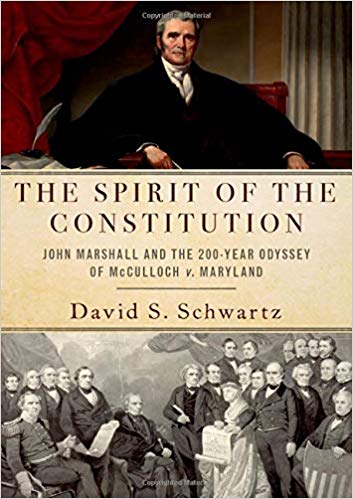
The Mythical McCulloch
Federalist Society Review, Volume 21
A Review of The Spirit of the Constitution: John Marshall and the 200-Year Odyssey of...

NY v. HHS and the Challenge of Protecting Conscience Rights in Healthcare
Federalist Society Review, Volume 21
Note from the Editor: The Federalist Society takes no positions on particular legal and public...
Christie v. NCAA: Anti-Commandeering or Bust
Federalist Society Review, Volume 18
Note from the Editor: This article argues that the Supreme Court should find unconstitutional the...
Does EPA’s Clean Power Plan Proposal Violate the States’ Sovereign Rights?
Engage Volume 16, Issue 1
Note from the Editor: This article discusses the Environmental Protection Agency’s Clean Power Plan under...
The Legality of Executive Action after King v. Burwell
Engage Volume 16, Issue 1
Note from the Editor: This article discusses the legality of possible executive actions if the...
Do Sue and Settle Practices Undermine Congressional Intent for Cooperative Federalism on Environmental Matters?
Engage Volume 15, Issue 2
Note from the Editor: This article is about whether sue and settle practices undermine congressional...
Cooperation or Coercion on Climate: Is the EPA Trying to Deputize the States? - Podcast
Federalism & Separation of Powers Practice Group Podcast
It has been argued that EPA's recently announced carbon emissions rule is just the latest...
The States and the NLRB: A Study in Comparative Sovereignty
Engage Volume 12, Issue 3, November 2011
Under a system of government that diffuses power and makes institutional “[a]mbition . . ....

Congressional Control Over State Sovereign Immunity: The Recent Supreme Court Decisions
Federalism & Separation of Powers Practice Group Newsletter - Volume 3, Issue 1, Spring 1999
On June 23, 1999, the last day of the most recent Supreme Court Term, the...
Federalism Revived? The Printz and City of Boerne Decisions
Federalism & Separation of Powers Practice Group Newsletter - Volume 2, Issue 1, Spring 1998
The following program was sponsored by the Federalism and Separation of Powers Practice Group at...
Printz v. United States
Federalism & Separation of Powers Practice Group Newsletter - Volume 1, Issue 3, Fall 1997
It is something of an annual tradition at the Supreme Court that each Term's biggest...