Facts of the Case
The National Institute of Family and Life Advocates and two other religiously-affiliated pro-life entities engaged in providing pregnancy-related services in the state of California (collectively “NIFLA”) sought to enjoin the enforcement of the California Reproductive Freedom, Accountability, Comprehensive Care, and Transparency Act (the “Act”). The law’s stated purpose is to ensure access to reproductive health services for all California women, regardless of income. NIFLA argued that the Act’s requirements that (1) licensed clinics provide information to patients about free and low-cost publicly funded family planning services, including contraception and abortion, and that (2) unlicensed clinics inform patients of their unlicensed status violated their free speech and free exercise rights under the First Amendment.
The U.S. District Court for the Southern District of California denied NIFLA’s motion for preliminary injunction, concluding that they had not demonstrated a likelihood of success on the merits, as required under Winter v. Natural Resources Defense Council, Inc., 555 U.S. 7 (2008), as to either their free speech or free exercise claims.
The Ninth Circuit affirmed, ruling that the district court had not abused its discretion by denying the injunction. The Court rejected NIFLA’s argument that strict scrutiny should apply to the Act, because while the law compelled content-based speech by requiring NIFLA to disseminate information about low-cost family planning services, it did not discriminate based on viewpoint. Relying on its own precedent in the face of a circuit split regarding the level of scrutiny to apply in the abortion-related disclosure context, the Court reasoned that the type of speech at issue in this case was professional speech. It was therefore subject to intermediate scrutiny, which the family planning information disclosure requirement survived.
The Court also affirmed that the requirement that unlicensed facilities disclose their unlicensed status survived any level of scrutiny.
Finally, the Court agreed with the decision below that NIFLA was not entitled to a preliminary injunction on free exercise grounds, finding that the Act to be a facially neutral law of general applicability that survived rational basis review. The Supreme Court’s grant of certiorari did not include this issue.
Questions
Do disclosures required by a California reproductive rights law violate protections arising from the free speech clause of the First Amendment, applicable to the states through the 14th Amendment?
Conclusions
-
In a 5-4 vote, the Court reversed and remanded, holding that the pro-life pregnancy center petitioners were likely to succeed on their claim that the California Reproductive Freedom, Accountability, Comprehensive Care, and Transparency Act (the “FACT Act” or the “Act”) violated the First Amendment.
In an opinion authored by Justice Thomas, the Court began its discussion by explaining that the licensed notice was a content-based regulation that likely violated the First Amendment. The court rejected the Ninth Circuit’s characterization of the licensed notice as regulating professional speech, stating that the Court had never recognized “professional speech” as a separate category of speech that was subject to different free speech rules. The Court explained that it had only granted lesser protection to professional speech in two situations--where professionals were required to disclose “factual, noncontroversial information in their ‘commercial speech,’’’ and where states regulated professional conduct that incidentally implicated speech--and that neither of those lines of authority were applicable in the instant case. The Court further stated that it had a long history of protecting the First Amendment rights of professionals outside of those two contexts, emphasizing that imposing content-based regulations on professional speech created a risk of the government seeking to suppress unpopular ideas rather than advance legitimate regulatory objectives. The Court also concluded that the licensed notice did not survive even intermediate scrutiny, as it was “wildly underinclusive” in light of the Act’s stated purpose of providing low income women with information about the state-sponsored health services at issue.
The Court also held that the unlicensed notice unduly burdened protected speech. Assuming without deciding that rules requiring professionals to disclose “factual, noncontroversial information in their ‘commercial speech’” applied here, the Court stated that California was required to show that such disclosures were only justified if they addressed a potentially real and not simply hypothetical harm, and that here, the state had only presented hypothetical risks. And even if the state had overcome this requirement, the Court ruled that the unlicensed notice was still unduly burdensome because it “impose[d] a government-scripted, speaker-based disclosure requirement that [wa]s wholly disconnected from the State’s informational interest,” possibly leaving unburdened speakers whose messages aligned with the state’s views.
Justice Kennedy filed a concurring opinion, in which Chief Justice Roberts, and Justices Alito and Gorsuch joined.
Justice Breyer filed a dissenting opinion, in which Justices Ginsburg, Sotomayor, and Kagan joined. The dissent argued that both notice requirements were likely to pass constitutional scrutiny. Regarding the licensed notice, Breyer highlighted the Court’s precedent permitting state notice requirements as to abortion alternatives, such as adoption, and asked why a state law couldn’t require healthcare provider to provide information about abortion and childbirth services in this case. Breyer also rejected the majority’s assertion that the unlicensed notice was supported by only a “hypothetical” interest, as well as the conclusion that this particular requirement should be deemed facially unconstitutional due to the fact that it could create an undue burden in some situations.

Free to Speak for a Living? Professional Speech and the First Amendment Back at SCOTUS
The Supreme Court’s 2018 decision in National Institute of Family & Life Advocates v. Becerra...
Chiles v. Salazar: Will the Supreme Court Finally Address Professional Speech?
A new certiorari petition in Chiles v. Salazar allows the Supreme Court to address an...
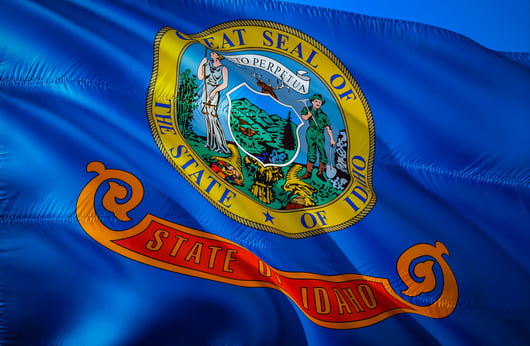
Idaho Supreme Court rejects controversial ethics rule 8.4(g)
The Idaho Supreme Court recently took the extraordinary step of unanimously rejecting a proposal by...

Licensing Speech & Regulating the Internet: Tennessee’s Auctioneer Licensing Scheme
(NIFLA v. Becerra: A huge First Amendment win or a lofty ideal lower courts will simply ignore?)
This spring the Tennessee legislature substantially broadened the sweep of its auctioneering license, with an...

Is It Time to Revisit the Constitutionality of Unauthorized Practice of Law Rules?
Federalist Society Review, Volume 20
Note from the Editor: The Federalist Society takes no positions on particular legal and public...

American Justice 2018: Book Review
“The Shifting Supreme Court” is the latest from the University of Pennsylvania’s “American Justice” series,...

Ethics CLE Teleforum 2018: New Issue in Legal Ethics, ABA Model Rule 8.4(g)
Professional Responsibilities and Legal Education Practice Group
Professional Responsibility & Legal Education Practice Group Teleforum CLE not offered if Teleforum listened to...
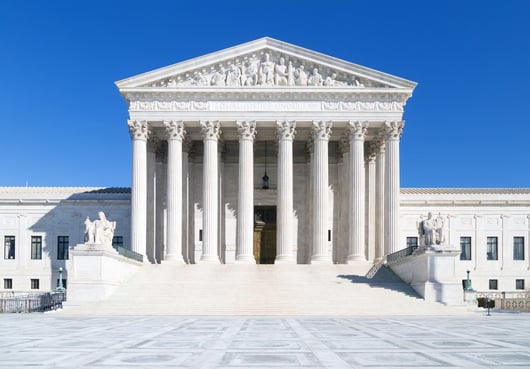
Compelled Speech in Masterpiece Cakeshop: What the Supreme Court’s June 2018 Decisions Tell Us About the Unresolved Questions
Federalist Society Review, Volume 19
Note from the Editor: This article discusses the unresolved compelled-speech questions in Masterpiece Cakeshop v....
Two More State Supreme Courts Reject ABA Model Rule 8.4(g)
On August 30, the Arizona Supreme Court denied a petition from the National Lawyers...
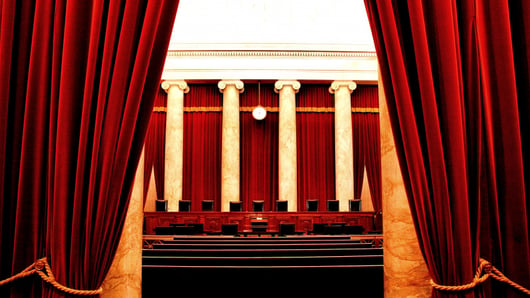
ABA Model Rule 8.4(g) Cannot Survive the Supreme Court’s Recent Decisions in NIFLA and Matal
The United States Supreme Court’s decision eight weeks ago in National Institute of Family and...
![Click to play: NIFLA v. Becerra: Can a State Regulate Professional Speech? [SCOTUSbrief]](https://img.youtube.com/vi/Dw7iJS9O6go/mqdefault.jpg)
NIFLA v. Becerra: Can a State Regulate Professional Speech? [SCOTUSbrief]
Short video featuring Andrea Picciotti-Bayer and Megan Dewitt
Can a government compel commercial or professional speech when the speaker disagrees with the message?...
The Issue of Occupational Speech in Masterpiece & NILF
It is not often that the Supreme Court takes two cases addressing an ever more...