Facts of the Case
In 1935, Lillian and William Gobitis were expelled from Pennsylvania public schools for refusing to salute the flag as part of a daily school exercise. The Gobitis children were Jehovah's Witnesses and believed that saluting the flag was forbidden by the Bible. They argued the expulsions violated their First Amendment rights.
Questions
Did the mandatory flag salute infringe upon liberties protected by the First and Fourteenth Amendments?
Conclusions
-
In an 8-to-1 decision, the Court upheld the mandatory flag salute. Writing for the majority, Justice Felix Frankfurter he relied primarily on the "secular regulation" rule, which weighs the secular purpose of a nonreligious government regulation against the religious practice it makes illegal or otherwise burdens the exercise of religion. The Court held that the state's interest in "national cohesion" was "inferior to none in the hierarchy of legal values," and that national unity was "the basis of national security." Frankfurter wrote that the school district's interest in creating national unity was enough to allow them to require students to salute the flag.
The Court declined to make itself “the school board for the country.”
Justice Harlan Stone dissented, writing that the “very essence of the liberty” guaranteed by the Constitution “is the freedom of the individual from compulsion as to what he shall think and what he shall say.” Stone’s position soon became the majority; the decision was reversed in 1943 in West Virginia State Board of Education v. Barnette
Lessons From John Adams: Defending Unpopular Clients from the Founding Era to the Present
The Founders Gave Us the Tools Series
CLE credit for this event is available at On-Demand CLE. In this Federalist Society America...
Plenary Panel 2: Justice Alito's Jurisprudence
An Examination of the Jurisprudence of Supreme Court Associate Justice Samuel Alito
This panel will examine Justice Samuel Alito’s jurisprudence as a whole, with particular attention to...

Litigation Update: S.E. v. Grey
Encinitas Unified School District required two fifth-grade boys and their assigned kindergarten buddies to read...
Religious Liberty in the Work-and-Market-place
2023 National Lawyers Convention
The Supreme Court’s decisions in 303 Creative LLC v. Elenis and in Groff v. DeJoy...
Panel Three: Critical Race Theory in K-12 Public Schools
2022 Missouri Chapters Conference
The 2022 Missouri Chapters Conference took place on January 24, 2022, at the Missouri State...

Fifth Circuit Gets It Right in Arnold Decision
Parents and some elected officials currently fighting against what some say are controversial far-Left ideology received a boost this...
Will the Supreme Court Revisit Employment Division v. Smith?
In 1990, the Supreme Court startled the nation with a decision in Employment Division v....
The Future of the Establishment Clause in the Roberts Court
2019 National Lawyers Convention
On November 14, 2019, the Federalist Society's Religious Liberty Practice Group held a panel for...
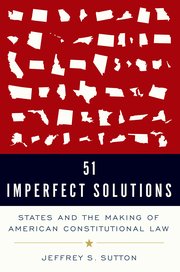
Protecting Individual Liberty Through State Constitutional Law: Judge Sutton’s Plea for Federalism in Judicial Decisionmaking
Federalist Society Review, Volume 20
A review of 51 Imperfect Solutions: States and the Making of American Constitutional Law, by...
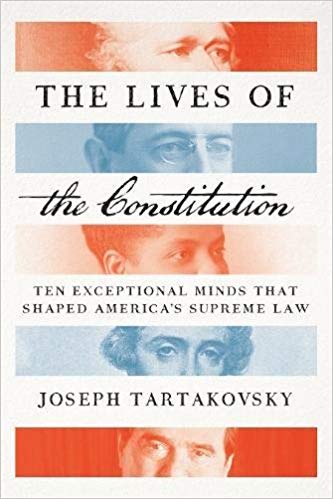
Giving Credit for Shaping the Constitution
Federalist Society Review, Volume 19
A review of: The Lives of the Constitution: Ten Exceptional Minds That Shaped America’s Supreme Law,...

51 Imperfect Solutions by Judge Jeffrey S. Sutton
Practice Groups Teleforum
When we think of constitutional law, we invariably think of the United States Supreme Court...

The CFPB, Justice Scalia, and Lone Dissents
This past Tuesday, the United States Court of Appeals for the D.C. Circuit—in arguably its...
How Should the Courts Interpret Split Decisions?
The Supreme Court occasionally renders plurality opinions, which may involve 4-1-4 decisions or any number...