Facts of the Case
In 1795, the Georgia state legislature passed a land grant awarding territory to four companies. The following year, the legislature voided the law and declared all rights and claims under it to be invalid. In 1800, John Peck acquired land that was part of the original legislative grant. He then sold the land to Robert Fletcher three years later, claiming that the land sales had been legitimate. Fletcher argued that since the original sale of the land had been declared invalid, Peck had no legal right to sell the land and thus committed a breach of contract.
Questions
Could the contract between Fletcher and Peck be invalidated by an act of the Georgia legislature?
Conclusions
-
The legislature’s repeal of the law was unconstitutional under Article I, Section 10, Clause I (the Contract Clause) of the United States Constitution. The majority concluded the sale between Fletcher and Peck was a binding contract, which under the Contract Clause cannot be invalidated even if it is illegally secured.
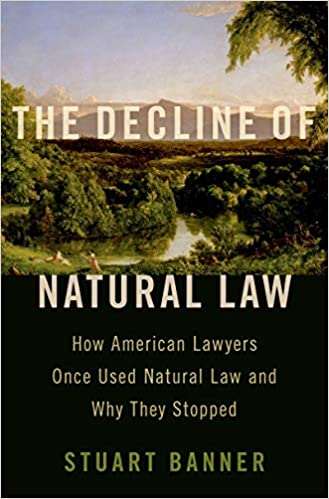
What Happened to Natural Law in American Jurisprudence?
Federalist Society Review, Volume 22
A Review of The Decline of Natural Law: How American Lawyers Once Used Natural Law and...

Forgotten Cases: Worthen v. Thomas and the Contract Clause
Federalist Society Review, Volume 18
Note from the Editor: This article discusses the history of interpretation of the Contract Clause and...