Facts of the Case
The New York State Board of Regents authorized a short, voluntary prayer for recitation at the start of each school day. A group of organizations joined forces in challenging the prayer, claiming that it violated the Establishment Clause of the First Amendment. The New York Court of Appeals rejected their arguments.
Questions
Does the reading of a nondenominational prayer at the start of the school day violate the "establishment of religion" clause of the First Amendment?
Conclusions
-
The state cannot hold prayers in public schools, even if participation is not required and the prayer is not tied to a particular religion.
In an opinion authored by Hugo L. Black, the Court held that respondent's decision to use its school system to facilitate recitation of the official prayer violated the Establishment Clause. Specifically, the policy breached the constitutional wall of separation between church and state. The Court ruled that the constitutional prohibition of laws establishing religion meant that government had no business drafting formal prayers for any segment of its population to repeat in a government-sponsored religious program. The Court held that respondent's provision of the contested daily prayer was inconsistent with the Establishment Clause.
Justice Douglas concurred in the judgment on the ground that the state's financing a religious exercise violated the First Amendment.
Justice Stewart dissented, arguing that no "official religion" was established by permitting those who want to say a prayer to say it.
Litigation Update: Ten Commandments in Public Schools
This week, the en banc U.S. Court of Appeals for the Fifth Circuit held that...

A Religious Charter School? A Discussion on the Limits of State Action and Demands of the Free Exercise Clause
On June 25, 2024, the Oklahoma Supreme Court ruled that the nation’s first religious charter...
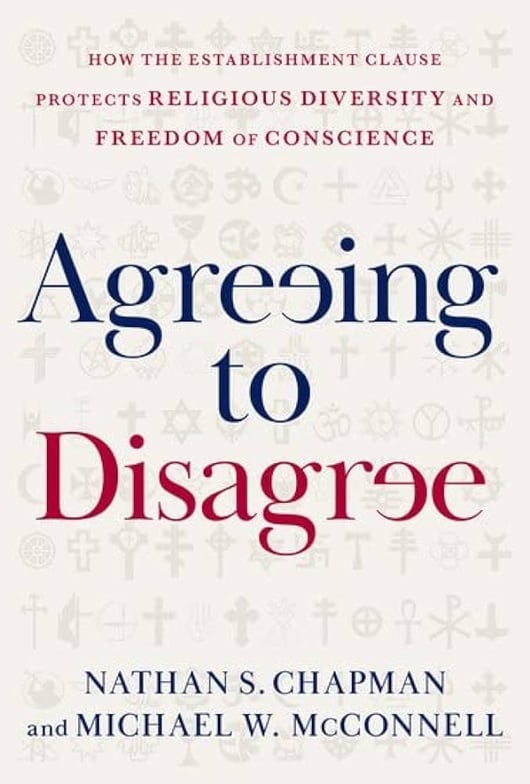
Establishing an Agreement to Disagree About Church and State
Federalist Society Review, Volume 24
A review of Nathan Chapman & Michael McConnell, Agreeing to Disagree: How the Establishment Clause...
Religious Liberty and Education: Kennedy, Carson, and Parental Rights
2022 National Lawyers Convention
This panel discussion will examine public and private education, with a focus on the relationship—and...
Religious Liberty at the Supreme Court 2022
Please join these experts as they review religious liberty at the Supreme Court in 2022. Featuring:...
Kennedy v. Bremerton School District’s Effect on the Establishment Clause
On June 27, 2022, the U.S. Supreme Court decided Kennedy v. Bremerton School District. In...

Courthouse Steps Oral Argument Webinar: Kennedy v. Bremerton School District
On April 25, 2022, the U.S. Supreme Court will hear oral argument in Kennedy v....

A Seat at the Sitting - April 2022
The April Docket in 90 Minutes or Less
Each month, a panel of constitutional experts convenes to discuss the Court’s upcoming docket sitting by...
Panel Three: School Choice: The Next Civil Rights Crusade? [Archive Collection]
1999 Stranahan National Issues Forum
On March 26, 1999, the Federalist Society co-sponsored the Stranahan National Issues Forum with the...
After Espinoza, What’s Left of the Establishment Clause?
Federalist Society Review, Volume 21
Note from the Editor: The Federalist Society takes no positions on particular legal and public...
The Future of the Establishment Clause in the Roberts Court
2019 National Lawyers Convention
On November 14, 2019, the Federalist Society's Religious Liberty Practice Group held a panel for...
Can a New Establishment Clause Jurisprudence Succeed in Protecting Religious Minorities Where Lemon Has Failed?
Federalist Society Review, Volume 20
Note from the Editor: The Federalist Society takes no positions on particular legal and public...

Courthouse Steps Oral Argument: The World War I Cross Cases
What is the nature of government involvement in religious matters, and what is the future...
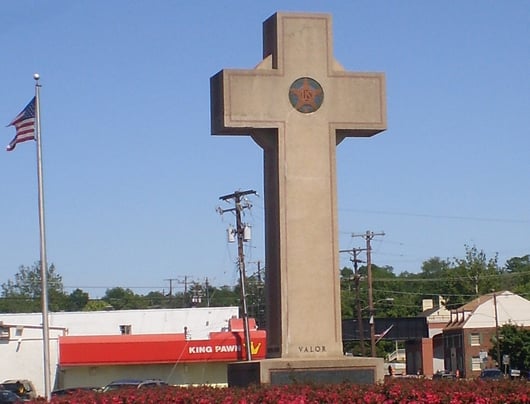
Courthouse Steps Preview: The Maryland Peace Cross (American Legion v. American Humanist Association)
Do crosses on public land violate the Establishment Clause? More importantly, how should the Supreme...
A Religious Organization's Autonomy in Matters of Self-Governance: Hosanna-Tabor and the First Amendment
Engage Volume 13, Issue 1, March 2012
In the second week of January, the U.S. Supreme Court handed down its unanimous decision...