Facts of the Case
The city of San Francisco operates a combined sewer system that collects both sewage and stormwater runoff. During heavy rains, the system can exceed its capacity, resulting in combined sewer overflows (CSOs) that discharge pollutants into the Pacific Ocean. The Clean Water Act requires cities like San Francisco to obtain a National Pollutant Discharge Elimination System (NPDES) permit for such discharges. San Francisco has been implementing a CSO control plan since the late 1960s and completed construction of its current CSO control facilities in 1997.
In 2019, the EPA and the California Regional Water Quality Control Board issued a new NPDES permit for San Francisco's Oceanside treatment facility. San Francisco is challenging two provisions in this permit: (1) narrative prohibitions against violating water quality standards, and (2) a requirement that San Francisco update its long-term CSO control plan. San Francisco argues that these provisions are inconsistent with the Clean Water Act and EPA regulations. The EPA’s Environmental Appeals Board denied San Francisco's administrative appeal, the U.S. Court of Appeals for the Ninth Circuit denied San Francisco’s petition for review, holding that the Clean Water Act authorizes EPA to include in the Oceanside NPDES permit the challenged provisions, and that EPA's decision to do so was rationally connected to evidence in the administrative record.
Questions
Does the Clean Water Act allow the Environmental Protection Agency (or an authorized state) to impose generic prohibitions in National Pollutant Discharge Elimination System permits that subject permit-holders to enforcement for violating water quality standards without identifying specific limits to which their discharges must conform?
Conclusions
-
The Clean Water Act does not authorize the EPA to include “end-result” provisions in wastewater discharge permits. Justice Samuel Alito authored the 5-4 majority opinion of the Court.
First, while rejecting San Francisco’s broader argument that all limitations must be “effluent limitations,” the Court focused on §1311(b)(1)(C)’s authorization of “any more stringent limitation” necessary to meet water quality standards. The terms “limitation,” “implement,” and “meet” in this provision require the EPA to specify concrete actions permittees must follow, not merely mandate end results without guidance. A proper “limitation” is a “restriction imposed from without,” not a directive that forces permittees to determine compliance measures themselves.
Second, Congress deliberately abandoned the pre-1972 backward-looking approach that had directly penalized polluters for water quality violations. The CWA’s “permit shield” provision, which protects compliant permittees from penalties, would be undermined if end-result requirements could expose permittees to massive penalties despite following all specified steps. Additionally, the EPA’s interpretation offered no solution for fairly allocating responsibility among multiple dischargers affecting the same body of water. Determining necessary compliance steps is the EPA’s responsibility, and Congress has provided the agency with sufficient tools to make these determinations without resorting to end-result requirements.
Justice Amy Coney Barrett authored a dissenting opinion, in which Justices Sonia Sotomayor, Elena Kagan, and Ketanji Brown Jackson joined.

Structure Over Spectacle: The Supreme Court's 2024 Term
Federalist Society Review, Volume 26
After several years of headline-grabbing decisions that reshaped national political debate—from abortion and affirmative action...
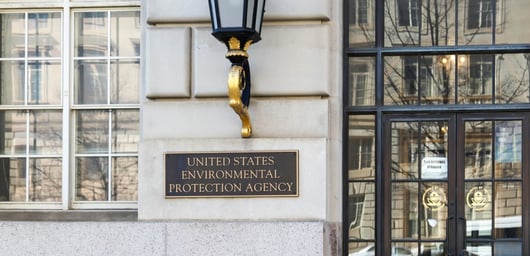
Schadenfreude at the Supreme Court: San Francisco takes on the EPA
San Francisco is the Josef K. of the modern era of the administrative state. In...