

Facts of the Case
This is a proceeding brought by the defendant in error, Hirsh, to recover possession of the cellar and first floor of a building on F Street in Washington which the plaintiff in error, Block, holds over after the expiration of a lease to him. Hirsh bought the building while the lease was running, and on December 15, 1919, notified Block that he should require possession on December 31, when the lease expired. Block declined to surrender the premises, relying upon the Act of October 22, 1919, c. 80, Title II -- "District of Columbia Rents"; especially § 109, 41 Stat. 297, 298, 301. That is also the ground of his defence in this Court, and the question is whether the statute is constitutional, or, as held by the Court of Appeals, an attempt to authorize the taking of property not for public use and without due process of law, and for this and other reasons void.
Conclusions
-
Held: (1) That the legislative declaration of facts affording the ground for the regulation was entitled to great respect, and was confirmed by common knowledge. P. 256 U. S. 154 . (2) That the exigency existing in the District clothed the letting of buildings there with a public interest so great as to justify regulation by law, i.e., by the police power of Congress -- while such exigency lasts. P. 256 U. S. 155 . (3) That, assuming the owner in this case did not desire the premises for his own use (as it might have turned out if the entire law had not been declared void) and treating the property as held for rent, the effect of the act, in allowing the tenant to retain possession at the rent stipulated in the expired lease or as it might be modified by the commission, was not, under the circumstances, an unconstitutional restriction of the owner's dominion and right of contract or a taking of his property for a use not public. P. 256 U.S. 156 . (4) That such regulation was justified as a temporary measure, even though it might not be as a permanent change. P. 256 U. S. 157 .

The Supreme Court Tackles Patent Reform: Why the Supreme Court Should End Inter Partes Review in Oil States
Federalist Society Review, Volume 18
Note from the Editor: This article argues that the Supreme Court should find unconstitutional the...
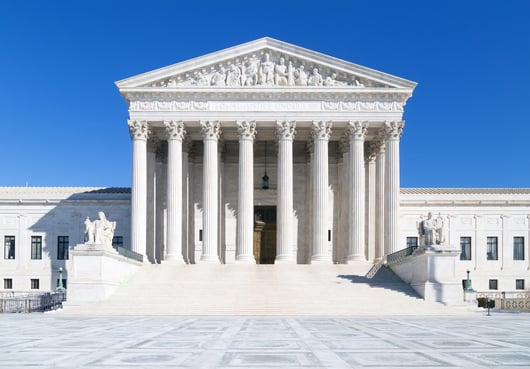
The Supreme Court Tackles Patent Reform
Why the Supreme Court in Oil States Should End Inter Partes Review Under the AIA
Click here to download a PDF version of this blog post. Oil States Energy Services,...
