

Partner, Crowell & Moring LLP, Crowell & Moring LLP
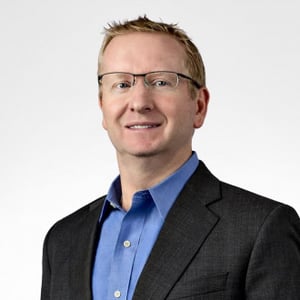
Trevor K. Copeland is a partner in the law firm of Crowell & Moring LLP (formerly Brinks Gilson & Lione PC).
His patent prosecution experience includes work on medical devices, sunglasses, footwear, sprinklers and irrigation equipment, decorative statuary and water gardens, biotechnology and general mechanical arts. He works closely with clients having products in these areas to develop intellectual property acquisition and management strategies, as well as to protect new ideas and products while respecting the rights of others.
Mr. Copeland's further practice includes design protection, whereby clients are able to protect the unique and valuable ornamental designs of their products using patent, copyright, and/or trademark. He has also litigated utility patents on clients' behalf, and has worked on preliminary injunction lawsuits for both design and utility patents, including winning a preliminary injunction against a foreign company preparing to launch an infringing laser-level device with a suction base.
Mr. Copeland has former experience as a high school biology and chemistry teacher, and as a visiting scientist with a Fungal Biochemistry and Molecular Genetics Laboratory Group.
Partner, Jackson Walker
Arthur offers clients a winning combination of trial and appellate experience gained as a federal prosecutor and more than 20 years of experience in handling patent, copyright, trademark, and trade secrets litigation.
While his practice concentrates on intellectual property litigation, Arthur also has significant experience in internal investigations, False Claims Act suits, partnership and breach of fiduciary duty, breach of contract, and employment litigation. Arthur also has represented clients testifying before Congressional committees.
Arthur writes and speaks frequently on topics ranging from the case against Boston bomber Dzhokhar Tsarnaev to patent litigation reform.
Prior to joining Michael Best, Arthur served as an Assistant United States Attorney in the Southern District of New York, where he was the lead prosecutor in criminal trials, including federal intellectual property crimes. He also argued numerous appeals.
Partner, Crowell & Moring LLP, Crowell & Moring LLP
Trevor K. Copeland is a partner in the law firm of Crowell & Moring LLP (formerly Brinks Gilson & Lione PC).
His patent prosecution experience includes work on medical devices, sunglasses, footwear, sprinklers and irrigation equipment, decorative statuary and water gardens, biotechnology and general mechanical arts. He works closely with clients having products in these areas to develop intellectual property acquisition and management strategies, as well as to protect new ideas and products while respecting the rights of others.
Mr. Copeland's further practice includes design protection, whereby clients are able to protect the unique and valuable ornamental designs of their products using patent, copyright, and/or trademark. He has also litigated utility patents on clients' behalf, and has worked on preliminary injunction lawsuits for both design and utility patents, including winning a preliminary injunction against a foreign company preparing to launch an infringing laser-level device with a suction base.
Mr. Copeland has former experience as a high school biology and chemistry teacher, and as a visiting scientist with a Fungal Biochemistry and Molecular Genetics Laboratory Group.
U.S. Court of Federal Claims and Jurist-In-Residence Professor of Law, The University of Akron School of Law
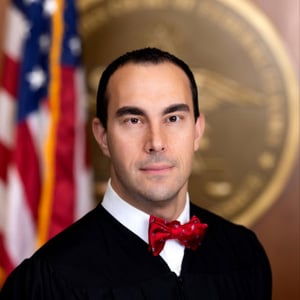
Judge Ryan T. Holte was sworn in as a judge on the United States Court of Federal Claims in July 2019. Prior to confirmation he served as the David L. Brennan Professor of Law and Director of the Center for Intellectual Property Law and Technology at The University of Akron School of Law (2017-2019) and an assistant professor of law at Southern Illinois University School of Law (2013-2017). Judge Holte has written and presented widely on patent law subjects and empirical legal studies of Federal Circuit and district court patent law cases. His most recent articles were published in the Iowa Law Review (2019), George Mason Law Review (2018), and Washington Law Review (2017).
In practice, Judge Holte served for six years as general counsel and partner of an electrical engineering technology company and is co-inventor of multiple patents related to Systems and Methods for Countering Satellite-Navigated Munitions. Prior to entering academia, Judge Holte practiced as a litigation attorney at the Federal Trade Commission and an associate in the Intellectual Property Practice Group at Jones Day. Prior to practice, he served as a law clerk to Judge Stanley F. Birch, Jr. on the United States Court of Appeals for the Eleventh Circuit and as a law clerk to Judge Loren A. Smith on the United States Court of Federal Claims.
Judge Holte received his JD from the University of California Davis School of Law and his BS, magna cum laude, in engineering from the California Maritime Academy where he was a First Class graduate of the Corps of Cadets Third Engineering Division and sailed as a U.S. Merchant Marine oiler.
Partner, Jackson Walker
Arthur offers clients a winning combination of trial and appellate experience gained as a federal prosecutor and more than 20 years of experience in handling patent, copyright, trademark, and trade secrets litigation.
While his practice concentrates on intellectual property litigation, Arthur also has significant experience in internal investigations, False Claims Act suits, partnership and breach of fiduciary duty, breach of contract, and employment litigation. Arthur also has represented clients testifying before Congressional committees.
Arthur writes and speaks frequently on topics ranging from the case against Boston bomber Dzhokhar Tsarnaev to patent litigation reform.
Prior to joining Michael Best, Arthur served as an Assistant United States Attorney in the Southern District of New York, where he was the lead prosecutor in criminal trials, including federal intellectual property crimes. He also argued numerous appeals.
Founding Member, Flachsbart & Greenspoon
Robert Greenspoon is a founding member of Flachsbart & Greenspoon, LLC. He is a registered patent attorney who concentrates his practice on the trial and appeal of patent cases and other complex litigation. He often leads the charge to advance important sweeping policy issues favoring rights holders. He received his undergraduate science degree in physics from the University of Chicago and his law degree from the University of Michigan. He is also a former federal district court law clerk.
In patent cases, Mr. Greenspoon represents both licensing businesses and operating companies, and both rights holders and accused infringers. He has argued and won numerous cases before the U.S. Court of Appeals for the Federal Circuit, among others. One of his most recent appellate wins came in 2015, when the Eighth Circuit reinstated his client’s case against a bank, remanding to allow a determination of whether it should be held accountable for aiding and abetting a $190 million Ponzi scheme. In January 2016, Mr. Greenspoon also presented his client’s petition to the Supreme Court in Cooper v. Lee, No. 15-955, seeking to hold America Invents Act reviews unconstitutional on Article III separation of powers grounds. This position has attracted numerous “friends of the court” rallying in support from affected businesses, inventor non-profit groups and academia. The Supreme Court will likely determine whether to hear the case in the fall.
Mr. Greenspoon is also a past board member of the United Inventors Association of the United States of America.
Professor of Law, Antonin Scalia Law School, George Mason University
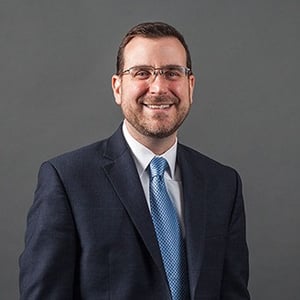
Adam Mossoff is Professor of Law at Antonin Scalia Law School, George Mason University. He has published extensively on why patents, copyrights, and other intellectual property rights have been—and should be—legally secured to innovators and creators as property rights. His scholarship has been relied on by the United States Supreme Court, by lower federal courts, and by U.S. federal agencies. He has been invited to testify numerous times before the U.S. Senate and the House of Representatives on intellectual property legislation. His writings on intellectual property policy have also appeared in the Wall Street Journal, New York Times, Forbes, Investors Business Daily, and in other media outlets. His journal articles can be downloaded here.
Professor Mossoff is a longstanding member of the Executive Committee of the Intellectual Property Practice Group of the Federalist Society, on which he served as Chairperson from 2016-2018, and he is Chair of the Intellectual Property Working Group of the Regulatory Transparency Project of the Federalist Society. He is a Senior Fellow and Chair of the Forum for Intellectual Property at the Hudson Institute, a Visiting Intellectual Property Fellow at the Heritage Foundation, and a member of the Board of Directors of the Center for Intellectual Property Understanding. He is a member of the Intellectual Property Rights Policy Committee of ANSI and he has served as Chair and Vice-Chair of the Intellectual Property Committee of the IEEE-USA, on which he remains a member in good standing.

Partner, Goldstein & Russell, P.C.
Tejinder Singh has represented parties and amici before the Supreme Court and lower courts. His matters have involved a broad range of subject areas, including constitutional law, the enforcement of arbitration awards, civil rights, criminal defense, financial regulation, and gambling law. In 2014, Tejinder argued and won the Supreme Court case Lane v. Franks, establishing that the First Amendment protects the subpoenaed testimony of public employees. He was named to the National Law Journal's D.C. Rising Stars list. A regular contributor to the SCOTUSblog, Tejinder also makes frequent television and radio appearances to discuss developments at the Court. Tejinder is an instructor in the Harvard Supreme Court Litigation Clinic.
Partner, Crowell & Moring LLP, Crowell & Moring LLP
Trevor K. Copeland is a partner in the law firm of Crowell & Moring LLP (formerly Brinks Gilson & Lione PC).
His patent prosecution experience includes work on medical devices, sunglasses, footwear, sprinklers and irrigation equipment, decorative statuary and water gardens, biotechnology and general mechanical arts. He works closely with clients having products in these areas to develop intellectual property acquisition and management strategies, as well as to protect new ideas and products while respecting the rights of others.
Mr. Copeland's further practice includes design protection, whereby clients are able to protect the unique and valuable ornamental designs of their products using patent, copyright, and/or trademark. He has also litigated utility patents on clients' behalf, and has worked on preliminary injunction lawsuits for both design and utility patents, including winning a preliminary injunction against a foreign company preparing to launch an infringing laser-level device with a suction base.
Mr. Copeland has former experience as a high school biology and chemistry teacher, and as a visiting scientist with a Fungal Biochemistry and Molecular Genetics Laboratory Group.
Partner, Crowell & Moring LLP, Crowell & Moring LLP
Trevor K. Copeland is a partner in the law firm of Crowell & Moring LLP (formerly Brinks Gilson & Lione PC).
His patent prosecution experience includes work on medical devices, sunglasses, footwear, sprinklers and irrigation equipment, decorative statuary and water gardens, biotechnology and general mechanical arts. He works closely with clients having products in these areas to develop intellectual property acquisition and management strategies, as well as to protect new ideas and products while respecting the rights of others.
Mr. Copeland's further practice includes design protection, whereby clients are able to protect the unique and valuable ornamental designs of their products using patent, copyright, and/or trademark. He has also litigated utility patents on clients' behalf, and has worked on preliminary injunction lawsuits for both design and utility patents, including winning a preliminary injunction against a foreign company preparing to launch an infringing laser-level device with a suction base.
Mr. Copeland has former experience as a high school biology and chemistry teacher, and as a visiting scientist with a Fungal Biochemistry and Molecular Genetics Laboratory Group.
Associate, Brinks, Gilson, & Lione PC
Daniel A. Parrish is an inventor and engineer with four pending patents on neuro-stimulation treatments for obstructive sleep apnea, and multiple academic publications on the topic. He has worked in both legal and scientific roles at three med-tech startups, each a spinoff from the same medical device incubator, gaining additional experience with cataract and glaucoma treatments. In 2014, Mr. Parrish graduated with honors from the William Mitchell College of Law in St. Paul, Minnesota, where he held an editor position in Cybaris®, an intellectual property law review. He authored an article on a new USPTO post-grant procedure, published in the same journal. While in law school, he worked as a law clerk and completed an independent externship with two Minneapolis IP law firms. He holds a Bachelor of Science from the University of Minnesota, double majoring in Biomedical Engineering and Human Physiology.
J.D., cum laude, William Mitchell College of Law, 2014
B.S., Biomedical Engineering and Physiology, University of Minnesota, 2008
Partner, Crowell & Moring LLP, Crowell & Moring LLP
Trevor K. Copeland is a partner in the law firm of Crowell & Moring LLP (formerly Brinks Gilson & Lione PC).
His patent prosecution experience includes work on medical devices, sunglasses, footwear, sprinklers and irrigation equipment, decorative statuary and water gardens, biotechnology and general mechanical arts. He works closely with clients having products in these areas to develop intellectual property acquisition and management strategies, as well as to protect new ideas and products while respecting the rights of others.
Mr. Copeland's further practice includes design protection, whereby clients are able to protect the unique and valuable ornamental designs of their products using patent, copyright, and/or trademark. He has also litigated utility patents on clients' behalf, and has worked on preliminary injunction lawsuits for both design and utility patents, including winning a preliminary injunction against a foreign company preparing to launch an infringing laser-level device with a suction base.
Mr. Copeland has former experience as a high school biology and chemistry teacher, and as a visiting scientist with a Fungal Biochemistry and Molecular Genetics Laboratory Group.

Laurence A. Tisch Professor of Law and Director, Classical Liberal Institute, New York University School of Law; Director, Classical Liberal Institute, Civitas Institute University of Texas at Austin
Richard A. Epstein is the Laurence A. Tisch Professor of Law, at New York University, a senior research fellow at the Civitas Institute at the University of Texas Austin, and a senior Lecturer, the University of Chicago. He received an LL.D., h.c . from the University of Ghent, 2003 , and an LLD h.c . from the University of Siegen in 2018 and the Bradley Prize in 2011. He has been a member of the American Academy of Arts and Sciences since 1985. He has edited both the Journal of Legal Studies (1981-1991) and the Journal of Law and Economics (1991-2001). He is also a founder and director of the Classical Liberal Institute at NYU Law School. His most recent book is The Classical Liberal Constitution: The Uncertain Quest for Limited Government (2014). His other books include Takings: Private Property and the Power of Eminent Domain ( 1985); Bargaining with the State (1993); Simple Rules for a Complex World (1995); Principles for a Free Society: Reconciling Individual Liberty and the Common Good (1998); Skepticism and Freedom: A Modern Theory of Classical Liberalism (2003); Design for Liberty: Private Property, Public Administration and the Rule of Law (2011), and most recently, The Myth of Birthright citizenship—and Beyond (2026). He has taught courses in , administrative law, antitrust, constitutional, contracts, environmental law, land use planning; real property, torts and water law. He has written and spoken extensively on a wide range of topics, and is writes a regular column for Defining Ideas.

Associate Professor of Law, New York Law School
James Grimmelmann is Associate Professor at New York Law School and a member of its Institute for Information Law and Policy. He received his J.D. from Yale Law School, where he was Editor-in-Chief of LawMeme and a member of the Yale Law Journal. Prior to law school, he received an A.B. in computer science from Harvard College and worked as a programmer for Microsoft. He has served as a Resident Fellow of the Information Society Project at Yale, as a legal intern for Creative Commons and the Electronic Frontier Foundation, and as a law clerk to the Honorable Maryanne Trump Barry of the United States Court of Appeals for the Third Circuit.
He studies how the law governing the creation and use of computer software affects individual freedom and the distribution of wealth and power in society. As a lawyer and technologist, he aims to help these two groups speak intelligibly to each other. He writes about intellectual property, virtual worlds, search engines, online privacy, and other topics in computer and Internet law. Recent publications include The Internet Is a Semicommons, 78 Fordham L. Rev. 2799 (2010), Saving Facebook, 94 Iowa L. Rev. 1137 (2009), and The Ethical Visions of Copyright Law, 77 Fordham L. Rev. 2005 (2009).
He has been blogging since 2000 at the Laboratorium (http://laboratorium.net/). His home page is at http://james.grimmelmann.net/.
Assistant Professor of Law, University of Chicago Law School
Jonathan Masur received a BS in physics and an AB in political science from Stanford University in 1999 and his JD from Harvard Law School in 2003. After graduating from law school, he clerked for Judge Richard Posner of the U.S. Court of Appeals for the Seventh Circuit and for Chief Judge Marilyn Hall Patel of the U.S. District Court for the Northern District of California. He taught at the Law School as a Bigelow Fellow and Lecturer in Law before joining the faculty in 2007.
His research and teaching interests include administrative law, legislation, behavioral law and economics, patent law, and criminal law.

President, TechFreedom
Berin Szoka serves as President of TechFreedom. Previously, he was a Senior Fellow and the Director of the Center for Internet Freedom at The Progress & Freedom Foundation. Before joining PFF, he was an Associate in the Communications Practice Group at Latham & Watkins LLP, where he advised clients on regulations affecting the Internet and telecommunications industries. Before joining Latham's Communications Practice Group, Szoka practiced at Lawler Metzger Milkman & Keeney, LLC, a boutique telecommunications law firm in Washington, and clerked for the Hon. H. Dale Cook, Senior U.S. District Judge for the Northern District of Oklahoma. Szoka received his Bachelor's degree in economics from Duke University and his juris doctor from the University of Virginia School of Law, where he served as Submissions Editor of the Virginia Journal of Law and Technology. He is admitted to practice law in the District of Columbia and California (inactive).
U.S. Court of Appeals, Seventh Circuit
Diane P. Wood received her BA in 1971 and her JD in 1975 from the University of Texas at Austin. After graduation, she clerked for Judge Irving L. Goldberg of the Fifth Circuit and for Justice Harry A. Blackmun of the U.S. Supreme Court. She then worked briefly for the U.S. State Department on international investment, antitrust, and transfer of technology issues. Moving on to Covington & Burling, Judge Wood continued a more general antitrust and commercial litigation practice until June 1980. In 1980–81, she was an assistant professor at the Georgetown University Law Center. In 1981, she joined the faculty of the Law School. She spent 1985–86 on leave as a Visiting Professor at Cornell Law School, and she was on leave during the fall quarter 1986, while she worked on the project to revise the Department of Justice Antitrust Guide for International Operations. She served as Associate Dean from 1989 through 1992. From 1993 until 1995, she was deputy assistant general in the Antitrust Division of the U.S. Department of Justice with responsibility for the Division's International, Appellate, and Legal Policy matters. Before becoming a judge of the U.S. Court of Appeals for the Seventh Circuit in 1995, Judge Wood was the Harold J. and Marion F. Green Professor of International Legal Studies.
Judge Wood's research interests include antitrust (both international and general), federal civil procedure, and international trade and business. She has taught in all three fields.
Partner, Crowell & Moring LLP, Crowell & Moring LLP
Trevor K. Copeland is a partner in the law firm of Crowell & Moring LLP (formerly Brinks Gilson & Lione PC).
His patent prosecution experience includes work on medical devices, sunglasses, footwear, sprinklers and irrigation equipment, decorative statuary and water gardens, biotechnology and general mechanical arts. He works closely with clients having products in these areas to develop intellectual property acquisition and management strategies, as well as to protect new ideas and products while respecting the rights of others.
Mr. Copeland's further practice includes design protection, whereby clients are able to protect the unique and valuable ornamental designs of their products using patent, copyright, and/or trademark. He has also litigated utility patents on clients' behalf, and has worked on preliminary injunction lawsuits for both design and utility patents, including winning a preliminary injunction against a foreign company preparing to launch an infringing laser-level device with a suction base.
Mr. Copeland has former experience as a high school biology and chemistry teacher, and as a visiting scientist with a Fungal Biochemistry and Molecular Genetics Laboratory Group.
Laurence A. Tisch Professor of Law and Director, Classical Liberal Institute, New York University School of Law; Director, Classical Liberal Institute, Civitas Institute University of Texas at Austin
Richard A. Epstein is the Laurence A. Tisch Professor of Law, at New York University, a senior research fellow at the Civitas Institute at the University of Texas Austin, and a senior Lecturer, the University of Chicago. He received an LL.D., h.c . from the University of Ghent, 2003 , and an LLD h.c . from the University of Siegen in 2018 and the Bradley Prize in 2011. He has been a member of the American Academy of Arts and Sciences since 1985. He has edited both the Journal of Legal Studies (1981-1991) and the Journal of Law and Economics (1991-2001). He is also a founder and director of the Classical Liberal Institute at NYU Law School. His most recent book is The Classical Liberal Constitution: The Uncertain Quest for Limited Government (2014). His other books include Takings: Private Property and the Power of Eminent Domain ( 1985); Bargaining with the State (1993); Simple Rules for a Complex World (1995); Principles for a Free Society: Reconciling Individual Liberty and the Common Good (1998); Skepticism and Freedom: A Modern Theory of Classical Liberalism (2003); Design for Liberty: Private Property, Public Administration and the Rule of Law (2011), and most recently, The Myth of Birthright citizenship—and Beyond (2026). He has taught courses in , administrative law, antitrust, constitutional, contracts, environmental law, land use planning; real property, torts and water law. He has written and spoken extensively on a wide range of topics, and is writes a regular column for Defining Ideas.
Associate Professor of Law, New York Law School
James Grimmelmann is Associate Professor at New York Law School and a member of its Institute for Information Law and Policy. He received his J.D. from Yale Law School, where he was Editor-in-Chief of LawMeme and a member of the Yale Law Journal. Prior to law school, he received an A.B. in computer science from Harvard College and worked as a programmer for Microsoft. He has served as a Resident Fellow of the Information Society Project at Yale, as a legal intern for Creative Commons and the Electronic Frontier Foundation, and as a law clerk to the Honorable Maryanne Trump Barry of the United States Court of Appeals for the Third Circuit.
He studies how the law governing the creation and use of computer software affects individual freedom and the distribution of wealth and power in society. As a lawyer and technologist, he aims to help these two groups speak intelligibly to each other. He writes about intellectual property, virtual worlds, search engines, online privacy, and other topics in computer and Internet law. Recent publications include The Internet Is a Semicommons, 78 Fordham L. Rev. 2799 (2010), Saving Facebook, 94 Iowa L. Rev. 1137 (2009), and The Ethical Visions of Copyright Law, 77 Fordham L. Rev. 2005 (2009).
He has been blogging since 2000 at the Laboratorium (http://laboratorium.net/). His home page is at http://james.grimmelmann.net/.
Assistant Professor of Law, University of Chicago Law School
Jonathan Masur received a BS in physics and an AB in political science from Stanford University in 1999 and his JD from Harvard Law School in 2003. After graduating from law school, he clerked for Judge Richard Posner of the U.S. Court of Appeals for the Seventh Circuit and for Chief Judge Marilyn Hall Patel of the U.S. District Court for the Northern District of California. He taught at the Law School as a Bigelow Fellow and Lecturer in Law before joining the faculty in 2007.
His research and teaching interests include administrative law, legislation, behavioral law and economics, patent law, and criminal law.
President, TechFreedom
Berin Szoka serves as President of TechFreedom. Previously, he was a Senior Fellow and the Director of the Center for Internet Freedom at The Progress & Freedom Foundation. Before joining PFF, he was an Associate in the Communications Practice Group at Latham & Watkins LLP, where he advised clients on regulations affecting the Internet and telecommunications industries. Before joining Latham's Communications Practice Group, Szoka practiced at Lawler Metzger Milkman & Keeney, LLC, a boutique telecommunications law firm in Washington, and clerked for the Hon. H. Dale Cook, Senior U.S. District Judge for the Northern District of Oklahoma. Szoka received his Bachelor's degree in economics from Duke University and his juris doctor from the University of Virginia School of Law, where he served as Submissions Editor of the Virginia Journal of Law and Technology. He is admitted to practice law in the District of Columbia and California (inactive).
U.S. Court of Appeals, Seventh Circuit
Diane P. Wood received her BA in 1971 and her JD in 1975 from the University of Texas at Austin. After graduation, she clerked for Judge Irving L. Goldberg of the Fifth Circuit and for Justice Harry A. Blackmun of the U.S. Supreme Court. She then worked briefly for the U.S. State Department on international investment, antitrust, and transfer of technology issues. Moving on to Covington & Burling, Judge Wood continued a more general antitrust and commercial litigation practice until June 1980. In 1980–81, she was an assistant professor at the Georgetown University Law Center. In 1981, she joined the faculty of the Law School. She spent 1985–86 on leave as a Visiting Professor at Cornell Law School, and she was on leave during the fall quarter 1986, while she worked on the project to revise the Department of Justice Antitrust Guide for International Operations. She served as Associate Dean from 1989 through 1992. From 1993 until 1995, she was deputy assistant general in the Antitrust Division of the U.S. Department of Justice with responsibility for the Division's International, Appellate, and Legal Policy matters. Before becoming a judge of the U.S. Court of Appeals for the Seventh Circuit in 1995, Judge Wood was the Harold J. and Marion F. Green Professor of International Legal Studies.
Judge Wood's research interests include antitrust (both international and general), federal civil procedure, and international trade and business. She has taught in all three fields.
Partner, Crowell & Moring LLP, Crowell & Moring LLP
Trevor K. Copeland is a partner in the law firm of Crowell & Moring LLP (formerly Brinks Gilson & Lione PC).
His patent prosecution experience includes work on medical devices, sunglasses, footwear, sprinklers and irrigation equipment, decorative statuary and water gardens, biotechnology and general mechanical arts. He works closely with clients having products in these areas to develop intellectual property acquisition and management strategies, as well as to protect new ideas and products while respecting the rights of others.
Mr. Copeland's further practice includes design protection, whereby clients are able to protect the unique and valuable ornamental designs of their products using patent, copyright, and/or trademark. He has also litigated utility patents on clients' behalf, and has worked on preliminary injunction lawsuits for both design and utility patents, including winning a preliminary injunction against a foreign company preparing to launch an infringing laser-level device with a suction base.
Mr. Copeland has former experience as a high school biology and chemistry teacher, and as a visiting scientist with a Fungal Biochemistry and Molecular Genetics Laboratory Group.
Partner, Jackson Walker
Arthur offers clients a winning combination of trial and appellate experience gained as a federal prosecutor and more than 20 years of experience in handling patent, copyright, trademark, and trade secrets litigation.
While his practice concentrates on intellectual property litigation, Arthur also has significant experience in internal investigations, False Claims Act suits, partnership and breach of fiduciary duty, breach of contract, and employment litigation. Arthur also has represented clients testifying before Congressional committees.
Arthur writes and speaks frequently on topics ranging from the case against Boston bomber Dzhokhar Tsarnaev to patent litigation reform.
Prior to joining Michael Best, Arthur served as an Assistant United States Attorney in the Southern District of New York, where he was the lead prosecutor in criminal trials, including federal intellectual property crimes. He also argued numerous appeals.
Assistant Professor, The Catholic University of America Columbus School of Law
Professor Winston came to the Columbus School of Law at The Catholic University of America in 2006, having previously been Director of the Center for Intellectual Property Law and assistant professor of law at Whittier Law School. She currently teaches Contracts, Patent Law and Trademarks and Unfair Competition. In 2007, the students at the law school voted Professor Winston the Outstanding Professor of First Year Classes, and again in 2009.
A frequent speaker on a variety of intellectual property topics, Professor Winston has spoken at the Federal Circuit Judicial Conference, the Intellectual Property Owners Association’s Annual Meeting, the Joint Department of Justice and Federal Trade Commission and United States Patent and Trademark Office Seminar Series, the Western Regional Meeting of the American Chemical Society, and the Music Library Association’s Annual Meeting. She has addressed audiences at the University of Akron, American University, DePaul University, George Washington University, University of Maryland University College, Michigan State University, Texas Wesleyan University, Tulane University, and Washington University in St. Louis.
Professor Winston earned her J.D. at University of Virginia School of Law, and an S.B. from the Massachusetts Institute of Technology. While in law school, she was managing editor of The Journal of Law and Politics. Two clerkships followed upon her graduation, first with the Honorable James T. Turner of the United States Court of Federal Claims, followed by two years with the Honorable Paul R. Michel of the United States Court of Appeals for the Federal Circuit. After her clerkships, Professor Winston spent three years in private practice as an associate with Covington & Burling in Washington, D.C.
Professor of Law, Antonin Scalia Law School, George Mason University
Adam Mossoff is Professor of Law at Antonin Scalia Law School, George Mason University. He has published extensively on why patents, copyrights, and other intellectual property rights have been—and should be—legally secured to innovators and creators as property rights. His scholarship has been relied on by the United States Supreme Court, by lower federal courts, and by U.S. federal agencies. He has been invited to testify numerous times before the U.S. Senate and the House of Representatives on intellectual property legislation. His writings on intellectual property policy have also appeared in the Wall Street Journal, New York Times, Forbes, Investors Business Daily, and in other media outlets. His journal articles can be downloaded here.
Professor Mossoff is a longstanding member of the Executive Committee of the Intellectual Property Practice Group of the Federalist Society, on which he served as Chairperson from 2016-2018, and he is Chair of the Intellectual Property Working Group of the Regulatory Transparency Project of the Federalist Society. He is a Senior Fellow and Chair of the Forum for Intellectual Property at the Hudson Institute, a Visiting Intellectual Property Fellow at the Heritage Foundation, and a member of the Board of Directors of the Center for Intellectual Property Understanding. He is a member of the Intellectual Property Rights Policy Committee of ANSI and he has served as Chair and Vice-Chair of the Intellectual Property Committee of the IEEE-USA, on which he remains a member in good standing.
Partner, Crowell & Moring LLP, Crowell & Moring LLP
Trevor K. Copeland is a partner in the law firm of Crowell & Moring LLP (formerly Brinks Gilson & Lione PC).
His patent prosecution experience includes work on medical devices, sunglasses, footwear, sprinklers and irrigation equipment, decorative statuary and water gardens, biotechnology and general mechanical arts. He works closely with clients having products in these areas to develop intellectual property acquisition and management strategies, as well as to protect new ideas and products while respecting the rights of others.
Mr. Copeland's further practice includes design protection, whereby clients are able to protect the unique and valuable ornamental designs of their products using patent, copyright, and/or trademark. He has also litigated utility patents on clients' behalf, and has worked on preliminary injunction lawsuits for both design and utility patents, including winning a preliminary injunction against a foreign company preparing to launch an infringing laser-level device with a suction base.
Mr. Copeland has former experience as a high school biology and chemistry teacher, and as a visiting scientist with a Fungal Biochemistry and Molecular Genetics Laboratory Group.

Samsung Electronics Co. v. Apple - Post-Decision SCOTUScast
Trevor K. Copeland, Arthur Gollwitzer
SCOTUScast 2-9-17 featuring Trevor Copeland and Art Gollwitzer
On December 6, 2016, the Supreme Court decided Samsung Electronics Co. v. Apple. In April...
Courthouse Steps: Samsung v. Apple: Design Patents at the Supreme Court - Podcast
Trevor K. Copeland, Ryan T. Holte, Arthur Gollwitzer
Intellectual Property Practice Group Teleforum
The Federalist Society will host a one hour Teleforum to discuss the recent Supreme Court...
Constitutional Challenges to the America Invents Act - Podcast
Robert P. Greenspoon, Adam Mossoff, Tejinder Singh, Trevor K. Copeland
Intellectual Property Practice Group Podcast
The America Invents Act (AIA) significantly affects the Constitutional separation of powers by creating a...
International Design Patent Filing Considerations After U.S. Entry into the Hague Agreement
Trevor K. Copeland, Daniel A. Parrish
Engage Volume 16, Issue 2
Effective May 13, 2015, applicants can file international design patent applications in a single, standardized...
The First Amendment Online: Search, Privacy & Personalization
Trevor K. Copeland, Richard A. Epstein, James Grimmelmann, Jonathan Masur, Berin Szóka, Diane P. Wood
The Chicago Lawyers Chapter and the Corporations, Securities and Antitrust, Intellectual Property and Telecommunications Practice Groups
Congress is aflutter with online privacy bills, while arguments for regulating search engines, social networks...
The First Amendment Online: Search, Privacy & Personalization
Trevor K. Copeland, Richard A. Epstein, James Grimmelmann, Jonathan Masur, Berin Szóka, Diane P. Wood
The Chicago Lawyers Chapter and the Corporations, Securities and Antitrust, Intellectual Property and Telecommunications Practice Groups
Congress is aflutter with online privacy bills, while arguments for regulating search engines, social networks...
Just a Minor Fix in Patent Reform? Qui Tam Actions and the False Marking Statute
Trevor K. Copeland, Arthur Gollwitzer, Elizabeth I. Winston, Adam Mossoff
Intellectual Property Practice Group Podcast
The false marking statute of the Patent Act (35 U.S.C. § 292) prohibits marking as...
Qui-tam-osaurus, the Statutory Dinosaur: Evolution or Extinction for the Qui Tam Patent False Marking Statute?
Trevor K. Copeland, Laura A. Lydigsen
Get rich quick! Sue for fun and profit! Sound like a hoax? Only time will...