
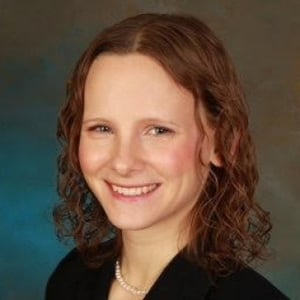
Executive Director, Center for Election Confidence
Lisa L. Dixon serves as the Executive Director of the Center for Election Confidence (formerly known as Lawyers Democracy Fund). Lisa is also a consultant for the Republican National Lawyers Association, serving as their Legal Counsel. Previously, Lisa practiced at Holtzman Vogel, where she specialized in tax-exempt organizations, campaign finance and election law, and lobbying compliance.
During law school, she interned for the Office of Chief Counsel, Procedure and Administration, at the Internal Revenue Service and at the Center for Law and Religious Freedom. Before law school, she served as the Assistant Student Division Director at The Federalist Society for Law and Public Policy Studies and interned at The Heritage Foundation’s Center for Legal and Judicial Studies.
Lisa earned a J.D. from the University of Virginia School of Law, an M.A. in History from the University of Virginia, and a B.A. in History from Hillsdale College. After 18 years on the East Coast, mostly in northern Virginia, she recently returned to her native Michigan, where she lives with her husband and three sons.
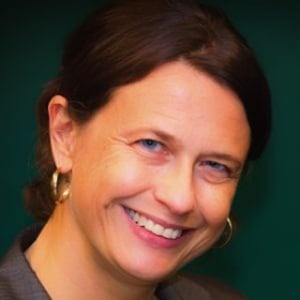
Professor, Political Science and Public Administration, University of North Carolina at Charlotte
Dr. Martha Kropf is Professor of Political Science & Public Administration at the University of North Carolina at Charlotte. Her Ph.D. is from American University in Washington, DC in Political Science (fields: American Politics, Public Policy and Public Economics). She worked two years at the University of Maryland Survey Research Center (Project Coordinator) and taught at the University of Missouri-Kansas City before coming to UNC Charlotte. Her areas of research include the study of elections and election reform, voting and political mobilization. She has published in the Journal of Politics, Political Research Quarterly and Public Opinion Quarterly. Her work has been funded by the National Science Foundation and the Aspen Institute.
Attorney
Maya M. Noronha is a civil rights attorney.
As special counsel for external affairs at First Liberty Institute, Maya worked for the largest legal organization in the United States dedicated exclusively to defending religious liberty for all Americans.
Previously, Maya worked at the U.S. Department of Health and Human Services, as acting chief of staff of the Administration for Children and Families; principal advisor to the Commissioner of the Administration on Children, Youth, and Families; and senior advisor to the Director of the Office for Civil Rights and regulatory reform officer. She provided advice on federal civil rights laws that prohibit discrimination on the basis of conscience, religion, race, color, national origin, limited English proficiency, sex, disability, age, and health information in both health care and human services.
In the area of election law, Maya has advised officials elected to or candidates for President, U.S. Senate, U.S. House of Representatives, Governor, state legislature, city council, and magisterial district judge. She practiced law at Baker Hostetler LLP, where she was on the Political Law and Federal Advocacy Teams, advising clients on voting rights, redistricting, election integrity, campaign finance, financial reporting, ethics compliance, as well as conducting trial and appellate litigation. She also has delivered legislative testimony, planned continuing legal education conferences on election law, and published about voting rights and election administration.
In addition to addressing the Federalist Society, she has delivered remarks to the White House Initiative on Asian American Pacific Islanders, United States Senate, Women in Government Relations, Georgetown University, George Mason University School of Law, the Columbus School of Law at the Catholic University of America, and Arizona State University Cronkite School of Journalism.
Maya is in Phi Beta Kappa, a member of the Alpha Sigma Nu Jesuit Honor Society, and a John Carroll Scholar. Forbes Magazine recognized Maya as one of its 30 under 30 in Law and Public Policy.
She serves concurrently on the Federalist Society’s Free Speech & Election Law Executive Committee and the American Bar Association’s Standing Committee on Election Law.
Education
· J.D., Georgetown University Law Center, 2011
· A.B., Georgetown University, 2005
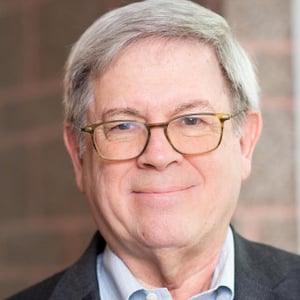
Senior Fellow, Cato Institute
Walter Olson is a senior fellow at the Cato Institute’s Robert A. Levy Center for Constitutional Studies and is known for his writing on the American legal system. His books include The Rule of Lawyers, on mass litigation, The Excuse Factory, on lawsuits in the workplace, and most recently Schools for Misrule, on the state of the law schools. His first book, The Litigation Explosion, was one of the most widely discussed general-audience books on law of its time. It led the Washington Post to dub him “intellectual guru of tort reform.” Active on social media, he is known as the founder and principal writer of what is generally considered the oldest blog on law as well as one of the most popular, Overlawyered.com. He has advised many public officials from the White House to town councils and in 2015 was named by Gov. Larry Hogan to be co-chair of the Maryland Redistricting Reform Commission, which issued its report recommendations later that year to acclaim across the state.
Before joining Cato, Olson was a senior fellow at the Manhattan Institute and an editor at the magazine Regulation, then edited by future Supreme Court Justice Antonin Scalia. Olson’s more than 400 broadcast appearances include all the major networks, NPR, the BBC, The Diane Rehm Show, and Oprah.
Executive Director, Center for Election Confidence
Lisa L. Dixon serves as the Executive Director of the Center for Election Confidence (formerly known as Lawyers Democracy Fund). Lisa is also a consultant for the Republican National Lawyers Association, serving as their Legal Counsel. Previously, Lisa practiced at Holtzman Vogel, where she specialized in tax-exempt organizations, campaign finance and election law, and lobbying compliance.
During law school, she interned for the Office of Chief Counsel, Procedure and Administration, at the Internal Revenue Service and at the Center for Law and Religious Freedom. Before law school, she served as the Assistant Student Division Director at The Federalist Society for Law and Public Policy Studies and interned at The Heritage Foundation’s Center for Legal and Judicial Studies.
Lisa earned a J.D. from the University of Virginia School of Law, an M.A. in History from the University of Virginia, and a B.A. in History from Hillsdale College. After 18 years on the East Coast, mostly in northern Virginia, she recently returned to her native Michigan, where she lives with her husband and three sons.
Professor, Political Science and Public Administration, University of North Carolina at Charlotte
Dr. Martha Kropf is Professor of Political Science & Public Administration at the University of North Carolina at Charlotte. Her Ph.D. is from American University in Washington, DC in Political Science (fields: American Politics, Public Policy and Public Economics). She worked two years at the University of Maryland Survey Research Center (Project Coordinator) and taught at the University of Missouri-Kansas City before coming to UNC Charlotte. Her areas of research include the study of elections and election reform, voting and political mobilization. She has published in the Journal of Politics, Political Research Quarterly and Public Opinion Quarterly. Her work has been funded by the National Science Foundation and the Aspen Institute.
Attorney
Maya M. Noronha is a civil rights attorney.
As special counsel for external affairs at First Liberty Institute, Maya worked for the largest legal organization in the United States dedicated exclusively to defending religious liberty for all Americans.
Previously, Maya worked at the U.S. Department of Health and Human Services, as acting chief of staff of the Administration for Children and Families; principal advisor to the Commissioner of the Administration on Children, Youth, and Families; and senior advisor to the Director of the Office for Civil Rights and regulatory reform officer. She provided advice on federal civil rights laws that prohibit discrimination on the basis of conscience, religion, race, color, national origin, limited English proficiency, sex, disability, age, and health information in both health care and human services.
In the area of election law, Maya has advised officials elected to or candidates for President, U.S. Senate, U.S. House of Representatives, Governor, state legislature, city council, and magisterial district judge. She practiced law at Baker Hostetler LLP, where she was on the Political Law and Federal Advocacy Teams, advising clients on voting rights, redistricting, election integrity, campaign finance, financial reporting, ethics compliance, as well as conducting trial and appellate litigation. She also has delivered legislative testimony, planned continuing legal education conferences on election law, and published about voting rights and election administration.
In addition to addressing the Federalist Society, she has delivered remarks to the White House Initiative on Asian American Pacific Islanders, United States Senate, Women in Government Relations, Georgetown University, George Mason University School of Law, the Columbus School of Law at the Catholic University of America, and Arizona State University Cronkite School of Journalism.
Maya is in Phi Beta Kappa, a member of the Alpha Sigma Nu Jesuit Honor Society, and a John Carroll Scholar. Forbes Magazine recognized Maya as one of its 30 under 30 in Law and Public Policy.
She serves concurrently on the Federalist Society’s Free Speech & Election Law Executive Committee and the American Bar Association’s Standing Committee on Election Law.
Education
· J.D., Georgetown University Law Center, 2011
· A.B., Georgetown University, 2005
Senior Fellow, Cato Institute
Walter Olson is a senior fellow at the Cato Institute’s Robert A. Levy Center for Constitutional Studies and is known for his writing on the American legal system. His books include The Rule of Lawyers, on mass litigation, The Excuse Factory, on lawsuits in the workplace, and most recently Schools for Misrule, on the state of the law schools. His first book, The Litigation Explosion, was one of the most widely discussed general-audience books on law of its time. It led the Washington Post to dub him “intellectual guru of tort reform.” Active on social media, he is known as the founder and principal writer of what is generally considered the oldest blog on law as well as one of the most popular, Overlawyered.com. He has advised many public officials from the White House to town councils and in 2015 was named by Gov. Larry Hogan to be co-chair of the Maryland Redistricting Reform Commission, which issued its report recommendations later that year to acclaim across the state.
Before joining Cato, Olson was a senior fellow at the Manhattan Institute and an editor at the magazine Regulation, then edited by future Supreme Court Justice Antonin Scalia. Olson’s more than 400 broadcast appearances include all the major networks, NPR, the BBC, The Diane Rehm Show, and Oprah.
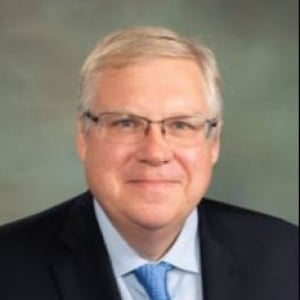
President and General Counsel, Public Interest Legal Foundation
J. Christian Adams is the President and General Counsel of the Public Interest Legal Foundation. He served from 2005 to 2010 in the Voting Section at the United States Department of Justice Voting Section. President Trump appointed Adams to the Presidential Advisory Commission on Election Integrity. President Trump also appointed Adams as a Commissioner to the United States Commission on Civil Rights where he also now serves with a term through 2025. He has been involved in election law lawsuits in 33 states and the territory of Guam. He has represented multiple presidential campaigns in election litigation. He has a law degree from the University of South Carolina School of Law. He is a member of the South Carolina and Virginia Bars.
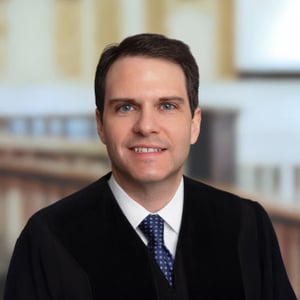
Associate Justice, Arkansas Supreme Court
Nicholas Bronni was appointed to the Arkansas Supreme Court by Governor Sarah Huckabee Sanders on December 20, 2024, and he began his service on January 1, 2025.
Before being appointed to the bench, Justice Bronni served as the Solicitor General of Arkansas. In that role, he successfully argued two cases in the United States Supreme Court: Delaware v. Pennsylvania, 598 U.S. 115 (2023), an original jurisdiction case concerning unclaimed property; and Rutledge v. PCMA, 592 U.S. 80 (2020), an ERISA preemption case. Justice Bronni also successfully argued numerous cases before federal and state appellate courts, including Arkansas Times v. Waldrip, 37 F.4th 1386 (8th Cir. 2022) (en banc), which upheld Arkansas's law barring state contractors from boycotting Israel; and Arkansas State Conf. NAACP v. Arkansas Bd. of Apportionment, 86 F.4th 1204 (8th Cir. 2023), a landmark case holding that Section 2 of the Voting Rights Act is not privately enforceable. As Solicitor General, Justice Bronni received the National Association of Attorneys General's 2024 Best Supreme Court Brief Award for his multistate amicus brief in Muldrow v. City of St. Louis, Missouri, 601 U.S. 346 (2024).
Justice Bronni received his law degree with magna cum laude honors from the University of Michigan Law School. At Michigan, he was an editor of the Michigan Law Review and was elected to the Order of the Coif. He received his undergraduate degree, summa cum laude, and with special departmental honors from the Elliott School of International Affairs at the George Washington University.
Prior to returning home to Arkansas, Justice Bronni was a Senior Litigation Counsel with the Appellate Litigation Group at the United States Securities and Exchange Commission. He was also an associate with Gibson Dunn and Crutcher LLP in Washington, DC. Justice Bronni clerked for the Honorable Jay S. Bybee of the United States Court of Appeals for the Ninth Circuit.
Attorney
Maya M. Noronha is a civil rights attorney.
As special counsel for external affairs at First Liberty Institute, Maya worked for the largest legal organization in the United States dedicated exclusively to defending religious liberty for all Americans.
Previously, Maya worked at the U.S. Department of Health and Human Services, as acting chief of staff of the Administration for Children and Families; principal advisor to the Commissioner of the Administration on Children, Youth, and Families; and senior advisor to the Director of the Office for Civil Rights and regulatory reform officer. She provided advice on federal civil rights laws that prohibit discrimination on the basis of conscience, religion, race, color, national origin, limited English proficiency, sex, disability, age, and health information in both health care and human services.
In the area of election law, Maya has advised officials elected to or candidates for President, U.S. Senate, U.S. House of Representatives, Governor, state legislature, city council, and magisterial district judge. She practiced law at Baker Hostetler LLP, where she was on the Political Law and Federal Advocacy Teams, advising clients on voting rights, redistricting, election integrity, campaign finance, financial reporting, ethics compliance, as well as conducting trial and appellate litigation. She also has delivered legislative testimony, planned continuing legal education conferences on election law, and published about voting rights and election administration.
In addition to addressing the Federalist Society, she has delivered remarks to the White House Initiative on Asian American Pacific Islanders, United States Senate, Women in Government Relations, Georgetown University, George Mason University School of Law, the Columbus School of Law at the Catholic University of America, and Arizona State University Cronkite School of Journalism.
Maya is in Phi Beta Kappa, a member of the Alpha Sigma Nu Jesuit Honor Society, and a John Carroll Scholar. Forbes Magazine recognized Maya as one of its 30 under 30 in Law and Public Policy.
She serves concurrently on the Federalist Society’s Free Speech & Election Law Executive Committee and the American Bar Association’s Standing Committee on Election Law.
Education
· J.D., Georgetown University Law Center, 2011
· A.B., Georgetown University, 2005
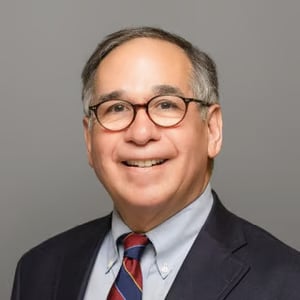
Adjunct Professor of Law; Director, N.Y. Census and Redistricting Institute, New York Law School
Jeff Wice is a Distinguished Adjunct Professor and Senior Fellow at New York Law School where he directs the New York Elections, Census & Redistricting Institute and teaches classes on redistricting, election law, and the census. He is now working on his sixth redistricting cycle. In past years, he served as a redistricting counsel to New York State Legislativbe Leaders and as counsel to three New York City Districting Commissions and to numerous counties and localities across New York and the nation.
During the 2000 census cycle, Professor Wice served as counsel to President Bill Clinton’s members of the U.S. Census Monitoring Board. He is the co-editor/author of the National Conference of State Legislatures' 2020 Redistricting Redbook, a comprehensive handbook on the census and redistricting.
‘’City & State NY’ recognized Professor Wice as one of New York’s “Top 50 Over 50” in 2022 and just last month as a "New York legal trailblazer" for his efforts promoting fair representation and the census. He is a graduate of the George Washington University and Antioch School of Law.
President and General Counsel, Public Interest Legal Foundation
J. Christian Adams is the President and General Counsel of the Public Interest Legal Foundation. He served from 2005 to 2010 in the Voting Section at the United States Department of Justice Voting Section. President Trump appointed Adams to the Presidential Advisory Commission on Election Integrity. President Trump also appointed Adams as a Commissioner to the United States Commission on Civil Rights where he also now serves with a term through 2025. He has been involved in election law lawsuits in 33 states and the territory of Guam. He has represented multiple presidential campaigns in election litigation. He has a law degree from the University of South Carolina School of Law. He is a member of the South Carolina and Virginia Bars.
Associate Justice, Arkansas Supreme Court
Nicholas Bronni was appointed to the Arkansas Supreme Court by Governor Sarah Huckabee Sanders on December 20, 2024, and he began his service on January 1, 2025.
Before being appointed to the bench, Justice Bronni served as the Solicitor General of Arkansas. In that role, he successfully argued two cases in the United States Supreme Court: Delaware v. Pennsylvania, 598 U.S. 115 (2023), an original jurisdiction case concerning unclaimed property; and Rutledge v. PCMA, 592 U.S. 80 (2020), an ERISA preemption case. Justice Bronni also successfully argued numerous cases before federal and state appellate courts, including Arkansas Times v. Waldrip, 37 F.4th 1386 (8th Cir. 2022) (en banc), which upheld Arkansas's law barring state contractors from boycotting Israel; and Arkansas State Conf. NAACP v. Arkansas Bd. of Apportionment, 86 F.4th 1204 (8th Cir. 2023), a landmark case holding that Section 2 of the Voting Rights Act is not privately enforceable. As Solicitor General, Justice Bronni received the National Association of Attorneys General's 2024 Best Supreme Court Brief Award for his multistate amicus brief in Muldrow v. City of St. Louis, Missouri, 601 U.S. 346 (2024).
Justice Bronni received his law degree with magna cum laude honors from the University of Michigan Law School. At Michigan, he was an editor of the Michigan Law Review and was elected to the Order of the Coif. He received his undergraduate degree, summa cum laude, and with special departmental honors from the Elliott School of International Affairs at the George Washington University.
Prior to returning home to Arkansas, Justice Bronni was a Senior Litigation Counsel with the Appellate Litigation Group at the United States Securities and Exchange Commission. He was also an associate with Gibson Dunn and Crutcher LLP in Washington, DC. Justice Bronni clerked for the Honorable Jay S. Bybee of the United States Court of Appeals for the Ninth Circuit.
Attorney
Maya M. Noronha is a civil rights attorney.
As special counsel for external affairs at First Liberty Institute, Maya worked for the largest legal organization in the United States dedicated exclusively to defending religious liberty for all Americans.
Previously, Maya worked at the U.S. Department of Health and Human Services, as acting chief of staff of the Administration for Children and Families; principal advisor to the Commissioner of the Administration on Children, Youth, and Families; and senior advisor to the Director of the Office for Civil Rights and regulatory reform officer. She provided advice on federal civil rights laws that prohibit discrimination on the basis of conscience, religion, race, color, national origin, limited English proficiency, sex, disability, age, and health information in both health care and human services.
In the area of election law, Maya has advised officials elected to or candidates for President, U.S. Senate, U.S. House of Representatives, Governor, state legislature, city council, and magisterial district judge. She practiced law at Baker Hostetler LLP, where she was on the Political Law and Federal Advocacy Teams, advising clients on voting rights, redistricting, election integrity, campaign finance, financial reporting, ethics compliance, as well as conducting trial and appellate litigation. She also has delivered legislative testimony, planned continuing legal education conferences on election law, and published about voting rights and election administration.
In addition to addressing the Federalist Society, she has delivered remarks to the White House Initiative on Asian American Pacific Islanders, United States Senate, Women in Government Relations, Georgetown University, George Mason University School of Law, the Columbus School of Law at the Catholic University of America, and Arizona State University Cronkite School of Journalism.
Maya is in Phi Beta Kappa, a member of the Alpha Sigma Nu Jesuit Honor Society, and a John Carroll Scholar. Forbes Magazine recognized Maya as one of its 30 under 30 in Law and Public Policy.
She serves concurrently on the Federalist Society’s Free Speech & Election Law Executive Committee and the American Bar Association’s Standing Committee on Election Law.
Education
· J.D., Georgetown University Law Center, 2011
· A.B., Georgetown University, 2005
Adjunct Professor of Law; Director, N.Y. Census and Redistricting Institute, New York Law School
Jeff Wice is a Distinguished Adjunct Professor and Senior Fellow at New York Law School where he directs the New York Elections, Census & Redistricting Institute and teaches classes on redistricting, election law, and the census. He is now working on his sixth redistricting cycle. In past years, he served as a redistricting counsel to New York State Legislativbe Leaders and as counsel to three New York City Districting Commissions and to numerous counties and localities across New York and the nation.
During the 2000 census cycle, Professor Wice served as counsel to President Bill Clinton’s members of the U.S. Census Monitoring Board. He is the co-editor/author of the National Conference of State Legislatures' 2020 Redistricting Redbook, a comprehensive handbook on the census and redistricting.
‘’City & State NY’ recognized Professor Wice as one of New York’s “Top 50 Over 50” in 2022 and just last month as a "New York legal trailblazer" for his efforts promoting fair representation and the census. He is a graduate of the George Washington University and Antioch School of Law.
Attorney
Maya M. Noronha is a civil rights attorney.
As special counsel for external affairs at First Liberty Institute, Maya worked for the largest legal organization in the United States dedicated exclusively to defending religious liberty for all Americans.
Previously, Maya worked at the U.S. Department of Health and Human Services, as acting chief of staff of the Administration for Children and Families; principal advisor to the Commissioner of the Administration on Children, Youth, and Families; and senior advisor to the Director of the Office for Civil Rights and regulatory reform officer. She provided advice on federal civil rights laws that prohibit discrimination on the basis of conscience, religion, race, color, national origin, limited English proficiency, sex, disability, age, and health information in both health care and human services.
In the area of election law, Maya has advised officials elected to or candidates for President, U.S. Senate, U.S. House of Representatives, Governor, state legislature, city council, and magisterial district judge. She practiced law at Baker Hostetler LLP, where she was on the Political Law and Federal Advocacy Teams, advising clients on voting rights, redistricting, election integrity, campaign finance, financial reporting, ethics compliance, as well as conducting trial and appellate litigation. She also has delivered legislative testimony, planned continuing legal education conferences on election law, and published about voting rights and election administration.
In addition to addressing the Federalist Society, she has delivered remarks to the White House Initiative on Asian American Pacific Islanders, United States Senate, Women in Government Relations, Georgetown University, George Mason University School of Law, the Columbus School of Law at the Catholic University of America, and Arizona State University Cronkite School of Journalism.
Maya is in Phi Beta Kappa, a member of the Alpha Sigma Nu Jesuit Honor Society, and a John Carroll Scholar. Forbes Magazine recognized Maya as one of its 30 under 30 in Law and Public Policy.
She serves concurrently on the Federalist Society’s Free Speech & Election Law Executive Committee and the American Bar Association’s Standing Committee on Election Law.
Education
· J.D., Georgetown University Law Center, 2011
· A.B., Georgetown University, 2005
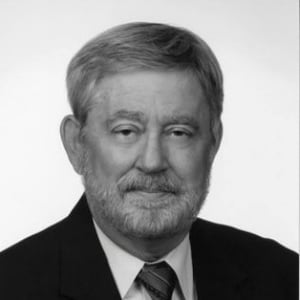
Of Counsel, BakerHostetler
Mark Braden concentrates his work principally on the law of the political process, including work with election and campaign agencies, voting issues, redistricting, and ethics and lobbying regulations – areas in which he has substantial knowledge and unusual experience.
He provides effective, and often highly innovative, legal guidance when representing individuals and organizations in the political arena and counseling some of the largest political action committees (PACs) and campaigns in the nation. Mark spent 10 years as chief counsel to the Republican National Committee prior to joining BakerHostetler. He is widely recognized for his knowledge of state election laws, having served as chief counsel to the Ohio Elections Commission and election counsel to the Ohio Secretary of State. Mark has played a significant role in the redistricting process nationwide. And in campaign finance, he was the father of “soft money” as originally used in national campaigns.
Mark is a former member of the adjunct faculty of George Washington University and Catholic University, and former special election law counsel to the United States House of Representatives’ Administration Committee. He has testified before congressional committees and the Federal Election Commission, and his experience in the legal and political arenas has resulted in invitations to lecture at universities and institutes nationwide. He has authored International Election Principles: Election, Chapter: “Early and Absentee Voting” (ABA Publishing, 2009) and Election Reform in the United States after Bush v. Gore, eds. Grofman & Alvarez, Chapter: “Entering the Political Thicket” (Cambridge University Press, 2013)
Adjunct Professor of Law; Director, N.Y. Census and Redistricting Institute, New York Law School
Jeff Wice is a Distinguished Adjunct Professor and Senior Fellow at New York Law School where he directs the New York Elections, Census & Redistricting Institute and teaches classes on redistricting, election law, and the census. He is now working on his sixth redistricting cycle. In past years, he served as a redistricting counsel to New York State Legislativbe Leaders and as counsel to three New York City Districting Commissions and to numerous counties and localities across New York and the nation.
During the 2000 census cycle, Professor Wice served as counsel to President Bill Clinton’s members of the U.S. Census Monitoring Board. He is the co-editor/author of the National Conference of State Legislatures' 2020 Redistricting Redbook, a comprehensive handbook on the census and redistricting.
‘’City & State NY’ recognized Professor Wice as one of New York’s “Top 50 Over 50” in 2022 and just last month as a "New York legal trailblazer" for his efforts promoting fair representation and the census. He is a graduate of the George Washington University and Antioch School of Law.
Attorney
Maya M. Noronha is a civil rights attorney.
As special counsel for external affairs at First Liberty Institute, Maya worked for the largest legal organization in the United States dedicated exclusively to defending religious liberty for all Americans.
Previously, Maya worked at the U.S. Department of Health and Human Services, as acting chief of staff of the Administration for Children and Families; principal advisor to the Commissioner of the Administration on Children, Youth, and Families; and senior advisor to the Director of the Office for Civil Rights and regulatory reform officer. She provided advice on federal civil rights laws that prohibit discrimination on the basis of conscience, religion, race, color, national origin, limited English proficiency, sex, disability, age, and health information in both health care and human services.
In the area of election law, Maya has advised officials elected to or candidates for President, U.S. Senate, U.S. House of Representatives, Governor, state legislature, city council, and magisterial district judge. She practiced law at Baker Hostetler LLP, where she was on the Political Law and Federal Advocacy Teams, advising clients on voting rights, redistricting, election integrity, campaign finance, financial reporting, ethics compliance, as well as conducting trial and appellate litigation. She also has delivered legislative testimony, planned continuing legal education conferences on election law, and published about voting rights and election administration.
In addition to addressing the Federalist Society, she has delivered remarks to the White House Initiative on Asian American Pacific Islanders, United States Senate, Women in Government Relations, Georgetown University, George Mason University School of Law, the Columbus School of Law at the Catholic University of America, and Arizona State University Cronkite School of Journalism.
Maya is in Phi Beta Kappa, a member of the Alpha Sigma Nu Jesuit Honor Society, and a John Carroll Scholar. Forbes Magazine recognized Maya as one of its 30 under 30 in Law and Public Policy.
She serves concurrently on the Federalist Society’s Free Speech & Election Law Executive Committee and the American Bar Association’s Standing Committee on Election Law.
Education
· J.D., Georgetown University Law Center, 2011
· A.B., Georgetown University, 2005
Of Counsel, BakerHostetler
Mark Braden concentrates his work principally on the law of the political process, including work with election and campaign agencies, voting issues, redistricting, and ethics and lobbying regulations – areas in which he has substantial knowledge and unusual experience.
He provides effective, and often highly innovative, legal guidance when representing individuals and organizations in the political arena and counseling some of the largest political action committees (PACs) and campaigns in the nation. Mark spent 10 years as chief counsel to the Republican National Committee prior to joining BakerHostetler. He is widely recognized for his knowledge of state election laws, having served as chief counsel to the Ohio Elections Commission and election counsel to the Ohio Secretary of State. Mark has played a significant role in the redistricting process nationwide. And in campaign finance, he was the father of “soft money” as originally used in national campaigns.
Mark is a former member of the adjunct faculty of George Washington University and Catholic University, and former special election law counsel to the United States House of Representatives’ Administration Committee. He has testified before congressional committees and the Federal Election Commission, and his experience in the legal and political arenas has resulted in invitations to lecture at universities and institutes nationwide. He has authored International Election Principles: Election, Chapter: “Early and Absentee Voting” (ABA Publishing, 2009) and Election Reform in the United States after Bush v. Gore, eds. Grofman & Alvarez, Chapter: “Entering the Political Thicket” (Cambridge University Press, 2013)
Attorney
Maya M. Noronha is a civil rights attorney.
As special counsel for external affairs at First Liberty Institute, Maya worked for the largest legal organization in the United States dedicated exclusively to defending religious liberty for all Americans.
Previously, Maya worked at the U.S. Department of Health and Human Services, as acting chief of staff of the Administration for Children and Families; principal advisor to the Commissioner of the Administration on Children, Youth, and Families; and senior advisor to the Director of the Office for Civil Rights and regulatory reform officer. She provided advice on federal civil rights laws that prohibit discrimination on the basis of conscience, religion, race, color, national origin, limited English proficiency, sex, disability, age, and health information in both health care and human services.
In the area of election law, Maya has advised officials elected to or candidates for President, U.S. Senate, U.S. House of Representatives, Governor, state legislature, city council, and magisterial district judge. She practiced law at Baker Hostetler LLP, where she was on the Political Law and Federal Advocacy Teams, advising clients on voting rights, redistricting, election integrity, campaign finance, financial reporting, ethics compliance, as well as conducting trial and appellate litigation. She also has delivered legislative testimony, planned continuing legal education conferences on election law, and published about voting rights and election administration.
In addition to addressing the Federalist Society, she has delivered remarks to the White House Initiative on Asian American Pacific Islanders, United States Senate, Women in Government Relations, Georgetown University, George Mason University School of Law, the Columbus School of Law at the Catholic University of America, and Arizona State University Cronkite School of Journalism.
Maya is in Phi Beta Kappa, a member of the Alpha Sigma Nu Jesuit Honor Society, and a John Carroll Scholar. Forbes Magazine recognized Maya as one of its 30 under 30 in Law and Public Policy.
She serves concurrently on the Federalist Society’s Free Speech & Election Law Executive Committee and the American Bar Association’s Standing Committee on Election Law.
Education
· J.D., Georgetown University Law Center, 2011
· A.B., Georgetown University, 2005
Adjunct Professor of Law; Director, N.Y. Census and Redistricting Institute, New York Law School
Jeff Wice is a Distinguished Adjunct Professor and Senior Fellow at New York Law School where he directs the New York Elections, Census & Redistricting Institute and teaches classes on redistricting, election law, and the census. He is now working on his sixth redistricting cycle. In past years, he served as a redistricting counsel to New York State Legislativbe Leaders and as counsel to three New York City Districting Commissions and to numerous counties and localities across New York and the nation.
During the 2000 census cycle, Professor Wice served as counsel to President Bill Clinton’s members of the U.S. Census Monitoring Board. He is the co-editor/author of the National Conference of State Legislatures' 2020 Redistricting Redbook, a comprehensive handbook on the census and redistricting.
‘’City & State NY’ recognized Professor Wice as one of New York’s “Top 50 Over 50” in 2022 and just last month as a "New York legal trailblazer" for his efforts promoting fair representation and the census. He is a graduate of the George Washington University and Antioch School of Law.
Of Counsel, BakerHostetler
Mark Braden concentrates his work principally on the law of the political process, including work with election and campaign agencies, voting issues, redistricting, and ethics and lobbying regulations – areas in which he has substantial knowledge and unusual experience.
He provides effective, and often highly innovative, legal guidance when representing individuals and organizations in the political arena and counseling some of the largest political action committees (PACs) and campaigns in the nation. Mark spent 10 years as chief counsel to the Republican National Committee prior to joining BakerHostetler. He is widely recognized for his knowledge of state election laws, having served as chief counsel to the Ohio Elections Commission and election counsel to the Ohio Secretary of State. Mark has played a significant role in the redistricting process nationwide. And in campaign finance, he was the father of “soft money” as originally used in national campaigns.
Mark is a former member of the adjunct faculty of George Washington University and Catholic University, and former special election law counsel to the United States House of Representatives’ Administration Committee. He has testified before congressional committees and the Federal Election Commission, and his experience in the legal and political arenas has resulted in invitations to lecture at universities and institutes nationwide. He has authored International Election Principles: Election, Chapter: “Early and Absentee Voting” (ABA Publishing, 2009) and Election Reform in the United States after Bush v. Gore, eds. Grofman & Alvarez, Chapter: “Entering the Political Thicket” (Cambridge University Press, 2013)
Attorney
Maya M. Noronha is a civil rights attorney.
As special counsel for external affairs at First Liberty Institute, Maya worked for the largest legal organization in the United States dedicated exclusively to defending religious liberty for all Americans.
Previously, Maya worked at the U.S. Department of Health and Human Services, as acting chief of staff of the Administration for Children and Families; principal advisor to the Commissioner of the Administration on Children, Youth, and Families; and senior advisor to the Director of the Office for Civil Rights and regulatory reform officer. She provided advice on federal civil rights laws that prohibit discrimination on the basis of conscience, religion, race, color, national origin, limited English proficiency, sex, disability, age, and health information in both health care and human services.
In the area of election law, Maya has advised officials elected to or candidates for President, U.S. Senate, U.S. House of Representatives, Governor, state legislature, city council, and magisterial district judge. She practiced law at Baker Hostetler LLP, where she was on the Political Law and Federal Advocacy Teams, advising clients on voting rights, redistricting, election integrity, campaign finance, financial reporting, ethics compliance, as well as conducting trial and appellate litigation. She also has delivered legislative testimony, planned continuing legal education conferences on election law, and published about voting rights and election administration.
In addition to addressing the Federalist Society, she has delivered remarks to the White House Initiative on Asian American Pacific Islanders, United States Senate, Women in Government Relations, Georgetown University, George Mason University School of Law, the Columbus School of Law at the Catholic University of America, and Arizona State University Cronkite School of Journalism.
Maya is in Phi Beta Kappa, a member of the Alpha Sigma Nu Jesuit Honor Society, and a John Carroll Scholar. Forbes Magazine recognized Maya as one of its 30 under 30 in Law and Public Policy.
She serves concurrently on the Federalist Society’s Free Speech & Election Law Executive Committee and the American Bar Association’s Standing Committee on Election Law.
Education
· J.D., Georgetown University Law Center, 2011
· A.B., Georgetown University, 2005
Adjunct Professor of Law; Director, N.Y. Census and Redistricting Institute, New York Law School
Jeff Wice is a Distinguished Adjunct Professor and Senior Fellow at New York Law School where he directs the New York Elections, Census & Redistricting Institute and teaches classes on redistricting, election law, and the census. He is now working on his sixth redistricting cycle. In past years, he served as a redistricting counsel to New York State Legislativbe Leaders and as counsel to three New York City Districting Commissions and to numerous counties and localities across New York and the nation.
During the 2000 census cycle, Professor Wice served as counsel to President Bill Clinton’s members of the U.S. Census Monitoring Board. He is the co-editor/author of the National Conference of State Legislatures' 2020 Redistricting Redbook, a comprehensive handbook on the census and redistricting.
‘’City & State NY’ recognized Professor Wice as one of New York’s “Top 50 Over 50” in 2022 and just last month as a "New York legal trailblazer" for his efforts promoting fair representation and the census. He is a graduate of the George Washington University and Antioch School of Law.

Does Ranked Choice Voting Help or Hurt?
Lisa L. Dixon, Martha Kropf, Maya Noronha, Walter K. Olson
Ranked choice voting, also known as instant runoff voting, is a voting method where voters...
Does Ranked Choice Voting Help or Hurt?
Lisa L. Dixon, Martha Kropf, Maya Noronha, Walter K. Olson
Ranked choice voting, also known as instant runoff voting, is a voting method where voters...
Standing and Section 2: Does Section 2 of the Voting Rights Act Provide a Private Right of Action?
J. Christian Adams, Nicholas Bronni, Maya Noronha, Jeffrey M. Wice
In 2021, in Arkansas State Conference NAACP v. Arkansas Board of Apportionment, private litigants sued...
Standing and Section 2: Does Section 2 of the Voting Rights Act Provide a Private Right of Action?
J. Christian Adams, Nicholas Bronni, Maya Noronha, Jeffrey M. Wice
In 2021, in Arkansas State Conference NAACP v. Arkansas Board of Apportionment, private litigants sued...
Topics
Arkansas State Conference NAACP v. Arkansas Board of Apportionment: Textualism in Action in a Voting Rights Act Case
On February 17, 2022, in Arkansas State Conference NAACP v. Arkansas Board of Apportionment, the...
State Court Docket Watch: Whitehead v. Fagan
Maya Noronha
On December 3, 2021, the Oregon Supreme Court delivered a unanimous opinion in Whitehead v....
Necessary & Proper Episode 72: Redistricting – Discussing the John R. Lewis Voting Rights Advancement Act
Mark Braden, Jeffrey M. Wice, Maya Noronha
An expert panel discusses the impact that changes proposed in HR 4, the John R....
Redistricting: Discussing the John R. Lewis Voting Rights Advancement Act
Mark Braden, Maya Noronha, Jeffrey M. Wice
Article I Initiative and Free Speech & Election Law Practice Group Teleforum
This webinar addresses the impact that changes proposed in HR 4, the John R. Lewis...
Redistricting: Discussing the John R. Lewis Voting Rights Advancement Act
Mark Braden, Maya Noronha, Jeffrey M. Wice
Article I Initiative and Free Speech & Election Law Practice Group Teleforum
This webinar addresses the impact that changes proposed in HR 4, the John R. Lewis...
Topics
Harmful Language in the U.S. Constitution?
This year, the National Archives and Records Administration (NARA) posted a blanket “Harmful Language Alert” on...