

Laurence A. Tisch Professor of Law and Director, Classical Liberal Institute, New York University School of Law; Senior Fellow, The Civitas Institute, University of Texas at Austin
Richard A. Epstein is the inaugural Laurence A. Tisch Professor of Law at NYU School of Law. Prior to his joining the faculty, he was a visiting law professor at NYU from 2007 through 2009. He served as the Peter and Kirstin Bedford Senior Fellow at the Hoover Institution from 2000 to 2024. Since 2024 to the present he is a senior lecturer at the Civitas Institute at the University of Texas—Austin. Epstein is also the James Parker Hall Distinguished Service Professor of Law Emeritus and a senior lecturer at the University of Chicago. His initial law school appointment was at the University of Southern California from 1968 to 1972. Epstein received an LL.D., h.c. from the University of Ghent, 2003. He has been a member of the American Academy of Arts and Sciences since 1985 and was a Senior Fellow of the Center for Clinical Medical Ethics at the University of Chicago Division of Biological Sciences, also from 1983. to 2022 He served as editor of the Journal of Legal Studies from 1981 to 1991, and of the Journal of Law and Economics from 1991-2001. From 2001 to 2010 he was a director of the John M. Olin Program in Law and Economics at the University of Chicago.
His newest book, The Myth of Birthright Citizenship: What the Fourteenth Amendment Really Says was published in 2026 (Encounter Books). Prior to that he has published many books including, The Dubious Morality of the Modern Administrative State (Roman & Littlefield 2020).Earlier he published th Classical Liberal Constitution: The Uncertain Quest for Limited Government (Harvard 2014) iHis previous books include Design for Liberty: Private Property, Public Administration and the Rule of Law (Harvard 2011); The Case Against the Employee Free Choice Act (Hoover 2009); Supreme Neglect: How to Revive the Constitutional Protection of Property Rights (Oxford 2008); Antitrust Decrees in Theory and Practice: Why Less is More (AEI 2007); Overdose: How Excessive Government Regulation Stifles Pharmaceutical Innovation (Yale University Press. 2006); How Progressives Rewrote the Constitution (Cato 2006); Cases and Materials on Torts (Aspen Law & Business; 8th ed. 2004); Skepticism and Freedom: A Modern Case for Classical Liberalism (University of Chicago, 2003); Torts (Aspen Law & Business 1999); Principles for a Free Society: Reconciling Individual Liberty with the Common Good (Perseus Books, 1998): Mortal Peril: Our Inalienable Rights to Health Care (Addison-Wesley, 1997); Simple Rules for a Complex World (Harvard, 1995); Bargaining With the State (Princeton, 1993); Forbidden Grounds: The Case Against Employment Discrimination Laws (Harvard , 1992); Takings: Private Property and the Power of Eminent Domain (Harvard, 1985); and Modern Products Liability Law (Greenwood Press, 1980). He has also edited(with Catherine M. Sharkey) Cases and Materials on the Law of Torts (10th edition 2012).
Professor Epstein has written numerous articles on a wide range of legal and interdisciplinary subjects. He has taught courses in administrative law, antitrust law, civil procedure, communications, constitutional law, contracts, corporations, criminal law, employment discrimination law, environmental law, food and drug law health law and policy, legal history, labor law, property, real estate development and finance, jurisprudence, labor law; land use planning, patents, individual, estate and corporate taxation, Roman Law; torts, and workers' compensation.
Professor Epstein also writes a regular column for Civitas Institute, which also sponsors his podcast, The Libertarian with Charles C.W. Cooke, and Law Talk, with Cooke and John Yoo. He also does a podcast with John Batchelor. And appears regularly on the Freedom File with Judge Andrew Napolitano.
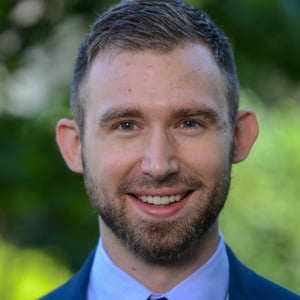
Assistant Professor of Law, Belmont University College of Law
Caleb N. Griffin is an Assistant Professor of Law at Belmont University College of Law. Prior to joining Belmont, Professor Griffin taught business and corporate law courses at Regent University School of Law, where he was the recipient of multiple teaching awards. Prior to entering the academy, Professor Griffin was an associate at Vinson & Elkins LLP in Houston, Texas, where he practiced corporate law. Professor Griffin's scholarship focuses on corporate law and corporate governance. His most recent paper provides a critical assessment of asset stewardship and proxy voting at index funds. Professor Griffin has also published theoretical and empirical work on mergers and acquisitions, the shareholder wealth maximization norm, and director fiduciary duties. Professor Griffin received his undergraduate degree in Finance, summa cum laude, from Oklahoma Christian University. He received his Juris Doctor, cum laude, from Harvard Law School.

David and Mary Harrison Distinguished Professor of Law, University of Virginia School of Law
Paul G. Mahoney is a David and Mary Harrison Distinguished Professor and served as dean of the Law School from 2008-16. Mahoney's teaching and research areas are securities regulation, law and economic development, corporate finance, financial derivatives and contracts. He has published widely in law reviews and peer-reviewed finance and law and economics journals. His book, “Wasting a Crisis: Why Securities Regulation Fails,” was published by the University of Chicago Press in 2015.
Mahoney joined the Law School faculty in 1990 after practicing law with the New York firm of Sullivan & Cromwell and clerking for Judge Ralph K. Winter, Jr. of the U.S. Court of Appeals for the Second Circuit and Justice Thurgood Marshall of the U.S. Supreme Court. He served as academic associate dean at the Law School from 1999 to 2004 and has held the Albert C. BeVier Research Chair and the Brokaw Chair in Corporate Law. He has been a visiting professor at the University of Chicago Law School, the University of Southern California Law School and the University of Toronto Faculty of Law. He has also worked on legal reform projects in Kazakhstan, Kyrgyzstan, Mongolia and Nepal.
Mahoney is a member of the Council on Foreign Relations and a fellow of the American Academy of Arts and Sciences. In 2018 he joined Securities and Exchange Commission’s Investor Advisory Committee. He served as an associate editor of the Journal of Economic Perspectives from 2004 to 2007 and as a director of the American Law and Economics Association from 2002 to 2004. He is a past recipient of the All-University Outstanding Teacher Award and the Law School's Traynor Award for excellence in faculty scholarship.
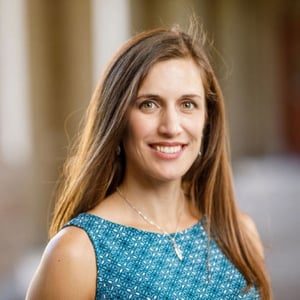
Associate Professor of Law, Notre Dame Law School
Marah Stith McLeod joined Notre Dame Law School in 2016. She teaches criminal law and criminal procedure and studies legal and ethical problems in these areas. Her scholarship explores the distribution of decisional power in the criminal justice system and the theory and practice of criminal punishment, including the death penalty.
McLeod attended Yale Law School, where she was notes editor of the Yale Law Journal. She served as a law clerk to Judge Diarmuid O’Scannlain of the Ninth Circuit Court of Appeals and to Justice Clarence Thomas of the U.S. Supreme Court. She also served an Attorney-Adviser in the Office of Legal Counsel in the U.S. Department of Justice.
After her government work, McLeod joined Sidley Austin LLP in Chicago and became a civil litigator and pro bono counsel in death penalty cases. She taught legal writing at Columbia Law School prior to coming to Notre Dame.
McLeod studied political theory at Harvard University, after which she spent a year working with Mother Teresa’s sisters in a home for handicapped orphans in Kolkata, India. McLeod now has three beloved children of her own.

Julius E. Davis Professor of Law, University of Minnesota Law School
Ilan Wurman is the Julius E. Davis Professor of Law at the University of Minnesota, where he teaches administrative law and constitutional law. He previously taught at Arizona State University. He writes primarily on the Fourteenth Amendment, administrative law, separation of powers, and constitutionalism. His academic writing has appeared in the Yale Law Journal, the Stanford Law Review, the University of Chicago Law Review, the University of Pennsylvania Law Review, the Virginia Law Review, the Duke Law Journal, the Minnesota Law Review, the Notre Dame Law Review, and the Texas Law Review among other journals.
Professor Wurman is the author of the new book The Constitution of 1789: A New Introduction (Cambridge 2026). His previous books include A Debt Against the Living: An Introduction to Originalism (Cambridge 2017), and The Second Founding: An Introduction to the Fourteenth Amendment (Cambridge 2020). He is also the author of the casebook, Administrative Law Theory and Fundamentals: An Integrated Approach (Foundation Press 3d ed. 2025).
Professor Wurman practices law with the firm Tully Bailey. He has litigated a variety of administrative law and constitutional law cases, including cases involving COVID-19 restrictions, transmission lines, and Appointments Clause challenges. He also devised winning public nuisance theories to force city governments to address the increasingly challenging public camping crises throughout the country.
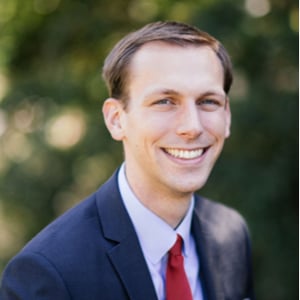
Assistant Professor, Pepperdine Caruso School of Law
Professor Kubisch received his law degree from the University of Notre Dame, where he served as Editor-in-Chief of the Notre Dame Law Review and earned the Colonel William J. Hoynes Award for having the best academic record in his class. Professor Kubisch clerked for the Honorable Steven M. Colloton of the United States Court of Appeals for the Eighth Circuit during the 2015-2016 term. Prior to teaching at Pepperdine, Professor Kubisch was an associate at Jones Day, where he specialized in appellate litigation and critical motions practice.
Associate Professor of Law, Notre Dame Law School
Marah Stith McLeod joined Notre Dame Law School in 2016. She teaches criminal law and criminal procedure and studies legal and ethical problems in these areas. Her scholarship explores the distribution of decisional power in the criminal justice system and the theory and practice of criminal punishment, including the death penalty.
McLeod attended Yale Law School, where she was notes editor of the Yale Law Journal. She served as a law clerk to Judge Diarmuid O’Scannlain of the Ninth Circuit Court of Appeals and to Justice Clarence Thomas of the U.S. Supreme Court. She also served an Attorney-Adviser in the Office of Legal Counsel in the U.S. Department of Justice.
After her government work, McLeod joined Sidley Austin LLP in Chicago and became a civil litigator and pro bono counsel in death penalty cases. She taught legal writing at Columbia Law School prior to coming to Notre Dame.
McLeod studied political theory at Harvard University, after which she spent a year working with Mother Teresa’s sisters in a home for handicapped orphans in Kolkata, India. McLeod now has three beloved children of her own.

Young Legal Scholars Paper Presentation
Richard A. Epstein, Caleb N. Griffin, Paul G. Mahoney, Marah Stith McLeod, Ilan Wurman, Mark R. Kubisch
24th Annual Federalist Society Faculty Conference
Featuring: Prof. Ilan Wurman, "Reversing Incorporation," Associate Professor, Arizona State University, Sandra Day O'Connor College...
Lynch v. Arizona - Post-Decision SCOTUScast
Marah Stith McLeod
SCOTUScast 7-14-16 featuring Marah Stith McLeod
On May 31, 2016, the Supreme Court decided Lynch v. Arizona without oral argument. A...