
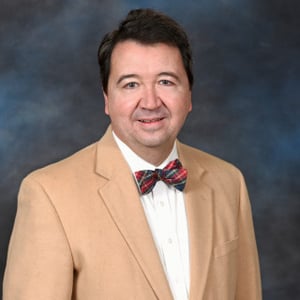
Judge, United States Court of Appeals, Sixth Circuit
John K. Bush is a Circuit Judge on the United States Court of Appeals for the Sixth Circuit.
His chambers are in Louisville, Kentucky. Prior to joining the court, Judge Bush was a partner in the
Louisville office of the firm Bingham Greenebaum Doll (now Dentons Bingham Greenebaum),
where he also was co-chair of the firm’s litigation department. He began his legal practice in the
Washington, D.C. office of Gibson Dunn & Crutcher.
Judge Bush served as a law clerk for Judge J. Smith Henley of the United States Court of
Appeals for the Eighth Circuit. He was graduated summa cum laude from Vanderbilt University,
and cum laude from Harvard Law School. He is an adjunct lecturer at The George Washington
University Law School and the Brandeis School of Law at the University of Louisville.
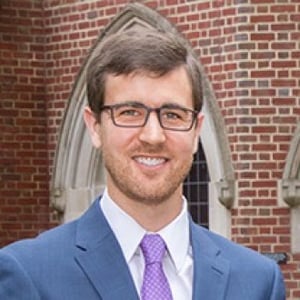
Professor of Law & Helen L. Crocker Faculty Scholar, Stanford Law School
Jud Campbell joined the faculty of Stanford Law School in 2023. He previously served as a professor of law at the University of Richmond School of Law and as a visiting professor of law at the University of Chicago Law School and at Harvard Law School. His academic focus is constitutional history and First Amendment law. His publications include articles in the Stanford Law Review, Yale Law Journal, Harvard Law Review, Texas Law Review, Constitutional Commentary, and Law and History Review. After completing his J.D. at Stanford Law School, he clerked for Judge Diane S. Sykes on the U.S. Court of Appeals for the Seventh Circuit, and for Judge José A. Cabranes on the U.S. Court of Appeals for the Second Circuit. He then served as the Executive Director of the Stanford Constitutional Law Center. He holds a bachelor’s degree from the University of North Carolina at Chapel Hill and two master’s degrees from the London School of Economics, where he studied as a Marshall Scholar.
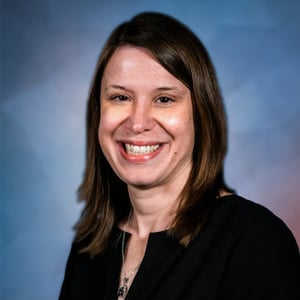
Senior Director of Strategic Partnerships, First Liberty Institute
Lisa Budzynski Ezell is the former Vice President and Director of the Federalist Society’s Lawyers Chapters. In this role, she managed a growing network of over 90 lawyers chapters nationwide, including oversight of leadership recruitment, chapter programming, state conferences, civics education outreach, and young lawyers activities. She holds a Bachelor of Arts degree from Saint Mary’s College in Political Science and History and a Master of Public Policy from George Mason University.
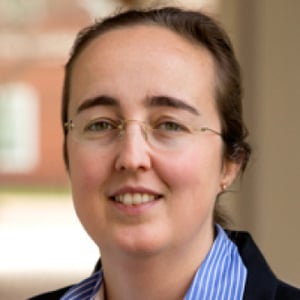
Assistant Professor of Political Science, Old Dominion University
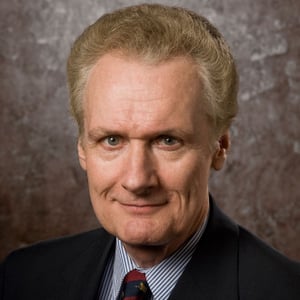
Vice President for Legal Affairs, Cato Institute
Roger Pilon is the Cato’s Institute’s vice president for legal affairs, the founding director of Cato’s Robert A. Levy Center for Constitutional Studies, the inaugural holder of Cato’s B. Kenneth Simon Chair in Constitutional Studies, and the founding publisher of the Cato Supreme Court Review.
Prior to joining Cato, Pilon held five senior posts in the Reagan administration, including at State and Justice, and was a national fellow at Stanford’s Hoover Institution. In 1989 the Bicentennial Commission presented him with its Benjamin Franklin Award for excellence in writing on the U.S. Constitution. In 2001 Columbia University’s School of General Studies awarded him its Alumni Medal of Distinction. Pilon lectures and debates at universities and law schools across the country and testifies often before Congress.
His writing has appeared in the Wall Street Journal, the Washington Post, the New York Times, the Los Angeles Times, Legal Times, National Law Journal, Harvard Journal of Law and Public Policy, Stanford Law and Policy Review, and elsewhere. He has appeared on ABC’s Nightline, CBS’s 60 Minutes II, Fox News Channel, NPR, CNN, MSNBC, CNBC, C-SPAN, and other media.
Pilon holds a BA from Columbia University, an MA and a PhD from the University of Chicago, and a JD from the George Washington University School of Law.
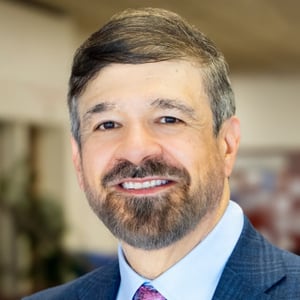
Hugh and Hazel Darling Foundation Professor of Law; Director, Center for the Study of Constitutional Originalism, University of San Diego School of Law
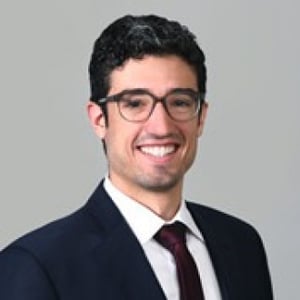
Assistant United States Attorney, United States Attorney’s Office
Professor of Law & Helen L. Crocker Faculty Scholar, Stanford Law School
Jud Campbell joined the faculty of Stanford Law School in 2023. He previously served as a professor of law at the University of Richmond School of Law and as a visiting professor of law at the University of Chicago Law School and at Harvard Law School. His academic focus is constitutional history and First Amendment law. His publications include articles in the Stanford Law Review, Yale Law Journal, Harvard Law Review, Texas Law Review, Constitutional Commentary, and Law and History Review. After completing his J.D. at Stanford Law School, he clerked for Judge Diane S. Sykes on the U.S. Court of Appeals for the Seventh Circuit, and for Judge José A. Cabranes on the U.S. Court of Appeals for the Second Circuit. He then served as the Executive Director of the Stanford Constitutional Law Center. He holds a bachelor’s degree from the University of North Carolina at Chapel Hill and two master’s degrees from the London School of Economics, where he studied as a Marshall Scholar.

Laurence A. Tisch Professor of Law and Director, Classical Liberal Institute, New York University School of Law; Director, Classical Liberal Institute, Civitas Institute University of Texas at Austin
Richard A. Epstein is the inaugural Laurence A. Tisch Professor of Law at NYU School of Law. Prior to his joining the faculty, he was a visiting law professor at NYU from 2007 through 2009. He served as the Peter and Kirstin Bedford Senior Fellow at the Hoover Institution from 2000 to 2024. Since 2024 to the present he is a senior lecturer at the Civitas Institute at the University of Texas—Austin. Epstein is also the James Parker Hall Distinguished Service Professor of Law Emeritus and a senior lecturer at the University of Chicago. His initial law school appointment was at the University of Southern California from 1968 to 1972. Epstein received an LL.D., h.c. from the University of Ghent, 2003. He has been a member of the American Academy of Arts and Sciences since 1985 and was a Senior Fellow of the Center for Clinical Medical Ethics at the University of Chicago Division of Biological Sciences, also from 1983. to 2022 He served as editor of the Journal of Legal Studies from 1981 to 1991, and of the Journal of Law and Economics from 1991-2001. From 2001 to 2010 he was a director of the John M. Olin Program in Law and Economics at the University of Chicago.
His newest book, The Myth of Birthright Citizenship: What the Fourteenth Amendment Really Says was published in 2026 (Encounter Books). Prior to that he has published many books including, The Dubious Morality of the Modern Administrative State (Roman & Littlefield 2020).Earlier he published th Classical Liberal Constitution: The Uncertain Quest for Limited Government (Harvard 2014) iHis previous books include Design for Liberty: Private Property, Public Administration and the Rule of Law (Harvard 2011); The Case Against the Employee Free Choice Act (Hoover 2009); Supreme Neglect: How to Revive the Constitutional Protection of Property Rights (Oxford 2008); Antitrust Decrees in Theory and Practice: Why Less is More (AEI 2007); Overdose: How Excessive Government Regulation Stifles Pharmaceutical Innovation (Yale University Press. 2006); How Progressives Rewrote the Constitution (Cato 2006); Cases and Materials on Torts (Aspen Law & Business; 8th ed. 2004); Skepticism and Freedom: A Modern Case for Classical Liberalism (University of Chicago, 2003); Torts (Aspen Law & Business 1999); Principles for a Free Society: Reconciling Individual Liberty with the Common Good (Perseus Books, 1998): Mortal Peril: Our Inalienable Rights to Health Care (Addison-Wesley, 1997); Simple Rules for a Complex World (Harvard, 1995); Bargaining With the State (Princeton, 1993); Forbidden Grounds: The Case Against Employment Discrimination Laws (Harvard , 1992); Takings: Private Property and the Power of Eminent Domain (Harvard, 1985); and Modern Products Liability Law (Greenwood Press, 1980). He has also edited(with Catherine M. Sharkey) Cases and Materials on the Law of Torts (10th edition 2012).
Professor Epstein has written numerous articles on a wide range of legal and interdisciplinary subjects. He has taught courses in administrative law, antitrust law, civil procedure, communications, constitutional law, contracts, corporations, criminal law, employment discrimination law, environmental law, food and drug law health law and policy, legal history, labor law, property, real estate development and finance, jurisprudence, labor law; land use planning, patents, individual, estate and corporate taxation, Roman Law; torts, and workers' compensation.
Professor Epstein also writes a regular column for Civitas Institute, which also sponsors his podcast, The Libertarian with Charles C.W. Cooke, and Law Talk, with Cooke and John Yoo. He also does a podcast with John Batchelor. And appears regularly on the Freedom File with Judge Andrew Napolitano.
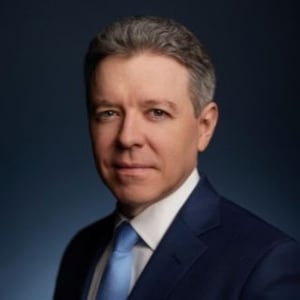
Former Solicitor General of Texas
Jonathan F. Mitchell is Principal at Mitchell Law PLLC. He received his law degree with high honors from the University of Chicago Law School, where he was an articles editor of The University of Chicago Law Review and a member of the Order of the Coif.
After graduating from law school, Mr. Mitchell clerked for Judge J. Michael Luttig of the U.S. Court of Appeals for the Fourth Circuit and for Justice Antonin Scalia of the Supreme Court of the United States. He then served as an Attorney-Adviser in the Office of Legal Counsel of the United States Department of Justice from 2003 through 2006. After leaving the Department of Justice, Mr. Mitchell served as a Visiting Researcher at Georgetown University Law Center, a Visiting Assistant Professor at the University of Chicago Law School from 2006 through 2008, and an Assistant Professor of Law at George Mason University from 2008 through 2010.
In 2010, Mr. Mitchell was appointed Solicitor General of Texas, a position he held until January 2015. After leaving the Texas Solicitor General’s office, Mr. Mitchell served as the Searle Visiting Professor of Law at the University of Texas School of Law before joining the Hoover Institution as a Visiting Fellow from 2015 to 2016. Mr. Mitchell also served as a Visiting Professor of Law at Stanford Law School before opening his own law firm in 2018.
Mr. Mitchell has published numerous works of scholarship in top-10 law journals, and he has written articles on textualism, national-security law, criminal law and procedure, judicial review and judicial federalism, and the legality of stare decisis in constitutional adjudication.
Mr. Mitchell has argued eight times before the Supreme Court of the United States, and more than 20 times in the federal courts of appeals. He has also argued before Supreme Court of Texas and in numerous trial courts. Mr. Mitchell has authored the principal merits brief in 11 Supreme Court cases, and has written and submitted more than 20 amicus curiae briefs in the Supreme Court.
Mr. Mitchell devised the novel enforcement mechanism in the Texas Heartbeat Act, also known as Senate Bill 8, which avoids pre-enforcement judicial review by prohibiting government officials from enforcing the statute and empowering private citizens to bring lawsuits against those who violate it. This produced an end-run around Roe v. Wade and allowed Texas and other states to impose pre-viability abortion bans despite the continued existence of Roe.
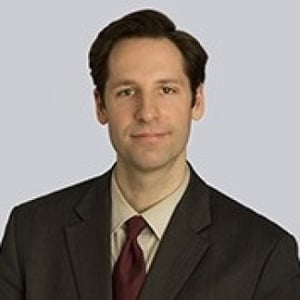
Associate Attorney, Gibson, Dunn & Crutcher LLP
Lochlan F. Shelfer is a litigation associate in the Washington, D.C. office of Gibson, Dunn & Crutcher. He is a member of the firm’s Appellate and Constitutional Law and Administrative Law practice groups.
Mr. Shelfer has litigated a wide range of appellate and trial matters in federal and state court. Mr. Shelfer’s appellate practice includes representing corporate clients in high-stakes commercial disputes, litigating cutting-edge legal issues before the Supreme Court of the United States, bringing merits and collection actions against foreign sovereigns, and representing pro bono clients before the courts of appeals. He has argued an appeal before the United States Court of Appeals for the Ninth Circuit, addressing matters of federal jurisdiction. In addition, Mr. Shelfer regularly represents clients in litigation under the Administrative Procedure Act.
Mr. Shelfer received his law degree from Yale Law School, where he served as an Articles Editor of the Yale Law Journal and was awarded the Judge William E. Miller Prize for best paper on the Bill of Rights for his work "How the Constitution Shall Not Be Construed," BYU Law Review (2017), and the Joseph Parker Prize for best paper on legal history for his work "Special Juries in the Supreme Court," Yale Law Journal (October, 2013). Prior to attending law school, Mr. Shelfer graduated summa cum laude from New York University with a B.A. in Classics and from Johns Hopkins University with a Ph.D. in Classics, specializing in the history of law. From 2013–2014, Mr. Shelfer served as a law clerk to the Honorable Carlos T. Bea of the United States Court of Appeals for the Ninth Circuit.
Mr. Shelfer is a member of the bars of Maryland and the District of Columbia.
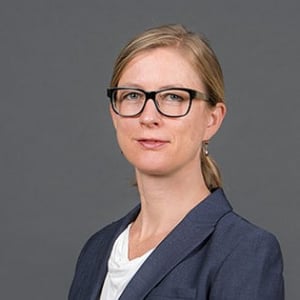
Assistant Professor of Law, George Mason University Antonin Scalia Law School
Megan Stevenson is an economist and legal scholar who became an Assistant Professor of Law at George Mason University, in 2017. Her research uses advanced econometric techniques to evaluate criminal law and policy in areas such as bail, pretrial detention, juvenile justice, and risk assessment. Her studies are published or forthcoming in top journals in both economics and law, such as the Stanford Law Review and the Review of Economics and Statistics. Her research on bail was cited extensively in a landmark federal civil rights decision, O’Donnell v. Harris, and has received widespread media coverage. In addition to legal scholarship, Professor Stevenson has written a number of op-eds for news outlets such as the Houston Chronicle and the Philadelphia Inquirer. Her research has been funded by the National Science Foundation, the Russell Sage Foundation, and the Laura and John Arnold Foundation.
Prior to joining the law faculty at George Mason, Professor Stevenson was a fellow at the Quattrone Center for the Fair Administration of Justice at the University of Pennsylvania Law School (2015-2017). She holds a BA in Interdisciplinary Studies (2009, with highest distinction) and a PhD in Agricultural and Resource Economics (2016), both from the University of California, Berkeley. She teaches Law & Economics and Criminal Law.
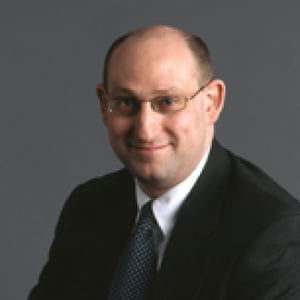
Professor of Law, Georgetown Law
Professor Teitelbaum joined the Georgetown faculty in 2009. Before coming to Georgetown, he clerked for Judge Richard M. Berman of the U.S. District Court for the Southern District of New York, practiced corporate and securities law at Cahill Gordon & Reindel LLP in New York, and was a Visiting Assistant Professor at Cornell Law School.
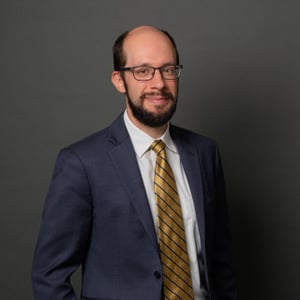
Assistant Professor of Law, Antonin Scalia Law School, George Mason University
Lael Weinberger is an assistant professor of law at George Mason University Antonin Scalia Law School. Previously, Lael clerked for Justice Neil Gorsuch on the United States Supreme Court, Judge Frank Easterbrook on the Seventh Circuit Court of Appeals, and Chief Justice Daniel Eismann on the Idaho Supreme Court. Lael also practiced law at the Washington, D.C., office of Gibson Dunn and held fellowships at Stanford and Harvard law schools. Lael earned a law degree and a Ph.D. in history, both from the University of Chicago. Lael's academic work has appeared in journals such as the University of Chicago Law Review, Notre Dame Law Review, and Constitutional Commentary, among others. He has also written widely for broader public audiences, with his writings and reviews appearing in publications including Newsweek, National Review, Claremont Review, First Things, Christianity Today, LA Review of Books, World, and the New Rambler Review.
Professor of Law & Helen L. Crocker Faculty Scholar, Stanford Law School
Jud Campbell joined the faculty of Stanford Law School in 2023. He previously served as a professor of law at the University of Richmond School of Law and as a visiting professor of law at the University of Chicago Law School and at Harvard Law School. His academic focus is constitutional history and First Amendment law. His publications include articles in the Stanford Law Review, Yale Law Journal, Harvard Law Review, Texas Law Review, Constitutional Commentary, and Law and History Review. After completing his J.D. at Stanford Law School, he clerked for Judge Diane S. Sykes on the U.S. Court of Appeals for the Seventh Circuit, and for Judge José A. Cabranes on the U.S. Court of Appeals for the Second Circuit. He then served as the Executive Director of the Stanford Constitutional Law Center. He holds a bachelor’s degree from the University of North Carolina at Chapel Hill and two master’s degrees from the London School of Economics, where he studied as a Marshall Scholar.
Laurence A. Tisch Professor of Law and Director, Classical Liberal Institute, New York University School of Law; Director, Classical Liberal Institute, Civitas Institute University of Texas at Austin
Richard A. Epstein is the inaugural Laurence A. Tisch Professor of Law at NYU School of Law. Prior to his joining the faculty, he was a visiting law professor at NYU from 2007 through 2009. He served as the Peter and Kirstin Bedford Senior Fellow at the Hoover Institution from 2000 to 2024. Since 2024 to the present he is a senior lecturer at the Civitas Institute at the University of Texas—Austin. Epstein is also the James Parker Hall Distinguished Service Professor of Law Emeritus and a senior lecturer at the University of Chicago. His initial law school appointment was at the University of Southern California from 1968 to 1972. Epstein received an LL.D., h.c. from the University of Ghent, 2003. He has been a member of the American Academy of Arts and Sciences since 1985 and was a Senior Fellow of the Center for Clinical Medical Ethics at the University of Chicago Division of Biological Sciences, also from 1983. to 2022 He served as editor of the Journal of Legal Studies from 1981 to 1991, and of the Journal of Law and Economics from 1991-2001. From 2001 to 2010 he was a director of the John M. Olin Program in Law and Economics at the University of Chicago.
His newest book, The Myth of Birthright Citizenship: What the Fourteenth Amendment Really Says was published in 2026 (Encounter Books). Prior to that he has published many books including, The Dubious Morality of the Modern Administrative State (Roman & Littlefield 2020).Earlier he published th Classical Liberal Constitution: The Uncertain Quest for Limited Government (Harvard 2014) iHis previous books include Design for Liberty: Private Property, Public Administration and the Rule of Law (Harvard 2011); The Case Against the Employee Free Choice Act (Hoover 2009); Supreme Neglect: How to Revive the Constitutional Protection of Property Rights (Oxford 2008); Antitrust Decrees in Theory and Practice: Why Less is More (AEI 2007); Overdose: How Excessive Government Regulation Stifles Pharmaceutical Innovation (Yale University Press. 2006); How Progressives Rewrote the Constitution (Cato 2006); Cases and Materials on Torts (Aspen Law & Business; 8th ed. 2004); Skepticism and Freedom: A Modern Case for Classical Liberalism (University of Chicago, 2003); Torts (Aspen Law & Business 1999); Principles for a Free Society: Reconciling Individual Liberty with the Common Good (Perseus Books, 1998): Mortal Peril: Our Inalienable Rights to Health Care (Addison-Wesley, 1997); Simple Rules for a Complex World (Harvard, 1995); Bargaining With the State (Princeton, 1993); Forbidden Grounds: The Case Against Employment Discrimination Laws (Harvard , 1992); Takings: Private Property and the Power of Eminent Domain (Harvard, 1985); and Modern Products Liability Law (Greenwood Press, 1980). He has also edited(with Catherine M. Sharkey) Cases and Materials on the Law of Torts (10th edition 2012).
Professor Epstein has written numerous articles on a wide range of legal and interdisciplinary subjects. He has taught courses in administrative law, antitrust law, civil procedure, communications, constitutional law, contracts, corporations, criminal law, employment discrimination law, environmental law, food and drug law health law and policy, legal history, labor law, property, real estate development and finance, jurisprudence, labor law; land use planning, patents, individual, estate and corporate taxation, Roman Law; torts, and workers' compensation.
Professor Epstein also writes a regular column for Civitas Institute, which also sponsors his podcast, The Libertarian with Charles C.W. Cooke, and Law Talk, with Cooke and John Yoo. He also does a podcast with John Batchelor. And appears regularly on the Freedom File with Judge Andrew Napolitano.
Former Solicitor General of Texas
Jonathan F. Mitchell is Principal at Mitchell Law PLLC. He received his law degree with high honors from the University of Chicago Law School, where he was an articles editor of The University of Chicago Law Review and a member of the Order of the Coif.
After graduating from law school, Mr. Mitchell clerked for Judge J. Michael Luttig of the U.S. Court of Appeals for the Fourth Circuit and for Justice Antonin Scalia of the Supreme Court of the United States. He then served as an Attorney-Adviser in the Office of Legal Counsel of the United States Department of Justice from 2003 through 2006. After leaving the Department of Justice, Mr. Mitchell served as a Visiting Researcher at Georgetown University Law Center, a Visiting Assistant Professor at the University of Chicago Law School from 2006 through 2008, and an Assistant Professor of Law at George Mason University from 2008 through 2010.
In 2010, Mr. Mitchell was appointed Solicitor General of Texas, a position he held until January 2015. After leaving the Texas Solicitor General’s office, Mr. Mitchell served as the Searle Visiting Professor of Law at the University of Texas School of Law before joining the Hoover Institution as a Visiting Fellow from 2015 to 2016. Mr. Mitchell also served as a Visiting Professor of Law at Stanford Law School before opening his own law firm in 2018.
Mr. Mitchell has published numerous works of scholarship in top-10 law journals, and he has written articles on textualism, national-security law, criminal law and procedure, judicial review and judicial federalism, and the legality of stare decisis in constitutional adjudication.
Mr. Mitchell has argued eight times before the Supreme Court of the United States, and more than 20 times in the federal courts of appeals. He has also argued before Supreme Court of Texas and in numerous trial courts. Mr. Mitchell has authored the principal merits brief in 11 Supreme Court cases, and has written and submitted more than 20 amicus curiae briefs in the Supreme Court.
Mr. Mitchell devised the novel enforcement mechanism in the Texas Heartbeat Act, also known as Senate Bill 8, which avoids pre-enforcement judicial review by prohibiting government officials from enforcing the statute and empowering private citizens to bring lawsuits against those who violate it. This produced an end-run around Roe v. Wade and allowed Texas and other states to impose pre-viability abortion bans despite the continued existence of Roe.
Associate Attorney, Gibson, Dunn & Crutcher LLP
Lochlan F. Shelfer is a litigation associate in the Washington, D.C. office of Gibson, Dunn & Crutcher. He is a member of the firm’s Appellate and Constitutional Law and Administrative Law practice groups.
Mr. Shelfer has litigated a wide range of appellate and trial matters in federal and state court. Mr. Shelfer’s appellate practice includes representing corporate clients in high-stakes commercial disputes, litigating cutting-edge legal issues before the Supreme Court of the United States, bringing merits and collection actions against foreign sovereigns, and representing pro bono clients before the courts of appeals. He has argued an appeal before the United States Court of Appeals for the Ninth Circuit, addressing matters of federal jurisdiction. In addition, Mr. Shelfer regularly represents clients in litigation under the Administrative Procedure Act.
Mr. Shelfer received his law degree from Yale Law School, where he served as an Articles Editor of the Yale Law Journal and was awarded the Judge William E. Miller Prize for best paper on the Bill of Rights for his work "How the Constitution Shall Not Be Construed," BYU Law Review (2017), and the Joseph Parker Prize for best paper on legal history for his work "Special Juries in the Supreme Court," Yale Law Journal (October, 2013). Prior to attending law school, Mr. Shelfer graduated summa cum laude from New York University with a B.A. in Classics and from Johns Hopkins University with a Ph.D. in Classics, specializing in the history of law. From 2013–2014, Mr. Shelfer served as a law clerk to the Honorable Carlos T. Bea of the United States Court of Appeals for the Ninth Circuit.
Mr. Shelfer is a member of the bars of Maryland and the District of Columbia.
Assistant Professor of Law, George Mason University Antonin Scalia Law School
Megan Stevenson is an economist and legal scholar who became an Assistant Professor of Law at George Mason University, in 2017. Her research uses advanced econometric techniques to evaluate criminal law and policy in areas such as bail, pretrial detention, juvenile justice, and risk assessment. Her studies are published or forthcoming in top journals in both economics and law, such as the Stanford Law Review and the Review of Economics and Statistics. Her research on bail was cited extensively in a landmark federal civil rights decision, O’Donnell v. Harris, and has received widespread media coverage. In addition to legal scholarship, Professor Stevenson has written a number of op-eds for news outlets such as the Houston Chronicle and the Philadelphia Inquirer. Her research has been funded by the National Science Foundation, the Russell Sage Foundation, and the Laura and John Arnold Foundation.
Prior to joining the law faculty at George Mason, Professor Stevenson was a fellow at the Quattrone Center for the Fair Administration of Justice at the University of Pennsylvania Law School (2015-2017). She holds a BA in Interdisciplinary Studies (2009, with highest distinction) and a PhD in Agricultural and Resource Economics (2016), both from the University of California, Berkeley. She teaches Law & Economics and Criminal Law.
Professor of Law, Georgetown Law
Professor Teitelbaum joined the Georgetown faculty in 2009. Before coming to Georgetown, he clerked for Judge Richard M. Berman of the U.S. District Court for the Southern District of New York, practiced corporate and securities law at Cahill Gordon & Reindel LLP in New York, and was a Visiting Assistant Professor at Cornell Law School.
Assistant Professor of Law, Antonin Scalia Law School, George Mason University
Lael Weinberger is an assistant professor of law at George Mason University Antonin Scalia Law School. Previously, Lael clerked for Justice Neil Gorsuch on the United States Supreme Court, Judge Frank Easterbrook on the Seventh Circuit Court of Appeals, and Chief Justice Daniel Eismann on the Idaho Supreme Court. Lael also practiced law at the Washington, D.C., office of Gibson Dunn and held fellowships at Stanford and Harvard law schools. Lael earned a law degree and a Ph.D. in history, both from the University of Chicago. Lael's academic work has appeared in journals such as the University of Chicago Law Review, Notre Dame Law Review, and Constitutional Commentary, among others. He has also written widely for broader public audiences, with his writings and reviews appearing in publications including Newsweek, National Review, Claremont Review, First Things, Christianity Today, LA Review of Books, World, and the New Rambler Review.
Professor of Law & Helen L. Crocker Faculty Scholar, Stanford Law School
Jud Campbell joined the faculty of Stanford Law School in 2023. He previously served as a professor of law at the University of Richmond School of Law and as a visiting professor of law at the University of Chicago Law School and at Harvard Law School. His academic focus is constitutional history and First Amendment law. His publications include articles in the Stanford Law Review, Yale Law Journal, Harvard Law Review, Texas Law Review, Constitutional Commentary, and Law and History Review. After completing his J.D. at Stanford Law School, he clerked for Judge Diane S. Sykes on the U.S. Court of Appeals for the Seventh Circuit, and for Judge José A. Cabranes on the U.S. Court of Appeals for the Second Circuit. He then served as the Executive Director of the Stanford Constitutional Law Center. He holds a bachelor’s degree from the University of North Carolina at Chapel Hill and two master’s degrees from the London School of Economics, where he studied as a Marshall Scholar.
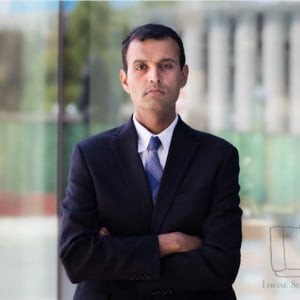
Managing Director, Berkeley Research Group (BRG)
Dr. Dasgupta served as Assistant Secretary for Trade and Economic Security, responsible for a comprehensive national security portfolio. His duties included oversight of the Committee on Foreign Investment in the United States (CFIUS), Team Telecom, the Forced Labor Enforcement Task Force (FLETF), Information and Communications Technology and Services (ICTS), Arctic security initiatives, the Icebreaker Collaboration Effort (ICE) Pact, and related trade matters. Sohan Dasgupta also served as political head of the Millennium Challenge Corporation (MCC), supporting U.S. foreign policy and national security objectives. Previously, he had served as Deputy General Counsel of the U.S. Department of Homeland Security (DHS).
Dr. Dasgupta holds a JD from the University of California, Berkeley, where he was elected to the Order of the Coif; a PhD in international trade and arbitration from the University of Cambridge; MSc from the University of Oxford; and BA in Economics–Operations Research and History from Columbia University. He commenced his legal career with clerkships on the U.S. Court of Appeals for the Ninth Circuit and the U.S. District Court for the Southern District of West Virginia.
Dr. Dasgupta has addressed the Hungarian, Romanian, and Guatemalan parliaments, and has spoken at the invitation of Members of the U.S. Congress, the British Parliament, the European Union Parliament, the Congress of the Philippines, and the Legislative Assembly of El Salvador.
Co-President, Stanford Student Chapter
Fellow, Center for Law and Biosciences, Stanford Law School
Roland Nadler is a 2015-2016 Fellow at the Center for Law and the Biosciences. He works on legal and ethical challenges posed by the increasing sophistication of neuroscience. In particular, he focuses on the conceptual evolution of legal doctrine in response to shifting popular and scientific understandings of the brain, encompassing issues of harm and injury, guilt and responsibility, autonomy and justice. Roland studied philosophy and cognitive science as an undergraduate at Harvard before working with the National Core for Neuroethics at the University of British Columbia, where he completed an MA in Interdisciplinary Studies. He recently completed his JD at Stanford Law School. Roland has served as a member of the Student & Postdoctoral Fellow Committee of the International Neuroethics Society since its formation, and previously worked as an external consultant with the MacArthur Research Network on Law & Neuroscience. In 2016, he will serve as a law clerk for the District of Maine.
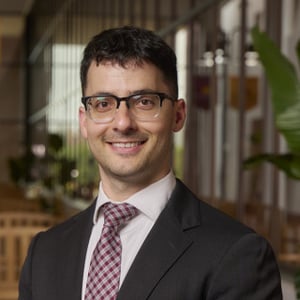
Professor, University of Minnesota Law School
Ilan Wurman is the Julius E. Davis Professor of Law at the University of Minnesota, where he teaches administrative law and constitutional law. He previously taught at Arizona State University. He writes primarily on the Fourteenth Amendment, administrative law, separation of powers, and constitutionalism. His academic writing has appeared in the Yale Law Journal, the Stanford Law Review, the University of Chicago Law Review, the University of Pennsylvania Law Review, the Virginia Law Review, the Duke Law Journal, the Minnesota Law Review, the Notre Dame Law Review, and the Texas Law Review among other journals.
Professor Wurman is the author of the new book The Constitution of 1789: A New Introduction (Cambridge 2026). His previous books include A Debt Against the Living: An Introduction to Originalism (Cambridge 2017), and The Second Founding: An Introduction to the Fourteenth Amendment (Cambridge 2020). He is also the author of the casebook, Administrative Law Theory and Fundamentals: An Integrated Approach (Foundation Press 3d ed. 2025).
Professor Wurman practices law with the firm Tully Bailey. He has litigated a variety of administrative law and constitutional law cases, including cases involving COVID-19 restrictions, transmission lines, and Appointments Clause challenges. He also devised winning public nuisance theories to force city governments to address the increasingly challenging public camping crises throughout the country.
Professor of Law & Helen L. Crocker Faculty Scholar, Stanford Law School
Jud Campbell joined the faculty of Stanford Law School in 2023. He previously served as a professor of law at the University of Richmond School of Law and as a visiting professor of law at the University of Chicago Law School and at Harvard Law School. His academic focus is constitutional history and First Amendment law. His publications include articles in the Stanford Law Review, Yale Law Journal, Harvard Law Review, Texas Law Review, Constitutional Commentary, and Law and History Review. After completing his J.D. at Stanford Law School, he clerked for Judge Diane S. Sykes on the U.S. Court of Appeals for the Seventh Circuit, and for Judge José A. Cabranes on the U.S. Court of Appeals for the Second Circuit. He then served as the Executive Director of the Stanford Constitutional Law Center. He holds a bachelor’s degree from the University of North Carolina at Chapel Hill and two master’s degrees from the London School of Economics, where he studied as a Marshall Scholar.
Managing Director, Berkeley Research Group (BRG)
Dr. Dasgupta served as Assistant Secretary for Trade and Economic Security, responsible for a comprehensive national security portfolio. His duties included oversight of the Committee on Foreign Investment in the United States (CFIUS), Team Telecom, the Forced Labor Enforcement Task Force (FLETF), Information and Communications Technology and Services (ICTS), Arctic security initiatives, the Icebreaker Collaboration Effort (ICE) Pact, and related trade matters. Sohan Dasgupta also served as political head of the Millennium Challenge Corporation (MCC), supporting U.S. foreign policy and national security objectives. Previously, he had served as Deputy General Counsel of the U.S. Department of Homeland Security (DHS).
Dr. Dasgupta holds a JD from the University of California, Berkeley, where he was elected to the Order of the Coif; a PhD in international trade and arbitration from the University of Cambridge; MSc from the University of Oxford; and BA in Economics–Operations Research and History from Columbia University. He commenced his legal career with clerkships on the U.S. Court of Appeals for the Ninth Circuit and the U.S. District Court for the Southern District of West Virginia.
Dr. Dasgupta has addressed the Hungarian, Romanian, and Guatemalan parliaments, and has spoken at the invitation of Members of the U.S. Congress, the British Parliament, the European Union Parliament, the Congress of the Philippines, and the Legislative Assembly of El Salvador.
Co-President, Stanford Student Chapter
Fellow, Center for Law and Biosciences, Stanford Law School
Roland Nadler is a 2015-2016 Fellow at the Center for Law and the Biosciences. He works on legal and ethical challenges posed by the increasing sophistication of neuroscience. In particular, he focuses on the conceptual evolution of legal doctrine in response to shifting popular and scientific understandings of the brain, encompassing issues of harm and injury, guilt and responsibility, autonomy and justice. Roland studied philosophy and cognitive science as an undergraduate at Harvard before working with the National Core for Neuroethics at the University of British Columbia, where he completed an MA in Interdisciplinary Studies. He recently completed his JD at Stanford Law School. Roland has served as a member of the Student & Postdoctoral Fellow Committee of the International Neuroethics Society since its formation, and previously worked as an external consultant with the MacArthur Research Network on Law & Neuroscience. In 2016, he will serve as a law clerk for the District of Maine.
Professor, University of Minnesota Law School
Ilan Wurman is the Julius E. Davis Professor of Law at the University of Minnesota, where he teaches administrative law and constitutional law. He previously taught at Arizona State University. He writes primarily on the Fourteenth Amendment, administrative law, separation of powers, and constitutionalism. His academic writing has appeared in the Yale Law Journal, the Stanford Law Review, the University of Chicago Law Review, the University of Pennsylvania Law Review, the Virginia Law Review, the Duke Law Journal, the Minnesota Law Review, the Notre Dame Law Review, and the Texas Law Review among other journals.
Professor Wurman is the author of the new book The Constitution of 1789: A New Introduction (Cambridge 2026). His previous books include A Debt Against the Living: An Introduction to Originalism (Cambridge 2017), and The Second Founding: An Introduction to the Fourteenth Amendment (Cambridge 2020). He is also the author of the casebook, Administrative Law Theory and Fundamentals: An Integrated Approach (Foundation Press 3d ed. 2025).
Professor Wurman practices law with the firm Tully Bailey. He has litigated a variety of administrative law and constitutional law cases, including cases involving COVID-19 restrictions, transmission lines, and Appointments Clause challenges. He also devised winning public nuisance theories to force city governments to address the increasingly challenging public camping crises throughout the country.

Panel 1: The Anti-Federalists at the Founding
John K. Bush, Jud Campbell, Lisa Ezell, Michelle Kundmueller, Roger Pilon, Michael B. Rappaport, Justin James Gilio
2020 Annual Western Chapters Conference
On January 25, 2020, the Federalist Society hosted its annual Western Chapters Conference at the...
Young Legal Scholars Paper Presentations
Jud Campbell, Richard A. Epstein, Jonathan Mitchell, Lochlan Shelfer, Megan Stevenson, Joshua C. Teitelbaum, Lael Weinberger
20th Annual Federalist Society Faculty Conference
The winners of our Young Legal Scholars Paper Competition will present their papers, and various...
Young Legal Scholars Paper Presentations
Jud Campbell, Richard A. Epstein, Jonathan Mitchell, Lochlan Shelfer, Megan Stevenson, Joshua C. Teitelbaum, Lael Weinberger
20th Annual Federalist Society Faculty Conference
The winners of our Young Legal Scholars Paper Competition will present their papers, and various...
Student Perspectives on Intellectual Diversity in Academia
Jud Campbell, Sohan Dasgupta, Jonathan Mondel, Roland Nadler, Ilan Wurman
Stanford Intellectual Diversity Conference
The proper education of America’s youth is arguably the most important social responsibility the university...
Student Perspectives on Intellectual Diversity in Academia
Jud Campbell, Sohan Dasgupta, Jonathan Mondel, Roland Nadler, Ilan Wurman
Stanford Intellectual Diversity Conference
The proper education of America’s youth is arguably the most important social responsibility the university...