
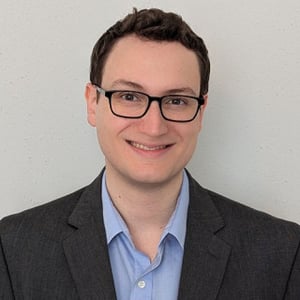
Assistant Professor of Law, The University of Houston Law Center
David Froomkin is an assistant professor of law at the University of Houston Law Center, with primary scholarly interests in administrative law, election law, and democratic and constitutional theory. His research focuses on the structure of government and of the democratic process, drawing on political science, political economy, and analysis of the text and structure of the Constitution. In addition to other ongoing projects, he is currently completing a book manuscript that develops a new conceptual and normative theory of the separation of powers as a government structure that can reinforce rather than vitiate legislative supremacy.
David received a B.A. from Columbia University in 2015, a J.D. from Yale Law School in 2022, and a Ph.D. (Political Science) from Yale University in 2024. Before joining the University of Houston Law Center, he also served as a Teaching Fellow and an Associate in Teaching at Yale. He currently teaches courses on election law, criminal law, and constitutional design.
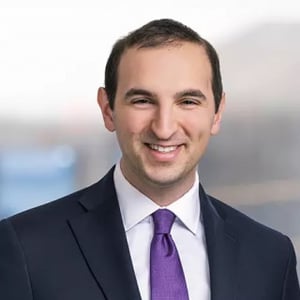
Associate, Covington & Burling LLP
Eli Nachmany is an associate at Covington & Burling LLP in the Washington, DC, office. He clerked for Judge Steven J. Menashi of the U.S. Court of Appeals for the Second Circuit. Eli graduated magna cum laude from Harvard Law School, where he was Editor-in-Chief of the Harvard Journal of Law & Public Policy. Prior to law school, Eli served as the speechwriter to the U.S. Secretary of the Interior and as a domestic policy aide in the White House Office of American Innovation. He graduated summa cum laude from New York University with a B.S. in Sports Management. Eli’s scholarship on administrative law and executive power has appeared in the BYU Law Review, George Mason Law Review, Wake Forest Law Review, and Yale Law Journal Forum.

Professor of Law, University of Michigan Law School
Christopher J. Walker is a Professor of Law at the University of Michigan. Prior to joining Michigan law faculty in 2022, he spent a decade teaching at The Ohio State University Moritz College of Law. He previously clerked for Justice Anthony Kennedy of the U.S. Supreme Court, worked on the Civil Appellate Staff at the U.S. Department of Justice, and served on the Senate Judiciary Committee staff for the Gorsuch Supreme Court confirmation. Professor Walker’s research focuses on administrative law, regulation, and law and policy at the agency level. Outside the law school, he chaired the American Bar Association’s Section of Administrative Law and Regulatory Practice in 2020-21 and served as one of forty Public Members of the Administrative Conference of the United States from 2016-2022, and he continues to serve in both organizations in various capacities. He also works of counsel at the U.S. Chamber Litigation Center. In 2022, he received the Federalist Society’s Joseph Story Award.
Assistant Professor of Law, The University of Houston Law Center
David Froomkin is an assistant professor of law at the University of Houston Law Center, with primary scholarly interests in administrative law, election law, and democratic and constitutional theory. His research focuses on the structure of government and of the democratic process, drawing on political science, political economy, and analysis of the text and structure of the Constitution. In addition to other ongoing projects, he is currently completing a book manuscript that develops a new conceptual and normative theory of the separation of powers as a government structure that can reinforce rather than vitiate legislative supremacy.
David received a B.A. from Columbia University in 2015, a J.D. from Yale Law School in 2022, and a Ph.D. (Political Science) from Yale University in 2024. Before joining the University of Houston Law Center, he also served as a Teaching Fellow and an Associate in Teaching at Yale. He currently teaches courses on election law, criminal law, and constitutional design.
Associate, Covington & Burling LLP
Eli Nachmany is an associate at Covington & Burling LLP in the Washington, DC, office. He clerked for Judge Steven J. Menashi of the U.S. Court of Appeals for the Second Circuit. Eli graduated magna cum laude from Harvard Law School, where he was Editor-in-Chief of the Harvard Journal of Law & Public Policy. Prior to law school, Eli served as the speechwriter to the U.S. Secretary of the Interior and as a domestic policy aide in the White House Office of American Innovation. He graduated summa cum laude from New York University with a B.S. in Sports Management. Eli’s scholarship on administrative law and executive power has appeared in the BYU Law Review, George Mason Law Review, Wake Forest Law Review, and Yale Law Journal Forum.
Professor of Law, University of Michigan Law School
Christopher J. Walker is a Professor of Law at the University of Michigan. Prior to joining Michigan law faculty in 2022, he spent a decade teaching at The Ohio State University Moritz College of Law. He previously clerked for Justice Anthony Kennedy of the U.S. Supreme Court, worked on the Civil Appellate Staff at the U.S. Department of Justice, and served on the Senate Judiciary Committee staff for the Gorsuch Supreme Court confirmation. Professor Walker’s research focuses on administrative law, regulation, and law and policy at the agency level. Outside the law school, he chaired the American Bar Association’s Section of Administrative Law and Regulatory Practice in 2020-21 and served as one of forty Public Members of the Administrative Conference of the United States from 2016-2022, and he continues to serve in both organizations in various capacities. He also works of counsel at the U.S. Chamber Litigation Center. In 2022, he received the Federalist Society’s Joseph Story Award.

Remedies in Presidential Removal Cases: A Shifting Landscape
David Froomkin, Eli Nachmany, Christopher J. Walker
The Supreme Court's decision in Collins v. Yellen represented a paradigm shift. Now, in cases...
Remedies in Presidential Removal Cases: A Shifting Landscape
David Froomkin, Eli Nachmany, Christopher J. Walker
The Supreme Court's decision in Collins v. Yellen represented a paradigm shift. Now, in cases...