
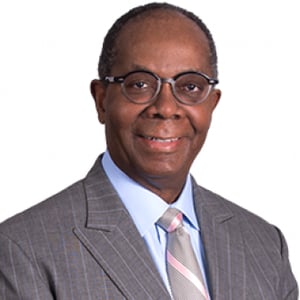
Managing Partner, Crabbe Brown & James LLP
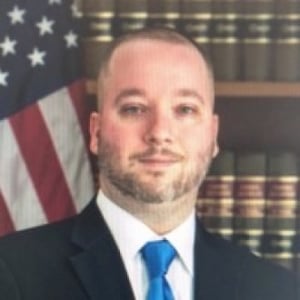
Larry James has been at the heart of the Columbus business, legal, civic, and political scene for the last thirty years. He is a respected litigator, as well as an advisor to local and national leaders. In recognition of his many achievements, the law firm changed its name from Crabbe, Brown, Jones, Potts & Schmidt to Crabbe, Brown & James in January 2001.
In 2011, The Ohio State University selected Mr. James as lead counsel to represent its student athletes in NCAA investigations. In 2013, Armen Keteyian published his book The System: The Glory and Scandal of Big-Time College Football, a chapter of which is dedicated to Larry’s work in representing the OSU football players.
In 2012, Mr. James and his wife, Donna, were awarded the American Red Cross of Greater Columbus’ Humanitarians of the Year Award. In 2015, noted journalist Wil Haygood published his award-winning book Showdown: Thurgood Marshall and the Supreme Court Nomination That Changed America, which he dedicated to Mr. James.
Mr. James is a life member of the Sixth Circuit Judicial Conference, and he has served as General Counsel of the National Fraternal Order of Police since 2001.

Senior Vice President for Legal Studies, Cato Institute
Clark Neily is senior vice president for legal studies at the Cato Institute. His areas of interest include constitutional law, overcriminalization, civil forfeiture, police accountability, and gun rights. Neily is the author of Terms of Engagement: How Our Courts Should Enforce the Constitution’s Promise of Limited Government. His writing has appeared in the Wall Street Journal, Forbes, and National Review Online, as well as various law reviews, including the Harvard Journal of Law and Public Policy, George Mason Law Review, Georgetown Journal of Law and Public Policy, NYU Journal of Law and Liberty, and Texas Review of Law and Politics. Neily is a frequent guest speaker and lecturer for the Federalist Society, Institute for Humane Studies, and American Constitution Society.
Before joining Cato in 2017, Neily was a senior attorney and constitutional litigator at the Institute for Justice and director of the Institute’s Center for Judicial Engagement. He is also an adjunct professor at the University of Texas School of Law, where he teaches constitutional litigation and public-interest law.
Neily served as co-counsel in District of Columbia v. Heller, the historic case in which the Supreme Court held for the first time that the Second Amendment protects an individual right to own a gun for self-defense.
Neily began his legal career as a law clerk to Judge Royce Lamberth on the U.S. District Court for the District of Columbia. After that he spent four years in the trial department of the Dallas-based firm Thompson & Knight. Neily received his undergraduate and law degrees from the University of Texas, where he was Chief Articles Editor of the Texas Law Review.
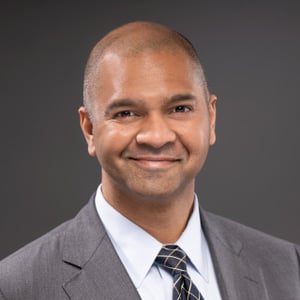
Senior Fellow, Stand Together Trust
Vikrant Reddy is a senior fellow at Stand Together Trust, specializing in the area of criminal justice reform. Reddy previously served as a senior policy analyst at the Texas Public Policy Foundation (TPPF), where he managed the launch of TPPF’s national Right on Crime initiative in 2010. He has worked as a research assistant at the Cato Institute, as a judicial clerk to the Hon. Gina M. Benavides in Texas, and as an attorney in private practice. He is a member of the State Bar of Texas, and he serves on the Executive Committee of the Criminal Law Practice Group of the Federalist Society. He is also an appointee to the U.S. Commission on Civil Rights Texas State Advisory Committee.
Reddy’s research and scholarly opinions have appeared in a range of national media outlets, including USA Today, National Review, The Federalist, and others.
Reddy earned his law degree from the Southern Methodist University School of Law. He received his undergraduate degree from the University of Texas at Austin.
Senior Vice President for Legal Studies, Cato Institute
Clark Neily is senior vice president for legal studies at the Cato Institute. His areas of interest include constitutional law, overcriminalization, civil forfeiture, police accountability, and gun rights. Neily is the author of Terms of Engagement: How Our Courts Should Enforce the Constitution’s Promise of Limited Government. His writing has appeared in the Wall Street Journal, Forbes, and National Review Online, as well as various law reviews, including the Harvard Journal of Law and Public Policy, George Mason Law Review, Georgetown Journal of Law and Public Policy, NYU Journal of Law and Liberty, and Texas Review of Law and Politics. Neily is a frequent guest speaker and lecturer for the Federalist Society, Institute for Humane Studies, and American Constitution Society.
Before joining Cato in 2017, Neily was a senior attorney and constitutional litigator at the Institute for Justice and director of the Institute’s Center for Judicial Engagement. He is also an adjunct professor at the University of Texas School of Law, where he teaches constitutional litigation and public-interest law.
Neily served as co-counsel in District of Columbia v. Heller, the historic case in which the Supreme Court held for the first time that the Second Amendment protects an individual right to own a gun for self-defense.
Neily began his legal career as a law clerk to Judge Royce Lamberth on the U.S. District Court for the District of Columbia. After that he spent four years in the trial department of the Dallas-based firm Thompson & Knight. Neily received his undergraduate and law degrees from the University of Texas, where he was Chief Articles Editor of the Texas Law Review.
Managing Partner, Crabbe Brown & James LLP
Larry James has been at the heart of the Columbus business, legal, civic, and political scene for the last thirty years. He is a respected litigator, as well as an advisor to local and national leaders. In recognition of his many achievements, the law firm changed its name from Crabbe, Brown, Jones, Potts & Schmidt to Crabbe, Brown & James in January 2001.
In 2011, The Ohio State University selected Mr. James as lead counsel to represent its student athletes in NCAA investigations. In 2013, Armen Keteyian published his book The System: The Glory and Scandal of Big-Time College Football, a chapter of which is dedicated to Larry’s work in representing the OSU football players.
In 2012, Mr. James and his wife, Donna, were awarded the American Red Cross of Greater Columbus’ Humanitarians of the Year Award. In 2015, noted journalist Wil Haygood published his award-winning book Showdown: Thurgood Marshall and the Supreme Court Nomination That Changed America, which he dedicated to Mr. James.
Mr. James is a life member of the Sixth Circuit Judicial Conference, and he has served as General Counsel of the National Fraternal Order of Police since 2001.
Senior Fellow, Stand Together Trust
Vikrant Reddy is a senior fellow at Stand Together Trust, specializing in the area of criminal justice reform. Reddy previously served as a senior policy analyst at the Texas Public Policy Foundation (TPPF), where he managed the launch of TPPF’s national Right on Crime initiative in 2010. He has worked as a research assistant at the Cato Institute, as a judicial clerk to the Hon. Gina M. Benavides in Texas, and as an attorney in private practice. He is a member of the State Bar of Texas, and he serves on the Executive Committee of the Criminal Law Practice Group of the Federalist Society. He is also an appointee to the U.S. Commission on Civil Rights Texas State Advisory Committee.
Reddy’s research and scholarly opinions have appeared in a range of national media outlets, including USA Today, National Review, The Federalist, and others.
Reddy earned his law degree from the Southern Methodist University School of Law. He received his undergraduate degree from the University of Texas at Austin.
Managing Partner, Crabbe Brown & James LLP
Larry James has been at the heart of the Columbus business, legal, civic, and political scene for the last thirty years. He is a respected litigator, as well as an advisor to local and national leaders. In recognition of his many achievements, the law firm changed its name from Crabbe, Brown, Jones, Potts & Schmidt to Crabbe, Brown & James in January 2001.
In 2011, The Ohio State University selected Mr. James as lead counsel to represent its student athletes in NCAA investigations. In 2013, Armen Keteyian published his book The System: The Glory and Scandal of Big-Time College Football, a chapter of which is dedicated to Larry’s work in representing the OSU football players.
In 2012, Mr. James and his wife, Donna, were awarded the American Red Cross of Greater Columbus’ Humanitarians of the Year Award. In 2015, noted journalist Wil Haygood published his award-winning book Showdown: Thurgood Marshall and the Supreme Court Nomination That Changed America, which he dedicated to Mr. James.
Mr. James is a life member of the Sixth Circuit Judicial Conference, and he has served as General Counsel of the National Fraternal Order of Police since 2001.
Senior Vice President for Legal Studies, Cato Institute
Clark Neily is senior vice president for legal studies at the Cato Institute. His areas of interest include constitutional law, overcriminalization, civil forfeiture, police accountability, and gun rights. Neily is the author of Terms of Engagement: How Our Courts Should Enforce the Constitution’s Promise of Limited Government. His writing has appeared in the Wall Street Journal, Forbes, and National Review Online, as well as various law reviews, including the Harvard Journal of Law and Public Policy, George Mason Law Review, Georgetown Journal of Law and Public Policy, NYU Journal of Law and Liberty, and Texas Review of Law and Politics. Neily is a frequent guest speaker and lecturer for the Federalist Society, Institute for Humane Studies, and American Constitution Society.
Before joining Cato in 2017, Neily was a senior attorney and constitutional litigator at the Institute for Justice and director of the Institute’s Center for Judicial Engagement. He is also an adjunct professor at the University of Texas School of Law, where he teaches constitutional litigation and public-interest law.
Neily served as co-counsel in District of Columbia v. Heller, the historic case in which the Supreme Court held for the first time that the Second Amendment protects an individual right to own a gun for self-defense.
Neily began his legal career as a law clerk to Judge Royce Lamberth on the U.S. District Court for the District of Columbia. After that he spent four years in the trial department of the Dallas-based firm Thompson & Knight. Neily received his undergraduate and law degrees from the University of Texas, where he was Chief Articles Editor of the Texas Law Review.
Senior Fellow, Stand Together Trust
Vikrant Reddy is a senior fellow at Stand Together Trust, specializing in the area of criminal justice reform. Reddy previously served as a senior policy analyst at the Texas Public Policy Foundation (TPPF), where he managed the launch of TPPF’s national Right on Crime initiative in 2010. He has worked as a research assistant at the Cato Institute, as a judicial clerk to the Hon. Gina M. Benavides in Texas, and as an attorney in private practice. He is a member of the State Bar of Texas, and he serves on the Executive Committee of the Criminal Law Practice Group of the Federalist Society. He is also an appointee to the U.S. Commission on Civil Rights Texas State Advisory Committee.
Reddy’s research and scholarly opinions have appeared in a range of national media outlets, including USA Today, National Review, The Federalist, and others.
Reddy earned his law degree from the Southern Methodist University School of Law. He received his undergraduate degree from the University of Texas at Austin.
Senior Fellow, Stand Together Trust
Vikrant Reddy is a senior fellow at Stand Together Trust, specializing in the area of criminal justice reform. Reddy previously served as a senior policy analyst at the Texas Public Policy Foundation (TPPF), where he managed the launch of TPPF’s national Right on Crime initiative in 2010. He has worked as a research assistant at the Cato Institute, as a judicial clerk to the Hon. Gina M. Benavides in Texas, and as an attorney in private practice. He is a member of the State Bar of Texas, and he serves on the Executive Committee of the Criminal Law Practice Group of the Federalist Society. He is also an appointee to the U.S. Commission on Civil Rights Texas State Advisory Committee.
Reddy’s research and scholarly opinions have appeared in a range of national media outlets, including USA Today, National Review, The Federalist, and others.
Reddy earned his law degree from the Southern Methodist University School of Law. He received his undergraduate degree from the University of Texas at Austin.
Senior Vice President for Legal Studies, Cato Institute
Clark Neily is senior vice president for legal studies at the Cato Institute. His areas of interest include constitutional law, overcriminalization, civil forfeiture, police accountability, and gun rights. Neily is the author of Terms of Engagement: How Our Courts Should Enforce the Constitution’s Promise of Limited Government. His writing has appeared in the Wall Street Journal, Forbes, and National Review Online, as well as various law reviews, including the Harvard Journal of Law and Public Policy, George Mason Law Review, Georgetown Journal of Law and Public Policy, NYU Journal of Law and Liberty, and Texas Review of Law and Politics. Neily is a frequent guest speaker and lecturer for the Federalist Society, Institute for Humane Studies, and American Constitution Society.
Before joining Cato in 2017, Neily was a senior attorney and constitutional litigator at the Institute for Justice and director of the Institute’s Center for Judicial Engagement. He is also an adjunct professor at the University of Texas School of Law, where he teaches constitutional litigation and public-interest law.
Neily served as co-counsel in District of Columbia v. Heller, the historic case in which the Supreme Court held for the first time that the Second Amendment protects an individual right to own a gun for self-defense.
Neily began his legal career as a law clerk to Judge Royce Lamberth on the U.S. District Court for the District of Columbia. After that he spent four years in the trial department of the Dallas-based firm Thompson & Knight. Neily received his undergraduate and law degrees from the University of Texas, where he was Chief Articles Editor of the Texas Law Review.
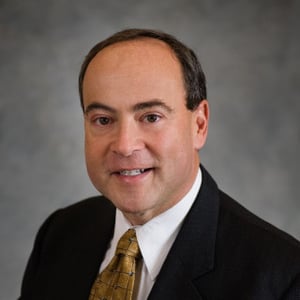
Justice, Supreme Court of Arizona
Clint Bolick was appointed by Governor Doug Ducey in January 2016 to serve on the Arizona Supreme Court and was retained by the voters in 2018 and 2024.
Prior to joining the Court, Justice Bolick litigated constitutional cases in state and federal courts from coast to coast, including the U.S. Supreme Court. Among other positions, he served as Vice President for Litigation at the Goldwater Institute and as Co-founder and Vice President for Litigation at the Institute for Justice. He has litigated in support of school choice, freedom of enterprise, private property rights, freedom of speech, and federalism, and against racial classifications and government subsidies.
Justice Bolick received his Juris Doctor degree from the University of California at Davis, where he has been recognized as a distinguished alumnus, and his Bachelor of Arts degree magna cum laude from Drew University. He serves as a research fellow with the Hoover Institution. Among other honors, he was named one of the 90 Greatest DC Lawyers in the Last 30 Years by Legal Times in 2008, received a Bradley Prize in 2006, and was recognized as one of the nation’s three lawyers of the year by American Lawyer in 2002 for his successful defense of school vouchers in Zelman v. Simmons-Harris.
Justice Bolick is a prolific author of a dozen books and hundreds of articles. Among his most recent books are Unshackled: Freeing America’s K-12 Education System: Immigration Wars: Forging an American Solution, co-authored with former Florida Governor Jeb Bush; and David’s Hammer: The Case for an Activist Judiciary. Bolick serves as an adjunct professor of constitutional law at Arizona State University’s Sandra Day O’Connor School of Law and has served as a lecturer at Harvard University’s John F. Kennedy School of Government.
Senior Vice President for Legal Studies, Cato Institute
Clark Neily is senior vice president for legal studies at the Cato Institute. His areas of interest include constitutional law, overcriminalization, civil forfeiture, police accountability, and gun rights. Neily is the author of Terms of Engagement: How Our Courts Should Enforce the Constitution’s Promise of Limited Government. His writing has appeared in the Wall Street Journal, Forbes, and National Review Online, as well as various law reviews, including the Harvard Journal of Law and Public Policy, George Mason Law Review, Georgetown Journal of Law and Public Policy, NYU Journal of Law and Liberty, and Texas Review of Law and Politics. Neily is a frequent guest speaker and lecturer for the Federalist Society, Institute for Humane Studies, and American Constitution Society.
Before joining Cato in 2017, Neily was a senior attorney and constitutional litigator at the Institute for Justice and director of the Institute’s Center for Judicial Engagement. He is also an adjunct professor at the University of Texas School of Law, where he teaches constitutional litigation and public-interest law.
Neily served as co-counsel in District of Columbia v. Heller, the historic case in which the Supreme Court held for the first time that the Second Amendment protects an individual right to own a gun for self-defense.
Neily began his legal career as a law clerk to Judge Royce Lamberth on the U.S. District Court for the District of Columbia. After that he spent four years in the trial department of the Dallas-based firm Thompson & Knight. Neily received his undergraduate and law degrees from the University of Texas, where he was Chief Articles Editor of the Texas Law Review.
Former Adjunct Professor of Law; former Special Counsel to the President; former federal prosecutor, Georgetown Law (ret.)
Bill Otis is a former Adjunct Professor of Law at Georgetown University, a one-time federal prosecutor, and a former Special White House Counsel for President George H. W. Bush. After graduating from Stanford Law School, he started his career in the Criminal Division of the Justice Department, then became chief of appeals for the US Attorney's Office for the Eastern District of Virginia. In the 1980's he served on the Department's "Train the Trainer" team, which taught US Attorneys Offices across the county how to implement the then-new Sentencing Reform Act. He has held several posts in the federal government, including Special Assistant to the Secretary of Energy and Counselor to the head of the Drug Enforcement Administration, in addition to the White House post. He has testified before Congress on issues in criminal procedure, illegal drugs, the US Sentencing Commission, and the death penalty, and has given numerous media interviews on those and other subjects. He currently teaches a seminar at Georgetown Law titled "Conservatism in Law in America" with his wife, Federalist Society co-founder Lee Liberman Otis.
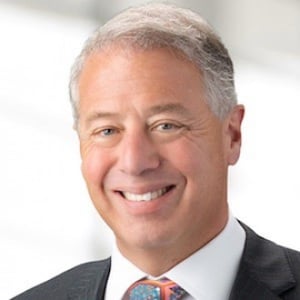
Founding and Managing Partner, Kabateck LLP
As a nationally recognized and respected consumer attorney, Brian Kabateck is a preeminent leader in the fight to ensure access to the justice system. He’s a powerful advocate in the courtroom and at the California State Capitol for consumers’ rights and protections. Formerly, Mr. Kabateck was President of the Consumer Attorneys of California and the Los Angeles County Bar Association.
Mr. Kabateck’s vigorous litigation on behalf of his clients has netted more than a billion dollars in recoveries. He has won many multi-million dollar verdicts, judgments and settlements in the areas of personal injury, insurance bad faith, pharmaceutical litigation, wrongful death, class action, mass torts and disaster litigation.
Because of his deep knowledge of the law and dynamic speaking style, Mr. Kabateck is a frequent analyst for national, local and legal media outlets. He makes regular appearances on CNN, MSNBC, CBS, NBC, ABC, FOX and CW stations. In addition to his television exposure, Mr. Kabateck often speaks at seminars, law schools and industry events.
As the former President of the Consumer Attorneys of California, Mr. Kabateck drew on his strong leadership abilities to bring change to some of the state’s most contentious problems. Under his direction, he brokered a consensus on issues including protecting patient safety and court funding. He has worked tirelessly with the California Legislature and California Department of Insurance to draft many laws for some of the state’s largest industries.
Mr. Kabateck’s ability to straddle the legal and political world has made him a strategic and outspoken advocate for consumer and patient rights. In November, voters will decide whether to overturn the decades old MICRA law which caps non-economic damages at $250,000. Mr. Kabateck is a leader in the fight to lift this outdated and misguided law that deprives the state’s most vulnerable victims from getting the compensation they deserve in medical malpractice cases.
Mr. Kabateck has extensive experience in all judicial forums throughout California. He has argued cases before the California State Supreme Court, California Court of Appeal, Ninth Circuit Court of Appeals, and the Federal Circuit Court of Appeals.
Senior Vice President for Legal Studies, Cato Institute
Clark Neily is senior vice president for legal studies at the Cato Institute. His areas of interest include constitutional law, overcriminalization, civil forfeiture, police accountability, and gun rights. Neily is the author of Terms of Engagement: How Our Courts Should Enforce the Constitution’s Promise of Limited Government. His writing has appeared in the Wall Street Journal, Forbes, and National Review Online, as well as various law reviews, including the Harvard Journal of Law and Public Policy, George Mason Law Review, Georgetown Journal of Law and Public Policy, NYU Journal of Law and Liberty, and Texas Review of Law and Politics. Neily is a frequent guest speaker and lecturer for the Federalist Society, Institute for Humane Studies, and American Constitution Society.
Before joining Cato in 2017, Neily was a senior attorney and constitutional litigator at the Institute for Justice and director of the Institute’s Center for Judicial Engagement. He is also an adjunct professor at the University of Texas School of Law, where he teaches constitutional litigation and public-interest law.
Neily served as co-counsel in District of Columbia v. Heller, the historic case in which the Supreme Court held for the first time that the Second Amendment protects an individual right to own a gun for self-defense.
Neily began his legal career as a law clerk to Judge Royce Lamberth on the U.S. District Court for the District of Columbia. After that he spent four years in the trial department of the Dallas-based firm Thompson & Knight. Neily received his undergraduate and law degrees from the University of Texas, where he was Chief Articles Editor of the Texas Law Review.
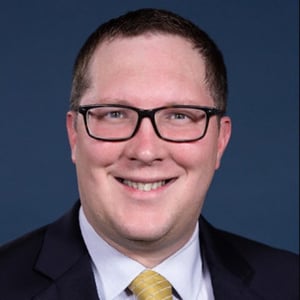
Attorney, Pacific Legal Foundation
Luke A. Wake is an attorney at the Pacific Legal Foundation. Prior to joining PLF, he was a senior staff attorney at the NFIB Small Business Legal Center.
Wake has particular expertise on environmental and land use issues, and has worked on numerous other constitutional issues and matters of importance to small business owners. He is an ardent defender of private property rights, which he believes are essential to the free enterprise system and the foundation of American liberty. As a strong advocate of individual rights and economic liberties, he has built his career defending small business interests.
Wake has focused on a whole host of issues, from employment law matters to regulatory compliance. In addition to serving as a resource for small business owners, Wake is committed to ensuring that the voice of small business is heard in the nation’s courts. As an appellate practitioner, Wake has focused particularly on informing the courts on matters of administrative law and on issues under the Fifth Amendment’s Takings Clause. He is also working to advance small business interests in law review articles, and was recently published in the Berkeley Journal of Law & Ecology. See R.S. Radford & Luke A. Wake, Deciphering and Extrapolating: Searching for Sense in Penn Central, 38 Ecology L.Q. 731, 746-747 (2011).
Before joining the Legal Center’s team, Wake completed a prestigious two-year fellowship as an attorney in the Pacific Legal Foundation’s College of Public Interest Law. Wake is a graduate of Case Western Reserve University School of Law in Cleveland Ohio, and is a member of the California Bar. He completed his undergraduate studies at Elon University in North Carolina in 2006 where he focused on political theory and corporate communications.
Senior Vice President for Legal Studies, Cato Institute
Clark Neily is senior vice president for legal studies at the Cato Institute. His areas of interest include constitutional law, overcriminalization, civil forfeiture, police accountability, and gun rights. Neily is the author of Terms of Engagement: How Our Courts Should Enforce the Constitution’s Promise of Limited Government. His writing has appeared in the Wall Street Journal, Forbes, and National Review Online, as well as various law reviews, including the Harvard Journal of Law and Public Policy, George Mason Law Review, Georgetown Journal of Law and Public Policy, NYU Journal of Law and Liberty, and Texas Review of Law and Politics. Neily is a frequent guest speaker and lecturer for the Federalist Society, Institute for Humane Studies, and American Constitution Society.
Before joining Cato in 2017, Neily was a senior attorney and constitutional litigator at the Institute for Justice and director of the Institute’s Center for Judicial Engagement. He is also an adjunct professor at the University of Texas School of Law, where he teaches constitutional litigation and public-interest law.
Neily served as co-counsel in District of Columbia v. Heller, the historic case in which the Supreme Court held for the first time that the Second Amendment protects an individual right to own a gun for self-defense.
Neily began his legal career as a law clerk to Judge Royce Lamberth on the U.S. District Court for the District of Columbia. After that he spent four years in the trial department of the Dallas-based firm Thompson & Knight. Neily received his undergraduate and law degrees from the University of Texas, where he was Chief Articles Editor of the Texas Law Review.
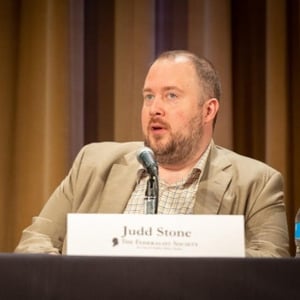
Stone Hilton, Founding Partner
A founding partner of Stone Hilton, Judd Stone is well respected both in Texas and across the nation as an insightful and tenacious appellate litigator. A lifelong Texan, Judd has argued dozens of appeals in both federal and state court, including arguing eight cases before the United States Supreme Court.
Judd began his legal career clerking for United States Supreme Court Justice Antonin Scalia and Fifth Circuit Chief Judge Edith H. Jones. With a J.D. from Northwestern University School of Law where he graduated first in his class, Judd's academic and professional credentials place him among the most distinguished lawyers in the profession. At the helm of countless major legal battles and emergency appeals for the State of Texas, Judd's deep understanding of the law and persuasive advocacy have been instrumental in shaping legal precedents. His tenure as the Solicitor General of Texas is a testament to his expertise and the trust placed in him by high-ranking state officials. Judd's strategic prowess extends beyond the courtroom; his advisory roles have made him a respected figure among policymakers.
His contributions to Stone Hilton and the legal community are characterized by his meticulous approach to cases, his acumen as a counselor, and his unwavering commitment to justice. As a partner at Stone Hilton, Judd continues to apply his formidable talents to advocate for his clients with the utmost dedication and to uphold the pillars of integrity and excellence that the firm stands for.
Senior Vice President for Legal Studies, Cato Institute
Clark Neily is senior vice president for legal studies at the Cato Institute. His areas of interest include constitutional law, overcriminalization, civil forfeiture, police accountability, and gun rights. Neily is the author of Terms of Engagement: How Our Courts Should Enforce the Constitution’s Promise of Limited Government. His writing has appeared in the Wall Street Journal, Forbes, and National Review Online, as well as various law reviews, including the Harvard Journal of Law and Public Policy, George Mason Law Review, Georgetown Journal of Law and Public Policy, NYU Journal of Law and Liberty, and Texas Review of Law and Politics. Neily is a frequent guest speaker and lecturer for the Federalist Society, Institute for Humane Studies, and American Constitution Society.
Before joining Cato in 2017, Neily was a senior attorney and constitutional litigator at the Institute for Justice and director of the Institute’s Center for Judicial Engagement. He is also an adjunct professor at the University of Texas School of Law, where he teaches constitutional litigation and public-interest law.
Neily served as co-counsel in District of Columbia v. Heller, the historic case in which the Supreme Court held for the first time that the Second Amendment protects an individual right to own a gun for self-defense.
Neily began his legal career as a law clerk to Judge Royce Lamberth on the U.S. District Court for the District of Columbia. After that he spent four years in the trial department of the Dallas-based firm Thompson & Knight. Neily received his undergraduate and law degrees from the University of Texas, where he was Chief Articles Editor of the Texas Law Review.
Stone Hilton, Founding Partner
A founding partner of Stone Hilton, Judd Stone is well respected both in Texas and across the nation as an insightful and tenacious appellate litigator. A lifelong Texan, Judd has argued dozens of appeals in both federal and state court, including arguing eight cases before the United States Supreme Court.
Judd began his legal career clerking for United States Supreme Court Justice Antonin Scalia and Fifth Circuit Chief Judge Edith H. Jones. With a J.D. from Northwestern University School of Law where he graduated first in his class, Judd's academic and professional credentials place him among the most distinguished lawyers in the profession. At the helm of countless major legal battles and emergency appeals for the State of Texas, Judd's deep understanding of the law and persuasive advocacy have been instrumental in shaping legal precedents. His tenure as the Solicitor General of Texas is a testament to his expertise and the trust placed in him by high-ranking state officials. Judd's strategic prowess extends beyond the courtroom; his advisory roles have made him a respected figure among policymakers.
His contributions to Stone Hilton and the legal community are characterized by his meticulous approach to cases, his acumen as a counselor, and his unwavering commitment to justice. As a partner at Stone Hilton, Judd continues to apply his formidable talents to advocate for his clients with the utmost dedication and to uphold the pillars of integrity and excellence that the firm stands for.

Anne Shea Ransdell and William Garland "Buck" Ransdell, Jr. Distinguished Professor of Law, University of North Carolina School of Law
Carissa Byrne Hessick joined the Carolina Law faculty in 2016. She serves as the Anne Shea Ransdell and William Garland “Buck” Ransdell, Jr. Distinguished Professor of Law and as the director of the Prosecutors and Politics Project. Her teaching and research interests include criminal law, the structure of the criminal justice system, criminal sentencing, and child pornography crimes. Hessick is the author of multiple law review articles, essays, and op eds on plea bargaining, the powers and selection of prosecutors, Sixth Amendment sentencing rights, and criminal statutes. Her work has appeared in the California Law Review, the Cornell Law Review, the L.A. Times, the UCLA Law Review, and the Virginia Law Review, among others. She founded the Prosecutors and Politics Project in 2018. And she currently serves as the Reporter for the ABA Criminal Justice Section’s Sentencing Standards Task Force.
Hessick attended Yale Law School, where she was an editor of the Yale Law Journal and winner of the Potter Stewart Prize for the Morris Tyler Moot Court of Appeals. After graduating from law school, she clerked for Judge Barbara S. Jones on the Southern District of New York and for Judge A. Raymond Randolph on the D.C. Circuit. She also worked as a litigation associate at Wachtell, Lipton, Rosen & Katz in New York City. Before joining the faculty at Carolina Law, Hessick taught on the faculties at Arizona State University’s Sandra Day O’Connor College of Law and the University of Utah’s S.J. Quinney College of Law. She also spent two years as a Climenko Fellow at Harvard Law School.
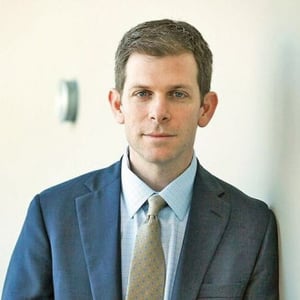
Criminal Trial and Appellate Lawyer, Markus/ Moss
David Oscar Markus is a magna cum laude graduate of Harvard Law School. David is known for his creative and unrelenting approach to cases, which leads to wins in trials and appeals. David focuses on high-stakes criminal litigation for both white collar and traditional criminal matters.
Best Lawyers named David “Lawyer of the Year” for White Collar Criminal Law in 2020 and for General Criminal Defense in 2017. And the Dade County Bar Association awarded him the “Legal Luminary” award for criminal defense, an honor voted on by members of the legal community. In 2015, the National Law Journal selected him as one of the Trailblazers for White Collar Criminal Defense in the entire country. Back when he was 29 years old (in 2002), the National Law Journal selected him as one of the top 40 litigators in the country under 40 years old, and it has recognized one of his federal trial victories as one of the top ten defense verdicts in the country that year.
In one trial victory, David not only beat all 141 counts in federal court for a doctor, but then won attorneys’ fees and costs of over $600,000 for his client in a first-of-its-kind victory. Based on that case, he was awarded the highest honor — the Rodney Thaxton “against all odds” award — by the Florida Association of Criminal Defense Lawyers. Although the 11th Circuit reversed the fee award in a number of controversial opinions, the court referred to Markus as an “elite” and “superb” attorney. In another case, David challenged the way the federal court system in Miami selected jurors (alphabetically by last name) and won, which changed the jury selection process in the District. After obtaining a fair jury, Markus’ client was found not guilty. He never stops fighting for his clients.
Based on this type of creative and unique lawyering, in 2010, David was one of eight finalists in the country for best white-collar criminal lawyer in the country by Chambers & Partners, which quoted market sources saying that David is “the whole package,” and “a creative, courageous and tenacious courtroom advocate.” And he was named to that very prestigious short list of 8 best white-collar criminal defense lawyers again in 2011 (he was the only lawyer listed who was not from a large firm). The 2012 Chambers said this: “David Markus received strong praise from peers and clients alike, who describe him as ‘a legal genius and brilliant strategist with a great demeanor.'” A recent Chambers & Partners described David as a “wickedly smart and a terrific trial lawyer. … Clients say that he is ‘thrilling’ to watch in court and that ‘his passion appreciation and enjoyment for his work are contagious.” And in 2014, that publication identified David as “one of the best trial lawyers around: very smart, highly respected and thoroughly prepared.” In 2016, Chambers said: “David Markus is one of the most talented criminal defense lawyers in Florida. He has a wealth of litigation experience and is regularly sought after for his counsel in high-stakes tax and criminal antitrust cases. Sources also describe him as an ‘extremely creative thinker and a great oral advocate’ who gets ‘tremendous results.'” Chambers has also explained: “David Markus is amazing, not only because of the strength and genius of his arguments and motions, but also because of his brilliant and astonishing performances during the hearings. Additionally, he radiates so much confidence, and that in itself soothes the usual anguish and anxiety that you endure during these types of situations. Last but not least, he is such a great human being.” In 2020, that publication said that David “is an exceptional trial lawyer,” “an incredible oral advocate” and that “he’s pretty fearless in terms of dealing with the government.”
Since 2010, David has been listed as one of the top 100 lawyers in Miami and in all of Florida by SuperLawyers. He is one of the few criminal defense lawyers to received such an honor. He is frequently named as one of the top lawyers in the Best Lawyers in America, South Florida Legal Guide, Florida Trend Magazine, Chambers & Partners, and the South Florida Business Journal. He was one of 20 lawyers named a key partner by the South Florida Business Journal in 2011 and again in 2012. The Daily Business Review named him a finalist for Most Effective Lawyer in Criminal Justice (one of three lawyers in Miami) in 2006, 2009, 2011, 2012, and 2015. He won the award in 2018. The district judges in the Southern District of Florida presented him with the Eugene Spellman Criminal Justice Act Award in 2013.
While at Harvard, David argued in front of Supreme Court Justice Anthony Kennedy who named him best oralist. David was mentored by Alan Dershowitz while in law school. After graduating from Harvard, David served as law clerk to the Honorable Edward B. Davis, then-Chief United States District Judge, Southern District of Florida. Following his clerkship, David worked as an associate at the leading criminal defense firm in the country, Williams & Connolly in Washington, D.C., and then practiced as an Assistant Federal Public Defender in Miami.
David is a past-president of the Florida Association of Criminal Defense Lawyers – Miami Chapter and past-president of the Federal Bar Association, South Florida Chapter, 2007-08. He served for ten years as the Southern District of Florida’s national representative for the Criminal Justice Act Panel, and is the vice-chair of the National Association of Criminal Defense Lawyer’s amicus committee. David also has co-authored the Fourth Amendment Forum, published in NACDL’s The Champion. He is frequently asked to serve on committees for the Southern District of Florida.
David frequently lectures on different aspects of the criminal trial and appeal. He currently teaches a White Collar Law seminar the the University of Miami School of Law and previously taught legal writing there. David also has taught Advanced Criminal Procedure and White Collar Law at Florida International University College of Law. He often speaks to other criminal defense lawyers on ethics and zealously representing criminal defendants charged with serious crimes. His lengthy list of lectures can be found on his resume.
David is often quoted in publications around the country, including The Miami Herald, The Sun-Sentinel, The Palm Beach Post, the Daily Business Review, USA Today, The New York Times, The Wall Street Journal, The Boston Globe, Law.com, and CNN.com. He has written opinion pieces for numerous publications, and is the author of the popular Southern District of Florida blog, which has been described by the New Times as “the definitive source on South Florida’s federal court system.” He recently wrote a chapter in a book for lawyers; his chapter was titled “Battling Goliath, Trying to Win in the Court of Appeals.” David is also a frequent opinion contributor, arguing for criminal justice reform and for individual rights. He has written pieces in the Washington Post, USA Today, Miami Herald, law.com Newsmax, and others.
Senior Vice President for Legal Studies, Cato Institute
Clark Neily is senior vice president for legal studies at the Cato Institute. His areas of interest include constitutional law, overcriminalization, civil forfeiture, police accountability, and gun rights. Neily is the author of Terms of Engagement: How Our Courts Should Enforce the Constitution’s Promise of Limited Government. His writing has appeared in the Wall Street Journal, Forbes, and National Review Online, as well as various law reviews, including the Harvard Journal of Law and Public Policy, George Mason Law Review, Georgetown Journal of Law and Public Policy, NYU Journal of Law and Liberty, and Texas Review of Law and Politics. Neily is a frequent guest speaker and lecturer for the Federalist Society, Institute for Humane Studies, and American Constitution Society.
Before joining Cato in 2017, Neily was a senior attorney and constitutional litigator at the Institute for Justice and director of the Institute’s Center for Judicial Engagement. He is also an adjunct professor at the University of Texas School of Law, where he teaches constitutional litigation and public-interest law.
Neily served as co-counsel in District of Columbia v. Heller, the historic case in which the Supreme Court held for the first time that the Second Amendment protects an individual right to own a gun for self-defense.
Neily began his legal career as a law clerk to Judge Royce Lamberth on the U.S. District Court for the District of Columbia. After that he spent four years in the trial department of the Dallas-based firm Thompson & Knight. Neily received his undergraduate and law degrees from the University of Texas, where he was Chief Articles Editor of the Texas Law Review.
Anne Shea Ransdell and William Garland "Buck" Ransdell, Jr. Distinguished Professor of Law, University of North Carolina School of Law
Carissa Byrne Hessick joined the Carolina Law faculty in 2016. She serves as the Anne Shea Ransdell and William Garland “Buck” Ransdell, Jr. Distinguished Professor of Law and as the director of the Prosecutors and Politics Project. Her teaching and research interests include criminal law, the structure of the criminal justice system, criminal sentencing, and child pornography crimes. Hessick is the author of multiple law review articles, essays, and op eds on plea bargaining, the powers and selection of prosecutors, Sixth Amendment sentencing rights, and criminal statutes. Her work has appeared in the California Law Review, the Cornell Law Review, the L.A. Times, the UCLA Law Review, and the Virginia Law Review, among others. She founded the Prosecutors and Politics Project in 2018. And she currently serves as the Reporter for the ABA Criminal Justice Section’s Sentencing Standards Task Force.
Hessick attended Yale Law School, where she was an editor of the Yale Law Journal and winner of the Potter Stewart Prize for the Morris Tyler Moot Court of Appeals. After graduating from law school, she clerked for Judge Barbara S. Jones on the Southern District of New York and for Judge A. Raymond Randolph on the D.C. Circuit. She also worked as a litigation associate at Wachtell, Lipton, Rosen & Katz in New York City. Before joining the faculty at Carolina Law, Hessick taught on the faculties at Arizona State University’s Sandra Day O’Connor College of Law and the University of Utah’s S.J. Quinney College of Law. She also spent two years as a Climenko Fellow at Harvard Law School.
Criminal Trial and Appellate Lawyer, Markus/ Moss
David Oscar Markus is a magna cum laude graduate of Harvard Law School. David is known for his creative and unrelenting approach to cases, which leads to wins in trials and appeals. David focuses on high-stakes criminal litigation for both white collar and traditional criminal matters.
Best Lawyers named David “Lawyer of the Year” for White Collar Criminal Law in 2020 and for General Criminal Defense in 2017. And the Dade County Bar Association awarded him the “Legal Luminary” award for criminal defense, an honor voted on by members of the legal community. In 2015, the National Law Journal selected him as one of the Trailblazers for White Collar Criminal Defense in the entire country. Back when he was 29 years old (in 2002), the National Law Journal selected him as one of the top 40 litigators in the country under 40 years old, and it has recognized one of his federal trial victories as one of the top ten defense verdicts in the country that year.
In one trial victory, David not only beat all 141 counts in federal court for a doctor, but then won attorneys’ fees and costs of over $600,000 for his client in a first-of-its-kind victory. Based on that case, he was awarded the highest honor — the Rodney Thaxton “against all odds” award — by the Florida Association of Criminal Defense Lawyers. Although the 11th Circuit reversed the fee award in a number of controversial opinions, the court referred to Markus as an “elite” and “superb” attorney. In another case, David challenged the way the federal court system in Miami selected jurors (alphabetically by last name) and won, which changed the jury selection process in the District. After obtaining a fair jury, Markus’ client was found not guilty. He never stops fighting for his clients.
Based on this type of creative and unique lawyering, in 2010, David was one of eight finalists in the country for best white-collar criminal lawyer in the country by Chambers & Partners, which quoted market sources saying that David is “the whole package,” and “a creative, courageous and tenacious courtroom advocate.” And he was named to that very prestigious short list of 8 best white-collar criminal defense lawyers again in 2011 (he was the only lawyer listed who was not from a large firm). The 2012 Chambers said this: “David Markus received strong praise from peers and clients alike, who describe him as ‘a legal genius and brilliant strategist with a great demeanor.'” A recent Chambers & Partners described David as a “wickedly smart and a terrific trial lawyer. … Clients say that he is ‘thrilling’ to watch in court and that ‘his passion appreciation and enjoyment for his work are contagious.” And in 2014, that publication identified David as “one of the best trial lawyers around: very smart, highly respected and thoroughly prepared.” In 2016, Chambers said: “David Markus is one of the most talented criminal defense lawyers in Florida. He has a wealth of litigation experience and is regularly sought after for his counsel in high-stakes tax and criminal antitrust cases. Sources also describe him as an ‘extremely creative thinker and a great oral advocate’ who gets ‘tremendous results.'” Chambers has also explained: “David Markus is amazing, not only because of the strength and genius of his arguments and motions, but also because of his brilliant and astonishing performances during the hearings. Additionally, he radiates so much confidence, and that in itself soothes the usual anguish and anxiety that you endure during these types of situations. Last but not least, he is such a great human being.” In 2020, that publication said that David “is an exceptional trial lawyer,” “an incredible oral advocate” and that “he’s pretty fearless in terms of dealing with the government.”
Since 2010, David has been listed as one of the top 100 lawyers in Miami and in all of Florida by SuperLawyers. He is one of the few criminal defense lawyers to received such an honor. He is frequently named as one of the top lawyers in the Best Lawyers in America, South Florida Legal Guide, Florida Trend Magazine, Chambers & Partners, and the South Florida Business Journal. He was one of 20 lawyers named a key partner by the South Florida Business Journal in 2011 and again in 2012. The Daily Business Review named him a finalist for Most Effective Lawyer in Criminal Justice (one of three lawyers in Miami) in 2006, 2009, 2011, 2012, and 2015. He won the award in 2018. The district judges in the Southern District of Florida presented him with the Eugene Spellman Criminal Justice Act Award in 2013.
While at Harvard, David argued in front of Supreme Court Justice Anthony Kennedy who named him best oralist. David was mentored by Alan Dershowitz while in law school. After graduating from Harvard, David served as law clerk to the Honorable Edward B. Davis, then-Chief United States District Judge, Southern District of Florida. Following his clerkship, David worked as an associate at the leading criminal defense firm in the country, Williams & Connolly in Washington, D.C., and then practiced as an Assistant Federal Public Defender in Miami.
David is a past-president of the Florida Association of Criminal Defense Lawyers – Miami Chapter and past-president of the Federal Bar Association, South Florida Chapter, 2007-08. He served for ten years as the Southern District of Florida’s national representative for the Criminal Justice Act Panel, and is the vice-chair of the National Association of Criminal Defense Lawyer’s amicus committee. David also has co-authored the Fourth Amendment Forum, published in NACDL’s The Champion. He is frequently asked to serve on committees for the Southern District of Florida.
David frequently lectures on different aspects of the criminal trial and appeal. He currently teaches a White Collar Law seminar the the University of Miami School of Law and previously taught legal writing there. David also has taught Advanced Criminal Procedure and White Collar Law at Florida International University College of Law. He often speaks to other criminal defense lawyers on ethics and zealously representing criminal defendants charged with serious crimes. His lengthy list of lectures can be found on his resume.
David is often quoted in publications around the country, including The Miami Herald, The Sun-Sentinel, The Palm Beach Post, the Daily Business Review, USA Today, The New York Times, The Wall Street Journal, The Boston Globe, Law.com, and CNN.com. He has written opinion pieces for numerous publications, and is the author of the popular Southern District of Florida blog, which has been described by the New Times as “the definitive source on South Florida’s federal court system.” He recently wrote a chapter in a book for lawyers; his chapter was titled “Battling Goliath, Trying to Win in the Court of Appeals.” David is also a frequent opinion contributor, arguing for criminal justice reform and for individual rights. He has written pieces in the Washington Post, USA Today, Miami Herald, law.com Newsmax, and others.
Senior Vice President for Legal Studies, Cato Institute
Clark Neily is senior vice president for legal studies at the Cato Institute. His areas of interest include constitutional law, overcriminalization, civil forfeiture, police accountability, and gun rights. Neily is the author of Terms of Engagement: How Our Courts Should Enforce the Constitution’s Promise of Limited Government. His writing has appeared in the Wall Street Journal, Forbes, and National Review Online, as well as various law reviews, including the Harvard Journal of Law and Public Policy, George Mason Law Review, Georgetown Journal of Law and Public Policy, NYU Journal of Law and Liberty, and Texas Review of Law and Politics. Neily is a frequent guest speaker and lecturer for the Federalist Society, Institute for Humane Studies, and American Constitution Society.
Before joining Cato in 2017, Neily was a senior attorney and constitutional litigator at the Institute for Justice and director of the Institute’s Center for Judicial Engagement. He is also an adjunct professor at the University of Texas School of Law, where he teaches constitutional litigation and public-interest law.
Neily served as co-counsel in District of Columbia v. Heller, the historic case in which the Supreme Court held for the first time that the Second Amendment protects an individual right to own a gun for self-defense.
Neily began his legal career as a law clerk to Judge Royce Lamberth on the U.S. District Court for the District of Columbia. After that he spent four years in the trial department of the Dallas-based firm Thompson & Knight. Neily received his undergraduate and law degrees from the University of Texas, where he was Chief Articles Editor of the Texas Law Review.

Courthouse Steps Decision Webinar: Lange v. California
Larry H. James, Clark Neily, Vikrant P. Reddy
Criminal Law & Procedure Practice Group Teleforum
The Supreme Court issued its decision in Lange v. California on June 23, 2021. Lange was...
Lange v. California - Post-Decision SCOTUScast
Clark Neily, Larry H. James, Vikrant P. Reddy
Featuring Clark Neily, Larry H. James, and Vikrant P. Reddy
On June 23rd, 2021 the Supreme Court decided Lange v. California, a case which concerned...
Courthouse Steps Oral Argument Teleforum: Lange v. California
Larry H. James, Clark Neily, Vikrant P. Reddy
In Lange v. California, defendant Arthur Lange challenges the application of the exigent circumstances exception...
Lange v. California - Post-Argument SCOTUScast
Vikrant P. Reddy, Clark Neily
featuring Vikrant Reddy and Clark Neily
On February 24, 2021 the Supreme Court heard oral argument in Lange v. California. The...
Feddie Night Fights: Plea Bargain Punch Out!
Clint Bolick, Clark Neily, William G. Otis
Arizona State Student Chapter
The Federalist Society's Student Division &Arizona State Student Chapter Present Feddie Night Fights:Plea Bargain Punch Out!...
Deep Dive Episode 150 – Regulating Business in the Age of COVID-19
Brian Kabateck, Clark Neily, Luke A. Wake
A Regulatory Transparency Project Teleforum
COVID-19 has presented unique challenges for state lawmakers as they attempt to address public health...
Qualified Immunity, a Debate--Retain or Abolish?
Clark Neily, Anthony J. Rodregous, Judd Stone
El Paso Lawyers Chapter - Online Event
Created by the Supreme Court in 1967, the legal doctrine of qualified immunity shields government...
Qualified Immunity, a Debate--Retain or Abolish?
Clark Neily, Anthony J. Rodregous, Judd Stone
El Paso Lawyers Chapter - Online Event
Created by the Supreme Court in 1967, the legal doctrine of qualified immunity shields government...
Clash of the Titans: General Michael Flynn & Judge Emmett Sullivan - Does the DOJ have Unfettered Discretion to Dismiss the Flynn Prosecution?
Carissa Byrne Hessick, David Oscar Markus, Clark Neily
Miami Lawyers Chapter - Online Event
On June 4, 2020, the Miami Lawyers Chapter of the Federalist Society hosted an online...
Clash of the Titans: General Michael Flynn & Judge Emmett Sullivan - Does the DOJ have Unfettered Discretion to Dismiss the Flynn Prosecution?
Carissa Byrne Hessick, David Oscar Markus, Clark Neily
Miami Lawyers Chapter - Online Event
On June 4, 2020, the Miami Lawyers Chapter of the Federalist Society hosted an online...