
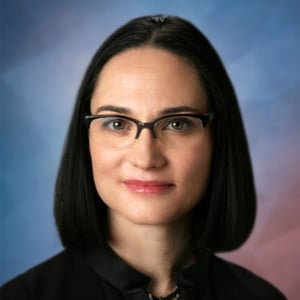
Alida graduated from Duke University with a degree in history and earned her J.D. from the Georgetown University Law Center.

Donald Phillip Rothschild Research Professor, George Washington University Law School
Renée Lettow Lerner is Donald Phillip Rothschild Research Professor of Law at George Washington University Law School.
Professor Lerner works in the fields of U.S. and English legal history, civil and criminal procedure, and comparative law. She advises judges, lawyers, and government officials from the United States and countries in Europe, Latin America, and Asia about the differences between adversarial and nonadversarial legal systems.
She writes extensively about the history of American juries. Her work includes not only scholarly articles, but also online publications intended for a broader audience of legal professionals and the public. In many different settings, she has debated the role of juries with other academics and with lawyers. She has a book forthcoming with Oxford University Press in the Very Short Introduction Series entitled “The Jury.” She is also working on a book about the American civil jury, from the colonial period to the present.
She is the author, with John Langbein and Bruce Smith, of the book History of the Common Law: The Development of Anglo-American Legal Institutions (2009).
Her recent writings include a book review of Amalia D. Kessler’s Inventing American Exceptionalism: The Origins of American Adversarial Legal Culture, 1800-1877, 67 J. Legal Ed. 888 (2018); “How the Creation of Appellate Courts in England and the United States Limited Judicial Comment on Evidence to the Jury,” 40 Journal of the Legal Profession 215 (2016); “The Troublesome Inheritance of Americans in Magna Carta and Trial by Jury,” in Magna Carta and its Modern Legacy 77-98 (Robert Hazell and James Melton eds., Cambridge University Press 2015); and “The Failure of Originalism in Preserving Constitutional Rights to Civil Jury Trial,” 22 William & Mary Bill of Rights Journal 811 (2014).
Professor Lerner received an A.B. summa cum laude in history from Princeton University. She was a Rhodes Scholar at Oxford University, where she studied English legal history. At Yale Law School, she was Articles Editor of the Yale Law Journal. She served as a law clerk to Justice Anthony M. Kennedy of the U.S. Supreme Court and to Judge Stephen F. Williams of the U.S. Court of Appeals for the District of Columbia Circuit. From 2003 to 2005, she served as Deputy Assistant Attorney General in the Office of Legal Counsel at the U.S. Department of Justice.
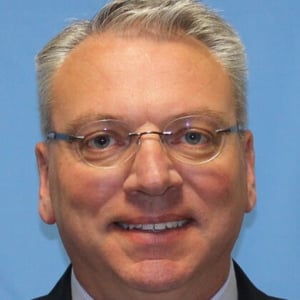
Judge, United States Court of Appeals, Third Circuit
David J. Porter is a judge on the United States Court of Appeals for the Third Circuit. He was nominated by President Donald Trump and confirmed on October 11, 2018. Before his appointment, he was a shareholder at Buchanan Ingersoll & Rooney PC, where he practiced commercial and civil litigation. Porter received his bachelor’s degree from Grove City College and his J.D. from the George Mason University School of Law. He clerked for Judge D. Brooks Smith on the United States District Court for the Western District of Pennsylvania.
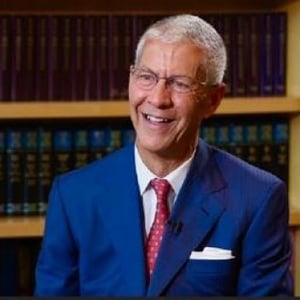
Irving Segal Distinguished Adjunct Professor of Law, University of Pennsylvania Law School
Shanin Specter is a preeminent American trial lawyer. He is a founding partner of Kline & Specter, one of the leading catastrophic injury firms in the United States.
Specter has obtained more than 200 jury verdicts and settlements in excess of $1 million and more than 50 case resolutions greater than $10 million, including jury verdicts of $153 million against a major automaker and $109 million against a Pennsylvania power company. In all, he has achieved 16 eight- or nine-figure verdicts, among them news-making cases involving medical malpractice, defective products, medical devices, premises liability, auto accidents and general negligence.
Beyond winning substantial monetary compensation for his clients, many of Specter's cases have prompted changes that provide a societal benefit, including improvements to vehicle safety, nursing and hospital procedures, the safe operation of police cars, training for the use of CPR at public institutions, and inspections, installation and maintenance of utility power lines. One case spurred the Pennsylvania Public Utility Commission to create a new Electric Safety Division to investigate reported electrical injuries. Most recently, Specter’s lawsuit on behalf of the victims of a fire escape collapse helped move the City of Philadelphia in 2016 to enact an ordinance requiring all fire escapes to be regularly inspected.
Specter earned his undergraduate degree with honors from Haverford College, his law degree from the University of Pennsylvania and an LL.M. with First Honors from Cambridge University.
Since 2000, Specter has served as an Adjunct Professor of Law at the University of Pennsylvania Law School. Since 2015, Specter has also taught at UC Hastings College of Law, UC Berkeley School of Law and Stanford Law School.
Alida graduated from Duke University with a degree in history and earned her J.D. from the Georgetown University Law Center.
Donald Phillip Rothschild Research Professor, George Washington University Law School
Renée Lettow Lerner is Donald Phillip Rothschild Research Professor of Law at George Washington University Law School.
Professor Lerner works in the fields of U.S. and English legal history, civil and criminal procedure, and comparative law. She advises judges, lawyers, and government officials from the United States and countries in Europe, Latin America, and Asia about the differences between adversarial and nonadversarial legal systems.
She writes extensively about the history of American juries. Her work includes not only scholarly articles, but also online publications intended for a broader audience of legal professionals and the public. In many different settings, she has debated the role of juries with other academics and with lawyers. She has a book forthcoming with Oxford University Press in the Very Short Introduction Series entitled “The Jury.” She is also working on a book about the American civil jury, from the colonial period to the present.
She is the author, with John Langbein and Bruce Smith, of the book History of the Common Law: The Development of Anglo-American Legal Institutions (2009).
Her recent writings include a book review of Amalia D. Kessler’s Inventing American Exceptionalism: The Origins of American Adversarial Legal Culture, 1800-1877, 67 J. Legal Ed. 888 (2018); “How the Creation of Appellate Courts in England and the United States Limited Judicial Comment on Evidence to the Jury,” 40 Journal of the Legal Profession 215 (2016); “The Troublesome Inheritance of Americans in Magna Carta and Trial by Jury,” in Magna Carta and its Modern Legacy 77-98 (Robert Hazell and James Melton eds., Cambridge University Press 2015); and “The Failure of Originalism in Preserving Constitutional Rights to Civil Jury Trial,” 22 William & Mary Bill of Rights Journal 811 (2014).
Professor Lerner received an A.B. summa cum laude in history from Princeton University. She was a Rhodes Scholar at Oxford University, where she studied English legal history. At Yale Law School, she was Articles Editor of the Yale Law Journal. She served as a law clerk to Justice Anthony M. Kennedy of the U.S. Supreme Court and to Judge Stephen F. Williams of the U.S. Court of Appeals for the District of Columbia Circuit. From 2003 to 2005, she served as Deputy Assistant Attorney General in the Office of Legal Counsel at the U.S. Department of Justice.
Judge, United States Court of Appeals, Third Circuit
David J. Porter is a judge on the United States Court of Appeals for the Third Circuit. He was nominated by President Donald Trump and confirmed on October 11, 2018. Before his appointment, he was a shareholder at Buchanan Ingersoll & Rooney PC, where he practiced commercial and civil litigation. Porter received his bachelor’s degree from Grove City College and his J.D. from the George Mason University School of Law. He clerked for Judge D. Brooks Smith on the United States District Court for the Western District of Pennsylvania.
Irving Segal Distinguished Adjunct Professor of Law, University of Pennsylvania Law School
Shanin Specter is a preeminent American trial lawyer. He is a founding partner of Kline & Specter, one of the leading catastrophic injury firms in the United States.
Specter has obtained more than 200 jury verdicts and settlements in excess of $1 million and more than 50 case resolutions greater than $10 million, including jury verdicts of $153 million against a major automaker and $109 million against a Pennsylvania power company. In all, he has achieved 16 eight- or nine-figure verdicts, among them news-making cases involving medical malpractice, defective products, medical devices, premises liability, auto accidents and general negligence.
Beyond winning substantial monetary compensation for his clients, many of Specter's cases have prompted changes that provide a societal benefit, including improvements to vehicle safety, nursing and hospital procedures, the safe operation of police cars, training for the use of CPR at public institutions, and inspections, installation and maintenance of utility power lines. One case spurred the Pennsylvania Public Utility Commission to create a new Electric Safety Division to investigate reported electrical injuries. Most recently, Specter’s lawsuit on behalf of the victims of a fire escape collapse helped move the City of Philadelphia in 2016 to enact an ordinance requiring all fire escapes to be regularly inspected.
Specter earned his undergraduate degree with honors from Haverford College, his law degree from the University of Pennsylvania and an LL.M. with First Honors from Cambridge University.
Since 2000, Specter has served as an Adjunct Professor of Law at the University of Pennsylvania Law School. Since 2015, Specter has also taught at UC Hastings College of Law, UC Berkeley School of Law and Stanford Law School.
Alida graduated from Duke University with a degree in history and earned her J.D. from the Georgetown University Law Center.
Alida graduated from Duke University with a degree in history and earned her J.D. from the Georgetown University Law Center.
Alida graduated from Duke University with a degree in history and earned her J.D. from the Georgetown University Law Center.

Panel Three: The Civil Jury: Constitutional Liberty or Unhealthy Romance?
Alida Kass, Renée Lettow Lerner, David James Porter, Shanin Specter
Third Circuit Chapters Conference
On October 24, 2019, The Federalist Society held its annual Third Circuit Chapters Conference. This...
Panel Three: The Civil Jury: Constitutional Liberty or Unhealthy Romance?
Alida Kass, Renée Lettow Lerner, David James Porter, Shanin Specter
Third Circuit Chapters Conference
On October 24, 2019, The Federalist Society held its annual Third Circuit Chapters Conference. This...
Henry Schein, Inc v. Archer and White Sales Inc. AND Lamps Plus, Inc. v. Varela - Post-Decision SCOTUScast
Alida Kass
SCOTUScast featuring Alida Kass
On January 8, 2019, the Supreme Court decided Henry Schein Inc. v. Archer and White...
Courthouse Steps Teleforum Preview: Frank v. Gaos
Alida Kass
What is the purpose of class actions? To provide compensation to class members? Or to...
New Jersey Supreme Court Strikes Down Reorganization of the Council on Affordable Housing
Alida Kass
State Court Docket Watch Article
In a highly anticipated decision, the New Jersey Supreme Court rejected Governor Chris Christie’s attempt...