
Partner, Hunton Andrews Kurth
Mr. Leopold is a Partner with the law firm of Hunton Andrews Kurth in Washington, DC. He is the former Senate-confirmed general counsel of the U.S. EPA from 2018-2020, and he previously was a litigator at the U.S. Department of Justice, Environment and Natural Resources Division form 2007-2013. As EPA General Counsel, he counseled on the development and defense of EPA’s most significant rulemakings, including the Affordable Clean Energy Rule, the Navigable Waters Protection Rule, and the Safe Affordable Fuel‐Efficient (SAFE) Vehicles Rule, as well as several pesticide actions. He was personally involved in defending EPA in litigation, including the County of Maui v. Hawaii Wildlife Fund in the U.S. Supreme Court. Mr. Leopold’s prior government service also includes working in Florida as general counsel of the Florida Department of Environmental Protection. He now represents clients in regulatory advocacy before federal agencies, litigates federal environmental actions, and defends clients with EPA enforcement issues.
Chair, Issues & Appeals, Hunton Andrews Kurth LLP
The former Solicitor General of West Virginia, Mr. Lin has been on the front lines of many precedent-setting cases in appellate courts across the country, including in a US Supreme Court victory that George Will called “the court’s most severe rebuke of a president” since the Truman administration. Having argued more than 60 appeals, he brings to clients a well-honed ability to identify the most persuasive issues for appeal and a practiced understanding of how best to frame complex legal questions in appellate courts.
With experience in the private sector and multiple branches of government, Mr. Lin’s practice has spanned a wide range of issues, including major questions of constitutional and administrative law at the federal and state levels. On behalf of more than two dozen states, he won a stay from the US Supreme Court of the EPA’s Clean Power Plan. Described by the New York Times as an “unprecedented” order, the stay was the first time the Supreme Court had ever put a regulation on hold before review by a federal appeals court. In that same case, Elbert argued before the en banc DC Circuit in an historic proceeding that one commenter quoted in E&E News compared to “the NBA All-Star Game.” At the state level, Elbert led the effort that persuaded the West Virginia Supreme Court of Appeals to overturn an injunction of the state’s right-to-work law.
In 2013, Mr. Lin was appointed the Solicitor General of West Virginia. During his four-and-a-half year tenure, he served as a member of the Attorney General’s senior management team, oversaw all civil and criminal appeals, and argued nearly two dozen cases in federal and state appellate courts. He authored more than twenty-five briefs in the US Supreme Court and more than forty-five formal Opinions of the Attorney General.
Earlier in his career, Mr. Lin served as a trial attorney in the Federal Programs Branch of the US Department of Justice’s Civil Division, where he received a Special Service Award. He has also been a law clerk at all three levels of the federal judiciary: for Justice Clarence Thomas on the US Supreme Court; for Judge William H. Pryor Jr. on the US Court of Appeals for the Eleventh Circuit; and for Senior Judge Robert E. Keeton on the US District Court for the District of Massachusetts.
Mr. Lin speaks regularly on a wide variety of topics, including constitutional law, administrative law, environmental law, state and federal relations, the US Supreme Court, and appellate practice. He has testified before Congress, and has spoken at the national conventions of the American Bar Association, the Association of Corporate Counsel, the National Asian Pacific American Bar Association, the Federalist Society, Americans for Prosperity, and the American Legislative Exchange Council. He is an elected member of the American Law Institute, a public member of the Administrative Conference of the United States, and a fellow of the American Academy of Appellate Lawyers.
Mr. Lin is admitted to practice in the following federal courts: the Supreme Court of the United States; the First, Second, Third, Fourth, Fifth, Sixth, Seventh, Eighth, Ninth, Eleventh, D.C., and Federal Circuits; the District of Massachusetts; the Northern and Southern Districts of West Virginia; and the Eastern and Western Districts of Virginia.

Director of the Center for Energy and Environment and Senior Fellow, Competitive Enterprise Institute
Daren Bakst is Director of the Competitive Enterprise Institute’s Center for Energy and Environment and a Senior Fellow. In this role, he manages, develops, and leads the coalition, advocacy, and research activities of the Center, which is one of the most effective advocates for Free Market Environmentalism.
Before joining CEI as Deputy Director in March, 2023, Daren was a Senior Research Fellow in Environmental Policy and Regulation at the Heritage Foundation, where he played a leading role in the launch of the organization’s new energy and environment center, and created and hosted the Heritage Foundation’s energy and environment podcast the “PowerCast.” During his decade at Heritage, Daren wrote about energy and environmental policy, food and agricultural policy (including editing and co-authoring the book Farms and Free Enterprise), regulation, and trade among other topics.
Daren also worked on environmental policy and regulation at the U.S. Chamber of Commerce, where he was a policy counsel and served as the executive to the association’s Government Oversight, Operations & Consumer Affairs committee, which was responsible for issues such as regulatory process reform. Daren has significant state level experience, working for seven years at the Raleigh, N.C.-based John Locke Foundation, one of the largest state-based, free-market think tanks. As director of legal and regulatory studies, his broad portfolio included energy and environmental policy, regulatory reform, and property rights.
Daren has testified numerous times before Congress, regularly submits comments to federal agencies and has appeared in or been quoted by a wide range of media outlets such as The Wall Street Journal, USA Today, The Washington Times, CNN, Fox Business News, Al-Jazeera America, and U.S. News and World Report. He is a member of the Federalist Society’s Environmental Law and Property Rights Executive Committee and serves on the College Level Advisory Board for Constituting America, an organization that informs and educates about the importance of the U.S. Constitution.
Daren, who hails from Florida, received his bachelor’s and master’s degrees from George Washington University. A licensed attorney, he holds a law degree from the University of Miami and a master of laws degree from American University.
Professor of Law, Georgetown Law
William W. Buzbee is a professor of law at Georgetown University Law Center. In his teaching and scholarship, he specializes in environmental law, legislation and regulation, and administrative law. Recent publications focus on climate regulation, deregulation and law governing agency policy change, and federalism. He also offers seminars on advanced environmental, regulatory, and constitutional law subjects, with his most recent seminar focused on “The Art of Regulatory War.”
Professor Buzbee’s books include the recently published Fighting Westway: Environmental Law, Citizen Activism, and the Regulatory War that Transformed New York City (Cornell University Press 2014) and Preemption Choice: The Theory, Law and Reality of Federalism’s Core Question(Cambridge University Press, hardcover 2009, paperback 2011) (William W. Buzbee editor and contributor). He has been a co-author of the 5th , 6th, 7th and forthcoming 8th editions of Environmental Protection: Law and Policy (Aspen/Wolters Kluwer). Law review scholarship includes publications in New York University Law Review, University of Pennsylvania Law Review, Michigan Law Review, Stanford Law Review (co-authored), Cornell Law Review (co-authored), Duke Law Journal (forthcoming), George Washington Law Review, Iowa Law Review, The Journal of Law and Politics and in an array of other journals, books, news outlets, and blogs. Three of his articles have been named among the 10 best environmental or land use law articles of that year and republished in the Land Use and Environment Law Review. He regularly assists with appellate and Supreme Court environmental, federalism, and regulatory litigation, and also has testified before congressional committees on environmental and regulatory matters. He has published op-eds on regulatory and environmental issues with The New York Times, The Hill, CNN, and been quoted and interviewed by numerous press and media outlets.
Professor Buzbee joined Georgetown from Emory Law School, where he was a professor of law and directed its Environmental and Natural Resources Law Program. He also co-directed Emory’s Center on Federalism and Intersystemic Governance. He has been a visiting professor of law at Columbia, Cornell and Illinois law schools. He has also served as a professor for the Leiden-Amsterdam-Columbia Law School Summer Program in American Law. Professor Buzbee is a founding Member Scholar of the Center for Progressive Reform, a Washington D.C.-based regulatory think tank. Professor Buzbee was awarded the 2007-2008 Emory Williams Teaching Award for excellence in teaching. Professor Buzbee clerked for United States Judge Jose A. Cabranes, and before becoming a professor was an attorney-fellow at the Natural Resources Defense Council, and did environmental, land use and litigation work for the New York City law firm, Patterson, Belknap, Webb & Tyler. JD, Columbia Law School, 1986; BA, Amherst College, magna cum laude, 1983.
Senior Attorney, Pacific Legal Foundation
Damien Schiff is a senior attorney at Pacific Legal Foundation. He leads its environmental practice group, a unique initiative that draws broadly from PLF’s expertise and success in property rights and separation of powers litigation. Over the years, Damien has represented hundreds of landowners and property rights advocates to defend their liberties against heavy-handed and unwarranted environmental and land-use regulation. His litigation experience includes Sackett v. U.S. Environmental Protection Agency, a groundbreaking decision in which the U.S. Supreme Court upheld the right of landowners to challenge Clean Water Act compliance orders issued by EPA, and Contoski v. Norton, PLF’s successful effort to force the federal government to make good on its promise to delist the bald eagle from the Endangered Species Act.
Besides litigation, Damien has written academic articles on a variety of subjects, including the Endangered Species Act, the Clean Water Act, greenhouse gas torts, the duty to rescue, and international water law. He has appeared on a variety of television and radio programs and has been quoted in The New York Times, The Wall Street Journal, Harper’s Magazine, and The Economist, among other publications.
He obtained his law degree magna cum laude from the University of San Diego School of Law, and his undergraduate degree magna cum laude from Georgetown University. While at USD, he was a research assistant for Professor Bernard Siegan, a leading constitutional theorist and advocate for property rights and economic liberty. Immediately prior to joining PLF, Damien clerked for Judge (and former PLF attorney) Victor Wolski of the United States Court of Federal Claims. Damien credits the mentoring and examples of Professor Siegan and Judge Wolski for his decision to pursue a career in liberty-based public interest litigation.
Damien lives in Sacramento with his wife, two young sons, four chickens, and a cat named Princess. In his off hours he enjoys stamp collecting, Gregorian chant, and martinis—preferably at the same time.
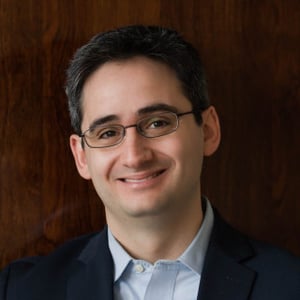
Chief Economist, American Compass
Oren Cass is the chief economist at American Compass and author of The Once and Future Worker: A Vision for the Renewal of Work in America (2018). He is a contributing editor for the Financial Times and a contributing opinion writer for the New York Times.
From 2005 to 2015, Oren worked as a management consultant in Bain & Company’s Boston and Delhi offices. During this period, he also earned his J.D. magna cum laude from Harvard Law School, where he was elected vice president and treasurer of the Harvard Law Review and oversaw the journal’s budget and operations. While still in law school, Oren also became Domestic Policy Director for Governor Mitt Romney’s 2012 presidential campaign, editing and producing the campaign’s “jobs book” and developing its domestic policy strategy, proposals, and research. He joined the Manhattan Institute as a senior fellow in 2015 and became a prolific scholar, publishing more than 15 reports for MI and editing its popular “Issues 2016” and “Issues 2020” series, testifying before seven congressional committees and speaking on dozens of college campuses. He founded American Compass at the start of 2020.
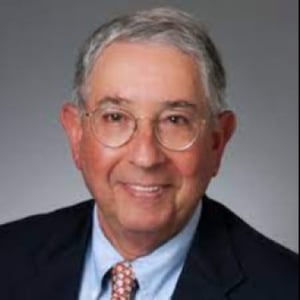
Distinguished Senior Fellow and President Emeritus, Thomas B. Fordham Institute
Chester E. Finn, Jr., scholar, educator and public servant, has devoted his career to improving education in the United States. At Fordham, he is now Distinguished Senior Fellow and President Emeritus. He’s also a Senior Fellow at Stanford's Hoover Institution.
Finn served as Fordham’s President from 1997 to 2014, after many earlier roles in education, academe and government. From 1999 until 2002, he was John M. Olin Fellow at the Manhattan Institute and previously at Hudson Institute. In 1992-94, he served as founding partner and senior scholar with the Edison Project. He was Professor of Education and Public Policy at Vanderbilt University from 1981 until 2002. From 1985 to 1988, he served as Assistant Secretary for Research and Improvement and Counselor to the Secretary at the U.S. Department of Education. Earlier positions include Staff Assistant to the President of the United States; Special Assistant to the Governor of Massachusetts; Counsel to the U.S. Ambassador to India; Research Associate at the Brookings Institution; and Legislative Director for Senator Daniel P. Moynihan.
For more than four decades, Finn has been in the forefront of the national debate about school reform. His participation in seminars, conferences, and hearings has taken him to colleges, education and civic groups, and government organizations throughout the world.
Finn has served on numerous boards, including the National Assessment Governing Board (which he chaired) and the Maryland State Board of Education (where he was vice-chair) and currently serves on the National Council on Teacher Quality, the Core Knowledge Foundation, CVPath Institute and the Civics & Civic Engagement Advisory Commission for America 250.
A native of Ohio, he holds an undergraduate degree in U.S. history, a master's degree in social studies teaching, and a doctorate in education policy, all from Harvard University. He and his wife, Renu Virmani, a physician, have two grown children and three wonderful granddaughters. They live in Chevy Chase, Maryland.
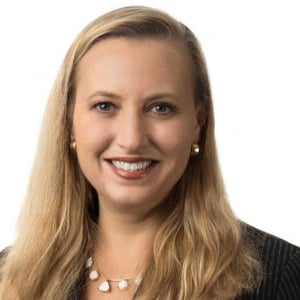
Principal, EducationCounsel, LLC
Bethany Little is a Principal at EducationCounsel, LLC where she supports foundations, education associations and other nonprofits with support in advancing improvements in education outcomes from early childhood through higher education. Little has spent twenty years working in government and non-profit organizations, including the White House, where she was education advisor to President Clinton and Vice President Gore on the Domestic Policy Council, and the U.S. Department of Education. In the U.S. Senate, she served as Chief Education Counsel to the Health, Education, Labor, and Pensions (HELP) Committee under two chairmen, Senators Edward Kennedy and Tom Harkin, and as a legislative aide to Senator Patty Murray. In the non-profit arena, Little was Managing Partner at America Achieves, where she led many of the organization's most critical priorities, including their support for state and local superintendents, the Global Learning Network and their parent engagement initiative. She has also served as an advocate for disadvantaged children as the vice president for policy and advocacy at the Alliance for Excellent Education and the director of government relations for the Children’s Defense Fund. She serves on the boards of the National Center for Teacher Residencies, Veterans Education Success, and Cesar Chavez Public Charter Schools for Public Policy.
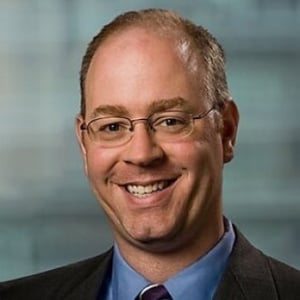
Director, Center for Educational Freedom, The Cato Institute
Neal McCluskey is the director of Cato’s Center for Educational Freedom. He is the author of the book Feds in the Classroom: How Big Government Corrupts, Cripples, and Compromises American Education and is coeditor of several volumes, including School Choice Myths: Setting the Record Straight on Education Freedom and Unprofitable Schooling: Examining Causes of, and Fixes for, America’s Broken Ivory Tower. McCluskey also maintains Cato’s Public Schooling Battle Map, an interactive database of values and identity‐based conflicts in public schools, and oversees Cato’s Private Schooling Status Tracker.
McCluskey is on the editorial board of the Journal of School Choice and the editorial advisory board of The Line, a journal promoting civil discourse in K–12 policy debates. His writings have appeared in such publications as the Wall Street Journal, the Washington Post, and Forbes, and he has appeared on numerous television and radio programs.
Prior to arriving at Cato, McCluskey was a policy analyst at the Center for Education Reform, taught high‐school English, covered municipal government and education as a freelance reporter, and served in the U.S. Army.
McCluskey holds an undergraduate degree from Georgetown University, where he double majored in government and English, has a master’s degree in political science from Rutgers University, Newark, and holds a PhD in public policy from George Mason University.
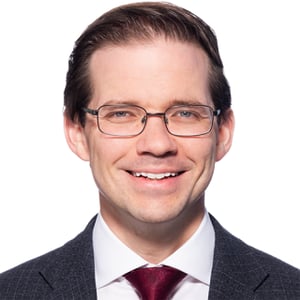
Of Counsel, Covington & Burling LLP
The Honorable Paul J. Ray is currently Of Counsel at Covington & Burling LLP where he advises clients on regulatory opportunities and challenges and helps them formulate and execute advocacy strategies for their regulatory policy priorities before the executive branch and Congress.
During the first Trump Administration, Paul held various senior positions at the Office of Information and Regulatory Affairs (OIRA) within the White House’s Office of Management and Budget, including as acting, and then Senate-confirmed, head of the office. As OIRA Administrator (the "regulations czar"), Paul supervised the review of hundreds of regulations from across the government, drafted numerous executive orders governing the regulatory process, and led the Administration’s regulatory reform effort. As a result of this experience, Paul is well-positioned to help clients understand and achieve regulatory policy priorities in the context of the government’s regulatory agenda and ongoing reform efforts.
Most recently, Paul was also the Director of the Roe Institute for Economic Policy Studies at The Heritage Foundation. In that role, he supervised the formulation of the Foundation’s economic and regulatory policy recommendations and provided technical assistance to congressional committees and staff regarding legislative changes to the regulatory process. In addition to his role at The Heritage Foundation, Paul also served as a Senior Advisor at a strategic advisory firm. Before his time in government, Paul practiced law at a law firm in Washington, specializing in administrative law matters.
Prior to his role at the White House, Paul was Counselor to the Secretary at the U.S. Department of Labor. There he led departmental efforts in high-profile rulemakings and helped formulate the Department’s legal positions and strategy.
Paul served as a law clerk to Supreme Court Justice Samuel Alito and as a law clerk to the Honorable Debra Livingston of the U.S. Court of Appeals for the Second Circuit.
Paul is a thought leader in the conservative legal movement and is a frequent commentator and speaker on regulatory policy and reform matters, including at law schools, professional gatherings, and other venues. He is the Chairman of Innovations in Peacebuilding International and the Regulatory Process Working Group of the Federalist Society’s Regulatory Transparency Project and a public member of the Administrative Conference of the United States. Paul is also an adjunct lecturer at the Hillsdale College School of Government.
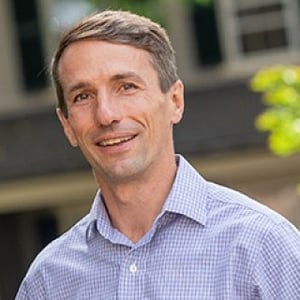
Academic Dean and Professor, Harvard Graduate School of Education
Martin West is the academic dean and professor of education at the Harvard Graduate School of Education and a faculty research fellow at the National Bureau of Economic Research. He is also deputy director of the Harvard Kennedy School's Program on Education Policy and Governance and executive editor of Education Next, a journal of opinion and research on education policy. West studies the politics of K-12 education in the United States and how education policies affect student learning and non-cognitive development. His current projects include studies of public opinion on education policy, the effects of charter school attendance and on cognitive and non-cognitive skills, data use in schools, and the influence of relative pay on teacher quality. In 2013-14, West worked as senior education policy advisor to the ranking member of the U.S. Senate Committee on Health, Education, Labor, and Pensions. He previously taught at Brown University and was a research fellow at the Brookings Institution, where he is now a nonresident senior fellow.
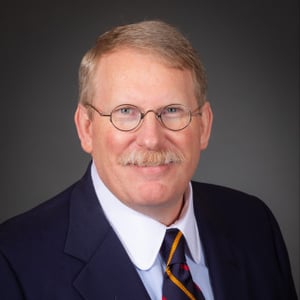
Co-Founder and President, Defense of Freedom Institute
Bob is a co-founder and President of DFI. He previously served as Senior Counselor to the Secretary of Education from 2017 through 2020 and Deputy General Counsel of the U.S. Department of Education from 2005 until 2009.
During his most recent tenure at the Department, Bob served on the Secretary’s Leadership Team as a strategic and legal adviser on higher education, civil rights, and congressional oversight matters. As the Department’s Regulatory Reform Officer, he also supervised the implementation of the Secretary’s regulatory agenda and was an architect of the Secretary’s reforms concerning Title IX and the Higher Education Act. As Deputy General Counsel, Bob advised on a wide variety of regulatory, legislative, and oversight matters.
Prior to joining the Department in 2017, Bob was vice president for regulatory compliance matters for several postsecondary institutions and practiced education and employment law in Washington, D.C. Before coming to the Department in 2005, he practiced law in New Orleans, litigating commercial, employment, and bankruptcy cases in Louisiana, Texas, and Mississippi.
Bob earned his A.B. in History from Georgetown University, studied British government and international politics at the London School of Economics and Political Science, and received his law degree from Tulane University Law School. His articles have been published by National Review, Real Clear Education, Washington Examiner, and other media outlets. Fox News has featured his work.
Bob is a member of the District of Columbia and Louisiana Bars and the Federalist Society for Law and Public Policy Studies.
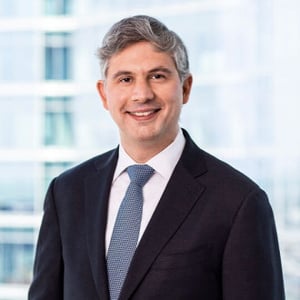
Partner, Keller Postman
Ashley Keller is one of the founding Partners of Keller Postman LLC. An experienced trial and appellate lawyer, Ashley helps set strategic direction across virtually all of the firm’s cases. He represents clients in a wide variety of practice areas and types of claims, including product-liability, antitrust, class action, and arbitration matters.
Ashley is one of the leaders of Keller Postman’s national product-liability practice. He leverages his ability to detangle complex concepts and develop novel legal theories to support individual client matters and as counsel on numerous product-liability multidistrict litigation matters. He chairs the plaintiffs’ Law & Briefing Committee in the Zantac (Ranitidine) Product Liability MDL in the U.S. District Court for the Southern District of Florida.
Ashley also litigates complex antitrust and class action matters. Among his notable cases, Ashley represents numerous States in antitrust litigation against Google for monopolizing products and services used by advertisers and publishers in online-display advertising.
Ashley also has played a central role in developing the firm’s pioneering arbitration practice, which includes pursuing individual arbitrations for clients whose claims are subject to arbitration clauses with class-action waivers. In part through managing the complexity of pursuing these individual claims simultaneously, the firm has secured millions in settlements for more than 500,000 employees and consumers.
Before launching Keller Postman, Ashley co-founded the litigation finance firm Gerchen Keller Capital, which grew to more than $1.3 billion in assets under management and was the world’s largest private investment manager focused on legal and regulatory risk prior to being acquired by Burford Capital in 2016.
Previously, Ashley was a partner at Bartlit Beck Herman Palenchar & Scott LLP, The American Lawyer’s litigation boutique of the year. While there, he handled various trial and appellate matters involving multi-billion-dollar securities and patent cases, contract disputes, mass torts, and class actions.
Ashley also worked as an analyst at Alyeska Investment Group, a Chicago-based market-neutral hedge fund, where he focused on investments in companies facing litigation and other complicated regulatory matters.
Ashley was named a 2021 Plaintiffs’ Lawyers Trailblazer by the National Law Journal. He is also listed on Lawdragon’s 500 Leading Lawyers in America, Lawdragon’s 500 Leading Plaintiff Consumer Lawyers, Lawdragon’s Leading Plaintiff Financial Lawyers, National Trial Lawyers’ Top 100, and Illinois Super Lawyers.
Ashley was a law clerk for Justice Anthony M. Kennedy at the Supreme Court of the United States and Judge Richard Posner at the U.S. Court of Appeals for the Seventh Circuit. He graduated magna cum laude from Harvard College, received his M.B.A. from the University of Chicago Booth School of Business and received his J.D. from the University of Chicago Law School, where he graduated first in his class.

Shareholder, Maynard Cooper & Gale
John Neiman is a go-to lawyer for clients with high-stakes appeals in Alabama and elsewhere. In the last two years, John has helped clients obtain reversals by the Alabama Supreme Court of an $11.4 million verdict in one case and an $18 million verdict in another. In a recent Eleventh Circuit case, he helped a client obtain vacatur of a trial court’s decision not to compel arbitration of a $66.5 million bad-faith insurance claim. He also has served as embedded appellate counsel at a trial, preserving the client’s objections for appeal when the plaintiffs asked the jury for more than $100 million in compensatory and punitive damages. A former U.S. Supreme Court clerk and Solicitor General of Alabama, John chairs an Appellate Practice group that strives to offer the firm’s clients the highest level of appellate advocacy at Alabama-level rates.
At any given time, John has a number of cases pending in the Alabama Supreme Court and Eleventh Circuit, but he also represents clients in a wide array of cases throughout the country. John has appeared for alcohol-industry clients in the Supreme Court and the Fourth, Sixth, Seventh, and Eighth Circuits, and has represented insurance clients in state courts in California, New York, and Kentucky. As state Solicitor General from 2011 to 2014, John argued two merits cases at the United States Supreme Court.
John is a fellow of the American Academy of Appellate Lawyers. Chambers USA: America's Leading Lawyers for Business distinguishes him as a Band 1 leading attorney in the area of Appellate Litigation. Best Lawyers® named him the region's 2017 and 2021 "Lawyer of the Year" for Appellate Practice.
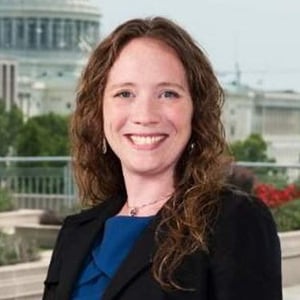
Partner, Luther Strange & Associates
Annie Donaldson Talley is Partner at Luther Strange and Associates. She recently departed the White House after serving as Deputy Assistant to the President and Deputy Counsel to the President. Over the past four years, she provided outside counsel to the Donald J. Trump for President campaign; helped stand up and manage the White House Counsel’s Office; interfaced with agencies across the federal government; and advised the President of the United States, White House Counsel, Chief of Staff and other senior staff across the Executive Office of the President on a broad range of issues from regulatory reform to executive nominations to the day-to-day issues facing the Administration.
Prior to her White House service, Annie Donaldson Talley counseled clients in the non-profit, for-profit, political, and government sectors, as well as high-profile individuals in private practice at Jones Day and Patton Boggs. She provided strategic counseling to clients structuring their affairs to ensure compliance with a web of state and federal laws and represented clients in complex, multi-faceted investigations, leading teams navigating issues of intense public scrutiny.
Annie Donaldson Talley is also a veteran of three presidential campaigns and served in state government. She holds a B.A., summa cum laude, from the University of Alabama and a J.D. from Harvard Law School, where she served on the Harvard Law Review. She lives in Montgomery, Alabama with her husband, Brett.
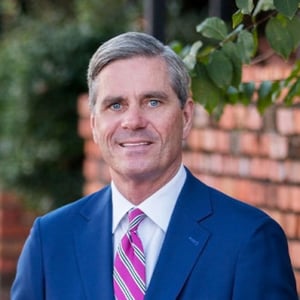
Shareholder, Beasley, Allen, Crow, Methvin, Portis & Miles, PC
Mr. Vance, a trial attorney from Montgomery, Alabama, is a specialist in the Consumer Fraud division of Beasley, Allen, Crow, Methvin, Portis & Miles, PC. He acts in behalf of individuals and small businesses against insurance companies and various other entities within the insurance industry.
Before coming to Beasley Allen, Mr. Vance was a partner at the Montgomery-based firm of Hawthorne, Hawthorne & Vance.
At AAJ, Mr. Vance serves on the Public Affairs Committee and formerly served a two-year term as a member of the Board of Directors for the Trial Lawyers for Public Justice, a national organization designed to promote a fair and impartial judicial system for all.
Mr. Vance has served as Vice President of the Montgomery County Bar Association and Treasurer of the Alabama Trial Lawyers Association. He was the president of the Young Lawyer's section of the Montgomery County Bar Association and a member of the Board of Directors of the Montgomery County Bar Association.
Mr. Vance attended the Jones School of Law at Faulkner University where he was elected president of the Student Bar Association and received the Advocacy Award as the outstanding graduate of his class in 1992. He also helped found the Jones School of Law Future Trial Lawyers Association. He received his undergraduate degree from Troy State University in 1987.

Tazewell Taylor Professor of Law and William H. Cabell Research Professor, William & Mary Law School
Jonathan H. Adler joined the William & Mary law faculty as the Tazwell Taylor Professor of Law and William H. Cabell Research Professor in 2025. Prior to joining the faculty, he was the inaugural Johan Verheij Memorial Professor of Law and the founding Director of the Coleman P. Burke Center for Environmental Law at the Case Western Reserve University School of Law.
Professor Adler is the author or editor of seven books, including Climate Liberalism: Perspectives on Liberty, Property and Pollution (Palgrave, 2023), Marijuana Federalism: Uncle Sam and Mary Jane (Brookings Institution Press, 2020), Business and the Roberts Court (Oxford University Press, 2016) and Rebuilding the Ark: New Perspectives on Endangered Species Act Reform (AEI Press, 2011).
His articles have appeared in publications ranging from the Harvard Environmental Law Review and Yale Journal on Regulation to the Wall Street Journal, New York Times, and Washington Post. He has testified before Congress a dozen times, and his work has been cited in the U.S. Supreme Court. A 2024 study identified Professor Adler as the seventh most cited legal academic in administrative and environmental law from 2019 to 2023.
Professor Adler is a contributing editor to Civitas Outlook and a regular contributor to the popular legal blog, The Volokh Conspiracy. A regular commentator on constitutional and regulatory issues, he has appeared on numerous radio and television programs, ranging from the PBS Newshour and National Public Radio to the Fox News Channel and Entertainment Tonight.
Professor Adler is a senior fellow at the Property & Environment Research Center in Bozeman, Montana. In 2018, Professor Adler was elected to membership in the American Law Institute and helped co-found the organization Checks and Balances. In 2024, Professor Adler was appointed a public member of the Administrative Conference of the United States.
Professor Adler clerked for the Honorable David B. Sentelle on the U.S. Court of Appeals for the District of Columbia Circuit.
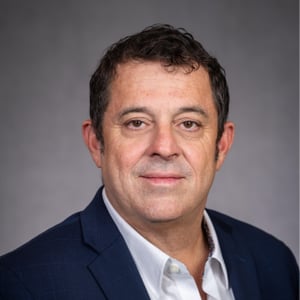
Senior Fellow for Law, Economics, and Technology, The Heritage Foundation; Professor, Florida International University
Mario Loyola is a Senior Fellow for Law, Economics, and Technology at The Heritage Foundation.
Loyola served in the Trump Administration as Associate Director for Regulatory Reform at the White House Council on Environmental Quality. In that role, he was one of the principal drafters of the One Federal Decision policy, which helped to streamline the permitting and environmental review of large infrastructure projects. While at CEQ, he was a member of the U.S. delegation to the USMCA free trade negotiations with Mexico and Canada, as well as the United Nations conference on biodiversity on the high seas. Loyola initially joined the White House in February 2017 as a Presidential Speechwriter, employing his expertise in many areas of foreign and domestic policy.
After beginning his career in M&A and corporate finance law, Loyola served in the Bush 43 Administration as a special assistant to the Undersecretary of Defense for Policy. He left that position to start writing on national defense issues in magazines such as National Review and The Weekly Standard, reporting from the front lines of the war on terrorism in Lebanon, Israel, and Iraq. He finished the Bush Administration as Foreign and Defense Counsel to the U.S. Senate Republican Policy Committee, then under the chairmanship of Senator Kay Bailey Hutchison of Texas. He subsequently moved to Texas and joined the Texas Public Policy Foundation, where he specialized in energy, environment, and federalism.
Loyola is a frequent contributor to The Wall Street Journal, National Review, and The Atlantic, among others. He teaches environmental and administrative law at Florida International University, where he is Founding Director of the Environmental Finance and Risk Management program in FIU’s prestigious Institute of Environment. He received a bachelor’s degree in European history from the University of Wisconsin–Madison and a J.D. from Washington University School of Law.
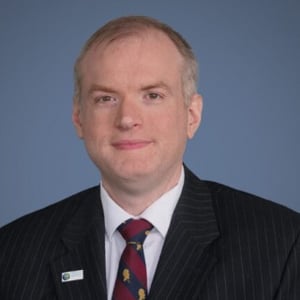
Attorney, Competitive Enterprise Institute
Devin Watkins is an attorney at the Competitive Enterprise Institute. Devin Watkins previously worked at the Cato Institute as a legal associate and interned at the Institute for Justice. At the Cato Institute, Watkins worked on a variety of Supreme Court cases, and one of the briefs he worked on was cited by the Court. His op-eds have appeared in National Review Online, The Hill, Time, and The Federalist among others.
Watkins holds a Juris Doctor cum laude from George Mason University's Antonin Scalia Law School, where he was the development editor on the Mason Law Review. Prior to his legal career Watkins was a senior software developer at Intel and WebMD. He graduated with a Bachelor of Science in Computer Science from Stevens Institute of Technology in Hoboken, New Jersey.
Watkins is a member of the Virginia State Bar, the District of Columbia Bar, the U.S. District Court for the District of Columbia Bar, and the U.S. Court of Appeals for the District of Columbia Circuit Bar.
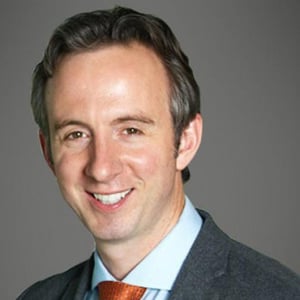
Professor of Law, University of Minnesota Law School
Professor James W. Coleman is a scholar of energy law. He specializes in North American energy infrastructure, transport, and trade. He is also a nonresident senior fellow at the American Enterprise Institute focused on energy policy.
Professor Coleman has testified before Congress on steps to speed up energy infrastructure permits. He also worked with a team of experts as part of Alberta's Royalty Review to revise the Canadian province's management of its vast oil and gas resources.
Before joining Minnesota, Professor Coleman taught at Southern Methodist University's Dedman School of Law, the University of Calgary’s law and business schools, and Harvard Law School. Earlier, he practiced environmental and appellate law at Sidley Austin in Washington, D.C., and clerked for the Honorable Steven M. Colloton of the U.S. Court of Appeals for the Eighth Circuit.
Professor Coleman received two degrees from Harvard University—a J.D. (cum laude) and B.A. in biology (magna cum laude with highest honors in the field). As a result of his undergraduate thesis on butterfly genetics, which required fieldwork in Central Asia, a species of lycaenid butterfly was named after him—Agrodiaetus ripartii colemani.
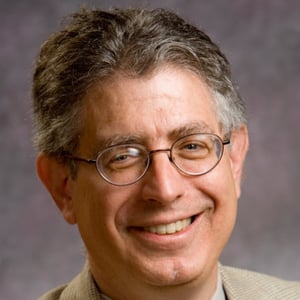
Sho Sato Professor of Law; Faculty Director, Center for Law, Energy, & the Environment, University of California, Berkeley
Dan Farber is the Sho Sato Professor of Law at the University of California, Berkeley. He is also the Co-Director of the Center for Law, Energy, and the Environment. Professor Farber serves on the editorial board of Foundation Press. He is a member of the American Academy of Arts and Sciences and a Life Member of the American Law Institute. He is the editor of Issues in Legal Scholarship.
Professor Farber is a graduate of the University of Illinois, where he earned his B.A., M.A., and J.D. degrees. He graduated, summa cum laude, from the College of Law, where he was the class valedictorian and served as Editor-in-Chief of the University of Illinois Law Review. After graduation from law school, he was a law clerk for Judge Philip W. Tone of the United States Court of Appeals for the Seventh Circuit and then for Justice John Paul Stevens of the Supreme Court of the United States. Professor Farber practiced law with Sidley & Austin, where he primarily worked on energy issues, before joining the University of Illinois College of Law faculty in 1978. He was a member of the University of Minnesota Law School faculty from1981 to 2002, where he was the McKnight Presidential Professor of Public Law. He also has been a Visiting Professor at the Stanford Law School, Harvard Law School, and the University of Chicago Law School.
Among Professor Farber’s eighteen books are RESEARCH HANDBOOK ON PUBLIC CHOICE AND PUBLIC LAW (Elgar 2010) (with A. O’Connell); JUDGMENT CALLS: POLITICS AND PRINCIPLE IN CONSTITUTIONAL LAW (Oxford University Press 2008) (with S. Sherry); RETAINED BY THE PEOPLE: THE “SILENT” NINTH AMENDMENT AND THE RIGHTS AMERICANS DON’T KNOW THEY HAVE (Basic Books 2007); and LINCOLN’S CONSTITUTION (University of Chicago Press 2003).
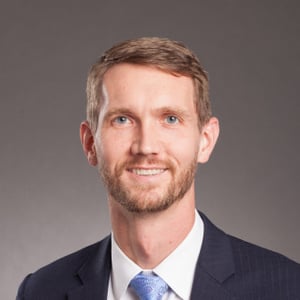
Senior Counsel for Environmental and Regulatory Affairs, Boeing
Adam Gustafson is a Senior Counsel for Environmental and Regulatory Affairs at Boeing.
Prior to joining Boeing, he served as Deputy General Counsel at the Environmental Protection Agency. Prior to that, he was a partner at Boyden Gray & Associates, where he represented States, federal judges, environmental groups, biofuel producers, agricultural interests, and public policy organizations, on such issues as the constitutional separation of powers, the First Amendment, automotive regulations, environmental computer models, healthcare regulation, and judicial deference to federal agencies.
Mr. Gustafson received his J.D. in 2009 from Yale Law School, where he was an editor of the Yale Law Journal, a managing editor of the Yale Journal of Law & the Humanities, and an executive editor of the symposium issue of the Harvard Journal of Law & Public Policy.
Mr. Gustafson served as a Vice President of the Yale Law School Federalist Society. He was a Coker Fellow, and his legal writing won the Joseph A. Chubb Competition Prize and the Edward D. Robbins Memorial Prize.
Mr. Gustafson graduated with high distinction in 2005 from the University of Virginia, where he was an Echols Scholar, a member of the Raven Society, a member of the rowing team, and a Lawn resident.
Before joining Boyden Gray & Associates, Mr. Gustafson was an associate at Cooper & Kirk, where he specialized in appellate litigation. Mr. Gustafson served as a law clerk to Judge Richard R. Clifton of the U.S. Court of Appeals for the Ninth Circuit, and to Judge Janice Rogers Brown of the U.S. Court of Appeals for the D.C. Circuit.
Senior Fellow for Law, Economics, and Technology, The Heritage Foundation; Professor, Florida International University
Mario Loyola is a Senior Fellow for Law, Economics, and Technology at The Heritage Foundation.
Loyola served in the Trump Administration as Associate Director for Regulatory Reform at the White House Council on Environmental Quality. In that role, he was one of the principal drafters of the One Federal Decision policy, which helped to streamline the permitting and environmental review of large infrastructure projects. While at CEQ, he was a member of the U.S. delegation to the USMCA free trade negotiations with Mexico and Canada, as well as the United Nations conference on biodiversity on the high seas. Loyola initially joined the White House in February 2017 as a Presidential Speechwriter, employing his expertise in many areas of foreign and domestic policy.
After beginning his career in M&A and corporate finance law, Loyola served in the Bush 43 Administration as a special assistant to the Undersecretary of Defense for Policy. He left that position to start writing on national defense issues in magazines such as National Review and The Weekly Standard, reporting from the front lines of the war on terrorism in Lebanon, Israel, and Iraq. He finished the Bush Administration as Foreign and Defense Counsel to the U.S. Senate Republican Policy Committee, then under the chairmanship of Senator Kay Bailey Hutchison of Texas. He subsequently moved to Texas and joined the Texas Public Policy Foundation, where he specialized in energy, environment, and federalism.
Loyola is a frequent contributor to The Wall Street Journal, National Review, and The Atlantic, among others. He teaches environmental and administrative law at Florida International University, where he is Founding Director of the Environmental Finance and Risk Management program in FIU’s prestigious Institute of Environment. He received a bachelor’s degree in European history from the University of Wisconsin–Madison and a J.D. from Washington University School of Law.

West Virginia v. EPA and Implications for Future Regulations
Richmond Lawyers Chapter
Richmond, VASackett v. EPA: How Will the U.S. Supreme Court Define "Waters of the United States?"
Daren Bakst, William W. Buzbee, Damien Michael Schiff
One of the most controversial and long-standing environmental issues deals with what waters are regulated...
Education: What Role for the Federal Government?
Oren Cass, Chester E. Finn, Bethany Little, Neal McCluskey, Paul J. Ray, Martin West
What role, if any, should the federal government play in education? What constitutional and policy...
Welcome and Opening Remarks
Robert S. Eitel
Featuring: Robert S. Eitel, President and Co-founder, Defense of Freedom Institute
Welcome and Opening Remarks
Robert S. Eitel
Featuring: Robert S. Eitel, President and Co-founder, Defense of Freedom Institute
Topics
Title IX NPRM: Due Process and Potential Challenges
The U.S. Department of Education’s (ED) proposed rulemaking (NPRM) pursuant to Title IX’s anti-sex discrimination...
Panel 1 - On the Front Lines: Litigating with the States
Ashley Keller, John Neiman, Annie Donaldson Talley, Gibson Vance
Featuring: Ashley Keller, Partner & Co-Founder, Keller Postman LLC John Neiman, Shareholder, Maynard Cooper & Gale Gibson...
Topics
Extending the Logic of The Major Question Doctrine
When the major question exception to Chevron applies, courts do not defer to agency interpretations...
The Implications of Jarkesy v. SEC for Administrative Tribunals
Jonathan H. Adler, Mario Loyola, Devin Watkins
In May, the U.S. Fifth Circuit Court of Appeals vacated a decision of the Securities...
West Virginia v. EPA and the Major Questions Doctrine
James W. Coleman, Daniel Farber, Adam Gustafson, Mario Loyola
In the historic decision of West Virginia v. EPA, the Supreme Court held that the...