


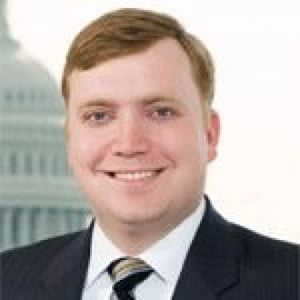




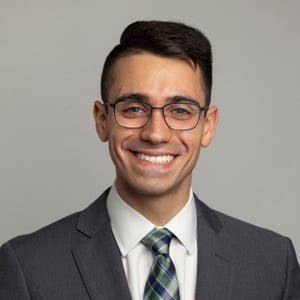
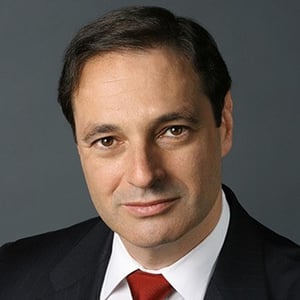

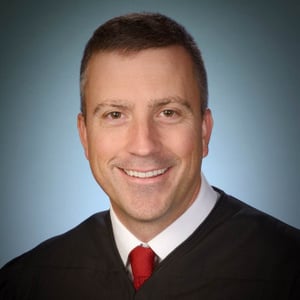
Tara Leigh Grove is the Vinson & Elkins Chair in Law at the University of Texas School of Law. Grove graduated summa cum laude from Duke University and magna cum laude from Harvard Law School, where she served as the Supreme Court Chair of the Harvard Law Review. Grove clerked for Judge Emilio Garza on the U.S. Court of Appeals for the Fifth Circuit, and then spent four years as an attorney for the U.S. Department of Justice, Civil Division, Appellate Staff, where she argued fifteen cases in the courts of appeals.
Grove’s research focuses on the federal judiciary, interpretive theory, and the constitutional separation of powers. She has published with such prestigious law journals as the Harvard Law Review, the Yale Law Journal, the Columbia Law Review, the University of Pennsylvania Law Review, the New York University Law Review, the University of Chicago Law Review, the Virginia Law Review, the Texas Law Review, the Cornell Law Review, the Northwestern University Law Review, and the Vanderbilt Law Review. Grove has received awards for both her research and her teaching.
In 2021, Grove served on the Presidential Commission on the Supreme Court of the United States, a bipartisan commission created by President Biden and charged with examining proposals for Supreme Court reform. Since 2022, Grove has worked on the Princeton Initiative on Reclaiming the Constitutional Powers of Congress, which brings together former members of Congress, political scientists, and law professors. Grove serves as the Co-Chair of the section on the Appointments Process for the Princeton Initiative. Grove is a co-author of Low & Jeffries' Federal Courts and the Law of Federal-State Relations, a leading federal courts casebook, and she has served as the Chair of the Federal Courts Section of the Association of American Law Schools. Grove has been a visiting professor at both Harvard Law School and Northwestern Pritzker School of Law.










Courthouse Steps Oral Argument: Ohio v. Environmental Protection Agency
Megan Herzog, Matthew Kuhn, Matthew Z. Leopold, Viktoria Z. Seale
On February 21, 2024, the Supreme Court will hear oral argument in Ohio v. Environmental...
Explainer Episode 64 - Union Release Time: Who Should Pay?
James Sherk, Jonathan Riches
In this episode, Jon Riches and James Sherk discuss fundamental questions related to government labor...
In Wyoming, Supreme Court Rules Canine Sniffs Outside Vehicles Don’t Need Probable Cause
Nicholas DeBenedetto
Last June, the Wyoming Supreme Court unanimously held that the Wyoming Constitution does not...
Explainer 62 - FDA's Regulation of Laboratory Developed Tests
Joel Zinberg
For many years FDA has claimed the authority to regulate Laboratory Developed Tests, that is...
Topics
West Virginia Adopts Substantial Civil Rules Changes
In 2019, the West Virginia Supreme Court of Appeals established a committee to review the...
Panel: The Future of Student Loan Cancellation, State Standing, and the Major Questions Doctrine after Biden v. Nebraska
Tara Leigh Grove, Julia D. Mahoney, Brian Gary Slocum, Christopher J. Walker, Daniel E. Walters
In response to the COVID-19 pandemic, the Secretary of Education created a nationwide student loan...
Congress and the Future of Agency Authority: A Discussion of Three Major Administrative Law Cases and Their Implications for Congress
Trevor N. McFadden, Kimberly Wehle, Will Yeatman
The Federalist Society's Capitol Hill Chapter and the Regulatory Transparency Project invite you to join...
Luncheon Discussion: Free Speech vs. Non-Discrimination: A Discussion on 303 Creative
Dale A. Carpenter, Mark Movsesian, Amy Sepinwall
303 Creative v. Elenis, which the U.S. Supreme Court decided last term, is the most...
A Deeper Originalism: From Court-Centered Jurisprudence to Constitutional Self-Government
Johnathan O'Neill
Originalism has substantially reoriented constitutional discourse since it first reemerged in response to the Warren...
Law and Economics of Net Neutrality
George Ford, Lawrence J. Spiwak
According to the Telecommunications Act of 1996, the policy of the United States shall be...