

Vice President, Edwin Meese III Institute for the Rule of Law, Advancing American Freedom
John G. Malcolm oversees Advancing American Freedom’s work to increase understanding of the Constitution and the rule of law as Vice President of the organization’s Edwin Meese III Institute for the Rule of Law. Malcolm brings to the challenge a wealth of legal expertise and experience in both the public and private sectors.
Prior to joining Advancing American Freedom in 2025, Malcolm was the Vice President of the Institute for Constitutional Government and the Director of the Meese Center for Legal and Judicial Studies at the Heritage Foundation. Prior to joining Heritage in 2012, Malcolm was general counsel at the U.S. Commission on International Religious Freedom, as well as a distinguished practitioner in residence at Pepperdine Law School. From 2004 to 2009, Malcolm was executive vice president and director of worldwide anti-piracy operations for the Motion Picture Association.
Malcolm served as a deputy assistant attorney general in the Department of Justice’s Criminal Division from 2001 to 2004, where he oversaw sections on computer crime and intellectual property, domestic security, child exploitation and obscenity, and special investigations. Immediately prior to that, he was a founding partner in the Atlanta law firm of Malcolm & Schroeder, LLP.
From 1990 to 1997, Malcolm was an assistant U.S. attorney in Atlanta, assigned to the fraud and public corruption section, and also an associate independent counsel, investigating fraud and abuse in the Department of Housing and Urban Development. He was honored with the Director’s Award for Superior Performance for his work in connection with the successful prosecution of Walter Leroy Moody Jr., who assassinated an 11th Circuit judge and the head of the Savannah chapter of the NAACP.
A graduate of Harvard Law School and Columbia College, Malcolm began his career as a law clerk to a federal district court judge and a federal appellate court judge, and as an associate at the Atlanta-based law firm of Sutherland, Asbill & Brennan (new Eversheds Sutherland).
Malcolm, who resides in Washington, D.C., serves on the Board of Trustees of the Washington National Opera and is a Senate-confirmed member of the Board of Directors of the Legal Services Corporation, the largest funder of civil legal aid in the United States.

Emanuel S. Heller Professor of Law, University of California at Berkeley; Thomas Smith Senior Research Fellow, The Civitas Institute, University of Texas at Austin
John Yoo is the Emanuel Heller Professor of Law at the University of California at Berkeley. He is also the Thomas Smith Senior Research Fellow, Civitas Institute, at the University of Texas at Austin. He is also a Nonresident Senior Fellow at the American Enterprise Institute.
His most recent book, The Politically Incorrect Guide to the Supreme Court, co-authored with Robert Delahunty, was published in 2023. Professor Yoo’s other books include Defender-in-Chief: Trump’s Fight for Presidential Power; Striking Power: How Cyber, Robots, and Space Weapons Change the Rules for War; Point of Attack: Preventive War, International Law, and Global Welfare; and Crisis and Command: A History of Executive Power from George Washington to George Bush.
He is a co-author of volumes 1 and 2 of R. Rossum, G. Tarr, V. Munoz & J. Yoo American Constitution Law (Routledge, 2026), and a co-editor of the eight-volume series on the 250th anniversary of the American Revolution, We Hold These Truths, with Yuval Levin and Adam White of the American Enterprise Institute.
Professor Yoo has published more than 100 articles in academic journals on subjects including national security, constitutional law, international law, and the Supreme Court. He also regularly contributes to the editorial pages of the Wall Street Journal, New York Times, Washington Post, Los Angeles Times, and National Review, among others.
Professor Yoo has served in all three branches of government. He was an official in the U.S. Department of Justice, where he worked on national security and terrorism issues after the 9/11 attacks. He served as general counsel of the U.S. Senate Judiciary Committee. He has been a law clerk for Supreme Court Justice Clarence Thomas and federal appeals Judge Laurence Silberman. He has been a visiting professor at the University of Texas at Austin’s School of Civic Leadership, Seoul National University, the Interdisciplinary Center Herzliya, Keio University, Trento University, the University of Chicago, and the Free University of Amsterdam.
Professor Yoo supervises the Public Law and Policy Program and the California Constitution Center. He also serves on the boards of Founding Forward, the Washington Legal Foundation, the Pacific Legal Foundation, the Ulysses Grant Institute, the Federalist Society’s Separation of Powers and Federalism Division, the Universidad Cientifica del Sur Law School, and the Asia-Pacific Law Institute at Seoul National University. He is a winner of the Federalist Society’s Paul Bator award and the Heritage Foundation’s Edwin Meese III Originalism Lectureship.
Professor Yoo graduated from Yale Law School and summa cum laude from Harvard College.

Partner, Clement & Murphy, PLLC
Paul served as the 43rd Solicitor General of the United States from June 2005 until June 2008. Before his confirmation as Solicitor General, he served as Acting Solicitor General for nearly a year and as Principal Deputy Solicitor General for over three years.
Paul has argued over 100 cases before the United States Supreme Court, including McConnell v. FEC, Tennessee v. Lane, United States v. Booker, MGM v. Grokster, Hobby Lobby v. Burwell, Epic Systems Corp. v. Lewis, Rucho v. Common Cause, Facebook v. Duguid, and TransUnion v. Ramirez. Paul has argued more Supreme Court cases since 2000 than any lawyer in or out of government. He has also argued many important cases in the lower courts, including Walker v. Cheney, United States v. Moussaoui and NFL v. Brady.
Paul’s practice focuses on appellate matters, constitutional litigation and strategic counseling. He represents a broad array of clients in the Supreme Court and in federal and state appellate courts. Last year, for example, he successfully argued Supreme Court cases involving significant issues of energy regulation, statutory interpretation, state sovereign immunity and Article III standing, and successfully argued a trademark appeal in the Fourth Circuit, and a constitutional appeal before the en banc Eleventh Circuit.
Paul focuses on high-stakes appeals. In recent years, he successfully defended a $1.2 billion jury verdict for clients in a Tenth Circuit case, while securing the reversal of an over $2 billion jury verdict for another client in the Seventh Circuit and the approval of a nearly $1 billion dollar class action settlement in the Third Circuit. He has initiated major administrative law challenges and constitutional litigation against the federal government, such as the successful challenge to the HHS drug-pricing rule and threatened challenges that led to the withdrawal of the Treasury Department’s proposed cryptocurrency regulations. He also counsels clients on a variety of strategic legal questions, whether arising from pending legislation, government inquiries or ongoing litigation.
Paul has undertaken substantial pro bono engagements in the Supreme Court, such as twice successfully representing the defendant in Bond v. United States and successfully representing the Omaha Tribe in Nebraska v. Parker, the guardian ad litem in Adoptive Couple v. Baby Girl, the defendant in Sekhar v. United States, a high school football coach in Kennedy v. Bremerton, and the Little Sisters of the Poor. Paul’s pro bono representation also precipitated the federal government’s confession of error in United States v. Rojas.
Following law school, Paul clerked for Judge Laurence H. Silberman of the U.S. Court of Appeals for the D.C. Circuit and for Associate Justice Antonin Scalia of the U.S. Supreme Court. After his clerkships, he went on to serve as Chief Counsel of the U.S. Senate Subcommittee on the Constitution, Federalism and Property Rights.
Paul is a Distinguished Lecturer in Law at the Georgetown University Law Center, where he has taught in various capacities since 1998. He also serves as a Senior Fellow of the Law Center’s Supreme Court Institute. He is the Justice Joseph Story Distinguished Practitioner in Residence at the Gray Center at Scalia Law School.

Deputy Secretary of Agriculture, U.S. Department of Agriculture
Judge Stephen Alexander Vaden was appointed as the Deputy Secretary of the U.S. Department of Agriculture on July 7, 2025. Alongside Secretary Brooke L. Rollins, Deputy Secretary Vaden leads the Department’s operations and implements policies that support America’s food and farm systems. A native of Union City, Tennessee, Deputy Secretary Vaden brings expertise in agricultural policy, law, and rural development. Previously, he served as a judge on the U.S. Court of International Trade and as General Counsel of USDA. Throughout Deputy Secretary Vaden’s time as General Counsel, he led successful Supreme Court litigation, advanced regulatory reform, and supported the implementation of the 2018 Farm Bill. He is a graduate of Yale Law School and Vanderbilt University. A public servant with strong agricultural roots, Deputy Secretary Vaden is committed to revitalizing rural America and ensuring an abundant, affordable, and safe U.S. food supply.
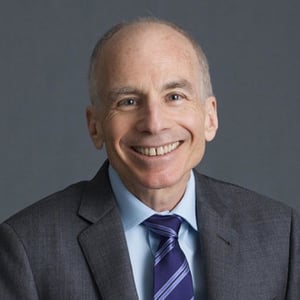
University Professor, Founding Linda D. & Timothy J. O’Neill Professor of Global Health Law, Faculty Director of O’Neill Institute for National & Global Health Law, Georgetown University, Director, World Health Organization Collaborating Center on Public Health Law & Human Rights
Lawrence O. Gostin is University Professor, Georgetown University’s highest academic rank conferred by the University President. Prof. Gostin directs the O’Neill Institute for National and Global Health Law and is the Founding O’Neill Chair in Global Health Law. He served as Associate Dean for Research at Georgetown Law from 2004 to 2008. He is Professor of Medicine at Georgetown University and Professor of Public Health at the Johns Hopkins University.
Prof. Gostin is the Director of the World Health Organization Collaborating Center on National and Global Health Law. The WHO Director-General has appointed Prof. Gostin to high-level positions, including the International Health Regulations (IHR) Roster of Experts and the Expert Advisory Panel on Mental Health. He served on the Director-General’s Advisory Committee on Reforming the World Health Organization, as well as numerous WHO expert advisory committees, including on the Pandemic Influenza Preparedness Framework, smallpox, genomic sequencing data, migrant health, and NCD prevention. He served on the WHO/Global Fund Blue Ribbon Expert Panel: The Equitable Access Initiative to develop a global health equity framework. He co-chairs the Lancet Commission on Global Health Law.
Professor Gostin served on two global commissions to report on the lessons learned from the 2015 West Africa Ebola epidemic. He was also senior advisor to the United Nations Secretary General’s post-Ebola Commission. He also served on the drafting team for the G-7 Summit in Tokyo 2016, focusing on global health security and Universal Health Coverage.
Prof. Gostin holds multiple international academic professorial appointments, including at Oxford University, the University of Witwatersrand (South Africa), and Melbourne University. Prof. Gostin served on the Governing Board of Directors of the Consortium of Universities for Global Health.
Prof. Gostin holds editorial appointments in leading academic journals throughout the world. He is the Legal and Global Health Correspondent for the Journal of the American Medical Association. He is also Founding Editor-in-Chief of Laws (an international open access law journal). He was formally the Editor-in-Chief of the Journal of Law, Medicine & Ethics.
Prof. Gostin holds four honorary degrees. In 1994, the Chancellor of the State University of New York conferred an Honorary Doctor of Laws Degree. In 2006, Her Majesty Queen Elizabeth II and the Vice Chancellor awarded Cardiff University’s (Wales) highest honor, an Honorary Fellow. In 2007, the Royal Institute of Public Health (United Kingdom) appointed Prof. Gostin as a Fellow of the Royal Society of Public Health (FRSPH). In 2012, the Chancellor of the University of Sydney – on the nomination of the Deans of the Law and Medical Schools – conferred a Doctor of Laws (honoris causa), presided by two Justices of Australia’s highest court—Justices Kirby and Haydon.
Prof. Gostin is an elected lifetime Member of the National Academy of Medicine/ National Academy of Sciences. He has served on the National Academy’s Board on Health Sciences Policy, the Board on Population Health, the Human Subjects Review Board, and the Committee on Science, Technology, and Law. He currently serves on the National Academies of Sciences Engineering, and Medicine, Board on Global Health. Gostin chaired the National Academy’s Committee on Global Solutions to Falsified, Substandard, and Counterfeit Medicines. He has chaired National Academy Committees on national preparedness for mass disasters, health informational privacy, public health genomics, and human subject research on prisoners.
Prof. Gostin is also a Member of the Council on Foreign Relations and Fellow of the Hastings Center. In 2016, President Obama appointed Prof. Gostin to a six-year term on the President’s National Cancer Advisory Board to advise the nation on cancer prevention, research, and policy. He also serves on the National Institutes of Health Director’s Advisory Committee on the ethics of public/private partnerships to end the opioid crisis.
Prof. Gostin has led major law reform initiatives in the U.S., including drafting the Model Emergency Health Powers Act (MEHPA) to combat bioterrorism (following the post-9/11 anthrax attacks) and the “Turning Point” Model State Public Health Act. He also spearheaded the World Health Organization and International Development Law Organization’s major report, Advancing the Right to Health: The Vital Role of Law.
Prof. Gostin’s proposal for a Framework Convention on Global Health – an international treaty ensuring the right to health – is now part of a global campaign, endorsed by the UN Secretary-General and Director of UNAIDS.
In the United Kingdom, Lawrence Gostin was the Legal Director of the National Association for Mental Health, Director of the National Council of Civil Liberties (the UK equivalent of the ACLU), and a Fellow at Oxford University. He helped draft the Mental Health Act (England and Wales) and brought landmark cases before the European Court of Human Rights.
Prof. Gostin’s books include: Public Health Law: Power, Duty, Restraint (University of California Press, 3rd ed., 2016); Public Health Law and Ethics: A Reader (University of California Press, 3rd ed., 2018); Human Rights in Global Health: Rights-Based Governance for a Globalizing World (Oxford University Press, 2018); Law and the Health System (Foundation Press, 2014); Principles of Mental Health Law & Practice (Oxford University Press, 2010).
Gostin’s classic text, Global Health Law (Harvard University Press, 2014) is read throughout the world—translated and published in both simplified and traditional Chinese, and in Spanish. Paul Farmer, Partners in Health, says of his book: Global Health Law is “more than the definitive book on a dynamic field. Gostin harnesses the power of international law and human rights as tools to close unconscionable health inequities — the injustices that burden marginalized populations throughout the world. Gostin presents a forceful vision, one that deserves a wide embrace.”
In a 2012 systematic empirical analysis of legal scholarship, independent researchers ranked Prof. Gostin 1st in the nation in productivity among all law professors, and 11th in in impact and influence. A 2017 and 2018 systematic empirical analysis ranked Prof. Gostin 1st in the nation for citations in health law.
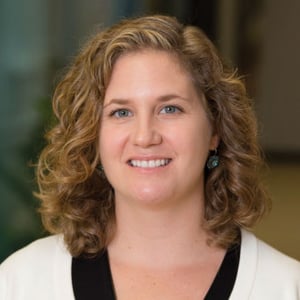
Senior Scholar, Johns Hopkins Center for Health Security
Dr. Nuzzo is a Senior Scholar at the Johns Hopkins Center for Health Security and an Associate Professor in the Department of Environmental Health and Engineering and the Department of Epidemiology at the Johns Hopkins Bloomberg School of Public Health. An epidemiologist by training, her work focuses on global health security, with a particular focus on outbreak detection and response, health systems as they relate to global health security, international and domestic biosurveillance, and infectious disease diagnostics. She directs the Outbreak Observatory, which conducts, in partnership with front-line public health practitioners, operational research to improve outbreak preparedness and response. Together with colleagues from the Nuclear Threat Initiative and the Economist Intelligence Unit, she co-leads the development of the first-ever Global Health Security Index, which benchmarks 195 countries’ public health and healthcare capacities and capabilities, their commitment to international norms and global health security financing, and socioeconomic, political, and environmental risk environments. Previously, she has conducted research related to the Affordable Care Act, tuberculosis control, foodborne outbreaks, and water security. Dr. Nuzzo is an Associate Editor of the peer-reviewed journal Health Security.
In addition to her work at the Center, Dr. Nuzzo has advised national governments and nonprofit organizations. She has served as a consultant to the National Biosurveillance Advisory Subcommittee, as a member of the US Environmental Protection Agency’s National Drinking Water Advisory Council (NDWAC), and as a member of the NDWAC’s Water Security Working Group. She has also served as a project advisor for the American Water Works Association Research Foundation (now called the Water Research Foundation), a primary funding organization for drinking water research in the United States. She has also been consulted on pandemic planning efforts in the Republic of Indonesia and Taiwan.
Dr. Nuzzo joined the Center at its founding in 2003, and she has served as an Analyst, Senior Analyst, and Associate. Prior to joining the Center, she served as a Research Analyst with the Center for Civilian Biodefense Strategies at the Johns Hopkins Bloomberg School of Public Health.
In 2002 and 2003, Dr. Nuzzo worked as a public health epidemiologist for the City of New York, where she was involved with disease and syndromic surveillance efforts related to the city’s Waterborne Disease Risk Assessment Program. Central to her duties in New York was the management of the city’s drug sale monitoring program for surveillance of diarrheal illness. She also worked on a local climate change initiative for the City of Cambridge, MA.
Dr. Nuzzo received a DrPH in epidemiology from the Johns Hopkins Bloomberg School of Public Health, an SM in environmental health from Harvard University, and a BS in environmental sciences from Rutgers University.
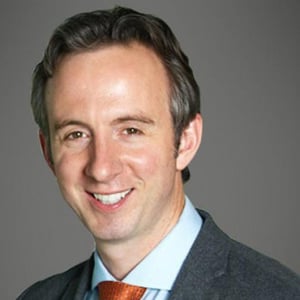
Professor of Law, University of Minnesota Law School
Professor James W. Coleman is a scholar of energy law. He specializes in North American energy infrastructure, transport, and trade. He is also a nonresident senior fellow at the American Enterprise Institute focused on energy policy.
Professor Coleman has testified before Congress on steps to speed up energy infrastructure permits. He also worked with a team of experts as part of Alberta's Royalty Review to revise the Canadian province's management of its vast oil and gas resources.
Before joining Minnesota, Professor Coleman taught at Southern Methodist University's Dedman School of Law, the University of Calgary’s law and business schools, and Harvard Law School. Earlier, he practiced environmental and appellate law at Sidley Austin in Washington, D.C., and clerked for the Honorable Steven M. Colloton of the U.S. Court of Appeals for the Eighth Circuit.
Professor Coleman received two degrees from Harvard University—a J.D. (cum laude) and B.A. in biology (magna cum laude with highest honors in the field). As a result of his undergraduate thesis on butterfly genetics, which required fieldwork in Central Asia, a species of lycaenid butterfly was named after him—Agrodiaetus ripartii colemani.
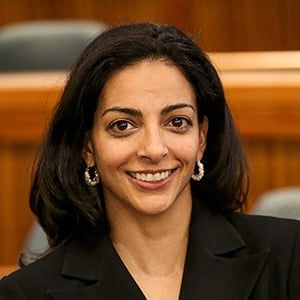
Associate Professor of Law, Suffolk University Law School
Sharmila L. Murthy is an Associate Professor at Suffolk University Law School, where she teaches and writes on issues of property law, environmental law, international environmental law, poverty, and human rights. A list of her scholarly publications is available.
Professor Murthy is active with the American Association of Law Schools. She currently serves as Chair of the International Human Rights Section, as Chair-Elect of the Environmental Law Section, and on the Executive Board of the Law and South Asia Studies Section. In 2017, she received the Woman of the Year: Faculty Division from the Suffolk Law Women of Color Law Student Association.
Previously, Professor Murthy was a Visiting Scholar at Harvard Kennedy School of Government, where she served as the lead investigator for water for the Project on Innovation and Access to Technologies for Sustainable Development through the Sustainability Science Program. She also co-founded the Human Rights to Water and Sanitation Program as a Fellow at Harvard Kennedy School’s Carr Center for Human Rights Policy. In addition, Professor Murthy has taught as part of the Water Diplomacy Workshop since 2013. In 2014, Professor Murthy was selected as a finalist for the United Nations Special Rapporteur on the human right to safe drinking water and sanitation.
Professor Murthy began her legal career as a public interest poverty lawyer. She was awarded a Skadden Fellowship to work with the Legal Aid Society of Middle Tennessee and the Cumberlands, where she created the Refugee and Immigrant Partnership Program for Legal Empowerment and litigated predatory lending and foreclosure rescue scam cases. For these efforts, she received the New Advocate of the Year award from the Tennessee Alliance of Legal Services. Professor Murthy also litigated complex and class action cases as an associate with Lieff Cabraser Heimann & Bernstein, where she represented members of the public in mortgage fraud and natural resource cases.
Professor Murthy received her JD from Harvard Law School, her MPA from Harvard Kennedy School of Government, and her BS in Natural Resources from Cornell University. She clerked for the Honorable Martha Craig Daughtrey on the U.S. Court of Appeals for the Sixth Circuit. She was also a U.S. Fulbright Scholar in India, where she studied the rural microfinance program of the Self-Employed Women’s Association.
Professor Murthy also volunteers with several civic and legal organizations. She currently serves on the Massachusetts State Board of the Conservation Law Foundation, on the Scientific Committee of WaterLex, and on the Steering Committee of the Boston Lawyer Chapter of the American Constitution Society (ACS). Previously, she was the President of the Tennessee Immigrant and Refugee Rights Coalition and the founding President of the Nashville ACS Chapter.
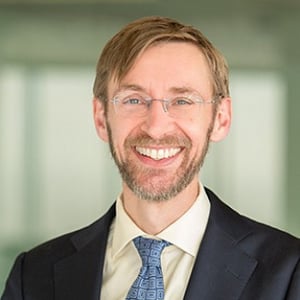
Partner, Squire Patton Boggs (Denver)
Keith Bradley represents companies before US federal and state agencies across a spectrum of regulatory regimes. As a senior advisor to the General Counsel of the US Department of Energy (DOE) until recently, he organized the defense of high-stakes litigation; advised on prominent departmental regulatory reforms, such as those in energy conservation and nuclear export controls; and was the department’s lead lawyer on implementation of the Iran nuclear deal.
Before joining DOE, he was counsel in the Legal Division of the Consumer Financial Protection Bureau, where he helped draft significant regulations, counseled senior agency executives on administrative and constitutional law, and worked with enforcement teams on some of the bureau’s most significant matters. Since leaving DOE, he has served as senior counsel for a corporation in Denver, where he built and ran the compliance management system and helped introduce regulators to the company’s novel business model.
Before his government service, Bradley engaged in administrative and regulatory litigation, appellate litigation and complex commercial litigation at a major US-based law firm.
Bradley is also a physicist who developed nanoelectronic sensor systems at a technology startup. He has 13 issued patents to his name.
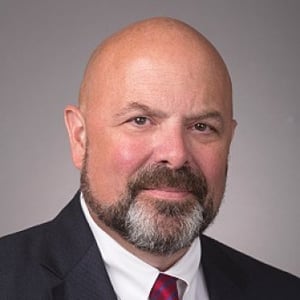
Partner, Perkins Coie LLP
Thomas (Tom) Jensen provides strategic regulatory counsel, litigation support and legislative advocacy to clients in the environment, energy and natural resources sectors. With considerable experience in and deep knowledge of environmental and resources law, Tom delivers sophisticated counsel to clients involved with energy and water pipelines, electric transmission projects, transportation facilities, hydropower and other energy generation assets, and other capital-intensive infrastructure projects. Tom currently serves as lead outside regulatory and litigation counsel to a major interstate natural gas pipeline project and recently led the successful permitting and siting effort for a 500 kV interstate electric transmission project.
A nationally recognized practitioner of natural resources and environmental law, Tom advises clients throughout the business, government and nonprofit sectors, reflecting his credentials not only in the legal industry, but also in the public sector. He served as the majority counsel to the U.S. Senate Committee on Energy and Natural Resources and was the associate director for natural resources on the White House Council on Environmental Quality. He has also written numerous pieces of legislation that have been enacted into federal law and has published and lectured widely in the field.
Developers of innovative, challenging energy projects and new environmental initiatives seek out Tom’s guidance for his insight into protected natural and cultural resources, public lands and marine areas, takings law and the National Environmental Policy Act. A key player in helping clients develop and defend their project strategies, Tom leads teams involved in siting, property and right-of-way acquisition, federal, state, tribal and local permitting, settlement negotiations and litigation.
Tom speaks frequently on environmental issues, from protected species mitigation to siting strategy, water development, water quality, climate adaptation and marine energy development. He also writes and speaks on conservation of at-risk wildlife and western range lands.
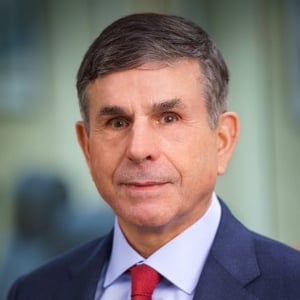
Partner, Marzulla Law
Roger J. Marzulla is one of the nation’s leading environmental, water, and property lawyers. As Assistant Attorney General in charge of the U.S. Justice Department’s Environment and Natural Resources Division, Roger learned first hand the operations and litigation styles of his client agencies: EPA, Interior Department, Bureau of Reclamation, Fish and Wildlife Service, National Marine Fisheries Service, Department of Transportation, Department of Commerce. In 1997, he co-founded Marzulla Law, where he brings to bear more than 35 years of expertise representing companies and individuals in industries as diverse as land and project development, aerospace, chemicals, oil and gas, mining, timber, manufacturing, computers, agriculture and water service.
Roger began his legal career as a trial lawyer in San Jose, California, after graduating magna cum laude from the University of Santa Clara School of Law. As a partner in Matthews & Marzulla he represented developers, title and construction companies, shopping centers, apartment owners and lenders in litigation throughout California. In 1981 he moved to Denver to become President of Mountain States Legal Foundation, litigating environmental and natural resource cases across the West.
In 1983 Roger joined the Justice Department as Special Litigation Counsel. He was subsequently promoted to Deputy Assistant Attorney General and, in 1987, was confirmed by the Senate as Assistant Attorney General in charge of the Environment and Natural Resources Division. At the Justice Department, Roger helped create litigation strategies for government programs as diverse as Superfund, the Clean Air Act, off-shore oil leasing, environmental crimes, federal facility clean-up, wetlands, endangered species and hazardous waste enforcement, as well as Presidential Order EO 12,630 (Government Interference with Private Property Rights).
In 1989 Roger returned to private law practice, successively heading the environmental law practices of the Powell, Goldstein and Akin, Gump law firms.
Since 1997, as a partner in Marzulla Law, Roger has continued to represent corporate and business clients in a wide array of environmental and property issues in courts across the country, frequently in litigation against the United States. He also assists clients in attaining compliance with environmental, health and safety regulation, and in avoiding risks in transactions.
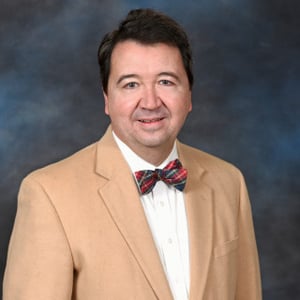
Judge, United States Court of Appeals, Sixth Circuit
John K. Bush is a Circuit Judge on the United States Court of Appeals for the Sixth Circuit.
His chambers are in Louisville, Kentucky. Prior to joining the court, Judge Bush was a partner in the
Louisville office of the firm Bingham Greenebaum Doll (now Dentons Bingham Greenebaum),
where he also was co-chair of the firm’s litigation department. He began his legal practice in the
Washington, D.C. office of Gibson Dunn & Crutcher.
Judge Bush served as a law clerk for Judge J. Smith Henley of the United States Court of
Appeals for the Eighth Circuit. He was graduated summa cum laude from Vanderbilt University,
and cum laude from Harvard Law School. He is an adjunct lecturer at The George Washington
University Law School and the Brandeis School of Law at the University of Louisville.

Professor of Law & Helen L. Crocker Faculty Scholar, Stanford Law School
Jud Campbell joined the faculty of Stanford Law School in 2023. He previously served as a professor of law at the University of Richmond School of Law and as a visiting professor of law at the University of Chicago Law School and at Harvard Law School. His academic focus is constitutional history and First Amendment law. His publications include articles in the Stanford Law Review, Yale Law Journal, Harvard Law Review, Texas Law Review, Constitutional Commentary, and Law and History Review. After completing his J.D. at Stanford Law School, he clerked for Judge Diane S. Sykes on the U.S. Court of Appeals for the Seventh Circuit, and for Judge José A. Cabranes on the U.S. Court of Appeals for the Second Circuit. He then served as the Executive Director of the Stanford Constitutional Law Center. He holds a bachelor’s degree from the University of North Carolina at Chapel Hill and two master’s degrees from the London School of Economics, where he studied as a Marshall Scholar.
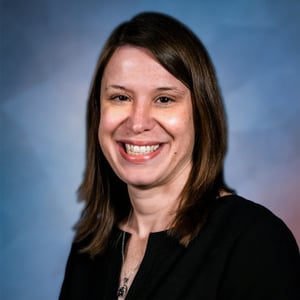
Senior Director of Strategic Partnerships, First Liberty Institute
Lisa Budzynski Ezell is the former Vice President and Director of the Federalist Society’s Lawyers Chapters. In this role, she managed a growing network of over 90 lawyers chapters nationwide, including oversight of leadership recruitment, chapter programming, state conferences, civics education outreach, and young lawyers activities. She holds a Bachelor of Arts degree from Saint Mary’s College in Political Science and History and a Master of Public Policy from George Mason University.
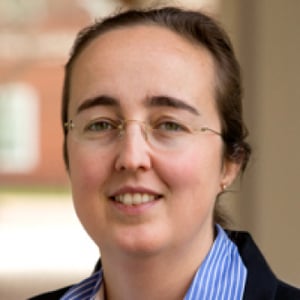
Assistant Professor of Political Science, Old Dominion University
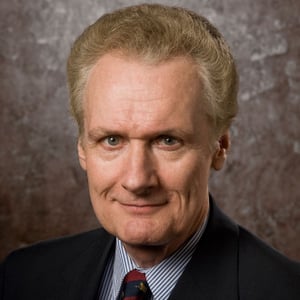
Vice President for Legal Affairs, Cato Institute
Roger Pilon is the Cato’s Institute’s vice president for legal affairs, the founding director of Cato’s Robert A. Levy Center for Constitutional Studies, the inaugural holder of Cato’s B. Kenneth Simon Chair in Constitutional Studies, and the founding publisher of the Cato Supreme Court Review.
Prior to joining Cato, Pilon held five senior posts in the Reagan administration, including at State and Justice, and was a national fellow at Stanford’s Hoover Institution. In 1989 the Bicentennial Commission presented him with its Benjamin Franklin Award for excellence in writing on the U.S. Constitution. In 2001 Columbia University’s School of General Studies awarded him its Alumni Medal of Distinction. Pilon lectures and debates at universities and law schools across the country and testifies often before Congress.
His writing has appeared in the Wall Street Journal, the Washington Post, the New York Times, the Los Angeles Times, Legal Times, National Law Journal, Harvard Journal of Law and Public Policy, Stanford Law and Policy Review, and elsewhere. He has appeared on ABC’s Nightline, CBS’s 60 Minutes II, Fox News Channel, NPR, CNN, MSNBC, CNBC, C-SPAN, and other media.
Pilon holds a BA from Columbia University, an MA and a PhD from the University of Chicago, and a JD from the George Washington University School of Law.
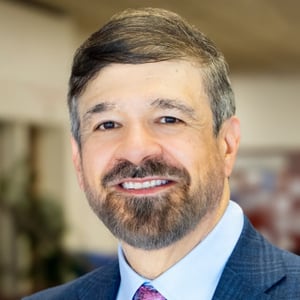
Hugh and Hazel Darling Foundation Professor of Law; Director, Center for the Study of Constitutional Originalism, University of San Diego School of Law
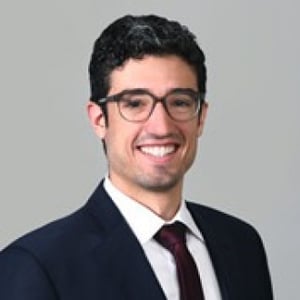
Assistant United States Attorney, United States Attorney’s Office
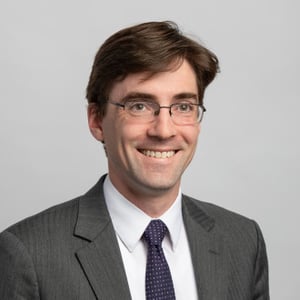
Deputy Litigation Director, Institute for Justice
Robert McNamara serves as Deputy Litigation Director with the Institute for Justice. He joined the Institute in August 2006 and litigates cutting-edge constitutional cases protecting free speech, property rights, economic liberty and other individual liberties in both federal and state courts.
Robert’s work has resulted in court victories for property owners fighting eminent domain abuse, tour guides fighting unconstitutional restrictions on their speech, taxi drivers seeking the right to own their own business, and many others. Robert also litigates in defense of innovation and entrepreneurship in medical care and was co-counsel in Flynn v. Holder, IJ’s landmark challenge to the federal prohibition on compensating bone marrow donors.
Robert’s writing has been published by outlets including The New York Times, The Wall Street Journal, The Washington Post and dozens more nationwide. His opinions and views on legal issues have been featured in radio and television programs ranging from National Public Radio’s All Things Considered to Fox News Channel’s Hannity & Colmes.
Robert is a graduate of Boston University and the New York University School of Law, where he was a founding member and eventual editor-in-chief of the NYU Journal of Law & Liberty. He currently lives in Virginia with his wife and children.
Robert McNamara is a member of the Virginia bar.
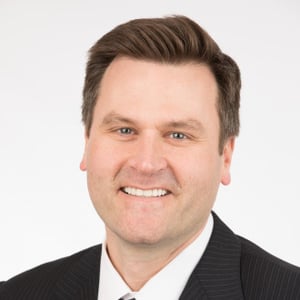
Vice President of Litigation and Deputy General Counsel, National Association of Manufacturers
Peter Tolsdorf is the vice president of litigation and deputy general counsel at the National Association of Manufacturers (NAM). As part of the Manufacturers’ Center for Legal Action, Mr. Tolsdorf works to strengthen the NAM’s ability to promote manufacturing policy objectives through litigation. He also serves as general counsel of The Manufacturing Institute, a nonprofit organization that seeks to help the manufacturing industry attract and develop world-class manufacturing talent.
Mr. Tolsdorf has extensive litigation experience on energy and the environment, labor and employment, product and civil liability, intellectual property, corporate governance and trade issues. At the American Petroleum Institute, he challenged regulatory overreach of the oil and natural gas industry. Mr. Tolsdorf previously served as an attorney at the Federal Energy Regulatory Commission (FERC), where he litigated energy generation and transmission matters. Before the FERC, he litigated cases at major international law firms Bingham McCutchen and McDermott Will & Emery.
Mr. Tolsdorf graduated from The George Washington University Law School, where he served as notes editor of The George Washington Law Review. He lives in Arlington, Virginia, with his wife and two sons.

Co-Chairman, The Federalist Society for Law and Public Policy Studies
Leonard is Co-Chairman and former Executive Vice President of the Federalist Society, joining the organization over 25 years ago. Since that time he has been instrumental in helping the organization top 70,000, focusing on the growth of lawyers membership, operations and activities advancing limited, constitutional government. In addition to his work at the Society, Leonard has advised President Trump on judicial selection, assisted with the Gorsuch and Kavanaugh Supreme Court selection and confirmation process, and served as a member of the transition team. He also organized the outside coalition efforts in support of the Roberts and Alito U.S. Supreme Court confirmations. Leonard was appointed by President George W. Bush to three terms to the U.S. Commission on International Religious Freedom as chairman. He was also a U.S. Delegate to the UN Council and UN Commission on Human Rights during the Bush Administration. Leonard was the recipient of the 2009 Bradley Prize, along with the other founders and directors of the Federalist Society, for his work in advancing freedom and the rule of law. He is the coeditor of Presidential Leadership: Rating the Best and the Worst in the White House, as well as the author of opinion editorials in the New York Times,The Wall Street Journal, and Washington Post. Leonard holds degrees from Cornell University and Cornell Law School. He presently resides in Northern Virginia, where he and his wife Sally have raised their seven children.
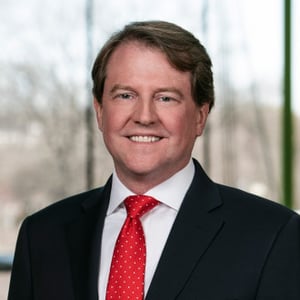
Partner, Jones Day
Don McGahn represents clients before government agencies, in enforcement matters, and in court disputes arising from government regulation or action. He handles litigation, crisis management, regulatory compliance, and political issues.
Prior to rejoining Jones Day in 2019, Don served as Counsel to the President of the United States, advising Donald J. Trump on all legal issues concerning the President and his administration, including constitutional and statutory authority, executive orders, international agreements, tariffs, trade, administrative law, and national security. Don also managed the judicial selection process for the President. During Don's tenure, a historic number of judges were appointed to the federal bench, including two Supreme Court justices. In addition, he spearheaded President Trump's deregulation efforts, which resulted in deregulation at record rates. Following Don's departure from the White House, the President appointed him to the Council of the Administrative Conference of the United States, a nonpartisan, independent agency dedicated to promoting improvement to administrative agency processes.
Don's accomplishments have been recognized at the highest levels of government. Senate Majority Leader Mitch McConnell stated that Don concluded his tenure "not only as the best White House Counsel I've seen on the job, but more broadly, as one of the most successful and consequential aides to any President in recent memory."
Don was nominated by President George W. Bush in 2008, and confirmed in the Senate by unanimous consent, to serve as a member of the Federal Election Commission. He also served as outside Counsel to the Committee on House Administration during the 113th and 114th Congresses and as general counsel to the National Republican Congressional Committee.
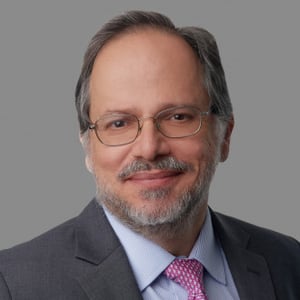
Director of Law & Policy, Environmental Integrity Project
Following Princeton and the University of Chicago Law School, David began practicing law at Paul, Weiss, Rifkind, Wharton & Garrison. Eventually tiring of litigation where the result was a wire transfer from Entity A to Entity B, in the early 1990’s David began his environmental law career at the Massachusetts Attorney General’s Office. Since then, he has litigated dozens of cases under all of the major environmental statutes including, as Sierra Club’s Chief Climate Counsel, initiating and managing Massachusetts v. EPA. Most recently, he has been busy challenging FERC’s permitting of natural gas pipelines and LNG export terminals. Apart from litigation, David has helped lead efforts on both greenhouse gas regulation and global warming legislation (and may be the only person ever invited to testify by both Barbara Boxer and James Inhofe).
He has drafted a range of federal climate legislation, advised states as to their greenhouse gas regulatory authority (and for many years has represented environmental groups defending state GHG regulations from dormant Commerce Clause challenges). David has designed and taught courses on “Environmental Litigation” at Georgetown University Law Center and “Environmental Law and Science” at the William and Mary Law School/Virginia Institute of Marine Science.
Judge, United States Court of Appeals, Sixth Circuit
John K. Bush is a Circuit Judge on the United States Court of Appeals for the Sixth Circuit.
His chambers are in Louisville, Kentucky. Prior to joining the court, Judge Bush was a partner in the
Louisville office of the firm Bingham Greenebaum Doll (now Dentons Bingham Greenebaum),
where he also was co-chair of the firm’s litigation department. He began his legal practice in the
Washington, D.C. office of Gibson Dunn & Crutcher.
Judge Bush served as a law clerk for Judge J. Smith Henley of the United States Court of
Appeals for the Eighth Circuit. He was graduated summa cum laude from Vanderbilt University,
and cum laude from Harvard Law School. He is an adjunct lecturer at The George Washington
University Law School and the Brandeis School of Law at the University of Louisville.
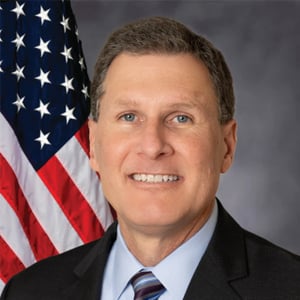
United States Attorney, Eastern District of California
Mr. Grant was appointed by Attorney General Pam Bondi to serve as the United States Attorney for the Eastern District of California beginning on August 11, 2025. Pursuant to 28 U.S.C. § 546(d), he was further appointed by the district court effective December 9, 2025.
Mr. Grant is a veteran of the Department of Justice, having served twice in Washington, D.C.: from 1991 to 1993 as an Attorney-Adviser in the Office of Legal Counsel, and from 2017 to 2021 as a Deputy Assistant Attorney General in the Environment and Natural Resources Division (ENRD). During his tenure at ENRD, he supervised more than a hundred Department litigators advancing the interests of the United States and its agencies in both enforcement and defensive matters, both civil and criminal.
In addition to his service in the Department, Mr. Grant has decades of experience in private practice in Washington, D.C. and Sacramento. That experience includes arguments in the U.S. Supreme Court, the California Supreme Court, and numerous other federal and state courts.
Mr. Grant served as a law clerk to Chief Justice Warren E. Burger (retired) and Associate Justice Clarence Thomas during the Supreme Court’s October 1994 Term. Earlier he served as a law clerk to Judge Edith H. Jones of the U.S. Court of Appeals for the Fifth Circuit in Houston, Texas.
Mr. Grant grew up in Modesto, California and raised his family in Sacramento County. He attended the University of California, Berkeley, from which he earned a bachelor’s degree in economics (1986) and a law degree (1990).
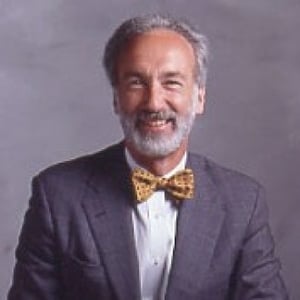
Emeritus Dean and Professor of Law, Lewis & Clark Law School
Professor Huffman joined the law school faculty in 1973, was appointed Acting Dean in 1993 and Dean in 1994, and returned to full time teaching in 2006. Born in Fort Benton, Montana, Jim graduated from Montana State University, the Fletcher School of Law and Diplomacy at Tufts University, and the University of Chicago Law School. He has been a visiting professor at Auckland University in New Zealand, the University of Oregon, the University of Athens in Greece and Universidad Francisco Marroquin in Guatemala. He was also a fellow at the Humane Studies Institute and a Distinguished Bradley Scholar at the Heritage Foundation. Jim serves on the boards of the National Crime Victims Law Institute, the Foundation for Research on Economics and the Environment, the Classroom Law Project, and the Rocky Mountain Mineral Law Foundation. He is a member and former Chair of the Executive Committee of the Environment and Property Rights Practice Group of the Federalist Society. He is a member of the Montana Bar Association and is admitted to practice before the United States Court of Appeals for the Federal Circuit and the United States Supreme Court. He is the author of more than 100 articles and chapters on a wide array of legal topics.
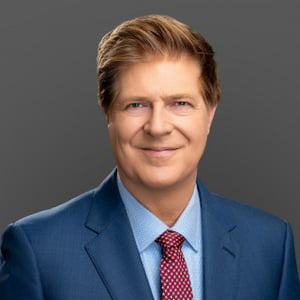
Senior Fellow, Ave Maria School of Law and Host of the Four Boxes Diner Second Amendment Channel
Mark W. Smith is a visiting member of the Senior Common Room, New College, Oxford University and a Visiting Fellow in Pharmaceutical Public Policy and Law in the Department of Pharmacology, Oxford University. Mark is also a Distinguished Scholar and Senior Fellow of Law and Public Policy at the Ave Maria School of Law. He hosts the Four Boxes Diner YouTube Channel (youtube.com/TheFourBoxesDiner), which addresses Second Amendment scholarship, cases, history and related issues, and whose videos have received almost 90 million views. Mark's scholarship has been cited by federal courts and by parties before the United States Supreme Court in Viramontes v. Cook County, New York State Rifle & Pistol Ass’n v. Bruen and in United States v. Rahimi. He is a graduate of the NYU School of Law. Mark is also a New York Times bestselling author who appears frequently in the national media including on the Fox News Channel.
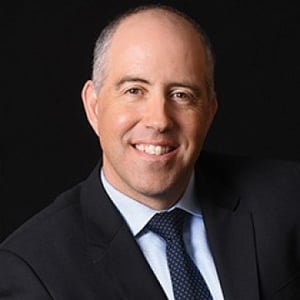
Albert A. Walsh Chair in Real Estate, Land Use, and Property Law; Faculty Director, Urban Law Center, Fordham Law School
Nestor Davidson joined Fordham in 2011 and was named the Albert A. Walsh Professor of Real Estate, Land Use and Property Law in 2017. Professor Davidson is an expert in property, urban law, and affordable housing law and policy, and is the co-author of the casebook Property Law: Rules, Policies and Practices (7th ed. 2017). Professor Davidson founded and serves as the faculty director of the law school’s Urban Law Center and previously served as Associate Dean for Academic Affairs.
Professor Davidson practiced with the firm of Latham and Watkins, focusing on commercial real estate and affordable housing, and served as Special Counsel and Principal Deputy General Counsel at the U.S. Department of Housing and Urban Development. He currently serves as a Member of the Board of the New York State Housing Finance Agency.
Professor Davidson earned his AB from Harvard College and his JD from Columbia Law School. After law school, he clerked for Judge David S. Tatel of the United States Court of Appeals for the District of Columbia Circuit and Justice David H. Souter of the Supreme Court of the United States.
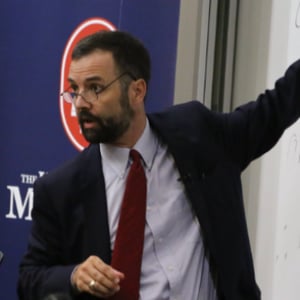
Professor of Law and Jamie L. Whitten Chair in Law and Government, University of Mississippi School of Law
Christopher Green (https://law.olemiss.edu/faculty-directory/christopher-green/) is Professor of Law and Jamie L. Whitten Chair in Law and Government at the University of Mississippi, where he has taught since 2006. He is a graduate of Princeton University and Yale Law School, and has a PhD in philosophy from the University of Notre Dame. He clerked for Judge Rhesa H. Barksdale on the Fifth Circuit and is the author of Equal Citizenship, Civil Rights, and the Constitution: The Original Sense of the Privileges or Immunities Clause (2015) and a large number of articles and essays on constitutional theory and the Fourteenth Amendment, including the two-part Original Sense of the (Equal) Protection Clause and Clarity and Reasonable Doubt in Early State-Constitutional Judicial Review. He is an affiliated scholar with the University of San Diego Center for the Study of Constitutional Originalism.
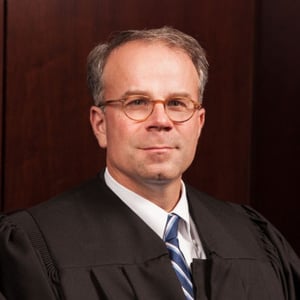
U.S. Court of Appeals, Seventh Circuit
Born 1971 in Fort Wayne, IN
Federal Judicial Service:
Judge, U.S. Court of Appeals for the Seventh Circuit
Nominated by Donald J. Trump on February 15, 2018, to a seat vacated by Richard Allen Posner. Confirmed by the Senate on May 14, 2018, and received commission on May 21, 2018.
Education:
St. Joseph’s College, Rensselaer, Indiana, B.B.A., 1993
Northwestern University School of Law, J.D., 1998
Professional Career:
Law clerk, Hon. Paul V. Niemeyer, U.S. Court of Appeals for the Fourth Circuit, 1998-1999
Law clerk, Hon. Anthony M. Kennedy, Supreme Court of the United States, 1999-2000
Private practice, Cleveland, Ohio, 2000-2002
Assistant U.S. attorney, Southern District of New York, 2002-2006
Counselor to the deputy attorney general, U.S. Department of Justice, 2006
Associate counsel, President George W. Bush, 2007
General counsel, National Security Council, and senior associate counsel, President George W. Bush, 2007-2009
Private practice, Chicago, Illinois, 2009-2018
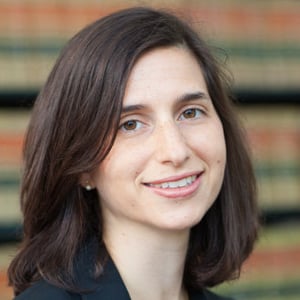
Professor of Law, University of Wisconsin School of Law
Miriam Seifter's research and teaching interests include administrative law, federalism, state and local government law, energy law, and property law. Her recent work focuses on executive power and the separation of powers at the state level, and on the role of states and interest groups in the federal regulatory process. Her publications appear or are forthcoming in the Harvard Law Review, the NYU Law Review, the UCLA Law Review, and the Virginia Law Review, among others. In 2017, UW Law students honored Professor Seifter with the Classroom Teacher of the Year Award, and in 2018, she received one of twelve Distinguished Teaching Awards from the University of Wisconsin-Madison. For her article Gubernatorial Administration, Seifter was named the 2017 winner of the American Constitution Society's Richard D. Cudahy Writing Competition on Regulatory and Administrative Law.
Professor Seifter received a B.A. magna cum laude from Yale University, an M.Sc. with distinction from Oxford University, and a J.D. magna cum laude from Harvard Law School, where she was the Environmental Fellow and an Articles Editor on the Harvard Law Review. After law school, she served as a law clerk for Chief Judge Merrick Garland on the D.C. Circuit and for Justice Ruth Bader Ginsburg at the Supreme Court of the United States. Prior to joining the UW Law faculty, she was a Visiting Researcher and Adjunct Professor of Law at Georgetown University Law Center and worked in private practice at Munger, Tolles & Olson LLP in San Francisco.

Chief Judge, United States Court of Appeals, Sixth Circuit
JEFFREY S. SUTTON is the Chief Judge of the United States Court of Appeals for the Sixth Circuit. He has served as Chair of the Federal Judicial Conference Committee on Rules of Practice and Procedure, Chair of the Advisory Committee on Appellate Rules, and Chair of the Supreme Court Fellows Commission. He currently serves as Chair of the Executive Committee of the Judicial Conference of the United States. Since 1993, Chief Judge Sutton has been an adjunct professor at The Ohio State University College of Law, where he teaches seminars on State Constitutional Law, the United States Supreme Court, and Appellate Advocacy. He also teaches a class on State Constitutional Law at Harvard Law School. Among other publications, he is the author of Who Decides? States as Laboratories of Constitutional Experimentation and 51 Imperfect Solutions: States and the Making of American Constitutional Law. He is the co-author of a casebook, State Constitutional Law: The Modern Experience, as well as The Law of Judicial Precedent. He is also the co-editor of The Essential Scalia: On the Constitution, the Courts, and the Rule of Law. In 2006, Chief Judge Sutton was elected to the American Law Institute, and in 2017 he was elected to its Council.

The Executive Branch, the Supreme Court, and More
John G. Malcolm, John C. Yoo
Join us as John Malcolm and John Yoo discuss recent Supreme Court news, the 25th...
Courthouse Steps Decision Teleforum: United States Forest Service v. Cowpasture River Preservation Association
Paul D. Clement, Stephen Alexander Vaden
On June 15, 2020, the Supreme Court released its decision in the case of United States...
Coronavirus & The Law
Lawrence Gostin, Jennifer Nuzzo
A coronavirus outbreak is raising attention and concern worldwide. Dr. Jennifer Nuzzo and Prof. Lawrence Gostin will...
Deep Dive Episode 92 – The Constitutionality of California’s Cap and Trade Agreement with Quebec
James W. Coleman, Sharmila L. Murthy
The state of California and the Canadian province of Quebec have agreed to link their...
Courthouse Steps Preview: United States Forest Service v. Cowpasture River Preservation Association
Keith Bradley, Thomas C. Jensen, Roger J. Marzulla
On February 24, 2020 the Supreme Court will hear argument in two consolidated cases, U.S....
Panel 1: The Anti-Federalists at the Founding
John K. Bush, Jud Campbell, Lisa Ezell, Michelle Kundmueller, Roger Pilon, Michael B. Rappaport, Justin James Gilio
On January 25, 2020, the Federalist Society hosted its annual Western Chapters Conference at the...
Pipeline Energy Infrastructure Legal Challenges
Robert J. McNamara, Peter Tolsdorf
The advent of fracking and other technological innovations has unleashed a new era of American...
Lunch Address by Don McGahn
Leonard A. Leo, Donald F. McGahn
On January 26, 2019, the Federalist Society hosted the annual Western Chapters Conference at the...
Climate Change Nuisance Suits
David Bookbinder, John K. Bush, Eric Grant, James L. Huffman, Mark W. Smith
Should climate change responsibility be evaluated in the courts or by the elected policymaking branches?...
Showcase Panel III: The States & Administrative Law
Nestor Davidson, Christopher R. Green, Michael Scudder, Miriam Seifter, Jeffrey S. Sutton
We live in a system where regulators make the rules, investigate alleged violations of the...