

Vice President, Edwin Meese III Institute for the Rule of Law, Advancing American Freedom
John G. Malcolm oversees Advancing American Freedom’s work to increase understanding of the Constitution and the rule of law as Vice President of the organization’s Edwin Meese III Institute for the Rule of Law. Malcolm brings to the challenge a wealth of legal expertise and experience in both the public and private sectors.
Prior to joining Advancing American Freedom in 2025, Malcolm was the Vice President of the Institute for Constitutional Government and the Director of the Meese Center for Legal and Judicial Studies at the Heritage Foundation. Prior to joining Heritage in 2012, Malcolm was general counsel at the U.S. Commission on International Religious Freedom, as well as a distinguished practitioner in residence at Pepperdine Law School. From 2004 to 2009, Malcolm was executive vice president and director of worldwide anti-piracy operations for the Motion Picture Association.
Malcolm served as a deputy assistant attorney general in the Department of Justice’s Criminal Division from 2001 to 2004, where he oversaw sections on computer crime and intellectual property, domestic security, child exploitation and obscenity, and special investigations. Immediately prior to that, he was a founding partner in the Atlanta law firm of Malcolm & Schroeder, LLP.
From 1990 to 1997, Malcolm was an assistant U.S. attorney in Atlanta, assigned to the fraud and public corruption section, and also an associate independent counsel, investigating fraud and abuse in the Department of Housing and Urban Development. He was honored with the Director’s Award for Superior Performance for his work in connection with the successful prosecution of Walter Leroy Moody Jr., who assassinated an 11th Circuit judge and the head of the Savannah chapter of the NAACP.
A graduate of Harvard Law School and Columbia College, Malcolm began his career as a law clerk to a federal district court judge and a federal appellate court judge, and as an associate at the Atlanta-based law firm of Sutherland, Asbill & Brennan (new Eversheds Sutherland).
Malcolm, who resides in Washington, D.C., serves on the Board of Trustees of the Washington National Opera and is a Senate-confirmed member of the Board of Directors of the Legal Services Corporation, the largest funder of civil legal aid in the United States.

Emanuel S. Heller Professor of Law, University of California at Berkeley; Thomas Smith Senior Research Fellow, The Civitas Institute, University of Texas at Austin
John Yoo is the Emanuel Heller Professor of Law at the University of California at Berkeley. He is also the Thomas Smith Senior Research Fellow, Civitas Institute, at the University of Texas at Austin. He is also a Nonresident Senior Fellow at the American Enterprise Institute.
His most recent book, The Politically Incorrect Guide to the Supreme Court, co-authored with Robert Delahunty, was published in 2023. Professor Yoo’s other books include Defender-in-Chief: Trump’s Fight for Presidential Power; Striking Power: How Cyber, Robots, and Space Weapons Change the Rules for War; Point of Attack: Preventive War, International Law, and Global Welfare; and Crisis and Command: A History of Executive Power from George Washington to George Bush.
He is a co-author of volumes 1 and 2 of R. Rossum, G. Tarr, V. Munoz & J. Yoo American Constitution Law (Routledge, 2026), and a co-editor of the eight-volume series on the 250th anniversary of the American Revolution, We Hold These Truths, with Yuval Levin and Adam White of the American Enterprise Institute.
Professor Yoo has published more than 100 articles in academic journals on subjects including national security, constitutional law, international law, and the Supreme Court. He also regularly contributes to the editorial pages of the Wall Street Journal, New York Times, Washington Post, Los Angeles Times, and National Review, among others.
Professor Yoo has served in all three branches of government. He was an official in the U.S. Department of Justice, where he worked on national security and terrorism issues after the 9/11 attacks. He served as general counsel of the U.S. Senate Judiciary Committee. He has been a law clerk for Supreme Court Justice Clarence Thomas and federal appeals Judge Laurence Silberman. He has been a visiting professor at the University of Texas at Austin’s School of Civic Leadership, Seoul National University, the Interdisciplinary Center Herzliya, Keio University, Trento University, the University of Chicago, and the Free University of Amsterdam.
Professor Yoo supervises the Public Law and Policy Program and the California Constitution Center. He also serves on the boards of Founding Forward, the Washington Legal Foundation, the Pacific Legal Foundation, the Ulysses Grant Institute, the Federalist Society’s Separation of Powers and Federalism Division, the Universidad Cientifica del Sur Law School, and the Asia-Pacific Law Institute at Seoul National University. He is a winner of the Federalist Society’s Paul Bator award and the Heritage Foundation’s Edwin Meese III Originalism Lectureship.
Professor Yoo graduated from Yale Law School and summa cum laude from Harvard College.
Robins Kaplan Distinguished Professor and John H. Faricy Professor of Empirical Research; Senior Fellow, Dispute Resolution Institute, Mitchell Hamline School of Law
Professor Henry Allen Blair is the Robins Kaplan Distinguished Professor of Litigation Skills and International Dispute Resolution, a John H. Faircy Professor of Empirical Legal Research, and a senior fellow in the Dispute Resolution Institute at Mitchell Hamline. He’s also a Fellow with the Chartered Institute of Arbitrators. He teaches and writes primarily in the areas of arbitration and international dispute resolution, contract law, and commercial law, with a focus on law and economics. In addition to his teaching and writing, he serves as the on-site director for Mitchell Hamline’s Certificate in Global Arbitration Law and Practice program in London and is the faculty advisor and coach for the Willem C. Vis International Commercial Arbitration Moot Court teams.
Professor Blair keeps connections with the world of practice, serving as Of Counsel at Greene Espel, and as an arbitrator or mediator in commercial disputes. He also regularly represents pro bono clients, or consults with other attorneys representing pro bono clients, who are seeking asylum in the United States.
Professor of Law, Vanderbilt Law School
Benjamin Mazur Summer Research Professor of Law Affiliated Faculty, Ford Motor Company Center for Global Citizenship, Northwestern University School of Law
Jide Nzelibe joined Northwestern's faculty as an assistant professor in 2004 became a full Professor in 2008. He served as the Bigelow Teaching Fellow and Lecturer in Law at the University of Chicago before joining Northwestern Law. In addition to his JD from Yale Law School, he also holds an MPA in international relations from Princeton University, where he was awarded a fellowship from the Woodrow Wilson Foundation and a pre-doctoral fellowship from the Ford Foundation. His research and teaching interests include international trade, foreign relations law, public and private international law and contracts.

Professor Emeritus of Law, Antonin Scalia Law School, George Mason University
Jeremy A. Rabkin is a Professor Emeritus of Law at the Antonin Scalia Law School, George Mason University. Before joining the faculty in June 2007, he was for over two decades a professor in the Department of Government at Cornell University. Professor Rabkin serves on the board of directors of the Center for Individual Rights, a public interest law firm based in Washington, D.C. Previously he was a board member of the U.S. Institute of Peace and the board of academic advisors of the American Enterprise Institute.
Professor Rabkin’s books include Law Without Nations? (Princeton University Press, 2005). He authored “If You Need a Friend, Don’t Call a Cosmopolitan,” a chapter in Varieties of Sovereignty and Citizenship (Sigal R. Ben-Porath & Rogers M. Smith eds., University of Pennsylvania Press, 2012). His articles have appeared in major law reviews and political science journals and his journalistic contributions in a range of magazines and newspapers, including the Washington Post and the Wall Street Journal.

Professor Emeritus, Paul M. Hebert Law Center, Louisiana State University
In memoriam
Dr. John Baker is Professor Emeritus of Law, and previously the Dale E. Bennett Professor of Law, at Louisiana State University Law School. He is currently Visiting Professor at Peking University School of Transnational Law (via Zoom) and has been Visiting Professor at The Center for the Constitution, Georgetown Law School (2013-2020). He has also been a Visiting Fellow at Oriel College, the University of Oxford (2012-2014) and taught at Blackfriars Hall, Oxford in 2014. Dr. Baker has also been an adjunct Fellow at the Heritage Foundation (Spring, 2008) and a Distinguished Scholar at the Catholic University of America Law School (2011-12). He has taught at Tulane Law School, George Mason Law School, Pepperdine Law School, New York Law School, Hong Kong University, and the University of Dallas, School of Management and also taught and/or lectured in 17 foreign countries. Notable among his foreign visits are the
following: Visiting Professor at the University of Lyon III (France) (1999-2011); Visiting Professor at the Universidad de los Andes, Chile (2012), as a Fulbright Specialist (2006); and a Fulbright Scholar at various universities in the Philippines. Dr. Baker received his J.D., with honors, from the University of Michigan Law School and his B.A., magna cum laude, from the University of Dallas. He also earned a Ph.D. in Political Thought from the University of London. Baker has taught over a dozen different subjects, mostly courses in public law. His main areas of interest are Constitutional Law (particularly federalism and separation of powers), Criminal Law, Anti-Terrorism Law, International Law, Health Care Law, Mediation, and Comparative Law.
In addition to law review articles and book chapters, Dr. Baker’s academic publications include Hall's Criminal Law: Cases and Materials (with Benson, Force and George; 5th ed. Michie, 1993); An Introduction to the Law of the United States (ed. with Levasseur; University Press of America, 1992). He has also published on Forbes.com, FoxNews.com, in The Washington Times, and a number of times in The Wall Street Journal. He argues in federal court, including two oral arguments in the U.S. Supreme Court. For many years, he co-taught courses for the Federalist Society on separation of powers with the late Supreme Court Justice Antonin Scalia. In September 2016, he co-taught a Supreme Court seminar in China with Justice Samuel Alito. Following law school, he served as a law clerk in federal district court and as an assistant district attorney in New Orleans before joining LSU in 1975. While a professor, he has been as a consultant to USAID, USIA (since rolled into the State Department), the Justice Department, the U.S. Senate Judiciary Subcommittee on Separation of Powers, and the Office of Planning in the White House. He served on an ABA Task Force which issued the report, The Federalization of Crime (1998) and later as a consultant to the “Bi-Partisan Task Force on the Over- federalization of Crime” (2012-2014) created by the U.S. House Judiciary Subcommittee on Crime. Dr. Baker was a co-founder of the first iteration (1995) of Stratfor Inc., a global intelligence agency. He co-authored its first book: The Intelligence Edge (with Friedman, Friedman and Chapman; Crown Books/Random House 1997). In 2022, he began a short, weekly video podcast available on YouTube and Rumble, The Baker Brief.
Senior Counsel, Schaerr Jaffe LLP
Ken Klukowski is senior counsel at the law firm Schaerr Jaffe, focusing on constitutional, administrative, and election law, and the federal courts. He has served in politically appointed positions in the U.S. government, including senior counsel in the Civil Division of the U.S. Department of Justice, and prior to that in the White House as special counsel in the Office of Management and Budget. He was also the constitutional rights advisor on the Presidential Transition Team of President Donald J. Trump. In the private sector, he has worked as a senior fellow of the American Constitutional Rights Union, senior counsel at First Liberty Institute, and a legal journalist. He litigates constitutional cases in the U.S. Supreme Court and lower federal courts, and contributes to media coverage of the nation’s highest court and legal issues. Earlier in his career, Klukowski served as special deputy attorney general of Indiana, and worked on faculty at Liberty University School of Law. His academic works have been published by journals such as the Federalist Society’s Harvard Journal of Law & Public Policy, and his columns have appeared in the Wall Street Journal and other national publications. His amicus briefs and nine law review articles have been cited by various federal courts and top legal journals. He has participated in numerous Supreme Court cases, and lectured and debated at 100 law school events nationwide. Klukowski received his bachelor’s degree from the University of Notre Dame, studied history at Arizona State University, earned his law degree from Scalia Law School at George Mason University, and served as a law clerk to Chief Judge Alice Batchelder on the U.S. Court of Appeals for the Sixth Circuit.
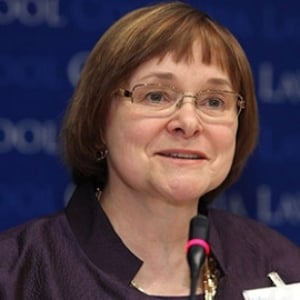
Lecturer in Law; Executive Director, Kernochan Center for Law, Media and the Arts, Columbia Law School
June Besek is the executive director and lecturer in law of the Kernochan Center for Law, Media and the Arts at Columbia Law School.
She teaches a seminar on authors, artists, and performers. Prof. Besek also co-teaches, a seminar on current issues in copyright.
Before joining Columbia in 1999, Prof. Besek was director of intellectual property at Reuters America Inc. She was formerly a partner at Schwab Goldberg Price & Dannay, where she focused on copyright, trademark, and other legal issues.
Prof. Besek is the chair of the copyright division of the American Bar Association’s intellectual property section, and also chairs the section’s copyright reform task force. Prof. Besek serves on the editorial board of the Journal of the Copyright Society of the U.S.A. and the board of advisors of the Columbia Journal of Law and the Arts.
She clerked for Judge Charles H. Tenney in the Southern District of New York.
Prof. Besek earned her J.D. from New York University in 1981 and received her B.A. from Yale.
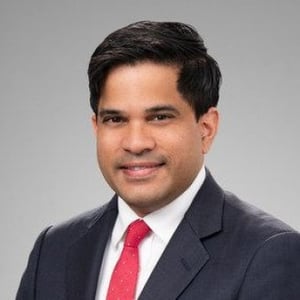
Partner, Latham & Watkins LLP
Sy Damle is one of the nation’s foremost practitioners in copyright law, with a particular focus on copyright rate-setting and software copyrights. Mr. Damle is a partner in the Washington, D.C. office of Latham & Watkins and a member of the Intellectual Property Litigation Practice. He also serves as an advisor to the American Law Institute’s Restatement of the Law, Copyright, and regularly writes and speaks about cutting-edge copyright issues. Mr. Damle focuses his practice on high-stakes copyright litigation and regulatory matters.
Mr. Damle joined Latham after serving as General Counsel and Associate Register of Copyrights at the US Copyright Office. In this role, Mr. Damle was responsible for the agency’s litigation, regulatory, and other legal work. While at the Copyright Office, Mr. Damle played a central role in every significant copyright case to reach the Supreme Court, addressing areas as diverse as software copyrights, fee awards in copyright actions, and the scope of the safe harbors in the Digital Millennium Copyright Act (DMCA). In addition, Mr. Damle led the Office’s first comprehensive regulatory revision effort in decades, concluding over 20 rulemakings, and helped lead two rulemakings under the anti-circumvention provisions of the DMCA. He was also responsible for overseeing the work of the Copyright Royalty Board (CRB), which establishes royalty rates and terms for major segments of the copyright industry. In that role, he wrote and issued binding opinions addressing novel questions of copyright law that govern CRB proceedings. Mr. Damle also regularly advised Congress on novel copyright issues, including by drafting and reviewing legislation.
Previously, Mr. Damle served as an appellate attorney for the Civil Division of the Department of Justice (DOJ). In his role at the DOJ, he appeared as lead counsel in more than 40 appeals, focusing on intellectual property, administrative law, and constitutional matters. He was responsible for the defense of rate-setting determinations of the CRB in the US Court of Appeals for the D.C. Circuit. He also wrote briefs in a number of high-profile Supreme Court cases, including Cable News Network v. CSC Holdings, addressing alleged copyright infringement by remote DVR services, and Ashcroft v. Iqbal, addressing pleading standards. Mr. Damle also served as senior counsel in the Consumer Financial Protection Bureau.
Mr. Damle’s work has been recognized by leading publications, including the National Law Journal, which has named him one of the top 40 Under 40 minority lawyers in the United States, and as one of DC’s Rising Stars.
Mr. Damle is a member of the Copyright Society of the USA, and serves on the board of the Edward Coke Appellate Inn of Court.
Mr. Damle earned his JD from the University of Virginia, where he graduated first in his class. He holds systems engineering and business degrees from the University of Pennsylvania, and was a software developer and information technology consultant prior to attending law school. He also served as a clerk for Judge Sandra L. Lynch of the US Court of Appeals for the First Circuit.
CoFounder, RightsClick
Steven’s extensive background in IP law and policy began as an attorney for the U.S. Senate Judiciary Committee, after which, he served as senior counsel for Policy and International Affairs at the U.S. Copyright Office and then as Chief Intellectual Property Counsel for the Global Intellectual Property Center of the U.S. Chamber of Commerce. Before co-founding RightsClick, he started the IP consultancy Sentinel Worldwide, and teaches copyright law at George Washington University Law School.

Senior Fellow and Director of Constitutional Studies, Manhattan Institute
Ilya Shapiro is a senior fellow and director of constitutional studies at the Manhattan Institute and a contributing editor of City Journal. Previously he was executive director and senior lecturer at the Georgetown Center for the Constitution, and before that a vice president of the Cato Institute.
Shapiro is the author of Lawless: The Miseducation of America’s Elites (2025) and Supreme Disorder: Judicial Nominations and the Politics of America’s Highest Court (2020), coauthor of Religious Liberties for Corporations? (2014), and editor of 11 volumes of the Cato Supreme Court Review (2008-18). He has contributed to a variety of academic, popular, and professional publications, including the Wall Street Journal, Harvard Journal of Law & Public Policy, Washington Post, Los Angeles Times, USA Today, National Review, and Newsweek. He also regularly provides commentary for various media outlets, writes the Shapiro’s Gavel newsletter on Substack, and once appeared on the Colbert Report.
Shapiro has testified many times before Congress and state legislatures and has filed more than 500 amicus curiae “friend of the court” briefs in the Supreme Court. He lectures regularly on behalf of the Federalist Society, is a member of the board of fellows of the Jewish Policy Center, was an inaugural Washington Fellow at the National Review Institute, and has been an adjunct law professor at the George Washington University and University of Mississippi. He is also the chairman of the board of advisers of the Mississippi Justice Institute, a barrister in the Edward Coke Appellate Inn of Court, and a former member of the Virginia Advisory Committee to the U.S. Commission on Civil Rights.
Earlier in his career, Shapiro was a special assistant/adviser to the Multi-National Force in Iraq on rule-of-law issues and practiced at Patton Boggs and Cleary Gottlieb. Before entering private practice, he clerked for Judge E. Grady Jolly of the U.S. Court of Appeals for the Fifth Circuit. He holds an AB from Princeton University, an MSc from the London School of Economics, and a JD from the University of Chicago Law School.
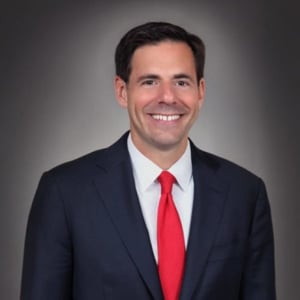
Partner, Morrison & Foerster LLP
John P. Carlin, former Assistant Attorney General for the U.S. Department of Justice’s (DOJ) National Security Division (NSD), chairs Morrison & Foerster’s global risk and crisis management team and advises industry-leading organizations in sensitive cyber and other national security matters, white collar investigations, and government enforcement actions.
Mr. Carlin has served as a top-level official in both Republican and Democratic administrations, most recently as Assistant Attorney General for National Security, the DOJ’s highest-ranking national security lawyer. In this capacity, for which Mr. Carlin was nominated by the President and overwhelmingly confirmed by the Senate on a bipartisan basis, he oversaw nearly 400 employees responsible for protecting the nation against terrorism, espionage, and cyber and other national security threats.
Prior to assuming his role in the NSD, Mr. Carlin served as Chief of Staff and Senior Counsel to Robert S. Mueller, III, former director of the FBI, where he helped lead the FBI’s evolution to meet growing and changing national security threats, including cyber threats. Mr. Carlin also held positions as National Coordinator of the DOJ’s Computer Hacking and Intellectual Property Program and Assistant United States Attorney for the District of Columbia, where he prosecuted cyber, fraud, and public corruption matters, among others, trying more than 40 cases to verdict.
Mr. Carlin is an inaugural Fellow of Harvard Kennedy School’s Belfer Center for Science and International Affairs’ Homeland Security Project, focused on the unique challenges and choices around protecting the American homeland. He also chairs the Aspen Institute’s Cybersecurity and Technology policy program, which provides a cross-disciplinary forum for industry, government, and media to address the rapidly developing landscape of digital threats and craft appropriate policy solutions. Mr. Carlin was recently invited to address the governors of every U.S. state and territory on cybersecurity issues at the National Governors Association’s Winter 2017 meeting, and has been featured or cited as a leading authority on cyber and economic espionage matters by numerous major media outlets, including The New York Times, The Washington Post, The Wall Street Journal, The Los Angeles Times, USA Today, CBS’s 60 Minutes, NBC’s Meet the Press, PBS’s Charlie Rose and Newshour, ABC’s Nightline and Good Morning America, NPR, CNN, and Vanity Fair, among others.
Mr. Carlin, who joined DOJ through the Attorney General’s Honors Program, is a five-time recipient of the Department of Justice Award for Special Achievement, was awarded the National Intelligence Superior Public Service Medal by the Director of National Intelligence, and drew bipartisan praise, with U.S. Attorney General Loretta Lynch calling him “a trusted and tireless leader” and former U.S. Attorney General Michael Mukasey calling him “a superb civil servant.” He earned his Juris Doctorate from Harvard Law School, where he received the Samuel J. Heyman Fellowship for Federal Government Service and served as Articles editor for the Harvard Journal on Legislation, and earned his Bachelor of Arts degree, magna cum laude, from Williams College, where he was elected to Phi Beta Kappa.
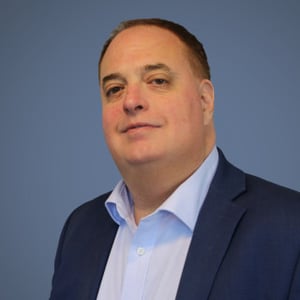
Director of the Center for Energy and Environment and Senior Fellow, Competitive Enterprise Institute
Daren Bakst is Director of the Competitive Enterprise Institute’s Center for Energy and Environment and a Senior Fellow. In this role, he manages, develops, and leads the coalition, advocacy, and research activities of the Center, which is one of the most effective advocates for Free Market Environmentalism.
Before joining CEI as Deputy Director in March, 2023, Daren was a Senior Research Fellow in Environmental Policy and Regulation at the Heritage Foundation, where he played a leading role in the launch of the organization’s new energy and environment center, and created and hosted the Heritage Foundation’s energy and environment podcast the “PowerCast.” During his decade at Heritage, Daren wrote about energy and environmental policy, food and agricultural policy (including editing and co-authoring the book Farms and Free Enterprise), regulation, and trade among other topics.
Daren also worked on environmental policy and regulation at the U.S. Chamber of Commerce, where he was a policy counsel and served as the executive to the association’s Government Oversight, Operations & Consumer Affairs committee, which was responsible for issues such as regulatory process reform. Daren has significant state level experience, working for seven years at the Raleigh, N.C.-based John Locke Foundation, one of the largest state-based, free-market think tanks. As director of legal and regulatory studies, his broad portfolio included energy and environmental policy, regulatory reform, and property rights.
Daren has testified numerous times before Congress, regularly submits comments to federal agencies and has appeared in or been quoted by a wide range of media outlets such as The Wall Street Journal, USA Today, The Washington Times, CNN, Fox Business News, Al-Jazeera America, and U.S. News and World Report. He is a member of the Federalist Society’s Environmental Law and Property Rights Executive Committee and serves on the College Level Advisory Board for Constituting America, an organization that informs and educates about the importance of the U.S. Constitution.
Daren, who hails from Florida, received his bachelor’s and master’s degrees from George Washington University. A licensed attorney, he holds a law degree from the University of Miami and a master of laws degree from American University.
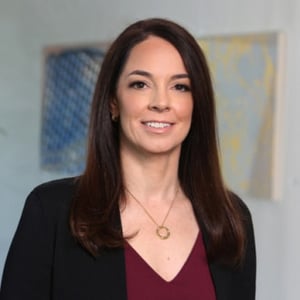
Partner, Hunton Andrews Kurth
A co-leader of Hunton Andrews Kurth’s environmental practice, Deidre is lauded in Chambers USA, 2016 as “extremely capable,” “very familiar with the regulations and agencies,” and excels at giving clients “good insight into getting an expeditious outcome.” Her practice focuses exclusively on environmental, energy and administrative law.
Deidre represents clients on permitting, compliance and litigation relating to the Clean Water Act (CWA), the Endangered Species Act (ESA), the National Environmental Policy Act (NEPA) and other environmental statutes. She frequently counsels clients on administrative rulemaking and policy, providing regulatory clarifications when necessary, and drafting federal and state legislation on myriad intricate issues. She is also well known for negotiating and obtaining permits for complicated energy and development projects. Her clients include development companies, oil and natural gas pipelines, electric utilities, agricultural interests, state and local agencies, and various trade associations.
Prior to entering private practice, Deidre served as assistant general counsel of the Army at the Pentagon, advising the secretary of the Army on environmental and land use issues involving the Corps of Engineers’ Civil Works and section 404 Regulatory program, as well as the Base Realignment and Closure (BRAC) program. Deidre has extensive experience with federal regulatory agencies, military departments and the US Department of Justice.
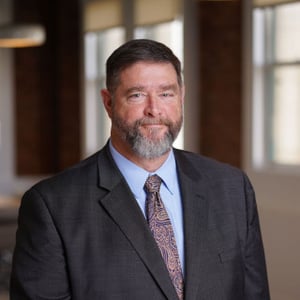
Partner, Briscoe Prows Kao Ivester & Bazel LLP
Tony Francois is experienced in Water and Real Property Law, Land Use and Zoning, Environmental Regulation, Natural Resources Development, Agricultural Law, and Constitutional Law. He has represented homeowners, builders, farmers and ranchers, trade associations, and water districts in administrative, civil, and criminal proceedings before state and federal administrative agencies and state and federal trial and appellate courts. He is a member of the California State Bar and the Northern, Eastern, and Central Districts of California and the Districts of New Mexico and North Dakota, and has litigated cases in federal courts in California, Oregon, Washington, Idaho, Montana, Nevada, Arizona, New Mexico, Colorado, North and South Dakota, Minnesota, Massachusetts, Maryland, South Carolina, and the District of Columbia, as well as the Sixth, Eighth, Ninth, and Tenth Circuit Courts of Appeals. He has appeared before the Supreme Courts of California, Idaho, Nevada, and the United States.
Prior to attending law school, he served as an infantry officer in the United States Army, and was stationed in the former West Germany during the fall of the Berlin Wall.
Tony was an Attorney at Pacific Legal Foundation from 2012 to 2021. He was a lobbyist for 10 years, first with California Farm Bureau Federation from 2003 to 2007, and then with KP Public Affairs from 2007 to 2012. He was an attorney at McQuaid, Bedford & Van Zandt in San Francisco from 1999 – 2003.

Professor of Law and Executive Director, Law and Economics Center, Antonin Scalia Law School, George Mason University
Donald Kochan is Professor of Law and Executive Director of the Law & Economics Center (LEC). Professor Kochan is an elected member of the American Law Institute (ALI) and serves as an Adviser to ALI's Restatement of the Law Fourth, Property project. Professor Kochan is a Nonresident Scholar at the Center for the Constitution at Georgetown University Law Center, where he was a Visiting Scholar in residence during Fall 2018. Before joining the Antonin Scalia Law School faculty, he was the Parker S. Kennedy Professor in Law at Chapman University’s Dale E. Fowler School of Law from 2004 to 2020. From 2003 to 2004, Professor Kochan was an Olin Fellow at the University of Virginia School of Law. During 2002-2003, he was a Visiting Assistant Professor of Law at George Mason’s Scalia Law School.
Professor Kochan’s scholarship focuses on areas of property law, constitutional law, administrative law, local government law, natural resources and environmental law, and law & economics. He has published several books and more than 50 scholarly articles and essays in well-regarded law journals. His work has been cited in more than a dozen state and federal court opinions, in more than 75 briefs filed in state and federal courts including more than 25 filed in the U.S. Supreme Court, in dozens of books and treatises, and in more than 800 scholarly articles.
Professor Kochan received his JD from Cornell Law School, where he was a John M. Olin Scholar in Law and Economics and managing editor of the Cornell International Law Journal. During law school, he also served as editor and executive editor of the Harvard Journal of Law & Public Policy symposium issues in 1997 and 1998. He received his BA from Western Michigan University, magna cum laude, with majors in both political science and philosophy, where he studied as the John W. Gill Medallion Scholar and was honored as the Presidential Scholar (awarded to the top graduate in the political science department).
After graduating from law school, Professor Kochan was a law clerk to The Honorable Richard F. Suhrheinrich of the United States Court of Appeals for the Sixth Circuit. Following his clerkship, Professor Kochan was an associate with the firm of Crowell & Moring LLP in Washington, D.C., where he specialized in natural resources & environmental law as well as tort, products, and consumer civil litigation & legislative affairs.
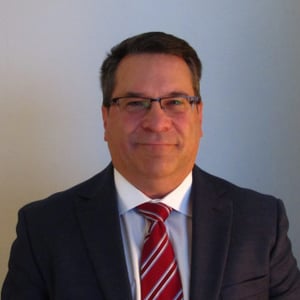
Executive Director and Vice President of Legal Studies , Washington Legal Foundation
Glenn G. Lammi is Executive Director and Vice President of Legal Studies at Washington Legal Foundation (WLF), a national public-interest law firm and policy center. He was a law clerk to WLF’s Legal Studies Division in 1990 and began in January 1992 as the division’s Chief Counsel. Glenn assumed leadership of the Legal Studies Division in 1995, and WLF’s Board appointed him Executive Director in 2021. In his Executive Director role, Glenn has a direct hand in fundraising, donor relations, communications, and the group’s strategic vision. As leader of its publishing and programs division, Glenn monitors legal-policy developments in federal and state courts, regulatory agencies, and legislatures, manages all aspects of WLF’s educational publications and its WLF Legal Pulse blog, and designs and moderates its programming. He is a member of the International Association of Defense Counsel. Glenn earned his bachelor’s degree from Pennsylvania State University in 1988 and graduated from American University’s Washington College of Law in 1991.

President, Harned Strategies LLC
Karen Harned is President at Harned Strategies LLC. Previously, she served as Executive Director of the National Federation of Independent Business Small Business Legal Center, a post she held from 2002-2022. Prior to joining the Legal Center, Ms. Harned was an attorney at a Washington, D.C. law firm specializing in food and drug law, where she represented several small and large businesses and their respective trade associations before Congress and federal agencies. She also served as Assistant Press Secretary to U.S. Senator Don Nickles of Oklahoma from August of 1989 to March of 1993. Ms. Harned received her B.A. from the University of Oklahoma in 1989 and her J.D. from The George Washington University National Law Center in 1995. She is admitted to practice in the District of Columbia.
As Executive Director of the NFIB Small Business Legal Center, Ms. Harned commented regularly on small business cases before federal and state courts, as well as the U.S. Supreme Court. She has appeared on Fox News, Fox Business, NBC Nightly News, CNN, CNBC and MSNBC, as well as National Public Radio, CBS Radio, and radio outlets across the country. Her opinion editorials and articles regarding healthcare, lawsuit abuse, regulation, and other issues important to small business have been published in newspapers and other publications nationwide.
Ms. Harned has testified before Congress on the small business impact of regulation and the civil justice system. Additionally, she has conducted numerous webinars and legal compliance seminars for small business owners across the country on issues relating to employment law, including unionization and immigration.

Executive Privilege and Congressional Oversight
John G. Malcolm, John C. Yoo
What is the proper balance between Congressional oversight and Executive privilege? As it becomes clear...
Courthouse Steps Decision Teleforum: Lamps Plus, Inc. v. Varela
Henry Allen Blair
On Wednesday, April 24, the Supreme Court handed down the decision in Lamps Plus, Inc....
Trump's Emergency Tariffs: Court Says Legal, But Are They Constitutional?
Timothy Meyer, Jide Okechuku Nzelibe, Jeremy A. Rabkin
In late March, the Court of International Trade (a U.S. Article III court) upheld the...
Courthouse Steps Oral Argument: Department of Commerce v. New York: Citizenship and the Census
John S. Baker, Kenneth A. Klukowski
On April 23, the Supreme Court will hear oral arguments in Department of Commerce v....
The ALI Copyright Project: Restatement or Revisionist?
June Besek, Sy Damle, Steven M. Tepp
The American Law Institute (ALI) is a familiar and trusted institution for jurists across the...
Courthouse Steps Oral Argument: Iancu v Brunetti
Ilya Shapiro
Remember “The Slants,” the Asian-American rock band who were denied a trademark because the U.S....
Book Review: Dawn of the Code War
John P. Carlin
In Dawn of the Code War, authors John P. Carlin and Garrett M. Graff describe...
Analyzing the New Proposed Rule Defining “Waters of the United States"
Daren Bakst, Deidre G. Duncan, Tony Francois
On February 14, 2019, the Environmental Protection Agency and the U.S. Army Corps of Engineers...
Percolating in Washington State: Export-Terminal Permit-Denial Suit Implicates Federalism and Foreign Commerce
Donald J. Kochan, Glenn G. Lammi
When state regulators block approval of construction projects, disappointed businesses routinely challenge the decision in...
Courthouse Steps Decision Teleforum: Air & Liquid Systems Corp., et al. v. DeVries
Karen Harned
On March 19, 2019, the Supreme Court decided Air & Liquid Systems Corp., et al....