

Professor of Law and Executive Director, Law and Economics Center, Antonin Scalia Law School, George Mason University
Donald Kochan is Professor of Law and Executive Director of the Law & Economics Center (LEC). Professor Kochan is an elected member of the American Law Institute (ALI) and serves as an Adviser to ALI's Restatement of the Law Fourth, Property project. Professor Kochan is a Nonresident Scholar at the Center for the Constitution at Georgetown University Law Center, where he was a Visiting Scholar in residence during Fall 2018. Before joining the Antonin Scalia Law School faculty, he was the Parker S. Kennedy Professor in Law at Chapman University’s Dale E. Fowler School of Law from 2004 to 2020. From 2003 to 2004, Professor Kochan was an Olin Fellow at the University of Virginia School of Law. During 2002-2003, he was a Visiting Assistant Professor of Law at George Mason’s Scalia Law School.
Professor Kochan’s scholarship focuses on areas of property law, constitutional law, administrative law, local government law, natural resources and environmental law, and law & economics. He has published several books and more than 50 scholarly articles and essays in well-regarded law journals. His work has been cited in more than a dozen state and federal court opinions, in more than 75 briefs filed in state and federal courts including more than 25 filed in the U.S. Supreme Court, in dozens of books and treatises, and in more than 800 scholarly articles.
Professor Kochan received his JD from Cornell Law School, where he was a John M. Olin Scholar in Law and Economics and managing editor of the Cornell International Law Journal. During law school, he also served as editor and executive editor of the Harvard Journal of Law & Public Policy symposium issues in 1997 and 1998. He received his BA from Western Michigan University, magna cum laude, with majors in both political science and philosophy, where he studied as the John W. Gill Medallion Scholar and was honored as the Presidential Scholar (awarded to the top graduate in the political science department).
After graduating from law school, Professor Kochan was a law clerk to The Honorable Richard F. Suhrheinrich of the United States Court of Appeals for the Sixth Circuit. Following his clerkship, Professor Kochan was an associate with the firm of Crowell & Moring LLP in Washington, D.C., where he specialized in natural resources & environmental law as well as tort, products, and consumer civil litigation & legislative affairs.
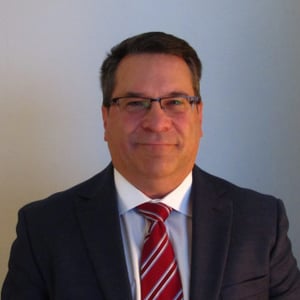
Executive Director and Vice President of Legal Studies , Washington Legal Foundation
Glenn G. Lammi is Executive Director and Vice President of Legal Studies at Washington Legal Foundation (WLF), a national public-interest law firm and policy center. He was a law clerk to WLF’s Legal Studies Division in 1990 and began in January 1992 as the division’s Chief Counsel. Glenn assumed leadership of the Legal Studies Division in 1995, and WLF’s Board appointed him Executive Director in 2021. In his Executive Director role, Glenn has a direct hand in fundraising, donor relations, communications, and the group’s strategic vision. As leader of its publishing and programs division, Glenn monitors legal-policy developments in federal and state courts, regulatory agencies, and legislatures, manages all aspects of WLF’s educational publications and its WLF Legal Pulse blog, and designs and moderates its programming. He is a member of the International Association of Defense Counsel. Glenn earned his bachelor’s degree from Pennsylvania State University in 1988 and graduated from American University’s Washington College of Law in 1991.

Deputy Secretary of Transportation, US Department of Transportation
Steven G. Bradbury was sworn in as the Deputy Secretary of Transportation on March 13, 2025, following his confirmation by the U.S. Senate on March 11, 2025. In this role, he oversees the Department’s operating administrations and spearheads initiatives to ensure a safe, efficient, and modern transportation system that strengthens economic productivity and global competitiveness. Deputy Secretary Bradbury also assists Secretary Duffy in managing the Department’s activities, including its workforce of over 58,000 employees and an annual budget exceeding $109 billion.
Bradbury previously served as the 23rd General Counsel of the Department of Transportation from 2017 to 2021, as the Acting Deputy Secretary from 2019, and as Acting Secretary of Transportation in 2021. As General Counsel, he was the chief legal officer, advising on all legal matters and ensuring the integrity and compliance of the Department’s policies and programs.
Before rejoining DOT, Bradbury was a Distinguished Fellow at The Heritage Foundation from December 2022 to March 2025. He has extensive experience in the public and private sector, having served as Principal Deputy and Acting Assistant Attorney General at the U.S. Department of Justice and as a partner at Kirkland & Ellis LLP and Dechert LLP. Earlier in his career, he clerked for Justice Clarence Thomas and Judge James L. Buckley.
Bradbury holds a J.D., magna cum laude, from the University of Michigan Law School and a B.A. in English from Stanford University.
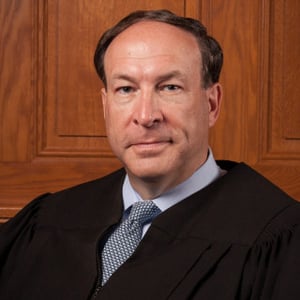
Judge, United States Court of Appeals, Seventh Circuit
Michael B. Brennan was confirmed and sworn in as a Circuit Judge for the U.S. Court of Appeals for the Seventh Circuit in May 2018.
He previously worked as a partner in the Milwaukee law firm of Gass Weber Mullins LLC, where he tried cases and handled appeals in federal and state courts, as a judge on the Milwaukee County Circuit, where he presided over a variety of criminal and civil calendars, and as an assistant district attorney in the Milwaukee County District Attorney’s office.
Brennan’s undergraduate degree is from the University of Notre Dame, and his law degree from Northwestern University School of Law, where he was an editor on the law review and the moot court champion. He served as a law clerk on the U.S. District Court for the Eastern District of Wisconsin and the U.S. Court of Appeals for the Seventh Circuit.
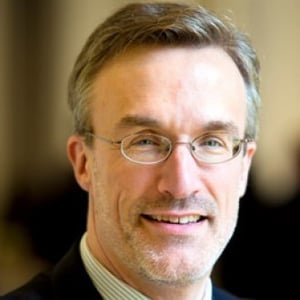
Edward B. Shils Professor of Law and Professor of Political Science; Director, Penn Program on Regulation, University of Pennsylvania Law School
Cary Coglianese is the Edward B. Shils Professor of Law and Professor of Political Science at the University of Pennsylvania, where he currently serves as the director of the Penn Program on Regulation and has served as the law school’s Deputy Dean for Academic Affairs. He specializes in the study of regulation and regulatory processes, with an emphasis on the empirical evaluation of alternative regulatory strategies and the role of public participation, negotiation, and business-government relations in policy making. His most recent books include: Achieving Regulatory Excellence; Does Regulation Kill Jobs?; Regulatory Breakdown: The Crisis of Confidence in U.S. Regulation; Import Safety: Regulatory Governance in the Global Economy; and Regulation and Regulatory Processes.
Prior to joining Penn Law, Coglianese spent a dozen years on the faculty at Harvard University’s John F. Kennedy School of Government. He also has taught as a visiting law professor at Stanford and Vanderbilt, founded the Law & Society Association’s international collaborative research network on regulatory governance, served as a founding editor of the peer-reviewed journal Regulation & Governance, and created and now advises the daily production of The Regulatory Review. The chair of the Administrative Conference of the United States' committee on rulemaking, he has led a National Science Foundation initiative on e-rulemaking, served on the ABA’s task force on improving Regulations.Gov, and chaired a task force on transparency and public participation in the regulatory process that offered a blueprint to the Obama Administration on open government. He is a co-chair of the American Bar Association’s administrative law section committee on e-government, past co-chair of the section's committee on rulemaking, and a past member of the section's Council. He currently serves as a member of a committee of the National Academies of Sciences, Engineering, and Medicine studying performance-based safety regulation and of an Aspen Institute dialogue on energy policy governance. He has served as a consultant to the Administrative Conference of the United States, Environment Canada, the Organization for Economic Cooperation and Development, the U.S. Department of Commerce, the U.S. Department of Transportation, and the U.S. Environmental Protection Agency.

Director, GW Regulatory Studies Center & Distinguished Professor of Practice, Trachtenberg School of Public Policy & Public Administration, The George Washington University
Susan Dudley is the Founder and Director of the George Washington University Regulatory Studies Center, established in 2009 to raise awareness of regulations’ effects and improve regulatory policy through research, education, and outreach. She is also a distinguished professor of practice in the Trachtenberg School of Public Policy and Public Administration. She is past-president of the Society for Benefit Cost Analysis, a senior fellow of the Administrative Conference of the United States, and on the Regulatory Transparency Project Regulatory Practice Working Group. Her book, Regulation: A Primer, with Jerry Brito, is available on Amazon.com.
From April 2007 through January 2009, Professor Dudley served as the Presidentially-appointed Administrator of the Office of Information and Regulatory Affairs in the U.S. Office of Management and Budget and was responsible for the review of draft executive branch regulations under Executive Order 12866, the collection of federal-government-wide information under the Paperwork Reduction Act, the development and implementation of government-wide policies in the areas of information policy, privacy, and statistical policy, and international regulatory cooperation efforts.
Prior to OIRA, she directed the Regulatory Studies Program at the Mercatus Center at George Mason University, and taught courses on regulation at the George Mason University School of Law. Earlier in her career, Professor Dudley served as an economist at OIRA, as well as the Environmental Protection Agency and the Commodity Futures Trading Commission. She was also a consultant to government and private clients at Economists Incorporated. She holds a Master of Science degree from the Sloan School of Management at MIT and a Bachelor of Science degree (summa cum laude) in Resource Economics from the University of Massachusetts, Amherst.
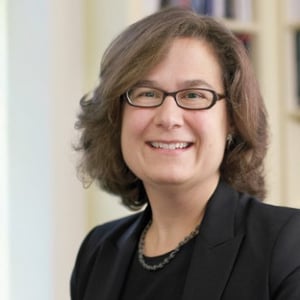
Segal Family Professor of Regulatory Law and Policy, New York University School of Law
Catherine Sharkey is the Segal Family Professor of Regulatory Law and Policy at NYU School of Law. She is a leading authority on torts, products liability, artificial intelligence in federal administrative agencies, public nuisance, punitive damages, and federal preemption of state tort law. She is a Senior Fellow of the Administrative Conference of the United States (ACUS), a member of its Roundtable on Artificial Intelligence in Federal Agencies, author of Algorithmic Tools in Retrospective Review (2023) and co-author of Government by Algorithm: Artificial Intelligence in Federal Administrative Agencies (2020). Sharkey is co-author of Cases and Materials on Torts (13th edition, 2024) and Business, Defamation, and Privacy Torts (1st ed., forthcoming 2025), and co-editor of Foundations of Tort Law (2nd edition, 2009). She is an elected member of the American Law Institute and an adviser to the Restatement Third, Torts: Liability for Economic Harm and Restatement Third, Torts: Remedies projects.

Tazewell Taylor Professor of Law and William H. Cabell Research Professor, William & Mary Law School
Jonathan H. Adler joined the William & Mary law faculty as the Tazwell Taylor Professor of Law and William H. Cabell Research Professor in 2025. Prior to joining the faculty, he was the inaugural Johan Verheij Memorial Professor of Law and the founding Director of the Coleman P. Burke Center for Environmental Law at the Case Western Reserve University School of Law.
Professor Adler is the author or editor of seven books, including Climate Liberalism: Perspectives on Liberty, Property and Pollution (Palgrave, 2023), Marijuana Federalism: Uncle Sam and Mary Jane (Brookings Institution Press, 2020), Business and the Roberts Court (Oxford University Press, 2016) and Rebuilding the Ark: New Perspectives on Endangered Species Act Reform (AEI Press, 2011).
His articles have appeared in publications ranging from the Harvard Environmental Law Review and Yale Journal on Regulation to the Wall Street Journal, New York Times, and Washington Post. He has testified before Congress a dozen times, and his work has been cited in the U.S. Supreme Court. A 2024 study identified Professor Adler as the seventh most cited legal academic in administrative and environmental law from 2019 to 2023.
Professor Adler is a contributing editor to Civitas Outlook and a regular contributor to the popular legal blog, The Volokh Conspiracy. A regular commentator on constitutional and regulatory issues, he has appeared on numerous radio and television programs, ranging from the PBS Newshour and National Public Radio to the Fox News Channel and Entertainment Tonight.
Professor Adler is a senior fellow at the Property & Environment Research Center in Bozeman, Montana. In 2018, Professor Adler was elected to membership in the American Law Institute and helped co-found the organization Checks and Balances. In 2024, Professor Adler was appointed a public member of the Administrative Conference of the United States.
Professor Adler clerked for the Honorable David B. Sentelle on the U.S. Court of Appeals for the District of Columbia Circuit.
Professor of Law and Executive Director, Law and Economics Center, Antonin Scalia Law School, George Mason University
Donald Kochan is Professor of Law and Executive Director of the Law & Economics Center (LEC). Professor Kochan is an elected member of the American Law Institute (ALI) and serves as an Adviser to ALI's Restatement of the Law Fourth, Property project. Professor Kochan is a Nonresident Scholar at the Center for the Constitution at Georgetown University Law Center, where he was a Visiting Scholar in residence during Fall 2018. Before joining the Antonin Scalia Law School faculty, he was the Parker S. Kennedy Professor in Law at Chapman University’s Dale E. Fowler School of Law from 2004 to 2020. From 2003 to 2004, Professor Kochan was an Olin Fellow at the University of Virginia School of Law. During 2002-2003, he was a Visiting Assistant Professor of Law at George Mason’s Scalia Law School.
Professor Kochan’s scholarship focuses on areas of property law, constitutional law, administrative law, local government law, natural resources and environmental law, and law & economics. He has published several books and more than 50 scholarly articles and essays in well-regarded law journals. His work has been cited in more than a dozen state and federal court opinions, in more than 75 briefs filed in state and federal courts including more than 25 filed in the U.S. Supreme Court, in dozens of books and treatises, and in more than 800 scholarly articles.
Professor Kochan received his JD from Cornell Law School, where he was a John M. Olin Scholar in Law and Economics and managing editor of the Cornell International Law Journal. During law school, he also served as editor and executive editor of the Harvard Journal of Law & Public Policy symposium issues in 1997 and 1998. He received his BA from Western Michigan University, magna cum laude, with majors in both political science and philosophy, where he studied as the John W. Gill Medallion Scholar and was honored as the Presidential Scholar (awarded to the top graduate in the political science department).
After graduating from law school, Professor Kochan was a law clerk to The Honorable Richard F. Suhrheinrich of the United States Court of Appeals for the Sixth Circuit. Following his clerkship, Professor Kochan was an associate with the firm of Crowell & Moring LLP in Washington, D.C., where he specialized in natural resources & environmental law as well as tort, products, and consumer civil litigation & legislative affairs.
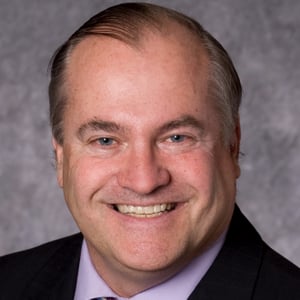
Robert F. Stanton Professor of Law, University of Maryland Carey School of Law
Robert V. Percival is the Robert F. Stanton Professor of Law and the Director of the Environmental Law Program at the University of Maryland School of Law. He received a B.A. summa cum laude from Macalester College, a J.D. from Stanford Law School and an M.A. in economics from Stanford University. At Stanford Percival was named the Nathan Abbott Scholar for graduating first in his law school class. Following graduation, he served as a law clerk for Judge Shirley M. Hufstedler of the U.S. Court of Appeals for the Ninth Circuit and for U.S. Supreme Court Justice Byron R. White. He joined the Maryland faculty in 1987 after serving as a senior attorney for the Environmental Defense Fund. Percival has served as a visiting professor of law at Harvard Law School, Georgetown University Law Center, the China University of Political Science and Law (Beijing), and Comenius University (Bratislava). He is the principal author of a leading environmental law casebook, now in its 9th edition, and the author of several articles about the Supreme Court and presidential authority over executive agencies. Percival wrote one of the first articles on the propriety of consent decrees to effectuate and enforce federal law “The Bounds of Consent: Consent Decrees, Settlements and Federal Environmental Policymaking,” 1987 Univ. Chic. Leg. F. 327 (1987). He also is the author of the first comprehensive analyses of what the papers of the late Justices Thurgood Marshall and Harry Blackmun reveal about the Supreme Court’s handling of environmental cases (“Environmental Law in the Supreme Court: Highlights from the Blackmun Papers,” 35 ELR 10637 (2005), and “Environmental Law in the Supreme Court: Highlights from the Marshall Papers,” 13 ELR 10606 (Oct. 1993)).

Judge, United States Court of Appeals, Sixth Circuit
Amul R. Thapar serves as a judge on the United States Court of Appeals for the Sixth Circuit. His judicial career began in 2007 when President George W. Bush nominated him to serve on the Eastern District of Kentucky, making him the first South Asian Article III judge in American history. In 2017, he became President Donald J. Trump’s first appellate court nominee.
Before joining the bench, Judge Thapar served as the United States Attorney for the Eastern District of Kentucky. While United States Attorney, Judge Thapar worked on the Attorney General’s Advisory Committee (“AGAC”) and chaired the AGAC’s Controlled Substances and Asset Forfeiture subcommittee. He also served on the Terrorism and National Security subcommittee, the Violent Crime subcommittee, and the Child Exploitation working group.
Judge Thapar has worked in private practice, at Williams & Connolly in Washington, D.C., and Squire, Sanders & Dempsey in Cincinnati, Ohio. He also served as an Assistant United States Attorney in both the Southern District of Ohio and the District of Columbia.
Judge Thapar received his undergraduate degree from Boston College and his law degree from the University of California, Berkeley. After graduating, Judge Thapar worked as a law clerk to the Honorable S. Arthur Spiegel of the United States District Court for the Southern District of Ohio, and the Honorable Nathaniel R. Jones of the United States Court of Appeals for the Sixth Circuit.
Judge Thapar has also published in the Yale Law Journal, Michigan Law Review, and Catholic University Law Review. He teaches courses on originalism, the Federalists and Anti-Federalists, and legal writing at Notre Dame Law School, the University of Virginia School of Law, and Vanderbilt Law School.
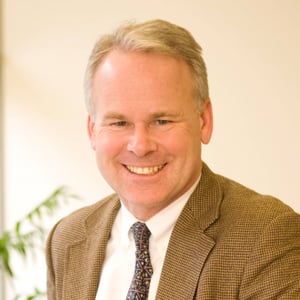
David Daniels Allen Distinguished Chair of Law Director, Climate Change Research Network Co-director, Energy, Environment and Land Use Program, Vanderbilt Law School
Michael Vandenbergh is a leading scholar in environmental and energy law whose research explores the relationship between formal legal regulation and informal social regulation of individual and corporate behavior. His work with Vanderbilt's Climate Change Research Network involves interdisciplinary teams that focus on the reduction of carbon emissions from the individual and household sector. His corporate work explores private environmental governance and the influence of social norms on firm behavior and the ways in which private contracting can enhance or undermine public governance. Before joining Vanderbilt's law faculty, Professor Vandenbergh was a partner at a national law firm in Washington, D.C. He served as Chief of Staff of the U.S. Environmental Protection Agency from 1993 to 1995. He began his career as a law clerk for Judge Edward R. Becker of the U.S. Court of Appeals for the Third Circuit in 1987-88. In addition to directing Vanderbilt's Climate Change Research Network, Professor Vandenbergh serves as co-director of the law school's Energy, Environment and Land Use Program. He was named a David Daniels Allen Distinguished Professor of Law in fall 2013. A recipient of the Hall-Hartman Teaching Award, he teaches courses in environmental law, energy, and property. Professor Vandenbergh has been a visiting professor at the University of Chicago Law School and at Harvard Law School.
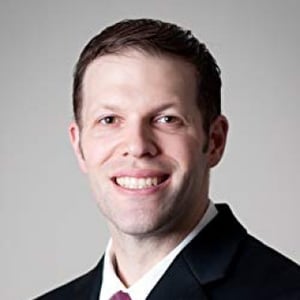
Director of Policy Studies & Senior Fellow, The Free State Foundation
Seth L. Cooper is Director of Policy Studies & Senior Fellow at The Free State Foundation. His work on federal communications and technology policy at the Free State Foundation began in 2009.
With Randolph May, Mr. Cooper is the co-author of Modernizing Copyright Law for the Digital Age: Constitutional Foundations for Reform (2020) and Constitutional Foundations of Intellectual Property: A Natural Rights Perspective (2015), both published by Carolina Academic Press. Along with Mr. May, Mr. Cooper also co-authored A Reader on Net Neutrality and Restoring Internet Freedom (2018) and #CommActUpdate: A Communications Law Fit for the Digital Age (2017), both published by Free State Foundation Press. He previously contributed to two chapters in Communications Law and Policy in the Digital Age (2012), published by Carolina Academic Press. Mr. Cooper's work has also appeared in such publications as CommLaw Conspectus, the San Jose Mercury News, Forbes.com, the Des Moines Register, the Baltimore Sun, the Washington Examiner, and the Washington Times.
Mr. Cooper previously served as Director to the Telecommunications and Information Technology Task Force at the American Legislative Exchange Council (ALEC). Mr. Cooper served as judicial clerk to the Honorable James Johnson at the Washington State Supreme Court. His co-writings about the Washington Supreme Court have appeared in the Gonzaga Law Review and in Federalist Society publications. He has worked in law and policy staff positions at the Washington State Senate and at the Discovery Institute's Center for Science & Culture. Mr. Cooper is a 2009 Lincoln Fellow at the Claremont Institute. He also has worked in private practice in the State of Washington, handling civil legal matters involving personal injuries, small business, contracts, and wills, trusts, and estates.
Mr. Cooper earned his B.A. degree in Political Science from Pacific Lutheran University and received his J.D. from Seattle University School of Law.
Director, GW Regulatory Studies Center & Distinguished Professor of Practice, Trachtenberg School of Public Policy & Public Administration, The George Washington University
Susan Dudley is the Founder and Director of the George Washington University Regulatory Studies Center, established in 2009 to raise awareness of regulations’ effects and improve regulatory policy through research, education, and outreach. She is also a distinguished professor of practice in the Trachtenberg School of Public Policy and Public Administration. She is past-president of the Society for Benefit Cost Analysis, a senior fellow of the Administrative Conference of the United States, and on the Regulatory Transparency Project Regulatory Practice Working Group. Her book, Regulation: A Primer, with Jerry Brito, is available on Amazon.com.
From April 2007 through January 2009, Professor Dudley served as the Presidentially-appointed Administrator of the Office of Information and Regulatory Affairs in the U.S. Office of Management and Budget and was responsible for the review of draft executive branch regulations under Executive Order 12866, the collection of federal-government-wide information under the Paperwork Reduction Act, the development and implementation of government-wide policies in the areas of information policy, privacy, and statistical policy, and international regulatory cooperation efforts.
Prior to OIRA, she directed the Regulatory Studies Program at the Mercatus Center at George Mason University, and taught courses on regulation at the George Mason University School of Law. Earlier in her career, Professor Dudley served as an economist at OIRA, as well as the Environmental Protection Agency and the Commodity Futures Trading Commission. She was also a consultant to government and private clients at Economists Incorporated. She holds a Master of Science degree from the Sloan School of Management at MIT and a Bachelor of Science degree (summa cum laude) in Resource Economics from the University of Massachusetts, Amherst.
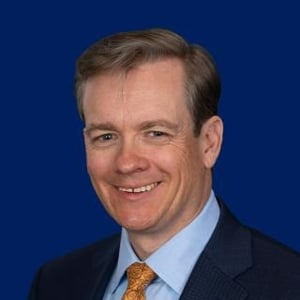
Daryl Joseffer is executive vice president and chief counsel at the U.S. Chamber Litigation Center, the litigation arm of the U.S. Chamber of Commerce. A former principal deputy solicitor general, Joseffer has argued 12 cases in the U.S. Supreme Court and dozens of other appeals across the country.
Before joining the Chamber, Joseffer practiced law with King & Spalding LLP, where he was a partner and head of the firm’s appellate group. Previously, he served in the Solicitor General’s Office and as a deputy general counsel in the White House Office of Management and Budget, a partner at Kirkland & Ellis, and a law clerk to the Honorable Jerry E. Smith, Circuit Judge of the U.S. Court of Appeals for the Fifth Circuit.
Joseffer graduated magna cum laude from Harvard Law School and received a B.A. in economics from Stanford University.
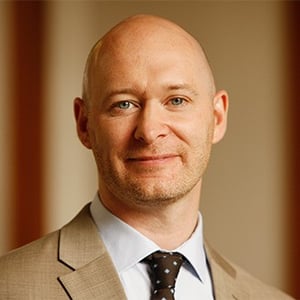
Edward F. Howrey Professor of Law, University of Virginia
Michael Livermore joined the faculty in 2013. He teaches environmental law, administrative law, regulatory law and policy, and advanced seminars on these topics. His research focuses on environmental law, regulation, bureaucratic oversight and the computational analysis of law. He frequently collaborates on interdisciplinary projects with researchers in other academic fields, including economics, computer science and neurology. His work has appeared in leading law journals, including the Yale Law Journal, University of Chicago Law Review, New York University Law Review, Georgetown Law Journal and Duke Law Journal. Livermore is a leading expert on the use of cost-benefit analysis to evaluate environmental regulation, and he is the co-author of Retaking Rationality: How Cost-Benefit Analysis Can Better Protect the Environment and Our Health (Oxford University Press, 2008) and co-editor of The Globalization of Cost-Benefit Analysis in Environmental Policy (Oxford University Press, 2013).
Prior to joining the faculty, Livermore was the founding executive director of the Institute for Policy Integrity at New York University School of Law, a think tank dedicated to improving the quality of government decision-making. In that capacity, he participated in dozens of regulatory proceedings on a diverse set of issues ranging from climate change to prison safety. He remains an active participant in environmental policy discussions. Livermore earned his J.D. magna cum laude from NYU Law, where he was a Furman Scholar, was elected to the Order of the Coif, and served as a managing editor of the Law Review. After law school, he spent a year as a fellow at NYU Law’s Center on Environmental and Land Use Law before clerking for Judge Harry T. Edwards on the U.S. Court of Appeals for the D.C. Circuit.
During the 2018-19 academic year, Livermore is leading an Online Workshop on the Computational Analysis of Law.

U.S. Court of Appeals, D.C. Circuit
Judge Williams practiced law in New York City (at the firm of Debevoise Plimpton and as an Assistant U.S. Attorney) and then taught law at the University of Colorado Law School from 1969 to 1986, with visiting years at UCLA, SMU, and the University of Chicago (where he was also a fellow in law and economics). He was appointed to the U.S. Court of Appeals for the D.C. Circuit in 1986. His most recent book is a biography of Vasily Maklakov, The Reformer: How One Liberal Fought to Preempt the Russian Revolution (Encounter Books, 2017).

Percolating in Washington State: Export-Terminal Permit-Denial Suit Implicates Federalism and Foreign Commerce
Donald J. Kochan, Glenn G. Lammi
When state regulators block approval of construction projects, disappointed businesses routinely challenge the decision in...
Showcase Panel II: Balancing Insulation and Accountability of Agency Decisions
Steven Gill Bradbury, Michael B. Brennan, Cary Coglianese, Susan E. Dudley, Catherine M. Sharkey
Many federal government decisions that affect Americans’ day-to-day lives are made by agencies. Agency decisions,...
Environmental Law without Congress
Jonathan H. Adler, Donald J. Kochan, Robert V. Percival, Amul R. Thapar, Michael P. Vandenbergh
It has long been understood that broad congressional delegations of rulemaking authority have empowered administrative...
Washington Supreme Court Addresses Constitutionality of Water Pollution Control Mandate
Seth L. Cooper
In Lemire v. Department of Ecology (2013),1 the Washington Supreme Court addressed the constitutionality of...
Environmental Law: The Future of Cost-Benefit Analysis in Environmental Policy
Susan E. Dudley, Daryl Joseffer, Michael Livermore, Stephen F. Williams
In the scheme of regulation, the wisdom of “look before you leap” has always been...