
Managing Director, Beacon Global Strategies LLC
From 2011-2013, Mr. Allen served as the Majority Staff Director of the House Permanent Select Committee on Intelligence (HPSCI). Under Chairman Mike Rogers’ (R-MI) direction, the HPSCI restored the process of an annual intelligence authorization bill to fund and give direction to the seventeen elements of the intelligence community, enacting measures for fiscal years 2011, 2012, and 2013. The HPSCI also led the House of Representatives’ consideration of cyber security legislation, passing the Cyber Information Sharing Protection Act (CISPA) with bipartisan majorities in 2012 and 2013.
Prior to joining the HPSCI, he was director for the Bipartisan Policy Center’s successor to the 9/11 Commission, the National Security Preparedness Group, co-chaired by former Congressman Lee Hamilton and former Governor Tom Kean.
Previously, Mr. Allen served in the White House for seven years in a variety of national security policy and legislative roles. At the National Security Council (NSC), he served as Special Assistant to the President and Senior Director for Counter-proliferation Strategy from June 2007 to January 2009 under National Security Advisor Steve Hadley. As Senior Director, he contributed to the development of the U.S. government’s policy on counter-proliferation issues, including on the Iranian, Syrian, and North Korean nuclear files; missile defense; civilian nuclear cooperation including the U.S.-India Civilian Nuclear Cooperation Agreement; U.S. exports controls; bio-defense; and WMD and terrorism.
As the Special Assistant to the President and Senior Director for Legislative Affairs from March 2005 to June 2007, Mr. Allen was the NSC’s chief liaison with the national security committees of Congress and led the confirmation teams of DNI nominees Negroponte and McConnell and CIA Director General Michael Hayden.
From December 2001 to February 2005, Mr. Allen worked in the legislative affairs office of the White House’s Homeland Security Council. As Special Assistant to the President for Legislative Affairs, Mr. Allen was part of team that managed the White House effort to enact the Intelligence Reform and Terrorism Prevention Act of 2004, which created the Office of the Director of National Intelligence.
At the beginning of the Bush Administration, Mr. Allen worked in the Bureau of Legislative Affairs at the Department of State. Mr. Allen received his L.L.M. with distinction in International Law from the Georgetown University Law Center, his J.D. from the University of Alabama (cum laude), and his B.A. from Vanderbilt University.
In addition to his work at the Bipartisan Policy Center, in 2009, Mr. Allen taught National Security Policymaking at the George Washington University Elliott School of International Affairs and served as an advisor for the congressionally-created Commission on WMD and Terrorism co-chaired by Senators Bob Graham and Jim Talent. Mr. Allen was the Intelligence Team Lead for the Romney for President Transition Team.
Mr. Allen is the author of Blinking Red: Crisis and Compromise in American Intelligence After 9/11. (Potomac Books, September 2013).
Senior Fellow, Hudson Institute
Former President Trump appointed Marshall S. Billingslea as Special Presidential Envoy for Arms Control on April 10, 2020 and accorded him the personal rank of Ambassador from May 18, 2020 to November 17, 2020. Billingslea leads arms control negotiations on behalf of the U.S. Government.
Billingslea most recently served as the Assistant Secretary for Terrorist Financing at the U.S. Department of Treasury since June 2017. In that role he built international coalitions and led U.S. efforts to counter illicit financial activities. In 2018 he was selected unanimously by the 37 member countries of the Financial Action Task Force (FATF) — the global anti-money laundering and counter-terrorist financing body — to serve as its President. He also co-chaired the global Counter-ISIS Finance Group and multiple bilateral negotiating fora with friendly and allied nations.
A former senior Pentagon official, Billingslea has deep expertise in arms control and broad experience in foreign policy and national security, having previously served in the Pentagon as the Deputy Under Secretary of the Navy, the Principal Deputy Assistant Secretary of Defense for Special Operations and Low-Intensity Conflict, and as the Deputy Assistant Secretary of Defense for Negotiations Policy. Billingslea has also worked as NATO’s Assistant Secretary General for Defense Investment, and as a Senior Professional Staff Member of the United States Senate Committee on Foreign Relations.
Billingslea holds a Bachelor of Arts from Dartmouth College and a Master of Arts in Law and Diplomacy from Tufts University. He has been decorated with numerous awards internationally including the Cross of Terra Mariana by the President of Estonia; the Knight’s Cross by the President of Poland; and the Cross of the Order of Merit of the Czech Republic. Throughout his years of public service, he has been awarded the Defense Medal for Distinguished Public Service by the U.S. Secretary of Defense; decorated by the U.S. Secretary of the Navy with the Distinguished Public Service medal; he was most recently awarded the Treasury Medal by the U.S. Secretary of the Treasury.
Professor of the Practice of Law and Executive Director, Center on Law, Ethics and National Security, Duke University Law School
Charles J. Dunlap Jr. joined the Duke Law faculty in July 2010 where he is currently a professor of the practice of law and Executive Director of the Center on Law, Ethics and National Security. His teaching and scholarly writing focus on national security, law of armed conflict, the use of force under international law, civil-military relations, cyberwar, airpower, military justice, and ethical issues related to the practice of national security law.
Dunlap retired from the Air Force in June 2010, having attained the rank of major general during a 34-year career in the Judge Advocate General Corps. In his capacity as Deputy Judge Advocate General spanning from May 2006 to March 2010, he assisted the Judge Advocate General in the professional supervision of more than 2,200 judge advocates, 350 civilian lawyers, 1,400 enlisted paralegals, and 500 civilians around the world. In addition to overseeing an array of military justice, operational, international, and civil law functions, he provided legal advice to commanders and civilian leaders at all levels.
In the course of his career, Dunlap has been involved in various high-profile interagency and policy matters, including his testimony before the U.S. House of Representatives concerning the Military Commissions Act of 2006.
Dunlap previously served as the senior lawyer (staff judge advocate) at Air Combat Command Headquarters at Langley Air Force Base in Virginia, at Air Education and Training Command Headquarters at Randolph Air Force Base in Texas, and at U.S. Strategic Command, Omaha, Nebraska, among other leadership posts. Additionally, he served on the faculty of the Air Force Judge Advocate General School where he taught various civil and criminal law topics. An experienced trial lawyer, he also spent two years as a military trial judge for a 22-state circuit. He served tours in the United Kingdom and Korea, and deployed for operations in the Middle East and Africa. He also led military-to-military delegations to Colombia, Uruguay, South Africa, and the Czech Republic.
A prolific author and accomplished public speaker, Dunlap’s commentary on a wide variety of national security topics has been published in leading newspapers and military journals. His 2001 essay written for Harvard University’s Carr Center on “lawfare,” a concept he defines as “the use or misuse of law as a substitute for traditional military means to accomplish an operational objective,” has been highly influential among military scholars and in the broader legal academy.
Dunlap is also the author of the prize-winning essay, “The Origins of the Military Coup of 2012”, originally published in 1992, which was selected for the 40th Anniversary Edition of Parameters (Winter 2010-2011).
Dunlap’s legal scholarship has been published in the Stanford Law Review, the Yale Journal of International Affairs, the Harvard Law’s National Security Journal, the Wake Forest Law Review, the Fletcher Forum of World Affairs, the University of Nebraska Law Review, the Texas Tech Law Review, Temple Law’s Journal of International & Comparative Law, the University of North Carolina’s Journal of International Law, the Connecticut Law Review, the Tennessee Law Review, and the Vanderbilt Journal of Transnational Law, among others.
He’s also authored numerous articles and opinion pieces in a range of publications including The Atlantic, the New York Times, the Washington Post, the Washington Times, the Air Force Times, Strategic Studies Quarterly, the Georgetown Journal of International Affairs, Business Insider, the Journal of Genocide Research, The Hill, Small Wars Journal, and the blogs, Lawfare and Just Security.
Maj Gen Dunlap founded his blog Lawfire in 2015 and has since written over 300 posts on a wide variety of subjects.
Dunlap's wife, Joy, was a vice president of the National Association of Broadcasters, and later a deputy director of Government Relations for the Military Officers Association of America. She served as the elected president of Duke Campus Club, and is a recipient of the prestigious Order of the Emerald by Kappa Delta sorority. Her blog, Speaking Joyfully, won 3rd place in the blog category at the 2021 Blue Ridge Mountains Christian Writers Conference. They reside in Durham.

Judge, United States Court of Appeals, Sixth Circuit
Judge Readler earned his undergraduate and law degrees from the University of Michigan. After graduating, he served as a law clerk to Judge Alan Norris of the United States Court of Appeals for the Sixth Circuit. Judge Readler then began practicing law in the Columbus office of the international law firm Jones Day, eventually spending ten years as a partner in the firm’s Issues and Appeals Practice Group. While at Jones Day, Judge Readler appeared in state and federal trial and appellate courts around the country, most frequently the Supreme Court of Ohio and the Sixth Circuit. Judge Readler also successfully argued before the United States Supreme Court in McQuiggin v. Perkins on behalf of an inmate claiming actual innocence. His other pro bono representations include representing capital defendants before the Tenth Circuit and the Supreme Court of Ohio, as well as representing defendants sentenced to life in prison before the Sixth Circuit. While at Jones Day, Judge Readler traveled to Nairobi with Lawyers Without Borders to train Kenyan lawyers in prosecuting domestic violence cases, and he was also a recipient of the American Marshall Memorial Fellowship awarded by the German Marshall Fund of the United States. Following his career in private practice, Judge Readler served as Acting Assistant Attorney General for the Civil Division of the United States Department of Justice from 2017 to 2019. In that role, Judge Readler led and supervised over 1,000 lawyers in the Department’s largest litigating division, briefing and arguing several cases on behalf of the United States in federal courts across the country, including high-profile cases significant to the Administration and the Department. In March 2019, Judge Readler was confirmed to serve as a Circuit Judge on the Sixth Circuit. He resides in Columbus.
Director of the Center for Eurasian, Russian and East European Studies and Professor of Government and Foreign Service, Georgetown University
Angela Stent is Director of the Center for Eurasian, Russian and East European Studies and Professor of Government and Foreign Service at Georgetown University. She is also a Senior Fellow (non-resident) at the Brookings Institution and co-chairs its Hewett Forum on Post-Soviet Affairs. During the academic year 2015-2016 she is a fellow at the Transatlantic Academy of the German Marshall Fund. From 2004-2006 she served as National Intelligence Officer for Russia and Eurasia at the National Intelligence Council. From 1999 to 2001, she served in the Office of Policy Planning at the U.S. Department of State. Stent’s academic work focuses on the triangular political and economic relationship between the United Sates, Russia and Europe. Her publications include: Russia and Germany Reborn: Unification, The Soviet Collapse and The New Europe (Princeton University Pres, 1999); From Embargo to Ostpolitik: The Political Economy of West German-Soviet Relations, 1955-1980 (Cambridge University Press, 1981); “Repairing US-Russian Relations: A Long Road Ahead” (2009) “Restoration and Revolution in Putin’s Foreign Policy,” (2008), “An Energy Superpower? Russia and Europe” (2008) and “Reluctant Europeans: Three Centuries of Russian Ambivalence Toward the West,” (2007), “Putin’s World” (2014). Her latest book is The Limits of Partnership: US-Russian Relations in the Twenty-First Century (Princeton University Press, 2014), for which she won the American Academy of Diplomacy’s Douglas Dillon prize for the best book on the practice of American Diplomacy. She is a member of the senior advisory panel for NATO’s Supreme Allied Commander in Europe. She is a member of the Council on Foreign Relations. She is a contributing editor to Survival and is on the editorial boards of the Journal of Cold War Studies, World Policy Journal, Internationale Politik and Mirovaia Ekonomika i Mezhdunarodnie Otnosheniie. She has served on the World Economic Forum’s Global Agenda Council for Russia and Central Asia. She is a Trustee of the Eurasia Foundation and of Supporters of Civil Society in Russia. Dr. Stent received her B.A. from Cambridge University, her MSc. with distinction from the London School of Economics and Political Science and her M.A. and PhD. from Harvard University.

Sterling Professor of Law and Political Science, Yale Law School
Akhil Reed Amar is Sterling Professor of Law and Political Science at Yale University, where he teaches constitutional law in both Yale College and Yale Law School. After graduating from Yale College, summa cum laude, in 1980 and from Yale Law School in 1984, and clerking for Judge (later Justice) Stephen Breyer, Amar joined the Yale faculty in 1985 at the age of 26. He is Yale’s only living professor to have won the University’s unofficial triple crown — the Sterling Chair for scholarship, the DeVane Medal for teaching, and the Lamar Award for alumni service.
Amar’s work has won awards from both the American Bar Association and the Federalist Society, and he has been cited by Supreme Court justices across the spectrum in more than 50 cases — tops among scholars under age 70. According to both Fred Shapiro’s landmark 2021 study of lifetime scholarly citations and Heinonline’s most recent tabulation of lifetime law-review citations, Amar is America’s second most-cited legal scholar still under age 70. He is a member of the American Academy of Arts and Sciences and has written widely for popular publications, including The New York Times, The Washington Post, The Wall Street Journal, Time, and The Atlantic. He was an informal consultant to the popular TV show The West Wing and his scholarship has been showcased on many broadcasts, including The Colbert Report, Morning Joe, AC360, Velshi, Fox News @ Night with Shannon Bream, Fareed Zakaria GPS, Erin Burnett Outfront, and Constitution USA with Peter Sagal.
He is the author of more than a hundred law review articles and several books, including The Bill of Rights (1998 — winner of the Yale University Press Governors’ Award), America’s Constitution (2005 — winner of the ABA’s Silver Gavel Award), America’s Unwritten Constitution (2012 — named one of the year’s 100 best nonfiction books by The Washington Post), and The Constitution Today (2016 — named one of the year’s top ten nonfiction books by Time magazine). The first volume of his ambitious trilogy on American constitutional history from the Founding to the present, The Words That Made Us: America’s Constitutional Conversation, 1760-1840, came out in May 2021. The second volume, Born Equal: Remaking America’s Constitution, 1840-1920, will be published in September 2025 and is already available for pre-order. All together, his nonfiction books have won two starred reviews from Publishers Weekly and three starred reviews from Kirkus—tops, it is believed, among legal scholars under age 70. Together with Vikram David Amar (YLS ’88), he has a bi-weekly column on the Supreme Court on the distinguished website SCOTUSblog. Along with Andy Lipka, he co-hosts a popular and free weekly podcast, Amarica’s Constitution, whose listeners are eligible for CLE credit in most American jurisdictions. A wide assortment of his articles and op-eds and video links to many of his public lectures and free online courses may be found at akhilamar.com.
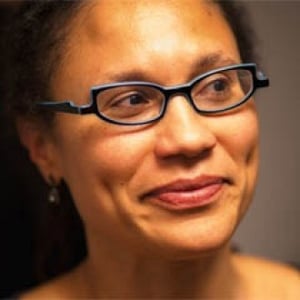
Professor of Law, Fordham University School of Law
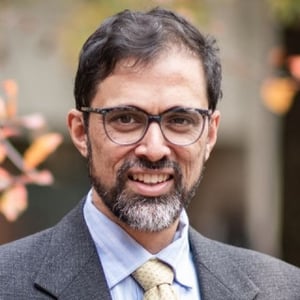
James Monroe Distinguished Professor of Law and Albert Clark Tate, Jr., Professor of Law, University of Virginia School of Law
Professor Saikrishna Prakash’s scholarship focuses on separation of powers, particularly executive powers. He teaches Constitutional Law, Foreign Relations Law and Presidential Powers at the Law School.
Prakash’s most recent book, “The Living Presidency: An Originalist Argument Against Its Ever-Expanding Powers,” was published by Harvard Belknap Press in 2020. He also authored “Imperial from the Beginning: The Constitution of the Original Executive” (Yale University Press, 2015). The former book focuses on the modern presidency while the latter considers the presidency of the Founders.
Prakash has authored over 75 law review articles. Among them are “Of Synchronicity and Supreme Law” in the Harvard Law Review, “The Indefensible Duty to Defend” in the Columbia Law Review, and “50 States, 50 Attorneys General and 50 Approaches to the Duty to Defend” and “The Executive Power Over Foreign Affairs” in the Yale Law Journal.
Prakash has published op-eds in The New York Times, The Wall Street Journal and the Los Angeles Times. At the request of Democrats and Republicans, he has testified before Congress on matters of presidential removal, the Mueller Report and how Congress might better check the presidency. He is currently a Miller Center Senior Fellow. In 2015, he received the Roger Traynor award for faculty scholarship. In the same year, he received an honorable mention from the American Society of Legal Writers for his book “Imperial from the Beginning.” He has given named lectures at William & Mary Law School, Princeton University and Toledo Law School, and keynote addresses at several conferences.
Prakash majored in economics and political science at Stanford University. At Yale Law School, he served as senior editor of the Yale Law Journal and received the John M. Olin Fellowship in Law, Economics and Public Policy. He subsequently clerked for Judge Laurence H. Silberman of the U.S. Court of Appeals for the District of Columbia Circuit and for Justice Clarence Thomas of the U.S. Supreme Court. After practicing in New York for two years, he served as a visiting professor at the University of Illinois College of Law and as an associate professor at Boston University School of Law. He then spent several years at the University of San Diego School of Law as the Herzog Research Professor of Law. Prakash has been a visiting professor at Northwestern University and the University of Chicago. He also has served as a James Madison Fellow at Princeton University and Visiting Research Fellow at the Hoover Institution of War & Peace at Stanford University.

Judge, United States Court of Appeals, D.C. Circuit
Judge Randolph was confirmed by the Senate and appointed to the United States Court of Appeals for the District of Columbia Circuit by President George H. W. Bush in July 1990.
Judge Randolph received his B.S. degree in 1966 from Drexel University, majoring in economics and basic engineering. At Drexel, he was president of the debate society, vice president of the Student Senate, and a member of the varsity wrestling squad. In 1969, he received his J.D. from the University of Pennsylvania, summa cum laude. Judge Randolph ranked first in his law school class all three years and was managing editor of the Law Review.
After graduation, Judge Randolph served as a law clerk to Judge Henry J. Friendly of the United States Court of Appeals for the Second Circuit in New York.
Admitted to the California Bar in 1970 (and to the District of Columbia bar in 1973), Judge Randolph worked as Assistant to the Solicitor General, U.S. Department of Justice, in Washington, D.C., 1970-1973.
After two years in private practice, Judge Randolph was named Deputy Solicitor General of the United States, a position he held from 1975-1977.
In 1979, Judge Randolph was appointed Special Counsel to the Committee on Standards of Official Conduct (the Ethics Committee) of the United States House of Representatives, remaining in this position until 1980.
In the 1980s, Judge Randolph held a number of positions while in private practice, including Special Assistant Attorney General for the states of New Mexico (1985 90), Utah (1986-1990) and Montana (1983-1990). He also served as a Member of the Advisory Panel of the Federal Courts Study Committee.
From 1971-1990, Judge Randolph argued 23 times in the United States Supreme Court, winning 20 of his cases.
As an Adjunct Professor of Law at Georgetown University Law Center from 1974-1978 he taught courses in civil procedure and injunctions. In 1992 he taught a course in constitutional law. He is a Distinguished Adjunct Professor of Law at George Mason School of Law and for the past ten years has been teaching First Amendment law. He also serves on the Judicial Advisory Board of the George Mason University Law and Economics Center.
From 1993 through 1995 Judge Randolph was a member of the Committee on Codes of Conduct of the Judicial Conference of the United States, and from 1995 to 1998 served as the Committee's chairman. He also served as the judicial liaison to the American Bar Association’s Administrative Law Section.
Judge Randolph is a member of the Board of Visitors at Drexel University Law School and was named to the “Drexel One Hundred” as a leading alumnus. In 2002 he was presented the James Wilson Award by the University of Pennsylvania Law School. In November 2005 he delivered the Fifth Annual Barbara K. Olson Memorial Lecture at the Annual Lawyers Convention of the Federalist Society. He has published numerous articles, the most recent of which is in the June 2006 issue of the Harvard Journal of Law and Public Policy.
Judge Randolph is married to the Honorable Eileen J. O’Connor, formerly Assistant Attorney General, Tax Division, U.S. Department of Justice. His son John Trevor Randolph is an investment banker in New York. His daughter Cynthia Lee Randolph is an artist living in San Francisco.

Emanuel S. Heller Professor of Law, University of California at Berkeley; Thomas Smith Senior Research Fellow, The Civitas Institute, University of Texas at Austin
John Yoo is the Emanuel Heller Professor of Law at the University of California at Berkeley. He is also the Thomas Smith Senior Research Fellow, Civitas Institute, at the University of Texas at Austin. He is also a Nonresident Senior Fellow at the American Enterprise Institute.
His most recent book, The Politically Incorrect Guide to the Supreme Court, co-authored with Robert Delahunty, was published in 2023. Professor Yoo’s other books include Defender-in-Chief: Trump’s Fight for Presidential Power; Striking Power: How Cyber, Robots, and Space Weapons Change the Rules for War; Point of Attack: Preventive War, International Law, and Global Welfare; and Crisis and Command: A History of Executive Power from George Washington to George Bush.
He is a co-author of volumes 1 and 2 of R. Rossum, G. Tarr, V. Munoz & J. Yoo American Constitution Law (Routledge, 2026), and a co-editor of the eight-volume series on the 250th anniversary of the American Revolution, We Hold These Truths, with Yuval Levin and Adam White of the American Enterprise Institute.
Professor Yoo has published more than 100 articles in academic journals on subjects including national security, constitutional law, international law, and the Supreme Court. He also regularly contributes to the editorial pages of the Wall Street Journal, New York Times, Washington Post, Los Angeles Times, and National Review, among others.
Professor Yoo has served in all three branches of government. He was an official in the U.S. Department of Justice, where he worked on national security and terrorism issues after the 9/11 attacks. He served as general counsel of the U.S. Senate Judiciary Committee. He has been a law clerk for Supreme Court Justice Clarence Thomas and federal appeals Judge Laurence Silberman. He has been a visiting professor at the University of Texas at Austin’s School of Civic Leadership, Seoul National University, the Interdisciplinary Center Herzliya, Keio University, Trento University, the University of Chicago, and the Free University of Amsterdam.
Professor Yoo supervises the Public Law and Policy Program and the California Constitution Center. He also serves on the boards of Founding Forward, the Washington Legal Foundation, the Pacific Legal Foundation, the Ulysses Grant Institute, the Federalist Society’s Separation of Powers and Federalism Division, the Universidad Cientifica del Sur Law School, and the Asia-Pacific Law Institute at Seoul National University. He is a winner of the Federalist Society’s Paul Bator award and the Heritage Foundation’s Edwin Meese III Originalism Lectureship.
Professor Yoo graduated from Yale Law School and summa cum laude from Harvard College.
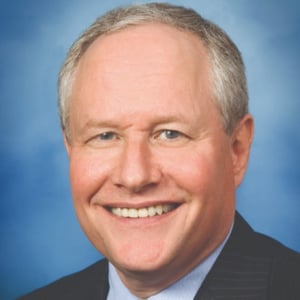
Editor, The Weekly Standard
William Kristol is the editor of The Weekly Standard. He is also a regular panelist on Fox News Sunday, a contributor for the Fox News Channel, and a monthly columnist for the Washington Post. Before starting the Weekly Standard in 1995, Mr. Kristol led the Project for the Republican Future, where he helped shape the strategy that produced the 1994 Republican congressional victory. Prior to that, Mr. Kristol served as chief of staff to Vice President Dan Quayle during the first Bush Administration, and to Education Secretary William Bennett under President Reagan. Before coming to Washington in 1985, Mr. Kristol was on the faculty of Harvard University’s Kennedy School of Government and the Department of Political Science at the University of Pennsylvania.

Executive Vice President, The Federalist Society
Dean Reuter is Executive Vice President at the Federalist Society for Law and Public Policy Studies. He has served in two federal government agency Offices of the Inspector General, as Counsel to the Inspector General and Deputy Inspector General, responsible for policing the use of federal funds granted and contracted through those agencies. As such, he helped conduct and oversee criminal investigations across the country. He is the principal author of the non-fiction book, The Hidden Nazi: The Untold Story of America's Deal with the Devil, and editor of Liberty’s Nemesis: The Unchecked Expansion of the State and Confronting Terror: 9/11 and the Future of American National Security. He was appointed by the President and served as Vice-Chairman of the Board of Directors of the Corporation for National and Community Service, and recently served as an appointee on the U.S. Commission on Presidential Scholars. He is a graduate of Hood College (BA with Honors) and the University of Maryland School of Law.
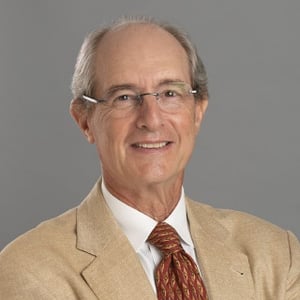
Professor of Practice, Cardozo School of Law
Gabor Rona received his B.A. from Brandeis University, J.D. from Vermont Law School and LL.M from Columbia Law School.
As the former International Legal Director of Human Rights First, he advised Human Rights First programs on questions of international law and coordinates international human rights litigation. He also represented Human Rights First with governments, intergovernmental and non-governmental organizations, the media and the public on matters of international human rights and international humanitarian law (the law of armed conflict).
Before Human Rights First, Rona was a Legal Advisor in the Legal Division of the International Committee of the Red Cross (ICRC) in Geneva. At the ICRC he focused on the application of international humanitarian and human rights law in the context of counter-terrorism policies and practices. He represented the ICRC in intergovernmental, nongovernmental, academic and public forums and his articles on the topic have appeared in the Financial Times, the Fletcher Forum on World Affairs and the Chicago Journal of International Law, among other publications. In addition, he represented the ICRC in connection with the establishment of international and other criminal tribunals, including the International Criminal Court. He has also taught International Humanitarian Law, International Human Rights Law and International Criminal Law at the International Institute of Human Rights in Strasbourg, France, the University Centre for International Humanitarian Law in Geneva, Switzerland and Columbia Law School in New York.

Retired Partner, Sullivan & Cromwell LLP
Upon his resignation as the Legal Adviser of the U.S. Department of State in January 1993, Mr. Williamson rejoined Sullivan & Cromwell's Washington, D.C. office. He originally joined the Firm in 1964 after graduating from New York University School of Law, where he was an editor of the Law Review. He became a partner of the Firm in 1971, moved to its London office in 1976, returned to its New York office in 1979, moved to its Washington, D.C. office in 1988 and became Of Counsel in 2007. In 2018, he retired from the firm.
At Sullivan & Cromwell, Mr. Williamson engaged in a broad and wide-ranging domestic and international financing and transactions practice, as well as advice with respect to corporate governance issues, the United States’ economic sanctions laws, the ethics rules applicable to government officials and the immunities of foreign sovereigns and international organizations.
Mr. Williamson has been an active participant on panels and other forums involving public international law and national security issues, such as the domestic and international bases for the use of force, the role of the United States with respect to the International Criminal Court, the law of the sea and the application of international legal principles in the war against terrorism.
Mr. Williamson is a member of the Council on Foreign Relations and a former member of the Executive Council of the American Society of International Law, the Executive Committees of the Business and Advisory Committee (BIAC) to the OECD and the U.S. Council for International Business, the United States Advisory Board of NTT DoCoMo, Inc. and the Board of Directors of Triton Oil & Gas Limited.
Mr. Williamson has served on the Boards of Regents and Trustees of the University of the South and as chair of the Board of Regents. He is currently a member of the Board of Directors of the American Council of Trustees and Alumni, a higher education watchdog.
Senior Fellow, Governance Studies, The Brookings Institution
Benjamin Wittes is a senior fellow in Governance Studies at The Brookings Institution. He co-founded and is the editor-in-chief of the Lawfare blog, which is devoted to sober and serious discussion of "Hard National Security Choices," and is a member of the Hoover Institution's Task Force on National Security and Law. He is the author of Detention and Denial: The Case for Candor After Guantanamo, published in November 2011, co-editor of Constitution 3.0: Freedom and Technological Change, published in December 2011, and editor of Campaign 2012: Twelve Independent Ideas for Improving American Public Policy (Brookings Institution Press, May 2012). He is also writing a book on data and technology proliferation and their implications for security. He is the author of Law and the Long War: The Future of Justice in the Age of Terror, published in June 2008 by The Penguin Press, and the editor of the 2009 Brookings book, Legislating the War on Terror: An Agenda for Reform.
His previous books include Starr: A Reassessment, published in 2002 by Yale University Press, and Confirmation Wars: Preserving Independent Courts in Angry Times, published in 2006 by Rowman & Littlefield and the Hoover Institution.
Between 1997 and 2006, he served as an editorial writer for The Washington Post specializing in legal affairs. Before joining the editorial page staff of The Washington Post, Wittes covered the Justice Department and federal regulatory agencies as a reporter and news editor at Legal Times. His writing has also appeared in a wide range of journals and magazines including The Atlantic, Slate, The New Republic, The Wilson Quarterly, The Weekly Standard, Policy Review, and First Things.
Benjamin Wittes was born in Boston, Massachusetts. He graduated from Oberlin College in 1990, and he has a black belt in taekwondo.

Partner, Baker Hostetler LLP
David Rivkin is a member of the firm's litigation, international and environmental teams and is co-leader of the firm's national appellate practice. He has extensive experience in constitutional, administrative and international law litigation and has been involved in numerous high-profile cases. With his prior experience in the government sector, David draws on a wealth of knowledge when providing compliance advice to companies and handling enforcement proceedings before government agencies on issues arising out of multilateral and unilateral sanctions, the Foreign Corrupt Practices Act (FCPA), anti-boycott issues, bankruptcy and financial fraud matters, and environmental and energy issues.
David has developed and implemented legislative, regulatory and litigation initiatives for two presidential administrations. Over the years, he has published hundreds of articles, op-eds, book reviews and book chapters on a variety of international, legal, constitutional, defense, arms control, foreign policy, environmental and energy issues for various newspapers and magazines, including The Wall Street Journal, The Washington Post, The New York Times, USA Today and The Los Angeles Times, and has been a frequent commentator and guest on TV and radio shows including ABC, CBS, NBC, CNN, Fox News, NPR and PBS.
Professor of Constitutional Law, Pepperdine University School of Law
One of America's best known scholars and popular commentators on the law, Professor Douglas W. Kmiec holds the endowed chair in constitutional law at Pepperdine Law School. He came to this position after serving several years as dean and St. Thomas More Professor of Law at The Catholic University of America in Washington, D.C., and for nearly two decades, on the law faculty at the University of Notre Dame. As dean at Catholic University, Professor Kmiec did what many said would be impossible; he greatly increased academic quality and student selectivity at the same time he deepened the school's religious commitment. During his tenure, the law school moved into the upper tier of the U.S. News ranking from tier three. At Notre Dame, he was director of Notre Dame's Center on Law & Government, and the founder of its Journal of Law, Ethics & Public Policy. Beyond the university setting, Kmiec served Presidents Ronald Reagan and George Bush during 1985-89 as constitutional legal counsel (Assistant Attorney General, Office of Legal Counsel, U.S. Department of Justice).
A wide-ranging writer and engaging speaker, Professor Kmiec writes a syndicated column for the Catholic News Service, and for several years wrote a regular column in the Chicago Tribune. He is also a frequent contributor to the pages of the Los Angeles Times, Wall Street Journal, and other periodicals. He is the co-author (with legal historian Stephen Presser of Northwestern) of three books on the Constitution -- The American Constitutional Order; Individual Rights and the American Constitution and The History, Structure and Philosophy of the American Constitution. Another recent book, Cease-Fire on the Family (Crisis Books/Notre Dame) attracted scholarly and popular acclaim for proposing realistic ways for families to "end the culture war" by renewing personal virtue and civic responsibility within itself. He has also written The Attorney General's Lawyer (Praeger 1992), and several respected legal treatises.
Professor Kmiec's scholarly research spans legal and non-legal subjects, from the Constitution and the federal system, to land use and the organization of America society. He is a frequent guest on national news programs, such as Nightline, the Newshour, and NPR's Talk of the Nation, analyzing constitutional questions.
A White House Fellow (1982-83), Professor Kmiec is one of a few individuals who has received the Distinguished Service Award from two cabinet departments —the Department of Justice in 1987 and Housing and Urban Development in 1983. In 1988, he was awarded the Edmund J. Randolph Award by the attorney general. He has lectured on the U.S. Constitution in Asia as a Fulbright Distinguished Scholar.
An honors graduate of Northwestern, Professor Kmiec received his law degree from the University of Southern California, where he served on the Law Review and received the Legion Lex Commencement Prize for Legal Writing. He is a member of the bar of the U.S. Supreme Court and the state bars of Illinois and California.
B.A., with honors, Northwestern University, 1973
J.D., University of Southern California, 1976
Attorney, DePalma Law Firm, LLC
Bart DePalma practices trial law in Woodland Park, CO, located in a mountain valley at the foot of Pikes Peak, focusing on criminal defense and business law.
Prior to practicing law, Mr. DePalma served as an Army infantry officer during the Persian Gulf War and an intelligence officer in Germany.
In his spare time, Mr. DePalma authors the blog Citizen Pamphleteer, discussing politics, law, economics and military matters.
B.A., Florida Atlantic University; J.D., Florida State University
Distinguished Visiting Professor, Hofstra Law School
Scott Horton is a Distinguished Visiting Professor at Hofstra Law School and an adjunct professor at Columbia Law School. He teaches international commercial law and the law of armed conflict. He is also a contributing editor at Harper's Magazine and writes on law and legal policy issues for several other publications. A life-long human rights advocate, Scott served as counsel to Andrei Sakharov and Elena Bonner, among other activists in the former Soviet Union. He is a co-founder of the American University in Central Asia, where he currently serves as a trustee, and has been involved in some of the most significant foreign investment projects in the Central Eurasian region. Scott recently led a number of studies of issues associated with the conduct of the war on terror, including major studies of the introduction of highly coercive interrogation techniques and the program of extraordinary renditions for the New York City Bar Association, where he has chaired several committees, including, most recently, the Committee on International Law. He is also an associate of the Harriman Institute at Columbia University, a member of the board of the National Institute of Military Justice, Center on Law and Security of NYU Law School, the EurasiaGroup and the American Branch of the International Law Association and a member of the Council on Foreign Relations. He co-authored a recent study on legal accountability for private military contractors, Private Security Contractors at War. He appeared as a congressional witness five times in the last two years, offering testimony on issues under the law of armed conflict, military contractor liability and the extraordinary renditions program.
University Professor, Georgetown University Law Center
David Luban is University Professor of Law and Philosophy at Georgetown University. He holds a Ph.D. in philosophy from Yale University. Luban's books include Lawyers and Justice: An Ethical Study (Princeton University Press, 1988), Legal Modernism (University of Michigan Press, 1994), and Legal Ethics and Human Dignity (Cambridge University Press, 2007), as well as textbooks and anthologies on legal ethics. His books have been translated into Chinese and Japanese.
Luban has been a Guggenheim Fellow and a Fellow of the Woodrow Wilson Center, and has won the Keck Award and Levy Award for distinguished scholarship. He has published more than 150 articles on topics in international criminal law, moral and political philosophy, professional ethics, criminal law theory, just war theory, and-most recently-issues surrounding the War on Terror, particularly torture and the mistreatment of detainees.
Luban joined the Georgetown faculty from the University of Maryland, and has been a visiting professor of law at the Harvard, Stanford, and Yale Law Schools, and a visiting professor of philosophy at Dartmouth College and the University of Melbourne. His articles on the torture issue include "Liberalism, Torture, and the Ticking Bomb," 91 Va. L. Rev. 1425 (2005), "Torture and the Professions," 26 Criminal J. Ethics no. 2 (2007), "The Torture Lawyers of Washington," in Legal Ethics and Human Dignity, and "Unthinking the Ticking Bomb," forthcoming in Global Basic Rights (Beitz & Goodin eds., Oxford University Press).

Senior Fellow, National Review
Bestselling author Andrew C. McCarthy is a contributing editor at National Review, a senior fellow at National Review Institute, and a Fox News contributor. He is a former Chief Assistant United States Attorney in the Southern District of New York and led the terrorism prosecution against the “Blind Sheikh” (Omar Abdel Rahman) and eleven other jihadists for conducting a war of urban terrorism against the United States that included the 1993 World Trade Center bombing and a plot to bomb New York City landmarks. During is 20-year career as a prosecutor, he received numerous honors, including the Justice Department’s highest awards. Andy speaks and writes widely on law and national security, radical Islam, politics, and culture. He has testified before Congress as an expert on issues of constitutional law, counterterrorism, and law-enforcement. He is a columnist for The Hill, and his essays and book reviews appear frequently at The New Criterion. His most recent New York Times bestselling book is Ball of Collusion (Encounter Books, 2019), about the Russiagate controversy (an updated version was published in 2020). His other books include Willful Blindness (2008), The Grand Jihad (2010), Spring Fever: The Illusion of Islamic Democracy (2012), and Faithless Execution (2014). He has also written several pamphlets in the Broadside series published by Encounter Books, most recently Islam and Free Speech (2015).
Partner, Baker & Hostetler LLP
Lee A. Casey focuses on federal environmental, constitutional and international law and Alien Tort Statute issues. He also advises clients on compliance issues under the Foreign Corrupt Practices Act (FCPA), U.S. trade sanctions regimes, and federal ethics requirements. Mr. Casey’s practice includes federal, district and appellate court litigation, as well as matters before federal agencies. Prior to joining BakerHostetler, Mr. Casey was an associate with Hunton & Williams, practicing in international, environmental and constitutional law. From 2004 through 2007 he served as an member of the United Nations Subcommission on the Promotion and Protection of Human Rights.
From 1986 to 1993, Mr. Casey served in various capacities in the federal government, including the Office of Legal Policy (1986-90) and the Office of Legal Counsel (1992-93) at the U.S. Department of Justice and served as Deputy Associate General Counsel at the U.S. Department of Energy (1990-92). The Office of Legal Counsel is responsible for advising the Attorney General and the White House on issues of constitutional law and statutory interpretation. The Office of Legal Policy served as a strategic “think tank” for the Reagan Justice Department and was responsible for reviewing candidates for appointments to the federal bench.
Before joining the government in 1986, Mr. Casey was an associate in the Los Angeles firm of Mitchell, Silberberg & Knupp, practicing in the litigation section, with an emphasis on copyright, contract and First Amendment issues. From 1984 to 1985, Mr. Casey served as Law Clerk to the Honorable Alex Kozinski, then Chief Judge of the United States Claims Court. From 1982 to 1984, he practiced at the Detroit firm of Dykema Gossett, focusing on corporate, securities, commercial and intellectual property litigation, and from 1990 through 1994, he served as an Adjunct Professor of Law at George Mason University School of Law in Arlington, Virginia.
Among the chapters, articles and papers that Mr. Casey has authored or co-authored are: “International Law and the Nation-State at the U.N.,” Reclaiming the Language of Freedom at the United Nations: A Guide for U.S. Policymakers, The Heritage Foundation (2006) (with David B. Rivkin, Jr.); “The Dangerous Myth of Universal Jurisdiction,” A Country I Do Not Recognize (ed. Robert H. Bork) (2005) (with David B. Rivkin, Jr.); “Leashing the Dogs of War,” The National Interest (Fall 2003) (with David B. Rivkin, Jr.); “The Limits of Legitimacy: The Rome Statute’s Unlawful Application to Non-State Parties,” 44 Va.J.Int’l L. 63 (Fall 2003) (with David B. Rivkin, Jr.); “Devil’s Advocates: The Danger of Judging Lawyers By Their Clients,” Policy Review (Feb. and Mar. 2002) (with David B. Rivkin, Jr.); “The Case Against the International Criminal Court,” 25 Fordham Int’l L.J. 840 (2002); “Europe in the Balance: The Alarmingly Undemocratic Drift of the European Union,” Policy Review (June and July 2001) (with David B. Rivkin Jr.); “Against an International Criminal Court,” Commentary, May 1998 (with David B. Rivkin, Jr.); “Federalism (Cont’d.),” Commentary, December 1996 (with David B. Rivkin, Jr.); “Presidents and War Powers: Another View,” Common Sense, Winter 1996 (with David B. Rivkin, Jr.); “How Binding Are Contracts?” The American Enterprise, Nov./Dec. 1993 (with David B. Rivkin, Jr.); and “Pirate Constitutionalism: An Essay in Self-Government,” 8 J. of L. & Politics 477 (1992).
Mr. Casey is a member of the California, Michigan and District of Columbia Bar Associations.

Agnes Williams Sesquicentennial Professor of Federal Courts, Georgetown Law
Stephen I. Vladeck is a professor of law at the Georgetown University Law Center, and is a nationally recognized expert on the federal courts; the Supreme Court; national security law; and military justice.
Vladeck is author of the New York Times bestselling book, “The Shadow Docket: How the Supreme Court Uses Stealth Rulings to Amass Power and Undermine the Republic,” which won the 2023 Writers’ League of Texas Book Award for Non-Fiction and was a finalist for the 2024 ABA Silver Gavel Award for Media and the Arts. Vladeck is also a highly regarded appellate advocate, having argued three cases before the U.S. Supreme Court and over a dozen before various lower federal civilian and military courts. He has received numerous awards for his influential and widely cited legal scholarship, his prolific popular writing, his teaching, and his service to the legal profession—including the 2024 University of Texas President’s Research Impact Award and his selection by the Order of the Coif to serve as its Distinguished Visiting Professor for 2025.
Vladeck is CNN’s Supreme Court analyst and editor and author of “One First,” a popular weekly newsletter about the Supreme Court. Together with Bobby Chesney, Vladeck co-hosts the popular and award-winning “National Security Law Podcast.” He is also a co-author of Aspen Publishers’ leading national security law and counterterrorism law casebooks. And he is a member of the Board of Trustees of EarthJustice—the nation’s premier nonprofit public interest environmental law organization.
Vladeck graduated from Yale Law School in 2004—where he was executive editor of the Yale Law Journal and won the Harlan Fiske Stone Prize for outstanding moot court oralist and shared the Potter Stewart Prize for best moot court team performance. After law school, he clerked for the Honorable Marsha S. Berzon on the U.S. Court of Appeals for the Ninth Circuit and the Honorable Rosemary Barkett on the U.S. Court of Appeals for the Eleventh Circuit. He earned a B.A. summa cum laude with Highest Distinction in History and Mathematics from Amherst College in 2001—where he wrote his senior thesis on “Leipzig’s Shadow: The War Crimes Trials of the First World War and Their Implications from Nuremberg to the Present.” A native New Yorker and hopeless Mets fan, Vladeck lives in the District with his wife, Karen (Founder and Managing Partner of Risepoint Search Partners); their daughters, Madeleine and Sydney; and their eleven-year-old pug, Roxanna.
Partner, Sidley Austin LLP
BRADFORD A. BERENSON is a litigator in the Washington, D.C., office whose practice focuses on the defense of white collar criminal cases, investigations by government agencies and congressional committees, and other civil or constitutional matters that present unusual legal, public relations, or political risks. He has defended criminal cases at every stage of development, from internal investigations and grand jury proceedings through trials, sentencings, and appeals. Mr. Berenson’s practice has included criminal matters in the fraud, environmental, health care, pharmaceutical, and public corruption areas. In addition, Mr. Berenson served as a consultant to Independent Counsel David M. Barrett in the prosecution of former HUD Secretary Henry Cisneros. He has also handled a variety of civil and appellate cases in federal court.
From January 2001 through January 2003, Mr. Berenson served as Associate Counsel to the President of the United States. In the White House, he worked on a wide variety of legal, legislative and policy issues associated with the Bush Administration’s relations with Congress, its justice and domestic policy initiatives, and the war on terrorism. These included judicial selection, responses to congressional oversight and investigations, the USA Patriot Act, the Military Order authorizing the use of military commissions, detainee and anti-terrorism litigation, presidential action against terrorist financing, and the creation of the new Department of Homeland Security.
Mr. Berenson has also provided commentary on legal matters in the mainstream media, publishing articles in the Wall Street Journal, Los Angeles Times and Washington Times and making appearances on news and public affairs programming on ABC, NBC, CBS, PBS, NPR, CNN and Fox News Channel. He was a consultant to ABC News in connection with the departures of Chief Justice Rehnquist and Justice O’Connor from the Supreme Court and the nominations of Chief Justice Roberts, Harriet Miers and Justice Alito.
Mr. Berenson holds a B.A., summa cum laude, from Yale University, and a J.D., magna cum laude, from Harvard Law School, where he was Supreme Court editor of the Harvard Law Review. Following graduation, he clerked for Judge Laurence H. Silberman of the U.S. Court of Appeals for the District of Columbia Circuit and Justice Anthony M. Kennedy of the United States Supreme Court.
Partner, McGuireWoods LLP
Andrew is a former Supreme Court clerk for Justice Sandra Day O’Connor and a former federal prosecutor with more than 25 years of experience in civil and criminal litigation. He represents clients in federal and state courts in complex civil litigation and in rulemaking and investigations before numerous federal and state agencies, including the Department of Justice, Environmental Protection Agency, Federal Trade Commission, Federal Election Commission, Federal Communications Commission and state attorneys general.
Professor from Practice, Georgetown University Law Center
Adjunct Scholar and Former Director, Project On Criminal Justice, Cato Institute
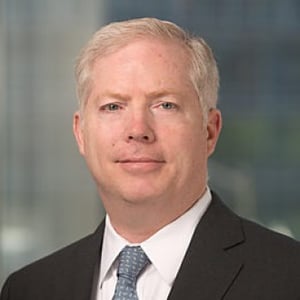
Tim Lynch is an attorney specializing in criminal law, constitutional law, and civil liberties. He is an adjunct scholar at the Cato Institute and the former director of Cato’s Project on Criminal Justice. His research interests include all aspects of constitutional criminal procedure, overcriminalization, the drug war, and police and prosecutorial misconduct. In 2000, he served on the National Committee to Prevent Wrongful Executions. Lynch also prepares amicus briefs before appellate courts and the U.S. Supreme Court in cases involving constitutional rights. He is the editor of In the Name of Justice: Leading Experts Reexamine the Classic Article “The Aims of the Criminal Law” and After Prohibition: An Adult Approach to Drug Policies in the 21st Century.
Lynch has published a variety of articles in both the law journals and in opinion pieces for the New York Times, the Washington Post, the Wall Street Journal, the Los Angeles Times, and other newspapers. He has appeared on The PBS NewsHour, NBC Nightly News, ABC World News Tonight, and C-SPAN’s Washington Journal. Lynch is a member of the Virginia, District of Columbia, and Supreme Court bars. He earned both a BS and a JD from Marquette University.
Mr. Lynch can be reached via his personal website.

The Russian Invasion of Ukraine and International Law, Order, and Security
Michael Allen, Marshall S. Billingslea, Charles J. Dunlap, Chad A. Readler, Angela Stent
In February, Russia began a full-scale military action against Ukraine. This war in Ukraine constitutes...
Panel II: How Does International Law Limit the War on Terror? [Archive Collection]
Akhil Reed Amar, Catherine Powell, Saikrishna Prakash, A. Raymond Randolph, John C. Yoo
On February 25, 2006, the Federalist Society student chapter at Columbia Law School hosted the...
Panel 2: Preventing Attacks through Interrogation and Transfer of Terrorists Suspects
William Kristol, Deborah Pearlstein, Dean Reuter, Gabor Rona, Edwin D. Williamson, Benjamin Wittes
Deborah Pearlstein, Associate Research Scholar, Woodrow Wilson School of Public and International Affairs, Princeton University...
OLC Memos
David B. Rivkin, Douglas W. Kmiec, Bart DePalma, Scott Horton, David Luban, Andrew McCarthy, Lee A. Casey, Stephen I. Vladeck
On April 16, President Obama announced that he was declassifying and releasing to the public...
Boumediene v. Bush
Bradford A. Berenson, Andrew G. McBride, Martin S. Lederman, Tim Lynch
Boumediene v. Bush arises on a writ of habeas corpus filed on behalf of Lakmar...
Bar Watch Bulletin August 8, 2006
The American Bar Association's Annual Meeting takes place in Honolulu from Thursday, August 3 to...