
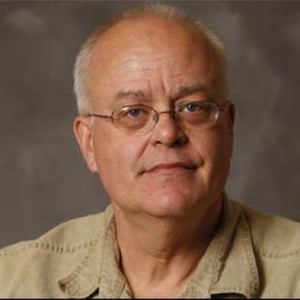
Professor of Law, University of Baltimore School of Law
Professor Garrett Epps joined the University of Baltimore School of Law in 2008. He teaches courses in Constitutional Law, First Amendment, and Fiction and Non-Fiction Writing for Law Students. He is a contributing writer to The Atlantic Online and serves as the magazine's Supreme Court correspondent. He is also a contributing editor of The American Prospect. Epps' most recent book, American Justice 2014: Nine Clashing Visions on the Supreme Court, was published by the University of Pennsylvania Press.
Professor Epps' previous book, American Epic: Reading the U.S. Constitution, was published in 2013 by Oxford University Press. In March 2014, American Epic was named a finalist for the American Bar Association’s Silver Gavel Book award. Two of his previous books, Democracy Reborn: The Fourteenth Amendment and the Fight for Equal Rights in Post-Civil War America (2006) and To an Unknown God: Religious Freedom on Trial (2001), were both also Silver Gavel finalists. A former staff writer for The Washington Post, Epps has written for The New York Times, The New York Review of Books, The Nation, The New Republic and The American Prospect.
He received his LL.M. in Comparative and International Law and his J.D. from Duke University, where he served as articles editor of Law and Contemporary Problems and graduated with the Willis Smith Award for the highest three-year academic average. Before attending law school, Epps earned his M.A. in English Writing in 1975 from Hollins College and his B.A. in 1972 from Harvard College, where he was editor of The Harvard Crimson.
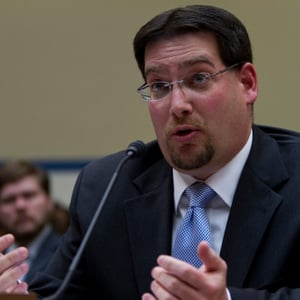
Deputy General Counsel, U. S. House of Representatives, Office of General Counsel
Todd Tatelman has served in the Office of General Counsel since November 2011. Mr. Tatelman previously served as a Legislative Attorney for the American Law Division of the Congressional Research Service. He received his bachelor of arts degrees in Philosophy, Political Science, and Economics from Boston University and his law degree, with honors, from The Catholic University of America, Columbus School of Law, where he was a member of The Catholic University Law Review.

George Mason University Foundation Professor of Law, Antonin Scalia Law School, George Mason University
TODD J. ZYWICKI is George Mason University Foundation Professor of Law at Antonin Scalia Law School at George Mason University and Research Fellow of the George Mason Law and Economics Center. During the Fall 2023 semester he served as the Visiting Scholar in Conservative Thought and Policy for the Bruce Benson Center for the Study of Western Civilization at the University of Colorado-Boulder. From 2020-2021 he was Chair of the Consumer Financial Protection Bureau Taskforce on Federal Consumer Financial Law. In 2021 he was inducted to the American College of Consumer Financial Services Lawyers. He is also a Senior Fellow of the F.A. Hayek Program for the Advanced Study of Politics, Philosophy, and Economics at George Mason University and a former Senior Fellow of the Cato Institute. From 2015-2017 he was Executive Director of the George Mason Law and Economics Center. He served as Co-Editor of the Supreme Court Economic Review from 2006-2017. From 2003-2004, Professor Zywicki served as the Director of the Office of Policy Planning at the Federal Trade Commission. He has also taught at Vanderbilt University Law School, Georgetown University Law Center, Boston College Law School, Mississippi College School of Law, and China University of Political Science and Law.
Professor Zywicki clerked for Judge Jerry E. Smith of the U.S. Court of Appeals for the Fifth Circuit and worked as an associate at Alston & Bird in Atlanta, Georgia, where he practiced bankruptcy and commercial law. He received his J.D. from the University of Virginia, where he was executive editor of the Virginia Tax Review and John M. Olin Scholar in Law and Economics. Professor Zywicki also received an M.A. in Economics from Clemson University and an A.B. cum Laude with high honors in his major from Dartmouth College.
Professor Zywicki is also a Lone Mountain Fellow of the Property and Environment Research Center, a Fellow of the International Centre for Economic Research in Turin, Italy, and a former Senior Fellow of the Goldwater Institute. During the Fall 2008 Semester Professor Zywicki was the Searle Fellow of the George Mason University School of Law and was a 2008-09 W. Glenn Campbell and Rita Ricardo-Campbell National Fellow and the Arch W. Shaw National Fellow at the Hoover Institution on War, Revolution and Peace. He has lectured and consulted with government officials around the world, including Iceland, Italy, Japan, and Guatemala. In 2006 Professor Zywicki served as a Member of the United States Department of Justice Study Group on “Identifying Fraud, Abuse and Errors in the United States Bankruptcy System.”
Professor Zywicki is the author of more than 130 articles in leading law reviews and peer-reviewed economics journals. He is one of the Top 10 most-cited law professors in the field of Commercial Law and one of the Top 25 law professors on Twitter as measured by engagement levels. He is one of the Top 50 Most Downloaded Law Authors at the Social Science Research Network. He has testified multiple times before Congress on issues of consumer bankruptcy law and consumer credit and is a frequent commentator on legal issues in the print and broadcast media, including the Wall Street Journal, New York Times, The Washington Post, The Washington Times, Nightline, The Newshour with Jim Lehrer, Neil Cavuto Show, Fox & Friends, Smerconish, Fox News @ Night with Shannon Bream, Fox Business, CNN, CNBC, Bloomberg News, BBC, The Diane Rehm Show, Lou Dobbs Show, Jerry Doyle Show, and The Laura Ingraham Show.
Professor Zywicki is former Chairman and a current member of the Board of Directors of the Competitive Enterprise Institute, and is a member of the Board of Directors of the Institute for Humane Studies, Bill of Rights Institute, the Executive Committee for the Federalist Society's Financial Institutions and E-Commerce Practice Group, the Board of Trustees of the Foundation for Research on Economics and the Environment. He formerly served on the Governing Board and the Advisory Council for the Financial Services Research Program at George Washington University School of Business. He is currently the Chair of the Academic Advisory Council for the following organizations: The Bill of Rights Institute, the film “We the People in IMAX,” and the McCormick-Tribune Foundation “Freedom Museum” in Chicago, Illinois. He is a member of the Board of Visitors of Ralston College and was a member of the Board of Trustees of Yorktown University. From 2005-2009 he served as an elected Alumni Trustee of the Dartmouth College Board of Trustees.

Senior Fellow in Constitutional Jurisprudence, Independence Institute
Professor Robert G. Natelson is a constitutional scholar and author.
Rob’s constitutional scholarship has been cited repeatedly by justices and parties at the U.S. Supreme Court—as well as by federal appeals courts, and at least 18 state supreme courts.
Rob’s research into the Constitution’s original meaning has carried him to libraries throughout the United States and in Britain, including four months at Oxford University. His books and articles span many different parts of the Constitution, including groundbreaking studies of the Necessary and Proper Clause, the Indian Commerce Clause, federalism, Founding-Era interpretation, regulation of elections, and the amendment process of Article V. He created the first-ever online bibliography for 18th century materials used in constitutional research. He is a contributing author to the Encyclopedia of the Supreme Court of the United States (on Magna Carta). He contributed eight essays to the third edition of the Heritage Guide to the Constitution: five on the amendment procedure and one each on the Guarantee Clause, the Postal Clause, and the Recess Appointments Clause.
U.S. Supreme Court justices have relied explicitly on Rob’s research in 41 citations in 13 separate cases.

Legal Scholar and Solo Practitioner
Jack received his B.A. in History from the University of Virginia in 1977, graduating with Highest Distinction. After graduating Yale Law School in 1980, he served active duty in the U.S. Army's JAG Corps, rising to the rank of Major, where he represented the United States in more than 250 cases.
He practiced for a decade as an Associate for Bradley Arant in Birmingham, Alabama. He proudly served the State of Alabama in the Office of the Attorney General, both as Deputy and Assistant Attorney General, handling complex civil and criminal litigation cases for the people of Alabama. In 2000, he won the "Best Brief Award" from the National Association of Attorneys General for his brief in a case decided by the U.S. Supreme Court, James Alexander v. Martha Sandoval – a case he won. He was Special Assistant to the Inspector General for the Corporation for National and Community Service, Visiting Legal Fellow for the Center for Judicial and Legal Studies for the Heritage Foundation, Of Counsel at Strickland Brockington Lewis, a solo practitioner, and General Counsel for Indigo Energy.
Most recently, he "re-upped" for military service, volunteering his legal services to the Georgia State Defense Force where twice each month he provided legal services for National Guardsmen who were being deployed. He wore his military uniform for the last time in October 2024.
Jack Park passed away on March 16, 2026.
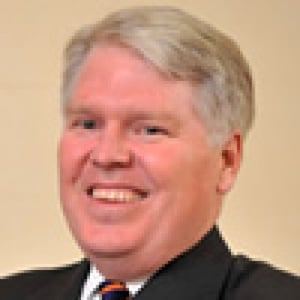
Partner, Cooper & Kirk, PLLC
Michael W. Kirk has extensive civil litigation experience representing a wide range of clients on a variety of constitutional, statutory, contractual, commercial and tort matters.
Mr. Kirk has appeared regularly in cases brought against the federal government. Most recently, for example, he successfully represented Ford Motor Company in a lawsuit against the Federal government seeking to recover environmental clean-up expenses arising from a World War II contract to build B-24 Bombers. While the Court of Federal Claims dismissed Ford’s suit, the United States Court of Appeals for the Federal Circuit reversed, and remanded with instructions that judgment be entered in favor of Ford. He is currently representing Shell Oil Company, Union Oil Company of California, Atlantic Richfield Company, and Chevron-Texaco in a similar lawsuit against the Federal Government arising from World War II contracts. And Mr. Kirk recently served as lead trial counsel for American Capital Corporation in a lawsuit against the United States for breach of contract arising from an agreement entered by the Government in an effort to address the savings and loan crisis of the 1980s. Following trial, the Court of Federal Claims awarded plaintiffs $109 million in January 2005.
Mr. Kirk has also represented state and local governments in numerous complex constitutional and statutory cases involving such varied issues as Medicaid, school desegregation, and prison reform. Most recently, he has represented the States of Tennessee and Hawaii in several cases involving their Medicaid programs. He is currently representing the Marion County, Florida School District in its school desegregation case, and he has successfully represented public school districts in Baton Rouge, Louisiana, Rockford, Illinois, and Oklahoma City, Oklahoma in their efforts to obtain unitary status and end long-running school desegregation cases. In the civil rights arena, Mr. Kirk served as lead trial counsel on behalf of a plaintiff in securing the largest verdict ever returned against a suburban Maryland police department.
Mr. Kirk has an extensive appellate practice, and he has argued cases before the United States Courts of Appeals for the District of Columbia, Federal, Third, Seventh, and Ninth Circuits.
Mr. Kirk served as law clerk to Judge James L. Ryan of the United States Court of Appeals for the Sixth Circuit. He received his J.D. degree, cum laude, in 1988 from Northwestern University. He served as Executive Editor of The Journal of Criminal Law and Criminology, and is a member of the Order of the Coif. He earned an A.B. degree, cum laude, from Georgetown University in 1985.
Mr. Kirk is a member of the Bars of the State of New York, the District of Columbia, the United States Supreme Court, the United States Courts of Appeals for the Third, Fourth, Fifth, Sixth, Seventh, Ninth, District of Columbia and Federal Circuits, the United States District Courts for the Districts of Arizona, Maryland and the District of Columbia, and the United States Court of Federal Claims.
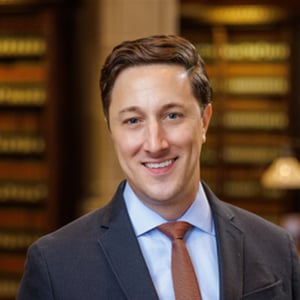
Professor of Law, Notre Dame Law School
Professor Derek Muller is a nationally-recognized scholar in the field of election law. His research focuses on the role of states in the administration of federal elections, the constitutional contours of voting rights and election administration, the limits of judicial power in the domain of elections, and the Electoral College.
He has published more than two dozen academic works, and his op-eds have appeared in the New York Times, the Los Angeles Times, and the Wall Street Journal. He has testified before Congress, and he is a contributor at the Election Law Blog. He is a co-author on a Federal Courts casebook published by Carolina Academic Press. He is also the co-reporter on a new Restatement of the Law, Election Litigation, an effort led by the American Law Institute.
Professor Muller teaches Election Law, Civil Procedure, and Evidence.
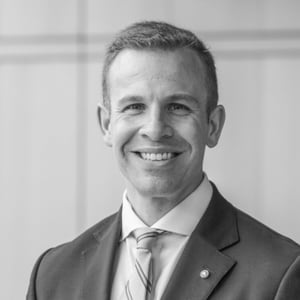
Senior Counsel, Becket Fund for Religious Liberty
William J. Haun is Senior Counsel at the Becket Fund for Religious Liberty and a Nonresident Fellow at the American Enterprise Institute (AEI). At Becket, Will litigates nationwide in defense of religious liberty for all faith traditions, particularly before the U.S. Supreme Court and in other federal and state appellate courts. His litigation includes being a member of the U.S. Supreme Court team that prevailed 9-0 for Catholic Social Services in Fulton v. City of Philadelphia, arguing before multiple federal appellate courts, federal district courts, and the Supreme Court of Texas. At AEI, Will writes and researches on constitutionalism and self-government’s prerequisites, especially the role of religion in securing and preserving freedom.
Before joining Becket and AEI, Will practiced appellate and antitrust law at two international law firms—Shearman & Sterling and Hunton & Williams. He also served as a law clerk to Judge Janice Rogers Brown of the U.S. Court of Appeals for the D.C. Circuit and Judge Claude Hilton of the U.S. District Court for the Eastern District of Virginia. Will often writes on constitutional law issues, including in the Harvard Journal of Law & Public Policy, the Catholic University Law Review, National Affairs, Law & Liberty, National Review Online, the Wall Street Journal, and the Washington Post. He also speaks on these topics, including at the Catholic University of America, Columbus School of Law, Princeton University, the University of Virginia School of Law, and the University of Chicago Law School. He received his J.D. from the Catholic University of America, cum laude, where he was a published member of the Law Review. He received his B.A. from American University in political science, cum laude. He lives in Maryland with his wife and children, where they enjoy sailing, cheering on their favorite baseball teams, and discovering the great traditions of their Catholic faith.
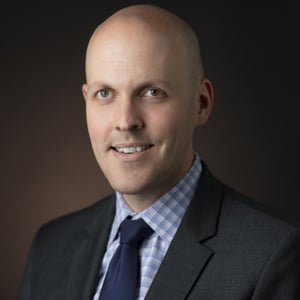
Partner, Barr & Klein PLLC
Steve Klein, a partner at Barr & Klein PLLC, is an experienced free speech attorney who has successfully fought for the First Amendment rights of his clients against local, state and federal regulators. As a lobbyist, Steve’s advocacy has led to the successful amendment of state laws to respect political engagement and prevented the enactment of laws that burden it. Steve has published articles in several legal journals, and his commentary has appeared in The Wall Street Journal, The Washington Times, The Detroit News, and other outlets. Steve earned a bachelors degree in politics at Hillsdale College and a law degree from Ave Maria School of Law, where he served as Managing Editor of the Ave Maria Law Review. He is licensed to practice law in the District of Columbia, Illinois and Michigan.
Professor of Law, Notre Dame Law School
Professor Derek Muller is a nationally-recognized scholar in the field of election law. His research focuses on the role of states in the administration of federal elections, the constitutional contours of voting rights and election administration, the limits of judicial power in the domain of elections, and the Electoral College.
He has published more than two dozen academic works, and his op-eds have appeared in the New York Times, the Los Angeles Times, and the Wall Street Journal. He has testified before Congress, and he is a contributor at the Election Law Blog. He is a co-author on a Federal Courts casebook published by Carolina Academic Press. He is also the co-reporter on a new Restatement of the Law, Election Litigation, an effort led by the American Law Institute.
Professor Muller teaches Election Law, Civil Procedure, and Evidence.
Partner, Cooper & Kirk, PLLC
Michael W. Kirk has extensive civil litigation experience representing a wide range of clients on a variety of constitutional, statutory, contractual, commercial and tort matters.
Mr. Kirk has appeared regularly in cases brought against the federal government. Most recently, for example, he successfully represented Ford Motor Company in a lawsuit against the Federal government seeking to recover environmental clean-up expenses arising from a World War II contract to build B-24 Bombers. While the Court of Federal Claims dismissed Ford’s suit, the United States Court of Appeals for the Federal Circuit reversed, and remanded with instructions that judgment be entered in favor of Ford. He is currently representing Shell Oil Company, Union Oil Company of California, Atlantic Richfield Company, and Chevron-Texaco in a similar lawsuit against the Federal Government arising from World War II contracts. And Mr. Kirk recently served as lead trial counsel for American Capital Corporation in a lawsuit against the United States for breach of contract arising from an agreement entered by the Government in an effort to address the savings and loan crisis of the 1980s. Following trial, the Court of Federal Claims awarded plaintiffs $109 million in January 2005.
Mr. Kirk has also represented state and local governments in numerous complex constitutional and statutory cases involving such varied issues as Medicaid, school desegregation, and prison reform. Most recently, he has represented the States of Tennessee and Hawaii in several cases involving their Medicaid programs. He is currently representing the Marion County, Florida School District in its school desegregation case, and he has successfully represented public school districts in Baton Rouge, Louisiana, Rockford, Illinois, and Oklahoma City, Oklahoma in their efforts to obtain unitary status and end long-running school desegregation cases. In the civil rights arena, Mr. Kirk served as lead trial counsel on behalf of a plaintiff in securing the largest verdict ever returned against a suburban Maryland police department.
Mr. Kirk has an extensive appellate practice, and he has argued cases before the United States Courts of Appeals for the District of Columbia, Federal, Third, Seventh, and Ninth Circuits.
Mr. Kirk served as law clerk to Judge James L. Ryan of the United States Court of Appeals for the Sixth Circuit. He received his J.D. degree, cum laude, in 1988 from Northwestern University. He served as Executive Editor of The Journal of Criminal Law and Criminology, and is a member of the Order of the Coif. He earned an A.B. degree, cum laude, from Georgetown University in 1985.
Mr. Kirk is a member of the Bars of the State of New York, the District of Columbia, the United States Supreme Court, the United States Courts of Appeals for the Third, Fourth, Fifth, Sixth, Seventh, Ninth, District of Columbia and Federal Circuits, the United States District Courts for the Districts of Arizona, Maryland and the District of Columbia, and the United States Court of Federal Claims.

Can a New Establishment Clause Jurisprudence Succeed in Protecting Religious Minorities Where Lemon Has Failed?
Alexandra M. Lightfoot
Note from the Editor: The Federalist Society takes no positions on particular legal and public...
How Should the United States Senate be Elected?
Garrett Epps, Todd B. Tatelman, Todd J. Zywicki
The Constitution did not create a direct democracy; it established a constitutional republic. Its goal...
Counting to Two Thirds: How Close Are We to a Convention for Proposing Amendments to the Constitution?
Robert G. Natelson
Note from the Editor: This article argues that, in aggregating applications from states to call...
Bethune-Hill v. Virginia State Board of Elections - Post-Decision SCOTUScast
John J. Park
On March 1, 2017, the Supreme Court decided Bethune-Hill v. Virginia State Board of Elections....
McCrory v. Harris and Bethune-Hill v. Virginia State Board of Elections - Post-Argument SCOTUScast
John J. Park
On December 5, 2016, the Supreme Court heard oral argument in McCrory v. Harris and...
Felon Voting - Podcast
Michael Kirk
Mr. Kirk discussed the successful challenge brought by the leaders of the Virginia General Assembly...
Felon Voting
TeleforumWittman v. Personhuballah - Post-Decision SCOTUScast
Derek T. Muller
On May 23, 2016, the Supreme Court decided Wittman v. Personhuballah. In 2012, the Virginia...
Supreme Court to Consider Honest-Services Fraud: Oral Arguments Heard in Robert F. McDonnell v. United States - Podcast
William J. Haun, Stephen R. Klein
On Wednesday, April 27, the United States Supreme Court heard oral arguments in Robert F....
Wittman v. Personhuballah - Post-Argument SCOTUScast
Derek T. Muller
On March 21, 2016, the Supreme Court heard oral argument in Wittman v. Personhuballah. In...