
Senior Fellow, Center for American Progress
Kate Martin is a Senior Fellow at American Progress where she works on issues at the intersection of national security, civil liberties, and human rights. The New York Times’ Taking Note blog described her as “an expert on surveillance and detention, and a leading advocate for the rule of law in the so-called ‘war on terror.’” Before coming to American Progress, Ms. Martin served as director of the Center for National Security Studies for more than 20 years. She frequently testifies before Congress on national security and civil liberties issues. She is also a frequent commentator in the national media and has written extensively on these issues for the past 25 years. At the Center for National Security Studies, Martin brought lawsuits that challenged government deprivations of civil liberties. She has taught national security law and served as general counsel to the National Security Archive.
Ms. Martin is a graduate of the University of Virginia School of Law and Pomona College. Before joining the public interest world, she served as a partner at the law firm of Nussbaum, Owen & Webster.

Founder, Libertas-West Project
Karen Lugo is a constitutional law consultant and national security analyst. She was Director of the Center for Tenth Amendment at Texas Public Policy Foundation from 2013 to 2015. When living in California, she was Co-Director of the Center for Constitutional Jurisprudence Center. From 2005 – 2012, she was a clinical visiting and adjunct professor at Chapman University School of Law where she co-taught the advanced Constitutional Law Clinic. Karen has co-authored and written circuit-level and Supreme Court amicus briefs on such issues as FISA Surveillance, Healthcare Reform, Arizona’s Border Security, Gay Marriage, The Ten Commandments, Eminent Domain, Christian Clubs on University Campuses, and Material Support for Terrorists.
Karen is the founder of the Libertas-West Project, a center for study Islamic integration and radicalization issues. In this capacity, she consulted with the Center for Security Policy to write a book on local over-watch of mosque construction and community engagement called: Mosques in America: A Guide to Accountable Permit Hearings and Continuing Citizen Oversight.
Karen writes and speaks for European and American groups on the importance of basing assimilation efforts on principles of Western exceptionalism. She presented a policy brief to the French Conseil d’Etat analyzing the legal implications of banning the burqa. Ms. Lugo has written one of the most comprehensive overviews of sharia law in American courts, American Family Law and Sharia-Compliant Marriages, for the Federalist Society law journal, Engage. She has written several white papers on the American Law for American Courts legislation and sharia tribunals in America.
Ms. Lugo was an appointee to the California Advisory Committee to the U.S. Commission on Civil Rights. She also taught a Human Rights law course on the contrast between French and English Enlightenment theories in Strasbourg, France.
Until moving from California, Ms. Lugo was a member of the David Horowitz Freedom Center Board of Directors. She was also a regular guest on the Orange County PBS local issues debate program, Inside OC, and she is a contributor to Pajamas Media, National Review Online, City Journal, American Spectator, American Greatness, Townhall.com, American Thinker, Daily Caller, and Family Security Matters. She has been interviewed by dozens of radio hosts and has spoken for civic groups on constitutional and cultural concerns.
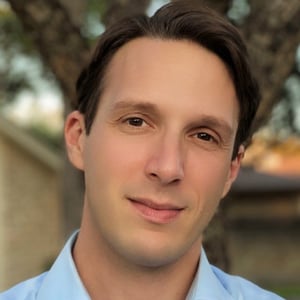
Senior Lecturer; Director, The Robert S. Strauss Center for International Security and Law, The University of Texas at Austin School of Law
Adam Klein is Director of the Strauss Center and Director of Strauss’ Program on Technology, Security, and Global Affairs. Adam also serves as a Senior Lecturer at the School of Law. Before joining the Strauss Center, Adam served as Chairman of the United States Privacy and Civil Liberties Oversight Board, the independent, bipartisan federal agency responsible for overseeing counterterrorism programs at the NSA, FBI, CIA, Department of Homeland Security, and other federal agencies. As the Board’s Senate-confirmed Chairman, he oversaw its oversight and advice engagements with other federal agencies, while also serving as the Board’s chief executive officer.
Before entering government, Adam was the Robert M. Gates Senior Fellow at the Center for a New American Security, a bipartisan national-security research institution in Washington, DC. There, his research focused on government surveillance, intelligence powers, and national security law. Previously, Adam practiced law at Wilmer Cutler Pickering Hale & Dorr, LLP and served as a law clerk to Justice Antonin Scalia of the U.S. Supreme Court and Judge Brett Kavanaugh of the U.S. Court of Appeals for the D.C. Circuit. He has also worked on national-security policy at the RAND Corporation, the 9/11 Public Discourse Project (the non-profit successor to the 9/11 Commission), and in the U.S. Congress. He received his BA from Northwestern University and his JD from Columbia Law School.
Adam is a former Council on Foreign Relations International Affairs Fellow and Robert Bosch Foundation Fellow in Berlin. He speaks German and French.
Kathleen Q. Abernathy recently returned to Wilkinson Barker Knauer LLP as special counsel. She was previously elected to the Board of Directors of Frontier Communications as an independent director in 2006 following her term as a Commissioner at the Federal Communications Commission from 2001 to 2005. In 2010 she joined the company as Chief Legal Officer and Executive Vice President, Regulatory and Governmental Affairs. Prior to her term as an FCC Commissioner, Ms. Abernathy worked for a number of different telecommunications companies and law firms. She has received numerous awards in recognition of her professional accomplishments and has taught as an adjunct professor at Georgetown University Law Center and Catholic University’s Columbus School of Law. She received her B.S. from Marquette University and her J.D. from Catholic University’s Columbus School of Law.
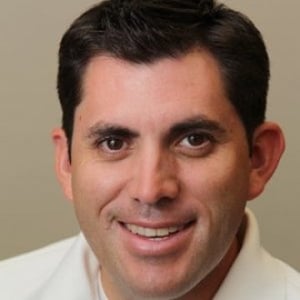
Senior Vice President, Federal Government Relations, Verizon
Joining Verizon in 2005, Mr. Fisher currently serves as Senior Vice President of Federal Government Relations. He manages Verizon's advocacy and relations in the United States Congress, the Administration and the company's interaction with over two dozen state and local groups such as the National Governors Association, National Conference of Mayors, and the National Council of State Legislators. He is also responsible for overseeing Verizon’s federal, state and local tax policy advocacy. In this position, he coordinates Verizon's overall legislative and Administration strategy, implementation and policy development relating to a wide range of telecommunications and business issues that impact the company. Mr. Fisher is also Vice-Chairman of Verizon’s Political Action Committee.
Before joining Verizon, Mr. Fisher was Director of Government Affairs for Clear Channel Communications (now iHeart Media). Joining Clear Channel in 2003, Mr. Fisher assisted with the opening of Clear Channel’s Washington, DC office and helped establish the company’s public policy positions on a number of broadcasting related issues before Congress.
From 1997-2003, Mr. Fisher served on the staff of United States Senator John McCain. He served as a Professional Staff Member on the Senate Commerce, Science and Transportation Committee where he worked on the Subcommittee on Communications. In this role, Mr. Fisher advised then Chairman McCain on a wide-range of telecommunications issues that included: wireline, wireless, cable, satellite, broadcasting, and high tech. He also advised the staff of other Members of the Committee and assisted with the drafting of major telecommunications legislation.
Prior to working on the Senate Commerce Committee, Mr. Fisher served on the personal staff of Senator McCain’s office in Phoenix, AZ. As Legislative Liaison, Mr. Fisher worked closely with city, county, and statewide elected officials on federal policy that affected Arizona and its localities. Before working in the Senator’s state office, Mr. Fisher worked on Senator McCain’s 1998 reelection campaign where he helped coordinate grassroots efforts, get out the vote program and fundraising.
Mr. Fisher is also a veteran of political campaigns having served as a campaign manager for a Republican Congressional candidate and as a consultant to various local and statewide campaigns in Arizona. He has also served as an informal policy advisor to three Republican Presidential campaigns.
Mr. Fisher is on the board of the National Association of Manufacturers, a member of the U.S. Chamber Public Affairs Council and an alumni of the American Council on Germany. Outside of the office, Mr. Fisher and his wife are co-founders of a Virginia 501(c)(3) non-profit called Operation Christmas Hope which serves underprivileged families in Alexandria. He also co-founded the Multiple Myeloma Charity Classic, a charity golf event that has raised over $1,000,000 in the last 7 years for Multiple Myeloma cancer research. Robert and his family attend Christ the King Church in Alexandria where he a member of the Finance Committee. Mr. Fisher, his wife Rebecca Fisher, and their two children, Savannah and Cole, reside in Alexandria, VA. Robert graduated from Arizona State University in 1997 with a B.A. in Political Science.
Executive Director, National Consumers League
Sally Greenberg joined the National Consumers League as Executive Director on October 1, 2007. The League’s focus is on five key priority areas: fraud, child labor, LifeSmarts, health care, especially the safe use of medications and medication adherence, and food safety and nutrition. Ms. Greenberg has testified numerous times before Congress on consumer protection issues, including on product safety, fraud, excessive fees on car rentals, consumer rip-offs in calling cards and in support of protections for farmworker children. Ms. Greenberg is our primary spokesperson on a variety of issues.
Ms. Greenberg came to NCL from Consumers Union, where she worked from 1997-2007 on product liability and food safety issues, along with auto and product safety. Previously, Ms. Greenberg worked at the U.S. Department of Justice Foreign Claims Settlement Commission and prior to that, she spent a decade serving as the Eastern States Civil Rights Counsel for the Anti-Defamation League, based in Boston.
Ms. Greenberg was president of the Women’s Bar Association of Massachusetts and the Women’s Bar Foundation, and served on several gubernatorial commissions in Massachusetts. Ms. Greenberg served for many years on the board of directors of the Alliance for Justice, and HALT, an organization whose mission is the protection of the rights of consumers in their interactions with lawyers and the legal system. Ms. Greenberg is a member of the Reagan-Udall Foundation Board, a nonprofit established by Congress to support the mission of the FDA and help equip the agency with the highest caliber regulatory science and technology. She also serves on the board of the Keystone Center, which helps leaders in health, energy, environment and education battle contentious issues with a consensus-based approach. Ms. Greenberg also served for over a decade on the board of directors of Trillium Asset Management, the oldest and largest investment management firm dedicated to socially responsible investing.

Visiting Fellow, Center for Internet, Communications, and Techno, American Enterprise Institute
Bret Swanson is a visiting fellow at AEI’s Center for Internet, Communications, and Technology Policy and president of Entropy Economics LLC, a strategic research firm specializing in technology, innovation, and the global economy. He advises investors and technology companies, focusing on the Internet ecosystem and the broadband networks and applications that drive it. Mr. Swanson is also a scholar at the US Chamber of Commerce Foundation, where, since 2005, his research has centered on economic growth and policies that encourage it. For eight years Mr. Swanson advised technology investors as executive editor of the Gilder Technology Report and later was a senior fellow at the Progress & Freedom Foundation, where he directed the Center for Global Innovation. Mr. Swanson began his career as an aide to former senator Richard Lugar (R-IN) and was then an economic analyst for former representative Jack Kemp (R-NY) at Empower America.
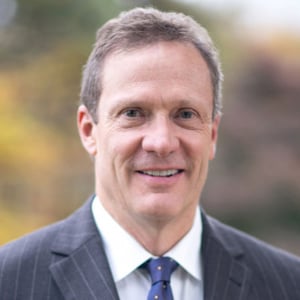
Blaine T. Phillips Distinguished Professor in Environmental Law, University of Virginia School of Law
Law and economics expert Jason Scott Johnston joined the Virginia Law faculty in 2010 and is the Blaine T. Phillips Distinguished Professor in Environmental Law. He formerly served as the the Nicholas E. Chimicles Research Professor in Business Law and Regulation at Virginia Law, and the Robert G. Fuller, Jr. Professor of Law and director of the Program on Law, Environment and Economy at the University of Pennsylvania Law School.
Johnston’s scholarship has examined subjects ranging from natural resources law to torts and contracts. He has published dozens of articles in law journals, such as the Yale Law Journal, and in peer-reviewed economics journals, such as the Journal of Law, Economics and Organization. He is currently working on a book that critically analyzes the foundations of global warming law and policy, a series of articles on the economics of regulatory science and another series of articles on various aspects of the law and economics of consumer protection. He has served on the Board of Directors of the American Law and Economics Association, on the National Science Foundation’s Law and Social Science grant review panel, and on the Board of the Searle Civil Justice Institute. He won Penn Law’s Robert A. Gorman Award for Teaching Excellence in 2003.
After earning his A.B. from Dartmouth College and both his J.D. and Ph.D. (economics) from the University of Michigan, Johnston clerked for Judge Gilbert S. Merritt on the U.S. Court of Appeals for the Sixth Circuit. He then taught at Vermont Law School and Vanderbilt Law School before joining Penn’s faculty. He has been a visiting professor or held fellowship appointments at Yale Law School, the University of Southern California Gould School of Law, the American Academy in Berlin and the Property and Environment Research Center.

Officer, Consumer Banking, The Pew Charitable Trusts
Thaddeus King is an officer for Pew’s consumer banking project, an initiative that advocates for policies that better protect and inform American checking accountholders. He works on major research report releases that focus on improving the safety and transparency of key banking practices, including disclosures, overdraft fees, and arbitration. He also has contributed extensively to research on alternative consumer transaction accounts, particularly prepaid accounts and mobile payments.
King previously worked as a law clerk at the National Association of Federal Credit Unions, in the departments of regulatory affairs and regulatory compliance, and as a research assistant focused on financial regulation at The George Washington University Law School. He is a member of the State Bar of Maryland. King holds a bachelor’s degree in business management from the University of South Carolina and a J.D. from The George Washington University Law School.

Reauthorization of Section 702 - Podcast
Kate Martin, Karen J. Lugo, Adam I. Klein
Section 702 of the Foreign Intelligence Surveillance Act (FISA) is up for reauthorization in 2017....
The Barriers to the American Innovation Economy
Kathleen Q. Abernathy, Robert Fisher, Sally Greenberg, Abbott (Tad) Lipsky, Bret Swanson
The Fifth Annual Executive Branch Review Conference will examine the changing and often convoluted relationship...
Class Action in Consumer Finance Agreements - Podcast
Jason Johnston, Thaddeus King
The Federal Arbitration Act (FAA), passed in 1925, generally requires courts to look favorably upon...