
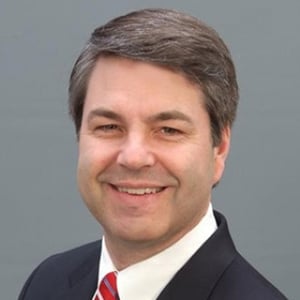
Partner and Co-Chair, Public Policy Group, Shook Hardy & Bacon LLP
Mark Behrens co-chairs Shook's Washington, DC-based Public Policy Practice Group and is a leading national expert on civil justice issues with over thirty years of experience. A substantial part of his practice is working to improve the civil litigation environment through state and federal legislation; in the courts through amicus curiae briefs; through legal scholarship and judicial education; and in the court of public opinion.
Mark is actively involved in civil justice reform efforts at the federal and state levels. He has testified before the U.S. Congress and most state legislatures on behalf of business and civil justice organizations. Mark also has an active amicus brief practice specializing in tort liability and civil justice issues. He has authored or co-authored over 150 amicus briefs in cases before the United States Supreme Court and federal and state appellate courts on behalf of business, civil justice, and defense lawyer organizations. In addition, Mark routinely files comments on behalf of business, civil justice, and defense lawyer organizations regarding potential changes to federal and state court rules. He chairs the International Association of Defense Counsel’s (IADC) Civil Justice Response Committee and serves on the Board of Directors of Lawyers for Civil Justice (LCJ).
Mark is a member of the American Law Institute (ALI). He received his J.D. in 1990 from Vanderbilt University Law School, where he was a member of the Vanderbilt Law Review. He received his B.A. in economics from the University of Wisconsin in 1987.
Partner and Co-Chair, Public Policy Group, Shook Hardy & Bacon LLP
Mark Behrens co-chairs Shook's Washington, DC-based Public Policy Practice Group and is a leading national expert on civil justice issues with over thirty years of experience. A substantial part of his practice is working to improve the civil litigation environment through state and federal legislation; in the courts through amicus curiae briefs; through legal scholarship and judicial education; and in the court of public opinion.
Mark is actively involved in civil justice reform efforts at the federal and state levels. He has testified before the U.S. Congress and most state legislatures on behalf of business and civil justice organizations. Mark also has an active amicus brief practice specializing in tort liability and civil justice issues. He has authored or co-authored over 150 amicus briefs in cases before the United States Supreme Court and federal and state appellate courts on behalf of business, civil justice, and defense lawyer organizations. In addition, Mark routinely files comments on behalf of business, civil justice, and defense lawyer organizations regarding potential changes to federal and state court rules. He chairs the International Association of Defense Counsel’s (IADC) Civil Justice Response Committee and serves on the Board of Directors of Lawyers for Civil Justice (LCJ).
Mark is a member of the American Law Institute (ALI). He received his J.D. in 1990 from Vanderbilt University Law School, where he was a member of the Vanderbilt Law Review. He received his B.A. in economics from the University of Wisconsin in 1987.
Associate Professor of Law, Loyola Law School Los Angeles
Hiro Aragaki joined the Loyola faculty in 2011. His scholarly interests cluster around the intersection of contract and procedure. He has written extensively on federal arbitration law and on interest-based dispute resolution in the public sphere. His work has appeared in theUniversity of Pennsylvania Law Review, the UCLA Law Review, and the Yale Law Journal Online, among others. His most recent work, Equal Opportunity for Arbitration, was selected for presentation in the Civil Litigation & Dispute Resolution category at the Stanford/Yale Junior Faculty Forum. In 2011, he traveled to Dhaka, Bangladesh, to train judges and lawyers in mediation and to provide advice on the design of an effective court-connected ADR program.
Before coming to Loyola, Professor Aragaki was an Assistant Professor of Law & Ethics at Fordham University Graduate School of Business Administration in New York, where he taught courses on business law. Prior to that, he practiced law with international law firms, served as an arbitrator and mediator, and clerked for the Hon. Fern M. Smith, U.S. District Court (N.D. Cal.).
Professor Aragaki graduated with distinction from Stanford Law School, where he was an associate editor of the Stanford Law Review. He received a B.A. in Philosophy from Yale College and an M.Phil. in Social and Political Theory from Cambridge University, where he held a Benefactor’s Scholarship at St. John’s College.
John M. Rounds Professor of Law and Associate Dean, University of Kansas School of Law
Chris Drahozal is an internationally known scholar whose writing focuses on the law and economics of dispute resolution, particularly arbitration. He is the author of multiple books and numerous articles on commercial arbitration, and has taught and given presentations on the subject in Europe, Canada and the United States. He is serving as an Associate Reporter for the ALI's Restatement (Third) of the U.S. Law of International Commercial Arbitration. Drahozal also is a well-respected teacher and received the Immel Award for Teaching Excellence in 2004. Prior to coming to KU, Professor Drahozal practiced law with Sidley & Austin in Washington, D.C., and served as a law clerk for Chief Judge Charles Clark of the United States Court of Appeals for the Fifth Circuit, Justice Byron R. White of the United States Supreme Court, and Judge George H. Aldrich of the Iran-United States Claims Tribunal in The Hague, The Netherlands.
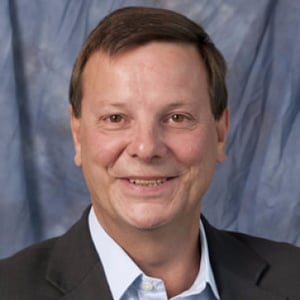
Professor of Law, Antonin Scalia Law School, George Mason University
Professor of Law Michael S. Greve joined the faculty of the Antonin Scalia Law School, George Mason University in fall 2012 after having served as John G. Searle Scholar at the American Enterprise Institute (AEI), where he specialized in constitutional law, courts, and business regulation and served as chairman of the Competitive Enterprise Institute. Prior to joining AEI, Greve was founder and co-director of the Center for Individual Rights, a public interest law firm specializing in constitutional litigation.
Greve has served previously as an adjunct professor at a number of universities, including Cornell and Johns Hopkins Universities, and has been a visiting professor at Boston College since 2004. He was awarded a PhD and an MA in government by Cornell University. Greve also earned a Diploma from the University of Hamburg in Germany.
A prolific writer, Greve is the author of nine books and a multitude of articles appearing in scholarly publications, as well as numerous editorials, short articles, and book reviews. He is a frequent speaker for professional and scholarly organizations and has made many appearances on radio and television.
In addition Greve has provided congressional and state legislative testimony, has lobbied and consulted in federal agency proceedings, and has provided litigation services and management in over 30 cases, including matters before the U.S. Supreme Court.
Professor of Law, University of Georgia School of Law
Peter B. "Bo" Rutledge is a full professor whose teaching and research interests include international dispute resolution, arbitration, international business transactions and the Supreme Court.
He is the author of the forthcoming book Arbitration and the Constitution and co-author with Gary Born of the book International Civil Litigation in the United States. His works have been published by Yale University Press, Oxford University Press and Cambridge University Press, and his articles have appeared in a diverse array of journals such as the University of Chicago Law Review, the Vanderbilt Law Review and the Journal of International Arbitration. He also regularly advises parties on matters of international dispute resolution (litigation and arbitration).
In 2008, the Supreme Court appointed Rutledge to brief and argue the case of Irizarry v. United States as amicus curiae in defense of the judgment below. He subsequently won the case, joining the ranks of a select few advocates who have successfully defended a judgment below when the government refused to do so. A former law clerk at the U.S. Supreme Court for Justice Clarence Thomas and the U.S. Court of Appeals for the 4th Circuit for Chief Judge J. Harvie Wilkinson III, Rutledge regularly files briefs and advises lawyers in matters before the Supreme Court and lower courts.
Given his interest in international dispute resolution, Rutledge has taught and spoken at numerous foreign universities. In 2010-11, he was a Fulbright Professor at the Institut für Zivilverfahrensrecht at the University of Vienna Law School. Foreign universities where Rutledge has been invited to speak include Oxford University, Cambridge University, the University of Mainz, Jagellonian University, Stockholm University and the University of Oslo.
An accomplished teacher, he has received teaching awards in the majority of his years in the legal academy, including most recently the 2009 John C. O'Byrne Award for Furthering Faculty-Student Relations.
In addition to his academic and legal work, Rutledge remains active in professional circles. He regularly advises parties on matters of international dispute resolution and has served as an expert in both litigation and arbitration. He is a listed arbitrator with the London Court of International Arbitration and the Vienna International Arbitral Center. He has testified on several occasions before Congress on pending arbitration legislation, has regularly spoken to broadcast and print media, and has given speeches to a range of professional audiences on matters such as international dispute resolution, arbitration and the Supreme Court. He currently serves as part of the American Arbitration Association's delegation to the UNCITRAL Working Group on Arbitration and is a member of the Academic Council of the Institute for Transnational Arbitration.
Before entering the teaching academy, Rutledge practiced at Wilmer Cutler & Pickering (now Wilmer Cutler Pickering Hale and Dorr), where his practice included international dispute resolution and Supreme Court matters, and at Freshfields Bruckhaus Deringer, where his practice concentrated on international arbitration.
He holds a B.A. magna cum laude from Harvard University, an M.Litt. in Applied Ethics from the University of Aberdeen (Scotland) and a J.D. with high honors from the University of Chicago, where he served as executive editor of The University of Chicago Law Review and was inducted into the Order of the Coif.
Milton R. Underwood Chair in Free Enterprise, Vanderbilt University Law School
Brian Fitzpatrick is the Milton R. Underwood Chair in Free Enterprise and Professor of Law at Vanderbilt Law School, where his research focuses on class action litigation, federal courts, judicial selection, and constitutional law. He is best known for his empirical studies of class action settlements as well as his book The Conservative Case for Class Actions (University of Chicago Press, 2019). Professor Fitzpatrick joined Vanderbilt's law faculty in 2007 after serving as the John M. Olin Fellow at New York University School of Law. He graduated first in his class from Harvard Law School and went on to clerk for Judge Diarmuid O'Scannlain on the U.S. Court of Appeals for the Ninth Circuit and Justice Antonin Scalia on the U.S. Supreme Court. After his clerkships, Professor Fitzpatrick practiced commercial and appellate litigation for several years at Sidley Austin in Washington, D.C., and served as Special Counsel for Supreme Court Nominations to U.S. Senator John Cornyn. Before earning his law degree, Fitzpatrick graduated summa cum laude with a bachelor's of science in chemical engineering from the University of Notre Dame. He has received the Hall-Hartman Outstanding Professor Award, which recognizes excellence in classroom teaching, for his Civil Procedure and Federal Courts courses.
Milton R. Underwood Chair in Free Enterprise, Vanderbilt University Law School
Brian Fitzpatrick is the Milton R. Underwood Chair in Free Enterprise and Professor of Law at Vanderbilt Law School, where his research focuses on class action litigation, federal courts, judicial selection, and constitutional law. He is best known for his empirical studies of class action settlements as well as his book The Conservative Case for Class Actions (University of Chicago Press, 2019). Professor Fitzpatrick joined Vanderbilt's law faculty in 2007 after serving as the John M. Olin Fellow at New York University School of Law. He graduated first in his class from Harvard Law School and went on to clerk for Judge Diarmuid O'Scannlain on the U.S. Court of Appeals for the Ninth Circuit and Justice Antonin Scalia on the U.S. Supreme Court. After his clerkships, Professor Fitzpatrick practiced commercial and appellate litigation for several years at Sidley Austin in Washington, D.C., and served as Special Counsel for Supreme Court Nominations to U.S. Senator John Cornyn. Before earning his law degree, Fitzpatrick graduated summa cum laude with a bachelor's of science in chemical engineering from the University of Notre Dame. He has received the Hall-Hartman Outstanding Professor Award, which recognizes excellence in classroom teaching, for his Civil Procedure and Federal Courts courses.
Professor of Law, High Point School of Law
Scott Gaylord directs High Point Law’s Appellate Litigation Clinic and serves as a Professor of Law, teaching Constitutional Law and related upper-level elective courses. The Appellate Clinic works with students to write and file briefs in significant court cases, including appeals before the United States Supreme Court.
Professor Gaylord is a prominent Constitutional Law scholar with an impressive background in both academia and legal practice. He has authored or co-authored 18 substantial law review articles, co-authored a Constitutional Law casebook, and has written more than 35 amicus briefs to the U.S. Supreme Court and federal circuit courts on prominent national cases involving religious liberty and free speech. He is a frequent speaker on constitutional law and First Amendment topics at law schools across the country and has regularly provided commentary on ongoing constitutional issues to national media outlets, including th eNew York Times, USA Today, the Diane Rehm Show, NPR, The National Constitution Center, and Bloomberg Law.
Professor Gaylord also started an appellate advocacy clinic at his former law school and currently serves on the North Carolina Chief Justice’s Commission on Professionalism, along with holding many other service and leadership roles. Prior to joining the academy in 2007, he practiced complex civil and commercial litigation with the Charlotte firm of Robinson Bradshaw & Hinson, and he clerked for Judge Edith H. Jones on the United States Court of Appeals for the Fifth Circuit.
Professor Gaylord earned his B.A. in philosophy and English, summa cum laude, from Colgate University, his Ph.D. in philosophy from the University of North Carolina at Chapel Hill, and his J.D. from Notre Dame Law School, where he also graduated summa cum laude.
United States Magistrate Judge, Eastern District of North Carolina
Robert T. Numbers, II serves as a United States Magistrate Judge in the United States District Court for the Eastern District of North Carolina.
Judge Numbers received degrees in Political Science and Economics, with honors, from Wake Forest University. After completing his undergraduate work, Judge Numbers obtained his law degree from the University of Notre Dame where he served on the Notre Dame Law Review.
Upon his graduation from law school, Judge Numbers joined the Winston-Salem office of a large, regional law firm. From 2005 until 2010, Judge Numbers’ practice focused on civil rights claims against local municipalities and government contractors. In 2010, Judge Numbers joined the firm’s Raleigh office and concentrated his practice on complex business litigation in state and federal courts.
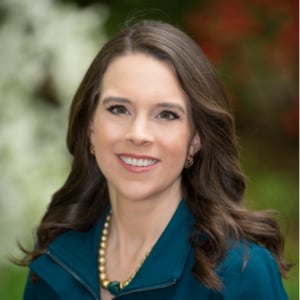
President, JCN
Carrie Campbell Severino is the president of the JCN, and co-author with Mollie Hemingway of the bestselling book Justice on Trial: The Kavanaugh Confirmation and the Future of the Court. As a go-to expert on the confirmation process, Mrs. Severino has been extensively quoted in the media. She regularly appears on television, including FOX, CNN, MSNBC, C-SPAN, and ABC’s This Week.
Severino writes and speaks on a wide range of judicial issues, including the constitutional limits on government, the federal nomination process, and state judicial selection. She has testified before Congress on constitutional questions and briefed Senators on judicial nominations, and regularly files briefs in high-profile Supreme Court cases. She was a law clerk to Supreme Court Justice Clarence Thomas and to Judge David B. Sentelle of the U.S. Court of Appeals for the D.C. Circuit, and is a graduate of Harvard Law School (J.D.), Duke University (B.A., Biology), and Michigan State University (M.A., Linguistics).
Milton R. Underwood Chair in Free Enterprise, Vanderbilt University Law School
Brian Fitzpatrick is the Milton R. Underwood Chair in Free Enterprise and Professor of Law at Vanderbilt Law School, where his research focuses on class action litigation, federal courts, judicial selection, and constitutional law. He is best known for his empirical studies of class action settlements as well as his book The Conservative Case for Class Actions (University of Chicago Press, 2019). Professor Fitzpatrick joined Vanderbilt's law faculty in 2007 after serving as the John M. Olin Fellow at New York University School of Law. He graduated first in his class from Harvard Law School and went on to clerk for Judge Diarmuid O'Scannlain on the U.S. Court of Appeals for the Ninth Circuit and Justice Antonin Scalia on the U.S. Supreme Court. After his clerkships, Professor Fitzpatrick practiced commercial and appellate litigation for several years at Sidley Austin in Washington, D.C., and served as Special Counsel for Supreme Court Nominations to U.S. Senator John Cornyn. Before earning his law degree, Fitzpatrick graduated summa cum laude with a bachelor's of science in chemical engineering from the University of Notre Dame. He has received the Hall-Hartman Outstanding Professor Award, which recognizes excellence in classroom teaching, for his Civil Procedure and Federal Courts courses.
Professor of Law, High Point School of Law
Scott Gaylord directs High Point Law’s Appellate Litigation Clinic and serves as a Professor of Law, teaching Constitutional Law and related upper-level elective courses. The Appellate Clinic works with students to write and file briefs in significant court cases, including appeals before the United States Supreme Court.
Professor Gaylord is a prominent Constitutional Law scholar with an impressive background in both academia and legal practice. He has authored or co-authored 18 substantial law review articles, co-authored a Constitutional Law casebook, and has written more than 35 amicus briefs to the U.S. Supreme Court and federal circuit courts on prominent national cases involving religious liberty and free speech. He is a frequent speaker on constitutional law and First Amendment topics at law schools across the country and has regularly provided commentary on ongoing constitutional issues to national media outlets, including th eNew York Times, USA Today, the Diane Rehm Show, NPR, The National Constitution Center, and Bloomberg Law.
Professor Gaylord also started an appellate advocacy clinic at his former law school and currently serves on the North Carolina Chief Justice’s Commission on Professionalism, along with holding many other service and leadership roles. Prior to joining the academy in 2007, he practiced complex civil and commercial litigation with the Charlotte firm of Robinson Bradshaw & Hinson, and he clerked for Judge Edith H. Jones on the United States Court of Appeals for the Fifth Circuit.
Professor Gaylord earned his B.A. in philosophy and English, summa cum laude, from Colgate University, his Ph.D. in philosophy from the University of North Carolina at Chapel Hill, and his J.D. from Notre Dame Law School, where he also graduated summa cum laude.
United States Magistrate Judge, Eastern District of North Carolina
Robert T. Numbers, II serves as a United States Magistrate Judge in the United States District Court for the Eastern District of North Carolina.
Judge Numbers received degrees in Political Science and Economics, with honors, from Wake Forest University. After completing his undergraduate work, Judge Numbers obtained his law degree from the University of Notre Dame where he served on the Notre Dame Law Review.
Upon his graduation from law school, Judge Numbers joined the Winston-Salem office of a large, regional law firm. From 2005 until 2010, Judge Numbers’ practice focused on civil rights claims against local municipalities and government contractors. In 2010, Judge Numbers joined the firm’s Raleigh office and concentrated his practice on complex business litigation in state and federal courts.
President, JCN
Carrie Campbell Severino is the president of the JCN, and co-author with Mollie Hemingway of the bestselling book Justice on Trial: The Kavanaugh Confirmation and the Future of the Court. As a go-to expert on the confirmation process, Mrs. Severino has been extensively quoted in the media. She regularly appears on television, including FOX, CNN, MSNBC, C-SPAN, and ABC’s This Week.
Severino writes and speaks on a wide range of judicial issues, including the constitutional limits on government, the federal nomination process, and state judicial selection. She has testified before Congress on constitutional questions and briefed Senators on judicial nominations, and regularly files briefs in high-profile Supreme Court cases. She was a law clerk to Supreme Court Justice Clarence Thomas and to Judge David B. Sentelle of the U.S. Court of Appeals for the D.C. Circuit, and is a graduate of Harvard Law School (J.D.), Duke University (B.A., Biology), and Michigan State University (M.A., Linguistics).
Associate Professor of Law, Loyola Law School Los Angeles
Hiro Aragaki joined the Loyola faculty in 2011. His scholarly interests cluster around the intersection of contract and procedure. He has written extensively on federal arbitration law and on interest-based dispute resolution in the public sphere. His work has appeared in theUniversity of Pennsylvania Law Review, the UCLA Law Review, and the Yale Law Journal Online, among others. His most recent work, Equal Opportunity for Arbitration, was selected for presentation in the Civil Litigation & Dispute Resolution category at the Stanford/Yale Junior Faculty Forum. In 2011, he traveled to Dhaka, Bangladesh, to train judges and lawyers in mediation and to provide advice on the design of an effective court-connected ADR program.
Before coming to Loyola, Professor Aragaki was an Assistant Professor of Law & Ethics at Fordham University Graduate School of Business Administration in New York, where he taught courses on business law. Prior to that, he practiced law with international law firms, served as an arbitrator and mediator, and clerked for the Hon. Fern M. Smith, U.S. District Court (N.D. Cal.).
Professor Aragaki graduated with distinction from Stanford Law School, where he was an associate editor of the Stanford Law Review. He received a B.A. in Philosophy from Yale College and an M.Phil. in Social and Political Theory from Cambridge University, where he held a Benefactor’s Scholarship at St. John’s College.
John M. Rounds Professor of Law and Associate Dean, University of Kansas School of Law
Chris Drahozal is an internationally known scholar whose writing focuses on the law and economics of dispute resolution, particularly arbitration. He is the author of multiple books and numerous articles on commercial arbitration, and has taught and given presentations on the subject in Europe, Canada and the United States. He is serving as an Associate Reporter for the ALI's Restatement (Third) of the U.S. Law of International Commercial Arbitration. Drahozal also is a well-respected teacher and received the Immel Award for Teaching Excellence in 2004. Prior to coming to KU, Professor Drahozal practiced law with Sidley & Austin in Washington, D.C., and served as a law clerk for Chief Judge Charles Clark of the United States Court of Appeals for the Fifth Circuit, Justice Byron R. White of the United States Supreme Court, and Judge George H. Aldrich of the Iran-United States Claims Tribunal in The Hague, The Netherlands.
Milton R. Underwood Chair in Free Enterprise, Vanderbilt University Law School
Brian Fitzpatrick is the Milton R. Underwood Chair in Free Enterprise and Professor of Law at Vanderbilt Law School, where his research focuses on class action litigation, federal courts, judicial selection, and constitutional law. He is best known for his empirical studies of class action settlements as well as his book The Conservative Case for Class Actions (University of Chicago Press, 2019). Professor Fitzpatrick joined Vanderbilt's law faculty in 2007 after serving as the John M. Olin Fellow at New York University School of Law. He graduated first in his class from Harvard Law School and went on to clerk for Judge Diarmuid O'Scannlain on the U.S. Court of Appeals for the Ninth Circuit and Justice Antonin Scalia on the U.S. Supreme Court. After his clerkships, Professor Fitzpatrick practiced commercial and appellate litigation for several years at Sidley Austin in Washington, D.C., and served as Special Counsel for Supreme Court Nominations to U.S. Senator John Cornyn. Before earning his law degree, Fitzpatrick graduated summa cum laude with a bachelor's of science in chemical engineering from the University of Notre Dame. He has received the Hall-Hartman Outstanding Professor Award, which recognizes excellence in classroom teaching, for his Civil Procedure and Federal Courts courses.
Professor of Law, Antonin Scalia Law School, George Mason University
Professor of Law Michael S. Greve joined the faculty of the Antonin Scalia Law School, George Mason University in fall 2012 after having served as John G. Searle Scholar at the American Enterprise Institute (AEI), where he specialized in constitutional law, courts, and business regulation and served as chairman of the Competitive Enterprise Institute. Prior to joining AEI, Greve was founder and co-director of the Center for Individual Rights, a public interest law firm specializing in constitutional litigation.
Greve has served previously as an adjunct professor at a number of universities, including Cornell and Johns Hopkins Universities, and has been a visiting professor at Boston College since 2004. He was awarded a PhD and an MA in government by Cornell University. Greve also earned a Diploma from the University of Hamburg in Germany.
A prolific writer, Greve is the author of nine books and a multitude of articles appearing in scholarly publications, as well as numerous editorials, short articles, and book reviews. He is a frequent speaker for professional and scholarly organizations and has made many appearances on radio and television.
In addition Greve has provided congressional and state legislative testimony, has lobbied and consulted in federal agency proceedings, and has provided litigation services and management in over 30 cases, including matters before the U.S. Supreme Court.
Professor of Law, University of Georgia School of Law
Peter B. "Bo" Rutledge is a full professor whose teaching and research interests include international dispute resolution, arbitration, international business transactions and the Supreme Court.
He is the author of the forthcoming book Arbitration and the Constitution and co-author with Gary Born of the book International Civil Litigation in the United States. His works have been published by Yale University Press, Oxford University Press and Cambridge University Press, and his articles have appeared in a diverse array of journals such as the University of Chicago Law Review, the Vanderbilt Law Review and the Journal of International Arbitration. He also regularly advises parties on matters of international dispute resolution (litigation and arbitration).
In 2008, the Supreme Court appointed Rutledge to brief and argue the case of Irizarry v. United States as amicus curiae in defense of the judgment below. He subsequently won the case, joining the ranks of a select few advocates who have successfully defended a judgment below when the government refused to do so. A former law clerk at the U.S. Supreme Court for Justice Clarence Thomas and the U.S. Court of Appeals for the 4th Circuit for Chief Judge J. Harvie Wilkinson III, Rutledge regularly files briefs and advises lawyers in matters before the Supreme Court and lower courts.
Given his interest in international dispute resolution, Rutledge has taught and spoken at numerous foreign universities. In 2010-11, he was a Fulbright Professor at the Institut für Zivilverfahrensrecht at the University of Vienna Law School. Foreign universities where Rutledge has been invited to speak include Oxford University, Cambridge University, the University of Mainz, Jagellonian University, Stockholm University and the University of Oslo.
An accomplished teacher, he has received teaching awards in the majority of his years in the legal academy, including most recently the 2009 John C. O'Byrne Award for Furthering Faculty-Student Relations.
In addition to his academic and legal work, Rutledge remains active in professional circles. He regularly advises parties on matters of international dispute resolution and has served as an expert in both litigation and arbitration. He is a listed arbitrator with the London Court of International Arbitration and the Vienna International Arbitral Center. He has testified on several occasions before Congress on pending arbitration legislation, has regularly spoken to broadcast and print media, and has given speeches to a range of professional audiences on matters such as international dispute resolution, arbitration and the Supreme Court. He currently serves as part of the American Arbitration Association's delegation to the UNCITRAL Working Group on Arbitration and is a member of the Academic Council of the Institute for Transnational Arbitration.
Before entering the teaching academy, Rutledge practiced at Wilmer Cutler & Pickering (now Wilmer Cutler Pickering Hale and Dorr), where his practice included international dispute resolution and Supreme Court matters, and at Freshfields Bruckhaus Deringer, where his practice concentrated on international arbitration.
He holds a B.A. magna cum laude from Harvard University, an M.Litt. in Applied Ethics from the University of Aberdeen (Scotland) and a J.D. with high honors from the University of Chicago, where he served as executive editor of The University of Chicago Law Review and was inducted into the Order of the Coif.
Milton R. Underwood Chair in Free Enterprise, Vanderbilt University Law School
Brian Fitzpatrick is the Milton R. Underwood Chair in Free Enterprise and Professor of Law at Vanderbilt Law School, where his research focuses on class action litigation, federal courts, judicial selection, and constitutional law. He is best known for his empirical studies of class action settlements as well as his book The Conservative Case for Class Actions (University of Chicago Press, 2019). Professor Fitzpatrick joined Vanderbilt's law faculty in 2007 after serving as the John M. Olin Fellow at New York University School of Law. He graduated first in his class from Harvard Law School and went on to clerk for Judge Diarmuid O'Scannlain on the U.S. Court of Appeals for the Ninth Circuit and Justice Antonin Scalia on the U.S. Supreme Court. After his clerkships, Professor Fitzpatrick practiced commercial and appellate litigation for several years at Sidley Austin in Washington, D.C., and served as Special Counsel for Supreme Court Nominations to U.S. Senator John Cornyn. Before earning his law degree, Fitzpatrick graduated summa cum laude with a bachelor's of science in chemical engineering from the University of Notre Dame. He has received the Hall-Hartman Outstanding Professor Award, which recognizes excellence in classroom teaching, for his Civil Procedure and Federal Courts courses.
Professor of Law, High Point School of Law
Scott Gaylord directs High Point Law’s Appellate Litigation Clinic and serves as a Professor of Law, teaching Constitutional Law and related upper-level elective courses. The Appellate Clinic works with students to write and file briefs in significant court cases, including appeals before the United States Supreme Court.
Professor Gaylord is a prominent Constitutional Law scholar with an impressive background in both academia and legal practice. He has authored or co-authored 18 substantial law review articles, co-authored a Constitutional Law casebook, and has written more than 35 amicus briefs to the U.S. Supreme Court and federal circuit courts on prominent national cases involving religious liberty and free speech. He is a frequent speaker on constitutional law and First Amendment topics at law schools across the country and has regularly provided commentary on ongoing constitutional issues to national media outlets, including th eNew York Times, USA Today, the Diane Rehm Show, NPR, The National Constitution Center, and Bloomberg Law.
Professor Gaylord also started an appellate advocacy clinic at his former law school and currently serves on the North Carolina Chief Justice’s Commission on Professionalism, along with holding many other service and leadership roles. Prior to joining the academy in 2007, he practiced complex civil and commercial litigation with the Charlotte firm of Robinson Bradshaw & Hinson, and he clerked for Judge Edith H. Jones on the United States Court of Appeals for the Fifth Circuit.
Professor Gaylord earned his B.A. in philosophy and English, summa cum laude, from Colgate University, his Ph.D. in philosophy from the University of North Carolina at Chapel Hill, and his J.D. from Notre Dame Law School, where he also graduated summa cum laude.
United States Magistrate Judge, Eastern District of North Carolina
Robert T. Numbers, II serves as a United States Magistrate Judge in the United States District Court for the Eastern District of North Carolina.
Judge Numbers received degrees in Political Science and Economics, with honors, from Wake Forest University. After completing his undergraduate work, Judge Numbers obtained his law degree from the University of Notre Dame where he served on the Notre Dame Law Review.
Upon his graduation from law school, Judge Numbers joined the Winston-Salem office of a large, regional law firm. From 2005 until 2010, Judge Numbers’ practice focused on civil rights claims against local municipalities and government contractors. In 2010, Judge Numbers joined the firm’s Raleigh office and concentrated his practice on complex business litigation in state and federal courts.
President, JCN
Carrie Campbell Severino is the president of the JCN, and co-author with Mollie Hemingway of the bestselling book Justice on Trial: The Kavanaugh Confirmation and the Future of the Court. As a go-to expert on the confirmation process, Mrs. Severino has been extensively quoted in the media. She regularly appears on television, including FOX, CNN, MSNBC, C-SPAN, and ABC’s This Week.
Severino writes and speaks on a wide range of judicial issues, including the constitutional limits on government, the federal nomination process, and state judicial selection. She has testified before Congress on constitutional questions and briefed Senators on judicial nominations, and regularly files briefs in high-profile Supreme Court cases. She was a law clerk to Supreme Court Justice Clarence Thomas and to Judge David B. Sentelle of the U.S. Court of Appeals for the D.C. Circuit, and is a graduate of Harvard Law School (J.D.), Duke University (B.A., Biology), and Michigan State University (M.A., Linguistics).
Director, Vanderbilt Health Policy Center, Vanderbilt University Law School
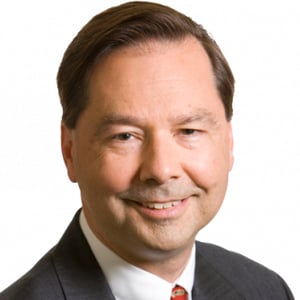
Senior Legal Fellow, Edwin Meese III Institute for the Rule of Law, Advancing American Freedom
Director, Vanderbilt Health Policy Center, Vanderbilt University Law School

Philadelphia Tort Litigation: Forum Shopping and Venue Reform
Mark A. Behrens
The Federalist Society takes no position on particular legal or public policy initiatives. Any expressions...
Philadelphia Tort Litigation: Forum Shopping and Venue Reform
Mark A. Behrens
The Federalist Society takes no position on particular legal or public policy initiatives. Any expressions...
The Future of Arbitration and the World of Class Action Litigation - Podcast
Hiro Aragaki, Christopher Drahozal, Michael S. Greve, Peter B. Rutledge, Brian T. Fitzpatrick
To listen, please right click on the audio file you wish to hear and then...
The Future of Arbitration and the World of Class Action Litigation
Panel Discussion on Judicial Selection in North Carolina
Brian T. Fitzpatrick, Scott W. Gaylord, Robert T. Numbers, Carrie Campbell Severino
Although North Carolina currently elects its judicial officials, various groups are pushing to eliminate judicial...
Panel Discussion on Judicial Selection in North Carolina
Brian T. Fitzpatrick, Scott W. Gaylord, Robert T. Numbers, Carrie Campbell Severino
Although North Carolina currently elects its judicial officials, various groups are pushing to eliminate judicial...
Panel Discussion on Judicial Selection in North Carolina
Triangle Lawyers Chapter
Raleigh, NCThe Expanded Medicaid Mandate Under the Affordable Care Act
Election Law in a Presidential Year
Birmingham, AlabamaHealth Care Litigation