

Milton R. Underwood Chair in Free Enterprise, Vanderbilt University Law School
Brian Fitzpatrick is the Milton R. Underwood Chair in Free Enterprise and Professor of Law at Vanderbilt Law School, where his research focuses on class action litigation, federal courts, judicial selection, and constitutional law. He is best known for his empirical studies of class action settlements as well as his book The Conservative Case for Class Actions (University of Chicago Press, 2019). Professor Fitzpatrick joined Vanderbilt's law faculty in 2007 after serving as the John M. Olin Fellow at New York University School of Law. He graduated first in his class from Harvard Law School and went on to clerk for Judge Diarmuid O'Scannlain on the U.S. Court of Appeals for the Ninth Circuit and Justice Antonin Scalia on the U.S. Supreme Court. After his clerkships, Professor Fitzpatrick practiced commercial and appellate litigation for several years at Sidley Austin in Washington, D.C., and served as Special Counsel for Supreme Court Nominations to U.S. Senator John Cornyn. Before earning his law degree, Fitzpatrick graduated summa cum laude with a bachelor's of science in chemical engineering from the University of Notre Dame. He has received the Hall-Hartman Outstanding Professor Award, which recognizes excellence in classroom teaching, for his Civil Procedure and Federal Courts courses.
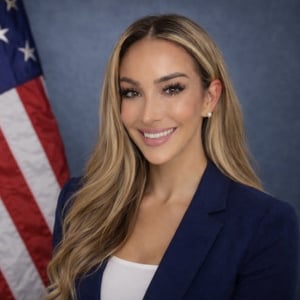
Senior Appellate Counsel, U.S. Navy
Stephanie Fisher recently completed six years as an active-duty Navy Judge Advocate and now serves in the Reserves. She will begin as a Trial Attorney in the Department of Justice’s National Security Division, Counterintelligence and Export Control Section, this summer (2026).
As a Judge Advocate, Stephanie served in numerous roles, including Senior Appellate Government Counsel, Legal Advisor to the Convening Authority for Military Commissions, Adjunct Professor of Law at the United States Naval Academy, and Trial Defense Counsel. She also completed temporary duty assignments with Naval Special Warfare Group 4, Submarine Squadron 6, and Commander, Navy Region Mid-Atlantic.
In her most recent role as Senior Appellate Government Counsel, she briefed and argued cases before the Navy-Marine Corps Court of Criminal Appeals and the Court of Appeals for the Armed Forces, where the courts affirmed more than 95% of the convictions she defended.
Before joining the JAG Corps, Stephanie clerked on the Arizona Supreme Court for the Honorable Justice William Montgomery. She earned her J.D. from Arizona State University’s Sandra Day O’Connor College of Law, where she served as a two-time Vice President of the Federalist Society student chapter. She earned her dual bachelor’s degree from the University of Michigan, where she was a four-year member of the varsity cheerleading team.
Stephanie currently serves on the DC Young Lawyer Chapter Board and the Armed Services Legal Network Executive Committee. In her free time, she enjoys skydiving, weightlifting, hiking, and traveling.
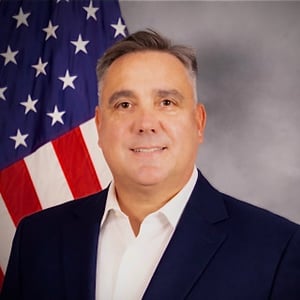
Deputy General Counsel, Office of the General Counsel, National Guard Bureau
Colonel Michael Mark Majors serves as Deputy General Counsel for the Office of the General Counsel, National Guard Bureau, with more than 27 years of military legal experience advising senior military leaders and government officials on military justice, administrative law, operational law, national security, and strategic policy. Throughout his career, he has served as a trusted legal advisor on complex issues spanning governance, risk management, compliance, homeland defense, and military operations.
As Deputy General Counsel, Colonel Majors advises senior National Guard leadership on legal and policy matters affecting more than 430,000 Soldiers and Airmen serving across the 54 states, territories, and the District of Columbia. In his primary role as Chief of the Strategic Engagement Division, he directs nationwide military legal professional development, accessions, and strategic engagement for more than 1,100 National Guard Judge Advocates and Legal Advisors. He develops and teaches National Guard legal education programs, authoring policy and regulatory guidance, and works closely with the Judge Advocate General's Corps, State Judge Advocates, and military legal organizations to strengthen legal readiness throughout the National Guard.
Colonel Majors has deployed in support of multinational operations in Bosnia-Herzegovina, Iraq, Bahrain, and Kosovo. His operational assignments include serving as Chief Deputy Legal Advisor for the NATO-led Kosovo Force (KFOR), advising senior commanders on the law of armed conflict, rules of engagement, international agreements, fiscal law, claims, and operational legal issues during a period of heightened regional instability following Russia's expanded invasion of Ukraine.
Colonel Majors is currently pursuing a Master of Laws (LL.M.) in Air and Space Law at the University of Mississippi School of Law, with a concentration in national security, space operations, commercial remote sensing, and international space law. He holds Master of Arts degrees in Defense and Strategic Studies from both the U.S. Army War College and the U.S. Naval War College, a Juris Doctor from Mississippi College School of Law, and a Bachelor of Science in Public Administration from Samford University.
He is admitted to practice law in the District of Columbia, Mississippi, and Alabama, as well as before the U.S. Court of Appeals for the Armed Forces and multiple federal courts. Colonel Majors serves on the Board of Directors of the Judge Advocate Association, is a Fellow of the Mississippi Bar, and is a frequent lecturer on military law, national security law, operational law, leadership, and emerging issues in air and space law. His military decorations include the Legion of Merit, the Defense Meritorious Service Medal (two awards), the Meritorious Service Medal (four awards), and the Combat Action Badge.
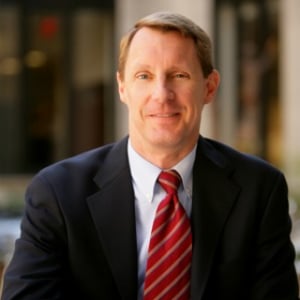
Director, International Legal Studies Program, Vanderbilt Law School
Michael Newton is an expert on terrorism, accountability, transnational justice, and conduct of hostilities issues. Over the course of his career, he has published more than 90 books, articles, op-eds and book chapters. He has been an expert witness in terrorism related trials and is admitted to the counsel list of the International Criminal Court, where, in 2018, he helped prepare the appeal of Jean-Pierre Bemba and participated in oral arguments in the Appeals Chamber. At Vanderbilt, he developed and teaches the innovative International Law Practice Lab, which provides expert assistance to judges, lawyers, legislatures, governments, and policy makers around the world. Professor Newton is most recently the editor of The United States Department of Defense Law of War Manual: Commentary and Critique, forthcoming from Cambridge University Press.
An authority on the law of armed conflict, Professor Newton served as the senior adviser to the Ambassador-at-Large for War Crimes Issues in the U.S. State Department from January 1999 to August 2002, during which he implemented a wide range of policy positions, including U.S. support to accountability mechanisms worldwide. He negotiated the “Elements of Crimes” for the International Criminal Court, and was the senior member of the team teaching international law to the first group of Iraqis who began to think about accountability mechanisms and a constitutional structure in November 2000. He shuttled to Baghdad repeatedly to aid international and Iraqi lawyers and jurists in drafting the Statute of the Iraqi High Tribunal while serving as the International Law Adviser to the Judicial Chambers from 2006 to 2008. He began assisting Iraqi officials, victims and civil society groups on legal issues associated with documentation and investigation of crimes committed by Da’esh on Iraqi soil days after Yazidi victims fled towards Mount Sinjar. He was the U.S. representative on the U.N. Planning Mission for the Sierra Leone Special Court and a founding member of its academic consortium. He is an elected member of the International Institute of Humanitarian Law and on the expert roster of Justice Rapid Response. In addition to teaching the Practice Lab, he develops and coordinates externships and educational opportunities for students interested in international legal issues, having supervised more than 150 such opportunities.
Professor Newton has served on the executive council of the American Society of International Law and as an invited expert for the Genocide Prevention Task Force established by the U.S. Holocaust Memorial Museum and the U.S. Institute of Peace. He is currently on the Advisory Board of the ABA International Criminal Court Project.
Professor Newton served in the U.S. Army more than 21 years, beginning with his commission from the U.S. Military Academy in May 1984 as an armor officer in the 4th Battalion, 68th Armor at Fort Carson, Colorado. After his selection for the Funded Legal Education Program, Newton served as chief of operational law with the Army Special Forces Command (Airborne) during Operation Desert Storm, and as the group judge advocate for the 7th Special Forces Group (Airborne). His deployments include Northern Iraq on Operation Provide Comfort to assist Kurdish civilians, and Haiti with 194th Armored Brigade (Separate), where he organized and led human rights and rules of engagement education for multinational forces, including police. He has taught international and operational law at the Judge Advocate General's School and Center in Charlottesville, Virginia, and taught international law at the United States Military Academy at West Point.
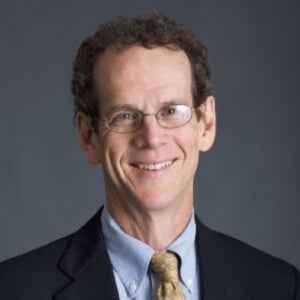
Hon. George J. Mitchell Professor in Law and Public Policy, Georgetown Law
David Cole is the Honorable George J. Mitchell Professor in Law and Public Policy and former National Legal Director of the American Civil Liberties Union (ACLU). He writes about and teaches constitutional law, freedom of speech, and constitutional criminal procedure. He is a regular contributor to The New York Review of Books and is the legal affairs correspondent for The Nation.
David has published widely in law journals and the popular press, including The Yale Law Journal, California Law Review, Stanford Law Review, The New York Times, The Washington Post, The New Yorker, The Atlantic, and The New Republic. He is the author or editor of ten books, several of which have won awards. Less Safe, Less Free: Why America Is Losing the War on Terror, published in 2007, and co-authored with Jules Lobel, won the Palmer Civil Liberties Prize for best book on national security and civil liberties. Enemy Aliens: Double Standards and Constitutional Freedoms in the War on Terrorism received the American Book Award in 2004. No Equal Justice: Race and Class in the American Criminal Justice System was named Best Non-Fiction Book of 1999 by the Boston Book Review and best book on an issue of national policy in1999 by the American Political Science Association.
David received his bachelor’s degree and law degree from Yale University. He worked as a staff attorney for the Center for Constitutional Rights from 1985 to 1990. He has continued to litigate as a professor and, from 2017 to 2024, as National Legal Director of the ACLU. He has litigated many significant constitutional cases at the Supreme Court, including Texas v. Johnson (1989), which extended First Amendment protection to flag burning; Bostock v. Clayton County (2020), which held that discrimination on the basis of sexual orientation and gender identity are prohibited forms of sex discrimination under Title VII; Mahanoy Area Sch. Dist. v. B.L. (2021), which protected student online speech from school discipline; and National Rifle Association v. Vullo (2024), which held that government officials violate the First Amendment when they use their regulatory authority to coerce private parties to blacklist a disfavored political group.
David has received two honorary degrees and numerous awards for his work, including the inaugural Norman Dorsen Presidential Prize from the ACLU for lifetime commitment to civil liberties. The late New York Times columnist Anthony Lewis called David “one of the country’s great legal voices for civil liberties today.” Nat Hentoff called him “a one-man Committee of Correspondence in the tradition of patriot Sam Adams.”

Partner, BakerHostetler, Adjunct Fellow, The Manhattan Institute
Andrew Grossman leads BakerHostetler’s Appellate and Major Motion team. He has appeared before the U.S. Supreme Court, nearly all the federal courts of appeals, as well as some state appellate courts, litigating high-profile and complex commercial, administrative and constitutional issues.
Andrew works with practice groups across BakerHostetler to identify and tackle complex issues, advise on administrative law and strategy, tee up issues for appeal and tackle appeals. He has developed and implemented litigation and administrative strategies for clients in several fields and industries.
In addition to his practice, Andrew advises members of Congress on matters of constitutional and administrative law, having testified more than a dozen times before the House and Senate Judiciary Committees. He has been a frequent legal commentator on radio and television, having appeared on Fox News, CNN, MSNBC, CNBC, NPR and its affiliates, CBN and elsewhere. His legal commentary has also appeared in dozens of magazines and newspapers, including The Wall Street Journal, USA Today, The Washington Post, The Washington Times and many others.
Andrew is a Senior Legal Fellow at the Buckeye Institute, an Adjunct Fellow the Manhattan Institute and a member of the leadership of the Federalist Society. He previously served as an adjunct scholar at the Cato Institute’s Robert A. Levy Center for Constitutional Studies and a legal fellow at the Heritage Foundation’s Meese Center for Legal and Judicial Studies. He clerked for Judge Edith H. Jones on the U.S. Court of Appeals for the Fifth Circuit.

Partner, Schaerr | Jaffe LLP
Erik Jaffe has been involved in appeals on a broad range of legal issues, including First Amendment challenges to campaign finance reform, Commerce Clause challenges to Health Care Reform and other federal legislation, Equal Protection Clause challenges to affirmative action in education, First Amendment challenges to school vouchers, Fifth Amendment challenges to takings of property, Second Amendment challenges to restrictions on gun ownership, and a wide variety of cases involving patents, copyrights, ERISA, securities fraud, federal preemption, environmental regulation, and other state and federal constitutional and statutory matters. He has represented businesses and non-profit groups, Judges, Senators, former government officials, Nobel Prize winners, and a broad cross-section of private individuals. Mr. Jaffe has been involved in over 120 Supreme Court matters, including filing over 30 cert. petitions, representing half-a-dozen parties on the merits, and filing over 70 amicus briefs at both the cert. and merits stages.
A 1990 graduate of the Columbia University School of Law, Mr. Jaffe was a law clerk to Judge Douglas H. Ginsburg of the United States Court of Appeals for the District of Columbia Circuit from 1990 to 1991. Following that clerkship he spent five years in litigation practice with the Washington, D.C. law firm of Williams & Connolly. In the summer of 1996 he left Williams & Connolly to clerk for Supreme Court Justice Clarence Thomas. At the end of that clerkship he started his own practice, and he was a sole practitioner from 1997 to 2018. He joined the firm of Schaerr | Jaffe LLP in 2018.
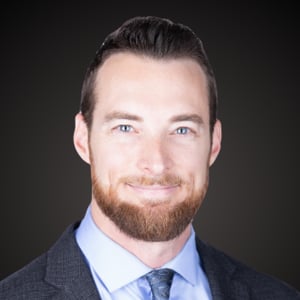
Director of the Higher Education Reform Initiative, America First Policy Institute
Dr. Christopher Schorr, Ph.D., is from San Diego, California and serves as Director for AFPI’s Higher Education Reform Initiative. In this role, Chris works to develop the Initiative’s research agenda and advance its policy priorities, including eliminating divisive DEI and gender theory-based practices, promoting academic freedom, combating antisemitism, and reforming student loans and accreditation. Prior to joining AFPI, Chris supported the Defense Health Board, a Department of Defense federal advisory committee, as a research analyst. He coauthored the Amazon best seller Black Eye for America: How Critical Race Theory is Burning Down the House.
Chris is a Marine veteran of the Iraq War. He received his Ph.D. and M.A. degrees in American Government from Georgetown University, and his B.A. in political science (summa cum laude) from the University of California, San Diego. With three children, Chris’s “free time” is largely accounted for; however, he and his wife enjoy reading, fitness, shooting, and the outdoors.

Senior Fellow and Director of Constitutional Studies, Manhattan Institute
Ilya Shapiro is a senior fellow and director of constitutional studies at the Manhattan Institute and a contributing editor of City Journal. Previously he was executive director and senior lecturer at the Georgetown Center for the Constitution, and before that a vice president of the Cato Institute.
Shapiro is the author of Lawless: The Miseducation of America’s Elites (2025) and Supreme Disorder: Judicial Nominations and the Politics of America’s Highest Court (2020), coauthor of Religious Liberties for Corporations? (2014), and editor of 11 volumes of the Cato Supreme Court Review (2008-18). He has contributed to a variety of academic, popular, and professional publications, including the Wall Street Journal, Harvard Journal of Law & Public Policy, Washington Post, Los Angeles Times, USA Today, National Review, and Newsweek. He also regularly provides commentary for various media outlets, writes the Shapiro’s Gavel newsletter on Substack, and once appeared on the Colbert Report.
Shapiro has testified many times before Congress and state legislatures and has filed more than 500 amicus curiae “friend of the court” briefs in the Supreme Court. He lectures regularly on behalf of the Federalist Society, is a member of the board of fellows of the Jewish Policy Center, was an inaugural Washington Fellow at the National Review Institute, and has been an adjunct law professor at the George Washington University and University of Mississippi. He is also the chairman of the board of advisers of the Mississippi Justice Institute, a barrister in the Edward Coke Appellate Inn of Court, and a former member of the Virginia Advisory Committee to the U.S. Commission on Civil Rights.
Earlier in his career, Shapiro was a special assistant/adviser to the Multi-National Force in Iraq on rule-of-law issues and practiced at Patton Boggs and Cleary Gottlieb. Before entering private practice, he clerked for Judge E. Grady Jolly of the U.S. Court of Appeals for the Fifth Circuit. He holds an AB from Princeton University, an MSc from the London School of Economics, and a JD from the University of Chicago Law School.

Senior Attorney, Institute for Justice
Paul Avelar is the Managing Attorney of the Institute for Justice Arizona Office. He joined the Institute in March 2010 and litigates free speech, property rights, economic liberty, school choice and other constitutional cases in federal and state courts.
As the head of IJ’s national Braiding Freedom Initiative, Paul represents natural hair braiders across the country to protect their right to earn an honest living. The Initiative uses lawsuits, activism and research to remove laws that require potential braiders to undergo hundreds of costly training hours just to braid hair. Since IJ launched the Braiding Freedom Initiative in 2014, 12 additional states have freed braiders from unnecessary licensing burdens. Paul drafted the model Natural Hair Braiding Protection Act, which has been adopted in Arkansas, Indiana, Iowa, Kentucky, Nebraska, New Hampshire, Texas and South Dakota. He is currently representing braiders in Missouri, where state laws infringe upon their right to earn an honest living.
In his free speech work, Paul has challenged numerous laws that trample First Amendment rights. In Arizona Freedom Club PAC v. Bennett, he represented candidates and independent groups in a successful U.S. Supreme Court challenge to the “matching funds” provision of Arizona’s publicly financed elections system. He represented grassroots groups and individuals in Arizona, Mississippi and Washington, where state laws burdened their political speech by requiring them to register with the government, to navigate complex regulations and to face fines and possible criminal penalties merely because they talked about political issues. In Washington, Paul protected a lawyer’s right to defend, pro-bono, the First Amendment rights of political speakers. Through litigation and legislation, Paul leads the fight against abusive civil forfeiture laws in Arizona and elsewhere.
Paul also co-authored the most comprehensive published study of economic liberty protections in the Arizona Constitution. The Chief Justice of the Arizona Supreme Court appointed Paul to the Task Force on the Review of the Role and Governance Structure of the State Bar of Arizona, where he dissented from the majority report and called on leaders to substantially reform the Bar and state regulation of the practice of law. He often speaks at law schools across the country about constitutional issues and his work at IJ.
Prior to joining IJ-AZ, Paul worked as an attorney in Philadelphia. He clerked for Judge Roger Miner on the 2nd U.S. Circuit Court of Appeals, Justice Andrew Hurwitz on the Arizona Supreme Court, and Judge Daniel Barker on the Arizona Court of Appeals.
Paul graduated manga cum laude from the Arizona State University College of Law in 2004 and was elected to the Order of the Coif. He received his undergraduate degree from Princeton University in 2000.
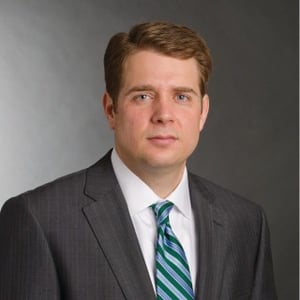
Judge, United States District Court for the District of Arizona
United States District Judge Michael T. Liburdi began his legal career as a law clerk to the Honorable Ruth V. McGregor of the Arizona Supreme Court.
He entered private practice with the law firm of Brown & Bain P.A., which became the Phoenix office of Perkins Coie LLP. He later practiced at Snell & Wilmer L.L.P.
From 2015-2018, Judge Liburdi served as General Counsel to Arizona Governor Douglas A. Ducey. Judge Liburdi provided legal advice to the Governor, advised on appointments to the state judiciary, directed litigation involving the state agencies, and worked with Arizona’s Congressional delegation on legal policy issues.
Immediately prior to his judicial appointment, Judge Liburdi was a shareholder at the international law firm of Greenberg Traurig, LLP.
Judge Liburdi’s private sector practice included complex commercial litigation, antitrust, constitutional law, and political and election law.
Judge Liburdi has served as an adjunct professor of law at the Sandra Day O’Connor College of Law at Arizona State University.
Judge Liburdi earned his Juris Doctorate from the Sandra Day O’Connor College of Law and a Bachelor of Science degree from Arizona State University.
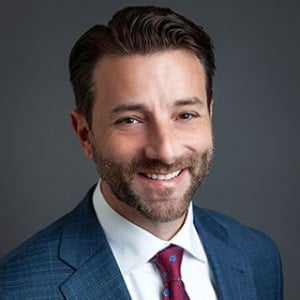
President & CEO, Arizona Chamber of Commerce & Industry
Danny brings more than 16 years of experience in global public affairs and government relations, as well as handling complex legal matters in private practice and public sector service. Prior to joining the Arizona Chamber of Commerce & Industry, Danny was general counsel to the Valor Global leadership team. He focused on helping achieve growth objectives as well as providing continued public affairs guidance in AZ, WA and other States.
Danny worked at Intel, was a shareholder at Greenberg Traurig where he chaired the Phoenix office government law and policy practice. Danny served as Deputy Chief of Staff for Arizona Governor Doug Ducey from 2014 to 2018 where he assisted in the passage of landmark legislation including the Arizona Opioid Epidemic Act and K–12 education funding ballot referral.
Danny was recently named among 2020 Leaders of the Year in Public Policy by Arizona Capitol Times for his contributions in the field of law and public policy. Danny earned his Juris Doctor (cum laude) from Sandra Day O’Connor College of Law at Arizona State University and Bachelor of Arts (cum laude) from Pepperdine University. Danny serves as an adjunct professor at Sandra Day O’Connor College of Law at Arizona State University, is a board member of numerous community organizations. Danny is passionate about orphan care and volunteers with Orphan Outreach for orphaned and vulnerable children in Mathare, Nairobi and Bungoma, Kenya. He and his wife Ann, live in Phoenix with their three children.
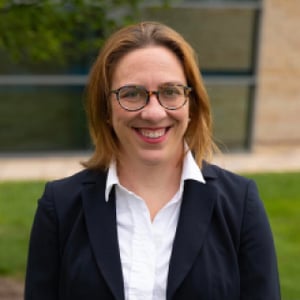
Associate Professor of Law, Sandra Day O'Connor College of Law at Arizona State University
Jennifer L. Selin is an associate professor at the Arizona State University Sandra Day O'Connor College of Law. Her published and ongoing scholarship explores legal institutions and how they work. Using both legal analysis and empirical tools, she demonstrates the structure of the administrative decision-making environment has important consequences for policy implementation.
Prior to joining ASU in 2024, Professor Selin served as senior attorney advisor at the Administrative Conference of the United States. Before working in the federal executive branch, she was a professor at the Universities of Illinois and Missouri.
Selin's scholarship has been published in political science, public administration, and law journals and has been utilized by the Obama, Trump and Biden Administrations, Congress, the Supreme Court, and the media. A proud graduate of Lebanon Valley College, Selin holds a J.D. from Wake Forest University and a Ph.D. from Vanderbilt University. Before first joining academia, she practiced administrative law and specialized in federal electricity market regulation and alternative energy development, licensing and regulation.
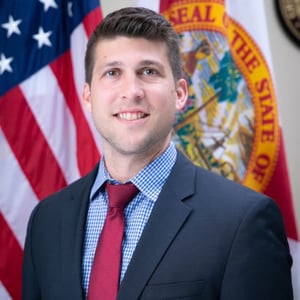
Attorney General, Florida
James Uthmeier is the Attorney General of the State of Florida. Before this, he served as Chief of Staff to Governor Ron DeSantis. Previously, he was General Counsel to the Governor, overseeing litigation and judicial nominations. He also served as a senior advisor at the U.S. Department of Commerce. A Georgetown Law graduate, Uthmeier is an adjunct professor at Florida State University College of Law and co-teaches religious education in Tallahassee.

Supreme Court & Appellate Litigation Chair, Lex Politica; Of Counsel, Alliance Defending Freedom
Erin Morrow Hawley serves as Chair of Lex Politica's Supreme Court and Appellate Practice overseeing the firm’s strategic appellate litigation and critical motions practice in the trial courts. Erin is an experienced litigator who represents clients in constitutional, regulatory, and appellate matters in federal and state courts throughout the country.
Erin has represented dozens of clients before the Supreme Court of the United States, served as lead counsel in high-profile cases raising novel constitutional and statutory issues, and authored numerous successful petitions for certiorari and briefs in opposition. She has argued in state and federal appellate and trial courts throughout the country, including the Supreme Court of the United States. Erin represents diverse clients in high-stakes litigation from state governments to faith-based nonprofits to Fortune 100 companies. She possesses expertise on a wide range of subject matters including administrative law, the First Amendment, religious liberty, federal jurisdiction, federal preemption, equitable jurisdiction, tax law, the Affordable Care Act, and Title IX.
Erin represents clients in cases where public communications strategy is paramount. She is a sought-after speaker and writer, has testified multiple times before Congress, and is a frequent presenter on constitutional and administrative law issues, including at the Oxford Union, the National Federalist Society Convention, and university campuses across the country. She is a frequent commentator to media outlets, including Fox News, MSNBC, the Wall Street Journal, WORLD, USA Today, the Federalist, and the Hill.
Erin previously oversaw Alliance Defending Freedom’s--where she still serves as Of Counsel--litigation strategies to empower women and protect the dignity of life, defend pregnancy centers’ First Amendment rights from government overreach, and safeguard Americans’ freedoms from the ever-encroaching administrative state.
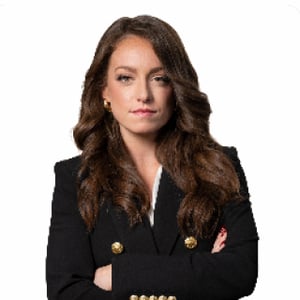
White House Correspondent, The Daily Wire
Mary Margaret Olohan is a senior reporter for The Daily Wire and the author of "Detrans: True Stories of Escaping The Gender Ideology Cult." She previously wrote for The Daily Signal and for The Daily Caller News Foundation. She is a graduate of the Catholic University of America.
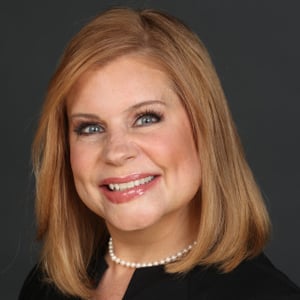
Vice President & Senior Legal Fellow, Defending Education
Sarah Parshall Perry is vice president and senior legal fellow at Defending Education.
Before coming to Defending Education, Sarah served as a Senior Legal Fellow for the Edwin Meese III Center for Legal and Judicial Studies, part of the Institute for Constitutional Government at Heritage, where her work centered on civil rights and the proper role of the courts.
Sarah joined Heritage after serving as Senior Counsel to the Assistant Secretary for Civil Rights at the U.S. Department of Education where she focused on policy reform, technical guidance, and the Office for Civil Rights’ (OCR) annual report to Congress. While at OCR, she was appointed by the Acting Assistant Secretary to co-chair the Employment Engagement, Diversity, & Inclusion Council and, in coordination with the Deputy Assistant Secretary for Enforcement oversee the hiring of dozens of attorneys for OCR’s 12 regional offices nationwide. Prior to her tenure at the Department of Education, she spent six years at the Family Research Council in Washington, D.C. where she was Senior Fellow for Education Reform and later, became the regular substitute host for the “Washington Watch” radio show. Her work at the Family Research Council also included the building and oversight of multiple policy coalitions geared toward the fight against antisemitism in academia, curbing tech censorship, and protecting religious liberty.
Before joining FRC, Sarah was in-house counsel and director of development for a Baltimore advertising agency, providing management of all new business transactions from pitch to contract execution for the multi-million-dollar enterprise. She began her practice at the litigation firm of Simms Showers, LLP where her work included Title VII employment discrimination, maritime/admiralty, and False Claims Act (“Qui Tam”) law. Sarah has a law degree from the University of Virginia School of Law, where she was an editor of the Virginia Journal of International Law, a recipient of the American Jurisprudence award, a Phi Delta Phi honor society member, and a student practitioner in the appellate litigation clinic where she argued before the 4th Circuit Court of Appeals. She holds a B.S. in Journalism with honors from Liberty University.
Her commentary and analysis have appeared in media outlets across the country, including the AP, BBC, Fox News, NPR, The Hill, Washington Post, Washington Times, and the New York Times. She is the mother of three children, and the author of just as many books on the trials and triumphs of parenting children on the autism spectrum. Sarah is a member of the Kirkpatrick Society at the American Enterprise Institute, and makes her home north of Baltimore, Maryland.
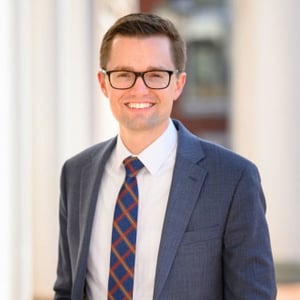
General Counsel, Center for American Liberty
Mark Trammell is the General Counsel at Center for American Liberty where he is dedicated to defending First Amendment freedoms and civil liberties.
Prior to joining the Center for American Liberty, Trammell served as in-house counsel to Young America’s Foundation, where he advocated for and defended students’ free speech rights on college campuses. He has also served as an attorney at Liberty Counsel and as an adjunct professor at Liberty University.
Trammell is a member of the Maryland bar and the Virginia bar. He is a graduate of Liberty University School of Law and Union University. Trammell currently serves on the Board of Trustees at Gateway Seminary of the Southern Baptist Convention.
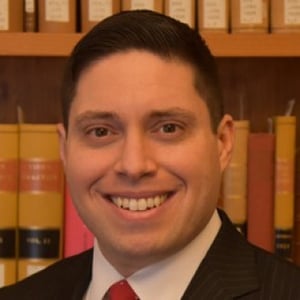
Professor, Associate Dean for Faculty Research, Catholic University of America, Columbus School of Law
José Joel Alicea is the inaugural St. Robert Bellarmine Professor of Law, Associate Dean for Faculty Research, and Director of the Law School’s Center for the Constitution and the Catholic Intellectual Tradition. He has also served as a Visiting Professor at Duke Law School and Notre Dame Law School. Prior to joining the Catholic Law faculty, Professor Alicea practiced law for several years at the law firm of Cooper & Kirk, PLLC, where he specialized in constitutional litigation. He previously served as a law clerk for Justice Samuel A. Alito Jr., on the United States Supreme Court and for Judge Diarmuid F. O'Scannlain on the United States Court of Appeals for the Ninth Circuit.
Professor Alicea’s scholarship has focused on constitutional theory. His scholarship has appeared, or is forthcoming, in the Yale Law Journal, the University of Pennsylvania Law Review, the Virginia Law Review, and the Notre Dame Law Review, among other publications. He has also been active in public debates about constitutional law, testifying before Congress and publishing essays in places like The New York Times, City Journal, and National Affairs.
Professor Alicea is a Fellow at the Columbus School of Law's Center for Religious Liberty and a Nonresident Fellow at The American Enterprise Institute. He is the recipient of several research and teaching awards, including the student-selected Professor of the Year teaching award.
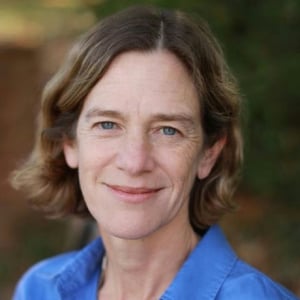
David Lurton Massee, Jr., Professor of Law, Director, Immigration, Migration and Human Rights Program, The University of Virginia School of Law
Amanda Frost is the David Lurton Massee, Jr., Professor of Law and Co-Director of the Immigration, Migration and Human Rights Program at the University of Virginia School of Law. Professor Frost specializes in immigration and citizenship law, federal courts and jurisdiction, and judicial ethics. Professor Frost is the author of the book You Are Not American: Citizenship Stripping from Dred Scott and the Dreamers, which was shortlisted for the Mark Lynton History Prize and was named a "New & Noteworthy" book by the NY Times Book Review. Her scholarship has been cited by state and federal courts, and she has been invited to testify before the House and Senate Judiciary Committees. She has published essays and op-eds in the New York Times, The Atlantic, The New Republic, Slate, USA Today, and The American Prospect.

E. Claiborne Robins Distinguished Chair in Law, University of Richmond School of Law
Professor Kurt Lash teaches and writes about constitutional law. Founder and director of the Richmond Program on the American Constitution, Professor Lash has published widely on the subjects of constitutional law and constitutional history, including The Fourteenth Amendment and the Privileges or Immunities of American Citizenship (Cambridge University Press, 2014), The Lost History of the Ninth Amendment (Oxford University Press, 2009), and The American First Amendment in the Twenty-first Century: Cases and Materials(with William W. Van Alstyne) (5th ed., Foundation Press, 2014). An elected member of the American Law Institute, Professor Lash’s work has appeared in numerous legal journals including the Stanford Law Journal, Georgetown Law Journal, Virginia Law Review, andNotre Dame Law Review. He has been a visiting professor at Northwestern University School of Law and is the former director of the University of Illinois College of Law Program in Constitutional Theory, History, and Law.

David Boies Professor of Law, Yale Law School

Julius E. Davis Professor of Law, University of Minnesota Law School
Ilan Wurman is the Julius E. Davis Professor of Law at the University of Minnesota, where he teaches administrative law and constitutional law. He previously taught at Arizona State University. He writes primarily on the Fourteenth Amendment, administrative law, separation of powers, and constitutionalism. His academic writing has appeared in the Yale Law Journal, the Stanford Law Review, the University of Chicago Law Review, the University of Pennsylvania Law Review, the Virginia Law Review, the Duke Law Journal, the Minnesota Law Review, the Notre Dame Law Review, and the Texas Law Review among other journals.
Professor Wurman is the author of the new book The Constitution of 1789: A New Introduction (Cambridge 2026). His previous books include A Debt Against the Living: An Introduction to Originalism (Cambridge 2017), and The Second Founding: An Introduction to the Fourteenth Amendment (Cambridge 2020). He is also the author of the casebook, Administrative Law Theory and Fundamentals: An Integrated Approach (Foundation Press 3d ed. 2025).
Professor Wurman practices law with the firm Tully Bailey. He has litigated a variety of administrative law and constitutional law cases, including cases involving COVID-19 restrictions, transmission lines, and Appointments Clause challenges. He also devised winning public nuisance theories to force city governments to address the increasingly challenging public camping crises throughout the country.

Head of AI Policy, Abundance Institute
Neil Chilson is the Head of AI Policy at the Abundance Institute. Prior to this position, he served as a Senior Research Fellow at the Center for Growth and Opportunity. Chilson is a lawyer, computer scientist, and author of the book “Getting Out of Control: Emergent Leadership in a Complex World.”
Chilson was previously the senior research fellow for Technology and Innovation at Stand Together, where he guided efforts to understand and promote the legal and cultural paradigms that best enable people to discover, innovate, and improve all our lives.
Before Stand Together, Chilson was the Chief Technologist at the Federal Trade Commission, where he focused on the economics of privacy and blockchain-related issues. Previously, he was an attorney advisor to Acting FTC Chairman Maureen K. Ohlhausen. In both roles he advised Chairman Ohlhausen and worked with staff on nearly every major technology-related case, report, workshop, or other FTC proceeding since January 2014. Neil joined the FTC from telecom firm Wilkinson Barker Knauer. Neil is frequently quoted by the press and his work has appeared in numerous news outlets, including The Wall Street Journal, The Washington Post, USAToday, and Newsweek. Neil has a J.D. from The George Washington Law School, a M.S. in computer science from University of Illinois, Urbana-Champaign, and a B.S. in computer science from Harding University.

AI Innovation and Law Fellow, University of Texas School of Law
Kevin Frazier is an AI Innovation and Law Fellow with University of Texas School of Law.
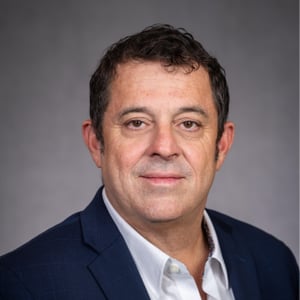
Senior Fellow for Law, Economics, and Technology, The Heritage Foundation; Professor, Florida International University
Mario Loyola is a Senior Fellow for Law, Economics, and Technology at The Heritage Foundation.
Loyola served in the Trump Administration as Associate Director for Regulatory Reform at the White House Council on Environmental Quality. In that role, he was one of the principal drafters of the One Federal Decision policy, which helped to streamline the permitting and environmental review of large infrastructure projects. While at CEQ, he was a member of the U.S. delegation to the USMCA free trade negotiations with Mexico and Canada, as well as the United Nations conference on biodiversity on the high seas. Loyola initially joined the White House in February 2017 as a Presidential Speechwriter, employing his expertise in many areas of foreign and domestic policy.
After beginning his career in M&A and corporate finance law, Loyola served in the Bush 43 Administration as a special assistant to the Undersecretary of Defense for Policy. He left that position to start writing on national defense issues in magazines such as National Review and The Weekly Standard, reporting from the front lines of the war on terrorism in Lebanon, Israel, and Iraq. He finished the Bush Administration as Foreign and Defense Counsel to the U.S. Senate Republican Policy Committee, then under the chairmanship of Senator Kay Bailey Hutchison of Texas. He subsequently moved to Texas and joined the Texas Public Policy Foundation, where he specialized in energy, environment, and federalism.
Loyola is a frequent contributor to The Wall Street Journal, National Review, and The Atlantic, among others. He teaches environmental and administrative law at Florida International University, where he is Founding Director of the Environmental Finance and Risk Management program in FIU’s prestigious Institute of Environment. He received a bachelor’s degree in European history from the University of Wisconsin–Madison and a J.D. from Washington University School of Law.
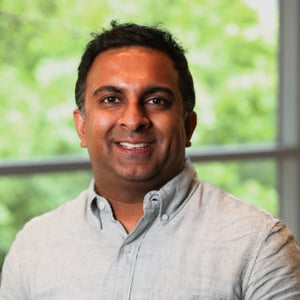
Director of Artificial Intelligence & Technology Policy, Vanderbilt Policy Accelerator, Vanderbilt University
Asad Ramzanali is the Director of Artificial Intelligence & Technology Policy at the Vanderbilt Policy Accelerator.
Asad has technology and technology policy experience across government, nonprofit, and industry. Most recently, he served as the Chief of Staff and Deputy Director for Strategy at the Biden-Harris White House Office of Science and Technology Policy (OSTP), with the designation of Special Assistant to the President. He joined OSTP after four years on Capitol Hill. He was Legislative Director for U.S. Representative Anna Eshoo, whose district included much of Silicon Valley, after a short stint as a legislative fellow for U.S. Senator Brian Schatz. Before entering public service, Asad worked on the corporate strategy team at Intuit and managed an impact investing program backed by JPMorgan Chase, funding early-stage financial technology startups serving low-income Americans.
Asad earned a Bachelor of Arts in economics from the University of California, Los Angeles (UCLA) and a Master of Public Policy from Harvard University’s Kennedy School of Government. He is based in Washington, D.C.
Head of AI Policy, Abundance Institute
Neil Chilson is the Head of AI Policy at the Abundance Institute. Prior to this position, he served as a Senior Research Fellow at the Center for Growth and Opportunity. Chilson is a lawyer, computer scientist, and author of the book “Getting Out of Control: Emergent Leadership in a Complex World.”
Chilson was previously the senior research fellow for Technology and Innovation at Stand Together, where he guided efforts to understand and promote the legal and cultural paradigms that best enable people to discover, innovate, and improve all our lives.
Before Stand Together, Chilson was the Chief Technologist at the Federal Trade Commission, where he focused on the economics of privacy and blockchain-related issues. Previously, he was an attorney advisor to Acting FTC Chairman Maureen K. Ohlhausen. In both roles he advised Chairman Ohlhausen and worked with staff on nearly every major technology-related case, report, workshop, or other FTC proceeding since January 2014. Neil joined the FTC from telecom firm Wilkinson Barker Knauer. Neil is frequently quoted by the press and his work has appeared in numerous news outlets, including The Wall Street Journal, The Washington Post, USAToday, and Newsweek. Neil has a J.D. from The George Washington Law School, a M.S. in computer science from University of Illinois, Urbana-Champaign, and a B.S. in computer science from Harding University.
AI Innovation and Law Fellow, University of Texas School of Law
Kevin Frazier is an AI Innovation and Law Fellow with University of Texas School of Law.
Senior Fellow for Law, Economics, and Technology, The Heritage Foundation; Professor, Florida International University
Mario Loyola is a Senior Fellow for Law, Economics, and Technology at The Heritage Foundation.
Loyola served in the Trump Administration as Associate Director for Regulatory Reform at the White House Council on Environmental Quality. In that role, he was one of the principal drafters of the One Federal Decision policy, which helped to streamline the permitting and environmental review of large infrastructure projects. While at CEQ, he was a member of the U.S. delegation to the USMCA free trade negotiations with Mexico and Canada, as well as the United Nations conference on biodiversity on the high seas. Loyola initially joined the White House in February 2017 as a Presidential Speechwriter, employing his expertise in many areas of foreign and domestic policy.
After beginning his career in M&A and corporate finance law, Loyola served in the Bush 43 Administration as a special assistant to the Undersecretary of Defense for Policy. He left that position to start writing on national defense issues in magazines such as National Review and The Weekly Standard, reporting from the front lines of the war on terrorism in Lebanon, Israel, and Iraq. He finished the Bush Administration as Foreign and Defense Counsel to the U.S. Senate Republican Policy Committee, then under the chairmanship of Senator Kay Bailey Hutchison of Texas. He subsequently moved to Texas and joined the Texas Public Policy Foundation, where he specialized in energy, environment, and federalism.
Loyola is a frequent contributor to The Wall Street Journal, National Review, and The Atlantic, among others. He teaches environmental and administrative law at Florida International University, where he is Founding Director of the Environmental Finance and Risk Management program in FIU’s prestigious Institute of Environment. He received a bachelor’s degree in European history from the University of Wisconsin–Madison and a J.D. from Washington University School of Law.
Director of Artificial Intelligence & Technology Policy, Vanderbilt Policy Accelerator, Vanderbilt University
Asad Ramzanali is the Director of Artificial Intelligence & Technology Policy at the Vanderbilt Policy Accelerator.
Asad has technology and technology policy experience across government, nonprofit, and industry. Most recently, he served as the Chief of Staff and Deputy Director for Strategy at the Biden-Harris White House Office of Science and Technology Policy (OSTP), with the designation of Special Assistant to the President. He joined OSTP after four years on Capitol Hill. He was Legislative Director for U.S. Representative Anna Eshoo, whose district included much of Silicon Valley, after a short stint as a legislative fellow for U.S. Senator Brian Schatz. Before entering public service, Asad worked on the corporate strategy team at Intuit and managed an impact investing program backed by JPMorgan Chase, funding early-stage financial technology startups serving low-income Americans.
Asad earned a Bachelor of Arts in economics from the University of California, Los Angeles (UCLA) and a Master of Public Policy from Harvard University’s Kennedy School of Government. He is based in Washington, D.C.

The Future of American Universities: A Conversation with Professor Brian Fitzpatrick
Portland Lawyer Chapter
Portland, ORExploring the Landscape of Military Law and Best Practices for JAGs
Jesse Burbank, Stephanie Fisher, Mark Majors, Michael A. Newton
Military law encompasses a wide range of legal disciplines, including criminal law, national security, government...
Dinner Discussion: Branches, Boundaries, and the Bench– A Judicious Conversation
Featuring: Hon. John Bush, U.S. Court of Appeals, Sixth Circuit Hon. John Nielsen, Supreme Court of...
Panel 2: New Frontiers for Traditional Fuels: Deregulation or Lawfare?
CLE credit for this event is available at On-Demand CLE. Coal, oil, and natural gas...
Combating Antisemitism on College Campuses: A Look at the Trump Administration's Civil Rights Enforcement Efforts One Year In
David D. Cole, Andrew Grossman, Erik S. Jaffe, Christopher Schorr, Ilya Shapiro
In March 2025, the U.S. Department of Education began investigating dozens of colleges - including...
Panel I: Laboratories of Liberty: State Deregulation and Economic Freedom
Paul Avelar, Michael T. Liburdi, Danny B. Seiden, Jennifer Selin, James William Uthmeier
Featuring: Mr. Paul Avelar, Arizona Office Managing Attorney, Institute for Justice Mr. Danny Seiden, President...
Who is Liable in Detransition Cases?
Erin M. Hawley, Mary Margaret Olohan, Sarah Parshall Perry, Mark Trammell
In the first medical malpractice verdict of its kind, a New York jury awarded $2...
Panel: Originalism, Birthright Citizenship and the 14th Amendment
J. Joel Alicea, Amanda Frost, Kurt T. Lash, Keith E. Whittington, Ilan Wurman
Prof. Amanda Frost, David Lurton Massee, Jr., Professor of Law, Director, Immigration, Migration and Human Rights...
America’s AI Action Plan: Green Lights or Guardrails?
Neil Chilson, Kevin Frazier, Mario Loyola, Asad Ramzanali
America’s new AI Action Plan — announced by the White House in July and framed...
America’s AI Action Plan: Green Lights or Guardrails?
Neil Chilson, Kevin Frazier, Mario Loyola, Asad Ramzanali
America’s new AI Action Plan — announced by the White House in July and framed...