
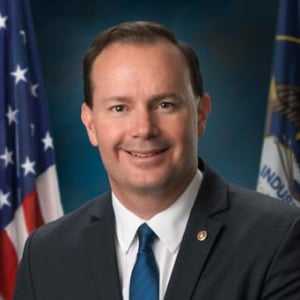
United States Senator, Utah
Elected in 2010 as Utah's 16th Senator, Mike Lee has spent his career defending the basic liberties of Americans and Utahns as a tireless advocate for our founding constitutional principles.
Senator Lee acquired a deep respect for the Constitution early on. His father, Rex Lee, who served as the Solicitor General under President Ronald Reagan, would often discuss varied aspects of judicial and constitutional doctrine around the kitchen table, from Due Process to the uses of Executive Plenary Power. He attended most of his father's arguments before the U.S. Supreme Court, giving him a unique, hands-on experience and understanding of government up close.
Lee graduated from Brigham Young University with a Bachelor of Science in Political Science, and served as BYU's Student Body President in his senior year. He graduated from BYU's Law School in 1997 and went on to serve as law clerk to Judge Dee Benson of the U.S. District Court for the District of Utah, and then with future Supreme Court Justice Judge Samuel A. Alito, Jr. on the U.S. Court of Appeals for the Third Circuit.
Lee spent several years as an attorney with the law firm Sidley & Austin specializing in appellate and Supreme Court litigation, and then served as an Assistant U.S. Attorney in Salt Lake City arguing cases before the U.S. Court of Appeals for the Tenth Circuit.
Lee served the state of Utah as Governor Jon Huntsman's General Counsel and was later honored to reunite with Justice Alito, now on the Supreme Court, for a one-year clerkship. He returned to private practice in 2007.
Throughout his career, Lee earned a reputation as an outstanding practitioner of the law based on his sound judgment, abilities in the courtroom, and thorough understanding of the Constitution.
Today, Lee fights to preserve America's proud founding document in the United States Senate. He advocates efforts to support constitutionally limited government, fiscal responsibility, individual liberty, and economic prosperity.
Lee is a member of the Judiciary Committee, and serves as Chairman of the Antitrust, Competition Policy and Consumer Rights Subcommittee protecting business competition and personal freedom.
He also oversees issues critical to Utah as the Chairman of the Water and Power Subcommittee of the Energy and Natural Resources Committee. He serves on the Commerce Committee and the Joint Economic Committee, as well.
In the 114th Congress, Lee also began his tenure as Chairman of the Senate Steering Committee, where he works with his Republican colleagues in the Senate to introduce bold and innovative solutions to issues facing the American people.
Lee and his wife Sharon live in Alpine, Utah, with their three children. He is a member of The Church of Jesus Christ of Latter-day Saints and served a two-year mission for the Church in the Texas Rio Grande Valley.
United States Senator, Utah
Elected in 2010 as Utah's 16th Senator, Mike Lee has spent his career defending the basic liberties of Americans and Utahns as a tireless advocate for our founding constitutional principles.
Senator Lee acquired a deep respect for the Constitution early on. His father, Rex Lee, who served as the Solicitor General under President Ronald Reagan, would often discuss varied aspects of judicial and constitutional doctrine around the kitchen table, from Due Process to the uses of Executive Plenary Power. He attended most of his father's arguments before the U.S. Supreme Court, giving him a unique, hands-on experience and understanding of government up close.
Lee graduated from Brigham Young University with a Bachelor of Science in Political Science, and served as BYU's Student Body President in his senior year. He graduated from BYU's Law School in 1997 and went on to serve as law clerk to Judge Dee Benson of the U.S. District Court for the District of Utah, and then with future Supreme Court Justice Judge Samuel A. Alito, Jr. on the U.S. Court of Appeals for the Third Circuit.
Lee spent several years as an attorney with the law firm Sidley & Austin specializing in appellate and Supreme Court litigation, and then served as an Assistant U.S. Attorney in Salt Lake City arguing cases before the U.S. Court of Appeals for the Tenth Circuit.
Lee served the state of Utah as Governor Jon Huntsman's General Counsel and was later honored to reunite with Justice Alito, now on the Supreme Court, for a one-year clerkship. He returned to private practice in 2007.
Throughout his career, Lee earned a reputation as an outstanding practitioner of the law based on his sound judgment, abilities in the courtroom, and thorough understanding of the Constitution.
Today, Lee fights to preserve America's proud founding document in the United States Senate. He advocates efforts to support constitutionally limited government, fiscal responsibility, individual liberty, and economic prosperity.
Lee is a member of the Judiciary Committee, and serves as Chairman of the Antitrust, Competition Policy and Consumer Rights Subcommittee protecting business competition and personal freedom.
He also oversees issues critical to Utah as the Chairman of the Water and Power Subcommittee of the Energy and Natural Resources Committee. He serves on the Commerce Committee and the Joint Economic Committee, as well.
In the 114th Congress, Lee also began his tenure as Chairman of the Senate Steering Committee, where he works with his Republican colleagues in the Senate to introduce bold and innovative solutions to issues facing the American people.
Lee and his wife Sharon live in Alpine, Utah, with their three children. He is a member of The Church of Jesus Christ of Latter-day Saints and served a two-year mission for the Church in the Texas Rio Grande Valley.
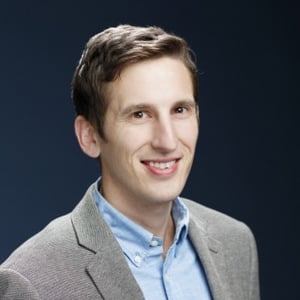
Legal Fellow, Center for Constitutional Studies, Cato Institute
Brent Skorup is a legal fellow in the Cato Institute’s Robert A. Levy Center for Constitutional Studies.
Before joining Cato, he was a senior research fellow at the Mercatus Center at the George Mason University. His research areas include free speech, technology law, Fourth Amendment protections, regulation, and property law. Skorup has published pieces in economics and law journals and in popular media, including The Wall Street Journal, The New York Times, Bloomberg Law, Reuters, and Wired. He’s appeared as a TV and radio interview guest for news outlets like C‑SPAN, NPR, CBS News, ABC News, and CNBC Asia.
The Pennsylvania Supreme Court, a dissenting opinion at the Illinois Supreme Court, and the ALI's Restatement of the Law of Property have cited his legal research and he has testified as a technology and legal expert in legislative hearings in several states. Skorup has been appointed to several federal and state advisory bodies and he is currently a member of the Texas Advanced Air Mobility Advisory Committee.
Skorup has a BA in economics from Wheaton College and a law degree from the George Mason University School of Law, where he was articles editor for the Civil Rights Law Journal. He was a legal clerk at the FCC’s wireless bureau and Office of General Counsel and at the Energy and Commerce Committee in the U.S. House of Representatives.

Senior Fellow, R Street Institute
Prior to R Street, Adam spent 12 years as a senior fellow at the Mercatus Center at George Mason University. Before the Mercatus Center, he served as the president of the Progress and Freedom Foundation. Adam has also worked for the Adam Smith Institute, the Heritage Foundation and the Cato Institute.
Adam has published 10 books on a wide range of topics, including online child safety, internet governance, intellectual property, telecommunications policy, media regulation and federalism.
In 2008, Adam received the Family Online Safety Institute’s “Award for Outstanding Achievement.”
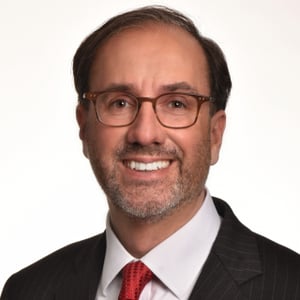
President and CEO, The Buckeye Institute
Robert Alt is the President and Chief Executive Officer of The Buckeye Institute where he has catalyzed exponential growth since he took the organization’s helm in 2012. He has since founded Buckeye’s renowned Economic Research Center and established its impactful Legal Center.
Alt is a distinguished scholar and attorney with particular expertise in legal policy, criminal justice, national security, and constitutional law. He previously worked for former U.S. Attorney General Edwin Meese III, regularly provides commentary on television and radio programs, and his writings have appeared in countless outlets.
In 2004, Alt spent five months in Iraq as an embedded war correspondent.
Alt has testified before Congress multiple times—including at the confirmation hearings for U.S. Supreme Court Justice Elena Kagan—the Federal Election Commission regarding matters of constitutional and administrative law, and numerous state legislatures.
Alt serves as an officer on the boards of The Philadelphia Society and the Federalist Society’s Columbus Lawyers Chapter. He taught national security law, criminal law, and legislation at Case Western Reserve University School of Law, as well as constitutional law and political parties and interest groups at Ashland University.
Alt earned his Doctor of Law degree from The University of Chicago Law School, where he was Symposium Editor and the winner of the Mulroy Prize for Excellence in Appellate Advocacy as well as research assistant to Professor Richard Epstein. Following law school, he clerked for Judge Alice Batchelder on the U.S. Court of Appeals for the Sixth Circuit. Alt graduated with his Bachelor of Arts in philosophy and political science magna cum laude from Azusa Pacific University where he also won the Outstanding Senior Award in Political Science.
Alt is an accomplished high-altitude alpinist and endurance athlete who has successfully climbed 6.75 of the famed Seven Summits of the World including Mount Everest. He is the creator of PROFOUND CLIMBING™ and a frequent speaker across the country and around the world on legal and public policy topics as well as effective leadership, management, decision-making, and teamwork in contexts ranging from extraordinary life/death situations to ordinary professional/business settings.
President and CEO, The Buckeye Institute
Robert Alt is the President and Chief Executive Officer of The Buckeye Institute where he has catalyzed exponential growth since he took the organization’s helm in 2012. He has since founded Buckeye’s renowned Economic Research Center and established its impactful Legal Center.
Alt is a distinguished scholar and attorney with particular expertise in legal policy, criminal justice, national security, and constitutional law. He previously worked for former U.S. Attorney General Edwin Meese III, regularly provides commentary on television and radio programs, and his writings have appeared in countless outlets.
In 2004, Alt spent five months in Iraq as an embedded war correspondent.
Alt has testified before Congress multiple times—including at the confirmation hearings for U.S. Supreme Court Justice Elena Kagan—the Federal Election Commission regarding matters of constitutional and administrative law, and numerous state legislatures.
Alt serves as an officer on the boards of The Philadelphia Society and the Federalist Society’s Columbus Lawyers Chapter. He taught national security law, criminal law, and legislation at Case Western Reserve University School of Law, as well as constitutional law and political parties and interest groups at Ashland University.
Alt earned his Doctor of Law degree from The University of Chicago Law School, where he was Symposium Editor and the winner of the Mulroy Prize for Excellence in Appellate Advocacy as well as research assistant to Professor Richard Epstein. Following law school, he clerked for Judge Alice Batchelder on the U.S. Court of Appeals for the Sixth Circuit. Alt graduated with his Bachelor of Arts in philosophy and political science magna cum laude from Azusa Pacific University where he also won the Outstanding Senior Award in Political Science.
Alt is an accomplished high-altitude alpinist and endurance athlete who has successfully climbed 6.75 of the famed Seven Summits of the World including Mount Everest. He is the creator of PROFOUND CLIMBING™ and a frequent speaker across the country and around the world on legal and public policy topics as well as effective leadership, management, decision-making, and teamwork in contexts ranging from extraordinary life/death situations to ordinary professional/business settings.
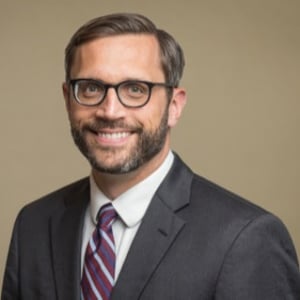
Partner, Consovoy McCarthy
Mr. Green helps clients litigate constitutional, statutory, and regulatory issues in courts and agencies throughout the country. Before joining the firm, he served as the Solicitor General of the State of Utah for five years. In that role, he oversaw all civil and criminal appellate matters in which the State of Utah or its officers or agencies were a party. While serving as solicitor general, he successfully argued cases before the Supreme Court of the United States, the U.S. Court of Appeals for the Tenth Circuit, and the Utah Supreme Court. He also led the Utah Attorney General office’s multistate litigation efforts, both challenging and defending regulatory actions by the federal government and other states. And he oversaw the division of the Utah Attorney General’s office responsible for defending cases challenging the constitutionality of state law. Before his service to the State of Utah, Mr. Green was Deputy Chief Counsel for Litigation at the U.S. Chamber Litigation Center. He began his career at Gibson, Dunn & Crutcher LLP’s Washington, D.C. office, where he litigated a variety of appellate and trial-court cases. Mr. Green served as a law clerk to Justice Clarence Thomas at the U.S. Supreme Court, to Judge Michael McConnell at the U.S. Court of Appeals for the Tenth Circuit, and to Judge Paul Cassell at the U.S. District Court for the District of Utah. He earned both his undergraduate and law degrees from the University of Utah. At the College of Law, he served as Editor in Chief of the Utah Law Review and graduated Order of the Coif and first in his class. He currently serves on the Utah Supreme Court’s advisory committee for the Utah Rules of Appellate Procedure and has been named one of Utah’s Legal Elite by Utah Business magazine.
United States Senator, Utah
Elected in 2010 as Utah's 16th Senator, Mike Lee has spent his career defending the basic liberties of Americans and Utahns as a tireless advocate for our founding constitutional principles.
Senator Lee acquired a deep respect for the Constitution early on. His father, Rex Lee, who served as the Solicitor General under President Ronald Reagan, would often discuss varied aspects of judicial and constitutional doctrine around the kitchen table, from Due Process to the uses of Executive Plenary Power. He attended most of his father's arguments before the U.S. Supreme Court, giving him a unique, hands-on experience and understanding of government up close.
Lee graduated from Brigham Young University with a Bachelor of Science in Political Science, and served as BYU's Student Body President in his senior year. He graduated from BYU's Law School in 1997 and went on to serve as law clerk to Judge Dee Benson of the U.S. District Court for the District of Utah, and then with future Supreme Court Justice Judge Samuel A. Alito, Jr. on the U.S. Court of Appeals for the Third Circuit.
Lee spent several years as an attorney with the law firm Sidley & Austin specializing in appellate and Supreme Court litigation, and then served as an Assistant U.S. Attorney in Salt Lake City arguing cases before the U.S. Court of Appeals for the Tenth Circuit.
Lee served the state of Utah as Governor Jon Huntsman's General Counsel and was later honored to reunite with Justice Alito, now on the Supreme Court, for a one-year clerkship. He returned to private practice in 2007.
Throughout his career, Lee earned a reputation as an outstanding practitioner of the law based on his sound judgment, abilities in the courtroom, and thorough understanding of the Constitution.
Today, Lee fights to preserve America's proud founding document in the United States Senate. He advocates efforts to support constitutionally limited government, fiscal responsibility, individual liberty, and economic prosperity.
Lee is a member of the Judiciary Committee, and serves as Chairman of the Antitrust, Competition Policy and Consumer Rights Subcommittee protecting business competition and personal freedom.
He also oversees issues critical to Utah as the Chairman of the Water and Power Subcommittee of the Energy and Natural Resources Committee. He serves on the Commerce Committee and the Joint Economic Committee, as well.
In the 114th Congress, Lee also began his tenure as Chairman of the Senate Steering Committee, where he works with his Republican colleagues in the Senate to introduce bold and innovative solutions to issues facing the American people.
Lee and his wife Sharon live in Alpine, Utah, with their three children. He is a member of The Church of Jesus Christ of Latter-day Saints and served a two-year mission for the Church in the Texas Rio Grande Valley.
Partner, Consovoy McCarthy
Mr. Green helps clients litigate constitutional, statutory, and regulatory issues in courts and agencies throughout the country. Before joining the firm, he served as the Solicitor General of the State of Utah for five years. In that role, he oversaw all civil and criminal appellate matters in which the State of Utah or its officers or agencies were a party. While serving as solicitor general, he successfully argued cases before the Supreme Court of the United States, the U.S. Court of Appeals for the Tenth Circuit, and the Utah Supreme Court. He also led the Utah Attorney General office’s multistate litigation efforts, both challenging and defending regulatory actions by the federal government and other states. And he oversaw the division of the Utah Attorney General’s office responsible for defending cases challenging the constitutionality of state law. Before his service to the State of Utah, Mr. Green was Deputy Chief Counsel for Litigation at the U.S. Chamber Litigation Center. He began his career at Gibson, Dunn & Crutcher LLP’s Washington, D.C. office, where he litigated a variety of appellate and trial-court cases. Mr. Green served as a law clerk to Justice Clarence Thomas at the U.S. Supreme Court, to Judge Michael McConnell at the U.S. Court of Appeals for the Tenth Circuit, and to Judge Paul Cassell at the U.S. District Court for the District of Utah. He earned both his undergraduate and law degrees from the University of Utah. At the College of Law, he served as Editor in Chief of the Utah Law Review and graduated Order of the Coif and first in his class. He currently serves on the Utah Supreme Court’s advisory committee for the Utah Rules of Appellate Procedure and has been named one of Utah’s Legal Elite by Utah Business magazine.

A Conversation with Senator Mike Lee
Mike S. Lee
On October 28, 2019, the George Washington Student Chapter presented A Conversation with Senator Mike...
The Supreme Court’s 2019 Term: Snoozer or Bruiser?
Charlotte, NCTech Roundup Episode 4 – The Future of Drone Policy: A Discussion with Sen. Mike Lee
Mike S. Lee, Brent Skorup, Adam Thierer
In this episode, Adam Thierer and Brent Skorup speak with Senator Mike Lee on the...
A Conversation with Senator Mike Lee
George Washington Student Chapter
Washington, DCU.S. Supreme Court October Term 2018 Review
Iowa Lawyers Chapter
Des Moines , IACriminal Justice Reform: A Survey of 2018 State Laws
Robert Alt
State legislatures across the country made significant strides in reforming their criminal justice regimes throughout...
Criminal Justice Reform: A Survey of 2018 State Laws
Robert Alt
State legislatures across the country made significant strides in reforming their criminal justice regimes throughout...
Topics
Rule 8.4(g) Development: Two Major Changes in Utah, Comment Period Ends Sunday
In 2017, the Utah Supreme Court held a public comment period on a proposal that...
Topics
Will the Supreme Court Soon Provide Guidance for Resolving Conflicts Over Federal Lands?
The Supreme Court has “repeatedly observed” that the Property Clause gives Congress plenary authority...
Topics
Why D.C. Should Not Adopt ABA Model Rule 8.4(g)
The D.C. Bar Rules of Professional Responsibility Review Committee is holding a public comment period...