
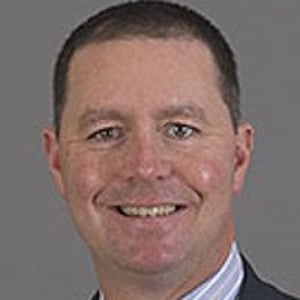
Judge, United States District Court, Northern District of Illinois
John Fitzgerald Kness is a judge on the United States District Court for the Northern District of Illinois. He was nominated by President Donald Trump on June 24, 2019. The United States Senate confirmed Kness on February 12, 2020, by a vote of 81-12.
Kness was the general counsel of the College of DuPage from 2016 to 2020.

George C. Dix Professor in Constitutional Law, Northwestern University Pritzker School of Law
John O. McGinnis is a graduate of Harvard College and Harvard Law School where he was an editor of the Harvard Law Review. He also has an MA degree from Balliol College, Oxford, in philosophy and theology. Professor McGinnis clerked on the U.S. Court of Appeals for the District of Columbia. From 1987 to 1991, he was deputy assistant attorney general in the Office of Legal Counsel at the Department of Justice. He is the author of Accelerating Democracy: Transforming Government Through Technology (Princeton 2013) and Originalism and the Good Constitution (Harvard 2013) (with M. Rappaport). He is a past winner of the Paul Bator award given by the Federalist Society to an outstanding academic under 40. He has been listed by the United States on the roster of panelists who may be called upon to decide World Trade Organization Disputes.
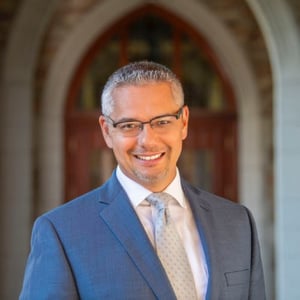
Tocqueville Associate Professor Department of Political Science and Concurrent Associate Professor of Law, University of Notre Dame Law School
Vincent Phillip Muñoz is the Tocqueville Associate Professor of Religion & Public Life in the Department of Political Science at the University of Notre Dame. He is the founding director of Notre Dame's undergraduate minor in Constitutional Studies and directs Notre Dame's Tocqueville Program for Inquiry into Religion and Public Life.
Muñoz writes and teaches across the fields of constitutional law, American politics, and political philosophy with a focus on religious liberty and the American Founding. His first book, God and the Founders: Madison, Washington, and Jefferson (Cambridge University Press, 2009) won the Hubert Morken Award from the American Political Science Association for the best publication on religion and politics in 2009 and 2010. His First Amendment church-state case reader, Religious Liberty and the American Supreme Court: The Essential Cases and Documents (Rowman & Littlefield) was first published in 2013 (revised edition, 2015) and is being used at Notre Dame and other leading universities.
Muñoz's current project is a scholarly monograph on the natural right of religious liberty and the original meaning of the First Amendment's Religion Clauses. Articles from that project have appeared in American Political Science Review, The Harvard Journal of Law and Public Policy, Notre Dame Law Review, American Political Thought, and the University of Pennsylvania's Journal of Constitutional Law.
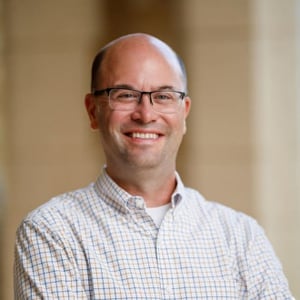
Paul J. Schierl Professor of Law, University of Notre Dame Law School
Professor Richard W. Garnett teaches and writes in the areas of constitutional law, criminal law, the First Amendment, and law and religion. He is a leading authority on questions and debates regarding religious freedom and church-state relations, and is the founding director of Notre Dame Law School’s Program on Church, State, and Society.
Garnett clerked for the late Chief Justice of the United States, William H. Rehnquist, and also for the late Chief Judge of the United States Court of Appeals for the Eighth Circuit, Richard S. Arnold. He earned his J.D. from Yale Law School in 1995 and his B.A., summa cum laude, from Duke University in 1990. He joined the faculty in 1999 after practicing law in Washington, D.C. with Miller, Cassidy, Larroca & Lewin.
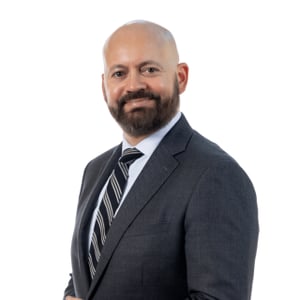
Milton R. Underwood Chair in Free Enterprise, Vanderbilt University Law School
Brian Fitzpatrick is the Milton R. Underwood Chair in Free Enterprise and Professor of Law at Vanderbilt Law School, where his research focuses on class action litigation, federal courts, judicial selection, and constitutional law. He is best known for his empirical studies of class action settlements as well as his book The Conservative Case for Class Actions (University of Chicago Press, 2019). Professor Fitzpatrick joined Vanderbilt's law faculty in 2007 after serving as the John M. Olin Fellow at New York University School of Law. He graduated first in his class from Harvard Law School and went on to clerk for Judge Diarmuid O'Scannlain on the U.S. Court of Appeals for the Ninth Circuit and Justice Antonin Scalia on the U.S. Supreme Court. After his clerkships, Professor Fitzpatrick practiced commercial and appellate litigation for several years at Sidley Austin in Washington, D.C., and served as Special Counsel for Supreme Court Nominations to U.S. Senator John Cornyn. Before earning his law degree, Fitzpatrick graduated summa cum laude with a bachelor's of science in chemical engineering from the University of Notre Dame. He has received the Hall-Hartman Outstanding Professor Award, which recognizes excellence in classroom teaching, for his Civil Procedure and Federal Courts courses.
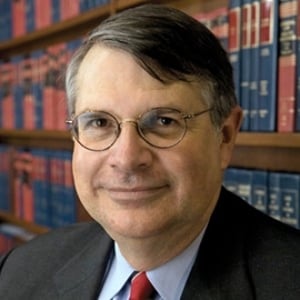
Charles Evans Hughes Professor of Law, Columbia Law School
THOMAS W. MERRILL is the Charles Evans Hughes Professor of Law at Columbia Law School. He previously taught at Northwestern University School of Law and Yale Law School. He has undergraduate degrees from Grinnell College and Oxford University, where he studied as a Rhodes Scholar, and a law degree from the University of Chicago. He clerked on the D.C. Circuit (for Chief Judge David Bazelon) and the U.S. Supreme Court (for Justice Harry Blackmun). From 1987-1990 he served as Deputy Solicitor General, U.S. Department of Justice. Professor Merrill’s writings related to property include Property: Principles and Policies (Foundation Press Second Edition, 2012) (with Henry E. Smith); Property: The Oxford Introductions to U.S. Law (Oxford U. Press, 2010); Property: Takings (Foundation Press, 2002)(with David Dana); and numerous articles, including “The Economics of Public Use” (Cornell Law Review 1986); “The Landscape of Constitutional Property” (Virginia Law Review 2000); and “The Character of the Governmental Action” (Vermont Law Review 2012). He is a member of the American Academy of Arts and Sciences.
Tocqueville Associate Professor Department of Political Science and Concurrent Associate Professor of Law, University of Notre Dame Law School
Vincent Phillip Muñoz is the Tocqueville Associate Professor of Religion & Public Life in the Department of Political Science at the University of Notre Dame. He is the founding director of Notre Dame's undergraduate minor in Constitutional Studies and directs Notre Dame's Tocqueville Program for Inquiry into Religion and Public Life.
Muñoz writes and teaches across the fields of constitutional law, American politics, and political philosophy with a focus on religious liberty and the American Founding. His first book, God and the Founders: Madison, Washington, and Jefferson (Cambridge University Press, 2009) won the Hubert Morken Award from the American Political Science Association for the best publication on religion and politics in 2009 and 2010. His First Amendment church-state case reader, Religious Liberty and the American Supreme Court: The Essential Cases and Documents (Rowman & Littlefield) was first published in 2013 (revised edition, 2015) and is being used at Notre Dame and other leading universities.
Muñoz's current project is a scholarly monograph on the natural right of religious liberty and the original meaning of the First Amendment's Religion Clauses. Articles from that project have appeared in American Political Science Review, The Harvard Journal of Law and Public Policy, Notre Dame Law Review, American Political Thought, and the University of Pennsylvania's Journal of Constitutional Law.
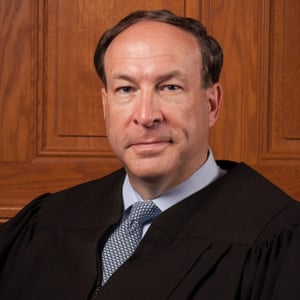
Judge, United States Court of Appeals, Seventh Circuit
Michael B. Brennan was confirmed and sworn in as a Circuit Judge for the U.S. Court of Appeals for the Seventh Circuit in May 2018.
He previously worked as a partner in the Milwaukee law firm of Gass Weber Mullins LLC, where he tried cases and handled appeals in federal and state courts, as a judge on the Milwaukee County Circuit, where he presided over a variety of criminal and civil calendars, and as an assistant district attorney in the Milwaukee County District Attorney’s office.
Brennan’s undergraduate degree is from the University of Notre Dame, and his law degree from Northwestern University School of Law, where he was an editor on the law review and the moot court champion. He served as a law clerk on the U.S. District Court for the Eastern District of Wisconsin and the U.S. Court of Appeals for the Seventh Circuit.
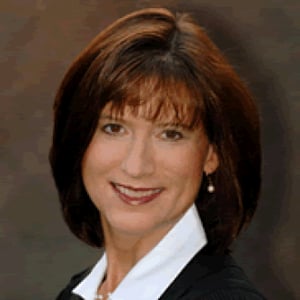
Judge, United States Court of Appeals, Seventh Circuit
Judge Sykes was nominated to the Seventh Circuit by President George W. Bush and confirmed by the Senate in 2004. Prior to her appointment to the federal bench, Judge Sykes served as a justice on the Wisconsin Supreme Court. Governor Tommy G. Thompson appointed her in September 1999 to fill a mid-term vacancy on the state supreme court, and she was elected to a full ten-year term in April 2000. From 1992-1999, Judge Sykes served on the state trial bench in Milwaukee County (elected in 1992 and re-elected in 1998). From 1985-1992, Judge Sykes practiced law with the Milwaukee firm of Whyte & Hirschboeck, S.C., and from 1984-1985, was a law clerk to Federal Judge Terence T. Evans.
Born and raised in the Milwaukee area, Judge Sykes earned a bachelor’s degree in journalism from Northwestern University in 1980 and a law degree from Marquette University Law School in 1984. Between college and law school, Judge Sykes worked as a reporter for The Milwaukee Journal.
Judge Sykes has two sons.
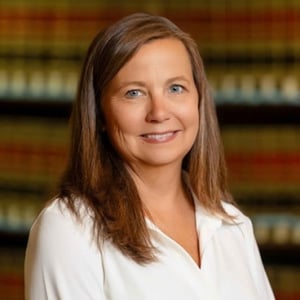
John P. Murphy Foundation Professor of Law and Associate Dean for External Engagement, University of Notre Dame Law School
Nicole Stelle Garnett is the John P. Murphy Foundation Professor of Law at Notre Dame Law School, where she also serves as the Associate Dean for External Engagement and directs the Notre Dame Education Law Project. Her teaching and research focus on education law and policy, religious liberty, and topics related to property law (especially land use and urban development policies). In addition to dozens of articles on these subjects, she is the author of Lost Classroom, Lost Community: Catholic Schools' Importance in Urban America (University of Chicago Press, 2014) and Ordering the City: Land Use, Policing and the Restoration of Urban America (Yale University Press, 2009).
Garnett received her B.A. with distinction in Political Science from Stanford University and her J.D. from Yale Law School. After law school, she clerked for the Honorable Morris S. Arnold of the United States Court of Appeals for the Eighth Circuit and for Associate Justice Clarence Thomas of the Supreme Court of the United States. Before joining the law school faculty in 1999, she worked for two years as a staff attorney at the Institute for Justice, a non-profit public-interest law firm in Washington, D.C., where she helped to defend the constitutionality of the nation's first private-school-choice programs.
At Notre Dame, Garnett is a faculty fellow in the Institute for Educational Initiatives, Kellogg Institute for International Studies, Fitzgerald Institute for Real Estate, and deNicola Center for Ethics and Culture. She also is an elected member of the American Law Institute and a Senior Fellow at the Manhattan Institute.
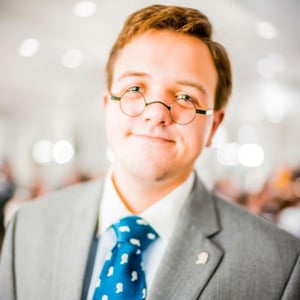
Adam Griffin is a graduate of the University of North Carolina School of Law. During law school, he served as a research assistant to Professor Stephen E. Sachs and UNC Law Dean Martin Brinkley. After law school, Adam spent two years litigating for liberty at the Institute for Justice as an inaugural Law and Liberty Fellow. He then served as a law clerk to Chief Judge Richard E. Myers in the United States District Court for the Eastern District of North Carolina, and previously worked at Pacific Legal Foundation and the Civil Rights Division of the Department of Justice.
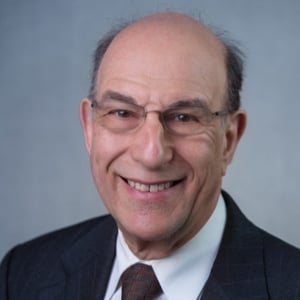
Distinguished Fellow, Economic Policy Institute
Richard Rothstein is a Distinguished Fellow of the Economic Policy Institute and a Senior Fellow (emeritus) at the Thurgood Marshall Institute of the NAACP Legal Defense Fund. He is the author of The Color of Law: A Forgotten History of How Our Government Segregated America, which recovers a forgotten history of how federal, state, and local policy explicitly segregated metropolitan areas nationwide, creating racially homogenous neighborhoods in patterns that violate the Constitution and require remediation. He is also the author of many other articles and books on race and education, which can be found on his web page at the Economic Policy Institute: http://www.epi.org/people/richard-rothstein/. Previous influential books include Class and Schools: Using Social, Economic and Educational Reform to Close the Black–White Achievement Gap and Grading Education: Getting Accountability Right. He welcomes questions and comments at riroth@epi.org.
Elisabeth H. and Granville S. Ridley Jr. Chair in Law, Vanderbilt University Law School
Christopher Serkin teaches and writes about land use and property law. His provocative scholarship addresses local governments, property theory, the Takings Clause, land use regulations and eminent domain. His articles have appeared in the Chicago, Columbia, Michigan, New York University, Notre Dame and Northwestern University law reviews, among others. He is the author of The Law of Property, a Concept and Insights book published in 2013, and a co-editor of a leading casebook, Land Use Controls (5th edition, 2020) with Robert Ellickson, Vicki Been and Roderick Hills. Professor Serkin was the law school's associate dean for academic affairs from 2019 to 2021 and its associate dean for research from 2015 to 2017. Before joining Vanderbilt’s law faculty, Serkin taught at Brooklyn Law School from 2005-13. He has been a visiting professor at the University of Pennsylvania, the University of Chicago, and New York University. He began his academic career at New York University School of Law, where he taught for two years as an acting assistant professor in its Lawyering Program. After earning his J.D. at the University of Michigan School of Law, where he was a Clarence Darrow Scholar, Dean Serkin was a law clerk for Judge John M. Walker Jr. of the U.S. Court of Appeals for the Second Circuit and for Judge J. Garvan Murtha of the U.S. District Court for the District of Vermont. Before joining the legal academy, he practiced law as an associate with Davis Polk & Wardwell.
Judge, United States Court of Appeals, Seventh Circuit
Michael B. Brennan was confirmed and sworn in as a Circuit Judge for the U.S. Court of Appeals for the Seventh Circuit in May 2018.
He previously worked as a partner in the Milwaukee law firm of Gass Weber Mullins LLC, where he tried cases and handled appeals in federal and state courts, as a judge on the Milwaukee County Circuit, where he presided over a variety of criminal and civil calendars, and as an assistant district attorney in the Milwaukee County District Attorney’s office.
Brennan’s undergraduate degree is from the University of Notre Dame, and his law degree from Northwestern University School of Law, where he was an editor on the law review and the moot court champion. He served as a law clerk on the U.S. District Court for the Eastern District of Wisconsin and the U.S. Court of Appeals for the Seventh Circuit.
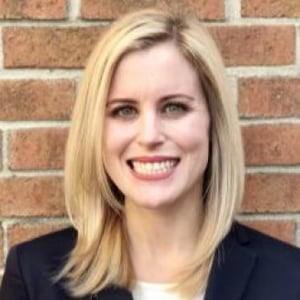
Lecturer in Law, University of Chicago Law School
Madeline Lansky is Lecturer in Law at the University of Chicago Law School. She received her B.A. in Political Science from the University of Southern California and her J.D. from the University of Chicago Law School. Since graduation, she has served as a law clerk to Judge William H. Pryor Jr. on the U.S. Court of Appeals for the Eleventh Circuit and Justices Clarence Thomas and Amy Coney Barrett on the U.S. Supreme Court.
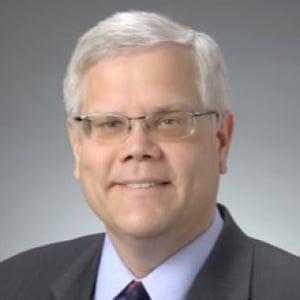
Partner and Business Lawyer, Foley & Lardner LLP
Eric Nelson is a partner and business lawyer with Foley & Lardner LLP, where he focuses his practice on contractual and distribution issues, including those involving manufacturers, service providers, utilities and energy marketers. Mr. Nelson received his bachelor’s degree in business administration in 1989 from the University of Wisconsin – Madison (where he received the School of Business Distinguished Student Award), and his J.D. degree in 1992 from Yale Law School. A member of the State Bar of Wisconsin, he served judicial clerkships with both the Hon. Clarence Thomas, Associate Justice of the U.S. Supreme Court (1993-1994), and the Hon. J. Michael Luttig, U.S. Court of Appeals for the Fourth Circuit (1992-1993), before joining the firm.
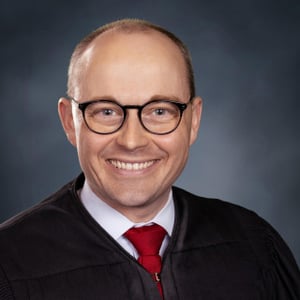
Judge, Illinois 18th Judicial Circuit
Judge Kenton Skarin serves on the Illinois 18th Judicial Circuit, a trial court of general jurisdiction that serves almost one million people in the western suburbs of Chicago.
Judge Skarin graduated first in his class from Northwestern University School of Law and summa cum laude from North Central College in Naperville, Illinois.
Earlier in his career, Judge Skarin clerked for Associate Justice Clarence Thomas at the United States Supreme Court and for Judge J. Harvie Wilkinson III at the United States Court of Appeals for the Fourth Circuit. Judge Skarin also practiced appellate law in the Chicago office of Jones Day and served as Deputy General Counsel to the Governor of Illinois.
Judge Skarin is a lifelong native of Wheaton, Illinois, where he lives with his wife and children.
Adam Griffin is a graduate of the University of North Carolina School of Law. During law school, he served as a research assistant to Professor Stephen E. Sachs and UNC Law Dean Martin Brinkley. After law school, Adam spent two years litigating for liberty at the Institute for Justice as an inaugural Law and Liberty Fellow. He then served as a law clerk to Chief Judge Richard E. Myers in the United States District Court for the Eastern District of North Carolina, and previously worked at Pacific Legal Foundation and the Civil Rights Division of the Department of Justice.
Distinguished Fellow, Economic Policy Institute
Richard Rothstein is a Distinguished Fellow of the Economic Policy Institute and a Senior Fellow (emeritus) at the Thurgood Marshall Institute of the NAACP Legal Defense Fund. He is the author of The Color of Law: A Forgotten History of How Our Government Segregated America, which recovers a forgotten history of how federal, state, and local policy explicitly segregated metropolitan areas nationwide, creating racially homogenous neighborhoods in patterns that violate the Constitution and require remediation. He is also the author of many other articles and books on race and education, which can be found on his web page at the Economic Policy Institute: http://www.epi.org/people/richard-rothstein/. Previous influential books include Class and Schools: Using Social, Economic and Educational Reform to Close the Black–White Achievement Gap and Grading Education: Getting Accountability Right. He welcomes questions and comments at riroth@epi.org.
Elisabeth H. and Granville S. Ridley Jr. Chair in Law, Vanderbilt University Law School
Christopher Serkin teaches and writes about land use and property law. His provocative scholarship addresses local governments, property theory, the Takings Clause, land use regulations and eminent domain. His articles have appeared in the Chicago, Columbia, Michigan, New York University, Notre Dame and Northwestern University law reviews, among others. He is the author of The Law of Property, a Concept and Insights book published in 2013, and a co-editor of a leading casebook, Land Use Controls (5th edition, 2020) with Robert Ellickson, Vicki Been and Roderick Hills. Professor Serkin was the law school's associate dean for academic affairs from 2019 to 2021 and its associate dean for research from 2015 to 2017. Before joining Vanderbilt’s law faculty, Serkin taught at Brooklyn Law School from 2005-13. He has been a visiting professor at the University of Pennsylvania, the University of Chicago, and New York University. He began his academic career at New York University School of Law, where he taught for two years as an acting assistant professor in its Lawyering Program. After earning his J.D. at the University of Michigan School of Law, where he was a Clarence Darrow Scholar, Dean Serkin was a law clerk for Judge John M. Walker Jr. of the U.S. Court of Appeals for the Second Circuit and for Judge J. Garvan Murtha of the U.S. District Court for the District of Vermont. Before joining the legal academy, he practiced law as an associate with Davis Polk & Wardwell.
John P. Murphy Foundation Professor of Law and Associate Dean for External Engagement, University of Notre Dame Law School
Nicole Stelle Garnett is the John P. Murphy Foundation Professor of Law at Notre Dame Law School, where she also serves as the Associate Dean for External Engagement and directs the Notre Dame Education Law Project. Her teaching and research focus on education law and policy, religious liberty, and topics related to property law (especially land use and urban development policies). In addition to dozens of articles on these subjects, she is the author of Lost Classroom, Lost Community: Catholic Schools' Importance in Urban America (University of Chicago Press, 2014) and Ordering the City: Land Use, Policing and the Restoration of Urban America (Yale University Press, 2009).
Garnett received her B.A. with distinction in Political Science from Stanford University and her J.D. from Yale Law School. After law school, she clerked for the Honorable Morris S. Arnold of the United States Court of Appeals for the Eighth Circuit and for Associate Justice Clarence Thomas of the Supreme Court of the United States. Before joining the law school faculty in 1999, she worked for two years as a staff attorney at the Institute for Justice, a non-profit public-interest law firm in Washington, D.C., where she helped to defend the constitutionality of the nation's first private-school-choice programs.
At Notre Dame, Garnett is a faculty fellow in the Institute for Educational Initiatives, Kellogg Institute for International Studies, Fitzgerald Institute for Real Estate, and deNicola Center for Ethics and Culture. She also is an elected member of the American Law Institute and a Senior Fellow at the Manhattan Institute.
Adam Griffin is a graduate of the University of North Carolina School of Law. During law school, he served as a research assistant to Professor Stephen E. Sachs and UNC Law Dean Martin Brinkley. After law school, Adam spent two years litigating for liberty at the Institute for Justice as an inaugural Law and Liberty Fellow. He then served as a law clerk to Chief Judge Richard E. Myers in the United States District Court for the Eastern District of North Carolina, and previously worked at Pacific Legal Foundation and the Civil Rights Division of the Department of Justice.
Distinguished Fellow, Economic Policy Institute
Richard Rothstein is a Distinguished Fellow of the Economic Policy Institute and a Senior Fellow (emeritus) at the Thurgood Marshall Institute of the NAACP Legal Defense Fund. He is the author of The Color of Law: A Forgotten History of How Our Government Segregated America, which recovers a forgotten history of how federal, state, and local policy explicitly segregated metropolitan areas nationwide, creating racially homogenous neighborhoods in patterns that violate the Constitution and require remediation. He is also the author of many other articles and books on race and education, which can be found on his web page at the Economic Policy Institute: http://www.epi.org/people/richard-rothstein/. Previous influential books include Class and Schools: Using Social, Economic and Educational Reform to Close the Black–White Achievement Gap and Grading Education: Getting Accountability Right. He welcomes questions and comments at riroth@epi.org.
Elisabeth H. and Granville S. Ridley Jr. Chair in Law, Vanderbilt University Law School
Christopher Serkin teaches and writes about land use and property law. His provocative scholarship addresses local governments, property theory, the Takings Clause, land use regulations and eminent domain. His articles have appeared in the Chicago, Columbia, Michigan, New York University, Notre Dame and Northwestern University law reviews, among others. He is the author of The Law of Property, a Concept and Insights book published in 2013, and a co-editor of a leading casebook, Land Use Controls (5th edition, 2020) with Robert Ellickson, Vicki Been and Roderick Hills. Professor Serkin was the law school's associate dean for academic affairs from 2019 to 2021 and its associate dean for research from 2015 to 2017. Before joining Vanderbilt’s law faculty, Serkin taught at Brooklyn Law School from 2005-13. He has been a visiting professor at the University of Pennsylvania, the University of Chicago, and New York University. He began his academic career at New York University School of Law, where he taught for two years as an acting assistant professor in its Lawyering Program. After earning his J.D. at the University of Michigan School of Law, where he was a Clarence Darrow Scholar, Dean Serkin was a law clerk for Judge John M. Walker Jr. of the U.S. Court of Appeals for the Second Circuit and for Judge J. Garvan Murtha of the U.S. District Court for the District of Vermont. Before joining the legal academy, he practiced law as an associate with Davis Polk & Wardwell.
John P. Murphy Foundation Professor of Law and Associate Dean for External Engagement, University of Notre Dame Law School
Nicole Stelle Garnett is the John P. Murphy Foundation Professor of Law at Notre Dame Law School, where she also serves as the Associate Dean for External Engagement and directs the Notre Dame Education Law Project. Her teaching and research focus on education law and policy, religious liberty, and topics related to property law (especially land use and urban development policies). In addition to dozens of articles on these subjects, she is the author of Lost Classroom, Lost Community: Catholic Schools' Importance in Urban America (University of Chicago Press, 2014) and Ordering the City: Land Use, Policing and the Restoration of Urban America (Yale University Press, 2009).
Garnett received her B.A. with distinction in Political Science from Stanford University and her J.D. from Yale Law School. After law school, she clerked for the Honorable Morris S. Arnold of the United States Court of Appeals for the Eighth Circuit and for Associate Justice Clarence Thomas of the Supreme Court of the United States. Before joining the law school faculty in 1999, she worked for two years as a staff attorney at the Institute for Justice, a non-profit public-interest law firm in Washington, D.C., where she helped to defend the constitutionality of the nation's first private-school-choice programs.
At Notre Dame, Garnett is a faculty fellow in the Institute for Educational Initiatives, Kellogg Institute for International Studies, Fitzgerald Institute for Real Estate, and deNicola Center for Ethics and Culture. She also is an elected member of the American Law Institute and a Senior Fellow at the Manhattan Institute.

Panel 2: Why the Constitution is Good
2024 Midwestern Chapters Conference
Chicago, ILTopics
Cultivating Controversy: Proposed ABA Standard Would Link Freedom of Expression to Law School Accreditation
What opinions belong on law school campuses? Given that hundreds of aspiring lawyers flock to...
Reception with Professor Richard Garnett
Grand Rapids Lawyers Chapter
Grand Rapids, MIThe Conservative Case for Class Actions
Milwaukee Lawyers Chapter
Milwaukee, WIBook Signings
2022 National Lawyers Convention
Washington, DC2022 Judge Rudolph T. Randa Lecture and Award
Milwaukee Lawyers Chapter
Milwaukee, WIEnvironmental Justice, Property Rights, and Zoning
Adam F. Griffin, Randall O'Toole, Richard Rothstein, Christopher Serkin, Nicole Stelle Garnett
This panel will focus on the pros and cons of zoning, its relation to environmental...
Environmental Justice, Property Rights, and Zoning
Adam F. Griffin, Randall O'Toole, Richard Rothstein, Christopher Serkin, Nicole Stelle Garnett
This panel will focus on the pros and cons of zoning, its relation to environmental...
Environmental Justice, Property Rights, and Zoning
TeleforumThe Legacy of Justice Clarence Thomas
A Panel Discussion Moderated by the Honorable Michael B. Brennan
Milwaukee, WI