

Tazewell Taylor Professor of Law and William H. Cabell Research Professor, William & Mary Law School
Jonathan H. Adler joined the William & Mary law faculty as the Tazwell Taylor Professor of Law and William H. Cabell Research Professor in 2025. Prior to joining the faculty, he was the inaugural Johan Verheij Memorial Professor of Law and the founding Director of the Coleman P. Burke Center for Environmental Law at the Case Western Reserve University School of Law.
Professor Adler is the author or editor of seven books, including Climate Liberalism: Perspectives on Liberty, Property and Pollution (Palgrave, 2023), Marijuana Federalism: Uncle Sam and Mary Jane (Brookings Institution Press, 2020), Business and the Roberts Court (Oxford University Press, 2016) and Rebuilding the Ark: New Perspectives on Endangered Species Act Reform (AEI Press, 2011).
His articles have appeared in publications ranging from the Harvard Environmental Law Review and Yale Journal on Regulation to the Wall Street Journal, New York Times, and Washington Post. He has testified before Congress a dozen times, and his work has been cited in the U.S. Supreme Court. A 2024 study identified Professor Adler as the seventh most cited legal academic in administrative and environmental law from 2019 to 2023.
Professor Adler is a contributing editor to Civitas Outlook and a regular contributor to the popular legal blog, The Volokh Conspiracy. A regular commentator on constitutional and regulatory issues, he has appeared on numerous radio and television programs, ranging from the PBS Newshour and National Public Radio to the Fox News Channel and Entertainment Tonight.
Professor Adler is a senior fellow at the Property & Environment Research Center in Bozeman, Montana. In 2018, Professor Adler was elected to membership in the American Law Institute and helped co-found the organization Checks and Balances. In 2024, Professor Adler was appointed a public member of the Administrative Conference of the United States.
Professor Adler clerked for the Honorable David B. Sentelle on the U.S. Court of Appeals for the District of Columbia Circuit.
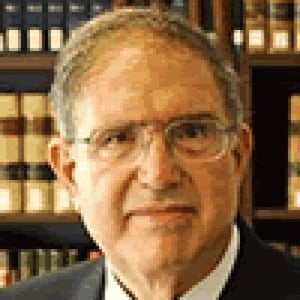
Professor of Law, George Mason University School of Law
With his work in regulatory takings and other aspects of property law, professor of law Steven Eagle plays an important role in the ongoing dialogue among American legal scholars, lawyers, and judges on the proper interpretation of property rights in the Constitution. He is the author of a leading property treatise and scholarly and popular articles and teaches in programs for judges and the practicing bar.
Professor Eagle came to George Mason in 1987 and also has taught at the law schools of Vanderbilt University, the University of Toledo, and Pace University. He earned his B.B.A. from the City College of New York (1965) and his J.D. from Yale Law School (1970). Professor Eagle teaches the first-year course, Property, Land Use Planning, and an advanced constitutional law seminar on property rights.
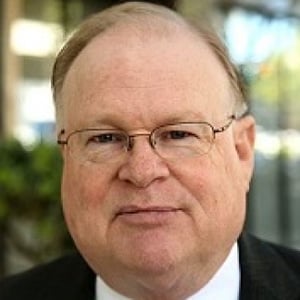
Senior Attorney, Pacific Legal Foundation
Reed Hopper is a Senior Attorney in PLF’s Environmental Law Practice Group. He oversees the Foundation’s Endangered Species Act Program that is designed to ensure that species protections are balanced with individual rights, the rule of law, and other social values. Reed also oversees PLF’s Clean Water Act Project that targets illegal federal regulation of local land and water use.
Reed has always had a strong patriotic spirit and a desire to serve his country. Before joining PLF in 1987, Reed served as an Environmental Protection Officer and Hearing Officer in the U.S. Coast Guard where he gained a love for the law. He also loves our constitutional way of life and cannot tolerate injustice. PLF affords him the opportunity to rectify unjust actions perpetrated by overreaching government. He enjoys getting up each morning to fight for a just cause.
Reed has litigated and won precedent-setting environmental and land use cases at all levels of the state and federal courts, including the U.S. Supreme Court. He has published numerous articles and testified before Congress as an expert witness.
Reed graduated from the University of California, Davis, with a Bachelors Degree in German and major work in biochemistry. He also did graduate business studies at California State University and Tulane University and earned his Juris Doctor Degree from the University of the Pacific, McGeorge School of Law.
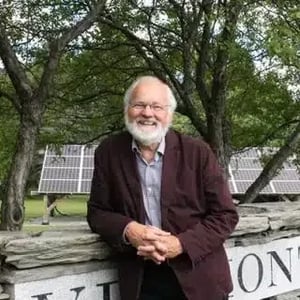
Professor of Law Emeritus; Senior Fellow for Climate Policy, Environmental Law Center, Vermont Law School
Patrick A. Parenteau is Emeritus Professor of Law and Senior Fellow for Climate Policy in the Environmental Law Center at Vermont Law School. He previously served as Director of the Environmental Law Center and was the founding director of the EAC (formerly the Environmental and Natural Resources Law Clinic) in 2004.
Professor Parenteau has an extensive background in environmental and natural resources law. His previous positions include Vice President for Conservation with the National Wildlife Federation in Washington, DC (1976-1984); Regional Counsel to the New England Regional Office of the EPA in Boston (1984-1987); Commissioner of the Vermont Department of Environmental Conservation (1987-1989); and Senior Counsel with the Perkins Coie law firm in Portland, Oregon (1989-1993).
Professor Parenteau has been involved in drafting, litigating, implementing, teaching, and writing about environmental law and policy for over three decades. His current focus is on confronting the profound challenges of climate change through his teaching, publishing, public speaking and litigation.
Professor Parenteau is a Fulbright US Scholar and a Fellow in the American College of Environmental Lawyers. In 2005 he received the National Wildlife Federation’s Conservation Achievement Award in recognition of his contributions to wildlife conservation and environmental education. In 2016 he received the Kerry Rydberg Award for excellence in public interest environmental law.
Professor Parenteau holds a B.S. from Regis University, a J.D. from Creighton University, and an LLM in Environmental Law from the George Washington U.
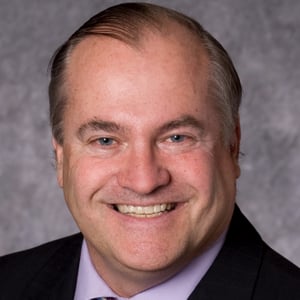
Robert F. Stanton Professor of Law, University of Maryland Carey School of Law
Robert V. Percival is the Robert F. Stanton Professor of Law and the Director of the Environmental Law Program at the University of Maryland School of Law. He received a B.A. summa cum laude from Macalester College, a J.D. from Stanford Law School and an M.A. in economics from Stanford University. At Stanford Percival was named the Nathan Abbott Scholar for graduating first in his law school class. Following graduation, he served as a law clerk for Judge Shirley M. Hufstedler of the U.S. Court of Appeals for the Ninth Circuit and for U.S. Supreme Court Justice Byron R. White. He joined the Maryland faculty in 1987 after serving as a senior attorney for the Environmental Defense Fund. Percival has served as a visiting professor of law at Harvard Law School, Georgetown University Law Center, the China University of Political Science and Law (Beijing), and Comenius University (Bratislava). He is the principal author of a leading environmental law casebook, now in its 9th edition, and the author of several articles about the Supreme Court and presidential authority over executive agencies. Percival wrote one of the first articles on the propriety of consent decrees to effectuate and enforce federal law “The Bounds of Consent: Consent Decrees, Settlements and Federal Environmental Policymaking,” 1987 Univ. Chic. Leg. F. 327 (1987). He also is the author of the first comprehensive analyses of what the papers of the late Justices Thurgood Marshall and Harry Blackmun reveal about the Supreme Court’s handling of environmental cases (“Environmental Law in the Supreme Court: Highlights from the Blackmun Papers,” 35 ELR 10637 (2005), and “Environmental Law in the Supreme Court: Highlights from the Marshall Papers,” 13 ELR 10606 (Oct. 1993)).
Tazewell Taylor Professor of Law and William H. Cabell Research Professor, William & Mary Law School
Jonathan H. Adler joined the William & Mary law faculty as the Tazwell Taylor Professor of Law and William H. Cabell Research Professor in 2025. Prior to joining the faculty, he was the inaugural Johan Verheij Memorial Professor of Law and the founding Director of the Coleman P. Burke Center for Environmental Law at the Case Western Reserve University School of Law.
Professor Adler is the author or editor of seven books, including Climate Liberalism: Perspectives on Liberty, Property and Pollution (Palgrave, 2023), Marijuana Federalism: Uncle Sam and Mary Jane (Brookings Institution Press, 2020), Business and the Roberts Court (Oxford University Press, 2016) and Rebuilding the Ark: New Perspectives on Endangered Species Act Reform (AEI Press, 2011).
His articles have appeared in publications ranging from the Harvard Environmental Law Review and Yale Journal on Regulation to the Wall Street Journal, New York Times, and Washington Post. He has testified before Congress a dozen times, and his work has been cited in the U.S. Supreme Court. A 2024 study identified Professor Adler as the seventh most cited legal academic in administrative and environmental law from 2019 to 2023.
Professor Adler is a contributing editor to Civitas Outlook and a regular contributor to the popular legal blog, The Volokh Conspiracy. A regular commentator on constitutional and regulatory issues, he has appeared on numerous radio and television programs, ranging from the PBS Newshour and National Public Radio to the Fox News Channel and Entertainment Tonight.
Professor Adler is a senior fellow at the Property & Environment Research Center in Bozeman, Montana. In 2018, Professor Adler was elected to membership in the American Law Institute and helped co-found the organization Checks and Balances. In 2024, Professor Adler was appointed a public member of the Administrative Conference of the United States.
Professor Adler clerked for the Honorable David B. Sentelle on the U.S. Court of Appeals for the District of Columbia Circuit.
Professor of Law, George Mason University School of Law
With his work in regulatory takings and other aspects of property law, professor of law Steven Eagle plays an important role in the ongoing dialogue among American legal scholars, lawyers, and judges on the proper interpretation of property rights in the Constitution. He is the author of a leading property treatise and scholarly and popular articles and teaches in programs for judges and the practicing bar.
Professor Eagle came to George Mason in 1987 and also has taught at the law schools of Vanderbilt University, the University of Toledo, and Pace University. He earned his B.B.A. from the City College of New York (1965) and his J.D. from Yale Law School (1970). Professor Eagle teaches the first-year course, Property, Land Use Planning, and an advanced constitutional law seminar on property rights.
Senior Attorney, Pacific Legal Foundation
Reed Hopper is a Senior Attorney in PLF’s Environmental Law Practice Group. He oversees the Foundation’s Endangered Species Act Program that is designed to ensure that species protections are balanced with individual rights, the rule of law, and other social values. Reed also oversees PLF’s Clean Water Act Project that targets illegal federal regulation of local land and water use.
Reed has always had a strong patriotic spirit and a desire to serve his country. Before joining PLF in 1987, Reed served as an Environmental Protection Officer and Hearing Officer in the U.S. Coast Guard where he gained a love for the law. He also loves our constitutional way of life and cannot tolerate injustice. PLF affords him the opportunity to rectify unjust actions perpetrated by overreaching government. He enjoys getting up each morning to fight for a just cause.
Reed has litigated and won precedent-setting environmental and land use cases at all levels of the state and federal courts, including the U.S. Supreme Court. He has published numerous articles and testified before Congress as an expert witness.
Reed graduated from the University of California, Davis, with a Bachelors Degree in German and major work in biochemistry. He also did graduate business studies at California State University and Tulane University and earned his Juris Doctor Degree from the University of the Pacific, McGeorge School of Law.
Professor of Law Emeritus; Senior Fellow for Climate Policy, Environmental Law Center, Vermont Law School
Patrick A. Parenteau is Emeritus Professor of Law and Senior Fellow for Climate Policy in the Environmental Law Center at Vermont Law School. He previously served as Director of the Environmental Law Center and was the founding director of the EAC (formerly the Environmental and Natural Resources Law Clinic) in 2004.
Professor Parenteau has an extensive background in environmental and natural resources law. His previous positions include Vice President for Conservation with the National Wildlife Federation in Washington, DC (1976-1984); Regional Counsel to the New England Regional Office of the EPA in Boston (1984-1987); Commissioner of the Vermont Department of Environmental Conservation (1987-1989); and Senior Counsel with the Perkins Coie law firm in Portland, Oregon (1989-1993).
Professor Parenteau has been involved in drafting, litigating, implementing, teaching, and writing about environmental law and policy for over three decades. His current focus is on confronting the profound challenges of climate change through his teaching, publishing, public speaking and litigation.
Professor Parenteau is a Fulbright US Scholar and a Fellow in the American College of Environmental Lawyers. In 2005 he received the National Wildlife Federation’s Conservation Achievement Award in recognition of his contributions to wildlife conservation and environmental education. In 2016 he received the Kerry Rydberg Award for excellence in public interest environmental law.
Professor Parenteau holds a B.S. from Regis University, a J.D. from Creighton University, and an LLM in Environmental Law from the George Washington U.
Robert F. Stanton Professor of Law, University of Maryland Carey School of Law
Robert V. Percival is the Robert F. Stanton Professor of Law and the Director of the Environmental Law Program at the University of Maryland School of Law. He received a B.A. summa cum laude from Macalester College, a J.D. from Stanford Law School and an M.A. in economics from Stanford University. At Stanford Percival was named the Nathan Abbott Scholar for graduating first in his law school class. Following graduation, he served as a law clerk for Judge Shirley M. Hufstedler of the U.S. Court of Appeals for the Ninth Circuit and for U.S. Supreme Court Justice Byron R. White. He joined the Maryland faculty in 1987 after serving as a senior attorney for the Environmental Defense Fund. Percival has served as a visiting professor of law at Harvard Law School, Georgetown University Law Center, the China University of Political Science and Law (Beijing), and Comenius University (Bratislava). He is the principal author of a leading environmental law casebook, now in its 9th edition, and the author of several articles about the Supreme Court and presidential authority over executive agencies. Percival wrote one of the first articles on the propriety of consent decrees to effectuate and enforce federal law “The Bounds of Consent: Consent Decrees, Settlements and Federal Environmental Policymaking,” 1987 Univ. Chic. Leg. F. 327 (1987). He also is the author of the first comprehensive analyses of what the papers of the late Justices Thurgood Marshall and Harry Blackmun reveal about the Supreme Court’s handling of environmental cases (“Environmental Law in the Supreme Court: Highlights from the Blackmun Papers,” 35 ELR 10637 (2005), and “Environmental Law in the Supreme Court: Highlights from the Marshall Papers,” 13 ELR 10606 (Oct. 1993)).

Laurence A. Tisch Professor of Law and Director, Classical Liberal Institute, New York University School of Law; Director, Classical Liberal Institute, Civitas Institute University of Texas at Austin
Richard A. Epstein is the Laurence A. Tisch Professor of Law, at New York University, a senior research fellow at the Civitas Institute at the University of Texas Austin, and a senior Lecturer, the University of Chicago. He received an LL.D., h.c . from the University of Ghent, 2003 , and an LLD h.c . from the University of Siegen in 2018 and the Bradley Prize in 2011. He has been a member of the American Academy of Arts and Sciences since 1985. He has edited both the Journal of Legal Studies (1981-1991) and the Journal of Law and Economics (1991-2001). He is also a founder and director of the Classical Liberal Institute at NYU Law School. His most recent book is The Classical Liberal Constitution: The Uncertain Quest for Limited Government (2014). His other books include Takings: Private Property and the Power of Eminent Domain ( 1985); Bargaining with the State (1993); Simple Rules for a Complex World (1995); Principles for a Free Society: Reconciling Individual Liberty and the Common Good (1998); Skepticism and Freedom: A Modern Theory of Classical Liberalism (2003); Design for Liberty: Private Property, Public Administration and the Rule of Law (2011), and most recently, The Myth of Birthright citizenship—and Beyond (2026). He has taught courses in , administrative law, antitrust, constitutional, contracts, environmental law, land use planning; real property, torts and water law. He has written and spoken extensively on a wide range of topics, and is writes a regular column for Defining Ideas.
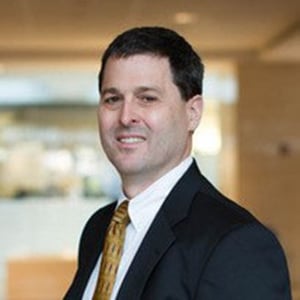
Scott K. Ginsburg Professor of Health Law & Policy, Georgetown University
David A. Hyman, M.D., J.D., is the Scott K. Ginsburg Professor of Health Law & Policy at Georgetown University. Professor Hyman focuses his research and writing on the regulation and financing of health care. He teaches or has taught health care regulation, civil procedure, insurance, medical malpractice, law & economics, professional responsibility, and tax policy.
While serving as Special Counsel to the Federal Trade Commission, Professor Hyman was principal author and project leader for the first joint report ever issued by the Federal Trade Commission and Department of Justice, “Improving Health Care: A Dose of Competition” (2004). He is also the author of Medicare Meets Mephistopheles, which was selected by the U.S. Chamber of Commerce/National Chamber Foundation as one of the top ten books of 2007, and the co-author (with Charles Silver) of Overcharged: Why Americans Pay Too Much for Health Care (2018). He has published widely in student-edited law reviews and peer-reviewed medical, health policy, law, and economics journals.
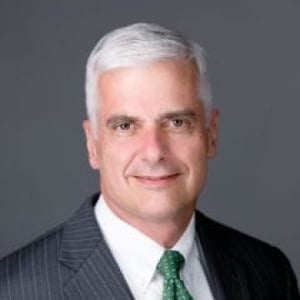
David McIntosh is a leader for the principles of limited constitutional government and individual freedom. He is president of the Club for Growth, the leading advocate for economic liberty.
Former Congressman David McIntosh represented Indiana's 2nd Congressional District in the United States Congress from 1995-2001. As a Freshman, David chaired the Subcommittee on Regulatory Relief. He passed the Congressional Review Act and held extensive oversight and field hearings to build a record of public support for regulatory relief initiatives in energy, biotechnology, pharmaceutical, healthcare, transportation and technology sectors. Another issue that he championed was the elimination of the marriage penalty in the Federal Tax Code.
David served during the Reagan administration as special assistant to Attorney General Edwin Meese III, and as special assistant to President Reagan for Domestic Affairs. During the first Bush administration, he served as executive director of the President's Council on Competitiveness and assistant to the Vice President. The Competitiveness Council coordinated the cost/benefit review of major regulations and promoted legal reform measures.
David is a co-founder of the Federalist Society for Law and Public Policy and serves on the Board of Directors. He remains active with several free market and conservative think tanks and grassroots organizations. David has also had stints at the Hudson Institute and as a Professor of Economics at Ball State School of Business.
Prior to the Club for Growth, David was a partner at Mayer Brown, LLP in Washington, DC.
David graduated from the University of Chicago Law School in 1983, and Yale University, BA, cum laude, in 1980. He and his wife, Ruthie, are the proud parents of Ellie age 17 and Davey age 13.
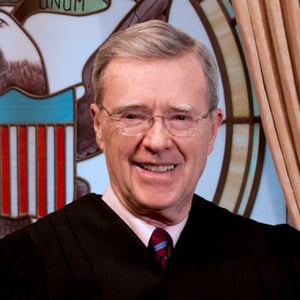
Judge, United States Court of Appeals, Ninth Circuit
Judge O’Scannlain was appointed United States Circuit Judge for the Ninth Circuit by President Reagan on September 26, 1986. He received a J.D. degree in 1963 from Harvard Law School and a B.A. in 1957 from St. John’s University. He also earned the LL.M. (Judicial Process) degree at University of Virginia Law School in 1992. He was awarded the LL.D. (honoris causa) degree by the University of Notre Dame in 2002, the LL.D. (honoris causa) degree by Lewis & Clark College in 2003 and the LL.D. (honoris causa) degree by the University of Portland in 2011.
As a judge on the U.S. Court of Appeals for the Ninth Circuit, Judge O’Scannlain has participated in over 6,000 federal cases and has written hundreds of published opinions on a broad range of subjects including constitutional law, international law, securities law, administrative law, and criminal law. He hears appeals in San Francisco (court headquarters), as well as in Los Angeles (Pasadena), Portland, Seattle, Anchorage and Honolulu. The late Chief Justice Rehnquist appointed Judge O'Scannlain to the Federal Judicial Center's Advisory Committee on Appellate Judge Education. In 2009, Chief Justice Roberts appointed Judge O’Scannlain to the International Judicial Relations Committee of the U.S. Judicial Conference and subsequently appointed him Chairman in 2010.
President George W. Bush appointed Judge O’Scannlain to the Board of Trustees of the James Madison Memorial Fellowship Foundation in 2004. Pope Benedict XVI conferred the Order of Saint Gregory the Great on Judge and Mrs. O’Scannlain in 2007.
Judge O’Scannlain’s professional interests also include judicial administration and reform, and continuing legal education. Judge O’Scannlain is former Chair of the Judicial Division of the American Bar Association and has previously chaired the ABA’s Appellate Judges Conference, its Committee on Appellate Practice, and its 9th Appellate Practice Institute. He has testified before the Senate Judiciary Committee on several occasions, the House Judiciary Subcommittee on Courts and Intellectual Property, and the Commission on Structural Alternatives for the Federal Courts of Appeals on the subject of court reorganization. In addition to serving as a faculty member at numerous federal appellate practice seminars for judges and attorneys, including New York University Law School’s Institute for Judicial Administration, Judge O’Scannlain is an Adjunct Professor at Lewis & Clark Law School where he teaches a seminar on the Supreme Court. He has served as a Moot Court Judge at distinguished law schools across the United States including Harvard, Yale Stanford, Boalt Hall (Berkeley Law), Virginia, Cornell, Notre Dame, Fordham, Alabama, University of Southern California, King Hall (U.C. Davis) and Loyola Marymount University and in China at Xiamen and Renmin Universities.
Between graduation from Harvard and investiture as a federal judge, Judge O’Scannlain was primarily engaged in private law practice. Between 1969 and 1974, he was consecutively the Deputy Attorney General of Oregon, the Public Utility Commissioner of Oregon, and Director of the Oregon Department of Environmental Quality. He retired from the U.S. Army Reserve in 1978 as a Major after 23 years Reserve and National Guard service, including four years as an enlisted man.
A first generation Irish-American son of immigrant parents from Sligo and Derry, Judge O’Scannlain is married to the former Maura Nolan and has eight children: Sean, Jane, Brendan, Kevin, Megan, Christopher, Anne, and Kate, and nineteen grandchildren. His chambers are in the Pioneer Courthouse in Portland, Oregon.

Enforcement of the Clean Water Act
Jonathan H. Adler, Steven J. Eagle, M. Reed Hopper, Patrick A. Parenteau, Robert V. Percival
In the 2006 plurality decision in Rapanos v. United States, the Supreme Court limited the...
Enforcement of the Clean Water Act
Washington, DCPanel I: Technology, Ethics & Human Dignity
2003 National Student Symposium
Notre Dame, IN2003 National Student Symposium
Law and Human Dignity
Notre Dame, IN