

Judge, United States Court of Appeals, Third Circuit
Stephanos Bibas is a judge on the U.S. Court of Appeals for the Third Circuit. Judge Bibas was previously a professor of law and criminology at the University of Pennsylvania Law School. As director of the Penn Law Supreme Court Clinic, he argued six cases before the Supreme Court of the United States and filed briefs in dozens of others. He graduated summa cum laude and Phi Beta Kappa from Columbia University in 1989 with a B.A. in political theory and from Oxford University in 1991 with a B.A. in jurisprudence. He then earned his J.D. from Yale Law School in 1994.
After graduating from Yale Law, Judge Bibas clerked for Judge Patrick Higginbotham of the U.S. Court of Appeals for the Fifth Circuit and Justice Anthony Kennedy on the Supreme Court and was a litigation associate at Covington & Burling LLP in Washington, D.C. Thereafter, Judge Bibas served as an Assistant U.S. Attorney in the Southern District of New York, where he successfully prosecuted the world’s leading expert in Tiffany stained glass for hiring a grave robber to steal priceless Tiffany windows from cemeteries. Before his tenure at Penn Law, Judge Bibas taught at the University of Chicago Law School and the University of Iowa College of Law and was a research fellow at Yale Law School. He has published two books and seventy scholarly articles.
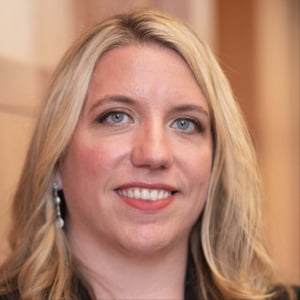
Louis D. Brandeis Professor of Law and Deputy Dean, Harvard Law School
Molly Brady is the Louis D. Brandeis Professor of Law at Harvard Law School, where she teaches property law and related subjects. Her scholarship uses historical analyses of property institutions and land use doctrines to explore broader theoretical questions. Her current research projects involve the relationship between covenants and zoning, the persistence of community knowledge in property doctrine, and the uses of history in state constitutional law. She is also an Associate Reporter for the American Law Institute’s Fourth Restatement of Property.
Previously, Professor Brady taught at the University of Virginia School of Law, where she received the 2019 UVA Student Council Distinguished Teaching Award, the 2018 Z Society Distinguished Faculty Award for “one outstanding member of the University’s faculty who has positively impacted the student body,” and an invitation to the Seven Society 27th Annual Monticello Dinner Series for “exemplary scholarship and transformative instruction of students.” Her recent article, “The Forgotten History of Metes and Bounds,” won both the Association of American Law Schools’ Scholarly Papers Prize for junior faculty members in their first five years of law teaching and the American Society for Legal History’s William Nelson Cromwell Article Prize for the year’s best paper by an early-career scholar.
Professor Brady received an AB summa cum laude in history from Harvard College, where she was elected to Phi Beta Kappa and was awarded the Harvard-Radcliffe Foundation for Women’s Athletics Prize for the top female scholar-athlete. Professor Brady then obtained her JD from Yale Law School, where she was the two-time recipient of the Parker Prize for legal history scholarship and was awarded the Quintin Johnstone Prize in Real Property Law, the Jewell Prize for an outstanding contribution to a Yale Law School journal, and the Cullen Prize for the best paper written by a first-year student. Following graduation, she served as a clerk to Judge Bruce M. Selya on the US Court of Appeals for the First Circuit and practiced at Ropes and Gray in Boston as a corporate associate focusing on intellectual property transactions. After leaving practice, she was in the first graduating class of the PhD in Law program at Yale University.
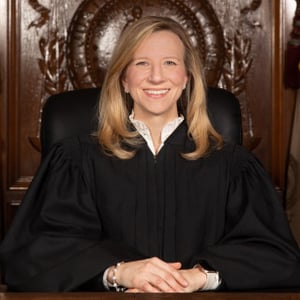
Justice, Supreme Court of Tennessee
Justice Sarah Campbell was confirmed to the Tennessee Supreme Court in 2022. She previously served as an Associate Solicitor General in the Tennessee Attorney General’s Office and as an associate at the law firm of Williams & Connolly LLP in Washington, DC. Justice Campbell earned her law degree from Duke University School of Law, a Master of Public Policy degree from Duke University, and her undergraduate degree from the University of Tennessee, where she received the Torchbearer Award. She served as a law clerk for Justice Samuel A. Alito, Jr. on the United States Supreme Court and Judge William H. Pryor Jr. on the U.S. Court of Appeals for the Eleventh Circuit.
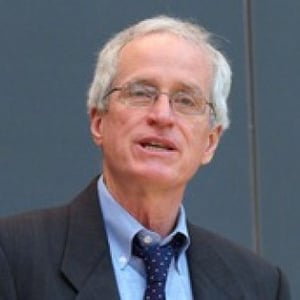
Lecturer, Harvard Law School
James E. Tierney is the former Attorney General of Maine and a Lecturer at Harvard Law School where he teaches a course on the role of state attorneys general while directing the Harvard Attorney General clinic. For thirteen years he was the Director of the National State Attorneys General Program at Columbia Law School, and he has also taught courses at Boston College Law School, Northeastern Law School and the University of Maine School of Law.
Mr. Tierney served as the Attorney General of Maine from 1980 until 1990. During his ten years as Attorney General of Maine, Mr. Tierney played an active role in the National Association of Attorneys General (NAAG) and has instructed newly elected state Attorneys General on the effective performance of their office. Mr. Tierney has also served as a Special Prosecutor in Florida, Pennsylvania, Minnesota and Vermont and, on behalf of NAAG, has authored an analysis of the operations of state grand jury practice throughout the United States. He travels regularly to visit in offices of attorney general where he conducts ethics seminars for incumbent attorneys general and their staffs.
Tierney has served on the Board of both the American Judicature Society and was a member of the Board of Commentators of the Courtroom Television Network. In April of 2006, Professor Tierney was selected as the Columbia Law School Public Interest Professor of the Year. This award, which is given to the faculty member or administrator who has most supported and inspired a significant portion of the public interest law student community, is selected by a vote of students.
Tierney is married to Maine author Elizabeth Strout. He has five children and eight grandchildren.
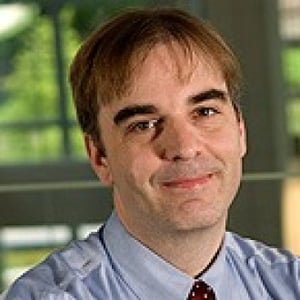
Alston & Bird Professor of Law, Duke University School of Law
Professor Young teaches constitutional law, federal courts, and foreign relations law. He is one of the nation's leading authorities on the constitutional law of federalism, having written extensively on the Rehnquist Court's "Federalist Revival" and the difficulties confronting courts as they seek to draw lines between national and state authority. He also is an active commentator on foreign relations law, where he focuses on the interaction between domestic and supranational courts and the application of international law by domestic courts. Professor Young also writes on constitutional interpretation and constitutional theory. He has been known to dabble in maritime law and comparative constitutional law.
A native of Abilene, Texas, Professor Young joined the Duke Law faculty in 2008, after serving as the Charles Alan Wright Chair in Federal Courts at the University of Texas at Austin School of Law, where he had taught since 1999. He graduated from Dartmouth College in 1990 and Harvard Law School in 1993. After law school, he served as a law clerk to Judge Michael Boudin of the 1st U.S. Circuit Court of Appeals (1993-94) and to Justice David Souter of the U.S. Supreme Court (1995-96). Professor Young practiced law at Cohan, Simpson, Cowlishaw, & Wulff in Dallas, Texas (1994-95) and at Covington & Burling in Washington, D.C. (1996-98), where he specialized in appellate litigation. He has also been a visiting professor at Harvard Law School (2004-05) and Villanova University School of Law (1998-99), as well as an adjunct professor at Georgetown University Law Center (1997).
Elected to the American Law Institute in 2006, Professor Young is an active participant in both public and private litigation in his areas of interest. He has been the principal author of amicus briefs on behalf of leading constitutional scholars in several recent Supreme Court cases, including Medellin v. Texas(concerning presidential power and the authority of the International Court of Justice over domestic courts) and Gonzales v. Raich (concerning federal power to regulate medical marijuana).
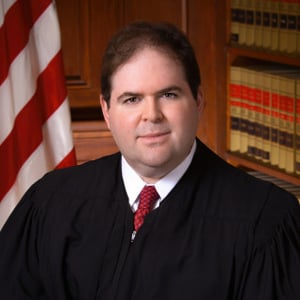
Judge, United States Court of Appeals, Eleventh Circuit
On November 19, 2019, Judge Robert J. Luck was appointed to the United States Court of Appeals for the Eleventh Circuit by President Donald Trump. Prior to serving on the federal bench, he was appointed to the Florida Supreme Court by Governor Ron DeSantis on January 14, 2019. He previously served on the Third District Court of Appeal in Miami after his appointment there by Governor Rick Scott in March 2017.
Earlier, Judge Luck served on the Eleventh Judicial Circuit Court of Florida from September 2013 to March 2017. He presided in the Criminal, Civil, and Appellate Divisions. Judge Luck, in his years as a trial court judge, tried seventy jury trials, and heard dozens of appeals from the county court and municipal agencies. Judge Luck was appointed to the circuit court in 2013 and was elected by the voters of Miami-Dade County to retain his seat in 2016.
Prior to his service on the bench, Judge Luck was an Assistant United States Attorney for the Southern District of Florida. In his years as a federal prosecutor, he was assigned to the Appeals, Major Crimes, and Economic Crimes Sections of the U.S. Attorney’s Office. Judge Luck tried nineteen jury trials before the federal district court and argued three appeals to the United States Court of Appeals for the Eleventh Circuit. In his final year in the Office, he was a Deputy Chief in the Major Crimes Section.
Earlier in his career, Judge Luck was a legislative correspondent for two United States Senators, a law clerk and staff attorney to Circuit Judge Edward E. Carnes on the United States Court of Appeals for the Eleventh Circuit, and a part of the Greenberg Traurig firm’s appellate section. Judge Luck received his Juris Doctor from the University of Florida Levin College of Law magna cum laude and was asked to join the Order of the Coif. Judge Luck also served as Editor-in-Chief of the Florida Law Review. Judge Luck received his Bachelor of Arts in Economics from the University of Florida with highest honors.
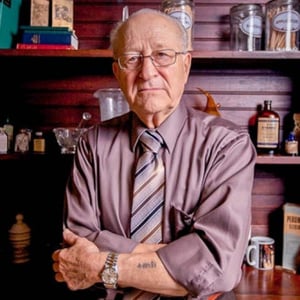
Director, Holocaust Resource Center at the Temple Judea of Manhasset, New York
IRVING ROTH is the Director of the Holocaust Resource Center at the Temple Judea of Manhasset, New York, and is the former education director of the Holocaust Memorial and Education Center of Nassau County. An internationally known educator, Mr. Roth has endeavored to teach people about the Holocaust and the lessons that can be learned from that experience. Through his participation in programs such as Adopt A Survivor, in which young people ‘adopt’ a Holocaust survivor and learn of his or her experiences, and the March of the Living, Mr. Roth has worked to ensure that an atrocity like the Holocaust never happens again. Many people throughout his community owe their knowledge of the Holocaust to Mr. Roth. Mr. Roth has been the recipient of numerous awards and accolades for his work promoting a more accepting and diverse world. It is his life’s mission to make the world a better place that has earned Mr. Roth the Spirit of Anne Frank Award.
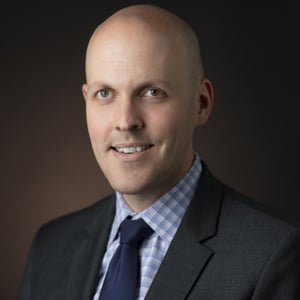
Partner, Barr & Klein PLLC
Steve Klein, a partner at Barr & Klein PLLC, is an experienced free speech attorney who has successfully fought for the First Amendment rights of his clients against local, state and federal regulators. As a lobbyist, Steve’s advocacy has led to the successful amendment of state laws to respect political engagement and prevented the enactment of laws that burden it. Steve has published articles in several legal journals, and his commentary has appeared in The Wall Street Journal, The Washington Times, The Detroit News, and other outlets. Steve earned a bachelors degree in politics at Hillsdale College and a law degree from Ave Maria School of Law, where he served as Managing Editor of the Ave Maria Law Review. He is licensed to practice law in the District of Columbia, Illinois and Michigan.
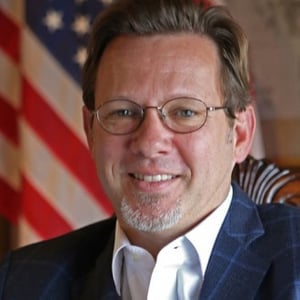
Chairman and Partner, Earth & Water Law Group
Earth & Water Group Founder, Brent Fewell, has over 25 years of experience in public policy, advocacy, and environmental law.
As an environmental lawyer and former corporate executive and senior U.S. EPA official in EPA’s Offices of Water and Congressional and Intergovernmental Relations, Brent brings a wealth of knowledge and unique perspective to his clients in navigating the regulatory and political arenas in Washington DC. As a highly regarded thought leader on environmental policy and governance matters, his counsel and opinions are sought out by corporate and government leaders around the globe. Brent brings unparalleled energy and passion to the issues in a way that few do to help his clients navigate in an increasingly complex and nuanced regulatory environment.
Brent received his B.S. in Wildlife Management from the University of Maine (high distinction), a Masters in Environmental Management from Duke University, and J.D. from Duquesne University School of Law. (Licensed in PA and DC)

Partner, Clement & Murphy, PLLC
Paul served as the 43rd Solicitor General of the United States from June 2005 until June 2008. Before his confirmation as Solicitor General, he served as Acting Solicitor General for nearly a year and as Principal Deputy Solicitor General for over three years.
Paul has argued over 100 cases before the United States Supreme Court, including McConnell v. FEC, Tennessee v. Lane, United States v. Booker, MGM v. Grokster, Hobby Lobby v. Burwell, Epic Systems Corp. v. Lewis, Rucho v. Common Cause, Facebook v. Duguid, and TransUnion v. Ramirez. Paul has argued more Supreme Court cases since 2000 than any lawyer in or out of government. He has also argued many important cases in the lower courts, including Walker v. Cheney, United States v. Moussaoui and NFL v. Brady.
Paul’s practice focuses on appellate matters, constitutional litigation and strategic counseling. He represents a broad array of clients in the Supreme Court and in federal and state appellate courts. Last year, for example, he successfully argued Supreme Court cases involving significant issues of energy regulation, statutory interpretation, state sovereign immunity and Article III standing, and successfully argued a trademark appeal in the Fourth Circuit, and a constitutional appeal before the en banc Eleventh Circuit.
Paul focuses on high-stakes appeals. In recent years, he successfully defended a $1.2 billion jury verdict for clients in a Tenth Circuit case, while securing the reversal of an over $2 billion jury verdict for another client in the Seventh Circuit and the approval of a nearly $1 billion dollar class action settlement in the Third Circuit. He has initiated major administrative law challenges and constitutional litigation against the federal government, such as the successful challenge to the HHS drug-pricing rule and threatened challenges that led to the withdrawal of the Treasury Department’s proposed cryptocurrency regulations. He also counsels clients on a variety of strategic legal questions, whether arising from pending legislation, government inquiries or ongoing litigation.
Paul has undertaken substantial pro bono engagements in the Supreme Court, such as twice successfully representing the defendant in Bond v. United States and successfully representing the Omaha Tribe in Nebraska v. Parker, the guardian ad litem in Adoptive Couple v. Baby Girl, the defendant in Sekhar v. United States, a high school football coach in Kennedy v. Bremerton, and the Little Sisters of the Poor. Paul’s pro bono representation also precipitated the federal government’s confession of error in United States v. Rojas.
Following law school, Paul clerked for Judge Laurence H. Silberman of the U.S. Court of Appeals for the D.C. Circuit and for Associate Justice Antonin Scalia of the U.S. Supreme Court. After his clerkships, he went on to serve as Chief Counsel of the U.S. Senate Subcommittee on the Constitution, Federalism and Property Rights.
Paul is a Distinguished Lecturer in Law at the Georgetown University Law Center, where he has taught in various capacities since 1998. He also serves as a Senior Fellow of the Law Center’s Supreme Court Institute. He is the Justice Joseph Story Distinguished Practitioner in Residence at the Gray Center at Scalia Law School.

Panel I: Federalism and the Separation of Powers
Stephanos Bibas, Maureen Brady, Sarah Keeton Campbell, James E. Tierney, Ernest Young
It has been said that American-style split sovereignty provides the people a “double security” for...
Address by Irving Roth
Robert J. Luck, Irving Roth
On January 31-February 1, 2020, The Federalist Society's Florida lawyers chapters hosted their annual Florida...
Topics
SCOTUS Declares That the PTO Is Not A Safe Space
Yesterday, the U.S. Supreme Court released its opinion, Matal v. Tam, previously known as Lee...
Bailey v. Maine Commission on Governmental Ethics: Another Step Toward the End of Political Privacy
Stephen R. Klein
Note from the Editor: This article discusses the Bailey v. Maine Commission on Governmental Ethics...
Federal Regulation of Water Transfers
Steve McKinney, James Nutt, Gil Rogers, Brent A. Fewell
Traditionally, water has been abundant in the Eastern United States, and water transfers from one...
A Supreme Court Preview: What's on Tap for the 2006-07 Term - Event Audio
Paul D. Clement
United States Solicitor General Paul D. Clement gave a preview of the 2006-07 term of...