
Warren Distinguished Professor of Law, University of San Diego School of Law
B.A. 1965, Williams College
LL.B. 1968, Yale University
Professor of Law, University of Colorado Law School
Paul Campos left a position with a Chicago law firm to begin his teaching career at Colorado Law School in 1990. As a scholar, he has focused on constitutional law and legal theory. His graduate studies in English literature, which culminated in a thesis on Shakespeare's King Lear, provided him with rigorous training in literary theory that has been helpful in his current work in constitutional interpretation. He has written several well-regarded law review articles in this area, including "Against Constitutional Theory," published in the Yale Journal of Law and Humanities, and "Advocacy in Scholarship," published in the California Law Review. Both of these articles have been noted as major critiques of the political and normative orientation of current constitutional theory. Professor Campos' regular column for the Rocky Mountain News (distributed by the Scripps Howard News Service), written for a general audience on political, social, and legal issues, has developed a considerable following. A packed house, drawn by his provocative take on a wide range of topics, attended his presentation of the 27th Annual Austin W. Scott, Jr. Lecture entitled "The Obesity Myth & The Lewinsky Scandal," which was based on his latest book project. His second book, Jurismania: The Madness of American Law, critiques the American legal system. Professor Campos also served as the first director of CU law school's Byron R. White Center for the Study of American Constitutional Law.
Wallace Stevens Professor of Law Emeritus, Oliver Ellsworth Research Professor, University of Connecticut
David McIntosh is a leader for the principles of limited constitutional government and individual freedom. He is president of the Club for Growth, the leading advocate for economic liberty.
Former Congressman David McIntosh represented Indiana's 2nd Congressional District in the United States Congress from 1995-2001. As a Freshman, David chaired the Subcommittee on Regulatory Relief. He passed the Congressional Review Act and held extensive oversight and field hearings to build a record of public support for regulatory relief initiatives in energy, biotechnology, pharmaceutical, healthcare, transportation and technology sectors. Another issue that he championed was the elimination of the marriage penalty in the Federal Tax Code.
David served during the Reagan administration as special assistant to Attorney General Edwin Meese III, and as special assistant to President Reagan for Domestic Affairs. During the first Bush administration, he served as executive director of the President's Council on Competitiveness and assistant to the Vice President. The Competitiveness Council coordinated the cost/benefit review of major regulations and promoted legal reform measures.
David is a co-founder of the Federalist Society for Law and Public Policy and serves on the Board of Directors. He remains active with several free market and conservative think tanks and grassroots organizations. David has also had stints at the Hudson Institute and as a Professor of Economics at Ball State School of Business.
Prior to the Club for Growth, David was a partner at Mayer Brown, LLP in Washington, DC.
David graduated from the University of Chicago Law School in 1983, and Yale University, BA, cum laude, in 1980. He and his wife, Ruthie, are the proud parents of Ellie age 17 and Davey age 13.
David and Mary Harrison Distinguished Professor of Law, University of Virginia School of Law
Frederick Schauer is David and Mary Harrison Distinguished Professor of Law at the University of Virginia, and previously was Frank Stanton Professor of the First Amendment at Harvard University. A Fellow of the American Academy of Arts and Sciences and recipient of a Guggenheim Fellowship, Schauer is the author of The Law of Obscenity (BNA, 1976), Free Speech: A Philosophical Enquiry (Cambridge, 1982), Playing By the Rules: A Philosophical Examination of Rule-Based Decision-Making in Law and in Life (Oxford, 1991), Profiles, Probabilities, and Stereotypes (Harvard, 2003), Thinking Like a Lawyer: A New Introduction to Legal Reasoning (Harvard, 2009), and The Force of Law (Harvard, 2015). The editor of Karl Llewellyn, The Theory of Rules (Chicago, 2011), and a founding editor of Legal Theory, he has chaired the Section on Constitutional Law of the Association of American Law Schools and the Committee on Philosophy and Law of the American Philosophical Association. In 2005 he wrote the Foreword to the Harvard Law Review’s Supreme Court issue, and has written widely on freedom of speech, constitutional interpretation, evidence, legal reasoning, and the philosophy of law.
Warren Distinguished Professor of Law, University of San Diego School of Law
B.A. 1965, Williams College
LL.B. 1968, Yale University
Professor of Law, University of Colorado Law School
Paul Campos left a position with a Chicago law firm to begin his teaching career at Colorado Law School in 1990. As a scholar, he has focused on constitutional law and legal theory. His graduate studies in English literature, which culminated in a thesis on Shakespeare's King Lear, provided him with rigorous training in literary theory that has been helpful in his current work in constitutional interpretation. He has written several well-regarded law review articles in this area, including "Against Constitutional Theory," published in the Yale Journal of Law and Humanities, and "Advocacy in Scholarship," published in the California Law Review. Both of these articles have been noted as major critiques of the political and normative orientation of current constitutional theory. Professor Campos' regular column for the Rocky Mountain News (distributed by the Scripps Howard News Service), written for a general audience on political, social, and legal issues, has developed a considerable following. A packed house, drawn by his provocative take on a wide range of topics, attended his presentation of the 27th Annual Austin W. Scott, Jr. Lecture entitled "The Obesity Myth & The Lewinsky Scandal," which was based on his latest book project. His second book, Jurismania: The Madness of American Law, critiques the American legal system. Professor Campos also served as the first director of CU law school's Byron R. White Center for the Study of American Constitutional Law.
Wallace Stevens Professor of Law Emeritus, Oliver Ellsworth Research Professor, University of Connecticut
David McIntosh is a leader for the principles of limited constitutional government and individual freedom. He is president of the Club for Growth, the leading advocate for economic liberty.
Former Congressman David McIntosh represented Indiana's 2nd Congressional District in the United States Congress from 1995-2001. As a Freshman, David chaired the Subcommittee on Regulatory Relief. He passed the Congressional Review Act and held extensive oversight and field hearings to build a record of public support for regulatory relief initiatives in energy, biotechnology, pharmaceutical, healthcare, transportation and technology sectors. Another issue that he championed was the elimination of the marriage penalty in the Federal Tax Code.
David served during the Reagan administration as special assistant to Attorney General Edwin Meese III, and as special assistant to President Reagan for Domestic Affairs. During the first Bush administration, he served as executive director of the President's Council on Competitiveness and assistant to the Vice President. The Competitiveness Council coordinated the cost/benefit review of major regulations and promoted legal reform measures.
David is a co-founder of the Federalist Society for Law and Public Policy and serves on the Board of Directors. He remains active with several free market and conservative think tanks and grassroots organizations. David has also had stints at the Hudson Institute and as a Professor of Economics at Ball State School of Business.
Prior to the Club for Growth, David was a partner at Mayer Brown, LLP in Washington, DC.
David graduated from the University of Chicago Law School in 1983, and Yale University, BA, cum laude, in 1980. He and his wife, Ruthie, are the proud parents of Ellie age 17 and Davey age 13.
David and Mary Harrison Distinguished Professor of Law, University of Virginia School of Law
Frederick Schauer is David and Mary Harrison Distinguished Professor of Law at the University of Virginia, and previously was Frank Stanton Professor of the First Amendment at Harvard University. A Fellow of the American Academy of Arts and Sciences and recipient of a Guggenheim Fellowship, Schauer is the author of The Law of Obscenity (BNA, 1976), Free Speech: A Philosophical Enquiry (Cambridge, 1982), Playing By the Rules: A Philosophical Examination of Rule-Based Decision-Making in Law and in Life (Oxford, 1991), Profiles, Probabilities, and Stereotypes (Harvard, 2003), Thinking Like a Lawyer: A New Introduction to Legal Reasoning (Harvard, 2009), and The Force of Law (Harvard, 2015). The editor of Karl Llewellyn, The Theory of Rules (Chicago, 2011), and a founding editor of Legal Theory, he has chaired the Section on Constitutional Law of the Association of American Law Schools and the Committee on Philosophy and Law of the American Philosophical Association. In 2005 he wrote the Foreword to the Harvard Law Review’s Supreme Court issue, and has written widely on freedom of speech, constitutional interpretation, evidence, legal reasoning, and the philosophy of law.
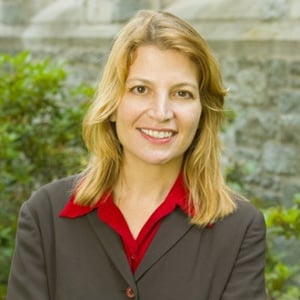
Wallace Stevens Professor of Law, University of Connecticut School of Law
Professor Bethany Berger is a widely read scholar of Property Law and Legal History and one of the leading federal Indian Law scholars in the country. She is a co-author and member of the Editorial Board of Felix S. Cohen's Handbook of Federal Indian Law, the foundational treatise in the field, and co-author of leading casebooks in both Property Law and American Indian Law. Her articles have appeared in the Michigan Law Review, California Law Review, UCLA Law Review, and the Duke Law Journal, among other publications, and have been excerpted and discussed in many casebooks and edited collections as well as in briefs to the Supreme Court and testimony before Congress.
Professor Berger graduated with honors from Wesleyan University, where she was elected to phi beta kappa, and from Yale Law School. After law school, Professor Berger went to the Navajo and Hopi Nations to serve as the Director of the Native American Youth Law Project of DNA-People's Legal Services. There, she conducted litigation challenging discrimination against Indian children, drafted and secured the passage of tribal laws affecting children, and helped to create a Navajo alternative to detention program. She then became Managing Attorney of Advocates for Children of New York, where she worked on impact litigation and policy reform concerning the rights of children in public education.
At the University of Connecticut School of Law, Professor Berger teaches American Indian Law, Property, Tribal Law, and Conflict of Laws. She is also the Wallace Stevens Professor of Law, a chair named for one of America’s greatest poets, a lawyer who lived and worked in Hartford for most of his life. She has served as a judge for the Southwest Intertribal Court of Appeals and as a visiting professor at Harvard Law School and the University of Michigan Law School.
Wallace Stevens Professor of Law, University of Connecticut School of Law
Professor Bethany Berger is a widely read scholar of Property Law and Legal History and one of the leading federal Indian Law scholars in the country. She is a co-author and member of the Editorial Board of Felix S. Cohen's Handbook of Federal Indian Law, the foundational treatise in the field, and co-author of leading casebooks in both Property Law and American Indian Law. Her articles have appeared in the Michigan Law Review, California Law Review, UCLA Law Review, and the Duke Law Journal, among other publications, and have been excerpted and discussed in many casebooks and edited collections as well as in briefs to the Supreme Court and testimony before Congress.
Professor Berger graduated with honors from Wesleyan University, where she was elected to phi beta kappa, and from Yale Law School. After law school, Professor Berger went to the Navajo and Hopi Nations to serve as the Director of the Native American Youth Law Project of DNA-People's Legal Services. There, she conducted litigation challenging discrimination against Indian children, drafted and secured the passage of tribal laws affecting children, and helped to create a Navajo alternative to detention program. She then became Managing Attorney of Advocates for Children of New York, where she worked on impact litigation and policy reform concerning the rights of children in public education.
At the University of Connecticut School of Law, Professor Berger teaches American Indian Law, Property, Tribal Law, and Conflict of Laws. She is also the Wallace Stevens Professor of Law, a chair named for one of America’s greatest poets, a lawyer who lived and worked in Hartford for most of his life. She has served as a judge for the Southwest Intertribal Court of Appeals and as a visiting professor at Harvard Law School and the University of Michigan Law School.
*Russell W. Hasan is a New York attorney. He is a graduate of Vassar College and an Honors graduate of the University of Connecticut School of Law. He writes for Liberty Magazine and also maintains a website of libertarian informationalresources. He welcomes emails at russhasan@gmail.com and he tweets at@RussHasan
Wallace Stevens Professor of Law, University of Connecticut School of Law
Professor Bethany Berger is a widely read scholar of Property Law and Legal History and one of the leading federal Indian Law scholars in the country. She is a co-author and member of the Editorial Board of Felix S. Cohen's Handbook of Federal Indian Law, the foundational treatise in the field, and co-author of leading casebooks in both Property Law and American Indian Law. Her articles have appeared in the Michigan Law Review, California Law Review, UCLA Law Review, and the Duke Law Journal, among other publications, and have been excerpted and discussed in many casebooks and edited collections as well as in briefs to the Supreme Court and testimony before Congress.
Professor Berger graduated with honors from Wesleyan University, where she was elected to phi beta kappa, and from Yale Law School. After law school, Professor Berger went to the Navajo and Hopi Nations to serve as the Director of the Native American Youth Law Project of DNA-People's Legal Services. There, she conducted litigation challenging discrimination against Indian children, drafted and secured the passage of tribal laws affecting children, and helped to create a Navajo alternative to detention program. She then became Managing Attorney of Advocates for Children of New York, where she worked on impact litigation and policy reform concerning the rights of children in public education.
At the University of Connecticut School of Law, Professor Berger teaches American Indian Law, Property, Tribal Law, and Conflict of Laws. She is also the Wallace Stevens Professor of Law, a chair named for one of America’s greatest poets, a lawyer who lived and worked in Hartford for most of his life. She has served as a judge for the Southwest Intertribal Court of Appeals and as a visiting professor at Harvard Law School and the University of Michigan Law School.
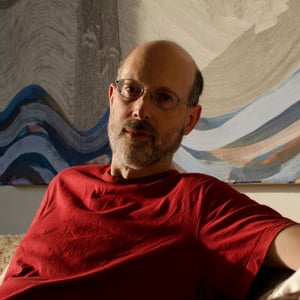
Maurice and Hilda Friedman Professor of Law, Columbia Law School; CEO, New Civil Liberties Alliance
Philip Hamburger is the Maurice and Hilda Friedman Professor of Law at Columbia Law School, and Chief Executive Officer at the New Civil Liberties Alliance. Before coming to Columbia, he was the John P. Wilson Professor at the University of Chicago Law School.
He writes on constitutional law and its history—with particular emphasis on religious liberty, freedom of speech and the press, judicial office, administrative power, and unconstitutional conditions.
His books are Separation of Church and State (Harvard 2002), Law and Judicial Duty (Harvard 2008), Is Administrative Law Unlawful? (Chicago 2014), The Administrative Threat (Encounter 2017), and Liberal Suppression: Section 501(c)(3) and the Taxation of Speech (Chicago 2018). A forthcoming book is Purchasing Submission: Conditions, Power, and Freedom (Harvard 2021).
He is a member of the American Academy of Arts and Sciences, and he has served on the board of directors of the American Society for Legal History. He has twice received the Sutherland Prize for the most significant contribution to English legal history, and has been awarded the Henry Paolucci - Walter Bagehot Book Award, the Hayek Book Prize, and the Bradley Prize.
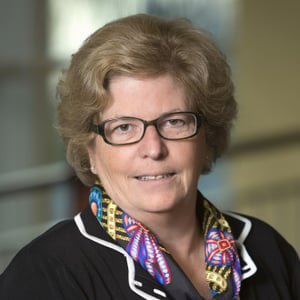
Former Managing Director, BlackRock Inc.
Joanne Medero was until July 2020 a Managing Director at BlackRock where she was member of their Global Public Policy Group and a Senior Advisor to the Vice Chairman on the intersection of public policy and corporate governance. In June 2021, Ms. Medero was appointed a director/trustee of the Nuveen Funds.
Ms. Medero's service with BlackRock dates back to 1996, including her years with Barclays Global Investors (BGI), which merged with BlackRock in 2009. She joined BGI as its Global General Counsel in 1996 and after more than ten years in that role, became the global head of Government Relations and Public Policy for Barclays’ investment banking and investment management businesses. Prior to joining BGI, Ms. Medero was a partner with Orrick, Herrington and Sutcliffe specializing in derivatives and market regulation issues. Ms. Medero also served as general counsel of the Commodity Futures Trading Commission (1989-1993) and as an associate director for legal and financial affairs at the Office of Presidential Personnel, The White House (1986-1989).
Ms. Medero is a graduate of St. Lawrence University and received her JD from George Washington University.
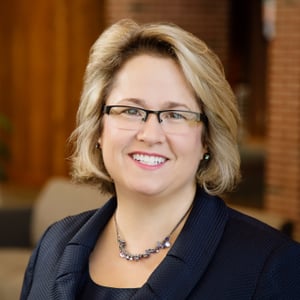
Professor, University of Illinois College of Law
Robin Fretwell Wilson is the Mildred Van Voorhis Jones Chair in Law at the University of Illinois College of Law.
A scholar in family law, bioethics and law and religion, Professor Wilson has worked extensively on behalf of state and federal law reform efforts in each realm.
Across two decades, she has worked to secure laws protecting the autonomy of patients to decide when they will be used to teach intimate exams to medical students, laws now in place in 22 states—sixteen of which have been enacted since 2019.
Professor Wilson is known for bridging differences in the culture war. In 2015, she spent a month in residence with the Utah legislature, helping Utah state lawmakers to pass anti-discrimination legislation that balances religious liberty and LGBT rights. In 2019, Professor Wilson assisted the governor of Utah to craft regulations banning gay conversion therapy. In 2019, she also aided U.S. Representative Chris Stewart with portions of the “Fairness for All” he introduced in Congress. A member of the American Law Institute and a Fulbright Specialist, Professor Wilson has served as a consultant to the United Arab Emirates’ Judicial Department as they sought to create a parallel court system for the adjudication by expatriates of family law matters using the laws of their home country or of their faith traditions.
Professor Wilson is the author of 20 books, including her 2018 book, Religious Freedom, LGBT Rights, and the Prospects for Common Ground, with Yale University Professor William Eskridge, Jr., which is now in paperback at Cambridge University Press. Her other books include: The Contested Place of Religion in Family Law (Cambridge University Press, 2018, ed.), Reconceiving the Family: Critical Reflections on the American Law Institute’s Principles of the Law of Family Dissolution (Cambridge University Press, 2006, ed.); The Handbook of Children, Culture & Violence (Sage Publications, 2006, with Nancy Dowd and Dorothy Singer, eds.); Same-Sex Marriage and Religious Liberty: Emerging Conflicts (Rowman & Littlefield, 2008, with Douglas Laycock and Anthony Picarello, eds.); Health Law and Bioethics: Cases in Context (Aspen, 2008, with Joan Krause, Sandra Johnson, and Richard Saver, eds.); Domestic Relations: Cases and Materials, 8th edition (Foundation Press, 2017, with Walter Wadlington and Raymond C. O’Brien); and Understanding Family Law, 4th edition (LexisNexis, 2013, with John DeWitt Gregory and Peter N. Swisher). Her articles have appeared in the Boston College Law Review, Cornell Law Review, Emory Law Journal, Illinois Law Review, North Carolina Law Review, San Diego Law Review, U.C. Davis Law Review, and Washington and Lee Law Review, as well as in numerous peer-reviewed journals.
In 2010 and again in 2016, Professor Wilson was ranked among the Top Ten Family Law Scholars in the United States for scholarly impact. She ranks among the Top 10% of Authors in all time downloads on the Social Science Research Network. Professor Wilson’s scholarship has been cited by the Fifth, Seventh and Tenth Circuit Court of Appeals, the Minnesota Court of Appeals, lower federal courts, and the Supreme Courts of Delaware, Illinois, Iowa, and Washington.
Professor Wilson’s work has been featured in the New York Times, Wall Street Journal, National Public Radio’s All Things Considered, Washington Post, Los Angeles Times, The Atlantic Monthly, U.S. News and World Report, ABA Journal, Chronicle of Higher Education, Chicago Tribune, CNN Headline News, Good Morning America, ABC News, CBS News, Philadelphia Inquirer, Essence Magazine, The American Prospect, People Magazine, The American Conservative, The Australian, and Al Jazeera, among others. She has presented her research across the world, including the United Nations in Geneva, Switzerland, as well as in Argentina, Brazil, Peru, Chile, China, Israel, Qatar, the Netherlands, Italy, England, Wales, Poland, Spain, Serbia, Japan, Canada, Norway, Denmark, Australia, New Zealand, South Africa, Turkey, and France.
Professor Wilson has seven times been honored for her work on innovative laws that respect all persons. In 2007, she received the Citizen’s Legislative Award for her work on changing Virginia’s informed consent law. In 2018, Professor Wilson received the Thomas L. Kane Religious Freedom Award from the J. Reuben Clark Law Society, which is presented annually to an individual who exemplifies the spirit of religious liberty for all and who has contributed in significant ways to the defense of religious freedom in the public square.
In 2018, Professor Wilson was honored as one of the 150 for 150: Celebrating the Accomplishments of Women at the University of Illinois at Urbana-Champaign for its sesquicentennial celebration. In 2020, Professor Wilson received the 2020 Larine Y. Cowan Make a Difference Award for Advocacy for LGBTQ Affairs, a university-wide honor given by the Office of Diversity, Equity and Inclusion at the University of Illinois at Urbana-Champaign.

Panel III: What is Originalism? [Archive Collection]
Lawrence Alexander, Paul Campos, Richard S. Kay, David M. McIntosh, Frederick Schauer
On April 7-9, 1995, the Federalist Society held its fourteenth annual National Student Symposium at...
Panel III: What is Originalism? [Archive Collection]
Lawrence Alexander, Paul Campos, Richard S. Kay, David M. McIntosh, Frederick Schauer
On April 7-9, 1995, the Federalist Society held its fourteenth annual National Student Symposium at...
Deep Dive Episode 59 – Cedar Point Nursery v. Shiroma
Bethany Berger
On May 8, 2019, the Ninth Circuit issued a 2-1 decision in Cedar Point Nursery...
Litigation Update: Cedar Point Nursery v. Shiroma
Bethany Berger
On May 8, 2019, the Ninth Circuit issued a 2-1 decision in Cedar Point Nursery...
Litigation Update: Cedar Point Nursery v. Shiroma
TeleforumMeet and Greet -- CANCELED
Hartford, ConnecticutAlways Right: Reflections on Justice Antonin Scalia
Hartford, ConnecticutReining in the Administrative State
Palo Alto, CaliforniaWinning the Copyright War: Copyright’s Merger Doctrine and Natural Rights Theory as Solutions to the Problem of Reconciling Copyright and Free Speech
Russell Hasan
I. Introduction A. Overview Concerns that the enforcement of copyright law might conflict with First...
Same-Sex Marriage and Religious Liberty: Emerging Conflicts, What Resolutions?
Hartford, Connecticut