
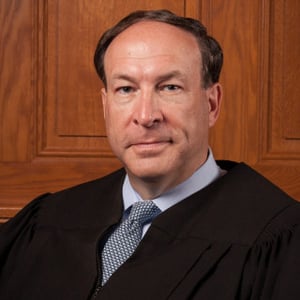
Judge, United States Court of Appeals, Seventh Circuit
Michael B. Brennan was confirmed and sworn in as a Circuit Judge for the U.S. Court of Appeals for the Seventh Circuit in May 2018.
He previously worked as a partner in the Milwaukee law firm of Gass Weber Mullins LLC, where he tried cases and handled appeals in federal and state courts, as a judge on the Milwaukee County Circuit, where he presided over a variety of criminal and civil calendars, and as an assistant district attorney in the Milwaukee County District Attorney’s office.
Brennan’s undergraduate degree is from the University of Notre Dame, and his law degree from Northwestern University School of Law, where he was an editor on the law review and the moot court champion. He served as a law clerk on the U.S. District Court for the Eastern District of Wisconsin and the U.S. Court of Appeals for the Seventh Circuit.

Professor of Law, Antonin Scalia Law School, George Mason University
Professor of Law Michael S. Greve joined the faculty of the Antonin Scalia Law School, George Mason University in fall 2012 after having served as John G. Searle Scholar at the American Enterprise Institute (AEI), where he specialized in constitutional law, courts, and business regulation and served as chairman of the Competitive Enterprise Institute. Prior to joining AEI, Greve was founder and co-director of the Center for Individual Rights, a public interest law firm specializing in constitutional litigation.
Greve has served previously as an adjunct professor at a number of universities, including Cornell and Johns Hopkins Universities, and has been a visiting professor at Boston College since 2004. He was awarded a PhD and an MA in government by Cornell University. Greve also earned a Diploma from the University of Hamburg in Germany.
A prolific writer, Greve is the author of nine books and a multitude of articles appearing in scholarly publications, as well as numerous editorials, short articles, and book reviews. He is a frequent speaker for professional and scholarly organizations and has made many appearances on radio and television.
In addition Greve has provided congressional and state legislative testimony, has lobbied and consulted in federal agency proceedings, and has provided litigation services and management in over 30 cases, including matters before the U.S. Supreme Court.
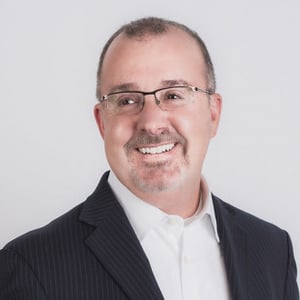
Chair, International Trade & National Security Practice Group, Buchanan Ingersoll & Rooney
Mr. Pickard counsels U.S. and international clients on the laws and regulations governing international trade, with particular emphasis on import remedy, anti-bribery, national security, and export control issues. He represents and advises clients in matters related to trade remedy investigations (including antidumping, countervailing duty, and safeguard cases), U.S. economic sanctions, export controls, anti-boycott measures, and the Foreign Corrupt Practices Act (FCPA). Mr. Pickard provides comprehensive international trade law compliance guidance, including assessing and resolving sensitive national security matters; developing corporate compliance programs; establishing compliance with the National Industrial Security Program (NISP) and mitigating Foreign Ownership, Control, or Influence (FOCI) issues; conducting internal investigations relating to potential violations; and appearing before the relevant agencies in connection with investigations, licensing, and enforcement actions. He also teams with the firm’s Election Law & Government Ethics Group to provide guidance pertaining to the Foreign Agents Registration Act (FARA).
Mr. Pickard represents clients before the U.S. International Trade Commission (ITC), the U.S. Department of the Treasury’s Office of Foreign Assets Control (OFAC), the U.S. Department of Justice (DOJ), the U.S. Department of State’s Directorate of Defense Trade Controls (DDTC), the U.S. Department of Commerce’s Bureau of Industry and Security (BIS) and International Trade Administration (ITA), the U.S. Department of Defense’s Defense Security Service (DSS), the Committee on Foreign Investment in the United States (CFIUS), the U.S. Court of International Trade, and the U.S. Court of Appeals for the Federal Circuit.

Stevenson Bernard Professor, George Washington University Law School
The Honorable F. Scott Kieff is the Stevenson Bernard Professor at George Washington University Law School and a Visiting Fellow at Stanford University’s Hoover Institution.
He served as Commissioner of the U.S. International Trade Commission from 2013-2017. He also served during the Bush, Obama, and Trump Administrations in the part-time leadership of the national security defense-intelligence community.
He was previously a professor of law and medicine at Washington University in Saint Louis and a Senior Fellow at Hoover. A former law clerk to U.S. Circuit Judge Giles S. Rich, he is a graduate of Penn Law School and MIT, where he studied molecular biology and microeconomics. He was elected to the European Academy of Sciences and Arts in 2012 and the Academia Europaea in 2024.
His private sector work through Kieff Strategies LLC (www.kieffstrategies.com) provides neutral services including mediation and compliance, and expert services including crisis management, advising, and testimony.

Professor of Law and Executive Director, Law and Economics Center, Antonin Scalia Law School, George Mason University
Donald Kochan is Professor of Law and Executive Director of the Law & Economics Center (LEC). Professor Kochan is an elected member of the American Law Institute (ALI) and serves as an Adviser to ALI's Restatement of the Law Fourth, Property project. Professor Kochan is a Nonresident Scholar at the Center for the Constitution at Georgetown University Law Center, where he was a Visiting Scholar in residence during Fall 2018. Before joining the Antonin Scalia Law School faculty, he was the Parker S. Kennedy Professor in Law at Chapman University’s Dale E. Fowler School of Law from 2004 to 2020. From 2003 to 2004, Professor Kochan was an Olin Fellow at the University of Virginia School of Law. During 2002-2003, he was a Visiting Assistant Professor of Law at George Mason’s Scalia Law School.
Professor Kochan’s scholarship focuses on areas of property law, constitutional law, administrative law, local government law, natural resources and environmental law, and law & economics. He has published several books and more than 50 scholarly articles and essays in well-regarded law journals. His work has been cited in more than a dozen state and federal court opinions, in more than 75 briefs filed in state and federal courts including more than 25 filed in the U.S. Supreme Court, in dozens of books and treatises, and in more than 800 scholarly articles.
Professor Kochan received his JD from Cornell Law School, where he was a John M. Olin Scholar in Law and Economics and managing editor of the Cornell International Law Journal. During law school, he also served as editor and executive editor of the Harvard Journal of Law & Public Policy symposium issues in 1997 and 1998. He received his BA from Western Michigan University, magna cum laude, with majors in both political science and philosophy, where he studied as the John W. Gill Medallion Scholar and was honored as the Presidential Scholar (awarded to the top graduate in the political science department).
After graduating from law school, Professor Kochan was a law clerk to The Honorable Richard F. Suhrheinrich of the United States Court of Appeals for the Sixth Circuit. Following his clerkship, Professor Kochan was an associate with the firm of Crowell & Moring LLP in Washington, D.C., where he specialized in natural resources & environmental law as well as tort, products, and consumer civil litigation & legislative affairs.
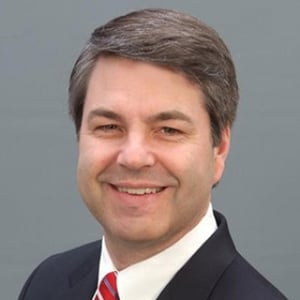
Partner and Co-Chair, Public Policy Group, Shook Hardy & Bacon LLP
Mark Behrens co-chairs Shook's Washington, DC-based Public Policy Practice Group and is a leading national expert on civil justice issues with over thirty years of experience. A substantial part of his practice is working to improve the civil litigation environment through state and federal legislation; in the courts through amicus curiae briefs; through legal scholarship and judicial education; and in the court of public opinion.
Mark is actively involved in civil justice reform efforts at the federal and state levels. He has testified before the U.S. Congress and most state legislatures on behalf of business and civil justice organizations. Mark also has an active amicus brief practice specializing in tort liability and civil justice issues. He has authored or co-authored over 150 amicus briefs in cases before the United States Supreme Court and federal and state appellate courts on behalf of business, civil justice, and defense lawyer organizations. In addition, Mark routinely files comments on behalf of business, civil justice, and defense lawyer organizations regarding potential changes to federal and state court rules. He chairs the International Association of Defense Counsel’s (IADC) Civil Justice Response Committee and serves on the Board of Directors of Lawyers for Civil Justice (LCJ).
Mark is a member of the American Law Institute (ALI). He received his J.D. in 1990 from Vanderbilt University Law School, where he was a member of the Vanderbilt Law Review. He received his B.A. in economics from the University of Wisconsin in 1987.
Partner, Proskauer Rose LLP
Steven Krane joined Proskauer upon his graduation from New York University School of Law in 1981, taking a year off in 1984-85 to serve as law clerk to Judge Judith S. Kaye of the New York Court of Appeals. He became a partner in the Litigation and Dispute Resolution Department in 1989, and is the chair of the firm’s Law Firm Advisory Practice Group, concentrating in the field of legal ethics and professional responsibility, while continuing to represent commercial clients in a broad range of civil litigation matters.
Steven represents law firms and individual lawyers in a variety of professional matters, including rendering opinions and counseling them on a daily basis on a broad range of professional matters including conflicts of interest, client confidentiality, cross-border legal practice issues, partnership disputes, and internal investigations. In addition, he defends law firms in litigated proceedings involving legal malpractice and other civil claims; represents individual lawyers before grievance and disciplinary committees; and assists lawyers in disputes concerning admission to the Bar. He has served as a litigation consultant and expert witness testifying on a variety of issues such as conflicts of interest, litigation conduct, legal malpractice, billing disputes, and solicitation of clients by lawyers leaving a law firm.
Steven is among the nation’s leaders in developing and interpreting the rules governing the professional conduct of lawyers. He is chair of the American Bar Association’s Standing Committee on Ethics and Professional Responsibility, and has served on that committee since 2004. He has led the New York State Bar Association's Committee on Standards of Attorney Conduct, and its predecessor, since 1995. That committee is responsible for formulating the ethical rules governing New York lawyers. He served as a member of the NYSBA Committee on Professional Ethics for four years (1990-94), and spent nine of the 11 years from 1985 to 1996 associated in various capacities with the Committee on Professional and Judicial Ethics of the New York City Bar, including three years as the chair (1993-96). He was recently appointed by Chief Judge Kaye as co-chair of the New York Judicial Institute on Professionalism in the Law. He served as vice-chair of the NYSBA Special Committee on the Law Governing Firm Structure and peration (the “MacCrate Committee”), and chaired the successor to that committee, the Special Committee on Multidisciplinary Practice.
Steven has had a distinguished career as a bar leader outside of the field of legal ethics as well, most notably serving as President of the NYSBA in 2001-02; the youngest person to hold that post. He coordinated the efforts of the organized bar in responding to the terrorist attacks of September 11, 2001; initiated the NYSBA’s successful lawsuit against the Federal Trade Commission challenging the application of the Gramm-Leach-Bliley Act’s privacy provisions to the legal profession (serving as counsel to the NYSBA in the District of Columbia Circuit and as a member of the ABA’s Gramm-Leach-Bliley Task Force); and created and now chairs the Student Loan Assistance for the Public Interest program, which provides grants to lawyers in public interest jobs to help them defray their educational debts. Active in the community, he is a member of the Board of Directors of the Friends of the John Jay Homestead (Katonah, NY) and a Trustee of the New York Bar Foundation.
Steven is active in the development of law and policy relating to cross-border legal practice, and serves as one of the principal negotiators for the ABA and NYSBA in their efforts to achieve agreements with foreign governments to liberalize restrictions on lawyers engaged in international practice. In that regard, he chairs the NYSBA Special Committee on Crossborder Legal Practice; is a vice-chair of the NYSBA Section on International Law and Practice; and Liaison to International Bar Associations; and is an Advisor to the ABA Task Force on International Trade in Legal Services.
Steven served as a Hearing Panel Chair for both the Departmental Disciplinary Committee for the First Judicial Department (1996-99) and the Committee on Grievances of the United States District Court for the Southern District of New York (1995-2000). He currently serves as a Special Referee for the Grievance Committee for the Ninth Judicial District (Second Department) in New York.
For several years, Steven taught legal ethics at Columbia University School of Law as a member of its adjunct faculty. He continues to be a frequent lecturer on ethics, and has written extensively on issues of professional responsibility.

Hot Topics: Judicial Activism
Michael B. Brennan, Michael S. Greve
When President George W. Bush announced his first nominations for the federal bench, he declared,...
NAFTA, Sovereignty and Tradeoffs
Damara Griffith
This paper provides an overview of NAFTA and the tensions that exist between American sovereignty...
The United Nations Conference on the Illicit Trade in Small Arms and Light Weapons
Daniel B. Pickard
The United Nations Conference on the Illicit Trade in Small Arms and Light Weapons in...
F. Scott Kieff Reviews "Grace Periods and the European and INternational Patent Law: Analysis of Key Legal and Socio-Economic Aspects" - by Joseph Straus
F. Scott Kieff
This monograph, published as volume 20 in the Max Plank Institute’s series entitled International Review...
Can a Man Head the Women's Bureau at the Department of Labor?
Donald J. Kochan
Can a man become the Director of the Women’s Bureau at the Department of Labor?...
Nike v. Kasky: An Invitation to Discard the Commercial Speech Doctrine
Deborah Fetra
Over the past 60 years, this Court’s approach to speech uttered by business interests has...
What Does Academic Research Tell Us About the Role of Money in American Politics?
Jeffrey Milyo
Proponents of campaign finance reform argue that money plays a central and nefarious role in...
Domestic Courts and Growing NGO Investment in "International Law": At What Cost and Consequence to Democracy?
Donald J. Kochan
Increasingly, United States courts are recognizing various treaties, as well as declarations, proclamations, conventions, resolutions,...
Preserving the Right to a Representative Jury
Mark A. Behrens
For over two centuries, the jury system has played an important and revered role in...
It's Not Our Job
Steven C. Krane
Lawyers have traditionally been able to provide their clients with dispassionate legal advice based on...