
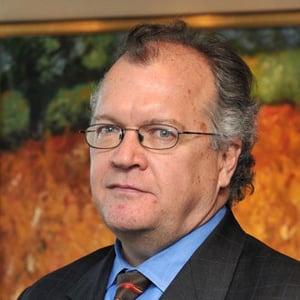
Partner, Morris, Manning, & Martin
Donald B. Cameron, Jr. is a Partner in Morris, Manning, & Martin’s International Trade practice. He has over three decades of experience representing multinational businesses, foreign governments, foreign trade associations and U.S. importers in litigation under U.S. antidumping, countervailing duty, and safeguards law. He also advises clients from around the globe in international trade disputes and market access issues, and has particular experience defending clients in industry sectors that are politically sensitive. Mr. Cameron has represented foreign producers and importers in sectors such as footwear, lumber, textiles, electronic products, and steel products. He practices regularly before the U.S. Department of Commerce, the U.S. International Trade Commission, the Office of the U.S. Trade Representative, the U.S. Court of International Trade and the U.S. Court of Appeals for the Federal Circuit.
Mr. Cameron has extensive experience representing private-sector interests and governments in dispute settlement proceedings before the World Trade Organization (WTO) and its predecessor, the General Agreement on Tariffs and Trade (GATT) in Geneva, and has argued on behalf of clients before the WTO Panels and WTO Appellate Body. He has also defended clients in North American Free Trade Agreement (NAFTA) Chapter 19 proceedings and has argued before NAFTA Panels. Mr. Cameron also advised the Government of Korea in the successful WTO challenges to the U.S. safeguard actions on line pipe and certain steel products (AB-2001-9 and AB-2003-3).
As counsel for foreign manufacturers, Mr. Cameron has also advised and assisted foreign governments in a variety of bilateral and multilateral trade negotiations, most prominent being the steel Voluntary Restraint Arrangements negotiations, bilateral subsidies negotiations and the OECD shipbuilding negotiations.

President, Cass & Associates, PC
Ronald A. Cass is Dean Emeritus of Boston University School of Law (where he was Dean from 1990-2004), President of Cass & Associates, PC, former Vice-Chairman and Commissioner of the U.S. International Trade Commission, former faculty member at Boston University School of Law and the University of Virginia Law School, and Distinguished Senior Fellow at the C. Boyden Gray Center for the Study of the Administrative State. Dean Cass also sits as an arbitrator for commercial, international, and intellectual property rights disputes, and is a former United States member of the Panel of Conciliators of the International Centre for Settlement of Investment Disputes. He is a member of the Council of the Administrative Conference of the United States and has received seven presidential appointments, spanning Presidents Ronald Reagan to Donald J. Trump.
As a law professor, lecturer, and scholar, Dean Cass has been teaching and writing about a wide array of legal issues on topics such as administrative law and regulation, antitrust, constitutional law, communications, intellectual property, international trade, separation of powers, and legal process. He has published more than 160 scholarly books, chapters, articles, and papers, including a leading casebook on administrative law. Dean Cass has taught judges as well as students in schools of law, economics, business, and public policy and has held academic appointments in the United States, Europe, and Latin America.
In addition to his academic work, Dean Cass has participated in numerous important legal cases as an amicus, consultant, or expert, and has advised businesses, law firms, investment funds, and government agencies on a range of trade, antitrust, intellectual property, and regulatory issues. He has a broad range of affiliations with professional groups, and has received numerous honors, fellowships and awards.
Dean Cass is a graduate of the University of Virginia and the University of Chicago Law School.
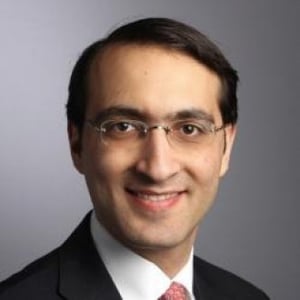
U.S. Department of Commerce, International Trade Administration, Assistant Secretary of Commerce for Enforcement and Compliance
Jeffrey I. Kessler was confirmed unanimously by the U.S. Senate on April 3, 2019 and assumed his position as Assistant Secretary of Commerce for Enforcement and Compliance on April 11, 2019. In his role, Mr. Kessler administers U.S. antidumping and countervailing duty laws, works to ensure foreign compliance with trade agreements, supports the negotiation and implementation of international trade agreements to open foreign markets, and administers the Foreign Trade Zones program – all with the goal of promoting U.S. jobs and economic growth.
Prior to joining the Department of Commerce, Mr. Kessler worked as an international trade attorney in private practice. In that capacity, Mr. Kessler advised leading global companies and U.S. industry associations on a wide range of high-profile, cutting-edge international trade, investment, and market access issues. Mr. Kessler was also involved in litigating several precedent-setting World Trade Organization cases, with successful challenges to foreign country trade practices that restrict billions of dollars of international trade per year, as well as successful defenses of U.S. trade practices.
Mr. Kessler also assisted U.S. companies and industry associations – especially those in innovative, IP-intensive industries – to decipher and navigate foreign trade and investment barriers. Mr. Kessler earned a BA magna cum laude from Yale University, an MA from the University of Chicago, and an JD and MA from Stanford University, where he was an Articles Editor of the Stanford Law Review and a John M. Olin Law and Economics fellow. Additionally,
Mr. Kessler is a member of the American Bar Association and a Term Member of the Council on Foreign Relations. Mr. Kessler resides in Arlington, Virginia with his wife Bethany and their two daughters, Lucy and Diana.
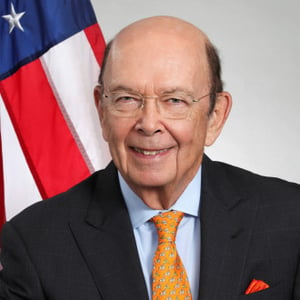
Secretary of Commerce, Department of Commerce
Wilbur L. Ross, Jr. was sworn in by Vice President Mike Pence as the 39th Secretary of Commerce on February 28, 2017. Secretary Ross is the principal voice of business in the Trump Administration, ensuring that U.S. entrepreneurs and businesses have the tools they need to create jobs and economic opportunity.
Secretary Ross is the former Chairman and Chief Strategy Officer of WL Ross & Co. LLC and has over 55 years of investment banking and private equity experience. He has restructured over $400 billion of assets in the airline, apparel, auto parts, banking, beverage, chemical, credit card, electric utility, food service, furniture, gypsum, homebuilding, insurance, marine transport, mortgage origination and servicing, oil and gas, railcar manufacturing and leasing, real estate, restaurant, shipyard, steel, textile and trucking industries. Secretary Ross has been chairman or lead director of more than 100 companies operating in more than 20 different countries.
Named by Bloomberg Markets as one of the 50 most influential people in global finance, Secretary Ross is the only person elected to both the Private Equity Hall of Fame and the Turnaround Management Hall of Fame. He previously served as privatization adviser to New York City Mayor Rudy Giuliani and was appointed by President Bill Clinton to the board of the U.S.-Russia Investment Fund. President Kim Dae-jung awarded Secretary Ross a medal for helping South Korea during its financial crisis and, in November 2014, the Emperor of Japan awarded him the Order of the Rising Sun, Gold and Silver Star.
As a philanthropist, Secretary Ross has served as Chairman of the Japan Society, Trustee of the Brookings Institution and Chairman of its Economic Studies Council, International Counsel Member of the Musée des Arts Décoratifs in Paris, Trustee of the Blenheim Foundation, President of the American Friends of the Rene Magritte Museum in Brussels and Director of the Palm Beach Civic Association. He also was an Advisory Board Member of Yale University School of Management.
Secretary Ross is a graduate of Yale University and Harvard Business School (with distinction). He and his wife Hilary Geary Ross have four children, Jessica Ross, Amanda Ross, Ted Geary and Jack Geary.

Executive Vice President, The Federalist Society
Dean Reuter is Executive Vice President at the Federalist Society for Law and Public Policy Studies. He has served in two federal government agency Offices of the Inspector General, as Counsel to the Inspector General and Deputy Inspector General, responsible for policing the use of federal funds granted and contracted through those agencies. As such, he helped conduct and oversee criminal investigations across the country. He is the principal author of the non-fiction book, The Hidden Nazi: The Untold Story of America's Deal with the Devil, and editor of Liberty’s Nemesis: The Unchecked Expansion of the State and Confronting Terror: 9/11 and the Future of American National Security. He was appointed by the President and served as Vice-Chairman of the Board of Directors of the Corporation for National and Community Service, and recently served as an appointee on the U.S. Commission on Presidential Scholars. He is a graduate of Hood College (BA with Honors) and the University of Maryland School of Law.
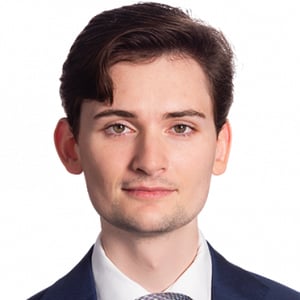
Deputy Assistant Attorney General, Office of Legal Policy, Department of Justice
GianCarlo Canaparo serves as Deputy Assistant Attorney General in the Office of Legal Policy at the Department of Justice. There, he oversees the Office's regulatory work and is the Department's liaison to the Office of Information and Regulatory Affairs. He also assists the White House in the process of selecting nominees for federal judgeships and advises Department leadership on policy and legal matters.
Before joining the Department, Canaparo was a senior legal fellow at The Heritage Foundation’s Edwin Meese III Center for Legal and Judicial Studies where he researched constitutional law, administrative law, and civil rights.
Canaparo’s scholarship has appeared in various law reviews including the Harvard Journal of Law and Public Policy, the Notre Dame Law Review, the Georgetown Journal of Law and Public Policy, the Texas Review of Law and Politics, and the Administrative Law Review. His research has been cited by Justice Neil Gorsuch and featured in the Wall Street Journal and Washington Post. His analysis has appeared in Law & Liberty, Civitas, Fox News, The National Review, Law 360, FedSoc Blog, and other outlets.
Canaparo co-hosted The Heritage Foundation’s SCOTUS 101 podcast, which follows the Supreme Court’s arguments and opinions and features interviews with judges, advocates, and scholars.
After graduating Georgetown law, Canaparo spent three years at the law firm of Skadden, Arps, Slate, Meagher & Flom and two years as a federal law clerk. He earned his bachelor’s degree in economics from the University of California at Davis.
Canaparo is a classical pianist and organist.
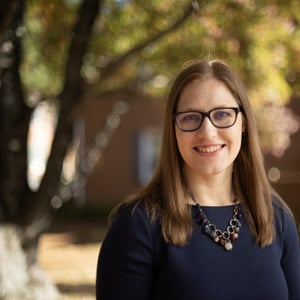
Fellow, Ethics and Public Policy Center
Rachel N. Morrison is an attorney and Fellow at the Ethics and Public Policy Center, where she directs EPPC’s Administrative State Accountability Project. Her legal and policy work focuses on religious liberty, health care rights of conscience, the right to life, nondiscrimination, and civil rights.
Before joining EPPC, Ms. Morrison served as an Attorney Advisor and Special Assistant to General Counsel Sharon Fast Gustafson at the Equal Employment Opportunity Commission (EEOC), where she focused on religious discrimination issues and was a member of the General Counsel’s Religious Discrimination Work Group. Before that, she served as Litigation Counsel for Americans United for Life and as a Constitutional Law Fellow at the Becket Fund for Religious Liberty, defending the right to life and religious freedom for all. She also clerked on the U.S. Court of Federal Claims.
Ms. Morrison’s legal analysis has been published in the Seton Hall Law Review, the Pepperdine Law Review, and the Ave Maria Law Review, as well as various other print media outlets.
Ms. Morrison earned her J.D., magna cum laude, from the Pepperdine University School of Law, where she was elected to the Order of the Coif and served as an editor for the Pepperdine Law Review and the Harvard Journal of Law & Public Policy. She received her B.A. in Mathematics and Speech Communication, summa cum laude, from Whitworth University (Spokane, WA). She is a member of the District of Columbia and the Washington State bars.
Ms. Morrison lives with her husband and daughter in Virginia.
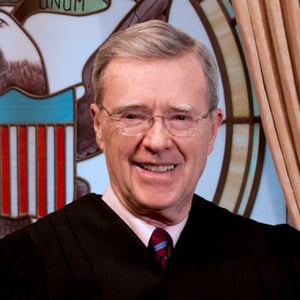
Judge, United States Court of Appeals, Ninth Circuit
Judge O’Scannlain was appointed United States Circuit Judge for the Ninth Circuit by President Reagan on September 26, 1986. He received a J.D. degree in 1963 from Harvard Law School and a B.A. in 1957 from St. John’s University. He also earned the LL.M. (Judicial Process) degree at University of Virginia Law School in 1992. He was awarded the LL.D. (honoris causa) degree by the University of Notre Dame in 2002, the LL.D. (honoris causa) degree by Lewis & Clark College in 2003 and the LL.D. (honoris causa) degree by the University of Portland in 2011.
As a judge on the U.S. Court of Appeals for the Ninth Circuit, Judge O’Scannlain has participated in over 6,000 federal cases and has written hundreds of published opinions on a broad range of subjects including constitutional law, international law, securities law, administrative law, and criminal law. He hears appeals in San Francisco (court headquarters), as well as in Los Angeles (Pasadena), Portland, Seattle, Anchorage and Honolulu. The late Chief Justice Rehnquist appointed Judge O'Scannlain to the Federal Judicial Center's Advisory Committee on Appellate Judge Education. In 2009, Chief Justice Roberts appointed Judge O’Scannlain to the International Judicial Relations Committee of the U.S. Judicial Conference and subsequently appointed him Chairman in 2010.
President George W. Bush appointed Judge O’Scannlain to the Board of Trustees of the James Madison Memorial Fellowship Foundation in 2004. Pope Benedict XVI conferred the Order of Saint Gregory the Great on Judge and Mrs. O’Scannlain in 2007.
Judge O’Scannlain’s professional interests also include judicial administration and reform, and continuing legal education. Judge O’Scannlain is former Chair of the Judicial Division of the American Bar Association and has previously chaired the ABA’s Appellate Judges Conference, its Committee on Appellate Practice, and its 9th Appellate Practice Institute. He has testified before the Senate Judiciary Committee on several occasions, the House Judiciary Subcommittee on Courts and Intellectual Property, and the Commission on Structural Alternatives for the Federal Courts of Appeals on the subject of court reorganization. In addition to serving as a faculty member at numerous federal appellate practice seminars for judges and attorneys, including New York University Law School’s Institute for Judicial Administration, Judge O’Scannlain is an Adjunct Professor at Lewis & Clark Law School where he teaches a seminar on the Supreme Court. He has served as a Moot Court Judge at distinguished law schools across the United States including Harvard, Yale Stanford, Boalt Hall (Berkeley Law), Virginia, Cornell, Notre Dame, Fordham, Alabama, University of Southern California, King Hall (U.C. Davis) and Loyola Marymount University and in China at Xiamen and Renmin Universities.
Between graduation from Harvard and investiture as a federal judge, Judge O’Scannlain was primarily engaged in private law practice. Between 1969 and 1974, he was consecutively the Deputy Attorney General of Oregon, the Public Utility Commissioner of Oregon, and Director of the Oregon Department of Environmental Quality. He retired from the U.S. Army Reserve in 1978 as a Major after 23 years Reserve and National Guard service, including four years as an enlisted man.
A first generation Irish-American son of immigrant parents from Sligo and Derry, Judge O’Scannlain is married to the former Maura Nolan and has eight children: Sean, Jane, Brendan, Kevin, Megan, Christopher, Anne, and Kate, and nineteen grandchildren. His chambers are in the Pioneer Courthouse in Portland, Oregon.
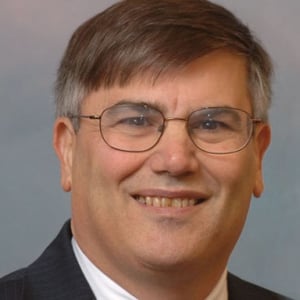
Senior Vice President, Spectrum Strategy & Technology Policy, Qualcomm
Dean Brenner is Senior Vice President, Government Affairs for Qualcomm Incorporated. He directs Qualcomm’s global spectrum acquisitions and strategy and is responsible for global technology policy. He represents Qualcomm before the Federal Communications Commission and other agencies of the United States and Canadian governments responsible for spectrum and telecommunications policy and interacts with spectrum regulators around the world. He also leads Qualcomm’s policy initiatives relating to mobile healthcare.
Mr. Brenner led Qualcomm’s bidding team in recent spectrum auctions in India (the 2.3 GHz band), the United States (the 700 MHz band), and the United Kingdom (the L Band). In addition, he was responsible for obtaining the regulatory approvals for Qualcomm’s sale of 700 MHz spectrum to AT&T in 2011. In 2006, he obtained the regulatory approvals to launch FLO TV, a mobile TV service. He has spoken at conferences on spectrum policy in the United States, Canada, South Korea, Belgium, Great Britain, and elsewhere around the world. He joined Qualcomm in November 2003.
Mr. Brenner received his A.B. degree, magna cum laude with distinction in public policy studies, from Duke in 1982. He won a prize for the best paper on communications policy, and he was a recipient for four years of a CBS Scholarship. He received his J.D., cum laude, from Georgetown University in 1985. He is admitted to the Bars of the District of Columbia, Maryland, and the U.S. Supreme Court, the U.S. Courts of Appeal for the D.C., Third, and Eleventh Circuits, and the U.S. District Court for the District of Columbia.
Mr. Brenner is a member of the Federal Advisory Board for Space-Based Positioning, Navigation, & Timing, which advises the Executive Branch on policy matters impacting the Global Positioning System. He is also a member of the Board of Governors of 4G Americas, the Board for Jewish Life at Duke University, and the Board of Trustees of the Field School. He lives in Washington, DC with his wife Robin Shaffert and their two sons, Michael and Steven.
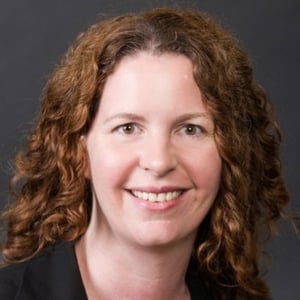
Director (Group Manager), Technology and Innovation Policy, Toyota North America
Hilary Cain is Director of Technology and Innovation Policy for Toyota. In this position, she handles policy issues relating to connected and automated vehicle technology, including artificial intelligence, data privacy, cybersecurity, and telecommunications.
Prior to joining Toyota, Cain was on the staff of the U.S. House of Representatives’ Committee on Science, Space, and Technology. She served as Staff Director of the Subcommittee on Technology and Innovation with jurisdiction over matters relating to competitiveness, technology, standards, and innovation. Previously, as a Counsel to the Committee, she handled parliamentary, procedural, and jurisdictional matters and participated in the development and implementation of legislative strategy. Before joining the Committee staff, Cain served as Legislative Director and Ways and Means Counsel for individual Members of Congress.
She holds a J.D. and a M.A. in Public Affairs from the University of Texas, and a B.A. in Political Science with honors from the University of Washington.

Vice President & Associate General Counsel, NCTA- The Internet & Television Association
Danielle J. Piñeres is a Vice President & Associate General Counsel at NCTA – The Internet & Television Association, where she focuses on wireless spectrum policy issues. Prior to her employment at NCTA, Ms. Piñeres worked as an associate with the law firm of Harris, Wiltshire & Grannis LLP in Washington, D.C., where she practiced in the areas of telecommunications (including spectrum regulation), international trade and foreign investment, and appellate litigation. Before joining HWG, Ms. Piñeres clerked for the Honorable Emily C. Hewitt at the United States Court of Federal Claims. Ms. Piñeres received her J.D. magna cum laude from the Georgetown University Law Center.

Professor of Law, University of Michigan Law School
Christopher J. Walker is a Professor of Law at the University of Michigan. Prior to joining Michigan law faculty in 2022, he spent a decade teaching at The Ohio State University Moritz College of Law. He previously clerked for Justice Anthony Kennedy of the U.S. Supreme Court, worked on the Civil Appellate Staff at the U.S. Department of Justice, and served on the Senate Judiciary Committee staff for the Gorsuch Supreme Court confirmation. Professor Walker’s research focuses on administrative law, regulation, and law and policy at the agency level. Outside the law school, he chaired the American Bar Association’s Section of Administrative Law and Regulatory Practice in 2020-21 and served as one of forty Public Members of the Administrative Conference of the United States from 2016-2022, and he continues to serve in both organizations in various capacities. He also works of counsel at the U.S. Chamber Litigation Center. In 2022, he received the Federalist Society’s Joseph Story Award.
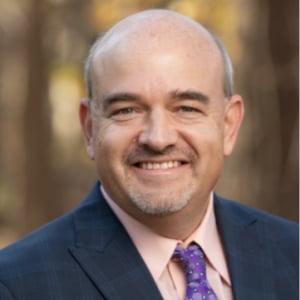
Newton D. Baker-Baker & Hostetler Chair in Law, Moritz College of Law, The Ohio State University
Professor Douglas A. Berman is Newton D. Baker-Baker & Hostetler Chair in Law and Executive Director of the Drug Enforcement and Policy Center, housed in the Moritz College of Law. Berman’s principal teaching and research focus is in the area of criminal law and criminal sentencing, though he also has teaching and practice experience in the fields of legislation and intellectual property. He has taught Criminal Law, Criminal Punishment and Sentencing, Criminal Procedure – Investigation, Marijuana Law, Policy & Reform Seminar, Federal and State Clemency Decision-making, The Death Penalty, Legislation, Introduction to Intellectual Property, Second Amendment Seminar, and the Legislation Clinic.
Professor Berman attended Princeton University and Harvard Law School. In law school, he was an editor and developments office chair of the Harvard Law Review and also served as a teaching assistant for a Harvard University philosophy course. After graduation from law school in 1993, Professor Berman served as a law clerk for Judge Jon O. Newman and then for Judge Guido Calabresi, both on the United States Court of Appeals for the Second Circuit. After clerking, Professor Berman was a litigation associate at the law firm of Paul, Weiss, Rifkind, Wharton, and Garrison in New York City.
Professor Berman is the co-author of two casebooks. Sentencing Law and Policy: Cases, Statutes and Guidelines, published by Aspen Publishers, is now in its fifth edition. Marijuana Law and Policy was released by Carolina Academic Press in 2020. In addition to authoring numerous articles on topics ranging from capital punishment to the federal sentencing guidelines, Professor Berman has served as a managing editor of the Federal Sentencing Reporter for more than twenty five years, and also serves as an editor of the Ohio State Journal of Criminal Law.
Professor Berman is the sole creator and author of the widely-read and widely-cited blog, Sentencing Law and Policy. The blog often receives nearly 50,000 page views per month (and had over 20,000 hits the day of the Supreme Court’s major sentencing decision in United States v. Booker). Professor Berman’s work on the Sentencing Law and Policy blog, which he describes as a form of “scholarship in action,” has been profiled or discussed at length in articles appearing in the Wall Street Journal, Legal Affairs magazine, Lawyers Weekly USA, Legal Times, Columbus Monthly, and in numerous other print and online publications.
In addition, Sentencing Law and Policy has the distinction of being the first blog cited by the U.S. Supreme Court (for a document appearing exclusively on the site), and substantive analysis in particular blog posts has been cited in numerous appellate and district court rulings, in many briefs submitted to federal and state courts around the country, and in hundreds of law review articles.
Professor Berman is a member of the Council on Criminal Justice and frequently is consulted by national and state policymakers, sentencing commissioners, and public policy groups concerning sentencing law and policy reforms. He has testified before the U.S. House of Representatives and before numerous sentencing commissions. He also is frequently contacted by national and local media concerning sentencing and marijuana reform developments.
Professor Berman has appeared on national television, radio and podcast news programs and has been extensively quoted in newspaper articles appearing in nearly every major national paper and many local papers, including The New York Times, The Washington Post, The Wall Street Journal, Legal Times, and in pieces from the Associated Press, Reuters, and Knight-Ridder news services.
Professor Berman sometimes serves as a consultant to lawyers working on important or interesting sentencing cases. In most instances, Professor Berman’s consulting has been on an ad hoc and pro bono basis, and it usually involves a quick review of draft briefs and other court filings and then providing general advice on litigation strategies. On some occasions, however, Professor Berman has been formally retained to play a more sustained role in certain cases, including being retained by law firms to provide consulting service on various cutting-edge federal sentencing issues.
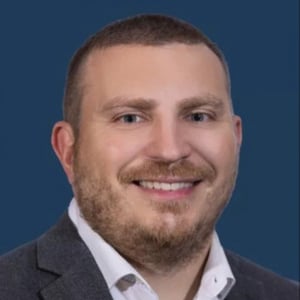
Legal Policy Director, Pacific Legal Foundation
Daniel Dew directs Pacific Legal Foundation’s legal policy efforts. The legal policy team fights for individual liberty in the other two branches of government by finding principled solutions to complex problems.
Daniel has led numerous successful public policy campaigns, including home equity theft reform, judicial bias reform, emergency powers reform, and prior to his time at PLF, civil asset forfeiture reform, sentencing reform, and removing government-imposed barriers to employment.
Before joining PLF, Daniel was a legal fellow at The Buckeye Institute in Columbus, Ohio, and a visiting legal fellow at The Heritage Foundation’s Meese Center for Legal and Judicial Studies.
Daniel served on the Ohio Supreme Court’s Task Force to Examine Ohio’s Bail System, and Ohio’s Justice Reinvestment 2.0 Ad Hoc Committee. He has also served as president of the Columbus, Ohio lawyers chapter of the Federalist Society, and chaired the Ohio State Bar Association’s Criminal Justice Committee.
He earned his law degree from Cleveland Marshall College of Law and his undergraduate degree from Utah State University.
When he’s not battling bureaucrats, Daniel coaches baseball, trains for marathons (very slowly), is constantly disappointed by Cleveland sports teams, and keeps busy with his wife, Amanda, and their four children.
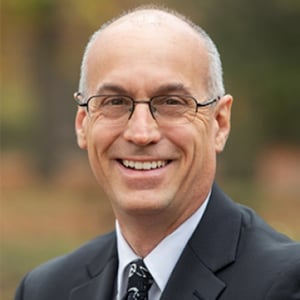
Associate Dean for Faculty and Intellectual Life, Ohio State University Moritz College of Law
Ric Simmons is the Associate Dean for Faculty and Intellectual Life and the Jacob E. Davis and Jacob E. Davis II Chair in Law at Moritz. He teaches Evidence, Criminal Law, Criminal Procedure, and Computer Crime and Surveillance.
An accomplished legal scholar, Professor Simmons’ research focuses on the intersection of the Fourth Amendment and new technology. He has written about the use of big data in the criminal justice system, searches of cell phones and other electronic devices, and hyper-intrusive surveillance devices. He has also written about the privatization of the criminal justice system and the role of the prosecutor. Professor Simmons is the author of Smart Surveillance: How to Interpret the Fourth Amendment in the Twenty-First Century (Cambridge Press 2019), and Private Criminal Justice: How Private Parties are Enforcing Criminal Law and Transforming Our Justice System (2023), and he has co-authored four casebooks and two hornbooks. His scholarship has also appeared in leading legal journals, including the Duke Law Journal, the Boston University Law Review, and the George Washington Law Review.
Before coming to Moritz, Simmons was an acting assistant professor at New York University School of Law. Before that, he clerked for the Honorable Laughlin E. Waters of the Central District of California and then served for four years as an assistant district attorney for New York County.
Professor Simmons is a national expert on the grand jury and served on the Ohio Supreme Court’s Grand Jury Task Force. He has also been a recipient of the Ohio State University Alumni Award for Distinguished Teaching and has won the Morgan E. Shipman Outstanding Professor Award six times.
Edwin M. Adams Professor of Law, University of Illinois College of Law
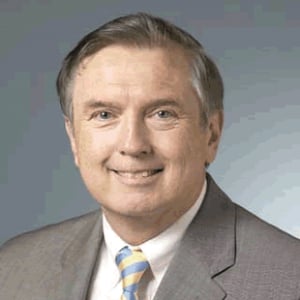
Professor of Law, University of Notre Dame Law School
Gerard V. Bradley is Professor of Law at the University of Notre Dame, where he teaches Legal Ethics and Constitutional Law. At Notre Dame he directs (with John Finnis) the Natural Law Institute and co-edits The American Journal of Jurisprudence, an international forum for legal philosophy. Bradley has been a Visiting Fellow at the Hoover Institution of Stanford University, and a Senior Fellow of the Witherspoon Institute, in Princeton, New Jersey. He served for many years as President of the Fellowship of Catholic Scholars.
Bradley received his B.A and J.D. degrees from Cornell University, graduating Summa cum laude from the law school in 1980. After serving in the Trial Division of the Manhattan District Attorney’s Office he joined the law faculty at the University of Illinois. He moved to Notre Dame in 1992. Bradley has published over one hundred scholarly articles and reviews. His most recent books are an edited collection of essays titled, Challenges to Religious Liberty in the Twenty-First Century (published by Cambridge University Press in 2012), Essays on Law, Religion, and Morality and Unquiet Americans: U.S. Catholics and the Common Good (both to be published in 2014.) He is currently working on a book about regulating obscenity in the Internet Age.

Fair Trade: Reinvigorating American Leadership in the 21st Century
Donald B. Cameron, Ronald A. Cass, Jeffrey Ian Kessler, Wilbur Ross, Dean Reuter
On October 15, 2019, the Federalist Society's International & National Security Law Practice Group hosted...
Kahler v. Kansas & Ramos v. Louisiana Post-Argument SCOTUScast
GianCarlo Canaparo
On October 7, 2019, the Supreme Court heard oral arguments in Kahler v. Kansas and Ramos...
National Polarization and the Threat to Free Speech in America
Knoxville, TNThe Supreme Court Takes Up Abortion: What You Need to Know About June Medical Services v. Gee
Rachel N. Morrison
Note from the Editor: The Federalist Society takes no positions on particular legal and public...
The Future of Sentencing Reform: In Ohio and the United States
Ohio State Student Chapter
Columbus, OHWhat Every American Needs to Know About the Fifth Amendment
Marquette Student Chapter
Milwaukee, WIThe Future of the Federal Judiciary
Diarmuid F. O'Scannlain
Note from the Editor: The Federalist Society takes no positions on particular legal and public...
What Every American Needs to Know About the Fifth Amendment
Illinois Student Chapter
Champaign, ILDeep Dive Episode 75 – Spectrum Wars
Dean Brenner, Hilary Cain, Danielle Piñeres, Christopher J. Walker
With the advent of mobile devices, ubiquitous home laptop, tablet and iPad computers, content streaming...
What Every American Needs to Understand About the Fifth Amendment: What Police Officers Tell Their Own Children About the Right to Remain Silent
Notre Dame Student Chapter
Notre Dame, IN