
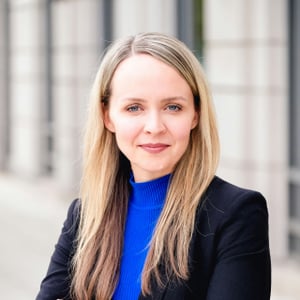
Professor of Law and Faculty Director for the Georgetown Center for the Constitution, Georgetown University Law Center
Stephanie Barclay is a Professor of Law at Georgetown Law School, and the Faculty Director of the Georgetown Center for the Constitution. Her research focuses on the role our different democratic institutions play in protecting minority rights, particularly at the intersection of free speech and religious exercise. Barclay‘s work is published or is forthcoming in leading journals such as the Harvard Law Review, the Chicago Law Review, the University of Pennsylvania Law Review, and the Yale Law Journal Forum. One of her articles was also selected for the 2020 Stanford/Harvard/Yale Junior Faculty Forum. Her work has been featured in many media outlets, including The New York Times, The Wall Street Journal, The Washington Post, USA Today, Bloomberg BNA, The Hill, and Law 360. And her work has also been cited by the U.S. Supreme Court.
Prior to joining Georgetown, Barclay was twice voted Professor of the Year. Barclay has also litigated constitutional cases at both the trial and appellate level, including before the U.S. Supreme Court. Barclay served as a law clerk to Judge N. Randy Smith on the U.S. Court of Appeals for the Ninth Circuit, and to Justice Neil M. Gorsuch of the U.S. Supreme Court.
Barclay is a Faculty Affiliate at the Constitutional Law Center at Stanford Law School; and she is a Nootbaar Fellow at the Nootbaar Institute on Law, Religion, and Ethics at Pepperdine University. She currently serves as the Chair for the AALS Law and Religion Section and as a Member of the Executive Committee for the AALS Constitutional Law Section. She graduated summa cum laude from BYU Law School, where she was elected to the Order of the Coif. She is completing a Ph.D. in Law at Oxford University as a Clarendon Scholar and a Tang Scholar.
Transfer Pricing Senior Associate, PricewaterhouseCoopers LLP
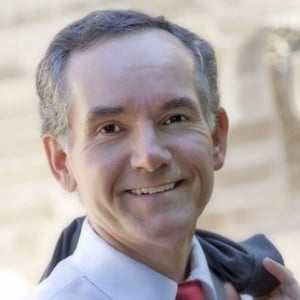
Robert H. McKinney Professor of Law Emeritus and Adjunct Professor of Religious Studies, Indiana University Bloomington - Maurer School of Law
Professor Conkle has been a member of the Maurer School of Law faculty since 1983, Professor Conkle teaches Constitutional Law, the First Amendment, and Law and Religion. His research addresses constitutional law and theory, religious liberty, and the role of religion in American law, politics, and public life. His most recent book is Religion, Law, and the Constitution, Second Edition (Foundation Press, 2022).
Conkle has been honored for his achievements both within and beyond the classroom. He is a two-time recipient of the Leon H. Wallace Teaching Award and has twice won the Gavel Award for outstanding contribution to the graduating class. He has received six faculty fellowships for outstanding scholarship, and in 1999 he was named the Robert H. McKinney Professor of Law. He retired from full-time teaching in December 2017 but continues to be involved in the Law School community.
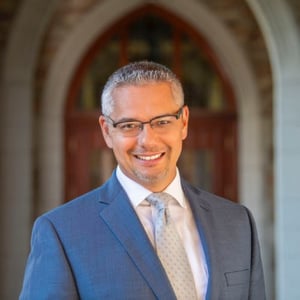
Tocqueville Associate Professor Department of Political Science and Concurrent Associate Professor of Law, University of Notre Dame Law School
Vincent Phillip Muñoz is the Tocqueville Associate Professor of Religion & Public Life in the Department of Political Science at the University of Notre Dame. He is the founding director of Notre Dame's undergraduate minor in Constitutional Studies and directs Notre Dame's Tocqueville Program for Inquiry into Religion and Public Life.
Muñoz writes and teaches across the fields of constitutional law, American politics, and political philosophy with a focus on religious liberty and the American Founding. His first book, God and the Founders: Madison, Washington, and Jefferson (Cambridge University Press, 2009) won the Hubert Morken Award from the American Political Science Association for the best publication on religion and politics in 2009 and 2010. His First Amendment church-state case reader, Religious Liberty and the American Supreme Court: The Essential Cases and Documents (Rowman & Littlefield) was first published in 2013 (revised edition, 2015) and is being used at Notre Dame and other leading universities.
Muñoz's current project is a scholarly monograph on the natural right of religious liberty and the original meaning of the First Amendment's Religion Clauses. Articles from that project have appeared in American Political Science Review, The Harvard Journal of Law and Public Policy, Notre Dame Law Review, American Political Thought, and the University of Pennsylvania's Journal of Constitutional Law.
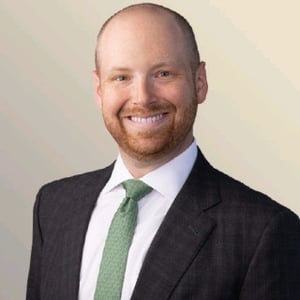
Solicitor General, Iowa Office of the Attorney General
Eric Wessan serves as Iowa’s Solicitor General in the Iowa Attorney General’s Office. In that role, Wessan leads Iowa’s litigation before State and federal appellate courts, including the Iowa and U.S. Supreme Courts. Before that role, Wessan worked on complex commercial litigation at two large law firms in Chicago. Wessan also served as a law clerk for the Honorable James C. Ho on the U.S. Court of Appeals for the Fifth Circuit and for the Honorable John F. Kness on the U.S. District Court for the Northern District of Illinois. Wessan is a graduate of the University of Chicago Law School, with honors, and of the University of Chicago.

Laurence A. Tisch Professor of Law and Director, Classical Liberal Institute, New York University School of Law; Director, Classical Liberal Institute, Civitas Institute University of Texas at Austin
Richard A. Epstein is the Laurence A. Tisch Professor of Law, at New York University, a senior research fellow at the Civitas Institute at the University of Texas Austin, and a senior Lecturer, the University of Chicago. He received an LL.D., h.c . from the University of Ghent, 2003 , and an LLD h.c . from the University of Siegen in 2018 and the Bradley Prize in 2011. He has been a member of the American Academy of Arts and Sciences since 1985. He has edited both the Journal of Legal Studies (1981-1991) and the Journal of Law and Economics (1991-2001). He is also a founder and director of the Classical Liberal Institute at NYU Law School. His most recent book is The Classical Liberal Constitution: The Uncertain Quest for Limited Government (2014). His other books include Takings: Private Property and the Power of Eminent Domain ( 1985); Bargaining with the State (1993); Simple Rules for a Complex World (1995); Principles for a Free Society: Reconciling Individual Liberty and the Common Good (1998); Skepticism and Freedom: A Modern Theory of Classical Liberalism (2003); Design for Liberty: Private Property, Public Administration and the Rule of Law (2011), and most recently, The Myth of Birthright citizenship—and Beyond (2026). He has taught courses in , administrative law, antitrust, constitutional, contracts, environmental law, land use planning; real property, torts and water law. He has written and spoken extensively on a wide range of topics, and is writes a regular column for Defining Ideas.
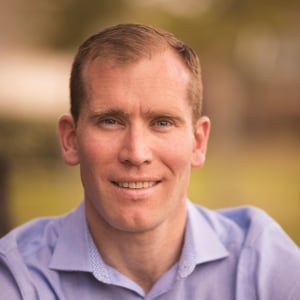
Vice President, Legal, Backflip
Michael Toth is Vice President, Legal at Backflip. Michael is a seasoned tech General Counsel with over 15 years of corporate counsel and litigation experience. He is skilled at leading legal and policy teams to executive on high-impact initiatives that deliver tech solutions in dynamic markets. Michael's work has been featured in Bloomberg, Wall Street Journal, the New York Times, Politico, Newsweek, Law 360, and other publications.
Michael has built out full-service legal and regulatory compliance departments, covering contracting, licensing, data privacy and security, employment, and corporate governance. He has represented companies in numerous capital markets transactions and litigated complex commercial cases in private practice. Michael has public-service experience serving a lawyer in the Marine Corps and a senior counsel at the Texas Office of Attorney General. At the Texas AG's office, Michael led the multistate investigation into Google. Michael's work brought together the 49-state coalition that launched a probe in Google's ad tech practices in 2019. Also during his tenure at the Texas AG's office, Michael worked on the opioid multistate and on human trafficking initiatives. In 2018, Michael was appointed to the Austin-based Third Court of Appeals, where he published several opinions on a range of state law issues.
After graduating law school, Michael served on active duty as a lawyer in the United States Marine Corps. A fluent Spanish speaker, Michael completed three overseas legal engagements in South America. Following active duty, Michael was a law clerk for the Honorable Edith H. Jones of the United States Court of Appeals for the Fifth Circuit and for the Honorable Ursula Ungaro of the United States District Court for the Southern District of Florida.
Michael graduated from Stanford University with an honors degree in history and received his law degree and a Masters in history from the University of Virginia. He has published numerous articles on legal topics as well as a book on the early United States Chief Justice Oliver Ellsworth. He lives outside of Austin, Texas, with his wife and three children.

Tazewell Taylor Professor of Law and William H. Cabell Research Professor, William & Mary Law School
Jonathan H. Adler joined the William & Mary law faculty as the Tazwell Taylor Professor of Law and William H. Cabell Research Professor in 2025. Prior to joining the faculty, he was the inaugural Johan Verheij Memorial Professor of Law and the founding Director of the Coleman P. Burke Center for Environmental Law at the Case Western Reserve University School of Law.
Professor Adler is the author or editor of seven books, including Climate Liberalism: Perspectives on Liberty, Property and Pollution (Palgrave, 2023), Marijuana Federalism: Uncle Sam and Mary Jane (Brookings Institution Press, 2020), Business and the Roberts Court (Oxford University Press, 2016) and Rebuilding the Ark: New Perspectives on Endangered Species Act Reform (AEI Press, 2011).
His articles have appeared in publications ranging from the Harvard Environmental Law Review and Yale Journal on Regulation to the Wall Street Journal, New York Times, and Washington Post. He has testified before Congress a dozen times, and his work has been cited in the U.S. Supreme Court. A 2024 study identified Professor Adler as the seventh most cited legal academic in administrative and environmental law from 2019 to 2023.
Professor Adler is a contributing editor to Civitas Outlook and a regular contributor to the popular legal blog, The Volokh Conspiracy. A regular commentator on constitutional and regulatory issues, he has appeared on numerous radio and television programs, ranging from the PBS Newshour and National Public Radio to the Fox News Channel and Entertainment Tonight.
Professor Adler is a senior fellow at the Property & Environment Research Center in Bozeman, Montana. In 2018, Professor Adler was elected to membership in the American Law Institute and helped co-found the organization Checks and Balances. In 2024, Professor Adler was appointed a public member of the Administrative Conference of the United States.
Professor Adler clerked for the Honorable David B. Sentelle on the U.S. Court of Appeals for the District of Columbia Circuit.
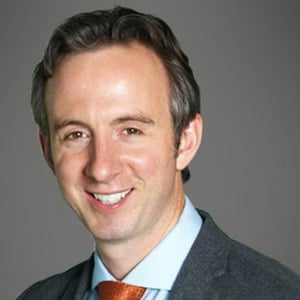
Professor of Law, University of Minnesota Law School
Professor James W. Coleman is a scholar of energy law. He specializes in North American energy infrastructure, transport, and trade. He is also a nonresident senior fellow at the American Enterprise Institute focused on energy policy.
Professor Coleman has testified before Congress on steps to speed up energy infrastructure permits. He also worked with a team of experts as part of Alberta's Royalty Review to revise the Canadian province's management of its vast oil and gas resources.
Before joining Minnesota, Professor Coleman taught at Southern Methodist University's Dedman School of Law, the University of Calgary’s law and business schools, and Harvard Law School. Earlier, he practiced environmental and appellate law at Sidley Austin in Washington, D.C., and clerked for the Honorable Steven M. Colloton of the U.S. Court of Appeals for the Eighth Circuit.
Professor Coleman received two degrees from Harvard University—a J.D. (cum laude) and B.A. in biology (magna cum laude with highest honors in the field). As a result of his undergraduate thesis on butterfly genetics, which required fieldwork in Central Asia, a species of lycaenid butterfly was named after him—Agrodiaetus ripartii colemani.
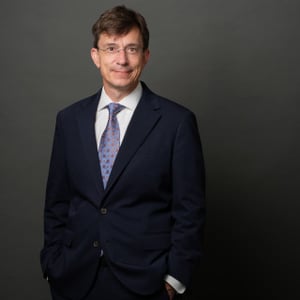
Professor of Law and Executive Director, Law and Economics Center, Antonin Scalia Law School, George Mason University
Donald Kochan is Professor of Law and Executive Director of the Law & Economics Center (LEC). Professor Kochan is an elected member of the American Law Institute (ALI) and serves as an Adviser to ALI's Restatement of the Law Fourth, Property project. Professor Kochan is a Nonresident Scholar at the Center for the Constitution at Georgetown University Law Center, where he was a Visiting Scholar in residence during Fall 2018. Before joining the Antonin Scalia Law School faculty, he was the Parker S. Kennedy Professor in Law at Chapman University’s Dale E. Fowler School of Law from 2004 to 2020. From 2003 to 2004, Professor Kochan was an Olin Fellow at the University of Virginia School of Law. During 2002-2003, he was a Visiting Assistant Professor of Law at George Mason’s Scalia Law School.
Professor Kochan’s scholarship focuses on areas of property law, constitutional law, administrative law, local government law, natural resources and environmental law, and law & economics. He has published several books and more than 50 scholarly articles and essays in well-regarded law journals. His work has been cited in more than a dozen state and federal court opinions, in more than 75 briefs filed in state and federal courts including more than 25 filed in the U.S. Supreme Court, in dozens of books and treatises, and in more than 800 scholarly articles.
Professor Kochan received his JD from Cornell Law School, where he was a John M. Olin Scholar in Law and Economics and managing editor of the Cornell International Law Journal. During law school, he also served as editor and executive editor of the Harvard Journal of Law & Public Policy symposium issues in 1997 and 1998. He received his BA from Western Michigan University, magna cum laude, with majors in both political science and philosophy, where he studied as the John W. Gill Medallion Scholar and was honored as the Presidential Scholar (awarded to the top graduate in the political science department).
After graduating from law school, Professor Kochan was a law clerk to The Honorable Richard F. Suhrheinrich of the United States Court of Appeals for the Sixth Circuit. Following his clerkship, Professor Kochan was an associate with the firm of Crowell & Moring LLP in Washington, D.C., where he specialized in natural resources & environmental law as well as tort, products, and consumer civil litigation & legislative affairs.
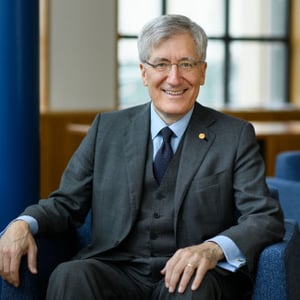
McCormick Professor of Jurisprudence; Director, James Madison Program, Princeton University
Robert P. George is McCormick Professor of Jurisprudence and Director of the James Madison Program in American Ideals and Institutions at Princeton University. He has several times been a Visiting Professor at Harvard Law School. He has served as Chairman of the U.S. Commission on International Religious Freedom and on the U.S. Commission on Civil Rights and the President’s Council on Bioethics. He has also served as the U.S. member of UNESCO’s World Commission on the Ethics of Scientific Knowledge and Technology. He was a Judicial Fellow at the Supreme Court of the United States, where he received the Justice Tom C. Clark Award. A Phi Beta Kappa graduate of Swarthmore, he holds the degrees of J.D. and M.T.S. from Harvard University and the degrees of D.Phil., B.C.L., D.C.L., and D.Litt. from Oxford University, in addition to twenty-one honorary doctorates. He is a recipient of the U.S. Presidential Citizens Medal, the Honorific Medal for the Defense of Human Rights of the Republic of Poland, the Canterbury Medal of the Becket Fund for Religious Liberty, the Bradley Prize, the Irving Kristol Award of the American Enterprise Institute, and Princeton University’s President’s Award for Distinguished Teaching. His books include Making Men Moral: Civil Liberties and Public Morality and In Defense of Natural Law (both published by Oxford University Press), as well as The Clash of Orthodoxies and Conscience and Its Enemies (both published by ISI Books).

Former President & CEO, The Federalist Society for Law and Public Policy Studies
Eugene B. Meyer, former President and CEO of the Federalist Society, has served as Executive Director, CEO, and/or President of the organization for more than 40 years. He is responsible for shepherding the organization from a small group of law students to a community of 90,000 lawyers, law students, academics, judges, and others interested in the rule of law. The Society now includes a Student Chapter at nearly every ABA-accredited law school in the country and Lawyers Chapters in 220 major cities across the nation. Gene earned his B.A. in history at Yale in 1975 and his M.A. in political science from the London School of Economics in 1976. Gene currently serves on the boards of the U.S. Chess Center, the Holman Foundation, the Sarah Scaife Foundation, and the advisory board of the Adam Smith Society. He holds the title of International Chess Master.
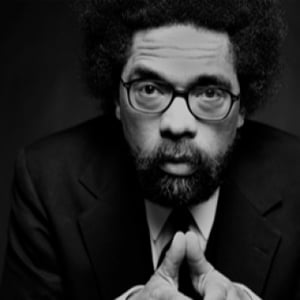
Professor of the Practice of Public Philosophy, Harvard University
Cornel West is a prominent and provocative democratic intellectual. He is Professor of the Practice of Public Philosophy at Harvard University and holds the title of Professor Emeritus at Princeton University. He has also taught at Union Theological Seminary, Yale, Harvard, Dartmouth College, and the University of Paris. Cornel West graduated Magna Cum Laude from Harvard in three years and obtained his M.A. and Ph.D. in Philosophy at Princeton. He has written 20 books and has edited 13. He is best known for his classics -- Democracy Matters and Race Matters -- which recently celebrated the 25th Anniversary of its debut with a new edition. His memoir Brother West: Living and Loving Out Loud, and Black Prophetic Fire have also received much critical acclaim. Dr. West is a frequent guest on the Bill Maher Show, Colbert Report, CNN, C-Span and Democracy Now.
He made his film debut in the Matrix – and was the commentator (with Ken Wilbur) on the official trilogy released in 2004. He also has appeared in over 25 documentaries and films including Examined Life, Call & Response, Sidewalk and Stand.
Last, he has made three spoken word albums including Never Forget, collaborating with Prince, Jill Scott, Andre 3000, Talib Kweli, KRS-One and the late Gerald Levert. His spoken word interludes were featured on Terence Blanchard’s Choices (which won the Grand Prix in France for the best Jazz Album of the year of 2009), The Cornel West Theory’s Second Rome, Raheem DeVaughn’s Grammy-nominated Love & War: Masterpeace, and most recently on Bootsy Collins’ The Funk Capital of the World. In short, Cornel West has a passion to communicate to a vast variety of publics in order to keep alive the legacy of Martin Luther King, Jr. – a legacy of telling the truth and bearing witness to love and justice.
He currently co-hosts a podcast – “The Tight Rope” with Professor Tricia Rose.
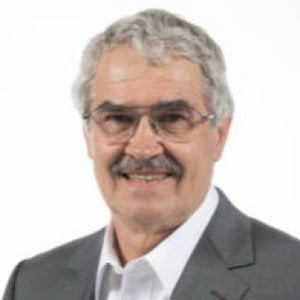
R. B. Price and Isabelle Wade & Paul C. Lyda Professor Emeritus of Law, University of Missouri School of Law
Carl H. Esbeck is R.B. Price Professor and Isabelle Wade & Paul C. Lyda Professor of Law emeritus at the University of Missouri. After attending Cornell University School of Law where he served as an editor on the Cornell Law Review, he held a judicial clerkship with the Honorable Howard C. Bratton, chief judge of the U.S. District Court in New Mexico.
Professor Esbeck publishes widely in the area of religious liberty and church-state relations. He is recognized as the progenitor of "Charitable Choice," an integral part of the 1996 Federal Welfare Reform Act, later made a part of the faith-based initiative and equal-treatment regulations under presidents George W. Bush and Barack Obama. In addition, he has taken the lead in recognizing that the modern Supreme Court has applied the Establishment Clause not as a personal right, but as a structural limit on the government's authority in disputes involving church governance. While on leave from 1999 to 2002, Professor Esbeck directed the Center for Law & Religious Freedom (CLRF) and later served as Senior Counsel to the Deputy Attorney General at the U.S. Department of Justice. While directing the CLRF, Professor Esbeck was a central part of the congressional advocacy behind the Religious Land Use and Institutionalized Persons Act of 2000 (RLUIPA). While at the Department of Justice one of his duties was to direct a task force to remove barriers to the equal-treatment of faith-based organizations applying for social service grants. He is the author of Disestablishment and Religious Dissent: Church-State Relations in the New American States, 1776 - 1833 (U. of MO Press, 2019).
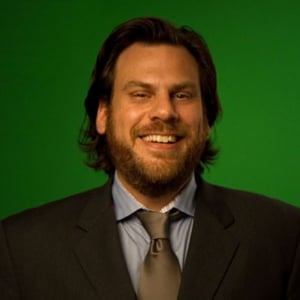
President and Founder, International Center for Law & Economics
Geoffrey A. Manne is the president and founder of the International Center for Law and Economics (ICLE), a nonprofit, nonpartisan research center based in Portland, Oregon. He is also a distinguished fellow at Northwestern Law School’s Searle Center on Law, Regulation, & Economic Growth. In April 2017 he was appointed by FCC Chairman Ajit Pai to the FCC’s Broadband Deployment Advisory Committee, and he recently served for two years on the FCC’s Consumer Advisory Committee.
Mr. Manne earned his JD and AB degrees from the University of Chicago and is an expert in the economic analysis of law, specializing in competition, telecommunications, consumer protection, intellectual property, and technology policy.
Prior to founding ICLE, Manne was a law professor at Lewis & Clark Law School. From 2006-2009, he took a leave from teaching to develop Microsoft’s law and economics academic outreach program. Manne has also served as a lecturer in law at the University of Chicago Law School and the University of Virginia School of Law. He practiced antitrust law and appellate litigation at Latham & Watkins, clerked for Hon. Morris S. Arnold on the 8th Circuit Court of Appeals, and worked as a research assistant for Judge Richard Posner. He was also once (very briefly) employed by the FTC.
Mr. Manne’s publications have appeared in numerous journals including the Journal of Competition Law and Economics, the Harvard Journal of Law and Technology, the Supreme Court Economic Review, and the Arizona Law Review, among others. With former FTC Commissioner, Joshua Wright, Manne is the editor of a volume from Cambridge University Press entitled, Competition Policy and Intellectual Property Law Under Uncertainty: Regulating Innovation. Manne has also testified on several occasions before Congress and at the FCC and FTC, and he regularly files written comments and amicus briefs on key antitrust, IP, and telecommunications issues. His analysis is frequently published in popular print and broadcasting outlets such as the Wall Street Journal, Wired, Foreign Affairs, NPR, and Bloomberg, among others.
Manne is a member of the American Law and Economics Association, the Canadian Law and Economics Association, and the Society for Institutional & Organizational Economics. He blogs at Truth on the Market (www.truthonthemarket.com) (of which he is also the co-founder), is a contributor at WIRED, and tweets at @geoffmanne. His scholarly publications are available at http://ssrn.com/author=175541.
Director of Innovation Policy, International Center for Law & Economics
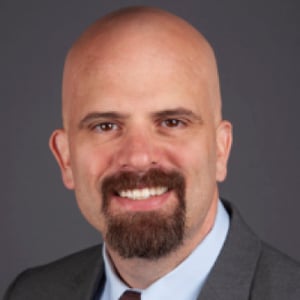
Kristian Stout, ICLE’s Director of Innovation Policy is an expert in intellectual property, antitrust, telecommunications, and Internet governance. Kristian has been a Fellow at the Internet Law & Policy Foundry, as well as the Eagleton Institute of Politics. Before practicing law, Kristian worked as a technology entrepreneur and a lecturer in the Computer Science Department at Rutgers University. Kristian served on the board of the New Jersey Leadership Program, and wasthe Chair of the Asset Forfeiture Working Group for the NJ State Advisory Committee to the United States Commission on Civil Rights. He has previously served on the Broadband Deployment Advisory Committee for the Federal Communications Commission. Kristian graduated magna cum laude from the Rutgers University School of law, and served on the editorial board of the Rutgers Journal of Law and Public Policy.
Senior Scholar, International Center for Law & Economics
Julian Morris is a Senior Scholar at the International Center for Law & Economics.
Senior Fellow for Law & Economics, International Center for Law & Economics
Dirk Auer is the Senior Fellow for Law & Economics at the International Center for Law & Economics.

Balancing Religious Freedoms in a Pluralistic Society
Chicago Lawyers Chapter - Online Event
Home Economics: Real Estate Exchanges and the Future of Homebuying
TeleforumDeep Dive Episode 128 – Can States Trump Interstate Commerce?
A Regulatory Transparency Project Teleforum
TeleforumA Discussion with Professors Robert George and Cornel West
Webinar & Live Stream
Topics
A Second Amendment Grade for President Trump So Far
In his most recent State of the Union address, President Donald Trump promised the American...
Topics
Big Tech and The Whole First Amendment
That's Debatable is a new blog initiative bringing together legal and policy experts with differing perspectives...
Topics
Changing Congress as America Changes
Working in Congress both as a Senate staffer and Member from Indiana solidified my long-held...
After Espinoza, What’s Left of the Establishment Clause?
Carl H. Esbeck
Note from the Editor: The Federalist Society takes no positions on particular legal and public...
The Deterioration of Appropriate Remedies in Patent Disputes
Geoffrey A. Manne, Kristian Stout, Julian Morris, Dirk Auer
Note from the Editor: The Federalist Society takes no positions on particular legal and public...
Topics
FCC's O'Rielly on First Amendment & Fairness Doctrine Dangers
That's Debatable is a new blog initiative bringing together legal and policy experts with differing perspectives...