

Professor of Law, South Texas College of Law Houston
Josh Blackman is a national thought leader on constitutional law and the United States Supreme Court. Josh’s work was quoted during two presidential impeachment trials. He has testified before Congress and advises federal and state lawmakers. Josh regularly appears on TV, including NBC, CBS, ABC, Fox, and the BBC. Josh is also a frequent guest on NPR and other syndicated radio programs. He has published commentaries in the New York Times, Wall Street Journal, Washington Post, and leading national publications.
Since 2012, Josh has served as a professor at the South Texas College of Law Houston. He holds the Centennial Chair of Constitutional Law. Josh is an Adjunct Fellow at the Manhattan Institute. Josh has written more than seven dozen law review articles that have been cited more than a thousand times. Josh was selected as the Jurist of the Year by the Texas Journal of Law & Public Policy, received the inaugural Meese III Originalism Award, and was awarded the Inaugural Joseph Story Award. Josh was selected by Forbes Magazine for the “30 Under 30” in Law and Policy. Josh is the President of the Harlan Institute, and founded FantasySCOTUS, the Internet’s Premier Supreme Court Fantasy League. He blogs at the Volokh Conspiracyand posts@JoshMBlackman.
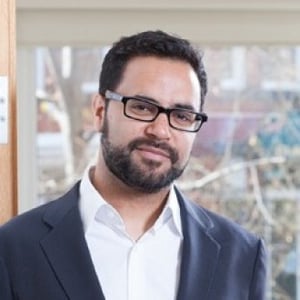
Founding Principal, Gupta Wessler PLLC
Deepak Gupta is the founding principal of Gupta Wessler PLLC. He focuses on Supreme Court, appellate, and complex litigation on a wide range of issues, including constitutional law, class actions, and consumers’ and workers’ rights.
Deepak is “known as a skilled appellate lawyer” (New York Times), “one of the emerging giants of the appellate and the Supreme Court bar,” a “heavy hitter,” and a “principled” and “incredibly talented lawyer” (Law 360). He is described in Chambers and Partners USA as “an excellent lawyer” with a “vibrant appellate practice focused on public interest cases and plaintiff-side representations.” Fastcase recently recognized him as “one of the country’s top litigators,” noting that “what sets him apart” is his legal creativity. The National Law Journal has singled out Deepak’s “calm, comfortable manner that conveys confidence” in oral argument.
Deepak regularly appears in the U.S. Supreme Court and appellate courts nationwide. In the 2016-2017 U.S. Supreme Court term, Deepak’s firm was counsel of record for parties in three merits cases; he was lead counsel in two, prevailing in both. Beyond the Supreme Court, Deepak has handled appeals in every federal circuit and seven state supreme courts. He is frequently sought out by trial lawyers to defend their most consequential victories or resurrect worthy claims on appeal—often after years of hard-fought litigation. He also works with co-counsel to design cases from the ground up—focusing on class actions and administrative and constitutional challenges. In one class action, Deepak represented all of the nation’s federal bankruptcy judges, recovering more than $50 million in back pay for the judges over Congress’s violation of the Constitution’s Judicial Compensation Clause. As the American Lawyer observed, “it’s hard to imagine a higher compliment than being hired to represent federal judges.”
Deepak’s clients have included national nonprofits, state and local governments, members of Congress, retail merchants, tech companies, and classes of consumers and workers harmed by corporate wrongdoing. He currently represents the American Association for Justice (on forced arbitration and civil justice issues), Everytown for Gun Safety (in Second Amendment litigation), and Citizens for Responsibility and Ethics in Washington (in litigation over the Emoluments Clauses).
Before founding the firm in 2012, Deepak served as Senior Counsel for Litigation and Senior Counsel for Enforcement Strategy at the Consumer Financial Protection Bureau. As the first appellate litigator hired under Elizabeth Warren’s leadership, he launched the Bureau’s amicus program, defended its regulations, and worked with the Solicitor General’s office on Supreme Court matters. For seven years previously, he was an attorney at Public Citizen Litigation Group, where he founded and directed the Consumer Justice Project and was the Alan Morrison Supreme Court Project Fellow. Before that, he worked on voting rights litigation at the Civil Rights Division of the U.S. Department of Justice, prisoners’ rights litigation at the ACLU, and religion clause litigation at Americans United for Separation of Church and State.
Deepak frequently engages in public advocacy and speaking, has testified multiple times before the U.S. House of Representatives and U.S. Senate, and appears frequently in the national print and broadcast media. He is currently a 2018-2019 Wasserstein Public Interest Fellow at Harvard Law School and has previously taught courses on public interest law and appellate advocacy as an Adjunct Professor of Law at Georgetown and American universities. He served as a law clerk to Judge Lawrence K. Karlton of the U.S. District Court for the Eastern District of California and studied law at Georgetown, Sanskrit at Oxford, and philosophy at Fordham.
Deepak is an elected member of the American Law Institute and sits on the boards of directors of the National Consumer Law Center, The Impact Fund, and the Alliance for Justice, and the advisory boards of the University of California’s Civil Justice Research Initiative, the Biden Institute, and the Institute for Consumer Antitrust Studies.
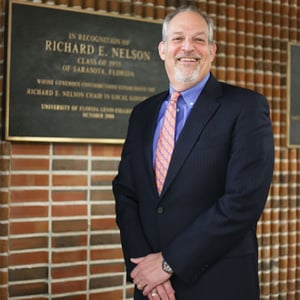
Richard E. Nelson Eminent Scholar Chair in Local Government Professor of Law, University of Florida Levin College of Law
Michael Allan Wolf joined the faculty of the University of Florida Levin College of Law in August, 2003, as the first occupant of the Richard E. Nelson Chair in Local Government Law. Professor Wolf has been teaching and writing for more than three decades in the areas of land-use planning, property, local government, constitutional, environmental, and urban revitalization law; and legal and constitutional history. He earned his B.A. degree from Emory University, his J.D. degree from the Georgetown University Law Center, and his A.M. (history) and Ph.D. (History of American Civilization) degrees from Harvard University. Professor Wolf, who was Professor of Law and History at the University of Richmond, held his first law teaching appointment at Oklahoma City University and has also served as a visiting professor, first at the University of Richmond, then at American University.
Since 2000, Professor Wolf has been the General Editor of Powell on Real Property (17 volumes), the most prominent treatise in the area that is regularly cited by state and federal courts. Other recent books include Land Use Law (with Daniel R. Mandelker, 2015-), The Supreme Court and the Environment: The Reluctant Protector (2012), Land Use Planning and the Environment: A Casebook (with Charles M. Haar, 2010), Powell on Real Property: Michael Allan Wolf Desk Edition (a one-volume abridgement of the treatise, 2009), The Zoning of America: Euclid v. Ambler (2008), and Strategies for Environmental Success in an Uncertain Judicial Climate (editor and contributor, 2005). His writings have also appeared in a wide variety of law and law-related journals (including the Harvard Law Review, Michigan Law Review, and Fordham Law Review), many of them contributions to symposia on topics in land-use regulation, environmental law, eminent domain, and regulatory takings. His commentaries have been featured in national newspapers and on National Public Radio.

Senior Legal Counsel, Pacific Legal Foundation
Before becoming an attorney, James had been a productive member of society working as an exploration geologist in the late 1970s throughout the southwestern United States. However, after several years of dealing with irrational government bureaucrats and environmental policies untethered from reality, James decided that what the world needs is more lawyers — if they are willing to fight for rationality in regulatory regimes, property rights, and liberty.
James attended the University of Arizona College of Law in Tucson, where he served as an editor for the Law Review and received a J.D. degree in 1983. He had previously received a Masters degree in geological sciences from Brown University and an undergraduate degree from Hamilton College in New York. James received the Professional Achievement Award from the University of Arizona Alumni Association in 2018.
James has worked with Pacific Legal Foundation since 1983, litigating cases from Alaska to Florida. He is a member of the Federalist Society’s Environmental Law and Property Rights Practice Group’s Executive Committee, a member of the American College of Real Estate Lawyers, and an honorary member of Owners Counsel of America, an organization comprised of eminent domain attorneys who represent property owners. The Owners Counsel awarded James its Crystal Eagle award in 2013. In 2022, James was awarded the Brigham-Kanner Property Rights Prize at the William & Mary College of Law. The prize is awarded annually to an individual whose work has advanced the cause of property rights and has contributed to the overall awareness of the important role property rights occupy in the broader scheme of individual liberty.
In 2001, James successfully argued a major property rights case, Palazzolo v. Rhode Island, before the United States Supreme Court, a case which affirmed that rights in regulated property do not disappear when land is bought and sold. He has written extensively on all aspects of property rights and environmental law and frequently speaks on these subjects throughout the nation.
When James is not suing the government he enjoys skiing faster than he should, bicycling, hiking, swimming, and spending quality time with his wife, family, and grandchild.
Mr. Burling’s book Nowhere to Live: The Hidden Story of America’s Housing Crisis is available now on Amazon.
James is a member of the bar only in the states of Alaska and California.

Professor of Law, Antonin Scalia Law School, George Mason University
Eric R. Claeys is Professor of Law at the Antonin Scalia Law School, George Mason University. He has written widely in the fields of property, private law, and constitutional law. Professor Claeys’s current research interests focus on flourishing- and labor-based natural rights justifications for property—in American property theory, in intellectual property, and in contemporary regulation of shale gas exploration and hydraulic fracturing. He is a member of the American Law Institute, he serves on the ALI’s Members’ Consultative Group for the first Restatement of Copyright, and he also serves as an adviser to the Restatement (Fourth) of the Law of Property.
Professor Claeys received his JD from the University of Southern California Gould School of Law. He received his AB from Princeton University, and he is a former visiting fellow and current member of Princeton’s Politics Department’s James Madison Program in American Ideals and Institutions. After law school, Professor Claeys clerked for the Hon. Melvin Brunetti, U.S. Court of Appeals for the Ninth Circuit, and the Hon. William H. Rehnquist, Chief Justice of the United States.
Professor Claeys’s main teaching interests include Property, Torts, Jurisprudence, and Intellectual Property. In recent years, he has also taught Water Law, Remedies, Estates and Trusts, Trade Secrecy, Constitutional Law, Torts, and Oil and Gas law. Spring 2018, he is teaching Torts and Jurisprudence as a Visiting Professor at Harvard Law School.

Judge, United States Court of Appeals, District of Columbia Circuit
Judge Katsas was appointed to the D.C. Circuit in December 2017. He graduated from Princeton University and Harvard Law School, where he was an executive editor on the Harvard Law Review. Between 1989 and 1992, he served as a law clerk to Judge Edward Becker on the Third Circuit, to then-Judge Clarence Thomas on the D.C. Circuit, and to Justice Thomas on the Supreme Court. Between 1992 and 2001, he was an associate and then partner in the Washington office of Jones Day, where he specialized in appellate and complex civil litigation. Between 2001 and 2009, he served in many senior positions in the Department of Justice, including as Assistant Attorney General for the Civil Division and as Acting Associate Attorney General. In 2009, he returned to Jones Day. From January to December 2017, he served as Deputy Assistant to the President and Deputy Counsel to the President.
Before joining the bench, Judge Katsas argued more than 75 appeals, including three cases in the Supreme Court, 13 cases in the D.C. Circuit, and cases in every other federal court of appeals. By appointment of the Chief Justice, he served on the Advisory Committee on Appellate Rules from 2013 to 2017. In 2016, he was elected to membership in the American Academy of Appellate Lawyers.
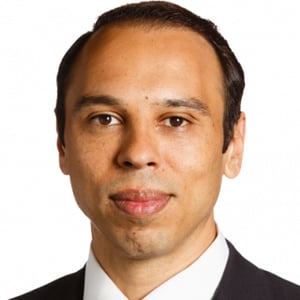
Vice President of Domestic and Economic Policy, The Heritage Foundation
Roger Severino is Vice President of Economic and Domestic Policy, and the Joseph C. and Elizabeth A. Anderlik Fellow at The Heritage Foundation.
Severino is a national authority on civil rights, conscience and religious freedom, the administrative state, and information privacy, particularly as applied to health care law and policy. Find his tweets at @RogerSeverino_.
Severino spearheaded the HHS Accountability Project while a Senior Fellow at EPPC from 2021 to 2023. Previously, Severino was Director of HHS’ Office for Civil Rights, where he led a team of over 250 staff enforcing our nation’s civil rights, conscience and religious freedom, and health information privacy laws. He served from 2017 to 2021 and was the longest-serving OCR director of the past three decades.
Prior to joining HHS, Severino served for two years as Director of the DeVos Center for Religion and Civil Society at Heritage, advocating for life, family, and religious-freedom policies. Before that, he was a trial attorney for seven years at the U.S. Department of Justice’s Civil Rights Division where he enforced the Fair Housing Act and the Civil Rights Act of 1964. Severino started his legal career at the Becket Fund for Religious Liberty, where he was Legal Counsel and Chief Operations Officer and defended the rights of people of all faiths under federal and international law.
Severino has been profiled in The New York Times, The Atlantic, The Wall Street Journal, and The Hill and has appeared on Fox News, CNN, MSNBC, NPR, and PBS, among others. In 2020, The New York Times dubbed him and his wife Carrie, “a conservative power couple” to be reckoned with.
Severino holds a JD from Harvard Law School, a master’s degree in public policy, with highest distinction, from Carnegie Mellon University, and a bachelor’s degree in business from the University of Southern California. He was appointed by President Trump to the Administrative Conference of the United States and is a member of the District of Columbia and the Commonwealth of Virginia bars.
As OCR director, Severino founded the federal government’s first division dedicated exclusively to conscience and religious freedom compliance and enforcement. He enforced the Weldon Amendment for the first time against a state (California) after it coerced families and religious organizations into paying for abortion insurance coverage, leading to a $200 million federal funding disallowance. He also enforced laws protecting pro-life pregnancy resource centers from discrimination by states hostile to their message and enforced laws prohibiting forced participation in abortions by medical professionals.
With respect to civil rights, Severino protected older persons and people with disabilities from being denied life-saving care due to discriminatory “quality of life” judgments, especially during the COVID-19 pandemic. He also achieved a landmark sexual harassment resolution with Michigan State University in the wake of the Larry Nassar sexual assault scandal and protected the rights of non-English speakers to have equal access to health and human services.
In the area of health privacy, he secured the largest HIPAA monetary settlement in history and achieved the largest number of enforcement resolutions both in a single year and across four years. He also facilitated the transformational use of Skype, Zoom, and Facetime for delivery of telehealth during the COVID-19 pandemic and beyond.
His regulatory reform activities resulted in a comprehensive conscience protection regulation and proposed a life-affirming disability rights regulation. He achieved regulatory savings of $3.6 billion in health care industry costs over five years and identified and proposed an additional $3.2 billion in cost savings from the repeal of ineffective and unnecessary regulatory burdens.
Severino is a Spanish speaker who teaches salsa and west coast swing in his spare time.
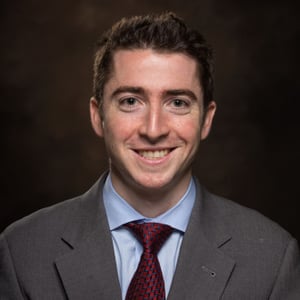
Associate Professor, Northern Illinois University
Evan Bernick joined the NIU Law faculty in 2021. He teaches courses in constitutional law, criminal law, criminal procedure, administrative law and legislation.
From 2020 to 2021, Professor Bernick was a visiting professor at the Georgetown University Law Center and the executive director of the Georgetown Center for the Constitution. Before that, he served as a clerk to Judge Diane S. Sykes of the United States Court of Appeals for the Seventh Circuit. From April 2017 to April 2019, he was a visiting lecturer at Georgetown and a resident fellow of the Center for the Constitution.
His scholarship covers a range of topics, from constitutional law, to philosophy of law, to social movements, to law enforcement. He has published with the Georgetown Law Journal, the Notre Dame Law Review, the William and Mary Law Review and the George Mason Law Review, among other journals. His book, The Original Meaning of the Fourteenth Amendment: Its Letter and Spirit (2021), with Randy E. Barnett, was published by Harvard University Press under its Belknap imprint "for books of long-lasting importance, superior in scholarship and physical production, chosen whether or not they might be profitable."
Professor Bernick received his bachelor's degree in 2008 from the University of Chicago, where he studied philosophy and graduated with honors. He received his juris doctorate in 2011 from the University of Chicago Law School.

Distinguished University Professor, Antonin Scalia Law School, George Mason University
University Professor Nelson Lund is the author of Rousseau’s Rejuvenation of Political Philosophy: A New Introduction. He has also written widely in the field of constitutional law, including articles on constitutional interpretation, federalism, separation of powers, the Second Amendment, the Commerce Clause, the Speech or Debate Clause, the Equal Protection Clause, and the Uniformity Clause. In addition, he has published articles in the fields of employment discrimination and civil rights, the legal regulation of medical ethics, and the application of economic analysis to legal institutions and legal ethics.
Professor Lund graduated from St. John's College in Annapolis, Maryland, after which he received an MA in philosophy from the Catholic University of America and a PhD in political science from Harvard University. He left the faculty of the University of Chicago to attend its law school, where he served as executive editor of the University of Chicago Law Review and chapter chairman of the Federalist Society for Law and Public Policy Studies. After law school, he held positions at the United States Department of Justice in the Office of the Solicitor General and the Office of Legal Counsel. He also served as a law clerk to the Honorable Patrick E. Higginbotham of the United States Court of Appeals for the Fifth Circuit and to the Honorable Sandra Day O'Connor of the United States Supreme Court. Following his clerkship with Justice O'Connor, Professor Lund served in the White House as associate counsel to the president from 1989 to 1992.
Since joining the faculty at George Mason University's Antonin Scalia Law School, Professor Lund has taught Constitutional Law, Legislation, Federal Election Law, Employment Discrimination, State and Local Government, and seminars on the Second Amendment and on a variety of topics in Jurisprudence.
Professor of Law, Case Western Reserve University School of Law
Professor Dent taught law at New York University, Cardozo, and the New York Law School before joining the faculty in 1990. Earlier he had clerked for Judge Paul R. Hays of the U.S. Court of Appeals, Second Circuit, and practiced corporate law in New York with Debevoise, Plimpton, Lyons & Gates. He teaches Business Associations, Mergers and Acquisitions, and Business Planning and is the faculty supervisor for the Business Organizations Concentration. He has published many articles on corporate and securities law, including “Academics in Wonderland: The Team Production and Director Primacy Models of Corporate Governance,” Houston Law Review (2008); “Corporate Governance: Still Broke, No Fix in Sight,” Journal of Corporation Law (2005); “Lawyers and Trust in Business Alliances,” Business Lawyer (2002); and “Gap Fillers and Fiduciary Duties in Strategic Alliances,” The Business Lawyer (2001). He also writes on law and religion, as in “Civil Rights for Whom: Gay Rights Versus Religious Freedom,” University of Kentucky Law Journal (2006-07); and “How Does Same-Sex Marriage Threaten You?,” Rutgers Law Review (2007). Mr. Dent serves as a director of the National Association of Scholars and as president of the Ohio Association of Scholars. He serves as an officer of Cleveland Chapter of the Federalist Society. He heads the Law Section of the Association for the Study of Free Institutions. He is chairman of the Ohio State Advisory Committee to the U.S. Commission on Civil Rights.

COVID-19 Business Closures, Firearms Dealers, and the Second Amendment
Josh Blackman, Deepak Gupta
As the United States faces the spread of COVID-19, officials in many jurisdictions have ordered the...
Lucas v. South Carolina Coastal Council at 25 - Podcast
Michael A. Wolf, James S. Burling, Eric R. Claeys
This spring marks the 25th anniversary of the U.S. Supreme Court's decision in Lucas v....
Don't Thread on Me
A landmark decision against bureaucratic browbeating has advocates for limited government, free markets, and shapely...
Supreme Court Concludes 2015 Term - Podcast
Gregory G. Katsas, Roger Severino
On June 27, 2016, the United States Supreme Court concluded its October 2015 term by...
The Circuit Splits Are Out There—and the Court Should Resolve Them
Evan D. Bernick
Note from the Editor: This article argues that the U.S. Supreme Court should resolve a...
Book Review: Cosmic Constitutional Theory: Why Americans Are Losing Their Inalienable Right to Self-Governance
Nelson Lund
Other Reviews of Cosmic Constitutional Theory: •Marc O. Degirolami, The New Republic, Sept. 2012: http://www.newrepublic.com/book/review/cosmic-constitutional-theory-judicial-restraint...
Perry v. Schwarzenegger: Is Traditional Marriage Unconstitutional?
George W. Dent
Note from the Editor: This article and the article in this issue by Mark Strasser...