
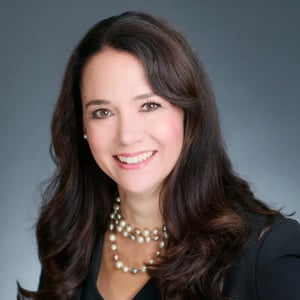
Principal, BGR Group
Robin Colwell is a Principal with BGR’s Commerce and Infrastructure Practice. She provides clients with strategic insights and skillful advocacy on complex telecommunications, technology, and cybersecurity policy issues. Robin’s wide-ranging experience includes key roles in the Executive, Legislative, and Judicial branches of government as well as the private sector.
A Florida native and Florida State University alumna, Robin received her law degree from the College of William & Mary School of Law, and first came to Washington as a law clerk to Chief Judge H. Robert Mayer of the Court of Appeals for the Federal Circuit. After several years representing mass media, communications, and technology clients in Wiley, Rein & Fielding LLP’s corporate practice, she developed deep expertise and passion for the public policy framework underlying these industries as Legislative Counsel for Senate Commerce Committee members including Senators Tim Scott, Jim DeMint, and Peter G. Fitzgerald, and as Counsel to the Senate Commerce Committee for Tourism, Competitiveness, and Innovation.
Robin next served as Chief of Staff to Commissioner Michael O’Rielly at the Federal Communications Commission, and later returned to the Hill as Chief Counsel to the House Energy & Commerce Committee for Communications and Technology. As Chief Counsel, Robin collaborated with majority and minority House and Senate Committee members and staff to secure enactment of major legislation including FOSTA/SESTA, protecting victims of online trafficking, and RAY BAUM’s Act, which funded repacking of spectrum following the broadcast incentive auction and included bicameral, bipartisan priorities such as MOBILE NOW and DIG ONCE.
Most recently, Robin served at the White House National Economic Council under former President Trump as a senior advisor to Director Larry Kudlow, developing Administration policy and leading interagency implementation of priorities including 5G deployment, security, and innovative network architecture; spectrum allocation; rural broadband deployment; data privacy and security; and domestic supply chain security. She was a key White House leader in the successful 2020 initiative to make a significant allocation of prime mid-band spectrum available to be auctioned in December 2021 for rapid U.S. deployment of commercial 5G networks.
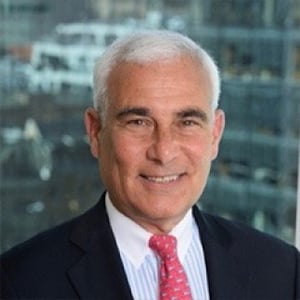
Managing Partner, Crest Hill Advisors
The founder and Managing Partner of Crest Hill Advisors, Scott Blake Harris has been a legal and policy professional in Washington, D.C. for forty-eight years, primarily focused on telecommunications, technology, and energy issues. He has deep experience both in government and in the private sector.
Prior to founding Crest Hill Advisors, Scott served as the Senior Spectrum Advisor and Director of the National Spectrum Strategy at the National Telecommunications and Information Administration (NTIA) in the U.S. Department of Commerce. He previously served in government as General Counsel of the Department of Energy, as the first Chief of the International Bureau at the Federal Communications Commission, and as Chief Counsel for Export Administration at the Department of Commerce. While at DOE, Scott also served as Co-Chair of the Broadband Subcommittee of the White House National Science and Technology Council.
In 1998, Scott co-founded the law firm of Harris, Wiltshire & Grannis LLP (now HWG LLP) and served as its first Managing Partner and later its first Chairman. Scott has also served as General Counsel of Neustar, Inc. and as Co-Managing Partner of Wilkinson Barker Knauer LLP. Earlier in his career, he was a partner at Gibson Dunn & Crutcher, where he was Chair of the Communications practice, and at Williams & Connolly, where began his career in private practice as a litigator in 1977. Scott served as a law clerk to the Hon. Gerhard A. Gesell on the U.S. District Court for the District of Columbia upon graduation from law school. He is a magna cum laude graduate of both Brown University and Harvard Law School.
Scott has received many honors during his career. He was named both as a “Visionary” and as one of the Top Ten Communications Lawyers by the Legal Times. He has been honored as a “Dean of the Bar” by, and received an award for Distinguished Service from, the Federal Communications Bar Association. He has also received awards for Outstanding Service from the National Association of State Energy Officials and for Special Achievement from the Chairman of the FCC. The National Association of Radio and Telecommunications Engineers presented Scott with the Marconi-Bell Award for his private sector work on unlicensed spectrum. He has also been deemed an “Eminent Practitioner” and “Senior Statesperson” by Chambers USA for his work in the telecommunications sector.
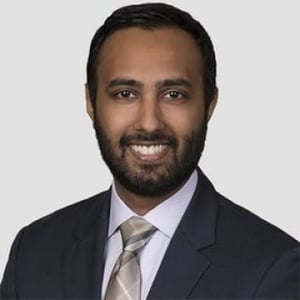
Senior Vice President & General Counsel, CTIA
Umair Javed serves as Senior Vice President and General Counsel. He joined CTIA in 2023 as Senior Vice President, Spectrum, where he was responsible for advancing the wireless industry’s spectrum priorities both domestically and internationally.
Prior to joining CTIA, Umair influenced global and domestic law and policy as Chief Counsel to FCC Chairwoman Jessica Rosenworcel. He served as the FCC designee on President Biden’s Competition Council, led the FCC’s National Security Policy Council, and represented the agency at international treaty-writing conferences. During his time at the FCC, Umair also crafted the FCC’s Spectrum Coordination Initiative, oversaw the third-highest grossing spectrum auction in FCC history, coordinated the deployment of 5G services in the C-band, and partnered with Congress on passage and FCC implementation of the Infrastructure Investment and Jobs Act, Secure and Trusted Communications Networks Act, and Secure Equipment Act.
From October 2017 to January 2019, Umair served as Legal Advisor, Wireless and International in the Office of FCC Commissioner Rosenworcel. He joined the FCC from Wiley Rein LLP, where he was an attorney in the firm’s Telecom, Media, and Technology Group.
Umair was named to the inaugural Lawyers of Color Hot List. He is also a 2021 HTTP “Tech Innovadores” recipient and the 2023 Public Safety Communications Leadership in Regulatory Service award recipient for his service at the FCC.
Umair has a Juris Doctor from the University of Virginia School of Law and a bachelor of arts in Political Philosophy, Policy, and Law from the University of Virginia. He is a member of the bar in the District of Columbia and Virginia. Umair also is a volunteer firefighter in Loudoun County, Virginia.

Senior Fellow for Law, Economics, and Technology, The Heritage Foundation; Professor, Florida International University
Mario Loyola is a Senior Fellow for Law, Economics, and Technology at The Heritage Foundation.
Loyola served in the Trump Administration as Associate Director for Regulatory Reform at the White House Council on Environmental Quality. In that role, he was one of the principal drafters of the One Federal Decision policy, which helped to streamline the permitting and environmental review of large infrastructure projects. While at CEQ, he was a member of the U.S. delegation to the USMCA free trade negotiations with Mexico and Canada, as well as the United Nations conference on biodiversity on the high seas. Loyola initially joined the White House in February 2017 as a Presidential Speechwriter, employing his expertise in many areas of foreign and domestic policy.
After beginning his career in M&A and corporate finance law, Loyola served in the Bush 43 Administration as a special assistant to the Undersecretary of Defense for Policy. He left that position to start writing on national defense issues in magazines such as National Review and The Weekly Standard, reporting from the front lines of the war on terrorism in Lebanon, Israel, and Iraq. He finished the Bush Administration as Foreign and Defense Counsel to the U.S. Senate Republican Policy Committee, then under the chairmanship of Senator Kay Bailey Hutchison of Texas. He subsequently moved to Texas and joined the Texas Public Policy Foundation, where he specialized in energy, environment, and federalism.
Loyola is a frequent contributor to The Wall Street Journal, National Review, and The Atlantic, among others. He teaches environmental and administrative law at Florida International University, where he is Founding Director of the Environmental Finance and Risk Management program in FIU’s prestigious Institute of Environment. He received a bachelor’s degree in European history from the University of Wisconsin–Madison and a J.D. from Washington University School of Law.
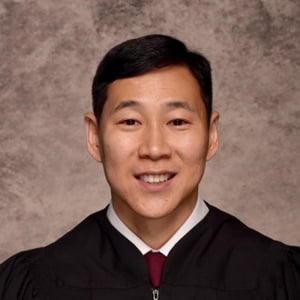
Circuit Judge, United States Court of Appeals for the Second Circuit
Michael H. Park was appointed to the U.S. Court of Appeals for the Second Circuit in May 2019. He earned his A.B. magna cum laude from Princeton University and his J.D. from Yale Law School, where he served as Managing Editor of the Yale Law Journal. Upon graduation from law school in 2001, Judge Park served as a law clerk to then-Judge Samuel A. Alito, Jr. on the Third Circuit, for whom he also clerked on the Supreme Court during the 2008 Term. Judge Park was an associate in the New York office of the Wilmer Hale law firm from 2002 to 2006, and he served as an Attorney-Adviser in the U.S. Department of Justice, Office of Legal Counsel from 2006 to 2008. Judge Park worked in the New York office of the Dechert law firm, first as counsel (2009-2011) and then as a partner (2012-2015). In 2015, Judge Park joined the law firm Consovoy McCarthy Park as a name partner, where he specialized in appellate and complex civil litigation. During that time, he also served as an adjunct professor at the Antonin Scalia Law School at George Mason University.

Executive Vice President, Chief Legal Officer, Gates Corporation
Matthew R. A. Heiman joined the Company in May 2026 and has served as the Company’s Chief Legal Officer and Corporate Secretary since June 2026. As Chief Legal Officer, Mr. Heiman is responsible for all legal functions for Gates, including securities and corporate governance, M&A, litigation, commercial, regulatory, compliance, patents and trademarks, real estate, employment and labor, sustainability and environmental matters. Prior to joining Gates, Mr. Heiman held senior legal leadership roles at Waystar, where he served as Chief Legal & Administrative Officer from 2023 to 2025 and as General Counsel and Corporate Secretary from 2020 to 2023. Prior to that, he was with Johnson Controls, where he served as Vice President, Corporate Secretary, and Associate General Counsel. Mr. Heiman has been a Senior Fellow for the National Security Institute at George Mason University’s Antonin Scalia School of Law since 2018.
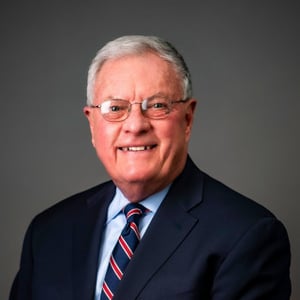
Co-Chair, Center for American Security
General Keith Kellogg was born in Dayton, Ohio, grew up in California, and 23 global and stateside military moves later, settled in Virginia, where he serves as co-Chair of the Center for American Security at AFPI. Kellogg is a highly decorated, retired three-star Army General and has extensive experience in the military and international business. Most recently, he was the National Security Advisor to former Vice President Mike Pence. He also served as the Chief of Staff and Executive Secretary of the National Security Council. Kellogg has wide-ranging experience in Europe, the Pacific, the Middle East, and Africa. He has served as an author and contributor on Fox News and CNN. Kellogg graduated from Santa Clara University with a degree in Political Science and went on to receive his master’s degree in International Studies from Kansas University. Kellogg and his wife, Paige, have three children, and love nothing more than having their four grandchildren stay with them and spoil them with anything they want. It drives their parents nuts.

Director of Foreign and Defense Policy Studies, American Enterprise Institute
Kori Schake leads foreign and defense policy studies at the American Enterprise Institute. She is the author of Safe Passage: the Transition from British to American Hegemony, and with Jim Mattis the editor of Warriors and Citizens: American Views on Our Military. Dr. Schake has taught at Stanford, Johns Hopkins SAIS, and West Point. She has also had a distinguished career in government, working at the US State Department, the US Department of Defense, and the National Security Council.
Managing Director, Beacon Global Strategies LLC
From 2011-2013, Mr. Allen served as the Majority Staff Director of the House Permanent Select Committee on Intelligence (HPSCI). Under Chairman Mike Rogers’ (R-MI) direction, the HPSCI restored the process of an annual intelligence authorization bill to fund and give direction to the seventeen elements of the intelligence community, enacting measures for fiscal years 2011, 2012, and 2013. The HPSCI also led the House of Representatives’ consideration of cyber security legislation, passing the Cyber Information Sharing Protection Act (CISPA) with bipartisan majorities in 2012 and 2013.
Prior to joining the HPSCI, he was director for the Bipartisan Policy Center’s successor to the 9/11 Commission, the National Security Preparedness Group, co-chaired by former Congressman Lee Hamilton and former Governor Tom Kean.
Previously, Mr. Allen served in the White House for seven years in a variety of national security policy and legislative roles. At the National Security Council (NSC), he served as Special Assistant to the President and Senior Director for Counter-proliferation Strategy from June 2007 to January 2009 under National Security Advisor Steve Hadley. As Senior Director, he contributed to the development of the U.S. government’s policy on counter-proliferation issues, including on the Iranian, Syrian, and North Korean nuclear files; missile defense; civilian nuclear cooperation including the U.S.-India Civilian Nuclear Cooperation Agreement; U.S. exports controls; bio-defense; and WMD and terrorism.
As the Special Assistant to the President and Senior Director for Legislative Affairs from March 2005 to June 2007, Mr. Allen was the NSC’s chief liaison with the national security committees of Congress and led the confirmation teams of DNI nominees Negroponte and McConnell and CIA Director General Michael Hayden.
From December 2001 to February 2005, Mr. Allen worked in the legislative affairs office of the White House’s Homeland Security Council. As Special Assistant to the President for Legislative Affairs, Mr. Allen was part of team that managed the White House effort to enact the Intelligence Reform and Terrorism Prevention Act of 2004, which created the Office of the Director of National Intelligence.
At the beginning of the Bush Administration, Mr. Allen worked in the Bureau of Legislative Affairs at the Department of State. Mr. Allen received his L.L.M. with distinction in International Law from the Georgetown University Law Center, his J.D. from the University of Alabama (cum laude), and his B.A. from Vanderbilt University.
In addition to his work at the Bipartisan Policy Center, in 2009, Mr. Allen taught National Security Policymaking at the George Washington University Elliott School of International Affairs and served as an advisor for the congressionally-created Commission on WMD and Terrorism co-chaired by Senators Bob Graham and Jim Talent. Mr. Allen was the Intelligence Team Lead for the Romney for President Transition Team.
Mr. Allen is the author of Blinking Red: Crisis and Compromise in American Intelligence After 9/11. (Potomac Books, September 2013).

Executive Director, Foundation for Defense of Democracies (FDD)
Mark Dubowitz is the executive director of the Foundation for Defense of Democracies (FDD), a Washington, D.C.-based nonpartisan policy institute, where he leads projects on Iran, sanctions, countering threat finance, and nonproliferation.
He is an expert on Iran’s global network including the regime's nuclear, terrorist, missile and cyber threats to the United States and other allies, and is widely recognized as one of the key influencers in shaping sanctions policies to counter the threats emanating from Iran and its surrogates.
Mark was featured as one of the key “financial warriors” against Iran by The Wall Street Journal's Jay Solomon in his 2016 book The Iran Wars. Politico magazine featured Mr. Dubowitz as one of Washington’s leading policy experts challenging Iran’s illicit behavior, observing that he is “...constantly thinking up—and promoting—new ways to squeeze the regime...”
Mr. Dubowitz has advised the Obama and Bush administrations and lawmakers on both sides of the aisle and testified more than twenty times before the U.S. Congress and foreign legislatures.
A former venture capitalist and technology executive, Mark heads FDD’s Center on Sanctions and Illicit Finance and is the author or co-author of over twenty studies on economic sanctions and Iran's nuclear program. He is widely published and cited in U.S. and international media. He teaches courses on sanctions and international negotiations at the University of Toronto's Munk School of Global Affairs, where he is a senior fellow.
Mark has a master’s degree in international public policy from Johns Hopkins University's School of Advanced International Studies, and law and MBA degrees from the University of Toronto.
Raised in Toronto, he is a proud American citizen, and has lived in Washington, D.C.

Founder and Executive Director, National Security Institute; Assistant Professor of Law, Antonin Scalia Law School, George Mason University
Jamil N. Jaffer is the Founder and Executive Director of the National Security Institute at the Antonin Scalia Law School at George Mason University where he also serves as an Assistant Professor of Law, Director of the National Security Law and Policy Program, and Director of the Cyber, Intelligence, and National Security LLM Program. Jamil also teaches classes on counterterrorism, intelligence, surveillance, cybersecurity, and other national security matters, as well as a summer course held abroad with U.S. Supreme Court Justice Neil M. Gorsuch. Jamil is also affiliated with Stanford University’s Center for International Security and Cooperation and previously served as a Visiting Fellow at the Hoover Institution from 2016 to 2019.
Jamil is also a Venture Partner with Paladin Capital Group, where he assists the firm with investments across the full range of its themes and theses, including a focus on dual-use national security technologies. Jamil also serves on the board of directors of RangeForce, a cybersecurity training and readiness platform startup and Tozny, a digital identity startup, and on the advisory boards of U.S. Strategic Metals, North America’s largest primary producer of cobalt, a critical mineral used in EV batteries, aerospace, and other national security applications; and Constella Intelligence, a deep and dark web intelligence startup. Jamil also serves as an advisor to Beacon Global Strategies, a strategic advisory firm and Duco, a technology platform startup that connects corporations with geopolitical and international business experts. Jamil is also the managing director of Trigraph Caveat Capital, a private investment vehicle.
Among other things, Jamil currently serves on the Board of Directors for the Greater Washington Board of Trade, the Board of Advisors for the Global Cyber Alliance, and the Advisory Board of the Foundation for the Defense of Democracies’ Center on Cyber and Tech Innovation, the Executive Committee of the Reagan Institute Strategy Group. Jamil is also a Fellow at the Academy for Judaic, Christian, and Islamic Studies, an advisor to the Concordia Summit, and is a member of the Board of Directors for the Center for Intelligence Policy, the Board of Directors of Speech First, and the Executive Committee of the International Law and National Security Practice Group of the Federalist Society.
Immediately prior to his current positions, from 2015-2021, Jamil served as a senior business leader at IronNet Cybersecurity, helping take the company from a bootstrapped first-year technology products startup through two rounds of venture capital fundraising, growing from 40 employees to over 300, and through its listing on New York Stock Exchange. In his role as IronNet's Senior Vice President for Strategy, Partnerships & Corporate Development, Jamil worked directly for the co-CEOs of the company, Gen (ret.) Keith B. Alexander, the former Director of the National Security Agency and Founding Commander of U.S. Cyber Command, and Bill Welch, the former COO of Zscaler and Duo; in that role, Jamil led all of the company’s strategic and technology partnership efforts, including developing go-to-market and technology integration plans with some of the largest cloud platforms and cybersecurity companies in the market, evaluating potential acquisition targets, and developing overall corporate strategy and thought leadership around collective security and collaborative defense in the cyber arena.
Prior to his time at IronNet, Jamil served on the leadership team of the Senate Foreign Relations Committee as Chief Counsel and Senior Advisor under Chairman Bob Corker (R-TN), where he worked on key national security and foreign policy issues, including leading the drafting of the proposed Authorization for the Use of Military Force against ISIS in 2014 and 2015, the AUMF against Syria in 2013, and revisions to the 9/11 AUMF against al Qaeda. Jamil was also the lead architect of the Iran Nuclear Agreement Review Act and two sanctions laws against Russia for its first intervention in Ukraine.
Prior to joining SFRC, Jamil served as Senior Counsel to the House Permanent Select Committee on Intelligence under Chairman Mike Rogers (R-MI) where he led the committee’s oversight of NSA surveillance, NRO intelligence issues, and NGA analytic and collection matters, as well as intelligence community-wide counterterrorism issues. Jamil was also the lead architect of the Cyber Intelligence Sharing and Protection Act, the nation’s first cyber threat intelligence sharing legislation that was signed into law in 2015.
In the Bush Administration, Jamil served in the White House as an Associate Counsel to the President, handling Defense Department, State Department, and intelligence community matters, and serving as one of the White House Counsel’s primary representatives to the National Security Council Deputies Committee.
Prior to the White House, Jamil served on the leadership team of the Justice Department’s National Security Division as Counsel to the Assistant Attorney General for National Security, where he focused on counterterrorism and intelligence matters. At NSD, Jamil helped lead the division’s work on In re: Directives, the first ever two-party litigated matter in the FISA Court and the second case before the FISA Court of Review in its 30-year history. Jamil also led NSD’s efforts on the President’s Comprehensive National Cybersecurity Initiative (CNCI), including the drafting of NSPD-54/HSPD-23, and related classified matters, and advised the National Security Agency (NSA) and U.S. Cyber Command’s predecessor organization, the Joint Function Component Command for Network Warfare (JFCC-NW), on matters related to cyber intelligence collection and offensive cyber activities. For his work on these matters, Jamil was awarded the Assistant Attorney General’s Award for Special Initiative and was among the group of lawyers awarded the Director of National Intelligence’s 2008 Legal Award (Team of the Year – Cyber Legal).
Jamil also served in other positions in the Justice Department, including in the Office of Legal Policy, where he worked on the confirmations of Chief Justice John G. Roberts, Jr. and Justice Samuel A. Alito, Jr. to the United States Supreme Court.
Jamil also served as a lawyer in private practice at Kellogg Huber, a Washington, DC-based litigation boutique, as a policy advisor to Congressman Bob Goodlatte (R-VA), and as a staff member or senior advisor on a number of political campaigns, including two presidential campaigns and a presidential transition team. While in law school, Jamil was a member of the University of Chicago Law Review, managing editor of the Chicago Journal of International Law, and National Symposium Editor of the Harvard Journal of Law & Public Policy. Following law school, Jamil served as a law clerk to Judge Edith H. Jones of the United States Court of Appeals for the Fifth Circuit and, later in his career, as a law clerk to then-Judge Neil M. Gorsuch when he first joined the United States Court of Appeals for the Tenth Circuit as well as a law clerk to Justice Neil Gorsuch when he joined the U.S. Supreme Court.
Jamil has published multiple op-eds and academic articles on national security, foreign policy, cybersecurity, counterterrorism, encryption, and intelligence matters, and is the co-author of a book chapter with former NSA Director Gen. (Ret.) Keith B. Alexander on national security and the press in National Security, Leaks, and the Freedom of the Press: The Pentagon Papers Fifty Years On (2021) and a book chapter with former CIA Director Gen. (ret.) Mike Hayden on ISIS, al Qaeda, and other international terrorist groups in Choosing to Lead: American Foreign Policy for a Disordered World (2015). Jamil has also written book chapters on cybersecurity and surveillance, as well as op-eds and policy papers with former Attorney General Michael B. Mukasey, former National Counterterrorism Center Director Matt Olsen, and Congressman Mike Waltz (R-FL), among others.
Jamil has previously taught graduate-level courses in intelligence law and policy at George Washington University’s Elliott School of International Affairs and the National Intelligence University, served an outside advisor to the Cyberspace Solarium Commission, and has recently testified before committees of the U.S. Senate and House of Representatives on China, cybersecurity, counterterrorism, and other national security matters. Jamil has also recently appeared on a range of national television and radio outlets including CNN, Fox News, Fox Business, MSNBC, Bloomberg, PBS, Voice of America, and National Public Radio, and in various print and online publications, including the Wall Street Journal, New York Times, and the Washington Post on a range of national security matters including cybersecurity, counterterrorism, surveillance, encryption, privacy, and foreign policy issues.
Jamil holds degrees from UCLA (BA, cum laude), the University of Chicago Law School (JD, with honors), and the United States Naval War College (MA, with distinction).

Maurice A. Deane Distinguished Professor of Constitutional Law and Faculty Director of International Programs, Hofstra University School of Law
Professor Ku’s primary research interest is the relationship of international law to constitutional law. He has also conducted academic research on a wide range of topics including international dispute resolution, international criminal law, and China’s relationship with international law. He teaches courses such as U.S. constitutional law, U.S. foreign affairs law, transnational law, and international trade and business law. Since 2014, he has served as the faculty director of international programs, overseeing Hofstra Law’s study abroad, exchange and LL.M. programs. Professor Ku also teaches Constitutional Law in our online degree programs: Master of Laws in American Law and Master of Arts in American Legal Studies. He has also been selected as the John DeWitt Gregory Research Scholar and as a Hofstra Law Research Fellow. He is a member of the American Law Institute.
He is the co-author, with John Yoo, of Taming Globalization: International Law, the U.S. Constitution, and the New World Order (Oxford University Press 2012). He also has published more than 40 law review articles, book chapters and symposia essays. He has given dozens of academic lectures and workshops at major universities and conferences in the United States, Europe and Asia.
He co-founded the leading international law weblog Opinio Juris, which is read daily by thousands worldwide. His essays and op-eds have been published in major news publications such as the Wall Street Journal, the Los Angeles Times, and the NYTimes.com. He has been frequently interviewed for television news programs and quoted in print and electronic media. He has also signed or submitted amicus briefs to national and international courts and served as an expert witness in both domestic and international proceedings.
Before joining the Hofstra Law faculty, Professor Ku served as a law clerk to the Honorable Jerry E. Smith of the U.S. Court of Appeals for the Fifth Circuit and as an Olin Fellow and Lecturer in Law at the University of Virginia Law School. Professor Ku also practiced as an associate at the New York City law firm of Debevoise & Plimpton, specializing in litigation and arbitration arising out of international disputes. He has been a visiting professor at the College of William & Mary Marshall- Wythe School of Law in Williamsburg, Virginia; a Fulbright Distinguished Lecturer in Law at East China University of Political Science and Law in Shanghai, China; and a Taiwan Fellow at National Taiwan University in Taipei, Taiwan. He is a member of the New York Bar and a graduate of Yale College and Yale Law School.
Beton Michael Kaneb Professor of National Security and Military Affairs, Harvard University
In addition to his roles at Harvard, where he has also served as Harvard College Professor, head of Winthrop House, and Director of the John M. Olin Institute for Strategic Studies, Professor Rosen has also served as the civilian assistant to the director, Net Assessment in the Office of the Secretary of Defense, the Director of Political-Military Affairs on the staff of the National Security Council, and a professor in the Strategic Department at the Naval War College. He participated in the President's Commission on Integrated Long Term Strategy, and in the Gulf War Air Power Survey sponsored by the Secretary of the Air Force. He currently serves as Senior Counsellor at the Long Term Strategy Group. He has published articles on ballistic missile defense, the American theory of limited war, and the strategic implications of the AIDS epidemic. His books include Winning the Next War: Innovation and the Modern Military, Societies and Military Power: India and its Armies, and War and Human Nature.
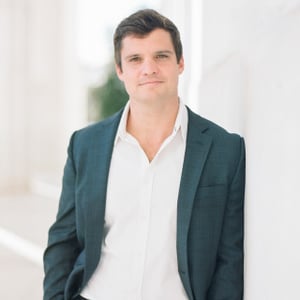
Managing Director, SCF Partners
Daniel G. West invests in energy services, equipment, and technology companies at SCF Partners in Houston, Texas. He provides equity capital and strategic growth assistance to entrepreneurs and leaders of both start-up ventures and established, growing businesses.
Prior to joining the private sector, Mr. West served as an infantry officer in the United States Marine Corps. As a platoon commander with the 22nd Marine Expeditionary Unit aboard the USS Mesa Verde, he led the Tactical Recovery of Aircraft and Personnel force in support of the NATO aerial campaign over Libya. He then served as executive officer of India Company, 3rd Battalion, 9th Marines as it mentored Afghan forces to assume lead security responsibility and executed counter-narcotics missions in Marjah, Helmand Province, Afghanistan. He also served as a clerk for Judge Laurence H. Silberman on the U.S. Court of Appeals for the D.C. Circuit.
Mr. West holds degrees in law, business administration, and economics from Harvard University, where he served as an editor of the Harvard Law Review and taught undergraduate courses in economics and government. He is a member of the Executive Committee of the International & National Security Law Practice Group of the Federalist Society and a term member of the Council on Foreign Relations.
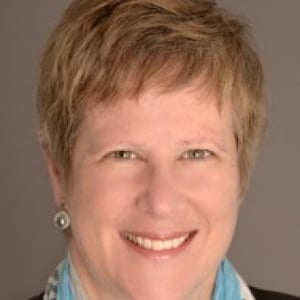
Director, Washington Ofice, Levin Center for Oversight and Democracy
Elise Bean became counsel to U.S. Sen. Carl Levin, D-Mich., on the U.S. Senate Homeland Security and Governmental Affairs Committee in 1985. She worked for him on three subcommittees, under the leadership of Linda Gustitus. In 2003, Levin appointed Bean as staff director and chief counsel of the committee's Permanent Subcommittee on Investigations, which he chaired. Bean retired from the Senate with Levin at the end of 2014.
During her tenure, Bean handled a variety of investigations, hearings and legislation, including matters involving offshore tax abuses, money laundering, foreign corruption, unfair credit card practices, health care fraud, abuses involving derivatives and structured finance, and shell companies with hidden owners. Investigations headed by her included inquiries into the 2008 financial crisis, HSBC money laundering problems, London whale trades at JPMorgan Chase, collapse of Enron, and offshore tax avoidance by Apple, Microsoft and Caterpillar.
In 2016 and 2015, she was included in the Global Tax 50, a list compiled by International Tax Review of the year's top 50 individuals and organizations influencing tax policy and practice. In 2013 and 2011, the Washingtonian magazine named her one of Washington's 100 most powerful women. In 2010, she was selected by the National Law Journal as one of Washington's most influential women lawyers.
Bean graduated Phi Beta Kappa from Wesleyan University in 1978 and earned her law degree, cum laude, from the University of Michigan Law School in 1982. She served as a law clerk to former Chief Judge of the U.S. Claims Court Alex Kozinski, who later served as the chief judge of the Ninth Circuit Court of Appeals. She worked for two years as a trial attorney with the U.S. Department of Justice Civil Frauds Section. Earlier in her career, she worked for U.S. Rep. John Joseph Moakley, D-Mass.
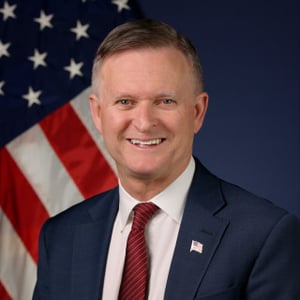
Deputy Secretary of Transportation, US Department of Transportation
Steven G. Bradbury was sworn in as the Deputy Secretary of Transportation on March 13, 2025, following his confirmation by the U.S. Senate on March 11, 2025. In this role, he oversees the Department’s operating administrations and spearheads initiatives to ensure a safe, efficient, and modern transportation system that strengthens economic productivity and global competitiveness. Deputy Secretary Bradbury also assists Secretary Duffy in managing the Department’s activities, including its workforce of over 58,000 employees and an annual budget exceeding $109 billion.
Bradbury previously served as the 23rd General Counsel of the Department of Transportation from 2017 to 2021, as the Acting Deputy Secretary from 2019, and as Acting Secretary of Transportation in 2021. As General Counsel, he was the chief legal officer, advising on all legal matters and ensuring the integrity and compliance of the Department’s policies and programs.
Before rejoining DOT, Bradbury was a Distinguished Fellow at The Heritage Foundation from December 2022 to March 2025. He has extensive experience in the public and private sector, having served as Principal Deputy and Acting Assistant Attorney General at the U.S. Department of Justice and as a partner at Kirkland & Ellis LLP and Dechert LLP. Earlier in his career, he clerked for Justice Clarence Thomas and Judge James L. Buckley.
Bradbury holds a J.D., magna cum laude, from the University of Michigan Law School and a B.A. in English from Stanford University.
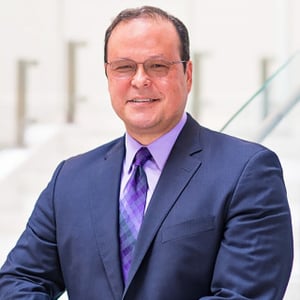
Senior Project Director and In Residence Adjunct, American University Washington College of Law
Alex Joel is a Scholar-in-Residence and Adjunct Professor at the Washington College of Law. He is conducting research, developing programming, and teaching courses focused on the intersections between the law, national security, technology, and privacy. Previously, he was a senior officer with the Office of the Director of National Intelligence (ODNI), where until June 2019 he served as the Chief of the Office of Civil Liberties, Privacy and Transparency (CLPT). CLPT works to ensure that the Intelligence Community carries out its national security mission in a manner that protects privacy and civil liberties, and provides appropriate public transparency. As Chief of CLPT, Mr. Joel was the ODNI’s Civil Liberties Protection Officer, a position established by the Intelligence Reform and Terrorism Protection Act of 2004. Mr. Joel served in that position since the ODNI stood up in 2005.
Since 2015, he also served as the ODNI’s Chief Transparency Officer, appointed to the position by Director of National Intelligence James Clapper. Mr. Joel formerly served on the Board of Directors of the International Association of Privacy Professionals, the world’s largest association of privacy professionals. Previously, Mr. Joel worked as an attorney at the Central Intelligence Agency's Office of General Counsel. Before that, he worked in private practice, as a technology attorney at the law firm of Shaw, Pittman, Potts & Trowbridge in Washington, D.C. (now Pillsbury Winthrop), and as the privacy, technology, and e-commerce attorney for Marriott International, Inc. Mr. Joel began his legal career as an officer in the U.S. Army Judge Advocate General’s Corps.
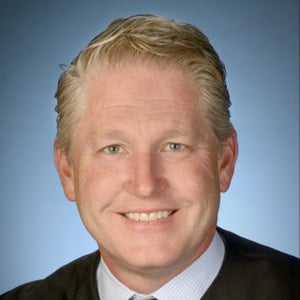
Judge, United States District Court, District of Columbia
Judge Carl J. Nichols was appointed to the District Court in June 2019. He received a B.A., cum laude and with high honors in Philosophy, from Dartmouth College in 1992, and a J.D., with high honors and Order of the Coif, from The University of Chicago Law School in 1996.
Immediately after law school, Judge Nichols served as a law clerk to Judge Laurence H. Silberman of the U.S. Court of Appeals for the District of Columbia and to Justice Clarence Thomas of the Supreme Court of the United States. Following his clerkships, Judge Nichols was an associate and then partner at Boies, Schiller & Flexner LLP. From 2005-2009, he served in the U.S. Department of Justice, first as a Deputy Assistant Attorney General in the Civil Division, and then as Principal Deputy Associate Attorney General. Judge Nichols was a partner at Wilmer Cutler Pickering Hale & Dorr LLP from 2010 until his appointment to the bench in 2019.

Partner, Steptoe & Johnson LLP
Stewart Baker is a partner in the law firm of Steptoe & Johnson in Washington, D.C. From 2005 to 2009, he was the first Assistant Secretary for Policy at the Department of Homeland Security. His law practice covers cybersecurity, data protection, homeland security, and travel and foreign investment regulation; he has been awarded one patent.
Mr. Baker has been General Counsel of the National Security Agency and General Counsel of the commission that investigated WMD intelligence failures prior to the Iraq war. He is the author of Skating on Stilts, a book on terrorism, cybersecurity, and other technology issues; he also hosts the weekly Cyberlaw Podcast.
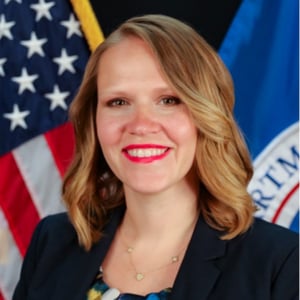
Director, Cybersecurity and Emerging Threats, R Street Institute
Tatyana Bolton is the Policy Director for R Street’s Cybersecurity & Emerging Threats team. She crafts and oversees the public policy strategy for the department with a focus on secure and competitive markets, data security and data privacy, and diversity in cybersecurity. Other areas of research for the team include cyber metrics, Bureau of Cyber Statistics, content moderation, 5G, building capacity, state and local cybersecurity, and supporting innovation.
Most recently, Tatyana worked as the senior policy director for the U.S. Cyberspace Solarium Commission focusing on U.S. government reorganization and resilience portfolios. From 2017-2020, Tatyana also served at the Cybersecurity and Infrastructure Security Agency as the cyber policy lead in the Office of Strategy, Policy and Plans where she developed strategies for strengthening the cybersecurity of our nation’s critical infrastructure. Tatyana’s work included efforts on the Cyber Deterrence Strategy of the United States, the Department of Homeland Security Cybersecurity Strategy and the National Cyber Strategy.
Tatyana has published pieces in Lawfare and Defense News on cybersecurity clinics and women in cybersecurity. She also received an award for exceptionally meritorious service from the Cyberspace Solarium Commission.
She received a Master of Arts in security studies with a focus on Asian affairs from Georgetown University’s Walsh School of Foreign Service’s Security Studies Program and earned a Bachelor of Arts with honors in political science and theatre from the Ohio State University.
Tatyana lives in Alexandria, Virginia with her family.
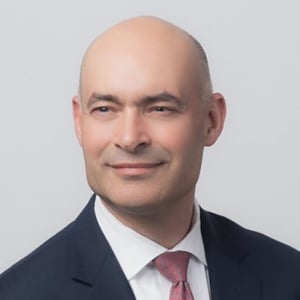
Senior Public Policy Advisor, Wiley Rein LLP
Nova Daly, an experienced international investment and trade policy professional, has held senior leadership positions at the U.S. Departments of the Treasury and Commerce, the White House, and the U.S. Senate. Drawing on his experience in the management, development, and implementation of the U.S. economic and national security policies and programs, he provides both high-level insight and deep operational experience to help clients navigate the policy and regulatory environment surrounding cross-border business activities, especially through the Committee on Foreign Investment in the United States (CFIUS).

Global Public Policy, AT&T, Director
Ms. Geffroy is based in AT&T’s Washington, DC office. She represents AT&T in a wide range of cybersecurity and national security policy issues. Ms. Geffroy also serves as a Senior Fellow with the George Washington University Center for Cyber and Homeland Security.
Prior to assuming her current role, Ms. Geffroy’s experience included serving as Chief Counsel to the House Permanent Select Committee on Intelligence and as Counselor to Board Member Elisebeth Collins on the Privacy and Civil Liberties Oversight Board. As Chief Counsel, Ms. Geffroy led the Committee’s efforts to pass cyber threat information sharing legislation, developed and implemented the Committee’s legislative and parliamentary operations and managed the legal issues arising in the Committee’s regular oversight of the seventeen Intelligence Community elements. Ms. Geffroy also served as an attorney in the U.S. Department of Justice Office of Legislative Affairs where she represented the Department in legislative and oversight matters before Congress on various national security, criminal, and civil matters.
Ms. Geffroy began her career in private practice with a law firm in Washington, D.C. She holds an LL.M. in International and Comparative Law from Georgetown University Law School, a J.D. from Suffolk University Law School, and a BA in Business Administration from Michigan State University. She lives in Alexandria, VA with her husband and four children.
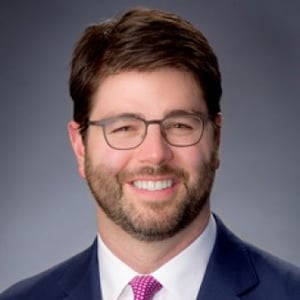
Partner, Wilkinson Barker Knauer LLP
Mr. Johnson provides advice and advocacy to clients navigating the complex terrain at the intersection of technology and security. Having served in a wide variety of national security and cybersecurity leadership roles on Capitol Hill, in the national security and intelligence communities, in the regulatory arena, and in the Executive Branch, Mr. Johnson focuses in particular on improving the effectiveness and efficiency of government-industry collaboration.
Mr. Johnson was Secretary Penny Pritzker’s Senior Adviser for Cybersecurity and Technology at the U.S. Department of Commerce, where he coordinated the Department’s cybersecurity initiatives and the Department’s support for the Commission on Enhancing National Cybersecurity. He was also the Department’s representative for National Security Council staff deliberations on cybersecurity, encryption, and other policy issues at the intersection of technology and security.
Previously, Mr. Johnson was appointed by Federal Communications Commission (FCC) Chairman Tom Wheeler as the FCC’s first Chief Counsel for Cybersecurity. In this position, he helped develop the FCC’s cybersecurity mission, focusing on creating new legal mechanisms for government collaboration with private sector stakeholders to improve the security and reliability of communications infrastructure. He was also the primary drafter of the charter for the Cybersecurity Forum for Independent and Executive Branch Regulators, a coordinating body of regulatory agencies which is presently chaired by the FCC.
Prior to his time at the FCC, Mr. Johnson was Senator John D. Rockefeller IV’s designated counsel on the Senate Intelligence Committee and counsel for defense, foreign policy, and international trade. In these roles, he was a leading staffer on bipartisan Senate cybersecurity initiatives and the primary staff drafter of the legislation that codified the National Institute of Standards and Technology’s collaborative process to work with industry to develop and update the widely-praised Cybersecurity Framework.
Before his government service, Mr. Johnson worked for a major Washington-based law firm, where he practiced in the areas of international trade, defense, and security. Earlier, he served as an Army officer in Germany, Korea, and the Balkans. He is a graduate of the University of Georgia School of Law, where he was the editor-in-chief of the Georgia Journal of International and Comparative Law, and he received a master of science degree in international relations from the London School of Economics and Political Science. He received his bachelor’s degree from Harvard, where he graduated cum laude, cross-enrolled at MIT for service as Executive Officer of its Army ROTC Paul Revere Battalion, and played varsity football.
Clete lives in Alexandria, Va. with his wife, Sheila, and their two children.

Telecommunications & Electronic Media Practice Group: Administration in Review and What Lies Ahead: Communications and Technology Policy Challenges in Times of Transformational Change
Robin Colwell, Scott Blake Harris, Umair Javed, Mario Loyola, Michael H. Park
Featuring a conversation addressing regulation of artificial intelligence, cybersecurity, tech platform regulation, privacy, spectrum policy,...
Panel II: The Future of Foreign Policy: What Should be the US’s Grand Strategy Going Forward
Matthew R. A. Heiman, Lt. General Keith Kellogg, Kori Schake
With conflict rising across the globe and a presidential election this year, the United States...
Panel I: Regional Strategy & Competing Conflicts
Michael Allen, Mark Dubowitz, Jamil N. Jaffer, Julian Ku
Over the past two years, a series of regional conflicts has resulted in diplomatic tensions...
New START, Nuclear Weapons, and the New Landscape: Arms Control and Deterrence Post-Ukraine
Stephen P. Rosen, Daniel G. West
In February 2023, Russian President Vladimir Putin announced that Russia would withdraw from the New...
The Role of Executive Branch Lawyers and The Presidential Records Act Compliance
Elise Bean, Steven Gill Bradbury, Alex Joel, Carl J. Nichols
At the end of an administration, the President and Vice President are required to relinquish...
Topics
Religious Liberty Update on U.S. Congress and Executive Branch Actions
Congress SENATE 1. On January 24, 2023, Sen. Ted Cruz (R-TX) introduced S.29, “AMERICANS Act,”...
Topics
Religious Liberty Update on U.S. Congress and Executive Branch Actions
Congress NEW LAW 1. On December 29, 2022, President Biden signed into law H.R.2617, the...
Topics
Religious Liberty Update on Congressional and Executive Branch Actions
Congress SENATE On September 29, 2022, Sen. Lindsey Graham (R-SC), with 16 cosponsors, introduced S.Res....
Deep Dive Episode 182 – Cybersecurity Threats and the Regulatory Response
Stewart A. Baker, Tatyana Bolton
The Biden administration had barely named a cabinet, let alone staffed the government, when it...
Supply Chain: The Role of Chinese Equipment in U.S. Tech
Nova Daly, Sarah Roland Geffroy, Clete D. Johnson
“Supply chain security” has been a hot topic in Congress and federal agencies in recent...