
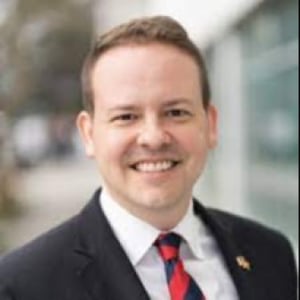
General Counsel, Department of Veterans Affairs
James Baehr was confirmed as General Counsel for the Department of Veterans Affairs in October, 2025.
Previously, Baehr was a Constitutional litigator and a founder of the Pelican Center for Justice. Before that, served as a Special Assistant to the President in the Domestic Policy Council in the White House. He coordinated and oversaw DPC’s policy portfolio across a number of agencies, including the Department of Veteran’s Affairs and the Department of Justice.
Baehr serves as a Major in the Marine Corps Reserves as the Reserve Regional Defense Counsel-East Coast. In 2018, he activated and deployed to the Middle East for Operation Inherent Resolve, where he worked on the Command Staff and earned the Defense Meritorious Service Medal.
In his civilian career, Baehr was a federal prosecutor at the U.S. Attorney’s Office in New Orleans, prosecuting over 100 defendants for felony-level violations in the Eastern District of Louisiana including narcotics, fraud, murder, and corruption. He previously clerked for Judge Edith Clement of the United States Fifth Circuit Court of Appeals.
Baehr’s first job after law school was as an active-duty Marine judge advocate defense counsel. He defended over 200 Marines in trials, presentencing trials, and administrative boards.
Baehr received his J.D. and a Masters in History from the University of Virginia in 2008. He graduated from Dartmouth College with honors in History and Government in 2005.
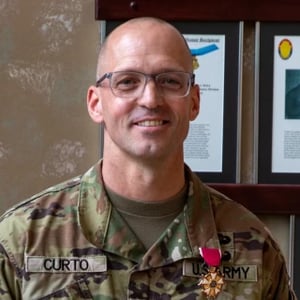
Colonel, U.S. Army
Colonel Toby Curto serves as a Staff Judge Advocate for the US Army 18th Airborne Corps at Fort Bragg. He received his JD from Maurice A. Deane School of Law at Hofstra University, his LLM in Military Law from The Judge Advocate General's Legal Center & School, and a Master of Strategic Studies from the US Army War College.
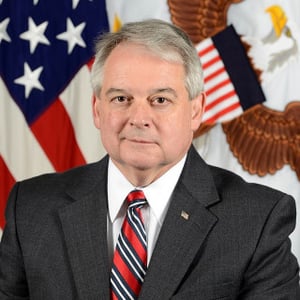
Partner, Bradley Arant Boult Cummings LLP; Former General Counsel of the Department of Defense
Paul Ney is a partner at Bradley Arant Boult Cummings LLP practicing in with the Defense & National Security and Government Enforcement and Investigations teams. Before joining Bradley, he served as the Legal Advisor to the National Security Council. Previously, he was Chief Legal Officer and Corporate Secretary at Momentus Inc., a space infrastructure company. Ney has nearly four decades of public service and private law practice experience.
Before joining Momentus, he was presidentially appointed and confirmed by the U.S. Senate to serve as the General Counsel of the Department of Defense. In this position, he was the Department’s chief legal officer leading a team of over 12,000 lawyers that served the Department’s more than 2.8 million military and civilian personnel, and he served as the Designated Agency Ethics Official overseeing the Department’s Standards of Conduct Office. During his tenure in the Department of Defense, the U.S. Space Force and the U.S. Space Command were established.
In earlier government roles, Ney was the Principal Deputy and the acting General Counsel of the United States Department of the Navy and Chief Deputy Attorney General for the State of Tennessee. He also served as Director of the Nashville Davidson County Mayor's Office of Economic and Community Development.
Ney has been a partner in two Nashville law firms. He is a registered patent attorney and he has more than 25 years of experience in private practice engaged in commercial litigation, administrative and regulatory law, and intellectual property law.
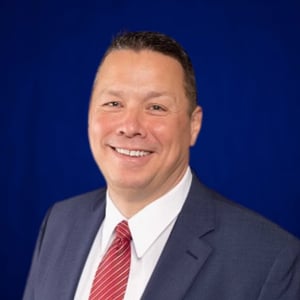
Founding Partner, The Sander Group, PLLC; Former General Counsel, U.S. Department of the Navy
Bob is the Founding Partner of The Sander Group, PLLC, which is a National Security and Government Contracts Boutique Law Firm located in Alexandria, VA. Bob previously served as the 23rd General Counsel of the Department of the Navy after his unanimous confirmation by the U.S. Senate on December 19, 2019. As General Counsel, Bob served as the Department of the Navy’s (DON) Chief Legal Officer and head of the Office of the General Counsel (OGC) where he led a team of over 1,100 civilian and uniformed attorneys and professional support staff in 140 offices worldwide. During this time, Bob provided legal advice to the Secretary of the Navy, the Under Secretary of the Navy, the Assistant Secretaries of the Navy and their staffs, and the multiple components of the Department, including the Navy and the Marine Corps.
Previously, in July 2018, Bob became the Principal Deputy General Counsel of the Department of the Army. He then became the Chief Legal Officer for the Army serving as The Senior Official Performing the Duties of the General Counsel of the Army in June 2019. During his time with the Army Office of General Counsel, Bob’s duties included providing legal and policy advice to the Secretary of the Army, the Army Secretariat, and other Senior Army leaders.
Prior to becoming Principal Deputy General Counsel of the Army, Bob performed a detail to the Office of the Director of National Intelligence Office of General Counsel. From 2010 to 2019, Bob worked as a Federal Prosecutor in the U.S. Department of Justice, National Security Division, Counterterrorism Section. Previously, Bob served as the Chief of the Economic Crimes Unit and the Captain of the Narcotics Enforcement Team in the Montgomery County, Pennsylvania, District Attorney’s Office. Bob also served as a Special Assistant United States Attorney for the Eastern District of Pennsylvania. As a state and federal prosecutor, Bob has handled thousands of cases, which includes trying dozens of jury trials to verdict.
In his military capacity, Bob is a Colonel in the U.S. Army Reserve Judge Advocate General’s Corps, where he serves as the Senior Legal Advisor/Staff Judge Advocate (IMA) for the Network Enterprise Technology Command and the U.S. Army Intelligence Center of Excellence at Fort Huachuca, AZ. Bob previously served as the Chief of the Procurement Fraud/Business Integrity Section for the Defense Logistics Agency at Fort Belvoir, VA and has performed duties as an Adjunct Professor at the National Intelligence University in Bethesda, Maryland. Bob previously deployed to Djibouti, Africa for 13 months as the Acting/Deputy Staff Judge Advocate for the Combined Joint Task Force-Horn of Africa, and was deployed for six months in support of Operations Enduring and Iraqi Freedom, where he served as Trial Counsel for V Corps in Darmstadt, Germany.
Bob received his Juris Doctor Degree from the Widener University School of Law, where he was a member of Law Review for the Delaware Journal of Corporate Law and a member of the Student Bar Association. Bob also has a Master of Science of Strategic Intelligence Degree from the National Intelligence University and a Bachelor of Business Administration Degree in Finance from Temple University. Bob holds an active Top Secret/Sensitive Compartmented Information (TS-SCI) Security Clearance.
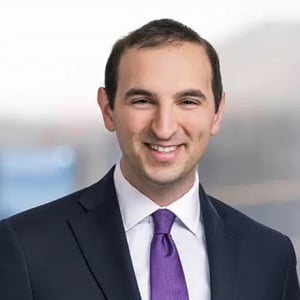
Associate, Covington & Burling LLP
Eli Nachmany is an associate at Covington & Burling LLP in the Washington, DC, office. He clerked for Judge Steven J. Menashi of the U.S. Court of Appeals for the Second Circuit. Eli graduated magna cum laude from Harvard Law School, where he was Editor-in-Chief of the Harvard Journal of Law & Public Policy. Prior to law school, Eli served as the speechwriter to the U.S. Secretary of the Interior and as a domestic policy aide in the White House Office of American Innovation. He graduated summa cum laude from New York University with a B.S. in Sports Management. Eli’s scholarship on administrative law and executive power has appeared in the BYU Law Review, George Mason Law Review, Wake Forest Law Review, and Yale Law Journal Forum.
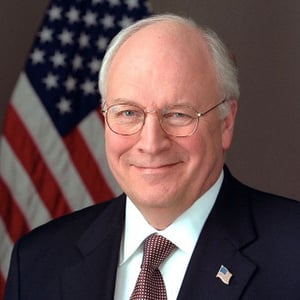
Former Vice President of the United States
Vice President Richard B. Cheney has had a distinguished career as a businessman and public servant, serving four Presidents and as an elected official. Throughout his service, Mr. Cheney served with duty, honor, and unwavering leadership, gaining him the respect of the American people during trying military times.
Mr. Cheney was born in Lincoln, Nebraska, on January 30, 1941 and grew up in Casper, Wyoming. He earned his bachelor's and master's of arts degrees from the University of Wyoming. His career in public service began in 1969 when he joined the Nixon Administration, serving in a number of positions at the Cost of Living Council, at the Office of Economic Opportunity, and within the White House.
When Gerald Ford assumed the Presidency in August 1974, Mr. Cheney served on the transition team and later as Deputy Assistant to the President. In November 1975, he was named Assistant to the President and White House Chief of Staff, a position he held throughout the remainder of the Ford Administration.
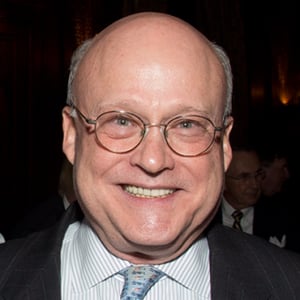
President Emeritus, Intercollegiate Studies Institute
T. Kenneth Cribb Jr. is the former president of the Intercollegiate Studies Institute. Mr. Cribb was Assistant to the President for Domestic Affairs in the Reagan administration, serving as President Reagan’s top adviser on domestic matters. Earlier in the administration he held the position of Counselor to the Attorney General. He also served as Vice Chairman of the Fulbright Foreign Scholarship Board from 1989 to 1992.
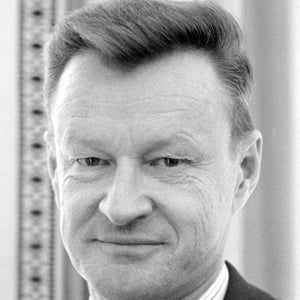
Former United States National Security Advisor
Zbigniew Brzezinski (born 1928) was assistant to the president of the United States for national security affairs during the Carter administration (1977-1980). Later he was associated with the Center for Strategic and International Studies in Washington D.C. He authored several books through which he expounded his philosophies as well as his political beliefs and ideals.

David McIntosh is a leader for the principles of limited constitutional government and individual freedom. He is president of the Club for Growth, the leading advocate for economic liberty.
Former Congressman David McIntosh represented Indiana's 2nd Congressional District in the United States Congress from 1995-2001. As a Freshman, David chaired the Subcommittee on Regulatory Relief. He passed the Congressional Review Act and held extensive oversight and field hearings to build a record of public support for regulatory relief initiatives in energy, biotechnology, pharmaceutical, healthcare, transportation and technology sectors. Another issue that he championed was the elimination of the marriage penalty in the Federal Tax Code.
David served during the Reagan administration as special assistant to Attorney General Edwin Meese III, and as special assistant to President Reagan for Domestic Affairs. During the first Bush administration, he served as executive director of the President's Council on Competitiveness and assistant to the Vice President. The Competitiveness Council coordinated the cost/benefit review of major regulations and promoted legal reform measures.
David is a co-founder of the Federalist Society for Law and Public Policy and serves on the Board of Directors. He remains active with several free market and conservative think tanks and grassroots organizations. David has also had stints at the Hudson Institute and as a Professor of Economics at Ball State School of Business.
Prior to the Club for Growth, David was a partner at Mayer Brown, LLP in Washington, DC.
David graduated from the University of Chicago Law School in 1983, and Yale University, BA, cum laude, in 1980. He and his wife, Ruthie, are the proud parents of Ellie age 17 and Davey age 13.
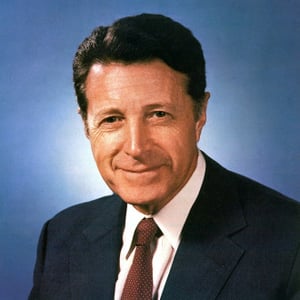
Former United States Secretary of Defense
Caspar Weinberger (August 18, 1917 – March 28, 2006) was an American politician and businessman. As a prominent Republican, he served in a variety of state and federal positions for three decades, including Chairman of the California Republican Party, 1962–68. Most notably he was Secretary of Defense under President Ronald Reagan from 1981 to 1987.
Principal, The Chertoff Group, Former NSA and CIA Director
As Director of the Central Intelligence Agency, General Michael V. Hayden was responsible for overseeing the collection of information concerning the plans, intentions and capabilities of America’s adversaries; producing timely analysis for decision makers; and conducting covert operations to thwart terrorists and other enemies of the US.
At Chertoff Group, General Hayden will uses his broad geographic and political knowledge to brief clients on intelligence matters worldwide – including developments in cybersecurity – that may affect their businesses.
Before becoming Director of the CIA, General Hayden served as the country’s first Principal Deputy Director of National Intelligence and was the highest-ranking intelligence officer in the armed forces. Earlier, he served as Commander of the Air Intelligence Agency, Director of the Joint Command and Control Warfare Center, Director of the National Security Agency and Chief of the Central Security Service.
General Hayden graduated from Duquesne University with a bachelor’s degree in history in 1967 and a master’s degree in modern American history in 1969. He also did postgraduate work at the Defense Intelligence School conducted by the Defense Intelligence Agency. He is currently a Distinguished Visiting Professor at George Mason University.

Founder and Executive Director, National Security Institute; Assistant Professor of Law, Antonin Scalia Law School, George Mason University
Jamil N. Jaffer is the Founder and Executive Director of the National Security Institute at the Antonin Scalia Law School at George Mason University where he also serves as an Assistant Professor of Law, Director of the National Security Law and Policy Program, and Director of the Cyber, Intelligence, and National Security LLM Program. Jamil also teaches classes on counterterrorism, intelligence, surveillance, cybersecurity, and other national security matters, as well as a summer course held abroad with U.S. Supreme Court Justice Neil M. Gorsuch. Jamil is also affiliated with Stanford University’s Center for International Security and Cooperation and previously served as a Visiting Fellow at the Hoover Institution from 2016 to 2019.
Jamil is also a Venture Partner with Paladin Capital Group, where he assists the firm with investments across the full range of its themes and theses, including a focus on dual-use national security technologies. Jamil also serves on the board of directors of RangeForce, a cybersecurity training and readiness platform startup and Tozny, a digital identity startup, and on the advisory boards of U.S. Strategic Metals, North America’s largest primary producer of cobalt, a critical mineral used in EV batteries, aerospace, and other national security applications; and Constella Intelligence, a deep and dark web intelligence startup. Jamil also serves as an advisor to Beacon Global Strategies, a strategic advisory firm and Duco, a technology platform startup that connects corporations with geopolitical and international business experts. Jamil is also the managing director of Trigraph Caveat Capital, a private investment vehicle.
Among other things, Jamil currently serves on the Board of Directors for the Greater Washington Board of Trade, the Board of Advisors for the Global Cyber Alliance, and the Advisory Board of the Foundation for the Defense of Democracies’ Center on Cyber and Tech Innovation, the Executive Committee of the Reagan Institute Strategy Group. Jamil is also a Fellow at the Academy for Judaic, Christian, and Islamic Studies, an advisor to the Concordia Summit, and is a member of the Board of Directors for the Center for Intelligence Policy, the Board of Directors of Speech First, and the Executive Committee of the International Law and National Security Practice Group of the Federalist Society.
Immediately prior to his current positions, from 2015-2021, Jamil served as a senior business leader at IronNet Cybersecurity, helping take the company from a bootstrapped first-year technology products startup through two rounds of venture capital fundraising, growing from 40 employees to over 300, and through its listing on New York Stock Exchange. In his role as IronNet's Senior Vice President for Strategy, Partnerships & Corporate Development, Jamil worked directly for the co-CEOs of the company, Gen (ret.) Keith B. Alexander, the former Director of the National Security Agency and Founding Commander of U.S. Cyber Command, and Bill Welch, the former COO of Zscaler and Duo; in that role, Jamil led all of the company’s strategic and technology partnership efforts, including developing go-to-market and technology integration plans with some of the largest cloud platforms and cybersecurity companies in the market, evaluating potential acquisition targets, and developing overall corporate strategy and thought leadership around collective security and collaborative defense in the cyber arena.
Prior to his time at IronNet, Jamil served on the leadership team of the Senate Foreign Relations Committee as Chief Counsel and Senior Advisor under Chairman Bob Corker (R-TN), where he worked on key national security and foreign policy issues, including leading the drafting of the proposed Authorization for the Use of Military Force against ISIS in 2014 and 2015, the AUMF against Syria in 2013, and revisions to the 9/11 AUMF against al Qaeda. Jamil was also the lead architect of the Iran Nuclear Agreement Review Act and two sanctions laws against Russia for its first intervention in Ukraine.
Prior to joining SFRC, Jamil served as Senior Counsel to the House Permanent Select Committee on Intelligence under Chairman Mike Rogers (R-MI) where he led the committee’s oversight of NSA surveillance, NRO intelligence issues, and NGA analytic and collection matters, as well as intelligence community-wide counterterrorism issues. Jamil was also the lead architect of the Cyber Intelligence Sharing and Protection Act, the nation’s first cyber threat intelligence sharing legislation that was signed into law in 2015.
In the Bush Administration, Jamil served in the White House as an Associate Counsel to the President, handling Defense Department, State Department, and intelligence community matters, and serving as one of the White House Counsel’s primary representatives to the National Security Council Deputies Committee.
Prior to the White House, Jamil served on the leadership team of the Justice Department’s National Security Division as Counsel to the Assistant Attorney General for National Security, where he focused on counterterrorism and intelligence matters. At NSD, Jamil helped lead the division’s work on In re: Directives, the first ever two-party litigated matter in the FISA Court and the second case before the FISA Court of Review in its 30-year history. Jamil also led NSD’s efforts on the President’s Comprehensive National Cybersecurity Initiative (CNCI), including the drafting of NSPD-54/HSPD-23, and related classified matters, and advised the National Security Agency (NSA) and U.S. Cyber Command’s predecessor organization, the Joint Function Component Command for Network Warfare (JFCC-NW), on matters related to cyber intelligence collection and offensive cyber activities. For his work on these matters, Jamil was awarded the Assistant Attorney General’s Award for Special Initiative and was among the group of lawyers awarded the Director of National Intelligence’s 2008 Legal Award (Team of the Year – Cyber Legal).
Jamil also served in other positions in the Justice Department, including in the Office of Legal Policy, where he worked on the confirmations of Chief Justice John G. Roberts, Jr. and Justice Samuel A. Alito, Jr. to the United States Supreme Court.
Jamil also served as a lawyer in private practice at Kellogg Huber, a Washington, DC-based litigation boutique, as a policy advisor to Congressman Bob Goodlatte (R-VA), and as a staff member or senior advisor on a number of political campaigns, including two presidential campaigns and a presidential transition team. While in law school, Jamil was a member of the University of Chicago Law Review, managing editor of the Chicago Journal of International Law, and National Symposium Editor of the Harvard Journal of Law & Public Policy. Following law school, Jamil served as a law clerk to Judge Edith H. Jones of the United States Court of Appeals for the Fifth Circuit and, later in his career, as a law clerk to then-Judge Neil M. Gorsuch when he first joined the United States Court of Appeals for the Tenth Circuit as well as a law clerk to Justice Neil Gorsuch when he joined the U.S. Supreme Court.
Jamil has published multiple op-eds and academic articles on national security, foreign policy, cybersecurity, counterterrorism, encryption, and intelligence matters, and is the co-author of a book chapter with former NSA Director Gen. (Ret.) Keith B. Alexander on national security and the press in National Security, Leaks, and the Freedom of the Press: The Pentagon Papers Fifty Years On (2021) and a book chapter with former CIA Director Gen. (ret.) Mike Hayden on ISIS, al Qaeda, and other international terrorist groups in Choosing to Lead: American Foreign Policy for a Disordered World (2015). Jamil has also written book chapters on cybersecurity and surveillance, as well as op-eds and policy papers with former Attorney General Michael B. Mukasey, former National Counterterrorism Center Director Matt Olsen, and Congressman Mike Waltz (R-FL), among others.
Jamil has previously taught graduate-level courses in intelligence law and policy at George Washington University’s Elliott School of International Affairs and the National Intelligence University, served an outside advisor to the Cyberspace Solarium Commission, and has recently testified before committees of the U.S. Senate and House of Representatives on China, cybersecurity, counterterrorism, and other national security matters. Jamil has also recently appeared on a range of national television and radio outlets including CNN, Fox News, Fox Business, MSNBC, Bloomberg, PBS, Voice of America, and National Public Radio, and in various print and online publications, including the Wall Street Journal, New York Times, and the Washington Post on a range of national security matters including cybersecurity, counterterrorism, surveillance, encryption, privacy, and foreign policy issues.
Jamil holds degrees from UCLA (BA, cum laude), the University of Chicago Law School (JD, with honors), and the United States Naval War College (MA, with distinction).
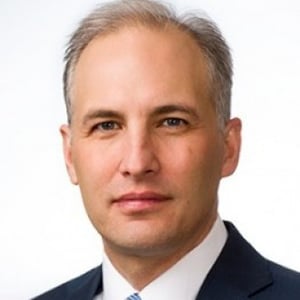
Chief Trust & Security Officer, Uber Technologies, Inc.
Mr. Matthew G. Olsen, also known as Matt, serves as the Chief Trust & Security Officer at Uber Technologies, Inc.
Matt Olsen has served as a leading government official on a range of national security, intelligence and law enforcement issues. He teaches the National Security Law and Practice Seminar at the Law School.
Most recently, Olsen served for three years as the director of the National Counterterrorism Center under President Barack Obama. Created by Congress in response to the attacks of Sept. 11, NCTC is responsible for the integration and analysis of terrorism information and strategic operational planning of counterterrorism activities. Prior to joining NCTC, Olsen was the general counsel for the National Security Agency, serving as NSA’s chief legal officer and focusing on surveillance law and cyber operations.
Olsen worked at the Department of Justice in a number of leadership positions. He served as an associate deputy attorney general, responsible for national security and criminal cases. He also was special counselor to the attorney general and executive director of the Guantanamo Review Task Force, where he led the review of individuals detained at Guantanamo. Olsen served as acting assistant attorney general for National Security and helped establish the National Security Division.
From 1994 to 2006, Olsen was a federal prosecutor in the U.S. Attorney’s Office for the District of Columbia, prosecuting terrorists, violent gang members and white-collar criminals. Olsen served as special counsel to the director of the FBI from 2004 to 2005. He began his public service career as a trial attorney in the Civil Rights Division of the Department of Justice.
Olsen is a lecturer on law at Harvard Law School, a national security analyst for ABC News, and an adjunct senior fellow at the Center for a New American Security. He also is affiliated with the Berkman Klein Center at Harvard, where he helps lead a project on cybersecurity. Olsen is a co-founder of IronNet Cybersecurity, a technology firm based in Washington, D.C., where he leads business development and strategy.
Olsen graduated from Harvard Law School and the University of Virginia and clerked in the U.S. District Court for the District of Columbia.
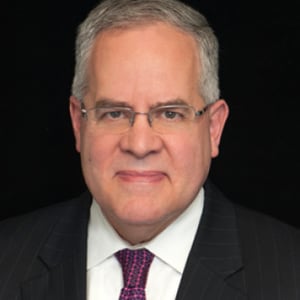
Advisory Board Member, Beacon Global Strategies LLC
Mr. Shedd was named Acting Director of the Defense Intelligence Agency in August 2014 following four years service as Deputy Director. Until January 2015 he led the Defense Intelligence Enterprise workforce comprised of more than 16,500 military and civilian employees worldwide. This workforce spans the Defense Intelligence Enterprise within the Department of Defense with an intelligence mission and/or function, plus all their stakeholders involved in creating, sustaining and enhancing mission capacity.
Mr. Shedd served from May 2007 to August 2010 as the Director of National Intelligence (DNI) Deputy Director for Policy, Plans, and Requirements, where he was responsible for overseeing the formulation and implementation of major Intelligence Community (IC) policies across the full spectrum of issues, from information sharing and IC authorities to analytic standards, among others. In particular, he led the review of Executive Order 12333, the foundational U.S. intelligence policy, which was revised by President George W. Bush in July 2008. Additionally, Mr. Shedd developed and implemented a National Intelligence Strategy, published in August 2009 for the IC and led all strategic planning efforts to determine future intelligence priorities for the Community and the Nation.
From May 2005 to April 2007, Mr. Shedd served as Chief of Staff and, later, Acting Director of the Intelligence Staff to the Director of National Intelligence. Prior to the creation of the Office of the Director of National Intelligence, Mr. Shedd held intelligence policy positions at the National Security Council (NSC) from February 2001 to May 2005. He served as the NSC’s Special Assistant to the President and Senior Director for Intelligence Programs and Reform. Mr. Shedd has been directly involved in the implementation of intelligence reform stemming from the 9/11 Commission report in July 2004, the Intelligence Reform and Terrorism Prevention Act of 2004, and the Weapons of Mass Destruction (WMD) Commission’s report to the President in March 2005.
Between 1984 and 1993, Mr. Shedd served overseas in the U.S. Embassies in Costa Rica and Mexico. Mr. Shedd has also held a variety of senior management assignments at the Central Intelligence Agency, including Chief of Congressional Liaison.
Mr. Shedd is also on the Government Advisory Board of Dataminr, a social media “big data” company that broadly services the Federal Government.
Mr. Shedd holds a B.A. from Geneva College in Beaver Falls, Pennsylvania and a M.A. from Georgetown University’s School of Foreign Service in Latin American Studies. Mr. Shedd was born in Bolivia and grew up in Latin America.

Executive Vice President, Chief Legal Officer, Gates Corporation
Matthew R. A. Heiman joined the Company in May 2026 and has served as the Company’s Chief Legal Officer and Corporate Secretary since June 2026. As Chief Legal Officer, Mr. Heiman is responsible for all legal functions for Gates, including securities and corporate governance, M&A, litigation, commercial, regulatory, compliance, patents and trademarks, real estate, employment and labor, sustainability and environmental matters. Prior to joining Gates, Mr. Heiman held senior legal leadership roles at Waystar, where he served as Chief Legal & Administrative Officer from 2023 to 2025 and as General Counsel and Corporate Secretary from 2020 to 2023. Prior to that, he was with Johnson Controls, where he served as Vice President, Corporate Secretary, and Associate General Counsel. Mr. Heiman has been a Senior Fellow for the National Security Institute at George Mason University’s Antonin Scalia School of Law since 2018.
Managing Director, Beacon Global Strategies LLC
From 2011-2013, Mr. Allen served as the Majority Staff Director of the House Permanent Select Committee on Intelligence (HPSCI). Under Chairman Mike Rogers’ (R-MI) direction, the HPSCI restored the process of an annual intelligence authorization bill to fund and give direction to the seventeen elements of the intelligence community, enacting measures for fiscal years 2011, 2012, and 2013. The HPSCI also led the House of Representatives’ consideration of cyber security legislation, passing the Cyber Information Sharing Protection Act (CISPA) with bipartisan majorities in 2012 and 2013.
Prior to joining the HPSCI, he was director for the Bipartisan Policy Center’s successor to the 9/11 Commission, the National Security Preparedness Group, co-chaired by former Congressman Lee Hamilton and former Governor Tom Kean.
Previously, Mr. Allen served in the White House for seven years in a variety of national security policy and legislative roles. At the National Security Council (NSC), he served as Special Assistant to the President and Senior Director for Counter-proliferation Strategy from June 2007 to January 2009 under National Security Advisor Steve Hadley. As Senior Director, he contributed to the development of the U.S. government’s policy on counter-proliferation issues, including on the Iranian, Syrian, and North Korean nuclear files; missile defense; civilian nuclear cooperation including the U.S.-India Civilian Nuclear Cooperation Agreement; U.S. exports controls; bio-defense; and WMD and terrorism.
As the Special Assistant to the President and Senior Director for Legislative Affairs from March 2005 to June 2007, Mr. Allen was the NSC’s chief liaison with the national security committees of Congress and led the confirmation teams of DNI nominees Negroponte and McConnell and CIA Director General Michael Hayden.
From December 2001 to February 2005, Mr. Allen worked in the legislative affairs office of the White House’s Homeland Security Council. As Special Assistant to the President for Legislative Affairs, Mr. Allen was part of team that managed the White House effort to enact the Intelligence Reform and Terrorism Prevention Act of 2004, which created the Office of the Director of National Intelligence.
At the beginning of the Bush Administration, Mr. Allen worked in the Bureau of Legislative Affairs at the Department of State. Mr. Allen received his L.L.M. with distinction in International Law from the Georgetown University Law Center, his J.D. from the University of Alabama (cum laude), and his B.A. from Vanderbilt University.
In addition to his work at the Bipartisan Policy Center, in 2009, Mr. Allen taught National Security Policymaking at the George Washington University Elliott School of International Affairs and served as an advisor for the congressionally-created Commission on WMD and Terrorism co-chaired by Senators Bob Graham and Jim Talent. Mr. Allen was the Intelligence Team Lead for the Romney for President Transition Team.
Mr. Allen is the author of Blinking Red: Crisis and Compromise in American Intelligence After 9/11. (Potomac Books, September 2013).
Executive Vice President, Chief Legal Officer, Gates Corporation
Matthew R. A. Heiman joined the Company in May 2026 and has served as the Company’s Chief Legal Officer and Corporate Secretary since June 2026. As Chief Legal Officer, Mr. Heiman is responsible for all legal functions for Gates, including securities and corporate governance, M&A, litigation, commercial, regulatory, compliance, patents and trademarks, real estate, employment and labor, sustainability and environmental matters. Prior to joining Gates, Mr. Heiman held senior legal leadership roles at Waystar, where he served as Chief Legal & Administrative Officer from 2023 to 2025 and as General Counsel and Corporate Secretary from 2020 to 2023. Prior to that, he was with Johnson Controls, where he served as Vice President, Corporate Secretary, and Associate General Counsel. Mr. Heiman has been a Senior Fellow for the National Security Institute at George Mason University’s Antonin Scalia School of Law since 2018.

Columnist, Bloomberg View
Eli Lake is a Bloomberg View columnist who writes about politics and foreign affairs. He was previously the senior national security correspondent for the Daily Beast. Lake also covered national security and intelligence for the Washington Times, the New York Sun and UPI, and was a contributing editor at the New Republic. In 2005 and 2006, Lake lived in Cairo as a correspondent for the New York Sun. He has traveled to war zones in Sudan, Iraq and Gaza. Lake is one of the few journalists to report from all three members of President George W. Bush’s axis of evil: Iraq, Iran and North Korea.
Partner, Wilmer Cutler Pickering Hale and Dorr LLP
Benjamin Powell is widely recognized as one of the country’s top authorities on handling cybersecurity, data breach and related investigation matters. He is a leading attorney in handling complex regulatory matters relating to international investment and mergers, including matters involving the Committee on Foreign Investment in the United States (CFIUS) and the Defense Security Service (DSS). He also is regularly asked to be lead counsel on major investigations and strategic counseling across a variety of sensitive regulatory matters for the world’s most prominent companies.
Mr. Powell handles matters relating to international investment and mergers, including matters involving the Committee on Foreign Investment in the United States (CFIUS), is widely recognized as one of the country’s top experts on handling cybersecurity, data breach, and related investigation matters, and regularly handles major investigations and strategic counseling for the world’s most prominent companies. He is also frequently retained to perform due diligence on major domestic corporate transactions requiring expertise in government regulatory issues, including government contracting, security clearance issues with the Defense Security Service (DSS), export control and related issues. He is regularly named as one of Washington’s Top Lawyers in surveys of best attorneys in DC. The Wall Street Journal calls him one of Washington’s “big legal guns” and The Legal 500 calls him an “exceptional lawyer” who “provides clear guidance on complex technological issues.” He is recognized as a CFIUS expert in the 2013 and 2014 editions of Chambers USA: America's Leading Lawyers in Business.
Mr. Powell has performed due diligence on some of the largest recent corporate transactions and successfully guided companies through some the most complex CFIUS filings for companies in a range of industries. He has counseled companies and handled investigations for many of the most sensitive cybersecurity and data breach incidents in recent years. He has represented clients in civil and criminal litigation involving privacy and surveillance issues at the state and federal level. He has also served as lead counsel on matters for companies facing difficult regulatory, congressional, and public policy issues across a range of industry sectors and subjects. Mr. Powell regularly handles matters involving the Defense Security Service, including the structuring of Special Security Agreements and Proxy Agreements, related to corporate security clearances and classified government contracting.
Mr. Powell was unanimously confirmed by the United States Senate as General Counsel to the Director of National Intelligence. His background includes serving as General Counsel to the first three Directors of National Intelligence, Special Assistant to the President and associate White House Counsel, Air Force officer, work at the Federal Bureau of Investigation, corporate counsel at a software company in Silicon Valley, and part of the trial team that obtained the largest antitrust jury verdict in US history. He joined the firm in 2009.

Executive Vice President, The Federalist Society
Dean Reuter is Executive Vice President at the Federalist Society for Law and Public Policy Studies. He has served in two federal government agency Offices of the Inspector General, as Counsel to the Inspector General and Deputy Inspector General, responsible for policing the use of federal funds granted and contracted through those agencies. As such, he helped conduct and oversee criminal investigations across the country. He is the principal author of the non-fiction book, The Hidden Nazi: The Untold Story of America's Deal with the Devil, and editor of Liberty’s Nemesis: The Unchecked Expansion of the State and Confronting Terror: 9/11 and the Future of American National Security. He was appointed by the President and served as Vice-Chairman of the Board of Directors of the Corporation for National and Community Service, and recently served as an appointee on the U.S. Commission on Presidential Scholars. He is a graduate of Hood College (BA with Honors) and the University of Maryland School of Law.

Military Law in Practice: Perspectives from Current and Former General Counsels
James Baehr, Toby Curto, Paul C. Ney, Robert J. Sander
CLE credit for this event will be available at On-Demand CLE. This webinar brings together...
Empowering the “Honest Broker”: Lessons Learned from the National Security Council Under President Donald J. Trump
Eli Nachmany
On September 18, 2019, Robert O’Brien took over as President Donald J. Trump’s National Security...
Address by Secretary of Defense Richard Cheney [Archive Collection]
Richard B. Cheney, T. Kenneth Cribb
On January 19-20, 1990, The Federalist Society hosted a conference at the Mayflower Hotel in...
Address by Secretary of Defense Caspar Weinberger [Archive Collection]
Zbigniew Brzezinski, David M. McIntosh, Caspar W. Weinberger
On November 6-7, 1987, The Federalist Society held a symposium at the Grand Hyatt Hotel...
Former NSA and CIA Director General Michael V. Hayden - Podcast
Michael V. Hayden, Jamil N. Jaffer
General Michael V. Hayden, former Director of the National Security Agency and the Central Intelligence...
Executive Order 12333 and Foreign Intelligence Collection - Podcast
Matthew G. Olsen, David Shedd, Matthew R. A. Heiman
In 1981, President Reagan signed Executive Order 12333. It assigned foreign intelligence collection responsibilities to...
Welcome & Panel I: How to Manage the Intelligence Community
Michael Allen, Matthew R. A. Heiman, Eli Lake, Ben Powell, Dean Reuter
Since September 11, 2001, the intelligence community has been at the center of key national...