
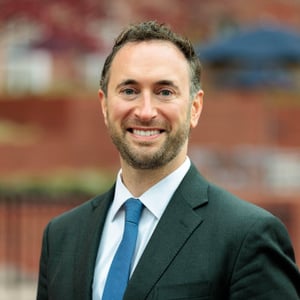
Associate Dean for Academic Affairs, The George Washington University Law School
Aram A. Gavoor is the Associate Dean for Academic Affairs and an internationally recognized scholar in American administrative law, national security, and federal courts. His co-authored work was cited by the U.S. Supreme Court in Department of Commerce v. New York (2019). His scholarship has earned placement in the Florida Law Review, Indiana Law Journal, Ohio State Law Journal, and other law journals. He has briefed and argued over a dozen high-profile public law cases before a majority of the U.S. Courts of Appeals and numerous cases before almost a third of the 94 U.S. District Courts. Associate Dean Gavoor frequently shares his national security, artificial intelligence policy, and federal courts expertise with international news media, including CNN, BBC World News, Wall Street Journal, NBC News, and ABC (Australia) World News. In 2021, the National Law Journal named Associate Dean Gavoor a Rising Star (top 40 under 40) honoree.
Earlier in his career, Associate Dean Gavoor served as Senior Counsel for National Security in the Civil Division of the U.S. Department of Justice, as third-in-rank Counselor to the Administrator of the Office of Information and Regulatory Affairs in the White House Office of Management and Budget, and in private practice. He received the Attorney General's Award for Distinguished Service in 2019, the Civil Division Special Commendation Award in 2020, 2019, and 2018, and a Commendation from the Human Rights and Special Prosecutions Section of the Criminal Division in 2018.
Associate Dean Gavoor previously served on the law school’s part-time faculty from 2008-2017 before accepting a term-limited position as Visiting Associate Professor from 2017-2019. He received GW Law’s Distinguished Adjunct Faculty Teaching Award from the 2020 and 2017 graduating classes. He currently teaches Constitutional Law II, Administrative Law, National Security Law, and Federal Courts.
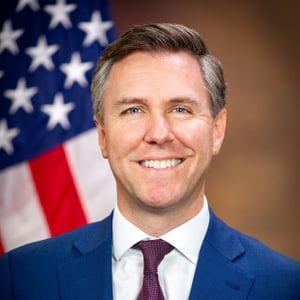
Assistant Attorney General, Civil Division, United States Department of Justice
Brett A. Shumate was sworn in as the Civil Division’s 36th Assistant Attorney General on June 11, 2025. He previously served in the Civil Division from 2017 to 2019 as the Deputy Assistant Attorney General for the Federal Programs Branch. Prior to rejoining the Department, Mr. Shumate was a partner at Jones Day in Washington, D.C.
Mr. Shumate clerked for Judge Edith H. Jones on the United States Court of Appeals for the Fifth Circuit. He graduated from Wake Forest University School of Law and Furman University.

Laurence H. Silberman Chair in Constitutional Governance, American Enterprise Institute; Executive Director, Antonin Scalia Law School’s C. Boyden Gray Center for the Study of the Administrative State
Adam J. White is the Laurence H. Silberman Chair in Constitutional Governance and senior fellow at the American Enterprise Institute, where he focuses on the Supreme Court and the administrative state. He also directs the Antonin Scalia Law School’s C. Boyden Gray Center for the Study of the Administrative State.
He writes on regulation and constitutional government for a variety of publications. He practiced law in Washington, D.C., after clerking for the D.C. Circuit's Judge David Sentelle. He also has been chairman of the ABA's Administrative Law Section.
In 2021, he served on the Presidential Commission on the Supreme Court of the United States, where he criticized “Court packing” and other efforts to restructure the Supreme Court.
Deputy Policy Director, U.S. Senate Committee on Commerce, Science, & Transportation
Dan Ball is a Deputy Policy Director with the Senate Committee on Commerce, Science, and Transportation, where he handles the Communications, Technology, Innovation, and Internet portfolio. He has previously practiced telecommunications law at law firms and at the FCC.
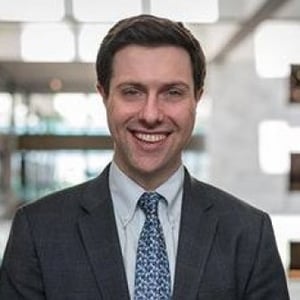
Senior Policy Advisor and Senior Technology Counsel, Senator Mark Warner
Rafi Martina currently serves as Senior Policy Advisor for Senator Mark Warner (D-Virginia). In this capacity, he acts as the senator’s principal advisor on cybersecurity, technology, telecommunications, competition, and consumer protection issues. Mr. Martina serves as Senator Warner’s principal cybersecurity and technology advisor across his committee assignments, including the Senate Banking Committee and Senate Select Committee on Intelligence, along with the Senator's work as Co-Chair of the Senate Cybersecurity Caucus.
He has spearheaded the Senator’s work on addressing social media disinformation, including by authoring the Honest Ads Act, authored numerous pieces of legislation the Senator has led on information security, including the IoT Cybersecurity Improvement Act of 2017, and drafted the Senator’s influential white paper developing policy proposals for the regulation of social media and technology firms.
Prior to joining Senator Warner’s staff, Mr. Martina served as regulatory counsel for Sprint Corp. from 2011-2015, where he represented Sprint in major rulemaking proceedings, mergers and acquisitions, and cases before the Federal Communications Commission, the National Telecommunications and Information Administration, the Department of Justice, and federal courts.
Before joining Sprint, Mr. Martina was the recipient of a post-graduate fellowship from the University of Virginia School of Law Foundation. Under the auspices of his fellowship, he acted as a legal fellow and staff attorney for FCC Commissioner Meredith Attwell Baker from 2010-2011.
Mr. Martina graduated from the University of Virginia School of Law. He received his Bachelors of Arts (with high honors) in Political Science from the University of Michigan and was a visiting scholar at Oxford University (Worcester College).

Professor Emeritus, Paul M. Hebert Law Center, Louisiana State University
In memoriam
Dr. John Baker is Professor Emeritus of Law, and previously the Dale E. Bennett Professor of Law, at Louisiana State University Law School. He is currently Visiting Professor at Peking University School of Transnational Law (via Zoom) and has been Visiting Professor at The Center for the Constitution, Georgetown Law School (2013-2020). He has also been a Visiting Fellow at Oriel College, the University of Oxford (2012-2014) and taught at Blackfriars Hall, Oxford in 2014. Dr. Baker has also been an adjunct Fellow at the Heritage Foundation (Spring, 2008) and a Distinguished Scholar at the Catholic University of America Law School (2011-12). He has taught at Tulane Law School, George Mason Law School, Pepperdine Law School, New York Law School, Hong Kong University, and the University of Dallas, School of Management and also taught and/or lectured in 17 foreign countries. Notable among his foreign visits are the
following: Visiting Professor at the University of Lyon III (France) (1999-2011); Visiting Professor at the Universidad de los Andes, Chile (2012), as a Fulbright Specialist (2006); and a Fulbright Scholar at various universities in the Philippines. Dr. Baker received his J.D., with honors, from the University of Michigan Law School and his B.A., magna cum laude, from the University of Dallas. He also earned a Ph.D. in Political Thought from the University of London. Baker has taught over a dozen different subjects, mostly courses in public law. His main areas of interest are Constitutional Law (particularly federalism and separation of powers), Criminal Law, Anti-Terrorism Law, International Law, Health Care Law, Mediation, and Comparative Law.
In addition to law review articles and book chapters, Dr. Baker’s academic publications include Hall's Criminal Law: Cases and Materials (with Benson, Force and George; 5th ed. Michie, 1993); An Introduction to the Law of the United States (ed. with Levasseur; University Press of America, 1992). He has also published on Forbes.com, FoxNews.com, in The Washington Times, and a number of times in The Wall Street Journal. He argues in federal court, including two oral arguments in the U.S. Supreme Court. For many years, he co-taught courses for the Federalist Society on separation of powers with the late Supreme Court Justice Antonin Scalia. In September 2016, he co-taught a Supreme Court seminar in China with Justice Samuel Alito. Following law school, he served as a law clerk in federal district court and as an assistant district attorney in New Orleans before joining LSU in 1975. While a professor, he has been as a consultant to USAID, USIA (since rolled into the State Department), the Justice Department, the U.S. Senate Judiciary Subcommittee on Separation of Powers, and the Office of Planning in the White House. He served on an ABA Task Force which issued the report, The Federalization of Crime (1998) and later as a consultant to the “Bi-Partisan Task Force on the Over- federalization of Crime” (2012-2014) created by the U.S. House Judiciary Subcommittee on Crime. Dr. Baker was a co-founder of the first iteration (1995) of Stratfor Inc., a global intelligence agency. He co-authored its first book: The Intelligence Edge (with Friedman, Friedman and Chapman; Crown Books/Random House 1997). In 2022, he began a short, weekly video podcast available on YouTube and Rumble, The Baker Brief.
Executive Vice President of Policy, Information Technology Industry Council
Rob Strayer serves as the Executive Vice President of Policy at the Information Technology Industry Council (ITI). He leads ITI’s efforts to shape technology policy around the globe to enable innovation, competition, and economic growth, while supporting governments efforts to achieve their public policy objectives. With a team of experienced professionals at ITI, he is responsible for developing and executing policy strategies in every region of the world and on a wide range of digital technology issues, including privacy and data protection, cybersecurity, trade and market access, standards, artificial intelligence, and taxation.
Prior to joining ITI, Strayer served as the Deputy Assistant Secretary of State for Cyber and International Communications and Information Policy at the U.S. State Department. In that role, he led dozens of bilateral and multilateral dialogues with foreign governments on digital economy regulatory and cybersecurity issues. He was named as an ambassador by the President to lead the 90-plus person U.S. delegation to the International Telecommunication Union (ITU) Plenipotentiary Conference in Dubai, United Arab Emirates in 2018.
Before joining the State Department, Strayer was the general counsel for the U.S. Senate Foreign Relations Committee. He also practiced telecommunications law at WilmerHale, and clerked for the U.S. Court of Appeals for the Eleventh Circuit.
Strayer received a law degree from Vanderbilt University Law School, and earned his B.A. in Economics, summa cum laude, from Denison University.
Professor of Law, Vanderbilt Law School
Benjamin Mazur Summer Research Professor of Law Affiliated Faculty, Ford Motor Company Center for Global Citizenship, Northwestern University School of Law
Jide Nzelibe joined Northwestern's faculty as an assistant professor in 2004 became a full Professor in 2008. He served as the Bigelow Teaching Fellow and Lecturer in Law at the University of Chicago before joining Northwestern Law. In addition to his JD from Yale Law School, he also holds an MPA in international relations from Princeton University, where he was awarded a fellowship from the Woodrow Wilson Foundation and a pre-doctoral fellowship from the Ford Foundation. His research and teaching interests include international trade, foreign relations law, public and private international law and contracts.

Professor Emeritus of Law, Antonin Scalia Law School, George Mason University
Jeremy A. Rabkin is a Professor Emeritus of Law at the Antonin Scalia Law School, George Mason University. Before joining the faculty in June 2007, he was for over two decades a professor in the Department of Government at Cornell University. Professor Rabkin serves on the board of directors of the Center for Individual Rights, a public interest law firm based in Washington, D.C. Previously he was a board member of the U.S. Institute of Peace and the board of academic advisors of the American Enterprise Institute.
Professor Rabkin’s books include Law Without Nations? (Princeton University Press, 2005). He authored “If You Need a Friend, Don’t Call a Cosmopolitan,” a chapter in Varieties of Sovereignty and Citizenship (Sigal R. Ben-Porath & Rogers M. Smith eds., University of Pennsylvania Press, 2012). His articles have appeared in major law reviews and political science journals and his journalistic contributions in a range of magazines and newspapers, including the Washington Post and the Wall Street Journal.
Professor Emeritus, Paul M. Hebert Law Center, Louisiana State University
In memoriam
Dr. John Baker is Professor Emeritus of Law, and previously the Dale E. Bennett Professor of Law, at Louisiana State University Law School. He is currently Visiting Professor at Peking University School of Transnational Law (via Zoom) and has been Visiting Professor at The Center for the Constitution, Georgetown Law School (2013-2020). He has also been a Visiting Fellow at Oriel College, the University of Oxford (2012-2014) and taught at Blackfriars Hall, Oxford in 2014. Dr. Baker has also been an adjunct Fellow at the Heritage Foundation (Spring, 2008) and a Distinguished Scholar at the Catholic University of America Law School (2011-12). He has taught at Tulane Law School, George Mason Law School, Pepperdine Law School, New York Law School, Hong Kong University, and the University of Dallas, School of Management and also taught and/or lectured in 17 foreign countries. Notable among his foreign visits are the
following: Visiting Professor at the University of Lyon III (France) (1999-2011); Visiting Professor at the Universidad de los Andes, Chile (2012), as a Fulbright Specialist (2006); and a Fulbright Scholar at various universities in the Philippines. Dr. Baker received his J.D., with honors, from the University of Michigan Law School and his B.A., magna cum laude, from the University of Dallas. He also earned a Ph.D. in Political Thought from the University of London. Baker has taught over a dozen different subjects, mostly courses in public law. His main areas of interest are Constitutional Law (particularly federalism and separation of powers), Criminal Law, Anti-Terrorism Law, International Law, Health Care Law, Mediation, and Comparative Law.
In addition to law review articles and book chapters, Dr. Baker’s academic publications include Hall's Criminal Law: Cases and Materials (with Benson, Force and George; 5th ed. Michie, 1993); An Introduction to the Law of the United States (ed. with Levasseur; University Press of America, 1992). He has also published on Forbes.com, FoxNews.com, in The Washington Times, and a number of times in The Wall Street Journal. He argues in federal court, including two oral arguments in the U.S. Supreme Court. For many years, he co-taught courses for the Federalist Society on separation of powers with the late Supreme Court Justice Antonin Scalia. In September 2016, he co-taught a Supreme Court seminar in China with Justice Samuel Alito. Following law school, he served as a law clerk in federal district court and as an assistant district attorney in New Orleans before joining LSU in 1975. While a professor, he has been as a consultant to USAID, USIA (since rolled into the State Department), the Justice Department, the U.S. Senate Judiciary Subcommittee on Separation of Powers, and the Office of Planning in the White House. He served on an ABA Task Force which issued the report, The Federalization of Crime (1998) and later as a consultant to the “Bi-Partisan Task Force on the Over- federalization of Crime” (2012-2014) created by the U.S. House Judiciary Subcommittee on Crime. Dr. Baker was a co-founder of the first iteration (1995) of Stratfor Inc., a global intelligence agency. He co-authored its first book: The Intelligence Edge (with Friedman, Friedman and Chapman; Crown Books/Random House 1997). In 2022, he began a short, weekly video podcast available on YouTube and Rumble, The Baker Brief.
Senior Counsel, Schaerr Jaffe LLP
Ken Klukowski is senior counsel at the law firm Schaerr Jaffe, focusing on constitutional, administrative, and election law, and the federal courts. He has served in politically appointed positions in the U.S. government, including senior counsel in the Civil Division of the U.S. Department of Justice, and prior to that in the White House as special counsel in the Office of Management and Budget. He was also the constitutional rights advisor on the Presidential Transition Team of President Donald J. Trump. In the private sector, he has worked as a senior fellow of the American Constitutional Rights Union, senior counsel at First Liberty Institute, and a legal journalist. He litigates constitutional cases in the U.S. Supreme Court and lower federal courts, and contributes to media coverage of the nation’s highest court and legal issues. Earlier in his career, Klukowski served as special deputy attorney general of Indiana, and worked on faculty at Liberty University School of Law. His academic works have been published by journals such as the Federalist Society’s Harvard Journal of Law & Public Policy, and his columns have appeared in the Wall Street Journal and other national publications. His amicus briefs and nine law review articles have been cited by various federal courts and top legal journals. He has participated in numerous Supreme Court cases, and lectured and debated at 100 law school events nationwide. Klukowski received his bachelor’s degree from the University of Notre Dame, studied history at Arizona State University, earned his law degree from Scalia Law School at George Mason University, and served as a law clerk to Chief Judge Alice Batchelder on the U.S. Court of Appeals for the Sixth Circuit.
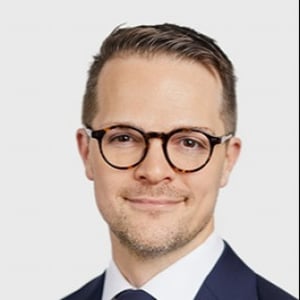
Vice President of Regulatory and Corporate Affairs, Cogeco Inc.
Paul Beaudry is Vice President, Regulatory and Corporate Affairs at Cogeco Inc. He leads Cogeco’s regulatory function in Canada and the United States, and represents the company in proceedings before the CRTC, the Federal Communications Commission and other government departments and regulatory agencies. He also oversees compliance with regulatory requirements imposed on the company at each level of government, in both countries. In addition, Paul leads Cogeco’s Sustainability team and the strategy for public disclosure of ESG matters. He joined Cogeco in November 2020 and has since held progressively larger leadership roles within the organization.
Prior to joining Cogeco, Paul served as Director of Regulatory Affairs at TELUS in Calgary. He also practiced competition and foreign investment law at Stikeman Elliott LLP and Ogilvy Renault LLP (now Norton Rose Fulbright) and served as a senior policy advisor to Canada’s Minister of Industry.
Paul is a graduate of the University of Montreal Faculty of Law and is a member of the Quebec Bar. He serve on the boards of the Institut national de santé publique du Québec, the Cable Public Affairs Channel (CPAC), La Fondation La Rue des Femmes and the Canadian chapter of the International Institute of Communications. He also sits on the Governors Council of Golf Canada.

Principal, MHRyan Law
Michael H. Ryan is a lawyer specialising in international telecommunications, Internet and media law and regulation, withexperience in policy analysis and regulatory economics.
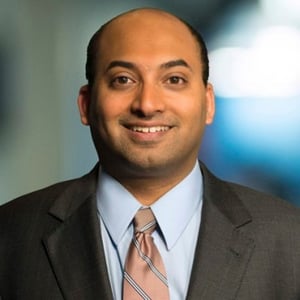
Senior Policy Counsel and Director, Government Affairs, Telecommunications Industry Association (TIA)
Dileep Srihari is Senior Policy Counsel and Director, Government Affairs at the Telecommunications Industry Association (TIA). He represents information and communications technology companies – those that manufacture chips, routers, switches, cell phones, base stations, and more – through policy development and advocacy before Congress and the FCC.
Srihari currently focuses on spectrum and broadband infrastructure deployment issues, including topics ranging from millimeter-wave spectrum for 5G to regulatory reform and funding for broadband deployment. He also provide counsel and supervise others on work spanning across TIA's Government Affairs department, including leading projects on national security issues related to the ICT supply chain as well as Internet of Things issues.
Srihari was previously an associate at law firm WilmerHale where he was a member of the firm’s Communications practice group. His work involved regulatory advocacy and appellate litigation on topics including wireless interference protections, television program access, and process safety management. He also previously worked on Capitol Hill for a somewhat-recognizable U.S. senator.
He holds a J.D. from Georgetown and a B.S. in Electrical Engineering and Computer Science from Cornell.
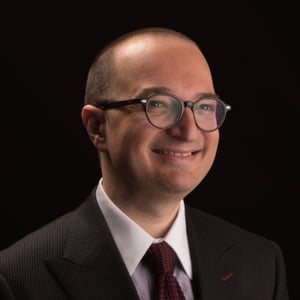
Professor of Law, University of Baltimore School of Law (on leave); Senior Counsel, U.S. Department of Justice
Professor Dolin’s scholarship centers on patent law with a specific focus on how the patent regime affects innovation, especially in bio-pharmaceutical areas. His work in these areas includes a number of scholarly articles, presentations, amicus briefs, and congressional testimony.
Dr. Dolin is currently on leave from his academic duties while he serves as Senior Counsel in the Civil Rights Division of the United States Department of Justice.
From January 2020 to January 2022, Professor Dolin served as a resident Associate Justice of the Supreme Court of the Republic of Palau. In this role, he (together with other members of the Court) heard appeals in civil, criminal, administrative, and constitutional law matters.
Prior to joining the University of Baltimore School of Law, Professor Dolin held visiting appointments in other law schools. He also served as a law clerk to the Hon. Pauline Newman, of the U.S. Court of Appeals for the Federal Circuit and the late Hon. H. Emory Widener Jr., of the U.S. Court of Appeals for the Fourth Circuit.
Rumors that he has a real Russian bear in his office are entirely true.
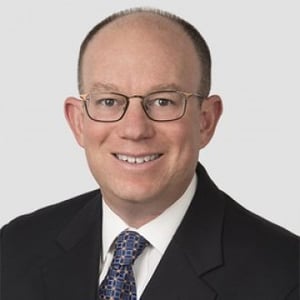
Partner, Wiley Rein LLP
Kevin Muhlendorf’s practice focuses on securities fraud, defense procurement fraud, and Foreign Corrupt Practices Act (FCPA) matters. As a former Assistant Chief in the Fraud Section of the Criminal Division of the U.S. Department of Justice (DOJ) and Senior Counsel in the Enforcement Division of the U.S. Securities and Exchange Commission (SEC), Kevin has firsthand knowledge and insight into government operations and processes. He relies on his prosecutorial experience to develop thoughtful investigative and trial strategies.
Professor Emeritus, Paul M. Hebert Law Center, Louisiana State University
In memoriam
Dr. John Baker is Professor Emeritus of Law, and previously the Dale E. Bennett Professor of Law, at Louisiana State University Law School. He is currently Visiting Professor at Peking University School of Transnational Law (via Zoom) and has been Visiting Professor at The Center for the Constitution, Georgetown Law School (2013-2020). He has also been a Visiting Fellow at Oriel College, the University of Oxford (2012-2014) and taught at Blackfriars Hall, Oxford in 2014. Dr. Baker has also been an adjunct Fellow at the Heritage Foundation (Spring, 2008) and a Distinguished Scholar at the Catholic University of America Law School (2011-12). He has taught at Tulane Law School, George Mason Law School, Pepperdine Law School, New York Law School, Hong Kong University, and the University of Dallas, School of Management and also taught and/or lectured in 17 foreign countries. Notable among his foreign visits are the
following: Visiting Professor at the University of Lyon III (France) (1999-2011); Visiting Professor at the Universidad de los Andes, Chile (2012), as a Fulbright Specialist (2006); and a Fulbright Scholar at various universities in the Philippines. Dr. Baker received his J.D., with honors, from the University of Michigan Law School and his B.A., magna cum laude, from the University of Dallas. He also earned a Ph.D. in Political Thought from the University of London. Baker has taught over a dozen different subjects, mostly courses in public law. His main areas of interest are Constitutional Law (particularly federalism and separation of powers), Criminal Law, Anti-Terrorism Law, International Law, Health Care Law, Mediation, and Comparative Law.
In addition to law review articles and book chapters, Dr. Baker’s academic publications include Hall's Criminal Law: Cases and Materials (with Benson, Force and George; 5th ed. Michie, 1993); An Introduction to the Law of the United States (ed. with Levasseur; University Press of America, 1992). He has also published on Forbes.com, FoxNews.com, in The Washington Times, and a number of times in The Wall Street Journal. He argues in federal court, including two oral arguments in the U.S. Supreme Court. For many years, he co-taught courses for the Federalist Society on separation of powers with the late Supreme Court Justice Antonin Scalia. In September 2016, he co-taught a Supreme Court seminar in China with Justice Samuel Alito. Following law school, he served as a law clerk in federal district court and as an assistant district attorney in New Orleans before joining LSU in 1975. While a professor, he has been as a consultant to USAID, USIA (since rolled into the State Department), the Justice Department, the U.S. Senate Judiciary Subcommittee on Separation of Powers, and the Office of Planning in the White House. He served on an ABA Task Force which issued the report, The Federalization of Crime (1998) and later as a consultant to the “Bi-Partisan Task Force on the Over- federalization of Crime” (2012-2014) created by the U.S. House Judiciary Subcommittee on Crime. Dr. Baker was a co-founder of the first iteration (1995) of Stratfor Inc., a global intelligence agency. He co-authored its first book: The Intelligence Edge (with Friedman, Friedman and Chapman; Crown Books/Random House 1997). In 2022, he began a short, weekly video podcast available on YouTube and Rumble, The Baker Brief.

The Future of Administrative Records after Department of Commerce v. New York
Aram A. Gavoor, Brett Shumate, Adam White
Until recently, the domain of administrative records under the Administrative Procedure Act of 1946 was...
Supply Chain Issues: Huawei and ZTE
Dan Ball, Rafi Martina
Huawei and ZTE, two large Chinese telecommunications companies, have received considerable scrutiny from the Trump...
Courthouse Steps Decision: The Census Citizenship Question, Department of Commerce v. New York
John S. Baker
On June 27, the Supreme Court decided Department of Commerce v. New York, the legal challenge...
Courthouse Steps Decision: The Census Citizenship Question, Department of Commerce v. New York
TeleforumCyber Strategy Update with Robert L. Strayer
Robert L. Strayer
Join us for a teleforum with Robert L. Strayer, Deputy Assistant Secretary of State for Cyber and...
Trump's Emergency Tariffs: Court Says Legal, But Are They Constitutional?
Timothy Meyer, Jide Okechuku Nzelibe, Jeremy A. Rabkin
In late March, the Court of International Trade (a U.S. Article III court) upheld the...
Courthouse Steps Oral Argument: Department of Commerce v. New York: Citizenship and the Census
John S. Baker, Kenneth A. Klukowski
On April 23, the Supreme Court will hear oral arguments in Department of Commerce v....
Topics
Questioning Citizenship vs. Questioning the Question
It will be interesting to see how much of the upcoming Supreme Court argument in Department...
Supply-chain Security in a 5G World: What to do about Huawei and ZTE?
Paul Beaudry, Michael H. Ryan, Dileep Srihari
On March 6th, Huawei announced it was suing the United States government over policies banning...
Courthouse Steps: Lucia v. SEC
Gregory Dolin, Kevin B. Muhlendorf
In Lucia v. SEC, the SEC fined the petitioner Raymond J. Lucia $300,000 and barred...