
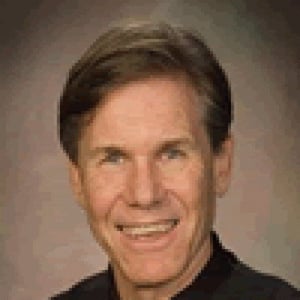
Chief Judge (ret.), U.S. Court of Appeals for the Federal Circuit, and Honorary Professor, Tsinghua University
Randall R. Rader was appointed to the United States Court of Appeals for the Federal Circuit by President George H. W. Bush in 1990 and served as Chief Judge from June 2010 to June 2014. He was appointed to the United States Claims Court (now the U. S. Court of Federal Claims) by President Ronald W. Reagan in 1988. Judge Rader's most prized title may well be "Professor Rader."
As Professor, Judge Rader has taught courses on patent law and other advanced intellectual property courses at The George Washington University Law School,University of Virginia School of Law, Georgetown University Law Center, the Munich Intellectual Property Law Center, and other university programs in Tokyo, Taipei, New Delhi, and Beijing. Due to the size and diversity of his classes, Judge Rader may have taught patent law to more students than anyone else. Judge Rader has also co-authored several texts including the most widely used textbook on U. S. patent law, "Cases and Materials on Patent Law," (St. Paul, Minn.: Thomson/West 3d ed. 2009) and "Patent Law in a Nutshell," (St. Paul, Minn.: Thomson/West 2007) (translated into Chinese and Japanese). Judge Rader has won acclaim for leading dozens of government and educational delegations to every continent (except Antarctica), teaching rule of law and intellectual property law principles.
Judge Rader has received many awards, including the Sedona Lifetime Achievement Award for Intellectual Property Law, 2009; Distinguished Teaching Awards from George Washington University Law School, 2003 and 2008 (by election of the students); the Jefferson Medal from the New Jersey Intellectual Property Law Association, 2003; the Distinguished Service Award from the Berkeley Center for Law and Technology, 2003; the J. William Fulbright Award for Distinguished Public Service from George Washington University Law School, 2000; and the Younger Federal Lawyer Award from the Federal Bar Association, 1983. Before appointment to the Court of Federal Claims, Judge Rader served as Minority and Majority Chief Counsel to Subcommittees of the U.S. Senate Committee on the Judiciary. From 1975 to 1980, he served as Counsel in the House of Representatives for representatives serving on the Interior, Appropriations, and Ways and Means Committees. He received a B.A. in English from Brigham Young University in 1974 and a J.D. from George Washington University Law School in 1978.

Samuel H. McCoy II Professor of Law, University of Virginia School of Law
John F. Duffy is the Samuel H. McCoy II Professor of Law and Class of 1966 Research Professor of Law at the University of Virginia School of Law, where he teaches administrative law, torts and intellectual property. Professor Duffy has published articles on a wide range of administrative law and regulatory issues in journals such as University of Chicago Law Review, Yale Law Journal, Stanford Law Review, Virginia Law Review, Columbia Law Review, Texas Law Review, Northwestern University Law Review, NYU Law Review, University of Pennsylvania Law Review and the Supreme Court Review. His 1998 article Administrative Common Law in Judicial Review, 77 Tex. L. Rev. 113 (1998), was one of the first articles to criticize the Chevron doctrine as being irreconcilable with § 706 of the APA; it won the American Bar Association’s Scholarship Award in Administrative Law. His 2008 article “Are Administrative Patent Judges Unconstitutional?” was covered on National Public Radio), in the New York Times (Adam Liptak, In One Flaw, Questions on Validity of 46 Judges, May 6, 2008), and in the Wall Street Journal (Dan Slater, Patently Unconstitutional, May 6, 2008). The NYT and WSJ agreed that he was “a different kind of law professor,” “one of the lucky few” whose “writings actually wind up changing the law.”
As an attorney in the courts, Duffy has twice successfully convinced the Supreme Court to overturn lower court doctrines that had been applied in many cases over decades but that were unanimously held to be irreconcilable with Supreme Court precedents. See TC Heartland v. Kraft Foods Group Brands, 581 U.S. 258 (2017); KSR v. Teleflex, 550 U.S. 398 (2007).
Prior to entering legal academics, Duffy clerked on the D.C. Circuit for Stephen Williams and on the Supreme Court for Antonin Scalia. While clerking, he became known as Justice Scalia’s “hapless law clerk,” who had been tasked with unearthing three-quarters of a century of legislative history that made “no difference” to the outcome in an otherwise forgettable case. See Conroy v. Aniskoff, 507 U.S. 511, 527-28 (1993) (Scalia, J., concurring in the judgment).
In earlier days, Duffy enjoyed being a professional blackjack player unwelcome in all Atlantic City casinos and a semi-professional road runner (best marathon time 2:24:33). He holds an A.B. in physics from Harvard and a J.D. from the University of Chicago.

IP Protection for Modern Technology
Chris Rogers, John Doll, Randall R. Rader, Charles Dadswell
Following are excerpts from a panel discussion entitled "IP Protection for Modern Technology" which was...
Administrative Common Law and the Original Meaning of Judicial Review Under the APA
John F. Duffy
In 1946 Congress enacted a "comprehensive statement of the right, mechanics, and scope of judicial...
Intellectual Property in an Era of Intellectual Renaissance
Gerald J. Mossinghoff
The remarks of the Hon. Gerald J. Mossinghoff to the Keio University International Extension Program...
Federal Circuit Maintains Close Oversight Of Patent Office Decisions
Gerald J. Mossinghoff
In a major decision on May 4, 1998, In re Zurko, No. 96-1258 (Fed. Cir....