
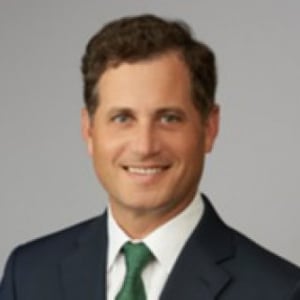
Partner, Gibson Dunn
David P. Burns is a litigation partner in the Washington, D.C., office of Gibson, Dunn & Crutcher. His practice focuses on white-collar criminal defense, internal investigations, national security, and regulatory enforcement matters. Mr. Burns represents corporations and executives in federal, state, and regulatory investigations involving securities and commodities fraud, sanctions and export controls, theft of trade secrets and economic espionage, the Foreign Agents Registration Act, accounting fraud, the Foreign Corrupt Practices Act, international and domestic cartel enforcement, health care fraud, government contracting fraud, and the False Claims Act.
Prior to re-joining the firm, Mr. Burns served in senior positions in both the Criminal Division and National Security Division of the U.S. Department of Justice. Most recently, he served as Acting Assistant Attorney General of the Criminal Division, where he led more than 600 federal prosecutors who conducted investigations and prosecutions involving securities fraud, health care fraud, Foreign Corrupt Practices Act violations, public corruption, cybercrime, intellectual property theft, money laundering, Bank Secrecy Act violations, child exploitation, international narcotics trafficking, human rights violations, organized and transnational crime, gang violence, and other crimes, as well as matters involving international affairs and sensitive law enforcement techniques. Prior to joining the Criminal Division, Mr. Burns served as the Principal Deputy Assistant Attorney General of the National Security Division from September 2018 to December 2020. In that role, he supervised the Division’s investigations and prosecutions, including counterterrorism, counterintelligence, economic espionage, cyber hacking, FARA, disclosure of classified information, and sanctions and export controls matters. He also spent five years as an Assistant United States Attorney in the Southern District of New York, Criminal Division, from 2000 to 2005.
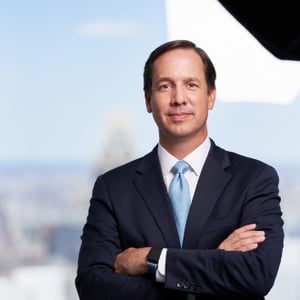
Counsel, Debevoise & Plimpton
Carter Burwell is a litigation counsel based in the Washington, D.C. office of Debevoise & Plimpton and a member of the firm’s White Collar & Regulatory Defense practice. His practice focuses on white collar criminal defense, government investigations and internal investigations, and national security matters.
Mr. Burwell joins Debevoise with more than 15 years of experience in senior roles across the federal government. Most recently, Mr. Burwell served as Counselor to the Secretary of the Treasury for Terrorism and Finance Intelligence, where he advised on matters involving financial sanctions and illicit finance, international corruption and human rights abuses and digital assets. At Treasury, Mr. Burwell worked directly with the National Security Council, other senior executive branch officials, foreign leaders and the private sector to develop and implement policies to protect domestic and international financial systems from national security threats. He also participated in the CFIUS review process and advanced anti-money laundering reforms under the Bank Secrecy Act.
Prior to his role at the Treasury Department, Mr. Burwell served as one of the top lawyers on the U.S. Senate Judiciary Committee, including as Chief Counsel to former Assistant Majority Leader and U.S. Senator John Cornyn and as Counsel to former Chairman and U.S. Senator Chuck Grassley. In the Senate, Mr. Burwell worked on bipartisan efforts to modernize national security and technology laws, reform the criminal justice system and conduct rigorous oversight of government officials and the private sector on matters of national consequence. Mr. Burwell also served as an Assistant U.S. Attorney in the Violent Crime and Terrorism Unit in the U.S. Attorney's Office in the Eastern District of New York (EDNY) and in the National Security and International Crimes Unit in the U.S. Attorney’s Office in the Eastern District of Virginia (EDVA). As a federal prosecutor at EDNY and EDVA, Mr. Burwell supervised and participated in a wide variety of investigations and prosecutions involving international and domestic terrorist groups, international cartels and racketeering organizations, as well as financial and cyber crimes. He successfully tried numerous cases to verdict and briefed and argued appeals in the U.S. Court of Appeals.
Earlier on in his career, Mr. Burwell served as a law clerk to U.S. District Court Judge Gleeson, now a Debevoise litigation partner, before going on to clerk on the U.S. Court of Appeals for the D.C. Circuit for the Hon. Judge Karen Henderson. Mr. Burwell was also a litigation associate at another international law firm.
He received his J.D. from the University Virginia School of Law in 2002, an M.Phil from the University of Cambridge in 1998, and his B.A. from Columbia College in 1996.
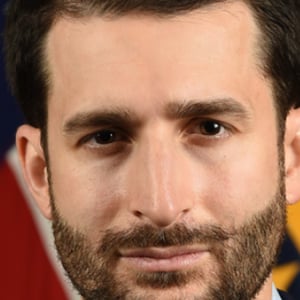
Chair, Public Interest Declassification Board
Ezra A. Cohen is chair of the Public Interest Declassification Board and an adjunct fellow at Hudson Institute, focusing on intelligence policy.
Prior to joining Hudson Institute, Mr. Cohen was the acting under secretary of defense for intelligence and security and director for defense intelligence at the Office of the Director of National Intelligence. In this role, Mr. Cohen served as the principal civilian intelligence advisor to the secretary of defense on all military intelligence related matters, including signals intelligence, human intelligence, sensitive activities, geospatial intelligence, sensitive reconnaissance, counterintelligence, law enforcement, and security. In this role he exercised supervision and control of the Defense Intelligence Enterprise including the National Security Agency, Central Security Service, the Defense Intelligence Agency, the National Geospatial-Intelligence Agency, the National Reconnaissance Office, and the Defense Counterintelligence and Security Agency.
Before becoming acting under secretary for intelligence, Mr. Cohen was the acting assistant secretary of defense for special operations and low-intensity conflict (SO/LIC); principal deputy assistance secretary of defense for SO/LIC; deputy assistant secretary of defense for counter-narcotics and global threats. As ASD SO/LIC, Mr. Cohen was responsible for all policy formulation and oversight of Department of Defense counterterrorism, special operations, personnel recovery, hostage rescue, counter-narcotics, detainee affairs, peacekeeping, humanitarian assistance, and stability operations. Further, Mr. Cohen provided administrative oversight and control of all organize, train, and equip activities for United States Special Operations Command.
Mr. Cohen also served on the National Security Council Staff, as the special assistant to the president and senior director for intelligence programs. In this role, he was principally responsible for the implementation of the president’s national security objectives through the vast array of intelligence community capabilities. As senior director, he was the United States Government’s strategic level policy coordinator for all intelligence programs and sensitive activities, including covert action. While at the National Security Council, Mr. Cohen, under his counterintelligence remit, initiated the comprehensive interagency review of Chinese malign activity.
Before joining the National Security Council, Mr. Cohen served at the Department of Defense in a number of international and domestic operational positions.
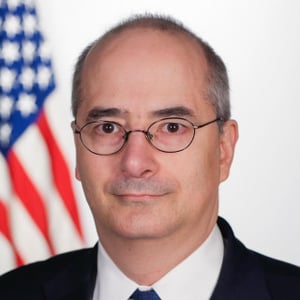
Former Assistant to the President and Deputy Counsel to the President, Former NSC Legal Advisor
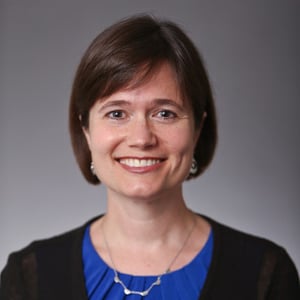
Senior Director, Liberty & National Security Program, Brennan Center for Justice at New York University Law School
Elizabeth (Liza) Goitein is senior director of the Brennan Center for Justice’s Liberty & National Security Program.
Goitein is a nationally-recognized expert on presidential emergency powers, government surveillance, and government secrecy. Her writing has been featured in major newspapers and magazines including the New York Times, Washington Post, Wall Street Journal, USA Today, Los Angeles Times, The Atlantic Magazine, and The New Republic, and she has appeared frequently on MSNBC, CNN, and NPR. She has testified on several occasions before the Senate and House Judiciary Committees.
Before coming to the Brennan Center, Goitein served as counsel to Senator Russ Feingold, chairman of the Constitution Subcommittee of the Senate Judiciary Committee, and as a trial attorney in the Federal Programs Branch of the Civil Division of the Department of Justice. Goitein graduated from Yale Law School and clerked for the Honorable Michael Daly Hawkins on the U.S. Court of Appeals for the Ninth Circuit. In 2021–22, she was a member of the inaugural class of Senior Practitioner Fellows at the University of Chicago’s Center for Effective Government.
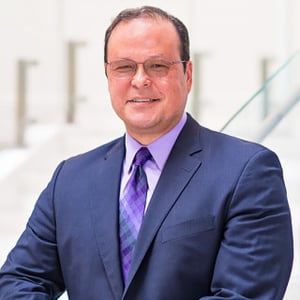
Senior Project Director and In Residence Adjunct, American University Washington College of Law
Alex Joel is a Scholar-in-Residence and Adjunct Professor at the Washington College of Law. He is conducting research, developing programming, and teaching courses focused on the intersections between the law, national security, technology, and privacy. Previously, he was a senior officer with the Office of the Director of National Intelligence (ODNI), where until June 2019 he served as the Chief of the Office of Civil Liberties, Privacy and Transparency (CLPT). CLPT works to ensure that the Intelligence Community carries out its national security mission in a manner that protects privacy and civil liberties, and provides appropriate public transparency. As Chief of CLPT, Mr. Joel was the ODNI’s Civil Liberties Protection Officer, a position established by the Intelligence Reform and Terrorism Protection Act of 2004. Mr. Joel served in that position since the ODNI stood up in 2005.
Since 2015, he also served as the ODNI’s Chief Transparency Officer, appointed to the position by Director of National Intelligence James Clapper. Mr. Joel formerly served on the Board of Directors of the International Association of Privacy Professionals, the world’s largest association of privacy professionals. Previously, Mr. Joel worked as an attorney at the Central Intelligence Agency's Office of General Counsel. Before that, he worked in private practice, as a technology attorney at the law firm of Shaw, Pittman, Potts & Trowbridge in Washington, D.C. (now Pillsbury Winthrop), and as the privacy, technology, and e-commerce attorney for Marriott International, Inc. Mr. Joel began his legal career as an officer in the U.S. Army Judge Advocate General’s Corps.
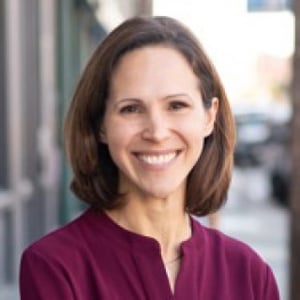
Vice President, Global Head of Public Policy, Cloudfare, Inc.
Alissa Starzak is the Vice President and Global Head of Public Policy at Cloudflare, a security, performance, and reliability company that is on a mission to help build a better Internet. Prior to joining Cloudflare, Starzak served as the 21st General Counsel of the Department of the Army, after confirmation by the Senate. Before her appointment as Army General Counsel, Starzak also served in a variety of other national security positions, including at the U.S. Department of Defense and as Counsel to the Senate Select Committee on Intelligence, and in private practice.
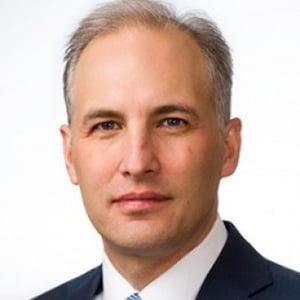
Chief Trust & Security Officer, Uber Technologies, Inc.
Mr. Matthew G. Olsen, also known as Matt, serves as the Chief Trust & Security Officer at Uber Technologies, Inc.
Matt Olsen has served as a leading government official on a range of national security, intelligence and law enforcement issues. He teaches the National Security Law and Practice Seminar at the Law School.
Most recently, Olsen served for three years as the director of the National Counterterrorism Center under President Barack Obama. Created by Congress in response to the attacks of Sept. 11, NCTC is responsible for the integration and analysis of terrorism information and strategic operational planning of counterterrorism activities. Prior to joining NCTC, Olsen was the general counsel for the National Security Agency, serving as NSA’s chief legal officer and focusing on surveillance law and cyber operations.
Olsen worked at the Department of Justice in a number of leadership positions. He served as an associate deputy attorney general, responsible for national security and criminal cases. He also was special counselor to the attorney general and executive director of the Guantanamo Review Task Force, where he led the review of individuals detained at Guantanamo. Olsen served as acting assistant attorney general for National Security and helped establish the National Security Division.
From 1994 to 2006, Olsen was a federal prosecutor in the U.S. Attorney’s Office for the District of Columbia, prosecuting terrorists, violent gang members and white-collar criminals. Olsen served as special counsel to the director of the FBI from 2004 to 2005. He began his public service career as a trial attorney in the Civil Rights Division of the Department of Justice.
Olsen is a lecturer on law at Harvard Law School, a national security analyst for ABC News, and an adjunct senior fellow at the Center for a New American Security. He also is affiliated with the Berkman Klein Center at Harvard, where he helps lead a project on cybersecurity. Olsen is a co-founder of IronNet Cybersecurity, a technology firm based in Washington, D.C., where he leads business development and strategy.
Olsen graduated from Harvard Law School and the University of Virginia and clerked in the U.S. District Court for the District of Columbia.
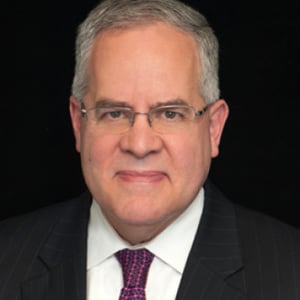
Advisory Board Member, Beacon Global Strategies LLC
Mr. Shedd was named Acting Director of the Defense Intelligence Agency in August 2014 following four years service as Deputy Director. Until January 2015 he led the Defense Intelligence Enterprise workforce comprised of more than 16,500 military and civilian employees worldwide. This workforce spans the Defense Intelligence Enterprise within the Department of Defense with an intelligence mission and/or function, plus all their stakeholders involved in creating, sustaining and enhancing mission capacity.
Mr. Shedd served from May 2007 to August 2010 as the Director of National Intelligence (DNI) Deputy Director for Policy, Plans, and Requirements, where he was responsible for overseeing the formulation and implementation of major Intelligence Community (IC) policies across the full spectrum of issues, from information sharing and IC authorities to analytic standards, among others. In particular, he led the review of Executive Order 12333, the foundational U.S. intelligence policy, which was revised by President George W. Bush in July 2008. Additionally, Mr. Shedd developed and implemented a National Intelligence Strategy, published in August 2009 for the IC and led all strategic planning efforts to determine future intelligence priorities for the Community and the Nation.
From May 2005 to April 2007, Mr. Shedd served as Chief of Staff and, later, Acting Director of the Intelligence Staff to the Director of National Intelligence. Prior to the creation of the Office of the Director of National Intelligence, Mr. Shedd held intelligence policy positions at the National Security Council (NSC) from February 2001 to May 2005. He served as the NSC’s Special Assistant to the President and Senior Director for Intelligence Programs and Reform. Mr. Shedd has been directly involved in the implementation of intelligence reform stemming from the 9/11 Commission report in July 2004, the Intelligence Reform and Terrorism Prevention Act of 2004, and the Weapons of Mass Destruction (WMD) Commission’s report to the President in March 2005.
Between 1984 and 1993, Mr. Shedd served overseas in the U.S. Embassies in Costa Rica and Mexico. Mr. Shedd has also held a variety of senior management assignments at the Central Intelligence Agency, including Chief of Congressional Liaison.
Mr. Shedd is also on the Government Advisory Board of Dataminr, a social media “big data” company that broadly services the Federal Government.
Mr. Shedd holds a B.A. from Geneva College in Beaver Falls, Pennsylvania and a M.A. from Georgetown University’s School of Foreign Service in Latin American Studies. Mr. Shedd was born in Bolivia and grew up in Latin America.
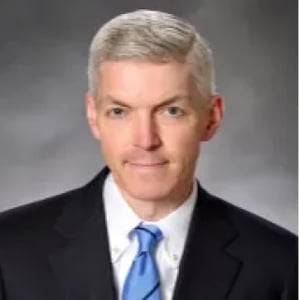
Executive Vice President, Chief Legal Officer, Gates Corporation
Matthew R. A. Heiman joined the Company in May 2026 and has served as the Company’s Chief Legal Officer and Corporate Secretary since June 2026. As Chief Legal Officer, Mr. Heiman is responsible for all legal functions for Gates, including securities and corporate governance, M&A, litigation, commercial, regulatory, compliance, patents and trademarks, real estate, employment and labor, sustainability and environmental matters. Prior to joining Gates, Mr. Heiman held senior legal leadership roles at Waystar, where he served as Chief Legal & Administrative Officer from 2023 to 2025 and as General Counsel and Corporate Secretary from 2020 to 2023. Prior to that, he was with Johnson Controls, where he served as Vice President, Corporate Secretary, and Associate General Counsel. Mr. Heiman has been a Senior Fellow for the National Security Institute at George Mason University’s Antonin Scalia School of Law since 2018.

Partner, Steptoe & Johnson LLP
Stewart Baker is a partner in the law firm of Steptoe & Johnson in Washington, D.C. From 2005 to 2009, he was the first Assistant Secretary for Policy at the Department of Homeland Security. His law practice covers cybersecurity, data protection, homeland security, and travel and foreign investment regulation; he has been awarded one patent.
Mr. Baker has been General Counsel of the National Security Agency and General Counsel of the commission that investigated WMD intelligence failures prior to the Iraq war. He is the author of Skating on Stilts, a book on terrorism, cybersecurity, and other technology issues; he also hosts the weekly Cyberlaw Podcast.
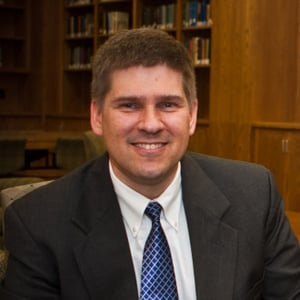
Associate Professor of Law, Brigham Young University J. Reuben Clark Law School
Eric Talbot Jensen teaches and writes in the areas of Public International Law, Criminal Law, The Law of Armed Conflict, International Criminal Law, and National Security Law. His recent scholarship has appeared in the Texas, Temple, Houston, and Israel Law Reviews, as well as the Stanford Law and Policy Review, Virginia Journal of International Law, Vanderbilt Journal of Transnational Law, and Stanford Journal of International Law. Professor Jensen is a co-author on an Oxford University text analyzing application of the laws of war to the war on terror and is also co-authoring a law school casebook on the Law of Armed Conflict for Aspen Publishing.
Prior to joining the BYU law faculty in 2011, Professor Jensen spent 2 years teaching at Fordham Law School in New York City and 20 years in the United States Army as both a Cavalry Officer and as a Judge Advocate. During his time as a Judge Advocate, Professor Jensen served in various positions including as the Chief of the Army’s International Law Branch; Deputy Legal Advisor for Task Force Baghdad; Professor of International and Operational Law at The Judge Advocate General’s Legal Center and School; legal advisor to the US contingent of UN Forces deployed to Skopje, Macedonia as part of UNPREDEP; and legal advisor in Bosnia in support of Operation Joint Endeavor/Guard.

Director of the Institute for Law, Science and Global Security a, Georgetown University
Professor Catherine Lotrionte is the Director of the Institute for Law, Science and Global Security and Visiting Assistant Professor of Government and Foreign Service at Georgetown University. Professor Lotrionte teaches courses on national security law, U.S. intelligence law, and international law. In addition to teaching, Professor Lotrionte coordinates research projects and events for the Institute for Law, Science and Global Security at Georgetown. She is the Institute Liaison for the Program on Nonproliferation Policy and Law, funded by the Defense Threat Reduction Agency, in cooperation with the Monterey Institute for International Studies’ James Martin Center for Nonproliferation Studies. Professor Lotrionte is also the Director of the CyberProject. Professor Lotrionte and the Institute focus on the role of international and domestic law in recent and upcoming developments in cyber technology and cyber threats.
In 2002 she was appointed by General Brent Scowcroft to be Counsel to the President's Foreign Intelligence Advisory Board at the White House, a position she held until 2006. In 2002 she served as a legal counsel for the Joint Inquiry Committee of the Senate Select Committee on Intelligence. Prior to that, Professor Lotrionte was Assistant General Counsel with the Office of General Counsel at the Central Intelligence Agency, where she provided legal advice relating to information warfare, foreign intelligence and counterintelligence activities, and international terrorism. Before working in the Office of General Counsel at the Central Intelligence Agency, Professor Lotrionte served in the U.S. Department of Justice.
Professor Lotrionte earned her Ph.D. from Georgetown University and her J.D. from New York University and is the author of numerous publications, including a forthcoming book concerning U.S. national security law in the post-Cold War era. She is a frequent speaker at cyber conferences held by academic, military, government, and media organizations. She is a Life Member of the Council on Foreign Relations.

Professor Emeritus of Law, Antonin Scalia Law School, George Mason University
Jeremy A. Rabkin is a Professor Emeritus of Law at the Antonin Scalia Law School, George Mason University. Before joining the faculty in June 2007, he was for over two decades a professor in the Department of Government at Cornell University. Professor Rabkin serves on the board of directors of the Center for Individual Rights, a public interest law firm based in Washington, D.C. Previously he was a board member of the U.S. Institute of Peace and the board of academic advisors of the American Enterprise Institute.
Professor Rabkin’s books include Law Without Nations? (Princeton University Press, 2005). He authored “If You Need a Friend, Don’t Call a Cosmopolitan,” a chapter in Varieties of Sovereignty and Citizenship (Sigal R. Ben-Porath & Rogers M. Smith eds., University of Pennsylvania Press, 2012). His articles have appeared in major law reviews and political science journals and his journalistic contributions in a range of magazines and newspapers, including the Washington Post and the Wall Street Journal.
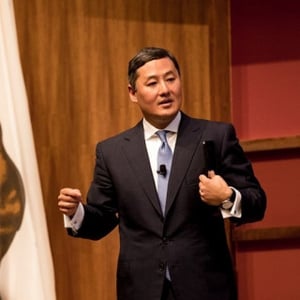
Emanuel S. Heller Professor of Law, University of California at Berkeley; Thomas Smith Senior Research Fellow, Civitas Institute, University of Texas at Austin
John Yoo is the Emanuel Heller Professor of Law at the University of California at Berkeley. He is also the Thomas Smith Senior Research Fellow, Civitas Institute, at the University of Texas at Austin. He is also a Nonresident Senior Fellow at the American Enterprise Institute.
His most recent book, The Politically Incorrect Guide to the Supreme Court, co-authored with Robert Delahunty, was published in 2023. Professor Yoo’s other books include Defender-in-Chief: Trump’s Fight for Presidential Power; Striking Power: How Cyber, Robots, and Space Weapons Change the Rules for War; Point of Attack: Preventive War, International Law, and Global Welfare; and Crisis and Command: A History of Executive Power from George Washington to George Bush.
He is a co-author of volumes 1 and 2 of R. Rossum, G. Tarr, V. Munoz & J. Yoo American Constitution Law (Routledge, 2026), and a co-editor of the eight-volume series on the 250th anniversary of the American Revolution, We Hold These Truths, with Yuval Levin and Adam White of the American Enterprise Institute.
Professor Yoo has published more than 100 articles in academic journals on subjects including national security, constitutional law, international law, and the Supreme Court. He also regularly contributes to the editorial pages of the Wall Street Journal, New York Times, Washington Post, Los Angeles Times, and National Review, among others.
Professor Yoo has served in all three branches of government. He was an official in the U.S. Department of Justice, where he worked on national security and terrorism issues after the 9/11 attacks. He served as general counsel of the U.S. Senate Judiciary Committee. He has been a law clerk for Supreme Court Justice Clarence Thomas and federal appeals Judge Laurence Silberman. He has been a visiting professor at the University of Texas at Austin’s School of Civic Leadership, Seoul National University, the Interdisciplinary Center Herzliya, Keio University, Trento University, the University of Chicago, and the Free University of Amsterdam.
Professor Yoo supervises the Public Law and Policy Program and the California Constitution Center. He also serves on the boards of Founding Forward, the Washington Legal Foundation, the Pacific Legal Foundation, the Ulysses Grant Institute, the Federalist Society’s Separation of Powers and Federalism Division, the Universidad Cientifica del Sur Law School, and the Asia-Pacific Law Institute at Seoul National University. He is a winner of the Federalist Society’s Paul Bator award and the Heritage Foundation’s Edwin Meese III Originalism Lectureship.
Professor Yoo graduated from Yale Law School and summa cum laude from Harvard College.
Partner, Steptoe & Johnson LLP
Stewart Baker is a partner in the law firm of Steptoe & Johnson in Washington, D.C. From 2005 to 2009, he was the first Assistant Secretary for Policy at the Department of Homeland Security. His law practice covers cybersecurity, data protection, homeland security, and travel and foreign investment regulation; he has been awarded one patent.
Mr. Baker has been General Counsel of the National Security Agency and General Counsel of the commission that investigated WMD intelligence failures prior to the Iraq war. He is the author of Skating on Stilts, a book on terrorism, cybersecurity, and other technology issues; he also hosts the weekly Cyberlaw Podcast.
Associate Professor of Law, Brigham Young University J. Reuben Clark Law School
Eric Talbot Jensen teaches and writes in the areas of Public International Law, Criminal Law, The Law of Armed Conflict, International Criminal Law, and National Security Law. His recent scholarship has appeared in the Texas, Temple, Houston, and Israel Law Reviews, as well as the Stanford Law and Policy Review, Virginia Journal of International Law, Vanderbilt Journal of Transnational Law, and Stanford Journal of International Law. Professor Jensen is a co-author on an Oxford University text analyzing application of the laws of war to the war on terror and is also co-authoring a law school casebook on the Law of Armed Conflict for Aspen Publishing.
Prior to joining the BYU law faculty in 2011, Professor Jensen spent 2 years teaching at Fordham Law School in New York City and 20 years in the United States Army as both a Cavalry Officer and as a Judge Advocate. During his time as a Judge Advocate, Professor Jensen served in various positions including as the Chief of the Army’s International Law Branch; Deputy Legal Advisor for Task Force Baghdad; Professor of International and Operational Law at The Judge Advocate General’s Legal Center and School; legal advisor to the US contingent of UN Forces deployed to Skopje, Macedonia as part of UNPREDEP; and legal advisor in Bosnia in support of Operation Joint Endeavor/Guard.
Director of the Institute for Law, Science and Global Security a, Georgetown University
Professor Catherine Lotrionte is the Director of the Institute for Law, Science and Global Security and Visiting Assistant Professor of Government and Foreign Service at Georgetown University. Professor Lotrionte teaches courses on national security law, U.S. intelligence law, and international law. In addition to teaching, Professor Lotrionte coordinates research projects and events for the Institute for Law, Science and Global Security at Georgetown. She is the Institute Liaison for the Program on Nonproliferation Policy and Law, funded by the Defense Threat Reduction Agency, in cooperation with the Monterey Institute for International Studies’ James Martin Center for Nonproliferation Studies. Professor Lotrionte is also the Director of the CyberProject. Professor Lotrionte and the Institute focus on the role of international and domestic law in recent and upcoming developments in cyber technology and cyber threats.
In 2002 she was appointed by General Brent Scowcroft to be Counsel to the President's Foreign Intelligence Advisory Board at the White House, a position she held until 2006. In 2002 she served as a legal counsel for the Joint Inquiry Committee of the Senate Select Committee on Intelligence. Prior to that, Professor Lotrionte was Assistant General Counsel with the Office of General Counsel at the Central Intelligence Agency, where she provided legal advice relating to information warfare, foreign intelligence and counterintelligence activities, and international terrorism. Before working in the Office of General Counsel at the Central Intelligence Agency, Professor Lotrionte served in the U.S. Department of Justice.
Professor Lotrionte earned her Ph.D. from Georgetown University and her J.D. from New York University and is the author of numerous publications, including a forthcoming book concerning U.S. national security law in the post-Cold War era. She is a frequent speaker at cyber conferences held by academic, military, government, and media organizations. She is a Life Member of the Council on Foreign Relations.
Professor Emeritus of Law, Antonin Scalia Law School, George Mason University
Jeremy A. Rabkin is a Professor Emeritus of Law at the Antonin Scalia Law School, George Mason University. Before joining the faculty in June 2007, he was for over two decades a professor in the Department of Government at Cornell University. Professor Rabkin serves on the board of directors of the Center for Individual Rights, a public interest law firm based in Washington, D.C. Previously he was a board member of the U.S. Institute of Peace and the board of academic advisors of the American Enterprise Institute.
Professor Rabkin’s books include Law Without Nations? (Princeton University Press, 2005). He authored “If You Need a Friend, Don’t Call a Cosmopolitan,” a chapter in Varieties of Sovereignty and Citizenship (Sigal R. Ben-Porath & Rogers M. Smith eds., University of Pennsylvania Press, 2012). His articles have appeared in major law reviews and political science journals and his journalistic contributions in a range of magazines and newspapers, including the Washington Post and the Wall Street Journal.
Emanuel S. Heller Professor of Law, University of California at Berkeley; Thomas Smith Senior Research Fellow, Civitas Institute, University of Texas at Austin
John Yoo is the Emanuel Heller Professor of Law at the University of California at Berkeley. He is also the Thomas Smith Senior Research Fellow, Civitas Institute, at the University of Texas at Austin. He is also a Nonresident Senior Fellow at the American Enterprise Institute.
His most recent book, The Politically Incorrect Guide to the Supreme Court, co-authored with Robert Delahunty, was published in 2023. Professor Yoo’s other books include Defender-in-Chief: Trump’s Fight for Presidential Power; Striking Power: How Cyber, Robots, and Space Weapons Change the Rules for War; Point of Attack: Preventive War, International Law, and Global Welfare; and Crisis and Command: A History of Executive Power from George Washington to George Bush.
He is a co-author of volumes 1 and 2 of R. Rossum, G. Tarr, V. Munoz & J. Yoo American Constitution Law (Routledge, 2026), and a co-editor of the eight-volume series on the 250th anniversary of the American Revolution, We Hold These Truths, with Yuval Levin and Adam White of the American Enterprise Institute.
Professor Yoo has published more than 100 articles in academic journals on subjects including national security, constitutional law, international law, and the Supreme Court. He also regularly contributes to the editorial pages of the Wall Street Journal, New York Times, Washington Post, Los Angeles Times, and National Review, among others.
Professor Yoo has served in all three branches of government. He was an official in the U.S. Department of Justice, where he worked on national security and terrorism issues after the 9/11 attacks. He served as general counsel of the U.S. Senate Judiciary Committee. He has been a law clerk for Supreme Court Justice Clarence Thomas and federal appeals Judge Laurence Silberman. He has been a visiting professor at the University of Texas at Austin’s School of Civic Leadership, Seoul National University, the Interdisciplinary Center Herzliya, Keio University, Trento University, the University of Chicago, and the Free University of Amsterdam.
Professor Yoo supervises the Public Law and Policy Program and the California Constitution Center. He also serves on the boards of Founding Forward, the Washington Legal Foundation, the Pacific Legal Foundation, the Ulysses Grant Institute, the Federalist Society’s Separation of Powers and Federalism Division, the Universidad Cientifica del Sur Law School, and the Asia-Pacific Law Institute at Seoul National University. He is a winner of the Federalist Society’s Paul Bator award and the Heritage Foundation’s Edwin Meese III Originalism Lectureship.
Professor Yoo graduated from Yale Law School and summa cum laude from Harvard College.
Managing Director, Beacon Global Strategies LLC
From 2011-2013, Mr. Allen served as the Majority Staff Director of the House Permanent Select Committee on Intelligence (HPSCI). Under Chairman Mike Rogers’ (R-MI) direction, the HPSCI restored the process of an annual intelligence authorization bill to fund and give direction to the seventeen elements of the intelligence community, enacting measures for fiscal years 2011, 2012, and 2013. The HPSCI also led the House of Representatives’ consideration of cyber security legislation, passing the Cyber Information Sharing Protection Act (CISPA) with bipartisan majorities in 2012 and 2013.
Prior to joining the HPSCI, he was director for the Bipartisan Policy Center’s successor to the 9/11 Commission, the National Security Preparedness Group, co-chaired by former Congressman Lee Hamilton and former Governor Tom Kean.
Previously, Mr. Allen served in the White House for seven years in a variety of national security policy and legislative roles. At the National Security Council (NSC), he served as Special Assistant to the President and Senior Director for Counter-proliferation Strategy from June 2007 to January 2009 under National Security Advisor Steve Hadley. As Senior Director, he contributed to the development of the U.S. government’s policy on counter-proliferation issues, including on the Iranian, Syrian, and North Korean nuclear files; missile defense; civilian nuclear cooperation including the U.S.-India Civilian Nuclear Cooperation Agreement; U.S. exports controls; bio-defense; and WMD and terrorism.
As the Special Assistant to the President and Senior Director for Legislative Affairs from March 2005 to June 2007, Mr. Allen was the NSC’s chief liaison with the national security committees of Congress and led the confirmation teams of DNI nominees Negroponte and McConnell and CIA Director General Michael Hayden.
From December 2001 to February 2005, Mr. Allen worked in the legislative affairs office of the White House’s Homeland Security Council. As Special Assistant to the President for Legislative Affairs, Mr. Allen was part of team that managed the White House effort to enact the Intelligence Reform and Terrorism Prevention Act of 2004, which created the Office of the Director of National Intelligence.
At the beginning of the Bush Administration, Mr. Allen worked in the Bureau of Legislative Affairs at the Department of State. Mr. Allen received his L.L.M. with distinction in International Law from the Georgetown University Law Center, his J.D. from the University of Alabama (cum laude), and his B.A. from Vanderbilt University.
In addition to his work at the Bipartisan Policy Center, in 2009, Mr. Allen taught National Security Policymaking at the George Washington University Elliott School of International Affairs and served as an advisor for the congressionally-created Commission on WMD and Terrorism co-chaired by Senators Bob Graham and Jim Talent. Mr. Allen was the Intelligence Team Lead for the Romney for President Transition Team.
Mr. Allen is the author of Blinking Red: Crisis and Compromise in American Intelligence After 9/11. (Potomac Books, September 2013).
Executive Vice President, Chief Legal Officer, Gates Corporation
Matthew R. A. Heiman joined the Company in May 2026 and has served as the Company’s Chief Legal Officer and Corporate Secretary since June 2026. As Chief Legal Officer, Mr. Heiman is responsible for all legal functions for Gates, including securities and corporate governance, M&A, litigation, commercial, regulatory, compliance, patents and trademarks, real estate, employment and labor, sustainability and environmental matters. Prior to joining Gates, Mr. Heiman held senior legal leadership roles at Waystar, where he served as Chief Legal & Administrative Officer from 2023 to 2025 and as General Counsel and Corporate Secretary from 2020 to 2023. Prior to that, he was with Johnson Controls, where he served as Vice President, Corporate Secretary, and Associate General Counsel. Mr. Heiman has been a Senior Fellow for the National Security Institute at George Mason University’s Antonin Scalia School of Law since 2018.

Columnist, Bloomberg View
Eli Lake is a Bloomberg View columnist who writes about politics and foreign affairs. He was previously the senior national security correspondent for the Daily Beast. Lake also covered national security and intelligence for the Washington Times, the New York Sun and UPI, and was a contributing editor at the New Republic. In 2005 and 2006, Lake lived in Cairo as a correspondent for the New York Sun. He has traveled to war zones in Sudan, Iraq and Gaza. Lake is one of the few journalists to report from all three members of President George W. Bush’s axis of evil: Iraq, Iran and North Korea.
Partner, Wilmer Cutler Pickering Hale and Dorr LLP
Benjamin Powell is widely recognized as one of the country’s top authorities on handling cybersecurity, data breach and related investigation matters. He is a leading attorney in handling complex regulatory matters relating to international investment and mergers, including matters involving the Committee on Foreign Investment in the United States (CFIUS) and the Defense Security Service (DSS). He also is regularly asked to be lead counsel on major investigations and strategic counseling across a variety of sensitive regulatory matters for the world’s most prominent companies.
Mr. Powell handles matters relating to international investment and mergers, including matters involving the Committee on Foreign Investment in the United States (CFIUS), is widely recognized as one of the country’s top experts on handling cybersecurity, data breach, and related investigation matters, and regularly handles major investigations and strategic counseling for the world’s most prominent companies. He is also frequently retained to perform due diligence on major domestic corporate transactions requiring expertise in government regulatory issues, including government contracting, security clearance issues with the Defense Security Service (DSS), export control and related issues. He is regularly named as one of Washington’s Top Lawyers in surveys of best attorneys in DC. The Wall Street Journal calls him one of Washington’s “big legal guns” and The Legal 500 calls him an “exceptional lawyer” who “provides clear guidance on complex technological issues.” He is recognized as a CFIUS expert in the 2013 and 2014 editions of Chambers USA: America's Leading Lawyers in Business.
Mr. Powell has performed due diligence on some of the largest recent corporate transactions and successfully guided companies through some the most complex CFIUS filings for companies in a range of industries. He has counseled companies and handled investigations for many of the most sensitive cybersecurity and data breach incidents in recent years. He has represented clients in civil and criminal litigation involving privacy and surveillance issues at the state and federal level. He has also served as lead counsel on matters for companies facing difficult regulatory, congressional, and public policy issues across a range of industry sectors and subjects. Mr. Powell regularly handles matters involving the Defense Security Service, including the structuring of Special Security Agreements and Proxy Agreements, related to corporate security clearances and classified government contracting.
Mr. Powell was unanimously confirmed by the United States Senate as General Counsel to the Director of National Intelligence. His background includes serving as General Counsel to the first three Directors of National Intelligence, Special Assistant to the President and associate White House Counsel, Air Force officer, work at the Federal Bureau of Investigation, corporate counsel at a software company in Silicon Valley, and part of the trial team that obtained the largest antitrust jury verdict in US history. He joined the firm in 2009.

Executive Vice President, The Federalist Society
Dean Reuter is Executive Vice President at the Federalist Society for Law and Public Policy Studies. He has served in two federal government agency Offices of the Inspector General, as Counsel to the Inspector General and Deputy Inspector General, responsible for policing the use of federal funds granted and contracted through those agencies. As such, he helped conduct and oversee criminal investigations across the country. He is the principal author of the non-fiction book, The Hidden Nazi: The Untold Story of America's Deal with the Devil, and editor of Liberty’s Nemesis: The Unchecked Expansion of the State and Confronting Terror: 9/11 and the Future of American National Security. He was appointed by the President and served as Vice-Chairman of the Board of Directors of the Corporation for National and Community Service, and recently served as an appointee on the U.S. Commission on Presidential Scholars. He is a graduate of Hood College (BA with Honors) and the University of Maryland School of Law.
Partner, Gibson Dunn
David P. Burns is a litigation partner in the Washington, D.C., office of Gibson, Dunn & Crutcher. His practice focuses on white-collar criminal defense, internal investigations, national security, and regulatory enforcement matters. Mr. Burns represents corporations and executives in federal, state, and regulatory investigations involving securities and commodities fraud, sanctions and export controls, theft of trade secrets and economic espionage, the Foreign Agents Registration Act, accounting fraud, the Foreign Corrupt Practices Act, international and domestic cartel enforcement, health care fraud, government contracting fraud, and the False Claims Act.
Prior to re-joining the firm, Mr. Burns served in senior positions in both the Criminal Division and National Security Division of the U.S. Department of Justice. Most recently, he served as Acting Assistant Attorney General of the Criminal Division, where he led more than 600 federal prosecutors who conducted investigations and prosecutions involving securities fraud, health care fraud, Foreign Corrupt Practices Act violations, public corruption, cybercrime, intellectual property theft, money laundering, Bank Secrecy Act violations, child exploitation, international narcotics trafficking, human rights violations, organized and transnational crime, gang violence, and other crimes, as well as matters involving international affairs and sensitive law enforcement techniques. Prior to joining the Criminal Division, Mr. Burns served as the Principal Deputy Assistant Attorney General of the National Security Division from September 2018 to December 2020. In that role, he supervised the Division’s investigations and prosecutions, including counterterrorism, counterintelligence, economic espionage, cyber hacking, FARA, disclosure of classified information, and sanctions and export controls matters. He also spent five years as an Assistant United States Attorney in the Southern District of New York, Criminal Division, from 2000 to 2005.
Counsel, Debevoise & Plimpton
Carter Burwell is a litigation counsel based in the Washington, D.C. office of Debevoise & Plimpton and a member of the firm’s White Collar & Regulatory Defense practice. His practice focuses on white collar criminal defense, government investigations and internal investigations, and national security matters.
Mr. Burwell joins Debevoise with more than 15 years of experience in senior roles across the federal government. Most recently, Mr. Burwell served as Counselor to the Secretary of the Treasury for Terrorism and Finance Intelligence, where he advised on matters involving financial sanctions and illicit finance, international corruption and human rights abuses and digital assets. At Treasury, Mr. Burwell worked directly with the National Security Council, other senior executive branch officials, foreign leaders and the private sector to develop and implement policies to protect domestic and international financial systems from national security threats. He also participated in the CFIUS review process and advanced anti-money laundering reforms under the Bank Secrecy Act.
Prior to his role at the Treasury Department, Mr. Burwell served as one of the top lawyers on the U.S. Senate Judiciary Committee, including as Chief Counsel to former Assistant Majority Leader and U.S. Senator John Cornyn and as Counsel to former Chairman and U.S. Senator Chuck Grassley. In the Senate, Mr. Burwell worked on bipartisan efforts to modernize national security and technology laws, reform the criminal justice system and conduct rigorous oversight of government officials and the private sector on matters of national consequence. Mr. Burwell also served as an Assistant U.S. Attorney in the Violent Crime and Terrorism Unit in the U.S. Attorney's Office in the Eastern District of New York (EDNY) and in the National Security and International Crimes Unit in the U.S. Attorney’s Office in the Eastern District of Virginia (EDVA). As a federal prosecutor at EDNY and EDVA, Mr. Burwell supervised and participated in a wide variety of investigations and prosecutions involving international and domestic terrorist groups, international cartels and racketeering organizations, as well as financial and cyber crimes. He successfully tried numerous cases to verdict and briefed and argued appeals in the U.S. Court of Appeals.
Earlier on in his career, Mr. Burwell served as a law clerk to U.S. District Court Judge Gleeson, now a Debevoise litigation partner, before going on to clerk on the U.S. Court of Appeals for the D.C. Circuit for the Hon. Judge Karen Henderson. Mr. Burwell was also a litigation associate at another international law firm.
He received his J.D. from the University Virginia School of Law in 2002, an M.Phil from the University of Cambridge in 1998, and his B.A. from Columbia College in 1996.
Chair, Public Interest Declassification Board
Ezra A. Cohen is chair of the Public Interest Declassification Board and an adjunct fellow at Hudson Institute, focusing on intelligence policy.
Prior to joining Hudson Institute, Mr. Cohen was the acting under secretary of defense for intelligence and security and director for defense intelligence at the Office of the Director of National Intelligence. In this role, Mr. Cohen served as the principal civilian intelligence advisor to the secretary of defense on all military intelligence related matters, including signals intelligence, human intelligence, sensitive activities, geospatial intelligence, sensitive reconnaissance, counterintelligence, law enforcement, and security. In this role he exercised supervision and control of the Defense Intelligence Enterprise including the National Security Agency, Central Security Service, the Defense Intelligence Agency, the National Geospatial-Intelligence Agency, the National Reconnaissance Office, and the Defense Counterintelligence and Security Agency.
Before becoming acting under secretary for intelligence, Mr. Cohen was the acting assistant secretary of defense for special operations and low-intensity conflict (SO/LIC); principal deputy assistance secretary of defense for SO/LIC; deputy assistant secretary of defense for counter-narcotics and global threats. As ASD SO/LIC, Mr. Cohen was responsible for all policy formulation and oversight of Department of Defense counterterrorism, special operations, personnel recovery, hostage rescue, counter-narcotics, detainee affairs, peacekeeping, humanitarian assistance, and stability operations. Further, Mr. Cohen provided administrative oversight and control of all organize, train, and equip activities for United States Special Operations Command.
Mr. Cohen also served on the National Security Council Staff, as the special assistant to the president and senior director for intelligence programs. In this role, he was principally responsible for the implementation of the president’s national security objectives through the vast array of intelligence community capabilities. As senior director, he was the United States Government’s strategic level policy coordinator for all intelligence programs and sensitive activities, including covert action. While at the National Security Council, Mr. Cohen, under his counterintelligence remit, initiated the comprehensive interagency review of Chinese malign activity.
Before joining the National Security Council, Mr. Cohen served at the Department of Defense in a number of international and domestic operational positions.
Former Assistant to the President and Deputy Counsel to the President, Former NSC Legal Advisor
Senior Director, Liberty & National Security Program, Brennan Center for Justice at New York University Law School
Elizabeth (Liza) Goitein is senior director of the Brennan Center for Justice’s Liberty & National Security Program.
Goitein is a nationally-recognized expert on presidential emergency powers, government surveillance, and government secrecy. Her writing has been featured in major newspapers and magazines including the New York Times, Washington Post, Wall Street Journal, USA Today, Los Angeles Times, The Atlantic Magazine, and The New Republic, and she has appeared frequently on MSNBC, CNN, and NPR. She has testified on several occasions before the Senate and House Judiciary Committees.
Before coming to the Brennan Center, Goitein served as counsel to Senator Russ Feingold, chairman of the Constitution Subcommittee of the Senate Judiciary Committee, and as a trial attorney in the Federal Programs Branch of the Civil Division of the Department of Justice. Goitein graduated from Yale Law School and clerked for the Honorable Michael Daly Hawkins on the U.S. Court of Appeals for the Ninth Circuit. In 2021–22, she was a member of the inaugural class of Senior Practitioner Fellows at the University of Chicago’s Center for Effective Government.
Senior Project Director and In Residence Adjunct, American University Washington College of Law
Alex Joel is a Scholar-in-Residence and Adjunct Professor at the Washington College of Law. He is conducting research, developing programming, and teaching courses focused on the intersections between the law, national security, technology, and privacy. Previously, he was a senior officer with the Office of the Director of National Intelligence (ODNI), where until June 2019 he served as the Chief of the Office of Civil Liberties, Privacy and Transparency (CLPT). CLPT works to ensure that the Intelligence Community carries out its national security mission in a manner that protects privacy and civil liberties, and provides appropriate public transparency. As Chief of CLPT, Mr. Joel was the ODNI’s Civil Liberties Protection Officer, a position established by the Intelligence Reform and Terrorism Protection Act of 2004. Mr. Joel served in that position since the ODNI stood up in 2005.
Since 2015, he also served as the ODNI’s Chief Transparency Officer, appointed to the position by Director of National Intelligence James Clapper. Mr. Joel formerly served on the Board of Directors of the International Association of Privacy Professionals, the world’s largest association of privacy professionals. Previously, Mr. Joel worked as an attorney at the Central Intelligence Agency's Office of General Counsel. Before that, he worked in private practice, as a technology attorney at the law firm of Shaw, Pittman, Potts & Trowbridge in Washington, D.C. (now Pillsbury Winthrop), and as the privacy, technology, and e-commerce attorney for Marriott International, Inc. Mr. Joel began his legal career as an officer in the U.S. Army Judge Advocate General’s Corps.
Vice President, Global Head of Public Policy, Cloudfare, Inc.
Alissa Starzak is the Vice President and Global Head of Public Policy at Cloudflare, a security, performance, and reliability company that is on a mission to help build a better Internet. Prior to joining Cloudflare, Starzak served as the 21st General Counsel of the Department of the Army, after confirmation by the Senate. Before her appointment as Army General Counsel, Starzak also served in a variety of other national security positions, including at the U.S. Department of Defense and as Counsel to the Senate Select Committee on Intelligence, and in private practice.
Executive Vice President, Chief Legal Officer, Gates Corporation
Matthew R. A. Heiman joined the Company in May 2026 and has served as the Company’s Chief Legal Officer and Corporate Secretary since June 2026. As Chief Legal Officer, Mr. Heiman is responsible for all legal functions for Gates, including securities and corporate governance, M&A, litigation, commercial, regulatory, compliance, patents and trademarks, real estate, employment and labor, sustainability and environmental matters. Prior to joining Gates, Mr. Heiman held senior legal leadership roles at Waystar, where he served as Chief Legal & Administrative Officer from 2023 to 2025 and as General Counsel and Corporate Secretary from 2020 to 2023. Prior to that, he was with Johnson Controls, where he served as Vice President, Corporate Secretary, and Associate General Counsel. Mr. Heiman has been a Senior Fellow for the National Security Institute at George Mason University’s Antonin Scalia School of Law since 2018.
Chief Trust & Security Officer, Uber Technologies, Inc.
Mr. Matthew G. Olsen, also known as Matt, serves as the Chief Trust & Security Officer at Uber Technologies, Inc.
Matt Olsen has served as a leading government official on a range of national security, intelligence and law enforcement issues. He teaches the National Security Law and Practice Seminar at the Law School.
Most recently, Olsen served for three years as the director of the National Counterterrorism Center under President Barack Obama. Created by Congress in response to the attacks of Sept. 11, NCTC is responsible for the integration and analysis of terrorism information and strategic operational planning of counterterrorism activities. Prior to joining NCTC, Olsen was the general counsel for the National Security Agency, serving as NSA’s chief legal officer and focusing on surveillance law and cyber operations.
Olsen worked at the Department of Justice in a number of leadership positions. He served as an associate deputy attorney general, responsible for national security and criminal cases. He also was special counselor to the attorney general and executive director of the Guantanamo Review Task Force, where he led the review of individuals detained at Guantanamo. Olsen served as acting assistant attorney general for National Security and helped establish the National Security Division.
From 1994 to 2006, Olsen was a federal prosecutor in the U.S. Attorney’s Office for the District of Columbia, prosecuting terrorists, violent gang members and white-collar criminals. Olsen served as special counsel to the director of the FBI from 2004 to 2005. He began his public service career as a trial attorney in the Civil Rights Division of the Department of Justice.
Olsen is a lecturer on law at Harvard Law School, a national security analyst for ABC News, and an adjunct senior fellow at the Center for a New American Security. He also is affiliated with the Berkman Klein Center at Harvard, where he helps lead a project on cybersecurity. Olsen is a co-founder of IronNet Cybersecurity, a technology firm based in Washington, D.C., where he leads business development and strategy.
Olsen graduated from Harvard Law School and the University of Virginia and clerked in the U.S. District Court for the District of Columbia.
Advisory Board Member, Beacon Global Strategies LLC
Mr. Shedd was named Acting Director of the Defense Intelligence Agency in August 2014 following four years service as Deputy Director. Until January 2015 he led the Defense Intelligence Enterprise workforce comprised of more than 16,500 military and civilian employees worldwide. This workforce spans the Defense Intelligence Enterprise within the Department of Defense with an intelligence mission and/or function, plus all their stakeholders involved in creating, sustaining and enhancing mission capacity.
Mr. Shedd served from May 2007 to August 2010 as the Director of National Intelligence (DNI) Deputy Director for Policy, Plans, and Requirements, where he was responsible for overseeing the formulation and implementation of major Intelligence Community (IC) policies across the full spectrum of issues, from information sharing and IC authorities to analytic standards, among others. In particular, he led the review of Executive Order 12333, the foundational U.S. intelligence policy, which was revised by President George W. Bush in July 2008. Additionally, Mr. Shedd developed and implemented a National Intelligence Strategy, published in August 2009 for the IC and led all strategic planning efforts to determine future intelligence priorities for the Community and the Nation.
From May 2005 to April 2007, Mr. Shedd served as Chief of Staff and, later, Acting Director of the Intelligence Staff to the Director of National Intelligence. Prior to the creation of the Office of the Director of National Intelligence, Mr. Shedd held intelligence policy positions at the National Security Council (NSC) from February 2001 to May 2005. He served as the NSC’s Special Assistant to the President and Senior Director for Intelligence Programs and Reform. Mr. Shedd has been directly involved in the implementation of intelligence reform stemming from the 9/11 Commission report in July 2004, the Intelligence Reform and Terrorism Prevention Act of 2004, and the Weapons of Mass Destruction (WMD) Commission’s report to the President in March 2005.
Between 1984 and 1993, Mr. Shedd served overseas in the U.S. Embassies in Costa Rica and Mexico. Mr. Shedd has also held a variety of senior management assignments at the Central Intelligence Agency, including Chief of Congressional Liaison.
Mr. Shedd is also on the Government Advisory Board of Dataminr, a social media “big data” company that broadly services the Federal Government.
Mr. Shedd holds a B.A. from Geneva College in Beaver Falls, Pennsylvania and a M.A. from Georgetown University’s School of Foreign Service in Latin American Studies. Mr. Shedd was born in Bolivia and grew up in Latin America.

Reforming the Classification System: Challenges, Approaches, and Priorities
David P. Burns, Carter Burwell, Ezra Cohen, John Eisenberg, Elizabeth Goitein, Alex Joel, Alissa Starzak
Our national security relies on the careful and deliberate creation, dissemination, and protection of classified...
Reforming the Classification System: Challenges, Approaches, and Priorities
Co-Sponsored with the ABA’s Standing Committee on Law & National Security
Washington, DCTopics
Annual Threat Assessment of the U.S. Intelligence Community
On April 9, 2021, the Office of the Director of National Intelligence released the Annual...
Executive Order 12333 and Foreign Intelligence Collection - Podcast
Matthew G. Olsen, David Shedd, Matthew R. A. Heiman
In 1981, President Reagan signed Executive Order 12333. It assigned foreign intelligence collection responsibilities to...
Executive Order 12333 and Foreign Intelligence Collection
TeleforumDoes the Intelligence Community Have the Tools Needed to Win the War on Terrorism?
TeleforumTransparency in the Intelligence Community
On Tuesday, Director of National Intelligence Clapper announced a plan to implement a new set...
Panel II: Are We @Cyberwar, and If So, How Should We Fight It?
Stewart A. Baker, Eric Jensen, Catherine B. Lotrionte, Jeremy A. Rabkin, John C. Yoo
Several significant cyber incidents, including the recent Sony hack, have been attributed to nation-states or...
Panel II: Are We @Cyberwar, and If So, How Should We Fight It?
Stewart A. Baker, Eric Jensen, Catherine B. Lotrionte, Jeremy A. Rabkin, John C. Yoo
Several significant cyber incidents, including the recent Sony hack, have been attributed to nation-states or...
Welcome & Panel I: How to Manage the Intelligence Community
Michael Allen, Matthew R. A. Heiman, Eli Lake, Ben Powell, Dean Reuter
Since September 11, 2001, the intelligence community has been at the center of key national...