
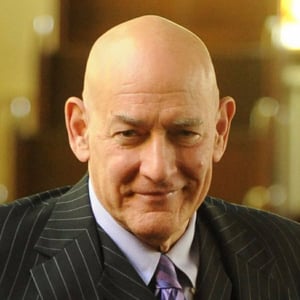
Raoul Berger Professor of Legal History at Northwestern University School of Law
Stephen Presser is a leading American legal historian and expert on shareholder liability for corporate debts. He is frequently an invited witness before committees of the U.S. Senate and House of Representatives on issues of constitutional law. He holds a joint appointment with the J. L. Kellogg Graduate School of Management and also teaches in Northwestern's history department.

President, Cass & Associates, PC
Ronald A. Cass is Dean Emeritus of Boston University School of Law (where he was Dean from 1990-2004), President of Cass & Associates, PC, former Vice-Chairman and Commissioner of the U.S. International Trade Commission, former faculty member at Boston University School of Law and the University of Virginia Law School, and Distinguished Senior Fellow at the C. Boyden Gray Center for the Study of the Administrative State. Dean Cass also sits as an arbitrator for commercial, international, and intellectual property rights disputes, and is a former United States member of the Panel of Conciliators of the International Centre for Settlement of Investment Disputes. He is a member of the Council of the Administrative Conference of the United States and has received seven presidential appointments, spanning Presidents Ronald Reagan to Donald J. Trump.
As a law professor, lecturer, and scholar, Dean Cass has been teaching and writing about a wide array of legal issues on topics such as administrative law and regulation, antitrust, constitutional law, communications, intellectual property, international trade, separation of powers, and legal process. He has published more than 160 scholarly books, chapters, articles, and papers, including a leading casebook on administrative law. Dean Cass has taught judges as well as students in schools of law, economics, business, and public policy and has held academic appointments in the United States, Europe, and Latin America.
In addition to his academic work, Dean Cass has participated in numerous important legal cases as an amicus, consultant, or expert, and has advised businesses, law firms, investment funds, and government agencies on a range of trade, antitrust, intellectual property, and regulatory issues. He has a broad range of affiliations with professional groups, and has received numerous honors, fellowships and awards.
Dean Cass is a graduate of the University of Virginia and the University of Chicago Law School.
Chief Counsel for Communications and Technology, Cmte. on Energy, U.S. House of Reps.
When Fried was in college, studying journalism at Northwestern University, he was working as a reporter at The Albuquerque Tribune. Mr. Fried went to law school at Washington University in St. Louis. Shortly after getting his J.D., he joined the Federal Communications Commission, where he helped implement the Telecommunications Act of 1996. He left after four years to work at Verner, Liipfert, Bernhard, McPherson and Hand, succeeding an associate at the law firm who left to work. Mr. Fried moved to the U.S. House Energy and Commerce Committee in 2003. Mr. Fried, 42, is primarily responsible for advising members of Congress on internet, television, broadband, and spectrum policy, as well as oversight of the FCC and the National Telecommunications and Information Administration.
Professor, Tilburg University, The Netherlands; and Partner, Covington & Burling LLP
Professor Damien Geradin is a competition law and regulatory partner in the Brussels office of Covington & Brussels, a Washington, DC-based international law firm comprising 850 lawyers spread in nine locations. His practice focuses on complex competition and regulatory cases in the field of network industries (telecommunications, energy, postal services and transport), as well as in the high-tech sector. Damien also performs advocacy and public policy work for his clients.
Prior to joining Covington & Burling, Damien was a law professor at the University of Liège and the College of Europe, Bruges where he taught EU competition law and the law of network industries. He also held visiting Professorships at Columbia Law School, Harvard Law School, the University of Michigan Law School, and at the Faculty of Law of Peking University. As an academic, Damien was involved as an expert witness in many regulatory and court proceedings, and international arbitration. Before becoming a law professor in 1998, Damien was an associate in the Brussels office of a large US law firm. In 1990-91, Damien also worked for a year as a legal adviser in the cabinet of the Belgian deputy-Prime Minister and Minister of Justice.
Since joining Covington, Damien has continued to teach on a part-time basis at Tilburg University and at the College of Europe in Bruges. In January 2010, he was appointed William W. Cook Global Law Professor at the University of Michigan Law School where he will teach an EU competition law class every year. Damien is the co-editor-in-chief of the Journal of Competition Law & Economics published by Oxford University Press. He is the author, co-author, or editor of 17 books, including recently Global Antitrust Law & Economics (with Prof. E. Elhauge of Harvard Law School) and author or co-author of more than 80 law review articles. Over the past ten years, Damien has delivered over 200 public presentations in more than 15 countries on various issues of EU competition law and economics, and regulatory issues.
Damien is listed as a competition, regulatory law expert in Legal 500, Who’s Who Legal, GCR, Chambers and other legal guides. Damien is a non-governmental adviser (selected by the European Commission) and contributor to the ICN’s committee on single-firm conduct.
Damien graduated obtained a law degree (magna cum laude) from the University of Liège in 1989, a LLM from King’s College London in 1990 and a PhD in law from Cambridge University in 1995. In 1997-98, Damien was a Fulbright scholar and a visiting lecturer at Yale Law School.
President and Co-Founder, Public Knowledge
Gigi Sohn is an internationally known communications attorney. In September 2001, she founded Public Knowledge with Laurie Racine (then President of the Center for the Public Domain) and activist/author David Bollier.
Gigi serves as PK's chief strategist, fundraiser and public face. She is frequently quoted in the New York Times, Washington Post and Wall Street Journal, as well as in trade and local press. Gigi has been published in the Washington Post, Variety, CNET and Legal Times. In addition, she has appeared on numerous television and radio programs, including the Today Show, The McNeil-Lehrer Report, C-SPAN's Washington Journal and National Public Radio's All Things Considered and Morning Edition.
Gigi is a Senior Adjunct Fellow at the Silicon Flatirons Center for Law, Technology and Entrepreneurship at the University of Colorado and a Senior Fellow at the University of Melbourne Faculty of Law, Graduate Studies Program in Australia. She has been a Non-Resident Fellow at the University of Southern California Annenberg Center, and an Adjunct Professor at Georgetown University and at the Benjamin N. Cardozo School of Law, Yeshiva University.
Gigi served as a Project Specialist in the Ford Foundation's Media, Arts and Culture unit and as Executive Director of the Media Access Project, a public interest law firm that represents citizens' rights before the FCC and the courts. In 1997, President Clinton appointed Gigi to serve as a member of his Advisory Committee on the Public Interest Obligations of Digital Television Broadcasters. In May 2006, the Electronic Frontier Foundation gave Gigi its Internet "Pioneer" Award.
Gigi currently serves on the board of the Telecommunications Policy Research Conference (TPRC) and Broadcasters' Child Development Center (BCDC). She is a member of the advisory board of the Future of Music Coalition and the Center for Public Integrity's "Well Connected" Telecommunications Project. Gigi served on the District of Columbia Bar Board of Governors from 1997-2000.
Gigi holds a B.S. in Broadcasting and Film, Summa Cum Laude, from the Boston University College of Communication and a J.D. from the University of Pennsylvania Law School.

Founding Partner, Lodestar Law and Economics PLLC
Josh is the founder of Lodestar Law and Economics, PLLC. On January 1, 2013, the U.S. Senate unanimously confirmed Wright as a Commissioner of the Federal Trade Commission (FTC). He is a leading scholar in antitrust law, economics, intellectual property, regulation, and consumer protection, and has published more than 100 articles and book chapters, co-authored a leading antitrust casebook, and edited several book volumes focusing on these issues. Commentators have recognized Wright as “widely considered his generation’s greatest mind on antitrust law,” and his academic work ranks him as one of the most cited antitrust academics in the world. Wright was also awarded the Paul M. Bator Award by the Federalist Society in 2014 to “an academic who demonstrated excellence in legal scholarship, a commitment to teaching, a concern for students, and who has made a significant public impact.” Wright also served as the Executive Director of the Global Antitrust Institute, the world’s premiere academic institute focused upon antitrust education for judges and regulators and has taught hundreds of judges and thousands of regulators from dozens of countries.
Wright’s practice focuses upon helping clients solve complex competition, consumer protection, and regulatory problems by providing legal and economic analysis, strategic advice and counseling, and economic expert testimony.
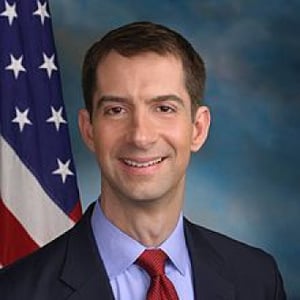
United States Senator, Arkansas
Tom Cotton is a United States Senator from Arkansas. Tom’s committees include the Banking Committee, where he chairs the Economic Policy Subcommittee, the Intelligence Committee, and the Armed Services Committee, where he chairs the Air Land Power Subcommittee.
Tom grew up on his family’s cattle farm in Yell County. He graduated from Dardanelle High School, Harvard, and Harvard Law School. After a clerkship with the U.S. Court of Appeals and private law practice, Tom left the law because of the September 11th attacks. Tom served nearly five years on active duty in the United States Army as an Infantry Officer.
Tom served in Iraq with the 101st Airborne and in Afghanistan with a Provincial Reconstruction Team. Between his two combat tours, Tom served with The Old Guard at Arlington National Cemetery. Tom’s military decorations include the Bronze Star Medal, Combat Infantry Badge, and Ranger Tab.
Between the Army and the Senate, Tom worked for McKinsey & Co. and served one term in the House of Representatives.
Tom and his wife Anna have two sons, Gabriel and Daniel.
President, JCN
Carrie Campbell Severino is the president of the JCN, and co-author with Mollie Hemingway of the bestselling book Justice on Trial: The Kavanaugh Confirmation and the Future of the Court. As a go-to expert on the confirmation process, Mrs. Severino has been extensively quoted in the media. She regularly appears on television, including FOX, CNN, MSNBC, C-SPAN, and ABC’s This Week.
Severino writes and speaks on a wide range of judicial issues, including the constitutional limits on government, the federal nomination process, and state judicial selection. She has testified before Congress on constitutional questions and briefed Senators on judicial nominations, and regularly files briefs in high-profile Supreme Court cases. She was a law clerk to Supreme Court Justice Clarence Thomas and to Judge David B. Sentelle of the U.S. Court of Appeals for the D.C. Circuit, and is a graduate of Harvard Law School (J.D.), Duke University (B.A., Biology), and Michigan State University (M.A., Linguistics).
President, Cass & Associates, PC
Ronald A. Cass is Dean Emeritus of Boston University School of Law (where he was Dean from 1990-2004), President of Cass & Associates, PC, former Vice-Chairman and Commissioner of the U.S. International Trade Commission, former faculty member at Boston University School of Law and the University of Virginia Law School, and Distinguished Senior Fellow at the C. Boyden Gray Center for the Study of the Administrative State. Dean Cass also sits as an arbitrator for commercial, international, and intellectual property rights disputes, and is a former United States member of the Panel of Conciliators of the International Centre for Settlement of Investment Disputes. He is a member of the Council of the Administrative Conference of the United States and has received seven presidential appointments, spanning Presidents Ronald Reagan to Donald J. Trump.
As a law professor, lecturer, and scholar, Dean Cass has been teaching and writing about a wide array of legal issues on topics such as administrative law and regulation, antitrust, constitutional law, communications, intellectual property, international trade, separation of powers, and legal process. He has published more than 160 scholarly books, chapters, articles, and papers, including a leading casebook on administrative law. Dean Cass has taught judges as well as students in schools of law, economics, business, and public policy and has held academic appointments in the United States, Europe, and Latin America.
In addition to his academic work, Dean Cass has participated in numerous important legal cases as an amicus, consultant, or expert, and has advised businesses, law firms, investment funds, and government agencies on a range of trade, antitrust, intellectual property, and regulatory issues. He has a broad range of affiliations with professional groups, and has received numerous honors, fellowships and awards.
Dean Cass is a graduate of the University of Virginia and the University of Chicago Law School.
Chief Counsel for Communications and Technology, Cmte. on Energy, U.S. House of Reps.
When Fried was in college, studying journalism at Northwestern University, he was working as a reporter at The Albuquerque Tribune. Mr. Fried went to law school at Washington University in St. Louis. Shortly after getting his J.D., he joined the Federal Communications Commission, where he helped implement the Telecommunications Act of 1996. He left after four years to work at Verner, Liipfert, Bernhard, McPherson and Hand, succeeding an associate at the law firm who left to work. Mr. Fried moved to the U.S. House Energy and Commerce Committee in 2003. Mr. Fried, 42, is primarily responsible for advising members of Congress on internet, television, broadband, and spectrum policy, as well as oversight of the FCC and the National Telecommunications and Information Administration.
Professor, Tilburg University, The Netherlands; and Partner, Covington & Burling LLP
Professor Damien Geradin is a competition law and regulatory partner in the Brussels office of Covington & Brussels, a Washington, DC-based international law firm comprising 850 lawyers spread in nine locations. His practice focuses on complex competition and regulatory cases in the field of network industries (telecommunications, energy, postal services and transport), as well as in the high-tech sector. Damien also performs advocacy and public policy work for his clients.
Prior to joining Covington & Burling, Damien was a law professor at the University of Liège and the College of Europe, Bruges where he taught EU competition law and the law of network industries. He also held visiting Professorships at Columbia Law School, Harvard Law School, the University of Michigan Law School, and at the Faculty of Law of Peking University. As an academic, Damien was involved as an expert witness in many regulatory and court proceedings, and international arbitration. Before becoming a law professor in 1998, Damien was an associate in the Brussels office of a large US law firm. In 1990-91, Damien also worked for a year as a legal adviser in the cabinet of the Belgian deputy-Prime Minister and Minister of Justice.
Since joining Covington, Damien has continued to teach on a part-time basis at Tilburg University and at the College of Europe in Bruges. In January 2010, he was appointed William W. Cook Global Law Professor at the University of Michigan Law School where he will teach an EU competition law class every year. Damien is the co-editor-in-chief of the Journal of Competition Law & Economics published by Oxford University Press. He is the author, co-author, or editor of 17 books, including recently Global Antitrust Law & Economics (with Prof. E. Elhauge of Harvard Law School) and author or co-author of more than 80 law review articles. Over the past ten years, Damien has delivered over 200 public presentations in more than 15 countries on various issues of EU competition law and economics, and regulatory issues.
Damien is listed as a competition, regulatory law expert in Legal 500, Who’s Who Legal, GCR, Chambers and other legal guides. Damien is a non-governmental adviser (selected by the European Commission) and contributor to the ICN’s committee on single-firm conduct.
Damien graduated obtained a law degree (magna cum laude) from the University of Liège in 1989, a LLM from King’s College London in 1990 and a PhD in law from Cambridge University in 1995. In 1997-98, Damien was a Fulbright scholar and a visiting lecturer at Yale Law School.
President and Co-Founder, Public Knowledge
Gigi Sohn is an internationally known communications attorney. In September 2001, she founded Public Knowledge with Laurie Racine (then President of the Center for the Public Domain) and activist/author David Bollier.
Gigi serves as PK's chief strategist, fundraiser and public face. She is frequently quoted in the New York Times, Washington Post and Wall Street Journal, as well as in trade and local press. Gigi has been published in the Washington Post, Variety, CNET and Legal Times. In addition, she has appeared on numerous television and radio programs, including the Today Show, The McNeil-Lehrer Report, C-SPAN's Washington Journal and National Public Radio's All Things Considered and Morning Edition.
Gigi is a Senior Adjunct Fellow at the Silicon Flatirons Center for Law, Technology and Entrepreneurship at the University of Colorado and a Senior Fellow at the University of Melbourne Faculty of Law, Graduate Studies Program in Australia. She has been a Non-Resident Fellow at the University of Southern California Annenberg Center, and an Adjunct Professor at Georgetown University and at the Benjamin N. Cardozo School of Law, Yeshiva University.
Gigi served as a Project Specialist in the Ford Foundation's Media, Arts and Culture unit and as Executive Director of the Media Access Project, a public interest law firm that represents citizens' rights before the FCC and the courts. In 1997, President Clinton appointed Gigi to serve as a member of his Advisory Committee on the Public Interest Obligations of Digital Television Broadcasters. In May 2006, the Electronic Frontier Foundation gave Gigi its Internet "Pioneer" Award.
Gigi currently serves on the board of the Telecommunications Policy Research Conference (TPRC) and Broadcasters' Child Development Center (BCDC). She is a member of the advisory board of the Future of Music Coalition and the Center for Public Integrity's "Well Connected" Telecommunications Project. Gigi served on the District of Columbia Bar Board of Governors from 1997-2000.
Gigi holds a B.S. in Broadcasting and Film, Summa Cum Laude, from the Boston University College of Communication and a J.D. from the University of Pennsylvania Law School.
Founding Partner, Lodestar Law and Economics PLLC
Josh is the founder of Lodestar Law and Economics, PLLC. On January 1, 2013, the U.S. Senate unanimously confirmed Wright as a Commissioner of the Federal Trade Commission (FTC). He is a leading scholar in antitrust law, economics, intellectual property, regulation, and consumer protection, and has published more than 100 articles and book chapters, co-authored a leading antitrust casebook, and edited several book volumes focusing on these issues. Commentators have recognized Wright as “widely considered his generation’s greatest mind on antitrust law,” and his academic work ranks him as one of the most cited antitrust academics in the world. Wright was also awarded the Paul M. Bator Award by the Federalist Society in 2014 to “an academic who demonstrated excellence in legal scholarship, a commitment to teaching, a concern for students, and who has made a significant public impact.” Wright also served as the Executive Director of the Global Antitrust Institute, the world’s premiere academic institute focused upon antitrust education for judges and regulators and has taught hundreds of judges and thousands of regulators from dozens of countries.
Wright’s practice focuses upon helping clients solve complex competition, consumer protection, and regulatory problems by providing legal and economic analysis, strategic advice and counseling, and economic expert testimony.
President, Cass & Associates, PC
Ronald A. Cass is Dean Emeritus of Boston University School of Law (where he was Dean from 1990-2004), President of Cass & Associates, PC, former Vice-Chairman and Commissioner of the U.S. International Trade Commission, former faculty member at Boston University School of Law and the University of Virginia Law School, and Distinguished Senior Fellow at the C. Boyden Gray Center for the Study of the Administrative State. Dean Cass also sits as an arbitrator for commercial, international, and intellectual property rights disputes, and is a former United States member of the Panel of Conciliators of the International Centre for Settlement of Investment Disputes. He is a member of the Council of the Administrative Conference of the United States and has received seven presidential appointments, spanning Presidents Ronald Reagan to Donald J. Trump.
As a law professor, lecturer, and scholar, Dean Cass has been teaching and writing about a wide array of legal issues on topics such as administrative law and regulation, antitrust, constitutional law, communications, intellectual property, international trade, separation of powers, and legal process. He has published more than 160 scholarly books, chapters, articles, and papers, including a leading casebook on administrative law. Dean Cass has taught judges as well as students in schools of law, economics, business, and public policy and has held academic appointments in the United States, Europe, and Latin America.
In addition to his academic work, Dean Cass has participated in numerous important legal cases as an amicus, consultant, or expert, and has advised businesses, law firms, investment funds, and government agencies on a range of trade, antitrust, intellectual property, and regulatory issues. He has a broad range of affiliations with professional groups, and has received numerous honors, fellowships and awards.
Dean Cass is a graduate of the University of Virginia and the University of Chicago Law School.
Chief Counsel for Communications and Technology, Cmte. on Energy, U.S. House of Reps.
When Fried was in college, studying journalism at Northwestern University, he was working as a reporter at The Albuquerque Tribune. Mr. Fried went to law school at Washington University in St. Louis. Shortly after getting his J.D., he joined the Federal Communications Commission, where he helped implement the Telecommunications Act of 1996. He left after four years to work at Verner, Liipfert, Bernhard, McPherson and Hand, succeeding an associate at the law firm who left to work. Mr. Fried moved to the U.S. House Energy and Commerce Committee in 2003. Mr. Fried, 42, is primarily responsible for advising members of Congress on internet, television, broadband, and spectrum policy, as well as oversight of the FCC and the National Telecommunications and Information Administration.
Professor, Tilburg University, The Netherlands; and Partner, Covington & Burling LLP
Professor Damien Geradin is a competition law and regulatory partner in the Brussels office of Covington & Brussels, a Washington, DC-based international law firm comprising 850 lawyers spread in nine locations. His practice focuses on complex competition and regulatory cases in the field of network industries (telecommunications, energy, postal services and transport), as well as in the high-tech sector. Damien also performs advocacy and public policy work for his clients.
Prior to joining Covington & Burling, Damien was a law professor at the University of Liège and the College of Europe, Bruges where he taught EU competition law and the law of network industries. He also held visiting Professorships at Columbia Law School, Harvard Law School, the University of Michigan Law School, and at the Faculty of Law of Peking University. As an academic, Damien was involved as an expert witness in many regulatory and court proceedings, and international arbitration. Before becoming a law professor in 1998, Damien was an associate in the Brussels office of a large US law firm. In 1990-91, Damien also worked for a year as a legal adviser in the cabinet of the Belgian deputy-Prime Minister and Minister of Justice.
Since joining Covington, Damien has continued to teach on a part-time basis at Tilburg University and at the College of Europe in Bruges. In January 2010, he was appointed William W. Cook Global Law Professor at the University of Michigan Law School where he will teach an EU competition law class every year. Damien is the co-editor-in-chief of the Journal of Competition Law & Economics published by Oxford University Press. He is the author, co-author, or editor of 17 books, including recently Global Antitrust Law & Economics (with Prof. E. Elhauge of Harvard Law School) and author or co-author of more than 80 law review articles. Over the past ten years, Damien has delivered over 200 public presentations in more than 15 countries on various issues of EU competition law and economics, and regulatory issues.
Damien is listed as a competition, regulatory law expert in Legal 500, Who’s Who Legal, GCR, Chambers and other legal guides. Damien is a non-governmental adviser (selected by the European Commission) and contributor to the ICN’s committee on single-firm conduct.
Damien graduated obtained a law degree (magna cum laude) from the University of Liège in 1989, a LLM from King’s College London in 1990 and a PhD in law from Cambridge University in 1995. In 1997-98, Damien was a Fulbright scholar and a visiting lecturer at Yale Law School.
President and Co-Founder, Public Knowledge
Gigi Sohn is an internationally known communications attorney. In September 2001, she founded Public Knowledge with Laurie Racine (then President of the Center for the Public Domain) and activist/author David Bollier.
Gigi serves as PK's chief strategist, fundraiser and public face. She is frequently quoted in the New York Times, Washington Post and Wall Street Journal, as well as in trade and local press. Gigi has been published in the Washington Post, Variety, CNET and Legal Times. In addition, she has appeared on numerous television and radio programs, including the Today Show, The McNeil-Lehrer Report, C-SPAN's Washington Journal and National Public Radio's All Things Considered and Morning Edition.
Gigi is a Senior Adjunct Fellow at the Silicon Flatirons Center for Law, Technology and Entrepreneurship at the University of Colorado and a Senior Fellow at the University of Melbourne Faculty of Law, Graduate Studies Program in Australia. She has been a Non-Resident Fellow at the University of Southern California Annenberg Center, and an Adjunct Professor at Georgetown University and at the Benjamin N. Cardozo School of Law, Yeshiva University.
Gigi served as a Project Specialist in the Ford Foundation's Media, Arts and Culture unit and as Executive Director of the Media Access Project, a public interest law firm that represents citizens' rights before the FCC and the courts. In 1997, President Clinton appointed Gigi to serve as a member of his Advisory Committee on the Public Interest Obligations of Digital Television Broadcasters. In May 2006, the Electronic Frontier Foundation gave Gigi its Internet "Pioneer" Award.
Gigi currently serves on the board of the Telecommunications Policy Research Conference (TPRC) and Broadcasters' Child Development Center (BCDC). She is a member of the advisory board of the Future of Music Coalition and the Center for Public Integrity's "Well Connected" Telecommunications Project. Gigi served on the District of Columbia Bar Board of Governors from 1997-2000.
Gigi holds a B.S. in Broadcasting and Film, Summa Cum Laude, from the Boston University College of Communication and a J.D. from the University of Pennsylvania Law School.
Founding Partner, Lodestar Law and Economics PLLC
Josh is the founder of Lodestar Law and Economics, PLLC. On January 1, 2013, the U.S. Senate unanimously confirmed Wright as a Commissioner of the Federal Trade Commission (FTC). He is a leading scholar in antitrust law, economics, intellectual property, regulation, and consumer protection, and has published more than 100 articles and book chapters, co-authored a leading antitrust casebook, and edited several book volumes focusing on these issues. Commentators have recognized Wright as “widely considered his generation’s greatest mind on antitrust law,” and his academic work ranks him as one of the most cited antitrust academics in the world. Wright was also awarded the Paul M. Bator Award by the Federalist Society in 2014 to “an academic who demonstrated excellence in legal scholarship, a commitment to teaching, a concern for students, and who has made a significant public impact.” Wright also served as the Executive Director of the Global Antitrust Institute, the world’s premiere academic institute focused upon antitrust education for judges and regulators and has taught hundreds of judges and thousands of regulators from dozens of countries.
Wright’s practice focuses upon helping clients solve complex competition, consumer protection, and regulatory problems by providing legal and economic analysis, strategic advice and counseling, and economic expert testimony.
Partner, Marzulla Law
Roger J. Marzulla is one of the nation’s leading environmental, water, and property lawyers. As Assistant Attorney General in charge of the U.S. Justice Department’s Environment and Natural Resources Division, Roger learned first hand the operations and litigation styles of his client agencies: EPA, Interior Department, Bureau of Reclamation, Fish and Wildlife Service, National Marine Fisheries Service, Department of Transportation, Department of Commerce. In 1997, he co-founded Marzulla Law, where he brings to bear more than 35 years of expertise representing companies and individuals in industries as diverse as land and project development, aerospace, chemicals, oil and gas, mining, timber, manufacturing, computers, agriculture and water service.
Roger began his legal career as a trial lawyer in San Jose, California, after graduating magna cum laude from the University of Santa Clara School of Law. As a partner in Matthews & Marzulla he represented developers, title and construction companies, shopping centers, apartment owners and lenders in litigation throughout California. In 1981 he moved to Denver to become President of Mountain States Legal Foundation, litigating environmental and natural resource cases across the West.
In 1983 Roger joined the Justice Department as Special Litigation Counsel. He was subsequently promoted to Deputy Assistant Attorney General and, in 1987, was confirmed by the Senate as Assistant Attorney General in charge of the Environment and Natural Resources Division. At the Justice Department, Roger helped create litigation strategies for government programs as diverse as Superfund, the Clean Air Act, off-shore oil leasing, environmental crimes, federal facility clean-up, wetlands, endangered species and hazardous waste enforcement, as well as Presidential Order EO 12,630 (Government Interference with Private Property Rights).
In 1989 Roger returned to private law practice, successively heading the environmental law practices of the Powell, Goldstein and Akin, Gump law firms.
Since 1997, as a partner in Marzulla Law, Roger has continued to represent corporate and business clients in a wide array of environmental and property issues in courts across the country, frequently in litigation against the United States. He also assists clients in attaining compliance with environmental, health and safety regulation, and in avoiding risks in transactions.
President, JCN
Carrie Campbell Severino is the president of the JCN, and co-author with Mollie Hemingway of the bestselling book Justice on Trial: The Kavanaugh Confirmation and the Future of the Court. As a go-to expert on the confirmation process, Mrs. Severino has been extensively quoted in the media. She regularly appears on television, including FOX, CNN, MSNBC, C-SPAN, and ABC’s This Week.
Severino writes and speaks on a wide range of judicial issues, including the constitutional limits on government, the federal nomination process, and state judicial selection. She has testified before Congress on constitutional questions and briefed Senators on judicial nominations, and regularly files briefs in high-profile Supreme Court cases. She was a law clerk to Supreme Court Justice Clarence Thomas and to Judge David B. Sentelle of the U.S. Court of Appeals for the D.C. Circuit, and is a graduate of Harvard Law School (J.D.), Duke University (B.A., Biology), and Michigan State University (M.A., Linguistics).

Executive Vice President, The Federalist Society
Dean Reuter is Executive Vice President at the Federalist Society for Law and Public Policy Studies. He has served in two federal government agency Offices of the Inspector General, as Counsel to the Inspector General and Deputy Inspector General, responsible for policing the use of federal funds granted and contracted through those agencies. As such, he helped conduct and oversee criminal investigations across the country. He is the principal author of the non-fiction book, The Hidden Nazi: The Untold Story of America's Deal with the Devil, and editor of Liberty’s Nemesis: The Unchecked Expansion of the State and Confronting Terror: 9/11 and the Future of American National Security. He was appointed by the President and served as Vice-Chairman of the Board of Directors of the Corporation for National and Community Service, and recently served as an appointee on the U.S. Commission on Presidential Scholars. He is a graduate of Hood College (BA with Honors) and the University of Maryland School of Law.
Clinical Professor of Law, Dale E. Fowler School of Law, Chapman University

2013 ABA Awards
ABA Watch previews some of the key honorees at this year’s ABA Annual Meeting in...
Where Have We Been, and Where Are We Going in Constitutional and Private Law, and Is It Someplace We Really Want to Get To?
Richmond, VirginiaIs Government a Friend or Foe of Innovation?
Ronald A. Cass, Neil Fried, Damien Geradin, Gigi B. Sohn, Joshua D. Wright
On June 11, 2013, the Federalist Society's Executive Branch Review Project held its First Annual...
Is Government a Friend or Foe of Innovation?
Ronald A. Cass, Neil Fried, Damien Geradin, Gigi B. Sohn, Joshua D. Wright
On June 11, 2013, the Federalist Society's Executive Branch Review Project held its First Annual...
Is Government a Friend or Foe of Innovation?
First Annual Executive Branch Review Conference
Washington, DCReception with Congressman Tom Cotton
New York, NYObama Administration Policy on Offshore Oil and Gas Production: Consensus or Contempt?
Roger J. Marzulla
In March 2010, President Obama announced his support for expanded oil and gas production in...
DOMA in the Supreme Court - Podcast
Carrie Campbell Severino, Dean Reuter
On March 27, the Supreme Court heard oral arguments in Windsor v. U.S., the challenge...
DOMA in the Supreme Court
Can States Require Proof of Citizenship for Voter Registration?--Arizona v. Inter Tribal Council of Arizona
Anthony (Tom) Caso
Introduction This term the Court will hear a case examining a perceived clash between state...