

Vice President, Edwin Meese III Institute for the Rule of Law, Advancing American Freedom
John G. Malcolm oversees Advancing American Freedom’s work to increase understanding of the Constitution and the rule of law as Vice President of the organization’s Edwin Meese III Institute for the Rule of Law. Malcolm brings to the challenge a wealth of legal expertise and experience in both the public and private sectors.
Prior to joining Advancing American Freedom in 2025, Malcolm was the Vice President of the Institute for Constitutional Government and the Director of the Meese Center for Legal and Judicial Studies at the Heritage Foundation. Prior to joining Heritage in 2012, Malcolm was general counsel at the U.S. Commission on International Religious Freedom, as well as a distinguished practitioner in residence at Pepperdine Law School. From 2004 to 2009, Malcolm was executive vice president and director of worldwide anti-piracy operations for the Motion Picture Association.
Malcolm served as a deputy assistant attorney general in the Department of Justice’s Criminal Division from 2001 to 2004, where he oversaw sections on computer crime and intellectual property, domestic security, child exploitation and obscenity, and special investigations. Immediately prior to that, he was a founding partner in the Atlanta law firm of Malcolm & Schroeder, LLP.
From 1990 to 1997, Malcolm was an assistant U.S. attorney in Atlanta, assigned to the fraud and public corruption section, and also an associate independent counsel, investigating fraud and abuse in the Department of Housing and Urban Development. He was honored with the Director’s Award for Superior Performance for his work in connection with the successful prosecution of Walter Leroy Moody Jr., who assassinated an 11th Circuit judge and the head of the Savannah chapter of the NAACP.
A graduate of Harvard Law School and Columbia College, Malcolm began his career as a law clerk to a federal district court judge and a federal appellate court judge, and as an associate at the Atlanta-based law firm of Sutherland, Asbill & Brennan (new Eversheds Sutherland).
Malcolm, who resides in Washington, D.C., serves on the Board of Trustees of the Washington National Opera and is a Senate-confirmed member of the Board of Directors of the Legal Services Corporation, the largest funder of civil legal aid in the United States.

Senior Vice President for Legal Studies, Cato Institute
Clark Neily is senior vice president for legal studies at the Cato Institute. His areas of interest include constitutional law, overcriminalization, civil forfeiture, police accountability, and gun rights. Neily is the author of Terms of Engagement: How Our Courts Should Enforce the Constitution’s Promise of Limited Government. His writing has appeared in the Wall Street Journal, Forbes, and National Review Online, as well as various law reviews, including the Harvard Journal of Law and Public Policy, George Mason Law Review, Georgetown Journal of Law and Public Policy, NYU Journal of Law and Liberty, and Texas Review of Law and Politics. Neily is a frequent guest speaker and lecturer for the Federalist Society, Institute for Humane Studies, and American Constitution Society.
Before joining Cato in 2017, Neily was a senior attorney and constitutional litigator at the Institute for Justice and director of the Institute’s Center for Judicial Engagement. He is also an adjunct professor at the University of Texas School of Law, where he teaches constitutional litigation and public-interest law.
Neily served as co-counsel in District of Columbia v. Heller, the historic case in which the Supreme Court held for the first time that the Second Amendment protects an individual right to own a gun for self-defense.
Neily began his legal career as a law clerk to Judge Royce Lamberth on the U.S. District Court for the District of Columbia. After that he spent four years in the trial department of the Dallas-based firm Thompson & Knight. Neily received his undergraduate and law degrees from the University of Texas, where he was Chief Articles Editor of the Texas Law Review.
Partner, Vinson & Elkins, and former U.S. Attorney for the Eastern District of Virginia
Zachary (“Zach”) Terwilliger, the former Senate confirmed United States Attorney for the Eastern District of Virginia, has extensive experience in all manner of federal investigations and trials. Those frontline skills combine with his mastery of involved management roles overseeing operational programs, setting policy parameters, and managing teams to accomplish strategic objectives. He gained this experience over a decades-long career in public service where he advanced from an office intern to serve as the presidentially appointed and Senate confirmed United States Attorney. He rounds out his Washington experience by having served as Associate Deputy Attorney General and Chief of staff to the Deputy Attorney General, whose office manages the entire Department of Justice and its various agencies, and as counsel to the Chair of the Senate Judiciary Committee.
In a testament to his professionalism, he was the sole and unanimous recommendation of Virginia’s two Democratic Senators to serve as U.S. Attorney. Following this recommendation, the President’s nomination, and confirmation by the entire U.S. Senate, Zach was sworn in as the then youngest U.S. Attorney in the country.
Zach’s knowledge of how the Justice Department and federal enforcement agencies function in both civil and criminal matters, particularly in regards to discretionary decision making, provides him with unique insights necessary to effectively assist companies and individuals facing federal enforcement matters, including allegations of domestic and international criminal and civil violations. Zach is skilled in navigating internal and government investigations, allegations of bribery under the Foreign Corrupt Practices Act, complex criminal grand jury investigations, criminal antitrust matters, and Congressional inquiries and select committee investigations, among other complex white collar issues.
As U.S. Attorney for the Eastern District of Virginia, Zach supervised a team of over 300 lawyers and support staff. He also managed multiple key corporate resolutions, and significantly enhanced the District’s white-collar footprint through collaboration with DOJ’s Fraud Section, as well as with other enforcement entities like the newly created Special Inspector General for Pandemic Recovery and the Procurement Collusion Strike Force. He is also a veteran litigator with years of investigative and in-court experience in trials, pre-trial proceedings, and appeals.

Tazewell Taylor Professor of Law and William H. Cabell Research Professor, William & Mary Law School
Jonathan H. Adler joined the William & Mary law faculty as the Tazwell Taylor Professor of Law and William H. Cabell Research Professor in 2025. Prior to joining the faculty, he was the inaugural Johan Verheij Memorial Professor of Law and the founding Director of the Coleman P. Burke Center for Environmental Law at the Case Western Reserve University School of Law.
Professor Adler is the author or editor of seven books, including Climate Liberalism: Perspectives on Liberty, Property and Pollution (Palgrave, 2023), Marijuana Federalism: Uncle Sam and Mary Jane (Brookings Institution Press, 2020), Business and the Roberts Court (Oxford University Press, 2016) and Rebuilding the Ark: New Perspectives on Endangered Species Act Reform (AEI Press, 2011).
His articles have appeared in publications ranging from the Harvard Environmental Law Review and Yale Journal on Regulation to the Wall Street Journal, New York Times, and Washington Post. He has testified before Congress a dozen times, and his work has been cited in the U.S. Supreme Court. A 2024 study identified Professor Adler as the seventh most cited legal academic in administrative and environmental law from 2019 to 2023.
Professor Adler is a contributing editor to Civitas Outlook and a regular contributor to the popular legal blog, The Volokh Conspiracy. A regular commentator on constitutional and regulatory issues, he has appeared on numerous radio and television programs, ranging from the PBS Newshour and National Public Radio to the Fox News Channel and Entertainment Tonight.
Professor Adler is a senior fellow at the Property & Environment Research Center in Bozeman, Montana. In 2018, Professor Adler was elected to membership in the American Law Institute and helped co-found the organization Checks and Balances. In 2024, Professor Adler was appointed a public member of the Administrative Conference of the United States.
Professor Adler clerked for the Honorable David B. Sentelle on the U.S. Court of Appeals for the District of Columbia Circuit.
United States House of Representatives, Michigan
Representative Justin Amash represents Michigan's Third District in the 112th United States Congress. Justin serves on the House Budget Committee and the House Oversight and Government Reform Committee. He was elected to his first term on November 2, 2010.
Justin was born in Grand Rapids, Michigan, and raised in the city of Kentwood. He received his bachelor's degree with High Honors in Economics from the University of Michigan and his Juris Doctor from the University of Michigan Law School. Justin worked as a business lawyer and a Michigan state representative before his election to Congress.
Justin has been a leader in the incorporation of Facebook and other social media into his work as a public official. He also set new standards for transparency and accountability in the Michigan state House.
In October 2010, TIME Magazine named Justin one of its "40 under 40 - Rising Stars of U.S. Politics."
Justin lives in Cascade Charter Township with his wife Kara, a graduate of Calvin College and a former elementary school teacher. Justin and Kara have three children, Alexander, Anwen, and Evelyn.

Professor of Law, Cornell Law School
Josh Chafetz received his B.A. from Yale University, his doctorate in Politics from Oxford (where he studied as a Rhodes Scholar), and his J.D. from Yale Law School. Following law school, he clerked for Judge Guido Calabresi of the United States Court of Appeals for the Second Circuit.
His research interests include structural constitutional law, American and British constitutional history, legislation and legislative procedure, American political development, and the intersection of law and politics. His second book, Congress's Constitution: Legislative Authority and the Separation of Powers, was published by Yale University Press in 2017. He is also the author of Democracy's Privileged Few: Legislative Privilege and Democratic Norms in the British and American Constitutions (Yale University Press, 2007) and is a co-editor (along with William N. Eskridge, Jr., Elizabeth Garrett, and James Brudney) of the leading casebook in Legislation, Cases and Materials on Legislation and Regulation: Statutes and the Creation of Public Policy, published by West.
His scholarship has been published in a number of top law reviews, including the Harvard Law Review, Yale Law Journal, University of Chicago Law Review, University of Pennsylvania Law Review, Duke Law Journal, Notre Dame Law Review, and Yale Journal of Law & the Humanities, among others. He has also written for a number of popular press outlets, including the New York Times, the Washington Post, Politico, Slate, and the New Republic. He is currently a Contributing Writer for the Capitol Hill newspaper The Hill.
Judge, United States Court of Appeals, Eleventh Circuit
On November 19, 2019, Judge Robert J. Luck was appointed to the United States Court of Appeals for the Eleventh Circuit by President Donald Trump. Prior to serving on the federal bench, he was appointed to the Florida Supreme Court by Governor Ron DeSantis on January 14, 2019. He previously served on the Third District Court of Appeal in Miami after his appointment there by Governor Rick Scott in March 2017.
Earlier, Judge Luck served on the Eleventh Judicial Circuit Court of Florida from September 2013 to March 2017. He presided in the Criminal, Civil, and Appellate Divisions. Judge Luck, in his years as a trial court judge, tried seventy jury trials, and heard dozens of appeals from the county court and municipal agencies. Judge Luck was appointed to the circuit court in 2013 and was elected by the voters of Miami-Dade County to retain his seat in 2016.
Prior to his service on the bench, Judge Luck was an Assistant United States Attorney for the Southern District of Florida. In his years as a federal prosecutor, he was assigned to the Appeals, Major Crimes, and Economic Crimes Sections of the U.S. Attorney’s Office. Judge Luck tried nineteen jury trials before the federal district court and argued three appeals to the United States Court of Appeals for the Eleventh Circuit. In his final year in the Office, he was a Deputy Chief in the Major Crimes Section.
Earlier in his career, Judge Luck was a legislative correspondent for two United States Senators, a law clerk and staff attorney to Circuit Judge Edward E. Carnes on the United States Court of Appeals for the Eleventh Circuit, and a part of the Greenberg Traurig firm’s appellate section. Judge Luck received his Juris Doctor from the University of Florida Levin College of Law magna cum laude and was asked to join the Order of the Coif. Judge Luck also served as Editor-in-Chief of the Florida Law Review. Judge Luck received his Bachelor of Arts in Economics from the University of Florida with highest honors.

Harlan Fiske Stone Professor of Constitutional Law, Columbia Law School
A leading administrative and constitutional law scholar, Gillian Metzger ’96 writes and teaches in the areas of administrative law, constitutional law, and federal courts, with an emphasis on federalism and privatization. In 2023-2024, she served as Acting Assistant Attorney General and Deputy Assistant Attorney General in the Office of Legal Counsel in the Department of Justice.
Metzger's recent work covers topics ranging from constitutional attacks on the administrative state to appropriations, administrative law under the Roberts Court, and the role of administrative agencies in a polarized world. In 2015, Metzger won the American Bar Association Administrative Law Section Annual Scholarship Award for “The Constitutional Duty to Supervise,” which examined presidential control and oversight of the modern administrative state. She is a co-editor of Gellhorn & Byse’s Administrative Law: Cases and Comments, 13th ed. (Foundation Press, 2023), a seminal administrative law casebook.
Professor Metzger was recently elected to the American Academy of Arts & Sciences and is a Senior Fellow of the Administrative Conference of the United States. In 2020, she was awarded Columbia University's Faculty Mentorship Award and in 2014, the Law School’s graduating class awarded Metzger the Willis L.M. Reese Prize for Excellence in Teaching, recognizing, among many other accomplishments, her commitment to mentoring new generations of law students.
In 2012, Metzger helped launch Columbia Law School’s Center for Constitutional Governance (CCG)—where she now serves as faculty director—a nonpartisan legal and policy organization devoted to the study of constitutional structure and authority. CCG brings together a diverse group of constitutional scholars to explore policy areas such as health care, civil rights, immigration, financial regulation, and national security.
Metzger also has co-authored and filed numerous amicus briefs in major constitutional and administrative law challenges before the Supreme Court and other courts. Most recently, Metzger filed a brief in Seila Law Center v. CFPB, a separation of powers challenge, and in Kisor v. Wilkie, a case involving judicial deference to agencies. She has also filed briefs in cases involving reproductive rights and the Affordable Care Act, among others.
Previously, Metzger served as vice dean of intellectual life at Columbia Law School. Before joining the Law School, she worked as an attorney with the Brennan Center for Justice. Metzger also clerked for U.S. Supreme Court Justice Ruth Bader Ginsburg ’59 and Judge Patricia M. Wald of the U.S. Circuit Court of Appeals for the District of Columbia. In 2018, Metzger moderated a panel discussion with Justice Ginsburg on impact litigation at Columbia Law School.

Of Counsel, Gibson Dunn & Crutcher
Amanda H. Neely is of counsel in the Washington, D.C. office of Gibson, Dunn & Crutcher and is a member of the Public Policy, Congressional Investigations, White Collar, and National Security practice groups.
Ms. Neely has extensive experience working on Capitol Hill. She leverages that expertise to advise clients regarding their interactions with Congress and the executive branch. Over the course of ten years, Ms. Neely held several senior staff positions in Congress. She served as Director of Governmental Affairs for the Senate Homeland Security and Governmental Affairs and General Counsel to Senator Rob Portman. Under Senator Portman’s chairmanship, she also served as Deputy Chief Counsel for the Permanent Subcommittee on Investigations. In those roles, she managed Senator Portman’s regulatory reform agenda and led oversight of federal government agencies and investigations into private entities. She previously served in several other Capitol Hill offices including as Oversight Counsel for the House of Representatives Committee on Ways and Means.
Congressional Investigations: At Gibson Dunn, Ms. Neely has represented clients undergoing investigations by numerous congressional committees, including the Senate Permanent Subcommittee on Investigations; Senate Finance Committee; Senate Judiciary Committee; Senate Health, Education, Labor, and Pensions Committee; House Committee on Oversight and Accountability; House Judiciary Committee; and the House Energy and Commerce Committee. In the course of those representations, Ms. Neely assists clients in all stages of investigations, including responding to letter requests and subpoenas to preparing witnesses for interviews, depositions, and congressional hearings. She also has assisted clients appearing before independent commissions such as the Financial Crisis Inquiry Commission and the Commission on Wartime Contracting.
Public Policy: Ms. Neely also works with clients to advance their legislative interests on Capitol Hill by gathering intelligence, formulating strategic plans, and executing lobbying campaigns. In those matters, she has represented a wide range of clients from the fields of technology, healthcare, finance, and energy.
Regulatory Counseling: Ms. Neely regularly advises clients regarding their interests before regulatory agencies. Her expertise in the CHIPS and Science Act allows her to help clients comply with the Department of Commerce’s regulations and assist them in commenting on agency rules and applying for funding. She also works with clients to engage in the rulemaking process at agencies ranging from the Consumer Financial Protection Bureau to the Commodity Futures Trading Commission to the Securities and Exchange Commission.
Ms. Neely also has participated in a variety of litigation matters before state and federal trial and appellate courts, including several class action defense and False Claims Act cases.
Ms. Neely clerked for the Honorable David B. Sentelle, then-Chief Judge of the United States Court of Appeals for the District of Columbia Circuit. She earned her law degree cum laude from Duke University School of Law, where she served as the Articles Editor for both the Alaska Law Review and the Duke Journal of Constitutional Law & Public Policy. She was a member of the Duke Law Moot Court Board and served on the executive board of the Duke Law Federalist Society.
Ms. Neely graduated cum laude from Princeton University, where she majored in English and earned a certificate in Medieval Studies. She served for two years on United States Senator Elizabeth Dole’s staff as a legislative correspondent, focusing on banking, housing, budget, and tax issues. Ms. Neely is admitted to practice law in the District of Columbia and before the United States Courts of Appeals for the District of Columbia Circuit.

CEO, The Evanina Group; Former Director of the National Counterintelligence and Security Center
Mr. Evanina was confirmed by the U.S. Senate on May 6, 2020 to be the first Senate-confirmed Director of the National Counterintelligence and Security Center (NCSC). Mr. Evanina served as the Director of NCSC since June 2, 2014. In this position, he was the head of Counterintelligence (CI) for the U.S. Government.
Under Mr. Evanina’s leadership, NCSC produced the President’s National Counterintelligence Strategy of the United States of America 2020, which has been instrumental in raising foreign intelligence threat awareness to critical infrastructure sectors and the private sector executives regarding supply chain, economic security, cyber, and malign foreign influence.
Mr. Evanina chaired the National Counterintelligence Policy Board, and the Allied Security and Counterintelligence Forum comprised of senior CI and security leaders from Australia, Canada, New Zealand, and the UK. Mr. Evanina also served as Chair of the NATO Counterintelligence Panel.
Prior to his selection as the Director of NCSC, Mr. Evanina served as the Chief of the Central Intelligence Agency’s Counterespionage Group. He also previously served as Assistant Special Agent in Charge of the FBI’s Washington Field Office, where he led operations in both the Counterintelligence and Counterterrorism Divisions.
Mr. Evanina currently serves as Founder and CEO of the Evanina Group advising CEOs and Board of Directors on strategic corporate risk.

Founder and Executive Director, National Security Institute; Assistant Professor of Law, Antonin Scalia Law School, George Mason University
Jamil N. Jaffer is the Founder and Executive Director of the National Security Institute at the Antonin Scalia Law School at George Mason University where he also serves as an Assistant Professor of Law, Director of the National Security Law and Policy Program, and Director of the Cyber, Intelligence, and National Security LLM Program. Jamil also teaches classes on counterterrorism, intelligence, surveillance, cybersecurity, and other national security matters, as well as a summer course held abroad with U.S. Supreme Court Justice Neil M. Gorsuch. Jamil is also affiliated with Stanford University’s Center for International Security and Cooperation and previously served as a Visiting Fellow at the Hoover Institution from 2016 to 2019.
Jamil is also a Venture Partner with Paladin Capital Group, where he assists the firm with investments across the full range of its themes and theses, including a focus on dual-use national security technologies. Jamil also serves on the board of directors of RangeForce, a cybersecurity training and readiness platform startup and Tozny, a digital identity startup, and on the advisory boards of U.S. Strategic Metals, North America’s largest primary producer of cobalt, a critical mineral used in EV batteries, aerospace, and other national security applications; and Constella Intelligence, a deep and dark web intelligence startup. Jamil also serves as an advisor to Beacon Global Strategies, a strategic advisory firm and Duco, a technology platform startup that connects corporations with geopolitical and international business experts. Jamil is also the managing director of Trigraph Caveat Capital, a private investment vehicle.
Among other things, Jamil currently serves on the Board of Directors for the Greater Washington Board of Trade, the Board of Advisors for the Global Cyber Alliance, and the Advisory Board of the Foundation for the Defense of Democracies’ Center on Cyber and Tech Innovation, the Executive Committee of the Reagan Institute Strategy Group. Jamil is also a Fellow at the Academy for Judaic, Christian, and Islamic Studies, an advisor to the Concordia Summit, and is a member of the Board of Directors for the Center for Intelligence Policy, the Board of Directors of Speech First, and the Executive Committee of the International Law and National Security Practice Group of the Federalist Society.
Immediately prior to his current positions, from 2015-2021, Jamil served as a senior business leader at IronNet Cybersecurity, helping take the company from a bootstrapped first-year technology products startup through two rounds of venture capital fundraising, growing from 40 employees to over 300, and through its listing on New York Stock Exchange. In his role as IronNet's Senior Vice President for Strategy, Partnerships & Corporate Development, Jamil worked directly for the co-CEOs of the company, Gen (ret.) Keith B. Alexander, the former Director of the National Security Agency and Founding Commander of U.S. Cyber Command, and Bill Welch, the former COO of Zscaler and Duo; in that role, Jamil led all of the company’s strategic and technology partnership efforts, including developing go-to-market and technology integration plans with some of the largest cloud platforms and cybersecurity companies in the market, evaluating potential acquisition targets, and developing overall corporate strategy and thought leadership around collective security and collaborative defense in the cyber arena.
Prior to his time at IronNet, Jamil served on the leadership team of the Senate Foreign Relations Committee as Chief Counsel and Senior Advisor under Chairman Bob Corker (R-TN), where he worked on key national security and foreign policy issues, including leading the drafting of the proposed Authorization for the Use of Military Force against ISIS in 2014 and 2015, the AUMF against Syria in 2013, and revisions to the 9/11 AUMF against al Qaeda. Jamil was also the lead architect of the Iran Nuclear Agreement Review Act and two sanctions laws against Russia for its first intervention in Ukraine.
Prior to joining SFRC, Jamil served as Senior Counsel to the House Permanent Select Committee on Intelligence under Chairman Mike Rogers (R-MI) where he led the committee’s oversight of NSA surveillance, NRO intelligence issues, and NGA analytic and collection matters, as well as intelligence community-wide counterterrorism issues. Jamil was also the lead architect of the Cyber Intelligence Sharing and Protection Act, the nation’s first cyber threat intelligence sharing legislation that was signed into law in 2015.
In the Bush Administration, Jamil served in the White House as an Associate Counsel to the President, handling Defense Department, State Department, and intelligence community matters, and serving as one of the White House Counsel’s primary representatives to the National Security Council Deputies Committee.
Prior to the White House, Jamil served on the leadership team of the Justice Department’s National Security Division as Counsel to the Assistant Attorney General for National Security, where he focused on counterterrorism and intelligence matters. At NSD, Jamil helped lead the division’s work on In re: Directives, the first ever two-party litigated matter in the FISA Court and the second case before the FISA Court of Review in its 30-year history. Jamil also led NSD’s efforts on the President’s Comprehensive National Cybersecurity Initiative (CNCI), including the drafting of NSPD-54/HSPD-23, and related classified matters, and advised the National Security Agency (NSA) and U.S. Cyber Command’s predecessor organization, the Joint Function Component Command for Network Warfare (JFCC-NW), on matters related to cyber intelligence collection and offensive cyber activities. For his work on these matters, Jamil was awarded the Assistant Attorney General’s Award for Special Initiative and was among the group of lawyers awarded the Director of National Intelligence’s 2008 Legal Award (Team of the Year – Cyber Legal).
Jamil also served in other positions in the Justice Department, including in the Office of Legal Policy, where he worked on the confirmations of Chief Justice John G. Roberts, Jr. and Justice Samuel A. Alito, Jr. to the United States Supreme Court.
Jamil also served as a lawyer in private practice at Kellogg Huber, a Washington, DC-based litigation boutique, as a policy advisor to Congressman Bob Goodlatte (R-VA), and as a staff member or senior advisor on a number of political campaigns, including two presidential campaigns and a presidential transition team. While in law school, Jamil was a member of the University of Chicago Law Review, managing editor of the Chicago Journal of International Law, and National Symposium Editor of the Harvard Journal of Law & Public Policy. Following law school, Jamil served as a law clerk to Judge Edith H. Jones of the United States Court of Appeals for the Fifth Circuit and, later in his career, as a law clerk to then-Judge Neil M. Gorsuch when he first joined the United States Court of Appeals for the Tenth Circuit as well as a law clerk to Justice Neil Gorsuch when he joined the U.S. Supreme Court.
Jamil has published multiple op-eds and academic articles on national security, foreign policy, cybersecurity, counterterrorism, encryption, and intelligence matters, and is the co-author of a book chapter with former NSA Director Gen. (Ret.) Keith B. Alexander on national security and the press in National Security, Leaks, and the Freedom of the Press: The Pentagon Papers Fifty Years On (2021) and a book chapter with former CIA Director Gen. (ret.) Mike Hayden on ISIS, al Qaeda, and other international terrorist groups in Choosing to Lead: American Foreign Policy for a Disordered World (2015). Jamil has also written book chapters on cybersecurity and surveillance, as well as op-eds and policy papers with former Attorney General Michael B. Mukasey, former National Counterterrorism Center Director Matt Olsen, and Congressman Mike Waltz (R-FL), among others.
Jamil has previously taught graduate-level courses in intelligence law and policy at George Washington University’s Elliott School of International Affairs and the National Intelligence University, served an outside advisor to the Cyberspace Solarium Commission, and has recently testified before committees of the U.S. Senate and House of Representatives on China, cybersecurity, counterterrorism, and other national security matters. Jamil has also recently appeared on a range of national television and radio outlets including CNN, Fox News, Fox Business, MSNBC, Bloomberg, PBS, Voice of America, and National Public Radio, and in various print and online publications, including the Wall Street Journal, New York Times, and the Washington Post on a range of national security matters including cybersecurity, counterterrorism, surveillance, encryption, privacy, and foreign policy issues.
Jamil holds degrees from UCLA (BA, cum laude), the University of Chicago Law School (JD, with honors), and the United States Naval War College (MA, with distinction).
Counsel, Government Affairs and Strategy, Paul Hastings
Dina Ellis Rochkind is Of Counsel in the Paul Hastings Government Affairs practice and is based in the firm’s Washington, D.C. office. Her practice focuses on representing clients before Members of Congress on Capitol Hill and the Executive Branch. Ms. Rochkind represents clients in matters involving regulatory initiatives, policymaking and legislation, and enforcement actions. Ms. Rochkind's legislative experience allows her to advise her clients on the latest client initiatives, from starting a business to crowdsourcing; bitcoin ($bitcoin) and ICOs; and blockchain technologies.
Ms. Rochkind has over 20 years of experience on Capitol Hill, lobbying, and working for the Executive Branch. Prior to joining Paul Hastings, she served as Washington Director in the office of Rep. Mike Coffman (R-CO). Other Capitol Hill experience includes serving as senior staff for various Congressional Committees and for Senator Pat Toomey (R-PA). Ms. Rochkind also served in the George W. Bush Administration as Deputy Assistant Secretary at the Treasury Department. She has been involved in drafting major pieces of legislation over the last two decades, including: the 2005 bankruptcy reform legislation, the FACT Act, E-Sign, Check 21, Federal Deposit Insurance Reform Act, Gramm-Leach-Bliley Act, and, most recently, the comprehensive and bipartisan JOBS Act, for which she was the lead staffer in the Senate.
Ms. Rochkind has worked across party lines on both sides of the aisle to achieve key legislative successes and has a reputation for "getting things done" in Washington. She is also experienced in crisis management. During the auto industry crisis, Ms. Rochkind led the lobby to rescue Chrysler and handled the consequences and fallout from its bankruptcy. She has led legislative advocacy on behalf of major corporate entities and advised congressional leaders on issues such as banking, bankruptcy, insurance, other financial services, and economic development.
Prior to leading Rep. Coffman’s office, Ms. Rochkind served as Vice President of Federal Government Affairs for a leading mortgage lending company.
Ms. Rochkind is admitted to practice law in the District of Columbia and Pennsylvania.

Head of Regulatory, a16z Crypto
Michele Korver is the head of regulatory at a16z crypto, a leading venture capital fund that invests in crypto and web3 companies, where she works with policymakers to shape cryptocurrency regulation and helps web3 startups navigate the landscape.
Prior to joining a16z, Michele spent more than 25 years in government and law enforcement and has been at the forefront of the rapidly-evolving web3 space. Michele started her career in the Secret Service, advancing to become one of the foremost federal prosecutors in crypto, and was the U.S. Department of Justice’s first dedicated subject matter expert in cryptocurrency-related prosecutions and forfeitures, creating and managing the Criminal Division’s Digital Currency Initiative. Most recently she served as Chief Digital Currency Advisor at the Department of the Treasury’s Financial Crimes Enforcement Network (FinCEN), advising on digital asset-related matters while advancing FinCEN’s leadership role within the space.
Michele participated in the Treasury-led U.S. delegation to the Financial Action Task Force, consulting on standards involving virtual asset activities and service providers, and was a contributing author to the Department of Justice’s 2020 Cryptocurrency Enforcement Framework. She also co-authored the articles “Attribution in Cryptocurrency Cases” (Feb. 2019) and “Surfing the First Wave of Cryptocurrency Money Laundering” (May 2021) published in the DOJ Journal of Federal Law and Practice.
She received her B.A. from the University of Florida, her J.D. magna cum laude from the University of Miami School of Law, and clerked for the Honorable William P. Dimitrouleas in the U.S. District Court for the Southern District of Florida.
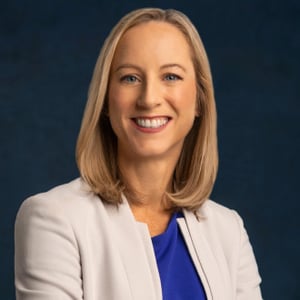
Vice President of Regulatory Affairs, Solidus Labs; Former Director, Consumer Financial Protection Bureau
The Honorable Kathleen L. Kraninger is the Vice President of Regulatory Affairs at Solidus Labs where she leads the firm’s regulatory strategy and works to advance market integrity and responsible innovation in digital asset markets. Solidus Labs is the first automated, comprehensive, and testable market surveillance and risk monitoring hub tailored for digital assets.
Previously, she served as the Senate-confirmed Director of the Consumer Financial Protection Bureau from December 2018 until January 2021, leading the 1,500-person independent, regulatory and law enforcement agency. She made her mark on all aspects of the agency’s mission and operations, particularly in facilitating innovation, promoting financial inclusion and leading through the economic uncertainty of the global pandemic. In addition, Kraninger served on the board of the Federal Deposit Insurance Corporation, the Financial Stability Oversight Board, and as chair of the Federal Financial Institutions Examinations Council.
Her distinguished public sector career spans senior roles at the Departments of Transportation and Homeland Security, the Office of Management and Budget, and in both the Senate and the House of Representatives. Kraninger graduated magna cum laude from Marquette University and earned a law degree from Georgetown University Law Center. She served as a U.S. Peace Corps Volunteer in Ukraine.
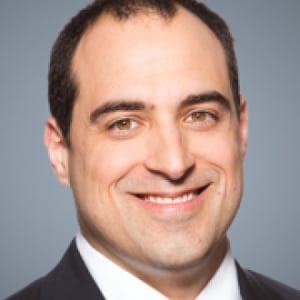
Vice President and Director, Center for Monetary and Financial Alternatives, Cato Institute
Norbert Michel is vice president and director of the Cato Institute’s Center for Monetary and Financial Alternatives, where he specializes on issues pertaining to financial markets and monetary policy. Michel was most recently the Director for Data Analysis at the Heritage Foundation where he edited, and contributed chapters, to two books: The Case Against Dodd–Frank: How the “Consumer Protection” Law Endangers Americans, and Prosperity Unleashed: Smarter Financial Regulation
Michel was previously a tenured professor at Nicholls State University’s College of Business, teaching finance, economics and statistics. Before that, he worked at Heritage as a tax policy analyst in the think tank’s Center for Data Analysis from 2002 to 2005. He previously was with the global energy company Entergy, where he worked on models to help predict bankruptcies of commercial clients.
Michel holds a doctoral degree in financial economics from the University of New Orleans. He received his bachelor of business administration degree in finance and economics from Loyola University. He currently resides in Virginia.
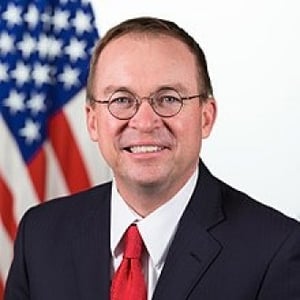
Co-Chair, Actum LLC; Former Director, Office of Management and Budget
Mick Mulvaney is a co-chair at Actum LLC, a global consultancy designed to solve diverse public and private sector challenges. Mulvaney previously served as Acting White House Chief of Staff from January 2019 until March 2020.
Mulvaney also served as director of the Office of Management and Budget (OMB). He was nominated to the post by President Donald J. Trump in December 2016 and confirmed by the Senate on February 16, 2017. Prior to his time as the director of OMB, he served the people of the 5th District of South Carolina as their Congressman where he was first elected in 2010, he is the first Republican member to hold the seat in 128 years.
A lifelong Carolinas resident, he attended Georgetown University, graduating with honors in International Economics, Commerce, and Finance and graduated as an Honor Scholar – the highest award given to students of the Georgetown School of Foreign Service.
After college, Mick received his law degree from the University of North Carolina at Chapel Hill on a full academic scholarship. He completed his formal education at Harvard Business School's OPM program in 2006.
In addition to practicing law and opening his own firm, he also ran the family real estate business, started a small homebuilding company, and became a minority shareholder in a local family restaurant franchise.
While in Congress, he served on the Budget Committee, Joint Economic Committee, Small Business Committee, Financial Services Committee, and the Oversight and Government Reform Committee.
He was a founding member of the Indian Land Rotary, a member of St. Philip Neri Catholic Church, and founding member of Our Lady of Grace Catholic Mission.
Mick and Pam were married in 1998, and are the proud parents of triplets: James, Caroline, and Finnegan, and two great danes: Guiness and Harper.

General Counsel, House Committee on Homeland Security
Steven Giaier is General Counsel for the Committee on Homeland Security in the U.S. House of Representative. In this role, he serves as the lead staff member on the Committee for all legal issues and legislation action. Over the past several years, he has written several of the most substantial pieces of legislation to move through the Committee and be enacted into law, including the Visa Waiver Program Improvement and Terrorist Travel Prevention Act and the U.S. Customs and Border Protection Authorization Act. Mr. Giaier formerly served as parliamentary advisor to Congressman Peter King during King’s tenure as chairman of the Homeland Security Committee from 2011-2013. He recently coauthored “Turf Wars: How a Jurisdictional Quagmire in Congress Compromises Homeland Security,” published by the New York University Journal of Legislation and Public Policy in the summer of 2015.
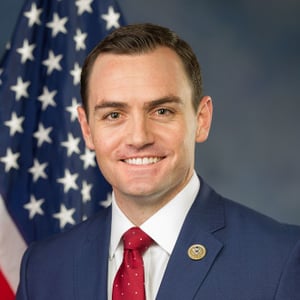
Congressman, U.S. House of Representatives
First elected in 2016, Congressman Mike Gallagher represents Wisconsin’s 8th District in the U.S. House of Representatives. Mike is a 7th generation Wisconsin native, born and raised in Green Bay.
Mike joined the United States Marine Corps the day he graduated from college and served for seven years on active duty as a Counterintelligence/Human Intelligence Officer and Regional Affairs Officer for the Middle East/North Africa, eventually earning the rank of Captain. He deployed twice to Al Anbar Province, Iraq as a commander of intelligence teams, served on General Petraeus’s Central Command Assessment Team in the Middle East, and worked for three years in the intelligence community, including tours at the National Counterterrorism Center and the Drug Enforcement Agency. Mike also served as the lead Republican staffer for Middle East, North Africa and Counterterrorism on the Senate Foreign Relations Committee. Prior to taking office, Mike worked in the private sector at a global energy and supply chain management company in Green Bay.
After earning his bachelor’s degree from Princeton University, Mike went on to earn a master’s degree in Security Studies from Georgetown University, a second in Strategic Intelligence from National Intelligence University, and his PhD in International Relations from Georgetown.
Mike currently serves on the House Armed Services Committee, where he is a member of the Seapower and Projection Forces, as well as the Readiness Subcommittees. He also serves on the Homeland Security Committee, where he is a member of the Counterterrorism and Intelligence (CTI) and Cybersecurity and Infrastructure Protection (CIP) Subcommittees.

Vice President, Networks, The Federalist Society for Law and Public Policy Studies
Nathan Kaczmarek is Vice President for Networks at the Federalist Society. He began his legal career in Detroit representing nationwide clients in all phases of healthcare litigation and complex medical malpractice claims. He has since served as a Senior Legal and Policy Advisor in the U.S. House of Representatives and as Counsel for the Subcommittee on Regulatory Affairs and Federal Management in the U.S. Senate. Prior to overseeing the Networks, he was Director of the Practice Groups, the Regulatory Transparency Project, and the Article I Initiative for the Federalist Society.
Nathan holds degrees from Hillsdale College and Thomas M. Cooley Law School. He is a Liaison Representative for The Administrative Conference of the United States. He also serves as Vice President of the Associates of St. John Bosco, a Virginia based non-profit dedicated to Catholic high school and college students.

Professor of Political Science and International Affairs, Elliot School of International Affairs, The George Washington University
Henry R. Nau is Professor of Political Science and International Affairs at the Elliott School of International Affairs, The George Washington University. From 1989-2016, he directed the US-Japan- South Korea Legislative Exchange Program, semiannual meetings among Members of the US Congress, Japanese Diet, and South Korean National Assembly. During the academic year 2011-12 he was the W. Glenn Campbell and Rita Ricardo-Campbell National Fellow and the Susan Louise Dyer Peace National Fellow at the Hoover Institution, Stanford University.
Professor Nau holds a B.S. degree in Economics, Politics and Science from the Massachusetts Institute of Technology, and M.A. and Ph.D. degrees from The Johns Hopkins University School of Advanced International Studies. Previously, he taught at Williams College and as Visiting Professor at Johns Hopkins SAIS, Stanford, and Columbia Universities. He is the recipient of grants from, among others, the Council on Foreign Relations, National Science Foundation, Woodrow Wilson International Center for Scholars, Smith- Richardson Foundation, Century Foundation, Japan US Friendship Commission, Rumsfeld Foundation, the Lynde and Harry Bradley Foundation, and the Hoover Institution. From August 1975 to January 1977 he served as a special assistant to the Under Secretary of State for Economic Affairs and from January 1981 to July 1983 as senior staff member and White House sherpa on President Reagan’s National Security Council responsible for G-7 Summits and international economic affairs.
Among numerous publications, he is the author of five single-authored University press books, including Conservative Internationalism: Armed Diplomacy Under Jefferson, Polk, Truman and Reagan (Princeton University Press, 2013; paperback with new preface 2015); Perspectives on International Relations: Power, Institutions, and Ideas (Sage/CQ Press, 5th Edition, 2016); At Home Abroad: Identity and Power in American Foreign Policy (Cornell University Press, 2002); The Myth of America's Decline: Leading the World Economy into the 1990s (Oxford University Press, 1990) and National Politics and International Technology: Nuclear Reactor Development in Western Europe (Johns Hopkins University Press, 1974). His most recent articles and book chapters include “How Restraint Leads to War,” Commentary Magazine, (September 2015; Lead Article on Front Cover); “The ‘Great Expansion:’ The Economic Legacy of Ronald Reagan,” in Reagan’s Legacy in a World Transformed, edited by Jeffrey L. Chidester and Paul Kengor, (Harvard University Press, 2015); and “Ideas have consequences: The Cold War and today,” International Politics, (July 2011).
He is the recipient of the State Department's Superior Honor Award (1977), the Elliott School Harry Harding Teaching Prize (2007), and the Japanese Government's Order of the Rising Sun, Gold Rays with Neck Ribbon (2016). From 1963-65 he served as a Lieutenant in the 82nd Airborne Division at Fort Bragg, N.C.

Professor Emeritus of Law, Antonin Scalia Law School, George Mason University
Jeremy A. Rabkin is a Professor Emeritus of Law at the Antonin Scalia Law School, George Mason University. Before joining the faculty in June 2007, he was for over two decades a professor in the Department of Government at Cornell University. Professor Rabkin serves on the board of directors of the Center for Individual Rights, a public interest law firm based in Washington, D.C. Previously he was a board member of the U.S. Institute of Peace and the board of academic advisors of the American Enterprise Institute.
Professor Rabkin’s books include Law Without Nations? (Princeton University Press, 2005). He authored “If You Need a Friend, Don’t Call a Cosmopolitan,” a chapter in Varieties of Sovereignty and Citizenship (Sigal R. Ben-Porath & Rogers M. Smith eds., University of Pennsylvania Press, 2012). His articles have appeared in major law reviews and political science journals and his journalistic contributions in a range of magazines and newspapers, including the Washington Post and the Wall Street Journal.

Senior Fellow and Director of Constitutional Studies, Manhattan Institute
Ilya Shapiro is a senior fellow and director of constitutional studies at the Manhattan Institute and a contributing editor of City Journal. Previously he was executive director and senior lecturer at the Georgetown Center for the Constitution, and before that a vice president of the Cato Institute.
Shapiro is the author of Lawless: The Miseducation of America’s Elites (2025) and Supreme Disorder: Judicial Nominations and the Politics of America’s Highest Court (2020), coauthor of Religious Liberties for Corporations? (2014), and editor of 11 volumes of the Cato Supreme Court Review (2008-18). He has contributed to a variety of academic, popular, and professional publications, including the Wall Street Journal, Harvard Journal of Law & Public Policy, Washington Post, Los Angeles Times, USA Today, National Review, and Newsweek. He also regularly provides commentary for various media outlets, writes the Shapiro’s Gavel newsletter on Substack, and once appeared on the Colbert Report.
Shapiro has testified many times before Congress and state legislatures and has filed more than 500 amicus curiae “friend of the court” briefs in the Supreme Court. He lectures regularly on behalf of the Federalist Society, is a member of the board of fellows of the Jewish Policy Center, was an inaugural Washington Fellow at the National Review Institute, and has been an adjunct law professor at the George Washington University and University of Mississippi. He is also the chairman of the board of advisers of the Mississippi Justice Institute, a barrister in the Edward Coke Appellate Inn of Court, and a former member of the Virginia Advisory Committee to the U.S. Commission on Civil Rights.
Earlier in his career, Shapiro was a special assistant/adviser to the Multi-National Force in Iraq on rule-of-law issues and practiced at Patton Boggs and Cleary Gottlieb. Before entering private practice, he clerked for Judge E. Grady Jolly of the U.S. Court of Appeals for the Fifth Circuit. He holds an AB from Princeton University, an MSc from the London School of Economics, and a JD from the University of Chicago Law School.
General Counsel, House Committee on Homeland Security
Steven Giaier is General Counsel for the Committee on Homeland Security in the U.S. House of Representative. In this role, he serves as the lead staff member on the Committee for all legal issues and legislation action. Over the past several years, he has written several of the most substantial pieces of legislation to move through the Committee and be enacted into law, including the Visa Waiver Program Improvement and Terrorist Travel Prevention Act and the U.S. Customs and Border Protection Authorization Act. Mr. Giaier formerly served as parliamentary advisor to Congressman Peter King during King’s tenure as chairman of the Homeland Security Committee from 2011-2013. He recently coauthored “Turf Wars: How a Jurisdictional Quagmire in Congress Compromises Homeland Security,” published by the New York University Journal of Legislation and Public Policy in the summer of 2015.
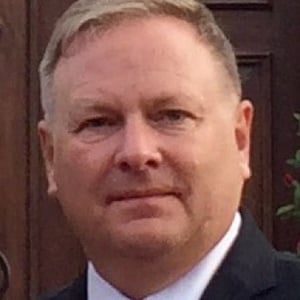
Senior Vice President, HSBC Bank USA, N.A.’s Office of Public Affairs
Michael Geffroy is Senior Vice President in HSBC Bank USA, N.A.’s Office of Public Affairs, where he is responsible for public policy and government affairs at the federal level.
Prior to joining HSBC, Mr. Geffroy had extensive experience in the U.S Congress, and in the Executive Branch. Most recently, he was the General Counsel for the U.S. Senate Select Committee on Intelligence (2014-2017), and he previously served in the U.S. House of Representatives as the Deputy Chief of Staff and Chief Counsel to the Committee on Homeland Security (2012-2014).
Mr. Geffroy’s tenure in the Executive branch includes his time as the Assistant Director for Enforcement at the Department of the Treasury’s Office of Foreign Assets Control, Counselor to the Assistant Attorney General of the Criminal Division, Department of Justice, and as an Assistant U.S. Attorney in the District of Columbia.
Mr. Geffroy is a Lieutenant Colonel in the U.S. Marine Corps Reserve (ret). His military service includes tours of duty in Afghanistan and Iraq.
Mr. Geffroy is admitted to practice law in the District of Columbia, Maryland, Rhode Island, and Massachusetts. He is a graduate of Brown University and the Columbus School of Law at the Catholic University of America.

Partner, Eversheds Sutherland LLP
Michael Bahar, a partner in the Washington DC office of Eversheds Sutherland (US) LLP, is the US leader of the global cybersecurity and privacy practice and a member of the firm’s Litigation practice. As former Deputy Legal Advisor to the National Security Council at the White House, former Minority Staff Director and General Counsel for the US House Intelligence Committee, and as a former Active Duty Navy JAG, Mr. Bahar provides advice on cybersecurity and privacy, international law and national security law. While with the House Intelligence Committee, he was lead drafter and negotiator for the Cybersecurity Act of 2015, the USA Freedom Act (which reformed certain key surveillance authorities) and four annual Intelligence Authorization Acts. More recently, he was a leader of the Committee’s investigation into the Russian hacking of the 2016 election. Michael offers clients a wealth of knowledge about cybersecurity, information sharing, privacy, crisis management and establishing cybersecurity programs that are not only in accordance with evolving laws and regulations but that also find business opportunities.
His in-depth knowledge and deep understanding of these topics—particularly in assessing the appropriate levels of cybersecurity investment based on litigation and regulatory risk analysis—allows Mr. Bahar to effectively advise clients and has made him a sought-after speaker at industry and corporate conferences across the country.
Mr. Bahar’s previous experience includes serving nearly 10 years on Active Duty with the Navy's Judge Advocate General (JAG) Corps, where he litigated felony court-martials, dealt with cutting-edge legal issues involving the laws of war, led the capture and investigation of the US Navy’s first set of captured pirates in generations, led a team of lawyers deployed to Afghanistan in support of a Special Operations Task Force, and completed two Pentagon tours. He has received two Defense Meritorious Service Medals, six Navy Commendation Medals and one Navy Achievement Medal, in addition to earning his Navy Parachutist Wings.
Mr. Bahar is admitted to the New York State Bar. He has submitted his application to The District of Columbia Bar. His work is supervised by District of Columbia Bar members.

Executive Vice President, Chief Legal Officer, Gates Corporation
Matthew R. A. Heiman joined the Company in May 2026 and has served as the Company’s Chief Legal Officer and Corporate Secretary since June 2026. As Chief Legal Officer, Mr. Heiman is responsible for all legal functions for Gates, including securities and corporate governance, M&A, litigation, commercial, regulatory, compliance, patents and trademarks, real estate, employment and labor, sustainability and environmental matters. Prior to joining Gates, Mr. Heiman held senior legal leadership roles at Waystar, where he served as Chief Legal & Administrative Officer from 2023 to 2025 and as General Counsel and Corporate Secretary from 2020 to 2023. Prior to that, he was with Johnson Controls, where he served as Vice President, Corporate Secretary, and Associate General Counsel. Mr. Heiman has been a Senior Fellow for the National Security Institute at George Mason University’s Antonin Scalia School of Law since 2018.

Senior Vice President, Cornerstone Government Affairs
Heather Molino joined Cornerstone in 2015 after two decades of Capitol Hill and communications experience, where she developed significant expertise in cyber, defense, space, intelligence and national security. Prior to joining Cornerstone, Ms. Molino was the minority staff director for the House Permanent Select Committee on Intelligence (HPSCI) under Ranking Member C.A. Dutch Ruppersberger (D-MD).
As staff director, Ms. Molino helped returned the House Intelligence Committee to the business of passing budget bills and other important legislation. Her achievements include helping pass into law five Intelligence Authorization Acts in four years, for Fiscal Year 2011 through 2015. Heather and her team helped create a coalition of business support to pass the most prominent cyber legislation in the House, the Cyber Intelligence Sharing and Protection Act (CISPA), as well as major intelligence reform legislation, the USA Freedom Act, all by strong bipartisan margins.
In her role, Ms. Molino was also responsible for advising Members of the Committee on policy, politics and communications to ensure U.S. intelligence professionals have the resources, capabilities and authorities needed to keep our country safe. Heather also organized and managed Democratic staff, handled the committee’s budget, oversaw press strategy and ensured proper and efficient oversight of our nation’s intelligence agencies. Before joining the committee, Heather served as deputy chief of staff and director of communications in Congressman Ruppersberger’s personal office.
Prior to Capitol Hill, Ms. Molino worked in broadcast journalism for over 10 years. She was a TV reporter and anchor in Washington, D.C., Virginia, Washington State and North Carolina. Ms. Molino holds a B.A. in Economics and Government from Cornell University. She is married to West Point graduate, Michael Molino. The couple has three small children.
General Counsel, House Committee on Homeland Security
Steven Giaier is General Counsel for the Committee on Homeland Security in the U.S. House of Representative. In this role, he serves as the lead staff member on the Committee for all legal issues and legislation action. Over the past several years, he has written several of the most substantial pieces of legislation to move through the Committee and be enacted into law, including the Visa Waiver Program Improvement and Terrorist Travel Prevention Act and the U.S. Customs and Border Protection Authorization Act. Mr. Giaier formerly served as parliamentary advisor to Congressman Peter King during King’s tenure as chairman of the Homeland Security Committee from 2011-2013. He recently coauthored “Turf Wars: How a Jurisdictional Quagmire in Congress Compromises Homeland Security,” published by the New York University Journal of Legislation and Public Policy in the summer of 2015.

Pardon Me: When Congressional Witnesses Plead the Fifth
John G. Malcolm, Clark Neily, G. Zachary Terwilliger
Congressional committees frequently use their subpoena power to compel witnesses to appear before them and...
Panel II: Congress and the Constitution: The Separation of Powers in Action
Jonathan H. Adler, Justin Amash, Josh Chafetz, Robert J. Luck, Gillian E. Metzger, Amanda H. Neely
Featuring: Prof. Jonathan H. Adler, Johan Verheij Memorial Professor of Law and Director of the...
What is the future of U.S. Counterintelligence and the National Counterintelligence and Security Center?
William Evanina, Jamil N. Jaffer
The Senate Select Committee on Intelligence released a detailed report in September 2022 on the...
Crypto Wars: Balancing Privacy versus National Security
Dina Ellis Rochkind, Michele Korver, Kathy Kraninger, Norbert J. Michel, Mick Mulvaney
Senior officials in the Administration have expressed concern about cryptocurrencies being used for criminal activity...
Courthouse Steps: Trump v. Hawaii Decided
Steven S. Giaier
Trump v. Hawaii is the latest iteration of Hawaii’s challenge to President Trump’s Executive Order suspending...
Courthouse Steps: Trump v. Hawaii Decided
International & National Security Law and Religious Liberties Practice Group Teleforum
TeleforumFounding Principles as Pillars of Our Foreign Policy
Mike Gallagher, Nathan Kaczmarek, Henry Nau, Jeremy A. Rabkin, Ilya Shapiro
What would history have to say about the way in which American foreign policy is...
Courthouse Steps: Trump v. Hawaii
Steven S. Giaier
On April 25, the Supreme Court will hear oral argument in Trump v. Hawaii, the...
Courthouse Steps: Trump v. Hawaii
International & National Security Law Practice Group Teleforum
TeleforumThe Role of Congressional Intelligence Committees
Michael Geffroy, Michael Bahar, Matthew R. A. Heiman, Heather Molino
Former Minority Staff Director and General Counsel for the House Permanent Select Committee on Intelligence...