
Retired
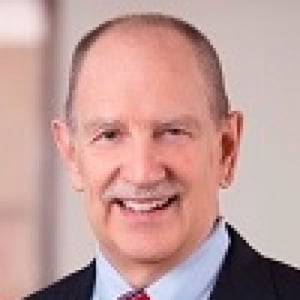
Tom Gede retired in 2023 as a principal in Morgan Lewis Consulting LLC and of counsel to the firm. He currently consults on a variety of legal and policy matters for both public and private clients. Tom has a national reputation and distinguished background in federal Indian law. Prior to retirement, he represented clients in complex governmental matters in litigation, administrative and regulatory proceedings, including high-profile matters involving state governments. A former senior deputy in the California Attorney General’s office, Tom was amicus coordinator and Supreme Court counsel, and argued cases in the US Supreme Court, the California Supreme Court, and numerous state and federal appellate courts.
Tom also served as executive director of the Conference of Western Attorneys General (CWAG), coordinating activities on key legal and policy issues, such as federal Indian law, energy, environmental, public lands, financial services, and telecommunications, for the attorneys general of 18 western states and territories. In 2016, Tom was elected as a Member of the American Law Institute (ALI), and served as an Adviser on the Restatement of the Law Third - The Law of American Indians. Tom also taught federal Indian law as an adjunct law professor at the University of the Pacific - McGeorge School of Law. He served as an assistant editor for and the author of the Indian gaming chapter in CWAG’s American Indian Law Deskbook (2d & 3d eds.). He has been engaged in Indian gaming and Indian law matters for more than three decades, having focused on the gaming compacts with Indian tribes, as well as complex civil and criminal jurisdiction, land, natural resources, water and law enforcement issues in Indian country. He has testified before Congress on American Indian and Native Alaskan issues. In 2012 he was appointed by Speaker John Boehner to serve on the United States Indian Law and Order Commission, where he examined criminal justice issues in Indian country and Alaska, resulting in the issuance of an important report to the President and Congress.
Senior Legal Counsel, Pacific Legal Foundation
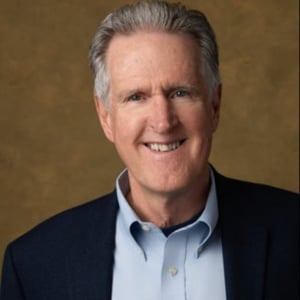
Before becoming an attorney, James had been a productive member of society working as an exploration geologist in the late 1970s throughout the southwestern United States. However, after several years of dealing with irrational government bureaucrats and environmental policies untethered from reality, James decided that what the world needs is more lawyers — if they are willing to fight for rationality in regulatory regimes, property rights, and liberty.
James attended the University of Arizona College of Law in Tucson, where he served as an editor for the Law Review and received a J.D. degree in 1983. He had previously received a Masters degree in geological sciences from Brown University and an undergraduate degree from Hamilton College in New York. James received the Professional Achievement Award from the University of Arizona Alumni Association in 2018.
James has worked with Pacific Legal Foundation since 1983, litigating cases from Alaska to Florida. He is a member of the Federalist Society’s Environmental Law and Property Rights Practice Group’s Executive Committee, a member of the American College of Real Estate Lawyers, and an honorary member of Owners Counsel of America, an organization comprised of eminent domain attorneys who represent property owners. The Owners Counsel awarded James its Crystal Eagle award in 2013. In 2022, James was awarded the Brigham-Kanner Property Rights Prize at the William & Mary College of Law. The prize is awarded annually to an individual whose work has advanced the cause of property rights and has contributed to the overall awareness of the important role property rights occupy in the broader scheme of individual liberty.
In 2001, James successfully argued a major property rights case, Palazzolo v. Rhode Island, before the United States Supreme Court, a case which affirmed that rights in regulated property do not disappear when land is bought and sold. He has written extensively on all aspects of property rights and environmental law and frequently speaks on these subjects throughout the nation.
When James is not suing the government he enjoys skiing faster than he should, bicycling, hiking, swimming, and spending quality time with his wife, family, and grandchild.
Mr. Burling’s book Nowhere to Live: The Hidden Story of America’s Housing Crisis is available now on Amazon.
James is a member of the bar only in the states of Alaska and California.
Fellow, College of Public Interest Law, Pacific Legal Foundation
Mr. Middleton joined the Pacific Legal Foundation as a Fellow in the College of Public Interest Law in 2007. His practice mainly focuses on environmental law, and he has authored briefs in important Clean Water Act and Endangered Species Act cases. He is also authoring an article on injunctive relief under the Endangered Species Act.
Mr. Middleton is a member of the state bar of California and is admitted to the United States Court of Appeals for the Ninth Circuit and the United States District Court for the Northern District of California. He grew up in Cincinnati, Ohio, and attended Saint Louis University and The Ohio State University Moritz College of Law.
Vice President & Legal Director, National Right To Work Legal Defense Foundation
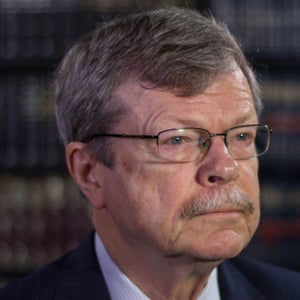
Raymond J. LaJeunesse, Jr., is Vice President and Legal Director of the National Right to Work Legal Defense Foundation, a non-profit legal aid organization. He was the first Staff Attorney employed by the Foundation and has more than forty-five years of experience helping workers in litigation in federal and state courts and administrative agencies over the abuses of compulsory unionism.
Mr. LaJeunesse has argued four cases in the United States Supreme Court. Those cases include Lehnert v. Ferris Faculty Ass’n, 500 U.S. 507 (1991), which limited the purposes for which compulsory union fees collected from public employees may lawfully be spent; Air Line Pilots Ass’n v. Miller, 523 U.S. 866 (1998), which established that unions cannot compel nonmembers to exhaust union-established remedies before going to court to challenge compulsory union fees; and Marquez v. Screen Actors Guild, 525 U.S. 33 (1998), in which the Court recognized that unions must notify employees that they can satisfy the “membership” requirement of “union shop” agreements by just paying fees for union bargaining activities and need not join and pay full dues to keep their jobs. He also was lead attorney in Hohe v. Casey, 956 F.2d 399 (3d Cir. 1992), in which more than $8.3 million in compulsory agency fees was recovered from the American Federation of State, County and Municipal Employees for a class of 57,000 nonmembers.
Mr. LaJeunesse is the author of several published articles about labor law, has testified before Congressional committees several times, and was an Advisor on the Transition Team for Labor- Related Agencies, Office of the President-Elect, in 1980-81 and a legislative aide to a member of the Virginia state legislature. He is a Vice Chairman of the Federalist Society’s Labor and Employment Law Practice Group and has spoken or debated at the Society’s National Lawyers Convention and at many Lawyers and Student Chapters on such topics as Right to Work laws, compulsory unionism arrangements, the misuse of union dues for politics, union organizing tactics (“card check” vs. secret-ballot elections), and the future of the union movement.
Solicitor General, Kansas, and Professor of Law, University of Kansas School of Law
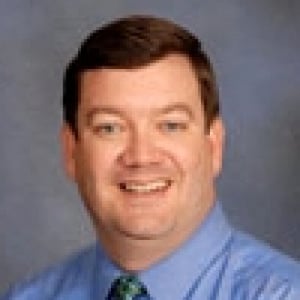
 Stephen R. McAllister is a native Kansan who grew up in Lucas, Kansas and graduated from Lucas-Luray High School. Growing up, he also lived in Hiawatha and Chanute, Kansas. He received both his B.A. and his J.D. degrees from the University of Kansas.
Following his graduation from law school, Steve clerked for Judge Richard Posner of the United States Court of Appeals for the Seventh Circuit in Chicago, and then for Justices Byron White and Clarence Thomas of the Supreme Court of the United States. After his clerkships Steve worked in the Washington, D.C. office of the Los Angeles law firm, Gibson, Dunn & Crutcher.
In 1993, Steve returned to his alma mater as a visiting professor of law. In 1999 he received tenure and promotion to the rank of full Professor. He served as Dean of the KU Law School from 2000 – 2005.
As a professor, Steve teaches constitutional law, constitutional litigation and torts. He won the Frederick J. Moreau Award for student advising in 1997, and a W.T. Kemper Award for excellence in teaching in 1999. As a scholar, Steve has written on a variety of constitutional topics, including affirmative action, capital punishment, federalism, and sex offender laws. Steve is an elected a Fellow of the American Bar Foundation and a Trustee of the Supreme Court Historical Society.
Steve also has appeared before the Supreme Court of the United States several times. From 1999 – 2003, he served as the first State Solicitor for Kansas, assisting the Kansas Attorney General’s office in state cases raising important constitutional issues. In both 2001 and 2002, Supreme Court briefs that Steve authored for the State of Kansas won Best Brief Prizes at the annual summer meeting of the National Association of Attorneys General.
From May 2006 until March 2007, Steve served as Legislative Counsel for Kansas, advising the legislature regarding legal issues. In that capacity, Steve participated in the Kansas school finance litigation in the Kansas Supreme Court, filing a brief on behalf of the Kansas Legislature and presenting oral argument on behalf of the State as a special assistant attorney general. Since May 2007, Steve has served as Solicitor General of Kansas in the office of the Kansas Attorney General, briefing and arguing important cases involving abortion, the death penalty, freedom of speech, and right to a jury trial.
Steve speaks regularly on a variety of constitutional topics, as well as judicial confirmation and the Supreme Court as an institution.
Clerk, Judge Richard Posner, U.S. Court of Appeals, 7th Circuit 1988-89; Clerk, Justice Byron White, U.S. Supreme Court 1989-91; Clerk, Justice Clarence Thomas, U.S. Supreme Court 1991-1992; Associate, Gibson, Dunn & Crutcher, DC, 1992-93; Visiting Associate Professor, Kansas 1993-95, Associate Professor, Kansas 1995-98, Professor since 1999; Associate Dean of Academic Affairs 1999-2000; Dean 2000-2005; Interim Director, Dole Institute of Politics 2003-04.
J.D. 1988, Kansas, Articles Editor, University of Kansas Law Review; B.A. 1985, Kansas
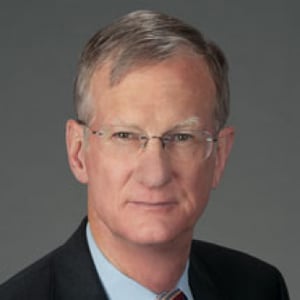
Legal Scholar and Solo Practitioner
Jack received his B.A. in History from the University of Virginia in 1977, graduating with Highest Distinction. After graduating Yale Law School in 1980, he served active duty in the U.S. Army's JAG Corps, rising to the rank of Major, where he represented the United States in more than 250 cases.
He practiced for a decade as an Associate for Bradley Arant in Birmingham, Alabama. He proudly served the State of Alabama in the Office of the Attorney General, both as Deputy and Assistant Attorney General, handling complex civil and criminal litigation cases for the people of Alabama. In 2000, he won the "Best Brief Award" from the National Association of Attorneys General for his brief in a case decided by the U.S. Supreme Court, James Alexander v. Martha Sandoval – a case he won. He was Special Assistant to the Inspector General for the Corporation for National and Community Service, Visiting Legal Fellow for the Center for Judicial and Legal Studies for the Heritage Foundation, Of Counsel at Strickland Brockington Lewis, a solo practitioner, and General Counsel for Indigo Energy.
Most recently, he "re-upped" for military service, volunteering his legal services to the Georgia State Defense Force where twice each month he provided legal services for National Guardsmen who were being deployed. He wore his military uniform for the last time in October 2024.
Jack Park passed away on March 16, 2026.
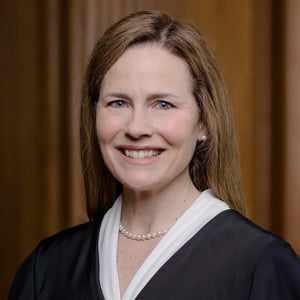
Associate Justice, United States Supreme Court
The Honorable Amy Coney Barrett is an Associate Justice of the Supreme Court of the United States. She was nominated by President Donald Trump and was confirmed on October 27, 2020. She is the fifth woman to serve on the Court.
Justice Barrett earned her J.D., summa cum laude, from Notre Dame, where she was a Kiley Fellow, earned the Hoynes Prize, the Law School’s highest honor, and served as executive editor of the Notre Dame Law Review. She clerked for Judge Laurence H. Silberman of the U.S. Court of Appeals for the D.C. Circuit and for Associate Justice Antonin Scalia of the U.S. Supreme Court. As an associate at Miller, Cassidy, Larroca & Lewin in Washington, D.C., she litigated constitutional, criminal, and commercial cases in both trial and appellate courts.
In 2002, Justice Barrett joined the faculty of Notre Dame Law School. She continued to teach following her appointment to the U.S. Court of Appeals for the Seventh Circuit in November 2017. Justice Barrett also served by appointment of the Chief Justice on the Advisory Committee for the Federal Rules of Appellate Procedure from 2010 to 2016.
Justice Barrett has published widely in the areas of federal courts, constitutional law, and statutory interpretation. Her scholarship in these fields has been published in leading journals, including the Columbia, Virginia, and Texas Law Reviews.
Andrew P. Morriss is Dean and Anthony G. Buzbee Dean's Endowed Chairholder at Texas A&M School of Law and a member of the Board of Advisors for the Center on Culture and Civil Society at the Independent Institute. He is also a Research Fellow at the Center for Labor and Employment Law at New York University; Senior Fellow at the Property & Environment Research Center; Senior Scholar at the Mercatus Center at George Mason University; and a regular Visiting Professor at Universidad Francisco Marroquín, in Guatemala. Prior to coming to the University of Illinois, he served as Galen J. Roush Professor of Business Law and Regulation at Case Western Reserve University.
He received his A.B. degree from Princeton University, his J.D. and a masters degree in public affairs from the University of Texas at Austin, and his Ph.D. (economics) from the Massachusetts Institute of Technology. After law school he clerked for U.S. District Judge Barefoot Sanders in the Northern District of Texas and worked for two years at Texas Rural Legal Aid in Hereford and Plainview, Texas.
Professor Morriss is the author or coauthor of more than forty book chapters and scholarly articles, and he is the co-editor of Cross-Border Human Resources, Labor and Employment Issues: Proceedings of the New York University 54th Annual Conference on Labor (with Samuel Estreicher); Property Stories (with Gerald Korngold); and The Common Law and the Environment (with Roger Meiners). He is the author of the book, Regulation by Litigation (with Bruce Yandle and Andrew Dorchak), and he also regularly writes for The Freeman: Ideas on Liberty and Books & Culture: A Christian Review.
Professor Morriss was recently named one of the Reporters for the Restatement of Employment Law by the American Law Institute (ALI), Senior Fellow for the Institute for Energy Research, and a Reporter for the Restatement of Employment Law by the American Law Institute.
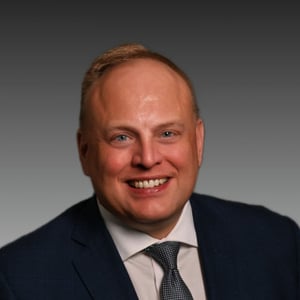
Executive Vice President and Director of Litigation, EdChoice Legal Advocates
Before founding a public interest law firm at EdChoice, Tom Fisher served as Indiana’s first Solicitor General from 2005-2023. Fisher has argued dozens of high-profile cases before both the Indiana Supreme Court and the Seventh Circuit U.S. Court of Appeals and five cases before the U.S. Supreme Court. A two-time recipient of the National Association of Attorneys General Best Brief Award, Fisher is a Fellow of the American Academy of Appellate Lawyers and a Sagamore of the Wabash. Fisher is a graduate of Wabash College and Indiana University Maurer School of Law, where he serves as an Adjunct Professor of Law.
United States Court of Appeals, Seventh Circuit
David Frank Hamilton is a United States federal judge, currently serving on the United States Court of Appeals for the Seventh Circuit. He previously was the Chief Judge of the United States District Court for the Southern District of Indiana.

Barwatch Bulletin for March 2009
ABA ONCE AGAIN PRE-VETTING JUDICIAL CANDIDATES On Tuesday, March 17, American Bar Association President H. Thomas...
SCOTUScast 3-3-09 featuring Tom Gede
Thomas F. Gede
On Monday, November 3, the Supreme Court heard oral argument in Carcieri v. Kempthorne. The...
SCOTUScast 3-3-09 featuring James Burling and Brandon Middleton
James S. Burling, Brandon Middleton
On Monday, January 12, the Supreme Court heard oral argument in Coeur Alaska v. Southeast...
The Dirty Dozen: How Twelve Supreme Court Cases Radically Expanded Government and Eroded Freedom
SCOTUScast 1-23-09 featuring Raymond LaJeunesse
Raymond J. LaJeunesse
On Monday, December 1, the Supreme Court heard oral argument in 14 Penn Plaza LLC...
Perspectives on Statutory Interpretation
SCOTUScast 1-12-09 featuring Stephen McAllister
Stephen R. McAllister
On Wednesday, November 5, the Supreme Court heard oral argument in Van de Kamp v....
Ohio Update: Ackison v. Anchor Packing Co.
John J. Park
In the Summer 2008 issue of State Court Docket Watch, David Oswiany discussed two decisions...
SCOTUScast 10-17-08 featuring Amy Barrett
Amy Coney Barrett
On Monday, October 6, the Supreme Court heard oral argument in Vaden v. Discover Bank....
SCOTUScast 10-17-08 featuring Andrew Morriss
Andrew P. Morriss
On Monday, October 6, the Supreme Court officially opened the October 2008 term by hearing...