
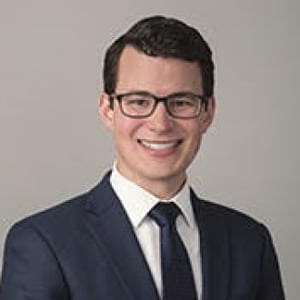
Associate Attorney, Gibson Dunn
David Casazza is an associate in the Washington, D.C. office of Gibson, Dunn & Crutcher. He practices in the firm’s Appellate and Constitutional Law, and Administrative Law and Regulatory Practice groups.
Mr. Casazza has represented clients in appellate and regulatory litigation before the Supreme Court of the United States, federal appellate courts, and federal district courts. These cases have involved a wide range of subjects including separation of powers, federal rulemaking challenges, data privacy protections, anti-terrorism claims and foreign sovereign immunity, energy infrastructure permitting, and a variety of First Amendment speech and religious liberty claims. He has also represented clients in complex litigation, obtaining dismissal with prejudice of consumer class actions attacking major brand names. He has been named by Best Lawyers as a 2021 and 2022 “One to Watch” in Appellate Practice.
He graduated magna cum laude from Harvard Law School, where he served as a Managing Editor for the Harvard Journal of Law and Public Policy and as Executive Vice President of the Harvard Federalist Society. Mr. Casazza received an A.B. magna cum laude in history from Princeton and an M.A. in history from the Johns Hopkins University.
Mr. Casazza served as a law clerk to Justice Samuel Alito on the Supreme Court of the United States and for Judge Jennifer Walker Elrod on the United States Court of Appeals for the Fifth Circuit.
He is a member of the bars of New York and the District of Columbia and is admitted to practice in the United States Courts of Appeals for the Third, Fourth, Fifth, and Ninth Circuits and in the United States District Court for the District of Columbia.

Of Counsel, Spencer Fane LLP
Anthony J. “A.J.” Ferate has built a multi-faceted background in the areas of the law, policy, energy, campaigns and elections, and defense over the last 20 years.
Through recent representation as Vice President of Regulatory Affairs for the Oklahoma Independent Petroleum Association (“OIPA”), A.J. held responsibilities over government efforts outside of the legislative branch on matters as broad as water, electric generation, commodity marketing, land matters, and seismicity. A.J. also maintained responsibility for legal matters at OIPA, including amicus briefing in appellate matters. A.J.’s extensive experience also includes management of public policy strategy for a Fortune 500 company.
For the past eleven years, A.J. has volunteered as General Counsel and spokesman for the Oklahoma Republican Party and has represented a number of elected officials, including U.S. Senator James Lankford, former statewide elected officials, a number of state legislators, and members of Congress.
Additionally, A.J. has assisted elected officials serve their constituents in all branches of government. Early in his career, A.J. held legislative aide duties in the Nebraska Legislature, then went on to work for former Nebraska Treasurer David Heineman. A.J. gained experience in the judiciary while serving Judge Gary L. Lumpkin at the Oklahoma Court of Criminal Appeals, the highest criminal appellate court in Oklahoma. Following this service, A.J. began work with Denise A. Bode of the Oklahoma Corporation Commission, assisting her in her duties regulating 70 percent of Oklahoma’s economy, including oil and gas and electric utilities.
A.J. honorably served ten years as an intelligence analyst for the United States Naval Reserve, including time at the Office of Naval Intelligence in the greater Washington DC area.
Opinion pieces authored or ghostwritten by A.J. have been published in the Seattle Times, Politico, Law360, The Oklahoman, Tulsa World and The Journal Record. A.J. has also been interviewed by national and international newspapers, and has also appeared on national radio programs including NPR’s The Diane Rehm Show and On Point with Tom Ashbrook.
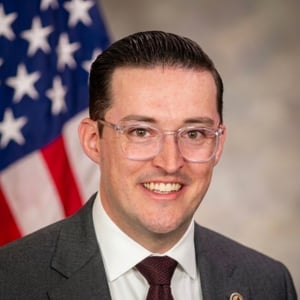
General Counsel and Senior Advisor, White House Task Force to Eliminate Fraud
Jason Manion has high-level legal experience in all three branches of federal government, in Ohio state government, and in private practice.
Since January 20, 2025, Jason has served in senior legal roles in the Trump-Vance Administration. He currently serves as General Counsel and Senior Advisor for the White House Task Force to Eliminate Fraud, a whole-of-government effort chaired by Vice President J.D. Vance to eliminate fraud, waste, and abuse within federal benefit programs.
Before joining the White House, Jason served as part of the senior leadership team at the U.S. Department of Justice, where he was Counselor to the Attorney General and Counselor and Chief of Staff to the Associate Attorney General. At the Justice Department, he oversaw a broad portfolio that included matters and issues arising out of the Civil, Civil Rights, Criminal, and National Security Divisions.
Previously, Jason was an award-winning federal prosecutor and accomplished appellate attorney. He worked as an appellate Assistant United States Attorney, a deputy Ohio solicitor general, and an appellate associate at Gibson, Dunn & Crutcher. In these various roles, he handled dozens of civil and criminal appeals (primarily in the U.S. Supreme Court, the U.S. Court of Appeals for the Sixth Circuit, and the Ohio Supreme Court) and presented eighteen oral arguments (in the Sixth Circuit, the D.C. Circuit, the Ohio Supreme Court, and federal district courts in Ohio and D.C.).
Jason has also worked on the confirmations of several of President Donald J. Trump’s Executive Branch and judicial nominees, including serving on the U.S. Senate Committee on the Judiciary as Special Counsel to Senator Ted Cruz for the confirmation of Justice Amy Coney Barrett.
Jason graduated from Harvard Law School and clerked for two Ohio-based Sixth Circuit judges, Judges Alice M. Batchelder and Eric E. Murphy. He has been an active member of the Federalist Society since law school and has served in multiple leadership roles in the Society.
Shareholder, Greenberg Traurig
Jennifer Weddle is the Co-Chair of Greenberg Traurig's American Indian Law Practice and has wide-ranging experience in complex regulatory and jurisdictional issues, with a focus in Indian law, handling a variety of matters for tribal and non-tribal clients. She has a dynamic, inter-disciplinary practice that centers on providing strategies for resolving complex jurisdictional problems. Much of her practice focuses in the areas of tribal economic development and natural resources development. Jennifer also has U.S. Supreme Court experience, including serving as one of the attorneys for the respondent in Nevada v. Hicks (2001) and representing the petitioners in Ute Mountain Ute Tribe v. Padilla (2012) and Grand Canyon Skywalk Development, LLC v. Grand Canyon Resort Corporation (2013) and cert stage amici in Saginaw-Chippewa Tribe v. NLRB (2016) and United States v. Cooley (2020) and amici on the merits in Lewis v. Clarke (2017), U.S. v. Washington (2018), Carpenter v. Murphy (2018), McGirt v. Oklahoma (2020), and United States v. Cooley (2021).
Jennifer's work also includes negotiations for mineral leasing employment matters and representation before federal agencies. She has also been involved in civil litigation, working on numerous complex federal, state and tribal litigation matters, including class action tort litigation and large commercial disputes. Her transactional experience includes oil and gas renewables projects throughout the west, as well as Endangered Species Act work. Jennifer frequently assists tribes, banks and non-bank entities with financing and regulatory matters with Indian law components. Jennifer has wide-ranging project siting experience, including the application of NEPA, NHPA, and other environmental laws on tribal and public lands, including with respect to large linear multi-state energy and infrastructure projects. Jennifer has deep transactional, regulatory and litigation experience involving very complex matters with both legal and policy components.
Jennifer is past President of the National Native American Bar Association and past two-term Chair of the Federal Bar Association Indian Law Section. She currently serves as the Tenth Circuit Representative on the American Bar Association Standing Committee on the Federal Judiciary, a role she has held since 2018, spanning the evaluations for more than two dozen federal judicial nominees at every level of the federal courts. She is a ’00 graduate of Harvard Law School and a ’97 graduate of the University of Michigan (Classical Languages and Literature).
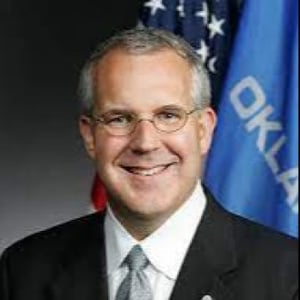
Of Counsel, SpencerFane
Governor Brad Henry represents clients in both the public and private sectors in government and administrative law.
Elected in 2002, Governor Henry served as Oklahoma’s 26th governor. One of only four governors to serve two consecutive terms, Governor Henry, a democrat, was re-elected in 2006 by the largest vote margin in modern times and the second largest margin in state history. During his time in office, he consistently received high approval ratings in public opinion surveys of his governorship, earning him recognition as one of the most popular state chief executives in modern history.
After taking office in the midst of the worst budget crisis in state history, Governor Henry forged a historic bipartisan agreement among legislative leaders that shielded education and health care from massive cuts. Under his leadership, Oklahoma experienced an economic revival, with record budget shortfalls becoming record budget surpluses. His efforts led to the largest personal income tax cut in state history and the elimination of the capital gains tax on Oklahoma-based property.
Governor Henry placed significant emphasis on the improvement of public education. His initiatives raised teacher salaries and benefits to historic levels, put more resources into the classroom and set higher academic standards for students. The governor also expanded Oklahoma’s early childhood education programs, which are now rated among the best in the country, and dramatically increased funding for college scholarship programs.
From his time in office, Governor Henry’s healthcare successes include the Insure Oklahoma program, a nationally-recognized public-private partnership that helps small businesses provide health coverage for their employees. Governor Henry also initatied programs to increase the number of insured children in the state and funded two new state facilities focusing exclusively on cancer and diabetes research and treatment.
During his two terms, Governor Henry served as Chairman of the Council of State Governments, the Southern Growth Policies Board, and the Interstate Oil and Gas Compact Commission. He was also a member of the National Governors Association, the Southern Governors Association, the Western Governors Association and the Democratic Governors Association and currently serves on numerous boards, including the national board and executive committee of the Muscular Dystrophy Association, as well as the board of directors of NIC Inc. (NASDAQ: EGOV), the nation’s leading provider of official government websites, online services, and secure payment processing solutions. He is a former member of the board of the Memorial Institute for the Prevention of Terrorism and was a charter member of the Governors’ Council of the Bipartisan Policy Center. Before his election as governor, Governor Henry practiced law with his father, Charles, in Shawnee and served ten years in the Oklahoma State Senate, chairing the Senate Judiciary Committee and serving as vice-chair of the Senate Economic Development Committee.
In 2010, Governor Henry was appointed by President Barack Obama to the six-member Council of Governors. The Council, created by an Executive Order of President George W. Bush, works closely with the Secretary of Defense, the Secretary of Homeland Security, and other defense and national security advisors to exchange views, information and advice on matters of mutual interest pertaining to the National Guard, homeland defense, and synchronization and integration of state and federal military activities.
Governor Henry was a President’s Leadership Scholar at the University of Oklahoma, where he received the Gold Letseizer Medal as the Top Senior Graduate and earned a bachelor’s degree in economics in 1985. In 1988, Governor Henry was awarded his law degree from the University of Oklahoma College of Law, where he served as managing editor of the Law Review.
A third generation Oklahoman, Governor Henry was born in Shawnee, Oklahoma, and is married to the former Kimberley Blain. They have three daughters, Leah, Laynie and Baylee.
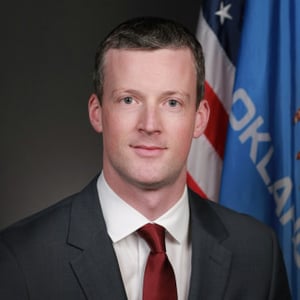
Judge, United States District Court, Western District of Oklahoma
Patrick Wyrick serves as a United States District Court Judge for the Western District of Oklahoma. He was nominated for that position by the President, and assumed duty on April 12, 2019. Before being appointed a federal judge, Wyrick served as Vice Chief Justice of the Oklahoma Supreme Court. Prior to his appointment to the Oklahoma Supreme Court, Wyrick served six years as Oklahoma's Solicitor General.

Courthouse Steps Decision: Oklahoma v. Castro-Huerta
David W. Casazza, Anthony J. Ferate, Jason Manion, Jennifer H. Weddle
On June 29, 2022, the Supreme Court decided Oklahoma v. Castro-Huerta. In a 5-4 decision,...
Oklahoma Executive Branch Review
Oklahoma City Lawyers Chapter
Oklahoma City, OKViolence is not Obscenity
Geoffrey Hymans
On September 17, 2007, the United States District Court for the Western District of Oklahoma...