
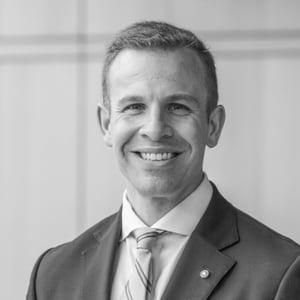
Senior Counsel, Becket Fund for Religious Liberty
William J. Haun is Senior Counsel at the Becket Fund for Religious Liberty and a Nonresident Fellow at the American Enterprise Institute (AEI). At Becket, Will litigates nationwide in defense of religious liberty for all faith traditions, particularly before the U.S. Supreme Court and in other federal and state appellate courts. His litigation includes being a member of the U.S. Supreme Court team that prevailed 9-0 for Catholic Social Services in Fulton v. City of Philadelphia, arguing before multiple federal appellate courts, federal district courts, and the Supreme Court of Texas. At AEI, Will writes and researches on constitutionalism and self-government’s prerequisites, especially the role of religion in securing and preserving freedom.
Before joining Becket and AEI, Will practiced appellate and antitrust law at two international law firms—Shearman & Sterling and Hunton & Williams. He also served as a law clerk to Judge Janice Rogers Brown of the U.S. Court of Appeals for the D.C. Circuit and Judge Claude Hilton of the U.S. District Court for the Eastern District of Virginia. Will often writes on constitutional law issues, including in the Harvard Journal of Law & Public Policy, the Catholic University Law Review, National Affairs, Law & Liberty, National Review Online, the Wall Street Journal, and the Washington Post. He also speaks on these topics, including at the Catholic University of America, Columbus School of Law, Princeton University, the University of Virginia School of Law, and the University of Chicago Law School. He received his J.D. from the Catholic University of America, cum laude, where he was a published member of the Law Review. He received his B.A. from American University in political science, cum laude. He lives in Maryland with his wife and children, where they enjoy sailing, cheering on their favorite baseball teams, and discovering the great traditions of their Catholic faith.

Professor Emeritus, Paul M. Hebert Law Center, Louisiana State University
In memoriam
Dr. John Baker is Professor Emeritus of Law, and previously the Dale E. Bennett Professor of Law, at Louisiana State University Law School. He is currently Visiting Professor at Peking University School of Transnational Law (via Zoom) and has been Visiting Professor at The Center for the Constitution, Georgetown Law School (2013-2020). He has also been a Visiting Fellow at Oriel College, the University of Oxford (2012-2014) and taught at Blackfriars Hall, Oxford in 2014. Dr. Baker has also been an adjunct Fellow at the Heritage Foundation (Spring, 2008) and a Distinguished Scholar at the Catholic University of America Law School (2011-12). He has taught at Tulane Law School, George Mason Law School, Pepperdine Law School, New York Law School, Hong Kong University, and the University of Dallas, School of Management and also taught and/or lectured in 17 foreign countries. Notable among his foreign visits are the
following: Visiting Professor at the University of Lyon III (France) (1999-2011); Visiting Professor at the Universidad de los Andes, Chile (2012), as a Fulbright Specialist (2006); and a Fulbright Scholar at various universities in the Philippines. Dr. Baker received his J.D., with honors, from the University of Michigan Law School and his B.A., magna cum laude, from the University of Dallas. He also earned a Ph.D. in Political Thought from the University of London. Baker has taught over a dozen different subjects, mostly courses in public law. His main areas of interest are Constitutional Law (particularly federalism and separation of powers), Criminal Law, Anti-Terrorism Law, International Law, Health Care Law, Mediation, and Comparative Law.
In addition to law review articles and book chapters, Dr. Baker’s academic publications include Hall's Criminal Law: Cases and Materials (with Benson, Force and George; 5th ed. Michie, 1993); An Introduction to the Law of the United States (ed. with Levasseur; University Press of America, 1992). He has also published on Forbes.com, FoxNews.com, in The Washington Times, and a number of times in The Wall Street Journal. He argues in federal court, including two oral arguments in the U.S. Supreme Court. For many years, he co-taught courses for the Federalist Society on separation of powers with the late Supreme Court Justice Antonin Scalia. In September 2016, he co-taught a Supreme Court seminar in China with Justice Samuel Alito. Following law school, he served as a law clerk in federal district court and as an assistant district attorney in New Orleans before joining LSU in 1975. While a professor, he has been as a consultant to USAID, USIA (since rolled into the State Department), the Justice Department, the U.S. Senate Judiciary Subcommittee on Separation of Powers, and the Office of Planning in the White House. He served on an ABA Task Force which issued the report, The Federalization of Crime (1998) and later as a consultant to the “Bi-Partisan Task Force on the Over- federalization of Crime” (2012-2014) created by the U.S. House Judiciary Subcommittee on Crime. Dr. Baker was a co-founder of the first iteration (1995) of Stratfor Inc., a global intelligence agency. He co-authored its first book: The Intelligence Edge (with Friedman, Friedman and Chapman; Crown Books/Random House 1997). In 2022, he began a short, weekly video podcast available on YouTube and Rumble, The Baker Brief.
Director, Washington Legislative Office, American Civil Liberties Union (ACLU)
Laura W. Murphy is in her second tenure as Director of the ACLU’s Washington Legislative Office, a position she first held from 1993-2005. Since returning Murphy has maintained strong relationships with leaders in the United States Congress and the Obama Administration to advance the ACLU’s public policy priorities including national security, criminal justice, human rights, privacy, reproductive rights, civil rights and First Amendment issues.
Recently, Murphy played a leadership role in the passage of the Fair Sentencing Act of 2010 signed into law by President Obama on August 3, 2010—a law that reduced the sentencing disparity between crack and powder cocaine and that begins to address some of the racial disparities in the criminal justice system. Under her leadership, the ACLU Washington Legislative Office worked with Congress and the White House to gain support around federally-funded abortions for servicewomen and military dependents in the cases of rape or incest. The provision was signed into law on January 2, 2013.
Prior to her return to the ACLU, she founded and directed her own firm, Laura Murphy & Associates, L.L.C., where she utilized her 30 years of policy-making and political expertise to guide and advise corporate and non-profit clients at the national, state and local levels.
Murphy is well known for her notable legislative career advancing human rights and civil liberties. Both major newspapers on Capitol Hill, Roll Call and The Hill, selected Murphy as one of the 50 most influential lobbyists and one of 17 top nonprofit lobbyists in 1997 and 2003, respectively. In 1997, and again in 2003, the Congressional Black Caucus honored her for her significant contributions to legislation that advances civil rights and civil liberties. She has been given awards for her work with Congress and the White House by ACLU affiliates in Massachusetts, Mississippi and Maryland. Murphy has also been instrumental in garnering support from African Americans for same sex marriage, especially in her home state of Maryland. Murphy’s family has a storied history in the civil rights movement and in the Black press, and they were intimately involved in the successful 2012 campaign for marriage equality in Maryland.
In previous professional positions Murphy served as chief of staff to a California Assembly Speaker and a cabinet member for the Mayor of the District of Columbia. Murphy has testified more than a dozen times before Congress and is an experienced national spokesperson. She has been a frequent guest on television and radio including PBS, “NBC Nightly News” and “The Today Show”, “ABC World News”, CNN, Fox News, and National Public Radio.
Founding Director, Knight First Amendment Institute at Columbia University
Jameel Jaffer is the founding director of the Knight First Amendment Institute at Columbia University, which works to protect and expand the freedoms of speech and the press through strategic litigation, research, and public education. Until recently, Jaffer was deputy legal director at the American Civil Liberties Union and director of the ACLU’s Center for Democracy, in which role he oversaw the ACLU’s work relating to free speech, privacy, technology, national security, and international human rights.
Jaffer has litigated some of the most significant post-9/11 cases relating to national security and civil liberties, including cases concerning detention, interrogation, surveillance, targeted killing, and government secrecy. He co-led the litigation that resulted in the publication of the Bush administration’s “torture memos”—a lawsuit the New York Times described as “among the most successful in the history of public disclosure.” More recently, he led the ACLU’s litigation that resulted in the publication of the Obama administration’s “drone memos.”

Senior Fellow and Director of Constitutional Studies, Manhattan Institute
Ilya Shapiro is a senior fellow and director of constitutional studies at the Manhattan Institute and a contributing editor of City Journal. Previously he was executive director and senior lecturer at the Georgetown Center for the Constitution, and before that a vice president of the Cato Institute.
Shapiro is the author of Lawless: The Miseducation of America’s Elites (2025) and Supreme Disorder: Judicial Nominations and the Politics of America’s Highest Court (2020), coauthor of Religious Liberties for Corporations? (2014), and editor of 11 volumes of the Cato Supreme Court Review (2008-18). He has contributed to a variety of academic, popular, and professional publications, including the Wall Street Journal, Harvard Journal of Law & Public Policy, Washington Post, Los Angeles Times, USA Today, National Review, and Newsweek. He also regularly provides commentary for various media outlets, writes the Shapiro’s Gavel newsletter on Substack, and once appeared on the Colbert Report.
Shapiro has testified many times before Congress and state legislatures and has filed more than 500 amicus curiae “friend of the court” briefs in the Supreme Court. He lectures regularly on behalf of the Federalist Society, is a member of the board of fellows of the Jewish Policy Center, was an inaugural Washington Fellow at the National Review Institute, and has been an adjunct law professor at the George Washington University and University of Mississippi. He is also the chairman of the board of advisers of the Mississippi Justice Institute, a barrister in the Edward Coke Appellate Inn of Court, and a former member of the Virginia Advisory Committee to the U.S. Commission on Civil Rights.
Earlier in his career, Shapiro was a special assistant/adviser to the Multi-National Force in Iraq on rule-of-law issues and practiced at Patton Boggs and Cleary Gottlieb. Before entering private practice, he clerked for Judge E. Grady Jolly of the U.S. Court of Appeals for the Fifth Circuit. He holds an AB from Princeton University, an MSc from the London School of Economics, and a JD from the University of Chicago Law School.
Partner, Hollingsworth LLP, Washington, DC.
Mr. Lasker litigates a wide variety of complex civil matters, with a current focus on toxic torts, environmental litigation, Alien Tort Statute litigation, and pharmaceutical products liability. Mr. Lasker has also represented clients in a variety of civil and criminal government investigation-related matters involving bank regulatory compliance, False Claims Act claims, and alleged price fixing, and he served as lead counsel in successfully defending a foreign client against a Foreign Corrupt Practices claim in a jury trial that was featured in the Legal Times. He represents clients in jury and bench trials, before arbitral panels and administrative courts, and both at trial and on appeal.
Mr. Lasker has significant experience defending against all matter of legal claims involving FDA- and EPA-regulated products and alleged toxins and environmental contaminants. He has represented clients in pharmaceutical products liability claims involving antipsychotic medications, obstetrical drugs, antifungals, antiepileptics, and cough/cold medicines, and in toxics/environmental matters involving herbicides, asbestos, lead paint, nonionizing radiation, and chemical solvents. He has represented clients in matters arising both in the United States and abroad, and in matters arising under both domestic and international law. Mr. Lasker's practice also includes matters involving sensitive national security issues, and he has represented his clients’ interests in meetings with both U.S. and foreign government officials. He has extensive expertise in developing and implementing sophisticated medical causation and science-based defenses, and he has successfully litigated issues involving Daubert, the federal preemption defense, and natural resource damages claims. He also assists clients in due diligence investigations as relates to environmental and toxics liabilities and through amicus briefing on key legal issues.
Mr. Lasker played a prominent role in helping to establish asbestos defendants’ rights to insurance non-products coverage through a successful amicus effort that secured one of the seminal judicial opinions recognizing the existence of such coverage, litigation efforts resulting in securing several hundreds of millions of dollars in asbestos non-products insurance recoveries, and oral presentations and publications on issues involving non-products coverage. He has also defended personal injury claims in asbestos litigation, advancing medical causation defenses as the asbestos litigation has extended to tertiary and even more remotely-situated corporate defendants.
Mr. Lasker is frequently requested to speak and publish on issues of interest to his clients, and he has been interviewed on such topics in numerous fora, including the AMA's American Medical News, Bloomberg News, the National Law Journal, and thePhiladelphia Inquirer. Mr. Lasker serves on the Board of Editors of LJN's Product Liability Law & Strategy newsletter and he is the Chair of the Toxics & Hazardous Substances Committee of the International Association of Defense Counsel (IADC), an invitation-only professional association for corporate and insurance defense attorneys around the world. He also serves as a member of the Defense Research Institute (DRI).
Partner, Hollingsworth LLP, Washington, DC.
Ms. Womeldorf joined the Hollingsworth LLP following clerkships with the Honorable Lewis F. Powell, Jr. and the Honorable Anthony M. Kennedy of the United States Supreme Court. She previously served as a law clerk to the Honorable Robert R. Merhige, Jr. of the United States District Court for the Eastern District of Virginia.
Ms. Womeldorf concentrates her practice on complex civil litigation. She has substantial experience in the defense of high-stakes mass torts, including serving as a member of the defense steering committee in the substantial welding fume Multidistrict Litigation (“MDL”) pending in Cleveland. She also represents pharmaceutical manufacturers in the defense of personal injury claims involving prescription drugs.
Ms. Womeldorf counsels clients on a wide range of issues designed to minimize potential liability, including issues related to workplace practices, Sunshine in Litigation legislation and class action treatment of medical monitoring claims. She is a member of the Sedona Conference Working Group on Protective Orders, Confidentiality and Public Access, and she actively participates with Lawyers for Civil Justice (“LCJ”). Her practice extends into general complex commercial litigation and employment law issues, and she previously served as counsel in the Office of the Senate Chief Counsel for Employment of the United States Senate.
Ms. Womeldorf participates in the Georgetown University Law Center’s Supreme Court Institute, which conducts moot courts for approximately 50 percent of the cases argued before the United States Supreme Court in any given term. She served as Lead Articles Editor for the Washington & Lee Law Review, and is a member of the Defense Research Institute (DRI).
Ms. Womeldorf is recognized in the Washington, DC edition of Super Lawyers for 2013 as she was in 2012.
*Russell W. Hasan is a New York attorney. He is a graduate of Vassar College and an Honors graduate of the University of Connecticut School of Law. He writes for Liberty Magazine and also maintains a website of libertarian informationalresources. He welcomes emails at russhasan@gmail.com and he tweets at@RussHasan
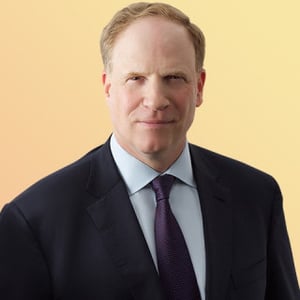
Partner, King & Spalding
Drew Hruska focuses on criminal and regulatory litigation and investigations, internal investigations, regulatory compliance and risk advice. A partner in our Special Matters and Investigations practice, Drew represents major financial services and industrial companies, family offices and prominent individuals.
Drew represents a variety of financial services clients, including securities, commercial banking, insurance, insurance brokerage, hedge funds and private equity funds, along with major industrial companies, concerning enforcement and national security investigations by government agencies, including the U.S. Department of Justice, OFAC, SEC, state attorneys general, and many others. Matters under investigation typically involve fraud, money laundering, international sanctions, foreign corrupt practices, banking regulation, false claims, taxation, data privacy and security, antitrust and immigration restrictions.
In addition, Drew consults with numerous multinational companies on a range of criminal, regulatory compliance, and risk issues. Drew speaks Russian and is frequently engaged on financial enforcement issues involving Russia and Eastern Europe. He has also served in independent roles a Monitor appointed by an international organization, an independent legal advisor for the Federal Reserve and Office of the Controller of the Currency, and as a court-appointed Examiner in bankruptcy.
Before joining our firm, Drew served as the Chief Assistant U.S. Attorney for the Eastern District of New York, where he supervised the criminal and civil divisions. He also oversaw the office’s corporate fraud offensive, including investigations of Computer Associates and Symbol Technologies. Drew served as Acting U.S. Attorney for the prosecution of the New York Racing Association on tax conspiracy charges. He also led the criminal investigation of the Staten Island Ferry crash of October 15, 2003, that resulted in a manslaughter conviction for New York City’s Ferry Service Director.
Previously, Drew served as Senior Counsel to U.S. Deputy Attorney General Larry Thompson, and as an Assistant District Attorney in the Manhattan District Attorney’s Office, where he prosecuted major securities, bank and insurance fraud cases as a member of the Frauds Bureau.
Drew is recognized by Chambers, Benchmark Litigation, Legal 500, and Who’s Who Legal. He serves on the World Jewish Congress President’s Security Advisory Committee and on the Dewey Medal Prize Committee for the New York City District Attorneys’ Offices.
Senior Counsel, Vice President of Allied Legal Affairs, Alliance Defending Freedom
Brett Harvey serves as senior counsel and vice president of Allied Legal Affairs with Alliance Defending Freedom.
Since joining ADF in 2000, Harvey has coordinated the efforts of the volunteer network of attorneys who collaborate with ADF. In 2002, his role expanded to direct the grant program. To date, Harvey and his team have awarded approximately $54 million in grant funds to thousands of legal projects and cases, many of which have set national and multinational precedents.
Harvey leads the Allied Legal Affairs team, which is dedicated to creating opportunities for attorneys aligned with the ADF mission to actively engage in the protection and promotion of religious liberty. Harvey and his team focus on recruitment, professional engagement, and integration of allies into ADF’s advocacy efforts, including coordinating amicus efforts at state supreme courts, circuit courts, and the U.S. Supreme Court.
Harvey has also litigated in a variety of state and federal courts, focusing on the protection of life and religious freedom. Most notably, he successfully spearheaded a national litigation strategy culminating in Town of Greece v. Galloway, in which the U.S. Supreme Court upheld the freedom of Americans to pray at public meetings.
Harvey earned his J.D. in 1995 from the Walter F. George School of Law at Mercer University in Georgia. He is admitted to the bar in the states of Arizona, Colorado, Florida, Georgia, and Virginia. He has also been admitted to practice before the U.S. District Court in Colorado, the U.S. Courts of Appeals for the 4th, 6th, 9th, 10th, and 11th Circuits, and the U.S. Supreme Court.
Senior Counsel, Alliance Defending Freedom
Joel L. Oster serves as senior legal counsel with Alliance Defending Freedom at its Kansas City Regional Service Center in Kansas, where he plays a significant role in litigation efforts defending church autonomy. Before joining Alliance Defending Freedom in 2004, he earned his J.D. from the University of Kansas School of Law. Oster is admitted to the bar in Kansas, Missouri, Florida, and numerous federal courts, and has practiced law since 1997.
United States Court of Appeals, Second Circuit
Barrington Daniels Parker, Jr. (b.1944) is a judge for the United States Court of Appeals for the Second Circuit. He joined the court in 2001 after being nominated by President George W. Bush. He assumed senior status on October 10, 2009.
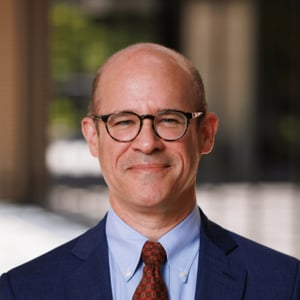
Professor of Law, Stanford Law School
Orin S. Kerr is a Professor of Law at Stanford Law School, where he teaches and writes in the areas of criminal procedure and computer crime law. Kerr earned mechanical engineering degrees from Princeton University and Stanford University before graduating with a J.D. from Harvard Law School. He is a former law clerk to Justice Anthony M. Kennedy at the United States Supreme Court and Judge Leonard I. Garth of the U.S. Court of Appeals for the Third Circuit.
Judge, United States Court of Appeals, Second Circuit
Judge Livingston was appointed United States Circuit Judge for the Second Circuit on May 17, 2007 and entered on duty June 1, 2007. Prior to her appointment she was the Paul J. Kellner Professor of Law at Columbia Law School, where she also served as Vice Dean from 2005 to 2006. Judge Livingston joined the Columbia faculty in 1994. She continues to serve as a member of that faculty as the Paul J. Kellner Professor.
Judge Livingston received her B.A., magna cum laude, in 1980 from Princeton University, where she was elected to Phi Beta Kappa. She received her J.D., magna cum laude, in 1984 from Harvard Law School, where she was an editor on the Harvard Law Review. Following law school, she served as a law clerk to Judge J. Edward Lumbard of the United States Court of Appeals for the Second Circuit.
Judge Livingston was an Assistant United States Attorney in the Southern District of New York from 1986 to 1991 and she served as a Deputy Chief of Appeals in the Criminal Division from 1990 to 1991. She was an associate with the New York law firm of Paul, Weiss, Rifkind, Wharton & Garrison from 1985 to 1986 and again from 1991 to 1992, when she elected to pursue an academic career. Judge Livingston was a member of the University of Michigan's Law School faculty from 1992 until 1994.
Judge Livingston is a co-author of the casebook, Comprehensive Criminal Procedure, and has published numerous academic articles on legal topics. She has taught courses in evidence, criminal law and procedure, and national security and terrorism. From 1994 to 2003, Judge Livingston was a Commissioner on New York City's Civilian Complaint Review Board.
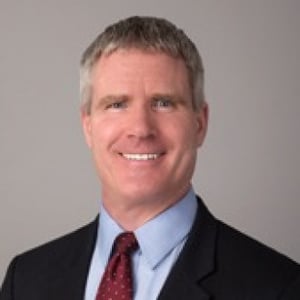
Partner, Gibson, Dunn & Crutcher LLP
Thomas G. Hungar is a partner in the Washington, D.C., office of Gibson Dunn. His practice focuses on appellate litigation, and he assists clients with congressional investigations and complex trial court litigation matters as well. He has presented oral argument before the Supreme Court of the United States in 28 cases, including some of the Court’s most important patent, antitrust, securities, and environmental law decisions, and he has also appeared before numerous lower federal and state courts.
Thomas served as General Counsel to the U.S. House of Representatives from July 2016 until January 2019. As General Counsel, he provided legal advice and litigation representation on a non-partisan basis to the House and its leadership, members, officers, and staff, and he worked closely with numerous House committees in connection with their oversight and investigative activities. Previously, he served as a Deputy Solicitor General of the United States. In that position, he supervised business-related appellate litigation for the federal government, with particular emphasis on patent, antitrust, securities, and environmental appellate cases, and he also oversaw appellate litigation in banking, bankruptcy, tax, government contracts, communications, copyright, labor, trademark, and international trade matters. In private practice, Thomas’s appellate experience has encompassed those areas as well as class actions, constitutional law, employment law, product liability, administrative procedure, insurance coverage and bad faith, and general commercial litigation. He has handled scores of business-related appeals in the Supreme Court and lower appellate courts, and has briefed and argued many high-profile matters.
Thomas is a Fellow of the American Academy of Appellate Lawyers and is a frequent lecturer in his areas of expertise. While at the Department of Justice, he served as Appellate Counsel to the Intellectual Property Task Force Executive Staff, and he was awarded the John Marshall Award for Outstanding Legal Achievement, the Department’s highest award presented to attorneys for contributions and excellence in legal performance, in recognition of his handling of patent-law matters before the Supreme Court.
Most recently, Thomas has garnered national recognition for his Appellate Practice in The Legal 500 – United States, Best Lawyers in America, and in Chambers USA, which has repeatedly highlighted Thomas for his “expertise in appellate litigation” and experience with employment and antitrust disputes, as well as Congressional Investigations. Thomas was also recently named a “Litigation Star” by Benchmark Litigation.
Thomas served as an Assistant to the Solicitor General of the United States from 1992-1994. He also served as a law clerk to Justice Anthony M. Kennedy of the Supreme Court and to Circuit Judge Alex Kozinski of the United States Court of Appeals for the Ninth Circuit. He received his law degree from Yale Law School in 1987, where he was a Senior Editor of the Yale Law & Policy Review. He received his Bachelor of Science degree magna cum laude in mathematics/computer science and economics from Willamette University in 1984.
Thomas is admitted to practice in the District of Columbia.

The “Mens Rea” Component Within the Issue of the Over-Federalization of Crime
William J. Haun, John S. Baker
Introduction After decades of hastily passing federal criminal laws, the U.S. House of Representatives, through...
Jameel Jaffer and Laura Murphy Testimony Before The House Committee on the Judiciary Oversight Hearing on The Administration’s Use of FISA Authorities
Laura W. Murphy, Jameel Jaffer
Before The House Committee on the Judiciary Oversight Hearing on The Administration’s Use of...
Madison Lecture Series on Judicial Engagement
Sekhar v. United States - Post-Decision SCOTUScast
Ilya Shapiro
On June 26, 2013, the Supreme Court announced its decision in Sekhar v. United States....
Preemption of Punitive Damages in Prescription Drug Litigation
Eric Lasker, Rebecca A. Womeldorf
Over the past 16 years, the United States Supreme Court has repeatedly addressed the question...
Winning the Copyright War: Copyright’s Merger Doctrine and Natural Rights Theory as Solutions to the Problem of Reconciling Copyright and Free Speech
Russell Hasan
I. Introduction A. Overview Concerns that the enforcement of copyright law might conflict with First...
International Criminal Discovery
Andrew C. Hruska
I. Introduction While money moves at the speed of light across national boundaries, law enforcement...
Who Said That?: A Simple Question That May Change the Way Courts View Legislative Prayer
Brett Harvey, Joel Oster
Related Opinions & Briefs: • Petition for Writ of Certiorari, Town of Greece v. Galloway:...
The 4th Amendment--Broad Rights But No Remedies?
Arbitration and Class Actions in the Supreme Court: American Express v. Italian Colors Restaurant