
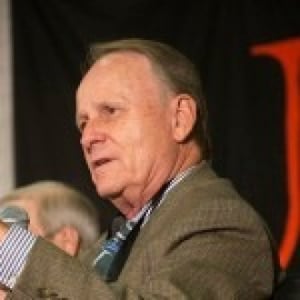
Professor Emeritus of Political Science and Professor Emeritus of Public Policy, Univ. of Maryland Baltimore County
George R. La Noue is Professor Emeritus of Political Science and Professor Emeritus of Public Policy at the University of Maryland Baltimore County. He has served as a trial expert in twenty cases involving public procurement preferences. For thirty years, he was Director of the Project on Civil Rights and Public Contracts at UMBC which recently contributed 289 public contracting disparity studies to the Library of Congress. He has been a consultant to nine governments and trial expert in thirty cases where the validity of disparity studies was at issue.
Prof. La Noue can be reached by email at glanoue@umbc.edu.
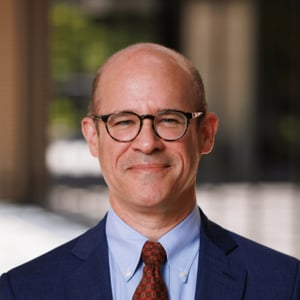
Professor of Law, Stanford Law School
Orin S. Kerr is a Professor of Law at Stanford Law School, where he teaches and writes in the areas of criminal procedure and computer crime law. Kerr earned mechanical engineering degrees from Princeton University and Stanford University before graduating with a J.D. from Harvard Law School. He is a former law clerk to Justice Anthony M. Kennedy at the United States Supreme Court and Judge Leonard I. Garth of the U.S. Court of Appeals for the Third Circuit.
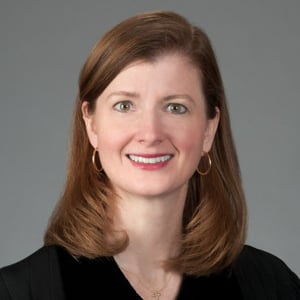
Judge, United States Court of Appeals, Eleventh Circuit
On March 20, 2018, Judge Elizabeth L. Branch (Lisa) was sworn in as a United States Circuit Judge for the Eleventh Circuit.
Judge Branch attended and graduated from Davidson College in North Carolina (B.A., cum laude, 1990), and Emory University School of Law (J.D., with distinction, 1994).
After graduating from law school, Judge Branch served as a federal law clerk to The Honorable J. Owen Forrester of the U.S. District Court for the Northern District of Georgia from 1994 to 1996. Following her clerkship, Judge Branch joined the litigation department of Smith, Gambrell & Russell, LLP in Atlanta as an associate and then a partner.
From 2004 to 2008, Judge Branch was a senior official in the Administration of President George W. Bush in Washington, D.C. She served first as the Associate General Counsel for Rules and Legislation at the U.S. Department of Homeland Security and then as the Counselor to the Administrator of the Office of Information and Regulatory Affairs at the U. S. Office of Management and Budget.
She returned to Smith Gambrell in 2008 as a litigation partner. Judge Branch then was appointed to the Court of Appeals of Georgia by Governor Nathan Deal, taking office on September 4, 2012, where she served until March 19, 2018.
Judge Branch is a member of the Board of Advisors of the Atlanta Lawyers Chapter for the Federalist Society for Law and Public Policy Studies.
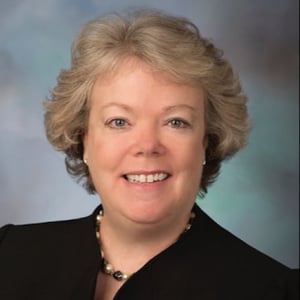
Executive Vice President and Chief Regulatory Officer, AT&T
Joan Marsh is responsible for managing AT&T’s engagement on regulatory matters in Washington, D.C. In this role, Ms. Marsh manages the team representing AT&T before the Federal Communications Commission and the Federal Trade Commission, as well as engagement on regulatory matters with Executive Branch Departments and Offices.
In 2017, Ms. Marsh was named Chief Regulatory and State External Affairs Officer, leading the Federal Regulatory, State External and Legislative Affairs, and National Regulatory teams supporting AT&T Communications. Prior to that, in 2016, Ms. Marsh was named SVP – Federal Regulatory after having served as VP – Federal Regulatory since 2007, where she directed the team responsible for AT&T’s wireless, spectrum and public safety regulatory affairs. From 1997 to 1999, she was the Senior Regional Attorney for AT&T in its Chicago offices, representing AT&T before various state public utilities commissions in the Midwest.
Prior to joining AT&T, Ms. Marsh spent five years as a trial litigator with the Chicago law firm of Kirkland & Ellis. She received a J.D. with Honors from the University of Southern California Law Center in Los Angeles in 1990. Ms. Marsh received a Bachelor of Arts in philosophy from the University of California, Los Angeles in 1986.
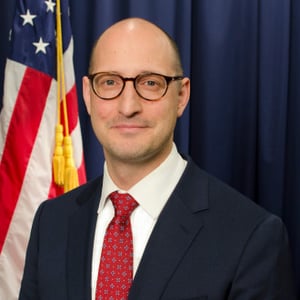
Partner, Cravath, Swaine & Moore LLP
Noah Joshua Phillips is Co-Chair of the Antitrust Practice and previously served as a Commissioner of the Federal Trade Commission. He advises clients on a range of antitrust issues, including mergers and acquisitions, business conduct and compliance, litigation and investigations, and data security and privacy.
On the FTC, Mr. Phillips played an integral role in precedent setting enforcement actions and regulatory efforts concerning antitrust, consumer protection and privacy. He decided dozens of merger and other antitrust enforcement matters across the economy, including in the consumer product, defense, energy, entertainment, healthcare, technology, pharmaceutical and retail industries. Mr. Phillips’ written antitrust opinions were consistently upheld by federal appellate courts.
As Commissioner, Mr. Phillips frequently testified before Congress and represented the FTC before international bodies, including the G7, the Competition Committee of the Organisation for Economic Co-operation and Development, and the International Conference of Data Protection and Privacy Commissioners. He speaks and writes frequently on a range of antitrust, consumer protection and privacy issues.
Prior to the FTC, Mr. Phillips served as Chief Counsel to U.S. Senator John Cornyn, of Texas, on the Senate Judiciary Committee. He advised Senator Cornyn on a variety of legal and policy issues, as well as judicial nominations.
Mr. Phillips received an A.B. magna cum laude from Dartmouth College in 2000 and a J.D. from Stanford Law School in 2005. He began his career at a New York-based investment bank. After law school, Mr. Phillips clerked for Hon. Edward C. Prado of the U.S. Court of Appeals for the Fifth Circuit and joined Cravath’s Litigation Department in 2006. He left the Firm in 2010, and he rejoined Cravath as a partner in December 2022.
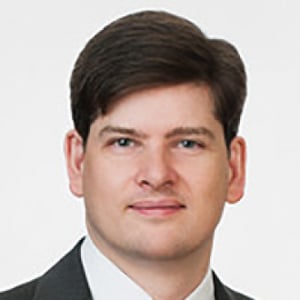
Commissioner, Federal Communications Commission
Nathan Simington was nominated to serve as a Commissioner of the FCC by President Donald J. Trump. He was confirmed by the United States Senate in 2020.
Commissioner Simington brings both private and public-sector experience to the Commission. Previously, he served as Senior Advisor at the National Telecommunications and Information Administration (NTIA.) In this role, he worked on many aspects of telecommunications policy, including spectrum allocation and planning, broadband access, and the US Government’s role in the Internet. Prior to joining the Commission, he was senior counsel to Brightstar Corp., an international mobile device services company. In this capacity, he led and negotiated telecommunications equipment and services transactions with leading providers in over twenty countries. Prior to joining Brightstar, he worked as an attorney in private practice.
Commissioner Simington is a graduate of the University of Michigan Law School. He also holds degrees from the University of Rochester and Lawrence University.
Commissioner Simington grew up in Saskatchewan, Canada. He became a United States citizen and now lives in McLean, Virginia with his wife and three children.
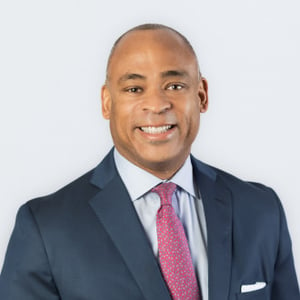
President & CEO, Internet Association
K. Dane Snowden is the President and CEO of Internet Association. Under his leadership, IA advocates for public policy that fosters innovation, promotes economic growth, and empowers people through a free and open internet.
Prior to joining IA, Dane served as Chief Operating Officer of The Internet & Television Association (NCTA). In this position, he led the Association’s day-to-day operations including its policy planning and strategic initiatives.
His past experience also includes a tenure at CTIA – The Wireless Association as Vice President of External and State Affairs where he focused on promoting policies to grow the wireless ecosystem. Dane’s government experience features his appointment as Chief of the Federal Communications Commission’s Consumer & Governmental Bureau where he was responsible for the development and execution of vision, strategic direction, telecommunication policy, and management of the Bureau’s activities and 300 employees. He began his career working in the private and non-profit sectors for MissionFish.com, America’s Promise- The Alliance for Youth, and the United Negro College Fund. He is a graduate of The College of William and Mary.
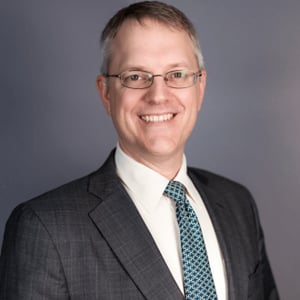
President and General Counsel, New Civil Liberties Alliance
NCLA’s President and General Counsel, Mark Chenoweth, has observed the administrative state up close and personal from perches in all four branches of the federal government. Mark served as the first chief of staff to Congressman Mike Pompeo, as legal counsel to Commissioner Anne Northup at the U.S. Consumer Product Safety Commission, as an attorney advisor in the Office of Legal Policy at the U.S. Department of Justice, and as a law clerk to the Hon. Danny J. Boggs on the U.S. Court of Appeals for the Sixth Circuit.
Mark has worked in several different roles in the private sector as well. He began his legal career in D.C. as a regulatory associate at Wilmer, Cutler & Pickering. He then returned to his home state of Kansas to serve as in-house counsel for Koch Industries. Most recently he spent over four years as general counsel of the Washington Legal Foundation.
Mark is a graduate of Yale College and the University of Chicago Law School, where he co-founded the Institute for Justice Clinic on Entrepreneurship and became a Tony Patiño Fellow. Mark has been widely quoted and/or published in newspapers and websites including the New York Times, San Francisco Chronicle, New Hampshire Union Leader, and Metropolitan Corporate Counsel. He has also had recurring op-eds in the Los Angeles Daily Journal, and at Forbes.com.
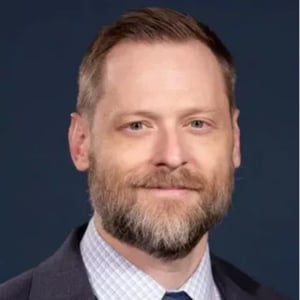
Litigation Director, Center for Individual Rights
Caleb Kruckenberg is CIR’s Litigation Director.
Caleb previously worked as a prosecutor, a public defender, a lobbyist for a national advocacy organization and, most recently, an impact litigator protecting the separation of powers at both the Pacific Legal Foundation and the New Civil Liberties Alliance. He has won major victories against numerous federal agencies, including the U.S. Department of Justice, Department of Labor, Bureau of Alcohol Tobacco and Firearms, and the Securities and Exchange Commission. He is also proud to have sued every U.S. attorney general, eight so far, since he has been litigating against the government on behalf of liberty-minded clients. Caleb has also argued more than 20 times in the U.S. Courts of Appeals, winning cases in 8 of the 12 regional circuit courts.
He graduated cum laude from Temple University Beasley School of Law in Philadelphia, where he was the lead articles editor for the Temple Law Review. Caleb also attended the Pennsylvania Academy of the Fine Arts, where he studied figurative painting.
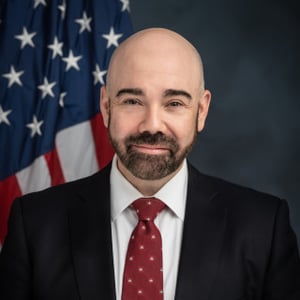
Assistant Secretary for Fair Housing and Equal Opportunity, United States Department of Housing and Urban Development
Craig Trainor is Assistant Secretary for Fair Housing and Equal Opportunity at the United States Department of Housing and Urban Development. President Trump nominated Mr. Trainor for this position on February 11, 2025, and the United States Senate confirmed him on October 7, 2025.
A “Day One” Trump-Vance Administration official, he previously served as Acting Assistant Secretary for Civil Rights and Principal Deputy Assistant Secretary for Civil Rights at the United States Department of Education, where he spearheaded the Department’s efforts to reorient America’s civil rights regime from an unjust spoils system to one that protects the rights of all Americans. Mr. Trainor’s February 14, 2025, “Dear Colleague” letter is widely considered the Trump Administration’s blueprint for enforcing civil rights laws and restoring the Constitution’s promise of equal protection.
Prior to serving in the Trump-Vance Administration, he was Senior Special Counsel with the United States House of Representatives Committee on the Judiciary under Chairman Jim Jordan (R-OH), and Senior Litigation Counsel with the America First Policy Institute under the Honorable Pam Bondi.
For over ten years, Mr. Trainor was a criminal defense and civil rights lawyer in New York City, litigating cases in New York state court and the United States District Court for the Southern and Eastern Districts of New York.
Prior to founding his law practice, he served as a New York City prosecutor, an associate attorney at a white collar criminal defense firm, and a law clerk to Chief Judge Frederick J. Scullin, Jr., United States District Court for the Northern District of New York.
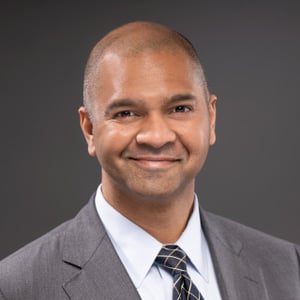
Senior Fellow, Stand Together Trust
Vikrant Reddy is a senior fellow at Stand Together Trust, specializing in the area of criminal justice reform. Reddy previously served as a senior policy analyst at the Texas Public Policy Foundation (TPPF), where he managed the launch of TPPF’s national Right on Crime initiative in 2010. He has worked as a research assistant at the Cato Institute, as a judicial clerk to the Hon. Gina M. Benavides in Texas, and as an attorney in private practice. He is a member of the State Bar of Texas, and he serves on the Executive Committee of the Criminal Law Practice Group of the Federalist Society. He is also an appointee to the U.S. Commission on Civil Rights Texas State Advisory Committee.
Reddy’s research and scholarly opinions have appeared in a range of national media outlets, including USA Today, National Review, The Federalist, and others.
Reddy earned his law degree from the Southern Methodist University School of Law. He received his undergraduate degree from the University of Texas at Austin.
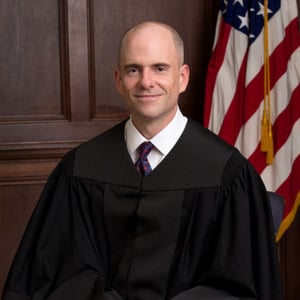
Judge, United States Court of Appeals, Eleventh Circuit
Judge Kevin C. Newsom is a member of the United States Court of Appeals for the Eleventh Circuit. He sits in Birmingham, Alabama.
Before his appointment to the bench, Judge Newsom was the head of the appellate practice group at Bradley Arant Boult Cummings LLP and, before that, the Solicitor General of Alabama. As a practicing lawyer, Judge Newsom argued four cases in the Supreme Court of the United States, and nearly 40 more in the United States Courts of Appeals and state supreme and appellate courts.
Judge Newsom graduated summa cum laude from Samford University and magna cum laude from Harvard Law School, where he was an articles editor on the Harvard Law Review. Following law school, Judge Newsom clerked for Judge Diarmuid F. O’Scannlain of the United States Court of Appeals for the Ninth Circuit and Justice David H. Souter of the Supreme Court of the United States.
Judge Newsom teaches at Harvard Law School, Yale Law School, Stanford Law School, and the University of Chicago Law School. His published work has appeared in the Yale Law Journal and the Harvard Law Review.
Judge, United States Court of Appeals, Eleventh Circuit
On March 20, 2018, Judge Elizabeth L. Branch (Lisa) was sworn in as a United States Circuit Judge for the Eleventh Circuit.
Judge Branch attended and graduated from Davidson College in North Carolina (B.A., cum laude, 1990), and Emory University School of Law (J.D., with distinction, 1994).
After graduating from law school, Judge Branch served as a federal law clerk to The Honorable J. Owen Forrester of the U.S. District Court for the Northern District of Georgia from 1994 to 1996. Following her clerkship, Judge Branch joined the litigation department of Smith, Gambrell & Russell, LLP in Atlanta as an associate and then a partner.
From 2004 to 2008, Judge Branch was a senior official in the Administration of President George W. Bush in Washington, D.C. She served first as the Associate General Counsel for Rules and Legislation at the U.S. Department of Homeland Security and then as the Counselor to the Administrator of the Office of Information and Regulatory Affairs at the U. S. Office of Management and Budget.
She returned to Smith Gambrell in 2008 as a litigation partner. Judge Branch then was appointed to the Court of Appeals of Georgia by Governor Nathan Deal, taking office on September 4, 2012, where she served until March 19, 2018.
Judge Branch is a member of the Board of Advisors of the Atlanta Lawyers Chapter for the Federalist Society for Law and Public Policy Studies.
Executive Vice President and Chief Regulatory Officer, AT&T
Joan Marsh is responsible for managing AT&T’s engagement on regulatory matters in Washington, D.C. In this role, Ms. Marsh manages the team representing AT&T before the Federal Communications Commission and the Federal Trade Commission, as well as engagement on regulatory matters with Executive Branch Departments and Offices.
In 2017, Ms. Marsh was named Chief Regulatory and State External Affairs Officer, leading the Federal Regulatory, State External and Legislative Affairs, and National Regulatory teams supporting AT&T Communications. Prior to that, in 2016, Ms. Marsh was named SVP – Federal Regulatory after having served as VP – Federal Regulatory since 2007, where she directed the team responsible for AT&T’s wireless, spectrum and public safety regulatory affairs. From 1997 to 1999, she was the Senior Regional Attorney for AT&T in its Chicago offices, representing AT&T before various state public utilities commissions in the Midwest.
Prior to joining AT&T, Ms. Marsh spent five years as a trial litigator with the Chicago law firm of Kirkland & Ellis. She received a J.D. with Honors from the University of Southern California Law Center in Los Angeles in 1990. Ms. Marsh received a Bachelor of Arts in philosophy from the University of California, Los Angeles in 1986.
Partner, Cravath, Swaine & Moore LLP
Noah Joshua Phillips is Co-Chair of the Antitrust Practice and previously served as a Commissioner of the Federal Trade Commission. He advises clients on a range of antitrust issues, including mergers and acquisitions, business conduct and compliance, litigation and investigations, and data security and privacy.
On the FTC, Mr. Phillips played an integral role in precedent setting enforcement actions and regulatory efforts concerning antitrust, consumer protection and privacy. He decided dozens of merger and other antitrust enforcement matters across the economy, including in the consumer product, defense, energy, entertainment, healthcare, technology, pharmaceutical and retail industries. Mr. Phillips’ written antitrust opinions were consistently upheld by federal appellate courts.
As Commissioner, Mr. Phillips frequently testified before Congress and represented the FTC before international bodies, including the G7, the Competition Committee of the Organisation for Economic Co-operation and Development, and the International Conference of Data Protection and Privacy Commissioners. He speaks and writes frequently on a range of antitrust, consumer protection and privacy issues.
Prior to the FTC, Mr. Phillips served as Chief Counsel to U.S. Senator John Cornyn, of Texas, on the Senate Judiciary Committee. He advised Senator Cornyn on a variety of legal and policy issues, as well as judicial nominations.
Mr. Phillips received an A.B. magna cum laude from Dartmouth College in 2000 and a J.D. from Stanford Law School in 2005. He began his career at a New York-based investment bank. After law school, Mr. Phillips clerked for Hon. Edward C. Prado of the U.S. Court of Appeals for the Fifth Circuit and joined Cravath’s Litigation Department in 2006. He left the Firm in 2010, and he rejoined Cravath as a partner in December 2022.
Commissioner, Federal Communications Commission
Nathan Simington was nominated to serve as a Commissioner of the FCC by President Donald J. Trump. He was confirmed by the United States Senate in 2020.
Commissioner Simington brings both private and public-sector experience to the Commission. Previously, he served as Senior Advisor at the National Telecommunications and Information Administration (NTIA.) In this role, he worked on many aspects of telecommunications policy, including spectrum allocation and planning, broadband access, and the US Government’s role in the Internet. Prior to joining the Commission, he was senior counsel to Brightstar Corp., an international mobile device services company. In this capacity, he led and negotiated telecommunications equipment and services transactions with leading providers in over twenty countries. Prior to joining Brightstar, he worked as an attorney in private practice.
Commissioner Simington is a graduate of the University of Michigan Law School. He also holds degrees from the University of Rochester and Lawrence University.
Commissioner Simington grew up in Saskatchewan, Canada. He became a United States citizen and now lives in McLean, Virginia with his wife and three children.
President & CEO, Internet Association
K. Dane Snowden is the President and CEO of Internet Association. Under his leadership, IA advocates for public policy that fosters innovation, promotes economic growth, and empowers people through a free and open internet.
Prior to joining IA, Dane served as Chief Operating Officer of The Internet & Television Association (NCTA). In this position, he led the Association’s day-to-day operations including its policy planning and strategic initiatives.
His past experience also includes a tenure at CTIA – The Wireless Association as Vice President of External and State Affairs where he focused on promoting policies to grow the wireless ecosystem. Dane’s government experience features his appointment as Chief of the Federal Communications Commission’s Consumer & Governmental Bureau where he was responsible for the development and execution of vision, strategic direction, telecommunication policy, and management of the Bureau’s activities and 300 employees. He began his career working in the private and non-profit sectors for MissionFish.com, America’s Promise- The Alliance for Youth, and the United Negro College Fund. He is a graduate of The College of William and Mary.
President and General Counsel, New Civil Liberties Alliance
NCLA’s President and General Counsel, Mark Chenoweth, has observed the administrative state up close and personal from perches in all four branches of the federal government. Mark served as the first chief of staff to Congressman Mike Pompeo, as legal counsel to Commissioner Anne Northup at the U.S. Consumer Product Safety Commission, as an attorney advisor in the Office of Legal Policy at the U.S. Department of Justice, and as a law clerk to the Hon. Danny J. Boggs on the U.S. Court of Appeals for the Sixth Circuit.
Mark has worked in several different roles in the private sector as well. He began his legal career in D.C. as a regulatory associate at Wilmer, Cutler & Pickering. He then returned to his home state of Kansas to serve as in-house counsel for Koch Industries. Most recently he spent over four years as general counsel of the Washington Legal Foundation.
Mark is a graduate of Yale College and the University of Chicago Law School, where he co-founded the Institute for Justice Clinic on Entrepreneurship and became a Tony Patiño Fellow. Mark has been widely quoted and/or published in newspapers and websites including the New York Times, San Francisco Chronicle, New Hampshire Union Leader, and Metropolitan Corporate Counsel. He has also had recurring op-eds in the Los Angeles Daily Journal, and at Forbes.com.
Litigation Director, Center for Individual Rights
Caleb Kruckenberg is CIR’s Litigation Director.
Caleb previously worked as a prosecutor, a public defender, a lobbyist for a national advocacy organization and, most recently, an impact litigator protecting the separation of powers at both the Pacific Legal Foundation and the New Civil Liberties Alliance. He has won major victories against numerous federal agencies, including the U.S. Department of Justice, Department of Labor, Bureau of Alcohol Tobacco and Firearms, and the Securities and Exchange Commission. He is also proud to have sued every U.S. attorney general, eight so far, since he has been litigating against the government on behalf of liberty-minded clients. Caleb has also argued more than 20 times in the U.S. Courts of Appeals, winning cases in 8 of the 12 regional circuit courts.
He graduated cum laude from Temple University Beasley School of Law in Philadelphia, where he was the lead articles editor for the Temple Law Review. Caleb also attended the Pennsylvania Academy of the Fine Arts, where he studied figurative painting.

The Race Card in ARPA’s Food Supply Deck
George R. La Noue
It is an old aphorism that a prudent person should not watch the making of...
Reception with Judge Kevin Newsom
DC Young Lawyers Chapter Event
Washington, DCTopics
Why Standing Matters
Last week the Supreme Court rejected a third legal challenge to the Affordable Care Act...
Van Buren v. United States - Post-Decision SCOTUScast
Orin S. Kerr
On June 3, 2021 the Supreme Court decided Van Buren v. United States. The issue...
Regulating Social Media in the New Administration
Telecommunications & Electronic Media and Corporations, Securities & Antitrust Practice Groups
Regulating Social Media in the New Administration
Lisa Branch, Joan Marsh, Noah Joshua Phillips, Nathan Simington, K. Dane Snowden
Simmering controversies over the social media platforms we use every day have recently come to...
Litigation Update: Brown v. Becerra
Mark Chenoweth, Caleb Kruckenberg
The U.S. Centers for Disease Control and Prevention (CDC) issued a moratorium on evictions nationwide...
Litigation Update: Brown v. Becerra
TeleforumIn the Rush to Reform, Prudence Is Among the Highest Duties: How to Responsibly Reform Cash Bail
Craig Trainor
Over the last two decades, the politics of American criminal law has made strange bedfellows....
Courthouse Steps Oral Argument Teleforum: Terry v. United States
Vikrant P. Reddy
Thirteen years ago, Tarahrick Terry was charged with possession with intent to distribute 3.9 grams...