

Founding Partner, Boyden Gray & Associates
Ambassador C. Boyden Gray is the founding partner of Boyden Gray & Associates, a law and strategy firm in Washington, D.C., focused on constitutional and regulatory issues.
Mr. Gray worked in the White House for twelve years, first as counsel to the Vice President during the Reagan administration and then as White House Counsel to President George H.W. Bush. In the Reagan administration, he was Counsel to the Presidential Task Force on Regulatory Relief, for which he wrote the original Executive Order 12291 requiring cost-benefit analysis and White House review of regulations (later renumbered as current EO 12866). In the George H.W. Bush Administration, Mr. Gray was in charge of judicial selection and was also instrumental in the enactment of the Clean Air Act Amendments of 1990, the Energy Policy Act of 1992, and a cap-and-trade system for acid rain emissions. In 1993, he received the Presidential Citizens Medal. Under President George W. Bush, Mr. Gray was U.S. Ambassador to the European Union and U.S. Special Envoy to Europe for Eurasian Energy.
Mr. Gray practiced law for 25 years at the law firm of Wilmer, Cutler & Pickering and was chairman of the Administrative Law and Regulatory Practice Section of the American Bar Association from 2000 to 2002. Early in his career, Mr. Gray helped to develop the Business Roundtable and served as its first counsel. He is an adjunct professor at Antonin Scalia Law School and a former adjunct professor at NYU Law School (teaching energy and environmental law). Mr. Gray is on the Board of Directors of the Atlantic Council, the Federalist Society, Reason Foundation, and the Trust for the National Mall.
Mr. Gray earned his A.B. magna cum laude from Harvard, where he was an editor of the Crimson, and his J.D. with high honors from the University of North Carolina at Chapel Hill, where he was editor-in-chief of the Law Review. Mr. Gray served in the United States Marine Corps, and after law school, he clerked for Earl Warren, Chief Justice of the United States Supreme Court.

Associate Dean for Research and Intellectual Life, McKnight Presidential Professor in Law, Distinguished McKnight University Professor, Harlan Albert Rogers Professor in Law, Associate Director, Corporate Institute, University of Minnesota Law School
Professor Kristin E. Hickman is the McKnight Presidential Professor in Law, a Distinguished McKnight University Professor, and Harlan Albert Rogers Professor in Law at the University of Minnesota Law School. She also has taught at Harvard Law School and Northwestern University School of Law. Professor Hickman teaches and writes primarily in the areas of administrative law, tax administration, and statutory interpretation. Her articles on these topics have appeared in the Columbia Law Review, Cornell Law Review, Virginia Law Review, Duke Law Journal, and other publications. She also co-authors the Administrative Law Treatise with Richard J. Pierce, Jr., and a casebook on federal administrative law with Pierce and Christopher J. Walker. Her scholarly work has been cited several times in opinions of the United States Supreme Court as well as regularly in lower court judicial opinions and court briefs.
In 2018-19, Professor Hickman served as Special Adviser to the Administrator of the Office of Information and Regulatory Affairs in Washington, D.C. She presently serves as a Senior Fellow, and previously served as a public member and chair of the judicial review committee, for the Administrative Conference of the United States. She also is a Fellow of the American College of Tax Counsel.
Professor Hickman received her B.S. degree in business administration with a concentration in accounting and a secondary major in history from Trinity University in San Antonio, Texas. After practicing for several years as a certified public accountant, Professor Hickman earned her J.D. degree, magna cum laude, from Northwestern University School of Law, where she was awarded the Raoul Berger Prize and the Lowden Wigmore Prize for her scholarly writings. Following law school, Professor Hickman clerked for The Honorable David B. Sentelle of the United States Court of Appeals for the District of Columbia Circuit and practiced law as an associate with the Chicago office of Skadden, Arps, Slate, Meagher & Flom, concentrating on corporate and international tax transactions and matters.
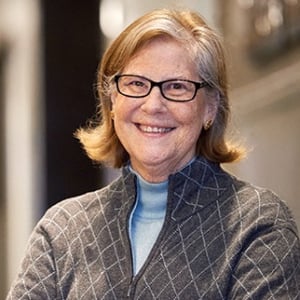
Professor of Practice and Distinguished Scholar in Residence; Co-Director of the Legislative and Regulatory Process Clinic, New York University School of Law
Sally Katzen served in the Clinton administration as administrator of the Office of Information and Regulatory Affairs in the Office of Management and Budget (OMB), as deputy assistant to the president for economic policy and deputy director of the National Economic Council in the White House, and then as the deputy director for management at OMB. She served as the head of the Agency Review Group for the Obama/Biden transition with responsibility for the Executive Office of the President and all government-wide agencies. She has taught both undergraduates and at various law schools. She is a member of the American Law Institute and the National Academy of Public Administration, has served on multiple panels for the National Academy of Sciences, testified frequently before Congress, and is on the board of several non-profit organizations. Before joining the Clinton administration, Katzen was a partner in the Washington, DC, law firm of Wilmer, Cutler & Pickering, specializing in regulatory and legislative matters, while serving in leadership roles in the American Bar Association (including chair of the Section on Administrative Law and Regulatory Practice and as DC delegate to the ABA’s House of Delegates), as president of the Federal Communications Bar Association and as president of the Women’s Legal Defense Fund. She graduated from Smith College and the University of Michigan Law School, where she was the first woman editor-in-chief of the Law Review. She clerked for Judge J. Skelly Wright of the United States Court of Appeals for the District of Columbia Circuit and served in the Carter administration as the general counsel of the Council on Wage and Price Stability in the Executive Office of the President.
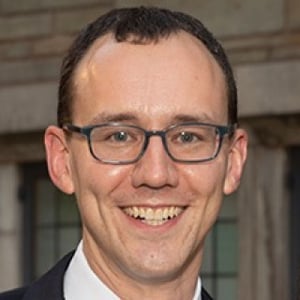
William K. Townsend Professor of Law, Yale Law School
Nicholas R. Parrillo is Townsend Professor of Law at Yale, with a secondary appointment as Professor of History. His research and teaching focus on administrative law and government bureaucracy and extend to legal history, remedies, and legislation. He has received the ABA’s award for the year’s best scholarship in administrative law and the Law and Society Association’s Hurst Prize for the year’s best book in legal history.
Parrillo’s Yale Law Journal article finding new originalist evidence of broad congressional delegations to agencies was discussed in the Solicitor General’s winning brief in the Supreme Court’s latest nondelegation case and in the en banc 5th Circuit opinion in that case. His Harvard Law Review article on how the judiciary handles the federal government’s disobedience to court orders has been discussed in The Washington Post, The Wall Street Journal, and The New York Times. Parrillo also authored a study that provided the empirical basis for best practices adopted by the Administrative Conference of the United States (ACUS) on the federal government’s ubiquitous but controversial use of guidance documents. Peer scholars at Jotwell, in selecting the “best new scholarship” in law, selected each of these three publications (one of them twice). Parrillo’s most recent article, invited for GW’s annual administrative law issue, reveals and analyzes dramatic variation among industries in their willingness to sue their federal health-and-safety regulators.
Parrillo has testified before Congress, been quoted by the Supreme Court, is a senior fellow of ACUS, and has been an instructor at the New York Historical Society’s graduate institute and an invited speaker before the 2nd Circuit Judicial Conference, the U.S. Department of Justice (in 2019 and again in 2024), the ACLU’s national legal staff, and the Federalist Society’s national convention (two times). He is a recipient of the Law School’s annual teaching award.

Judge, United States Court of Appeals, Eighth Circuit
David Stras became a judge on the United States Court of Appeals for the Eighth Circuit on January 31, 2018. Before serving on the Eighth Circuit, Judge Stras was an Associate Justice of the Minnesota Supreme Court, a position he occupied from July 1, 2010 until his appointment to the Eighth Circuit.
Prior to becoming a judge, Stras was a member of the faculty of the University of Minnesota Law School from 2004 through 2010. He taught and wrote in the areas of federal courts and jurisdiction, constitutional law, criminal law, and law and politics.
Judge Stras received his Bachelor of Arts degree, with highest distinction, in 1995 and his Master of Business Administration in 1999, both from the University of Kansas. He also received his law degree from the University of Kansas School of Law in 1999, where he served as Editor-in-Chief of the Criminal Procedure Edition of the Kansas Law Review.
Following law school, Stras clerked for The Honorable Melvin Brunetti of the United States Court of Appeals for the Ninth Circuit and then for The Honorable J. Michael Luttig of the United States Court of Appeals for the Fourth Circuit.
From 2001 to 2002, he practiced white-collar criminal and appellate litigation with the Washington, D.C., office of Sidley Austin Brown & Wood. Following his year in practice, he clerked for The Honorable Clarence Thomas of the Supreme Court of the United States.
Founding Partner, Boyden Gray & Associates
Ambassador C. Boyden Gray is the founding partner of Boyden Gray & Associates, a law and strategy firm in Washington, D.C., focused on constitutional and regulatory issues.
Mr. Gray worked in the White House for twelve years, first as counsel to the Vice President during the Reagan administration and then as White House Counsel to President George H.W. Bush. In the Reagan administration, he was Counsel to the Presidential Task Force on Regulatory Relief, for which he wrote the original Executive Order 12291 requiring cost-benefit analysis and White House review of regulations (later renumbered as current EO 12866). In the George H.W. Bush Administration, Mr. Gray was in charge of judicial selection and was also instrumental in the enactment of the Clean Air Act Amendments of 1990, the Energy Policy Act of 1992, and a cap-and-trade system for acid rain emissions. In 1993, he received the Presidential Citizens Medal. Under President George W. Bush, Mr. Gray was U.S. Ambassador to the European Union and U.S. Special Envoy to Europe for Eurasian Energy.
Mr. Gray practiced law for 25 years at the law firm of Wilmer, Cutler & Pickering and was chairman of the Administrative Law and Regulatory Practice Section of the American Bar Association from 2000 to 2002. Early in his career, Mr. Gray helped to develop the Business Roundtable and served as its first counsel. He is an adjunct professor at Antonin Scalia Law School and a former adjunct professor at NYU Law School (teaching energy and environmental law). Mr. Gray is on the Board of Directors of the Atlantic Council, the Federalist Society, Reason Foundation, and the Trust for the National Mall.
Mr. Gray earned his A.B. magna cum laude from Harvard, where he was an editor of the Crimson, and his J.D. with high honors from the University of North Carolina at Chapel Hill, where he was editor-in-chief of the Law Review. Mr. Gray served in the United States Marine Corps, and after law school, he clerked for Earl Warren, Chief Justice of the United States Supreme Court.
Associate Dean for Research and Intellectual Life, McKnight Presidential Professor in Law, Distinguished McKnight University Professor, Harlan Albert Rogers Professor in Law, Associate Director, Corporate Institute, University of Minnesota Law School
Professor Kristin E. Hickman is the McKnight Presidential Professor in Law, a Distinguished McKnight University Professor, and Harlan Albert Rogers Professor in Law at the University of Minnesota Law School. She also has taught at Harvard Law School and Northwestern University School of Law. Professor Hickman teaches and writes primarily in the areas of administrative law, tax administration, and statutory interpretation. Her articles on these topics have appeared in the Columbia Law Review, Cornell Law Review, Virginia Law Review, Duke Law Journal, and other publications. She also co-authors the Administrative Law Treatise with Richard J. Pierce, Jr., and a casebook on federal administrative law with Pierce and Christopher J. Walker. Her scholarly work has been cited several times in opinions of the United States Supreme Court as well as regularly in lower court judicial opinions and court briefs.
In 2018-19, Professor Hickman served as Special Adviser to the Administrator of the Office of Information and Regulatory Affairs in Washington, D.C. She presently serves as a Senior Fellow, and previously served as a public member and chair of the judicial review committee, for the Administrative Conference of the United States. She also is a Fellow of the American College of Tax Counsel.
Professor Hickman received her B.S. degree in business administration with a concentration in accounting and a secondary major in history from Trinity University in San Antonio, Texas. After practicing for several years as a certified public accountant, Professor Hickman earned her J.D. degree, magna cum laude, from Northwestern University School of Law, where she was awarded the Raoul Berger Prize and the Lowden Wigmore Prize for her scholarly writings. Following law school, Professor Hickman clerked for The Honorable David B. Sentelle of the United States Court of Appeals for the District of Columbia Circuit and practiced law as an associate with the Chicago office of Skadden, Arps, Slate, Meagher & Flom, concentrating on corporate and international tax transactions and matters.
Professor of Practice and Distinguished Scholar in Residence; Co-Director of the Legislative and Regulatory Process Clinic, New York University School of Law
Sally Katzen served in the Clinton administration as administrator of the Office of Information and Regulatory Affairs in the Office of Management and Budget (OMB), as deputy assistant to the president for economic policy and deputy director of the National Economic Council in the White House, and then as the deputy director for management at OMB. She served as the head of the Agency Review Group for the Obama/Biden transition with responsibility for the Executive Office of the President and all government-wide agencies. She has taught both undergraduates and at various law schools. She is a member of the American Law Institute and the National Academy of Public Administration, has served on multiple panels for the National Academy of Sciences, testified frequently before Congress, and is on the board of several non-profit organizations. Before joining the Clinton administration, Katzen was a partner in the Washington, DC, law firm of Wilmer, Cutler & Pickering, specializing in regulatory and legislative matters, while serving in leadership roles in the American Bar Association (including chair of the Section on Administrative Law and Regulatory Practice and as DC delegate to the ABA’s House of Delegates), as president of the Federal Communications Bar Association and as president of the Women’s Legal Defense Fund. She graduated from Smith College and the University of Michigan Law School, where she was the first woman editor-in-chief of the Law Review. She clerked for Judge J. Skelly Wright of the United States Court of Appeals for the District of Columbia Circuit and served in the Carter administration as the general counsel of the Council on Wage and Price Stability in the Executive Office of the President.
Judge, United States Court of Appeals, Eighth Circuit
David Stras became a judge on the United States Court of Appeals for the Eighth Circuit on January 31, 2018. Before serving on the Eighth Circuit, Judge Stras was an Associate Justice of the Minnesota Supreme Court, a position he occupied from July 1, 2010 until his appointment to the Eighth Circuit.
Prior to becoming a judge, Stras was a member of the faculty of the University of Minnesota Law School from 2004 through 2010. He taught and wrote in the areas of federal courts and jurisdiction, constitutional law, criminal law, and law and politics.
Judge Stras received his Bachelor of Arts degree, with highest distinction, in 1995 and his Master of Business Administration in 1999, both from the University of Kansas. He also received his law degree from the University of Kansas School of Law in 1999, where he served as Editor-in-Chief of the Criminal Procedure Edition of the Kansas Law Review.
Following law school, Stras clerked for The Honorable Melvin Brunetti of the United States Court of Appeals for the Ninth Circuit and then for The Honorable J. Michael Luttig of the United States Court of Appeals for the Fourth Circuit.
From 2001 to 2002, he practiced white-collar criminal and appellate litigation with the Washington, D.C., office of Sidley Austin Brown & Wood. Following his year in practice, he clerked for The Honorable Clarence Thomas of the Supreme Court of the United States.
William K. Townsend Professor of Law, Yale Law School
Nicholas R. Parrillo is Townsend Professor of Law at Yale, with a secondary appointment as Professor of History. His research and teaching focus on administrative law and government bureaucracy and extend to legal history, remedies, and legislation. He has received the ABA’s award for the year’s best scholarship in administrative law and the Law and Society Association’s Hurst Prize for the year’s best book in legal history.
Parrillo’s Yale Law Journal article finding new originalist evidence of broad congressional delegations to agencies was discussed in the Solicitor General’s winning brief in the Supreme Court’s latest nondelegation case and in the en banc 5th Circuit opinion in that case. His Harvard Law Review article on how the judiciary handles the federal government’s disobedience to court orders has been discussed in The Washington Post, The Wall Street Journal, and The New York Times. Parrillo also authored a study that provided the empirical basis for best practices adopted by the Administrative Conference of the United States (ACUS) on the federal government’s ubiquitous but controversial use of guidance documents. Peer scholars at Jotwell, in selecting the “best new scholarship” in law, selected each of these three publications (one of them twice). Parrillo’s most recent article, invited for GW’s annual administrative law issue, reveals and analyzes dramatic variation among industries in their willingness to sue their federal health-and-safety regulators.
Parrillo has testified before Congress, been quoted by the Supreme Court, is a senior fellow of ACUS, and has been an instructor at the New York Historical Society’s graduate institute and an invited speaker before the 2nd Circuit Judicial Conference, the U.S. Department of Justice (in 2019 and again in 2024), the ACLU’s national legal staff, and the Federalist Society’s national convention (two times). He is a recipient of the Law School’s annual teaching award.
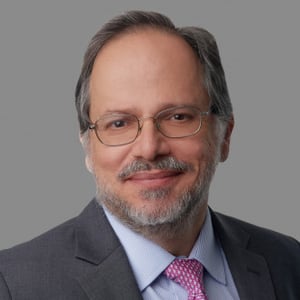
Director of Law & Policy, Environmental Integrity Project
Following Princeton and the University of Chicago Law School, David began practicing law at Paul, Weiss, Rifkind, Wharton & Garrison. Eventually tiring of litigation where the result was a wire transfer from Entity A to Entity B, in the early 1990’s David began his environmental law career at the Massachusetts Attorney General’s Office. Since then, he has litigated dozens of cases under all of the major environmental statutes including, as Sierra Club’s Chief Climate Counsel, initiating and managing Massachusetts v. EPA. Most recently, he has been busy challenging FERC’s permitting of natural gas pipelines and LNG export terminals. Apart from litigation, David has helped lead efforts on both greenhouse gas regulation and global warming legislation (and may be the only person ever invited to testify by both Barbara Boxer and James Inhofe).
He has drafted a range of federal climate legislation, advised states as to their greenhouse gas regulatory authority (and for many years has represented environmental groups defending state GHG regulations from dormant Commerce Clause challenges). David has designed and taught courses on “Environmental Litigation” at Georgetown University Law Center and “Environmental Law and Science” at the William and Mary Law School/Virginia Institute of Marine Science.
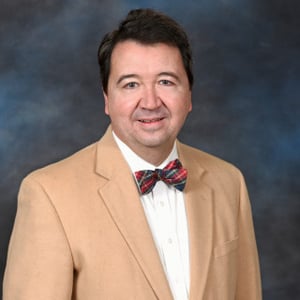
Judge, United States Court of Appeals, Sixth Circuit
John K. Bush is a Circuit Judge on the United States Court of Appeals for the Sixth Circuit.
His chambers are in Louisville, Kentucky. Prior to joining the court, Judge Bush was a partner in the
Louisville office of the firm Bingham Greenebaum Doll (now Dentons Bingham Greenebaum),
where he also was co-chair of the firm’s litigation department. He began his legal practice in the
Washington, D.C. office of Gibson Dunn & Crutcher.
Judge Bush served as a law clerk for Judge J. Smith Henley of the United States Court of
Appeals for the Eighth Circuit. He was graduated summa cum laude from Vanderbilt University,
and cum laude from Harvard Law School. He is an adjunct lecturer at The George Washington
University Law School and the Brandeis School of Law at the University of Louisville.
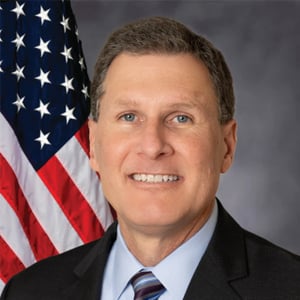
United States Attorney, Eastern District of California
Mr. Grant was appointed by Attorney General Pam Bondi to serve as the United States Attorney for the Eastern District of California beginning on August 11, 2025. Pursuant to 28 U.S.C. § 546(d), he was further appointed by the district court effective December 9, 2025.
Mr. Grant is a veteran of the Department of Justice, having served twice in Washington, D.C.: from 1991 to 1993 as an Attorney-Adviser in the Office of Legal Counsel, and from 2017 to 2021 as a Deputy Assistant Attorney General in the Environment and Natural Resources Division (ENRD). During his tenure at ENRD, he supervised more than a hundred Department litigators advancing the interests of the United States and its agencies in both enforcement and defensive matters, both civil and criminal.
In addition to his service in the Department, Mr. Grant has decades of experience in private practice in Washington, D.C. and Sacramento. That experience includes arguments in the U.S. Supreme Court, the California Supreme Court, and numerous other federal and state courts.
Mr. Grant served as a law clerk to Chief Justice Warren E. Burger (retired) and Associate Justice Clarence Thomas during the Supreme Court’s October 1994 Term. Earlier he served as a law clerk to Judge Edith H. Jones of the U.S. Court of Appeals for the Fifth Circuit in Houston, Texas.
Mr. Grant grew up in Modesto, California and raised his family in Sacramento County. He attended the University of California, Berkeley, from which he earned a bachelor’s degree in economics (1986) and a law degree (1990).
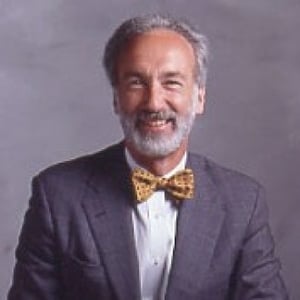
Emeritus Dean and Professor of Law, Lewis & Clark Law School
Professor Huffman joined the law school faculty in 1973, was appointed Acting Dean in 1993 and Dean in 1994, and returned to full time teaching in 2006. Born in Fort Benton, Montana, Jim graduated from Montana State University, the Fletcher School of Law and Diplomacy at Tufts University, and the University of Chicago Law School. He has been a visiting professor at Auckland University in New Zealand, the University of Oregon, the University of Athens in Greece and Universidad Francisco Marroquin in Guatemala. He was also a fellow at the Humane Studies Institute and a Distinguished Bradley Scholar at the Heritage Foundation. Jim serves on the boards of the National Crime Victims Law Institute, the Foundation for Research on Economics and the Environment, the Classroom Law Project, and the Rocky Mountain Mineral Law Foundation. He is a member and former Chair of the Executive Committee of the Environment and Property Rights Practice Group of the Federalist Society. He is a member of the Montana Bar Association and is admitted to practice before the United States Court of Appeals for the Federal Circuit and the United States Supreme Court. He is the author of more than 100 articles and chapters on a wide array of legal topics.
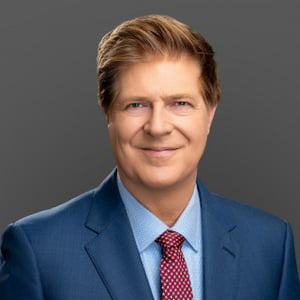
Senior Fellow, Ave Maria School of Law and Host of the Four Boxes Diner Second Amendment Channel
Mark W. Smith is a visiting member of the Senior Common Room, New College, Oxford University and a Visiting Fellow in Pharmaceutical Public Policy and Law in the Department of Pharmacology, Oxford University. Mark is also a Distinguished Scholar and Senior Fellow of Law and Public Policy at the Ave Maria School of Law. He hosts the Four Boxes Diner YouTube Channel (youtube.com/TheFourBoxesDiner), which addresses Second Amendment scholarship, cases, history and related issues, and whose videos have received almost 90 million views. Mark's scholarship has been cited by federal courts and by parties before the United States Supreme Court in Viramontes v. Cook County, New York State Rifle & Pistol Ass’n v. Bruen and in United States v. Rahimi. He is a graduate of the NYU School of Law. Mark is also a New York Times bestselling author who appears frequently in the national media including on the Fox News Channel.
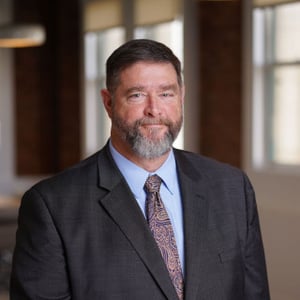
Partner, Briscoe Prows Kao Ivester & Bazel LLP
Tony Francois is experienced in Water and Real Property Law, Land Use and Zoning, Environmental Regulation, Natural Resources Development, Agricultural Law, and Constitutional Law. He has represented homeowners, builders, farmers and ranchers, trade associations, and water districts in administrative, civil, and criminal proceedings before state and federal administrative agencies and state and federal trial and appellate courts. He is a member of the California State Bar and the Northern, Eastern, and Central Districts of California and the Districts of New Mexico and North Dakota, and has litigated cases in federal courts in California, Oregon, Washington, Idaho, Montana, Nevada, Arizona, New Mexico, Colorado, North and South Dakota, Minnesota, Massachusetts, Maryland, South Carolina, and the District of Columbia, as well as the Sixth, Eighth, Ninth, and Tenth Circuit Courts of Appeals. He has appeared before the Supreme Courts of California, Idaho, Nevada, and the United States.
Prior to attending law school, he served as an infantry officer in the United States Army, and was stationed in the former West Germany during the fall of the Berlin Wall.
Tony was an Attorney at Pacific Legal Foundation from 2012 to 2021. He was a lobbyist for 10 years, first with California Farm Bureau Federation from 2003 to 2007, and then with KP Public Affairs from 2007 to 2012. He was an attorney at McQuaid, Bedford & Van Zandt in San Francisco from 1999 – 2003.
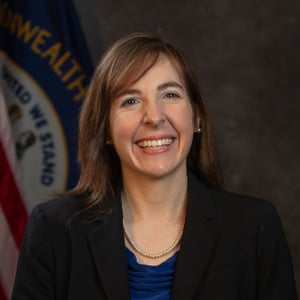
Auditor of Public Accounts, Commonwealth of Kentucky
Allison Ball is the 48th Auditor of Public Accounts for the Commonwealth of Kentucky. Prior to being elected Auditor, Ball served two terms as Kentucky State Treasurer. Before that, she spent four years as Assistant Floyd County Attorney, prosecuting child abuse and juvenile delinquency cases. When first appointed to office, Ball was the youngest statewide elected official in the country.
Ball has a rich Kentucky history; her family has been in Eastern Kentucky since the 1790s, and she holds a degree from the University of Kentucky College of Law.
She is a fierce watchdog for Kentucky taxpayer dollars. As Auditor, Ball protects against waste, fraud, and abuse.
As Treasurer, she returned more unclaimed property than any Treasurer in state history and established a savings and investment program for people with disabilities. She has been a national leader for improved financial literacy; Ball established the Kentucky Financial Empowerment Commission, and she successfully advocated for a financial literacy high school graduation requirement.
A Floyd County native, Ball and her husband, Dr. Asa James Swan, have two children, Levi and Marigold. Upon birth of her son, she was the first Kentucky Constitutional Officer to give birth while in office.
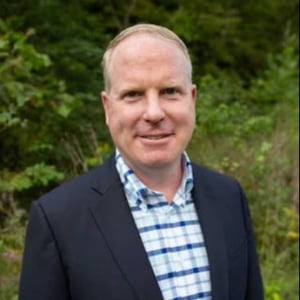
Bilby Law PLLC
Joe Bilby is a proud veteran of the U.S. Marine Corps. A graduate of the University of Virginia and the University of Kentucky College of Law, Joe began his legal career working in at a large law firm in Louisville and focusing on workplace law, business litigation, and trust/estate litigation.
Having spent seven years serving as general counsel to the Kentucky Department of Agriculture, Joe has extensive experience serving Kentucky’s farmers and agribusinesses.
Joe especially enjoys working with churches and religious organizations.
Joe provides affordable estate planning services for individuals and families across Kentucky.
He also has a specialty practice that serves employers across the nation who rely on the H-2A and H-2B temporary visa programs to meet their workforce needs.
Joe lives in central Kentucky with his wife and two children.
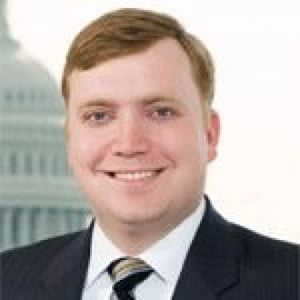
Solicitor General of Kentucky
Matt Kuhn serves as the Solicitor General of Kentucky. As Solicitor General, he oversees the office's civil and criminal appellate litigation and supervises the office's filing of amicus briefs. Since joining the Attorney General's office, he has argued in the Supreme Court of the United States, the United States Court of Appeals for the Sixth Circuit, and the Supreme Court of Kentucky. Before joining the Attorney General's office, he served as Chief Deputy General Counsel to the Governor of Kentucky. He also worked in private practice at Jones Day in Washington, D.C. and Stoll Keenon Ogden in Louisville, and served as a law clerk for Judge Raymond Gruender of the United States Court of Appeals for the Eighth Circuit. He is a graduate of Furman University and Columbia Law School.
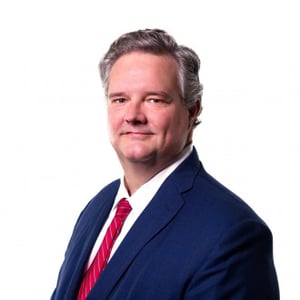
Partner, Dinsmore & Shohl LLP
Eric has more than two decades of experience providing strategic counsel to a broad range of industries, organizations, candidates and public officials on law and public policy, including campaign and issue advocacy, government ethics and regulatory compliance. He advises clients how to make their voices heard by policymakers, through engagement in the policymaking process and through direct and grassroots advocacy in support of issues and candidates.
He has extensive experience with complex litigation business disputes and appellate matters. He brought a case on behalf of the Commonwealth that resulted in the largest judgment in Kentucky history, in the amount of $870 million against an unregulated offshore Internet gambling operation. Eric also advises clients in industries such distilled spirits, breweries and energy industry clients on corporate and transactional matters, and before regulatory agencies on licensing, enforcement and compliance matters.
Eric was counsel for U.S. Senate Majority Leader Mitch McConnell’s 2014 reelection effort. He is currently general counsel to the Republican Party of Kentucky and the Kentucky House Republican Leadership. He has advised gubernatorial campaigns in Kentucky, Ohio, and other states, and legislative caucuses across the nation, including Kentucky, Ohio, Pennsylvania and West Virginia. Eric serves as counsel to multiple campaigns, super PACs, trade associations and non-profit organizations, including one spending over $10 million in support of Senator Ted Cruz in the 2016 Presidential primary.
With his experience and knowledge of how policy is made and regulators make decisions, Eric is effective at counseling businesses and industries how to cut through the red tape and obtain a positive result for their operations.
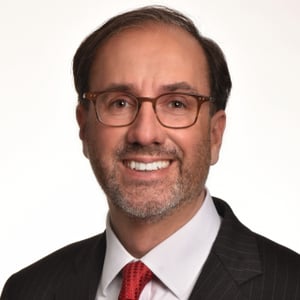
President and CEO, The Buckeye Institute
Robert Alt is the President and Chief Executive Officer of The Buckeye Institute where he has catalyzed exponential growth since he took the organization’s helm in 2012. He has since founded Buckeye’s renowned Economic Research Center and established its impactful Legal Center.
Alt is a distinguished scholar and attorney with particular expertise in legal policy, criminal justice, national security, and constitutional law. He previously worked for former U.S. Attorney General Edwin Meese III, regularly provides commentary on television and radio programs, and his writings have appeared in countless outlets.
In 2004, Alt spent five months in Iraq as an embedded war correspondent.
Alt has testified before Congress multiple times—including at the confirmation hearings for U.S. Supreme Court Justice Elena Kagan—the Federal Election Commission regarding matters of constitutional and administrative law, and numerous state legislatures.
Alt serves as an officer on the boards of The Philadelphia Society and the Federalist Society’s Columbus Lawyers Chapter. He taught national security law, criminal law, and legislation at Case Western Reserve University School of Law, as well as constitutional law and political parties and interest groups at Ashland University.
Alt earned his Doctor of Law degree from The University of Chicago Law School, where he was Symposium Editor and the winner of the Mulroy Prize for Excellence in Appellate Advocacy as well as research assistant to Professor Richard Epstein. Following law school, he clerked for Judge Alice Batchelder on the U.S. Court of Appeals for the Sixth Circuit. Alt graduated with his Bachelor of Arts in philosophy and political science magna cum laude from Azusa Pacific University where he also won the Outstanding Senior Award in Political Science.
Alt is an accomplished high-altitude alpinist and endurance athlete who has successfully climbed 6.75 of the famed Seven Summits of the World including Mount Everest. He is the creator of PROFOUND CLIMBING™ and a frequent speaker across the country and around the world on legal and public policy topics as well as effective leadership, management, decision-making, and teamwork in contexts ranging from extraordinary life/death situations to ordinary professional/business settings.
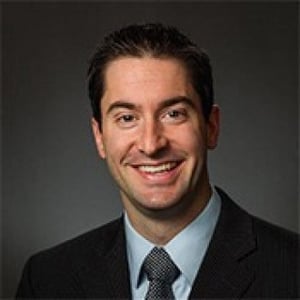
Chief Legal Counsel, Alliance Defending Freedom
Jim Campbell serves as chief legal counsel with Alliance Defending Freedom, where he leads the U.S. Legal Advocacy team. In that role, Campbell oversees all U.S. litigation teams and Allied Legal Affairs.
Prior to joining ADF in March 2023, Campbell was the solicitor general in the office of Nebraska Attorney General Douglas J. Peterson and Michael T. Hilgers. In that role, he represented the state of Nebraska in cases before state and federal courts and oversaw all civil appeals for the state. In February 2023, Campbell argued Biden v. Nebraska before the U.S. Supreme Court, a case in which Nebraska and five other states challenged the Biden administration’s attempt to forgive over $400 billion in federal student loans for over 40 million individuals.
Before joining the Nebraska attorney general’s office in January 2020, Campbell worked as senior counsel with ADF. In that role, he defended his clients’ religious freedom and freedom of speech, with a particular focus on appellate work. Campbell has also authored many articles and legal commentary pieces, including some published by USA Today and The Washington Post.
A native of northeastern Ohio, Campbell earned his Juris Doctor from the University of Akron School of Law, where he graduated summa cum laude in 2006. Following law school, he clerked for the Honorable Alice M. Batchelder of the U.S. Court of Appeals for the 6th Circuit. Campbell is admitted to the state bars of Ohio, Arizona, and Nebraska. He is also admitted to multiple federal district and appellate courts, including the U.S. Supreme Court.

Third Annual Missouri Meeting at the Capitol
Jefferson City Lawyers Chapter
Jefferson City , MOShowcase Panel IV: Does Agency Regulatory Power Extend Beyond its Formal Power, and Should It?
2018 National Lawyers Convention
Washington, DCShowcase Panel IV: Does Agency Regulatory Power Extend Beyond its Formal Power, and Should It?
C. Boyden Gray, Kristin E. Hickman, Sally Katzen, David R. Stras, Nicholas R. Parrillo
The Federalist Society’s Regulatory Transparency Project working group on agency enforcement and coercion released a...
Showcase Panel IV: Does Agency Regulatory Power Extend Beyond its Formal Power, and Should It?
C. Boyden Gray, Kristin E. Hickman, Sally Katzen, David R. Stras, Nicholas R. Parrillo
The Federalist Society’s Regulatory Transparency Project working group on agency enforcement and coercion released a...
Climate Change Nuisance Suits
David Bookbinder, John K. Bush, Eric Grant, James L. Huffman, Mark W. Smith
Should climate change responsibility be evaluated in the courts or by the elected policymaking branches?...
Topics
NLC 2018 Digital Survival Guide
This "Survival Guide" is your one-stop-shop for all things digital at the National Lawyers Convention. Enjoy!...
Will We Soon Have Clarity on Navigable Waters?: How the Supreme Court’s October 2017 Term Set the Stage
Tony Francois
Note from the Editor: This article discusses the longstanding legal battle over the meaning of...
Kentucky Constitution: Features, Quirks, and Practice Pointers
Allison Joy Ball, Joe Bilby, Matthew Kuhn, David Eric Lycan
On October 29, 2018, the Federalist Society's Kentucky lawyers chapters hosted the second annual Kentucky...
Update: Workers’ Speech Rights in the Wake of Janus
Robert Alt
In its Janus v. AFSCME decision this past June, the Supreme Court held that it violated...
Compelled Speech in Masterpiece Cakeshop: What the Supreme Court’s June 2018 Decisions Tell Us About the Unresolved Questions
Jim Campbell
Note from the Editor: This article discusses the unresolved compelled-speech questions in Masterpiece Cakeshop v....