

Professor Emeritus of Political Science and Professor Emeritus of Public Policy, Univ. of Maryland Baltimore County
George R. La Noue is Professor Emeritus of Political Science and Professor Emeritus of Public Policy at the University of Maryland Baltimore County. He has served as a trial expert in twenty cases involving public procurement preferences. For thirty years, he was Director of the Project on Civil Rights and Public Contracts at UMBC which recently contributed 289 public contracting disparity studies to the Library of Congress. He has been a consultant to nine governments and trial expert in thirty cases where the validity of disparity studies was at issue.
Prof. La Noue can be reached by email at glanoue@umbc.edu.

Harry Kalven, Jr. Professor of Law & Faculty Director, Constitutional Law Institute, University of Chicago Law School
William Baude is a Professor of Law and the Faculty Director of the Constitutional Law Institute at the University of Chicago Law School, where he teaches federal courts, constitutional law, and conflict of laws. His current research interests include different aspects of the Fourteenth Amendment (particularly both Section One and Section Three) and the nature of judicial discretion.
Among his other activities Baude is: the co-editor of two textbooks, The Constitution of the United States and Hart & Wechsler's Federal Courts in the Federal System; an Affiliated Scholar at the Center for the Study of Constitutional Originalism; a founding member of the Academic Freedom Alliance; a member of the American Law Institute; an occasional blogger at The Volokh Conspiracy; and a podcaster on Divided Argument. He also recently served on the Presidential Commission on the Supreme Court of the United States.
Professor Baude received his BS in Mathematics from the University of Chicago and his JD from Yale Law School. He then clerked for then-Judge Michael McConnell on the United States Court of Appeals, and Chief Justice John Roberts on the United States Supreme Court. Before joining the Chicago faculty, he was a fellow at the Stanford Constitutional Law Center, and a lawyer in Washington, DC.

Professor of Law, South Texas College of Law Houston
Josh Blackman is a national thought leader on constitutional law and the United States Supreme Court. Josh’s work was quoted during two presidential impeachment trials. He has testified before Congress and advises federal and state lawmakers. Josh regularly appears on TV, including NBC, CBS, ABC, Fox, and the BBC. Josh is also a frequent guest on NPR and other syndicated radio programs. He has published commentaries in the New York Times, Wall Street Journal, Washington Post, and leading national publications.
Since 2012, Josh has served as a professor at the South Texas College of Law Houston. He holds the Centennial Chair of Constitutional Law. Josh is an Adjunct Fellow at the Manhattan Institute. Josh has written more than seven dozen law review articles that have been cited more than a thousand times. Josh was selected as the Jurist of the Year by the Texas Journal of Law & Public Policy, received the inaugural Meese III Originalism Award, and was awarded the Inaugural Joseph Story Award. Josh was selected by Forbes Magazine for the “30 Under 30” in Law and Policy. Josh is the President of the Harlan Institute, and founded FantasySCOTUS, the Internet’s Premier Supreme Court Fantasy League. He blogs at the Volokh Conspiracyand posts@JoshMBlackman.

Partner, Wiley Rein, LLP
Megan L. Brown is a partner at Wiley Rein LLP. She has significant litigation, appellate and regulatory experience before state and federal courts and agencies.
Ms. Brown helps businesses respond to federal, state and local regulation and investigations raising administrative law, statutory interpretation, and constitutional issues, including the First Amendment.
Supreme Court & Appellate Litigation Chair, Lex Politica; Of Counsel, Alliance Defending Freedom
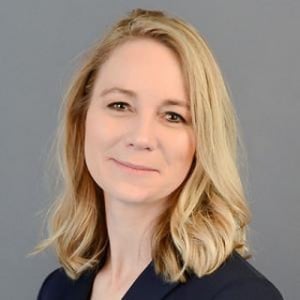
Erin Morrow Hawley serves as Chair of Lex Politica's Supreme Court and Appellate Practice overseeing the firm’s strategic appellate litigation and critical motions practice in the trial courts. Erin is an experienced litigator who represents clients in constitutional, regulatory, and appellate matters in federal and state courts throughout the country.
Erin has represented dozens of clients before the Supreme Court of the United States, served as lead counsel in high-profile cases raising novel constitutional and statutory issues, and authored numerous successful petitions for certiorari and briefs in opposition. She has argued in state and federal appellate and trial courts throughout the country, including the Supreme Court of the United States. Erin represents diverse clients in high-stakes litigation from state governments to faith-based nonprofits to Fortune 100 companies. She possesses expertise on a wide range of subject matters including administrative law, the First Amendment, religious liberty, federal jurisdiction, federal preemption, equitable jurisdiction, tax law, the Affordable Care Act, and Title IX.
Erin represents clients in cases where public communications strategy is paramount. She is a sought-after speaker and writer, has testified multiple times before Congress, and is a frequent presenter on constitutional and administrative law issues, including at the Oxford Union, the National Federalist Society Convention, and university campuses across the country. She is a frequent commentator to media outlets, including Fox News, MSNBC, the Wall Street Journal, WORLD, USA Today, the Federalist, and the Hill.
Erin previously oversaw Alliance Defending Freedom’s--where she still serves as Of Counsel--litigation strategies to empower women and protect the dignity of life, defend pregnancy centers’ First Amendment rights from government overreach, and safeguard Americans’ freedoms from the ever-encroaching administrative state.
Knights of Columbus Professor of Law and the Catholic Tradition, The Catholic University of America Columbus School of Law
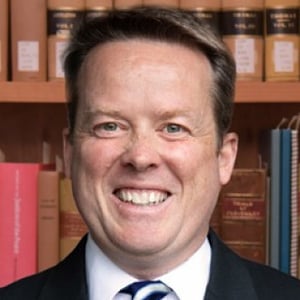
Kevin C. Walsh teaches and writes in the areas of federal jurisdiction, constitutional law, and the U.S. Supreme Court. His scholarship explores the doctrines that define—and delimit—the scope of federal judicial power.
Professor Walsh graduated from Harvard Law School, where he was Articles Chair for Volume 115 of the Harvard Law Review. After graduation, he clerked for Judge Paul V. Niemeyer of the United States Court of Appeals for the Fourth Circuit and Associate Justice Antonin Scalia of the Supreme Court of the United States. He then practiced law at Hunton & Williams LLP and taught as a visiting assistant professor at Villanova University School of Law. Walsh received his A.B. from Dartmouth College, and an M.A. in Theological Studies from the University of Notre Dame. He taught at the University of Richmond School of Law for thirteen years prior to joining The Catholic University of America, where he currently resides.
In early 2011, Professor Walsh filed two amicus curiae briefs addressing jurisdictional issues in the State challenges to the individual mandate in the federal healthcare reform legislation: a brief in Virginia v. Sebelius (United States Court of Appeals for the Fourth Circuit), and a brief in Florida v. HHS (United States Court of Appeals for the Eleventh Circuit).
Harry Kalven, Jr. Professor of Law & Faculty Director, Constitutional Law Institute, University of Chicago Law School
William Baude is a Professor of Law and the Faculty Director of the Constitutional Law Institute at the University of Chicago Law School, where he teaches federal courts, constitutional law, and conflict of laws. His current research interests include different aspects of the Fourteenth Amendment (particularly both Section One and Section Three) and the nature of judicial discretion.
Among his other activities Baude is: the co-editor of two textbooks, The Constitution of the United States and Hart & Wechsler's Federal Courts in the Federal System; an Affiliated Scholar at the Center for the Study of Constitutional Originalism; a founding member of the Academic Freedom Alliance; a member of the American Law Institute; an occasional blogger at The Volokh Conspiracy; and a podcaster on Divided Argument. He also recently served on the Presidential Commission on the Supreme Court of the United States.
Professor Baude received his BS in Mathematics from the University of Chicago and his JD from Yale Law School. He then clerked for then-Judge Michael McConnell on the United States Court of Appeals, and Chief Justice John Roberts on the United States Supreme Court. Before joining the Chicago faculty, he was a fellow at the Stanford Constitutional Law Center, and a lawyer in Washington, DC.
Professor of Law, South Texas College of Law Houston
Josh Blackman is a national thought leader on constitutional law and the United States Supreme Court. Josh’s work was quoted during two presidential impeachment trials. He has testified before Congress and advises federal and state lawmakers. Josh regularly appears on TV, including NBC, CBS, ABC, Fox, and the BBC. Josh is also a frequent guest on NPR and other syndicated radio programs. He has published commentaries in the New York Times, Wall Street Journal, Washington Post, and leading national publications.
Since 2012, Josh has served as a professor at the South Texas College of Law Houston. He holds the Centennial Chair of Constitutional Law. Josh is an Adjunct Fellow at the Manhattan Institute. Josh has written more than seven dozen law review articles that have been cited more than a thousand times. Josh was selected as the Jurist of the Year by the Texas Journal of Law & Public Policy, received the inaugural Meese III Originalism Award, and was awarded the Inaugural Joseph Story Award. Josh was selected by Forbes Magazine for the “30 Under 30” in Law and Policy. Josh is the President of the Harlan Institute, and founded FantasySCOTUS, the Internet’s Premier Supreme Court Fantasy League. He blogs at the Volokh Conspiracyand posts@JoshMBlackman.
Partner, Wiley Rein, LLP
Megan L. Brown is a partner at Wiley Rein LLP. She has significant litigation, appellate and regulatory experience before state and federal courts and agencies.
Ms. Brown helps businesses respond to federal, state and local regulation and investigations raising administrative law, statutory interpretation, and constitutional issues, including the First Amendment.
Supreme Court & Appellate Litigation Chair, Lex Politica; Of Counsel, Alliance Defending Freedom
Erin Morrow Hawley serves as Chair of Lex Politica's Supreme Court and Appellate Practice overseeing the firm’s strategic appellate litigation and critical motions practice in the trial courts. Erin is an experienced litigator who represents clients in constitutional, regulatory, and appellate matters in federal and state courts throughout the country.
Erin has represented dozens of clients before the Supreme Court of the United States, served as lead counsel in high-profile cases raising novel constitutional and statutory issues, and authored numerous successful petitions for certiorari and briefs in opposition. She has argued in state and federal appellate and trial courts throughout the country, including the Supreme Court of the United States. Erin represents diverse clients in high-stakes litigation from state governments to faith-based nonprofits to Fortune 100 companies. She possesses expertise on a wide range of subject matters including administrative law, the First Amendment, religious liberty, federal jurisdiction, federal preemption, equitable jurisdiction, tax law, the Affordable Care Act, and Title IX.
Erin represents clients in cases where public communications strategy is paramount. She is a sought-after speaker and writer, has testified multiple times before Congress, and is a frequent presenter on constitutional and administrative law issues, including at the Oxford Union, the National Federalist Society Convention, and university campuses across the country. She is a frequent commentator to media outlets, including Fox News, MSNBC, the Wall Street Journal, WORLD, USA Today, the Federalist, and the Hill.
Erin previously oversaw Alliance Defending Freedom’s--where she still serves as Of Counsel--litigation strategies to empower women and protect the dignity of life, defend pregnancy centers’ First Amendment rights from government overreach, and safeguard Americans’ freedoms from the ever-encroaching administrative state.
Knights of Columbus Professor of Law and the Catholic Tradition, The Catholic University of America Columbus School of Law
Kevin C. Walsh teaches and writes in the areas of federal jurisdiction, constitutional law, and the U.S. Supreme Court. His scholarship explores the doctrines that define—and delimit—the scope of federal judicial power.
Professor Walsh graduated from Harvard Law School, where he was Articles Chair for Volume 115 of the Harvard Law Review. After graduation, he clerked for Judge Paul V. Niemeyer of the United States Court of Appeals for the Fourth Circuit and Associate Justice Antonin Scalia of the Supreme Court of the United States. He then practiced law at Hunton & Williams LLP and taught as a visiting assistant professor at Villanova University School of Law. Walsh received his A.B. from Dartmouth College, and an M.A. in Theological Studies from the University of Notre Dame. He taught at the University of Richmond School of Law for thirteen years prior to joining The Catholic University of America, where he currently resides.
In early 2011, Professor Walsh filed two amicus curiae briefs addressing jurisdictional issues in the State challenges to the individual mandate in the federal healthcare reform legislation: a brief in Virginia v. Sebelius (United States Court of Appeals for the Fourth Circuit), and a brief in Florida v. HHS (United States Court of Appeals for the Eleventh Circuit).
Professor of Law and Jamie L. Whitten Chair in Law and Government, University of Mississippi School of Law
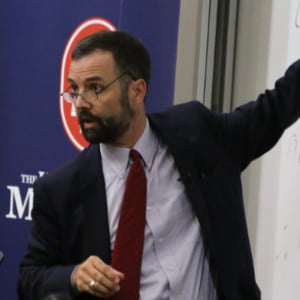
Christopher Green (https://law.olemiss.edu/faculty-directory/christopher-green/) is Professor of Law and Jamie L. Whitten Chair in Law and Government at the University of Mississippi, where he has taught since 2006. He is a graduate of Princeton University and Yale Law School, and has a PhD in philosophy from the University of Notre Dame. He clerked for Judge Rhesa H. Barksdale on the Fifth Circuit and is the author of Equal Citizenship, Civil Rights, and the Constitution: The Original Sense of the Privileges or Immunities Clause (2015) and a large number of articles and essays on constitutional theory and the Fourteenth Amendment, including the two-part Original Sense of the (Equal) Protection Clause and Clarity and Reasonable Doubt in Early State-Constitutional Judicial Review. He is an affiliated scholar with the University of San Diego Center for the Study of Constitutional Originalism.
Senior Legal Fellow, Courts and the Constitution, Legal Policy Center, The Heritage Foundation
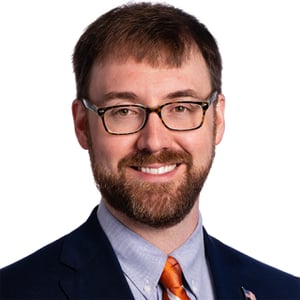
Zack is a Senior Legal Fellow of Courts and the Constitution at The Heritage Foundation.
He previously served for several years as an Assistant United States Attorney in the Northern District of Florida. Prior to that, he spent two years as an associate in the Washington, D.C. office of Cleary Gottlieb Steen & Hamilton, which he joined after clerking for the Hon. Emmett R. Cox on the United States Court of Appeals for the Eleventh Circuit.
Smith received his undergraduate, master’s, and law degrees from the University of Florida. During law school, Smith served as the Editor in Chief of the Florida Law Review and served on the executive boards of several student organizations, including the UF Chapter of the Federalist Society.
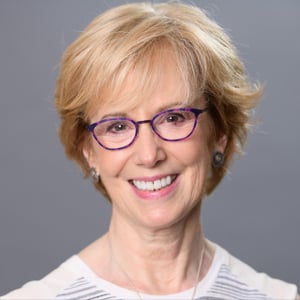
Director, GW Regulatory Studies Center & Distinguished Professor of Practice, Trachtenberg School of Public Policy & Public Administration, The George Washington University
Susan Dudley is the Founder and Director of the George Washington University Regulatory Studies Center, established in 2009 to raise awareness of regulations’ effects and improve regulatory policy through research, education, and outreach. She is also a distinguished professor of practice in the Trachtenberg School of Public Policy and Public Administration. She is past-president of the Society for Benefit Cost Analysis, a senior fellow of the Administrative Conference of the United States, and on the Regulatory Transparency Project Regulatory Practice Working Group. Her book, Regulation: A Primer, with Jerry Brito, is available on Amazon.com.
From April 2007 through January 2009, Professor Dudley served as the Presidentially-appointed Administrator of the Office of Information and Regulatory Affairs in the U.S. Office of Management and Budget and was responsible for the review of draft executive branch regulations under Executive Order 12866, the collection of federal-government-wide information under the Paperwork Reduction Act, the development and implementation of government-wide policies in the areas of information policy, privacy, and statistical policy, and international regulatory cooperation efforts.
Prior to OIRA, she directed the Regulatory Studies Program at the Mercatus Center at George Mason University, and taught courses on regulation at the George Mason University School of Law. Earlier in her career, Professor Dudley served as an economist at OIRA, as well as the Environmental Protection Agency and the Commodity Futures Trading Commission. She was also a consultant to government and private clients at Economists Incorporated. She holds a Master of Science degree from the Sloan School of Management at MIT and a Bachelor of Science degree (summa cum laude) in Resource Economics from the University of Massachusetts, Amherst.
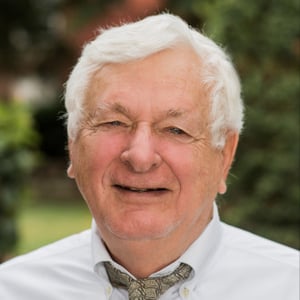
Lyle T. Alverson Professor of Law, George Washington University Law School
Professor Pierce is author of over twenty books and 130 articles on administrative law, government regulation, and the effects of various forms of government intervention on the performance of markets. His books and articles have been cited in hundreds of judicial opinions, including over a dozen opinions of the U.S. Supreme Court.

Associate Dean for Diversity, Equity, and Inclusion, Samuel Weiss Faculty Scholar and Clinical Professor of Law, and Director, Center for Immigrants' Rights Clinic, The Pennsylvania State University
Shoba Sivaprasad Wadhia is Associate Dean for Diversity, Equity, and Inclusion; the Samuel Weiss Faculty Scholar; and Clinical Professor of Law at Penn State Law in University Park. Her research focuses on the role of prosecutorial discretion in immigration law and the intersections of race, national security, and immigration. Her work has been published in numerous law journals, including Duke Law Journal, Emory Law Journal, Texas Law Review, Washington and Lee Law Review, Harvard Latino Law Review, Administrative Law Review, Howard Law Journal, Georgetown Immigration Law Journal, and Columbia Journal of Race and Law. Wadhia is the author of two award-winning books with New York University Press: Beyond Deportation: The Role of Prosecutorial Discretion in Immigration Cases (2015) and Banned: Immigration Enforcement in the Time of Trump (2019). She is also the author of Immigration and Nationality Law: Problems and Solutions, (w. Steve Yale-Loehr and Lenni Benson), published by Carolina Academic Press.
Wadhia’s scholarship has been cited in dozens of law journals and by numerous federal circuit courts, including Judge Richard Posner (article on deferred action), Judge Paul J. Watford (article on the role of discretion in speed deportation), and Judge Kim McLane Wardlaw (“See generally” citation to book Beyond Deportation), Judge Julius N. Richardson (co-authored article and Chevron deference and immigration), and Judge Andrew S. Oldham (co-authored article on Chevron deference and immigration). She serves as the inaugural Editor-In-Chief of the American Immigration Lawyers Association (AILA) Law Journal, a partnership between AILA and Fastcase. In 2019, she served as the Enlund Scholar In Residence at DePaul University School of Law. In 2019, Wadhia testified before Congress on the historical role of prosecutorial discretion and deferred action in immigration cases.
Wadhia has written or been quoted by numerous media outlets, including New York Times, USA Today, Los Angeles Times, Philadelphia Inquirer, The Hill, SCOTUS blog, blog of the Harvard Law Review, American Constitution Society, Yale Journal on Regulation’s Notice & Comment, and Immigration Law Professors Blog. She has also served as an expert witness, lead author, or co-counsel in connection with Deferred Action for Childhood Arrivals (DACA), the asylum ban, the travel ban, and prosecutorial discretion more generally.
At Penn State Law, Professor Wadhia teaches doctrinal courses in immigration and asylum and refugee law. She is also the founder/director of the Center for Immigrants’ Rights Clinic (CIRC), where she supervises students in three areas: 1) community outreach; 2) legal support in individual immigration cases; and 3) policy work for institutional clients. CIRC has earned a national reputation for its high-quality work product and impact in the community. 2018 marked the 10-year anniversary of CIRC. CIRC was honored with the Excellence in Legal Advocacy Award in 2017 by the American-Arab Anti-Discrimination Committee and named legal organization of the year in 2019 by the Pennsylvania Immigration Resource Center.
Prior to joining Penn State, Professor Wadhia was deputy director for legal affairs at the National Immigration Forum in Washington, D.C., where she provided legal and policy expertise on multiple legislative efforts, including the creation of the Department of Homeland Security, comprehensive immigration reform, immigration enforcement, and immigration policy post 9-11. Wadhia has also been an associate with the immigration law firm, Maggio Kattar of P.C. in Washington, D.C., where she represented individuals and families in asylum, deportation, family, and employment-based immigration.
Wadhia has received many awards for her scholarship, teaching, and service, including Pro Bono Attorney of the Year by the American-Arab Anti-Discrimination Committee in 2003, leadership awards by the Department of Homeland Security’s Office of Civil Rights and Civil Liberties and Office of the Inspector General in 2008, 2017 Honoree by the National Immigration Project, Arnold Addison Award for Town and Gown Relations by the Borough of State College in 2019, and the 2019 Elmer Friend Excellence in Teaching Award by the American Immigration Lawyers Association. In 2020, Wadhia received the university-wide Rosemary Schraer Mentoring Award and was named a Fastcase 50 Awardee, which honors 50 of “the law’s smartest, most courageous innovators, techies, visionaries, & leaders.”
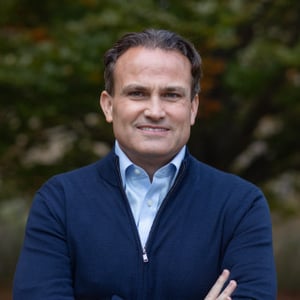
Professor of Law, University of Michigan Law School
Christopher J. Walker is a Professor of Law at the University of Michigan. Prior to joining Michigan law faculty in 2022, he spent a decade teaching at The Ohio State University Moritz College of Law. He previously clerked for Justice Anthony Kennedy of the U.S. Supreme Court, worked on the Civil Appellate Staff at the U.S. Department of Justice, and served on the Senate Judiciary Committee staff for the Gorsuch Supreme Court confirmation. Professor Walker’s research focuses on administrative law, regulation, and law and policy at the agency level. Outside the law school, he chaired the American Bar Association’s Section of Administrative Law and Regulatory Practice in 2020-21 and served as one of forty Public Members of the Administrative Conference of the United States from 2016-2022, and he continues to serve in both organizations in various capacities. He also works of counsel at the U.S. Chamber Litigation Center. In 2022, he received the Federalist Society’s Joseph Story Award.
Harry Kalven, Jr. Professor of Law & Faculty Director, Constitutional Law Institute, University of Chicago Law School
William Baude is a Professor of Law and the Faculty Director of the Constitutional Law Institute at the University of Chicago Law School, where he teaches federal courts, constitutional law, and conflict of laws. His current research interests include different aspects of the Fourteenth Amendment (particularly both Section One and Section Three) and the nature of judicial discretion.
Among his other activities Baude is: the co-editor of two textbooks, The Constitution of the United States and Hart & Wechsler's Federal Courts in the Federal System; an Affiliated Scholar at the Center for the Study of Constitutional Originalism; a founding member of the Academic Freedom Alliance; a member of the American Law Institute; an occasional blogger at The Volokh Conspiracy; and a podcaster on Divided Argument. He also recently served on the Presidential Commission on the Supreme Court of the United States.
Professor Baude received his BS in Mathematics from the University of Chicago and his JD from Yale Law School. He then clerked for then-Judge Michael McConnell on the United States Court of Appeals, and Chief Justice John Roberts on the United States Supreme Court. Before joining the Chicago faculty, he was a fellow at the Stanford Constitutional Law Center, and a lawyer in Washington, DC.
Professor of Law, South Texas College of Law Houston
Josh Blackman is a national thought leader on constitutional law and the United States Supreme Court. Josh’s work was quoted during two presidential impeachment trials. He has testified before Congress and advises federal and state lawmakers. Josh regularly appears on TV, including NBC, CBS, ABC, Fox, and the BBC. Josh is also a frequent guest on NPR and other syndicated radio programs. He has published commentaries in the New York Times, Wall Street Journal, Washington Post, and leading national publications.
Since 2012, Josh has served as a professor at the South Texas College of Law Houston. He holds the Centennial Chair of Constitutional Law. Josh is an Adjunct Fellow at the Manhattan Institute. Josh has written more than seven dozen law review articles that have been cited more than a thousand times. Josh was selected as the Jurist of the Year by the Texas Journal of Law & Public Policy, received the inaugural Meese III Originalism Award, and was awarded the Inaugural Joseph Story Award. Josh was selected by Forbes Magazine for the “30 Under 30” in Law and Policy. Josh is the President of the Harlan Institute, and founded FantasySCOTUS, the Internet’s Premier Supreme Court Fantasy League. He blogs at the Volokh Conspiracyand posts@JoshMBlackman.
Partner, Wiley Rein, LLP
Megan L. Brown is a partner at Wiley Rein LLP. She has significant litigation, appellate and regulatory experience before state and federal courts and agencies.
Ms. Brown helps businesses respond to federal, state and local regulation and investigations raising administrative law, statutory interpretation, and constitutional issues, including the First Amendment.
Supreme Court & Appellate Litigation Chair, Lex Politica; Of Counsel, Alliance Defending Freedom
Erin Morrow Hawley serves as Chair of Lex Politica's Supreme Court and Appellate Practice overseeing the firm’s strategic appellate litigation and critical motions practice in the trial courts. Erin is an experienced litigator who represents clients in constitutional, regulatory, and appellate matters in federal and state courts throughout the country.
Erin has represented dozens of clients before the Supreme Court of the United States, served as lead counsel in high-profile cases raising novel constitutional and statutory issues, and authored numerous successful petitions for certiorari and briefs in opposition. She has argued in state and federal appellate and trial courts throughout the country, including the Supreme Court of the United States. Erin represents diverse clients in high-stakes litigation from state governments to faith-based nonprofits to Fortune 100 companies. She possesses expertise on a wide range of subject matters including administrative law, the First Amendment, religious liberty, federal jurisdiction, federal preemption, equitable jurisdiction, tax law, the Affordable Care Act, and Title IX.
Erin represents clients in cases where public communications strategy is paramount. She is a sought-after speaker and writer, has testified multiple times before Congress, and is a frequent presenter on constitutional and administrative law issues, including at the Oxford Union, the National Federalist Society Convention, and university campuses across the country. She is a frequent commentator to media outlets, including Fox News, MSNBC, the Wall Street Journal, WORLD, USA Today, the Federalist, and the Hill.
Erin previously oversaw Alliance Defending Freedom’s--where she still serves as Of Counsel--litigation strategies to empower women and protect the dignity of life, defend pregnancy centers’ First Amendment rights from government overreach, and safeguard Americans’ freedoms from the ever-encroaching administrative state.
Knights of Columbus Professor of Law and the Catholic Tradition, The Catholic University of America Columbus School of Law
Kevin C. Walsh teaches and writes in the areas of federal jurisdiction, constitutional law, and the U.S. Supreme Court. His scholarship explores the doctrines that define—and delimit—the scope of federal judicial power.
Professor Walsh graduated from Harvard Law School, where he was Articles Chair for Volume 115 of the Harvard Law Review. After graduation, he clerked for Judge Paul V. Niemeyer of the United States Court of Appeals for the Fourth Circuit and Associate Justice Antonin Scalia of the Supreme Court of the United States. He then practiced law at Hunton & Williams LLP and taught as a visiting assistant professor at Villanova University School of Law. Walsh received his A.B. from Dartmouth College, and an M.A. in Theological Studies from the University of Notre Dame. He taught at the University of Richmond School of Law for thirteen years prior to joining The Catholic University of America, where he currently resides.
In early 2011, Professor Walsh filed two amicus curiae briefs addressing jurisdictional issues in the State challenges to the individual mandate in the federal healthcare reform legislation: a brief in Virginia v. Sebelius (United States Court of Appeals for the Fourth Circuit), and a brief in Florida v. HHS (United States Court of Appeals for the Eleventh Circuit).
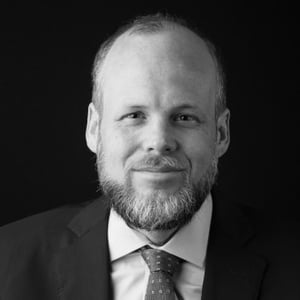
Founder, CGCN Law, PLLC
Senior Legal Fellow, Courts and the Constitution, Legal Policy Center, The Heritage Foundation
Zack is a Senior Legal Fellow of Courts and the Constitution at The Heritage Foundation.
He previously served for several years as an Assistant United States Attorney in the Northern District of Florida. Prior to that, he spent two years as an associate in the Washington, D.C. office of Cleary Gottlieb Steen & Hamilton, which he joined after clerking for the Hon. Emmett R. Cox on the United States Court of Appeals for the Eleventh Circuit.
Smith received his undergraduate, master’s, and law degrees from the University of Florida. During law school, Smith served as the Editor in Chief of the Florida Law Review and served on the executive boards of several student organizations, including the UF Chapter of the Federalist Society.

Topics
Separate Payments for Abortion Services and Other Changes in HHS’s Proposed Insurance Regulations
On June 28, 2021, the U.S. Department of Health and Human Services (HHS) (along with...
The Race Card in ARPA’s Food Supply Deck
George R. La Noue
It is an old aphorism that a prudent person should not watch the making of...
Immigration Policymaking in the Biden Administration
A Regulatory Transparency Project Webinar
Severability and Article III Powers
William Baude, Josh Blackman, Megan L. Brown, Erin M. Hawley, Kevin C. Walsh
What should the Supreme Court do when it finds one provision of a statute unconstitutional? There is a...
Severability and Article III Powers
William Baude, Josh Blackman, Megan L. Brown, Erin M. Hawley, Kevin C. Walsh
What should the Supreme Court do when it finds one provision of a statute unconstitutional? There is a...
Severability and Article III Powers
Federalism & Separation of Powers Practice Group Teleforum
TeleforumState Court Docket Watch: Initiative Measure No. 65: Mayor Butler v. Watson
Christopher R. Green
Note from the Editor: The Federalist Society takes no positions on particular legal and public...
Current Status of Police Reform Legislation
Zack Smith
Over the past year, police reform has become a priority for many at both the...
Courthouse Steps Decision Webinar: Holly Frontier Cheyenne Refining LLC v. Renewable Fuels Association
TeleforumCurrent Status of Police Reform Legislation
Teleforum