
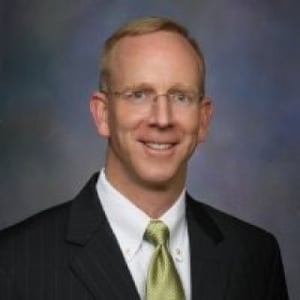
Investigative Counsel, U.S. House Committee on Education and the Workforce
Kent Talbert is a Washington, DC-based attorney with over 25 years’ experience in providing advice on education law and policy in Congress, the U.S. Department of Education, and the private sector. His practice includes legal and policy advice to colleges and universities, for-profit schools, accrediting agencies, the pre-K-12 sector, charter school organizations, trade associations, and education-focused companies, as well as service as an expert witness. He currently serves as Investigative Counsel, U.S. House Committee on Education and the Workforce.
Prior to establishing his firm, Mr. Talbert practiced at Talbert & Eitel, PLLC from 2010-2012. From 2006-2009 he served as General Counsel of the U.S. Department of Education, advising the Secretary of Education on a broad range of legal and policy matters, including the reauthorization of the Higher Education Act of 1965, the drafting and implementation of regulations under the No Child Left Behind Act of 2001, and major education law cases pending before the Supreme Court of the United States and other appellate and trial courts. During his tenure as General Counsel, Mr. Talbert served as the Chief Regulatory Officer for the Department, overseeing all documents for publication in the Federal Register.
He has provided legal and strategic advice on the No Child Left Behind Act of 2001, the Higher Education Opportunity Act of 2008, the Ensuring Continued Access to Student Loans Act of 2008, the Freedom of Information Act (FOIA), the Family Educational Rights and Privacy Act (FERPA), the Rehabilitation Act of 1973, the Americans With Disabilities Act, Title IX of the Education Amendments of 1972, the Jeanne Clery Disclosure of Campus Security Policy and Campus Crime Statistics Act ("Clery Act"), Federal Student Aid program reviews, negotiated rulemaking, and accreditation.
Prior to his service as General Counsel, Mr. Talbert served as the Department's Deputy General Counsel for Departmental and Legislative Service from 2001-2006. Earlier in his career, Mr. Talbert served for over 12 years on House and Senate staff, both as Education Policy Counsel for the Committee on Education and the Workforce in the U.S. House of Representatives, and as a professional staff member of the Committee on Labor and Human Resources (now Committee on Health, Education, Labor, and Pensions) in the U.S. Senate.
Mr. Talbert is a member of the Bars of the District of Columbia and South Carolina, the Alliance of Public Charter School Attorneys, and the National Association of College and University Attorneys where he serves on the Committee on Legal Education. He is admitted to practice before the United States Supreme Court, the United States Court of Federal Claims, the United States Court of Appeals for the District of Columbia Circuit, the United States Court of Appeals for the Fourth Circuit, and all federal courts in South Carolina and Washington, DC.
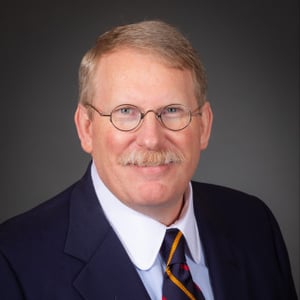
Co-Founder and President, Defense of Freedom Institute
Bob is a co-founder and President of DFI. He previously served as Senior Counselor to the Secretary of Education from 2017 through 2020 and Deputy General Counsel of the U.S. Department of Education from 2005 until 2009.
During his most recent tenure at the Department, Bob served on the Secretary’s Leadership Team as a strategic and legal adviser on higher education, civil rights, and congressional oversight matters. As the Department’s Regulatory Reform Officer, he also supervised the implementation of the Secretary’s regulatory agenda and was an architect of the Secretary’s reforms concerning Title IX and the Higher Education Act. As Deputy General Counsel, Bob advised on a wide variety of regulatory, legislative, and oversight matters.
Prior to joining the Department in 2017, Bob was vice president for regulatory compliance matters for several postsecondary institutions and practiced education and employment law in Washington, D.C. Before coming to the Department in 2005, he practiced law in New Orleans, litigating commercial, employment, and bankruptcy cases in Louisiana, Texas, and Mississippi.
Bob earned his A.B. in History from Georgetown University, studied British government and international politics at the London School of Economics and Political Science, and received his law degree from Tulane University Law School. His articles have been published by National Review, Real Clear Education, Washington Examiner, and other media outlets. Fox News has featured his work.
Bob is a member of the District of Columbia and Louisiana Bars and the Federalist Society for Law and Public Policy Studies.

Assistant Professor, George Mason University School of Law
Assistant Professor Christopher M. Newman graduated magna cum laude from the University of Michigan Law School in 1999, where he served as book review editor for the Michigan Law Review and received Michigan's highest law school award, the Henry M. Bates Memorial Scholarship. He also holds a BA in classical liberal arts awarded by St. John's College in Annapolis, Maryland.
Following law school, Professor Newman was a clerk for the Honorable Alex Kozinski of the U.S. Court of Appeals for the Ninth Circuit, with whom he co-published What's So Fair About Fair Use?, 46 J. Copyright Soc'y 513 (1999). From 2000-2007, he was a litigation associate with Irell & Manella LLP in Los Angeles, where he represented clients in disputes involving contracts, business torts, intellectual property, corporate and securities litigation, and appellate matters, as well as pro bono family and criminal law matters. Professor Newman left practice at the beginning of 2007 to serve an Olin/Searle Fellowship in Law at the UCLA School of Law, where he focused on his research and writing in the areas of property theory and intellectual property, and from January 2008 until his arrival at Mason Law served as a research fellow of UCLA's Intellectual Property Project.

Louis and Harriet Ancel Professor of Law and Public Policy, Northwestern University School of Law
Martin H. Redish, the Louis and Harriet Ancel Professor of Law and Public Policy at Northwestern University School of Law, teaches and writes on the subjects of federal jurisdiction, civil procedure, freedom of expression and constitutional law. In addition, he is Senior Counsel to the law firm of Sidley Austin LLP.
Professor Redish received his AB with highest honors in political science from the University of Pennsylvania and his JD magna cum laude from Harvard Law School.
Described in a review of his book, The Federal Courts in the Political Order, as "without a doubt the foremost scholar on issues of federal court jurisdiction in this generation," Professor Redish is the author or co-author of more than 80 articles and 15 books. Professor Redish's book entitled, The Logic of Persecution: Free Expression and the McCarthy Era, was published by Stanford University Press in the summer of 2005. His book entitled Wholesale Justice: Constitutional Democracy and the Problem of the Class Action Lawsuit, was published by Stanford University Press in 2009. Professor Redish was recently listed in a study conducted by William S. Hein & Company as the sixteenth most cited legal scholar of all time. He has also been consistently recognized by the Institute for Scientific Information for being among the most highly cited researchers worldwide. As a visiting professor at the University of Michigan Law School he won the L. Hart Wright Outstanding Teacher Award. He has also won the Robert Childress Memorial Award for Teaching Excellence, the Dean's Teaching Award, the First Year Course Professor Award, and the Student Bar Association Faculty Appreciation Award at Northwestern.
Professor Redish has appeared as an expert witness before numerous congressional committees. In addition, he has made frequent appearances in the national media, including the Today Show, ABC and NBC National News, CNN, Court TV, CSPAN and National Public Radio.

Senior Fellow, Center for Energy and Environment, Competitive Enterprise Institute
Marlo Lewis, Jr. is a Senior Fellow at the Competitive Enterprise Institute, where he writes on global warming, energy policy, and other public policy issues. Prior to joining CEI in April 2002, he served as Director of External Relations at the Reason Foundation in Los Angeles, California. During the 106th Congress, Marlo served as Staff Director of the House Government Reform Subcommittee on National Economic Growth, Natural Resources, and Regulatory Affairs.
His interests include the science, economics, and politics of global warming policy; the precautionary principle; environmentalism and religion; and the moral basis of free enterprise. Marlo has been published in The Washington Times, Investors Business Daily, TechCentralStation, National Review, and Interpretation: A Journal of Political Philosophy. He has appeared on various television and radio programs, and his ideas have been featured in radio commentary by Rush Limbaugh and G. Gordon Liddy.
Before joining CEI for his first tenure with the organization in 1993, Marlo served as Research Director for the grassroots organization, Citizens Against Government Waste. Earlier, he was a Staff Consultant to the House Foreign Affairs Subcommittee on International Economic Policy and Trade, a Special Assistant at the State Department Bureau of Inter-American Affairs and Bureau of International Organization Affairs, and a Visiting Assistant Professor of Political Science at Claremont McKenna College. He holds a Ph.D. in Government from Harvard University and a B.A. in Political Science from Claremont McKenna College.

President, Harned Strategies LLC
Karen Harned is President at Harned Strategies LLC. Previously, she served as Executive Director of the National Federation of Independent Business Small Business Legal Center, a post she held from 2002-2022. Prior to joining the Legal Center, Ms. Harned was an attorney at a Washington, D.C. law firm specializing in food and drug law, where she represented several small and large businesses and their respective trade associations before Congress and federal agencies. She also served as Assistant Press Secretary to U.S. Senator Don Nickles of Oklahoma from August of 1989 to March of 1993. Ms. Harned received her B.A. from the University of Oklahoma in 1989 and her J.D. from The George Washington University National Law Center in 1995. She is admitted to practice in the District of Columbia.
As Executive Director of the NFIB Small Business Legal Center, Ms. Harned commented regularly on small business cases before federal and state courts, as well as the U.S. Supreme Court. She has appeared on Fox News, Fox Business, NBC Nightly News, CNN, CNBC and MSNBC, as well as National Public Radio, CBS Radio, and radio outlets across the country. Her opinion editorials and articles regarding healthcare, lawsuit abuse, regulation, and other issues important to small business have been published in newspapers and other publications nationwide.
Ms. Harned has testified before Congress on the small business impact of regulation and the civil justice system. Additionally, she has conducted numerous webinars and legal compliance seminars for small business owners across the country on issues relating to employment law, including unionization and immigration.
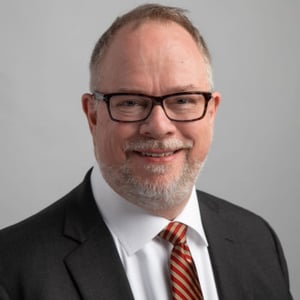
Managing Attorney of the Washington Office, Institute for Justice
William R. Maurer is the Managing Attorney of the Washington state office of the Institute for Justice, which engages in litigation in the areas of economic liberty, private property rights, educational choice, & freedom of speech.
Maurer is an advocate against the criminalization of poverty and the governmental use of the criminal and civil enforcement systems to raise revenue. He was lead counsel in a class action challenging the use of tickets to raise revenue in the city of Pagedale, Missouri. The suit resulted in a federal consent decree that reformed the city’s ticketing and municipal court system. He regularly speaks, teaches, and writes about the abuse of fines and fees in the criminal justice system. He was a participant in summits on taxation by citation put on by the White House and Department of Justice during the Obama Administration. His work on the issue includes serving as an advisory board member of the Fines and Fees Justice Center.
In addition to his work on criminal and civil justice reform, Maurer is a First Amendment litigator. In 2011, he successfully argued before the U.S. Supreme Court that Arizona’s punitive campaign financing regime was unconstitutional. Before the Washington Supreme Court, he successfully argued against efforts to classify radio commentary as a contribution under the state’s campaign finance law.
His cases and advocacy have been covered in the Washington Post, the New York Times, the Economist, the Wall Street Journal, and other major media outlets.
Maurer was named a “Washington Superlawyer” by Washington Law & Politics Magazine for several years. He is a chapter author in numerous legal reference works and has written several articles for law reviews and legal publications across the country.
Prior to joining IJ-WA, Maurer clerked for Washington Supreme Court Justice Richard Sanders and then practiced law at Perkins Coie LLP. Maurer received his law degree in 1994 from the University of Wisconsin – Madison, where he was an editor of the Wisconsin Law Review. He received his BA from Bard College in 1989.

Professor of Law, Antonin Scalia Law School, George Mason University
Adam Mossoff is Professor of Law at Antonin Scalia Law School, George Mason University. He has published extensively on why patents, copyrights, and other intellectual property rights have been—and should be—legally secured to innovators and creators as property rights. His scholarship has been relied on by the United States Supreme Court, by lower federal courts, and by U.S. federal agencies. He has been invited to testify numerous times before the U.S. Senate and the House of Representatives on intellectual property legislation. His writings on intellectual property policy have also appeared in the Wall Street Journal, New York Times, Forbes, Investors Business Daily, and in other media outlets. His journal articles can be downloaded here.
Professor Mossoff is a longstanding member of the Executive Committee of the Intellectual Property Practice Group of the Federalist Society, on which he served as Chairperson from 2016-2018, and he is Chair of the Intellectual Property Working Group of the Regulatory Transparency Project of the Federalist Society. He is a Senior Fellow and Chair of the Forum for Intellectual Property at the Hudson Institute, a Visiting Intellectual Property Fellow at the Heritage Foundation, and a member of the Board of Directors of the Center for Intellectual Property Understanding. He is a member of the Intellectual Property Rights Policy Committee of ANSI and he has served as Chair and Vice-Chair of the Intellectual Property Committee of the IEEE-USA, on which he remains a member in good standing.
Assistant Professor, George Mason University School of Law
Assistant Professor Christopher M. Newman graduated magna cum laude from the University of Michigan Law School in 1999, where he served as book review editor for the Michigan Law Review and received Michigan's highest law school award, the Henry M. Bates Memorial Scholarship. He also holds a BA in classical liberal arts awarded by St. John's College in Annapolis, Maryland.
Following law school, Professor Newman was a clerk for the Honorable Alex Kozinski of the U.S. Court of Appeals for the Ninth Circuit, with whom he co-published What's So Fair About Fair Use?, 46 J. Copyright Soc'y 513 (1999). From 2000-2007, he was a litigation associate with Irell & Manella LLP in Los Angeles, where he represented clients in disputes involving contracts, business torts, intellectual property, corporate and securities litigation, and appellate matters, as well as pro bono family and criminal law matters. Professor Newman left practice at the beginning of 2007 to serve an Olin/Searle Fellowship in Law at the UCLA School of Law, where he focused on his research and writing in the areas of property theory and intellectual property, and from January 2008 until his arrival at Mason Law served as a research fellow of UCLA's Intellectual Property Project.
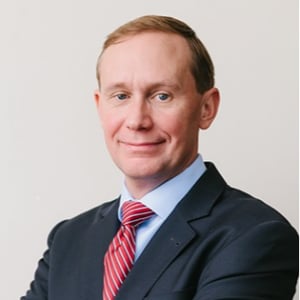
Associate Professor, Boston College Law School
David Olson is an associate professor and the Faculty Director of the Program on Innovation and Entrepreneurship. He teaches patent law, intellectual property law, antitrust law, and various seminars. His research and writing primarily focus on patents, copyrights, antitrust, and incentives for innovation and competition. Since joining BC Law in 2007, he has been recognized for his teaching excellence and contributions. In 2011, he received the Business & Law Society Faculty Award for Achievement in Business & Law. In 2012, he received the Professor Emil Slizewski Award for Faculty Excellence. For one semester in 2015, Olson served as a visiting professor at Pontifical Catholic University, Rio de Janeiro, Brazil, where he conducted research and taught a course on intellectual property.
Olson has published scholarly articles on patent law, copyright law, antitrust, music licensing, and first amendment copyright issues. His writing has been cited in Supreme Court and other legal opinions. He has testified before the U.S. Congress on matters of drug patents, FDA regulation, and antitrust.
The media frequently seeks Olson’s insights and opinions. He has been quoted in the Wall Street Journal, Associated Press, and Reuters, among others. He has appeared as a guest panelist on WBUR’s Radio Boston, WAMU's Kojo Namdi Show, and Public Radio Canada. His op-eds have appeared in the Chicago Tribune, Washington Times, and The Hill.
Olson came to Boston College from Stanford Law School's Center for Internet and Society, where he conducted research on patent law and litigated copyright fair use impact cases. Before entering academia, Olson practiced law as a patent litigator. He clerked for Judge Jerry Smith of the U.S. Court of Appeals for the Fifth Circuit.
New York Times Bestselling Author on Technology and Strategy, and Law
CoFounder, RightsClick
Steven’s extensive background in IP law and policy began as an attorney for the U.S. Senate Judiciary Committee, after which, he served as senior counsel for Policy and International Affairs at the U.S. Copyright Office and then as Chief Intellectual Property Counsel for the Global Intellectual Property Center of the U.S. Chamber of Commerce. Before co-founding RightsClick, he started the IP consultancy Sentinel Worldwide, and teaches copyright law at George Washington University Law School.


The Road to a National Curriculum: The Legal Aspects of the Common Core Standards, Race to the Top, and Conditional Waivers
Kent D. Talbert, Robert S. Eitel
Note from the Editor: This paper examines the U.S. Department of Education’s administration of the...
The Supreme Court Rules on Congress’s Power to Grant Copyrights to Public Domain Works – Golan v. Holder
Intellectual Property Practice Group Teleforum
What Did Congress Mean? Statutory Interpretation in the Age of Plain Meaning
Stopping Online Piracy: Where Should We Draw the Line?
Golan v. Holder - Post-Decision SCOTUScast
Christopher Newman
On January 18, 2012, the Supreme Court announced its decision in Golan v. Holder. The question...
Coleman v. Maryland Court of Appeals - Post-Argument SCOTUScast
Elizabeth Price Foley
On January 11, 2012, the Supreme Court heard oral argument in Coleman v. Maryland Court of...
Pleading, Discovery, and the Federal Rules: Exploring the Foundations of Modern Procedure
Martin Redish
Note from the Editor: In December 2010, the Federalist Society heard from a number of...
EPA Regulation of Fuel Economy: Congressional Intent or Climate Coup?
Marlo Lewis
Note from the Editor:1 This paper assesses EPA’s rule setting standards for motor vehicle greenhouse...
Florida Constitutional Challenge to Obamacare: It All Comes Down to Broccoli
Karen Harned
Note from the Editor: This paper provides an update on the litigation dealing with the...
Illuminating Citizens United: What the Decision Really Did
William R. Maurer
In January 2010, the U.S. Supreme Court issued one of its most controversial decisions in...