
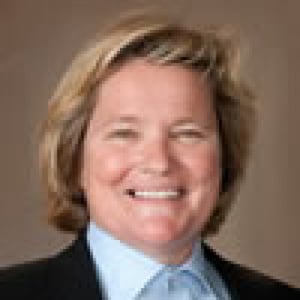
Attorney, Arguedas, Cassman & Headley, LLP
Ms. Arguedas is recognized as one of the finest criminal defense lawyers in the United States. In her 20-plus years in private practice, she has represented high-profile clients in some of the most visible cases around the country, as well as many little-known clients on relatively routine matters that never make the nightly news.
Ms. Arguedas is equally adept at handling complex white-collar cases, sensational murders, and the full range of less serious criminal cases. She works closely with other ACH lawyers as well as a team of investigators, jury consultants and other top experts she has assembled over more than two decades.
Singled out for her thorough preparation, shrewd strategizing, and impressive courtroom skills, Cris has been named the lawyer other lawyers would hire if they got arrested (California Lawyer), one of the 10 best lawyers in the Bay Area (San Francisco Chronicle, Northern California Super Lawyers), one of the 50 most influential women lawyers in the United States (National Law Journal), one of the 100 top lawyers in California (San Francisco Daily Journal, The Recorder), and one of the five most promising women lawyers in the country (Time). She was named to “The International Who’s Who of Business Crime Lawyers 2010”, is a fellow of the American College of Trial Lawyers, and in 2010 was inducted into the Trial Lawyer Hall of Fame of the Litigation Section of the State Bar of California (an honor shared by only 20 other attorneys in the State).
Ms. Arguedas expertise also makes her a highly sought-after lecturer, teacher, and advisor to public officials in both major parties. She has served on advisory committees for the District Attorney of San Francisco and for the current and two past United States Attorneys for the Northern District of California. At the statewide level, she has been appointed to several commissions on judicial standards by the Chief Justice of the California Supreme Court. Cris has also headed U.S. Senator Barbara Boxer’s Federal Judicial Selection Committee, which recommends nominees for the federal judiciary and for the U.S. Attorney for the Northern District of California.
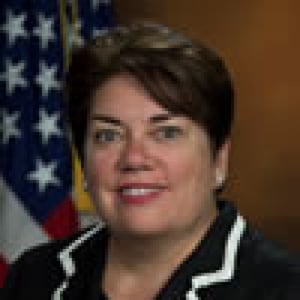
Assistant Attorney General for the Criminal Division, The United States Department of Justice
Leslie R. Caldwell was confirmed as the Assistant Attorney General for the Criminal Division on May 15, 2014.
As head of the Criminal Division, Ms. Caldwell oversees nearly 600 attorneys who prosecute federal criminal cases across the country, help develop criminal law and formulate criminal enforcement policy. She also works closely with the nation’s 93 United States Attorneys in the investigation and prosecution of criminal matters in their districts.
Ms. Caldwell has dedicated most of her professional career to handling federal criminal cases, both as a prosecutor and as defense counsel. From 2002 to 2004, Ms. Caldwell served as the director of the Justice Department’s Enron Task Force. When she worked at the U.S. Attorney’s Office for the Northern District of California from 1999 to 2002, she served as the Chief of the Criminal Division and the Chief of the Securities Fraud Section. During her eleven years in the U.S. Attorney’s Office for the Eastern District of New York from 1987 to 1998, her positions included Senior Trial Counsel for the Business & Securities Fraud Section and Chief of the Violent Criminal Enterprises Section. For her work on the Enron Task Force, Ms. Caldwell received the Attorney General’s Award for Exceptional Service. She is also the recipient of the Attorney General’s John Marshall Award for Trial of Litigation and the Attorney General’s Award for Fraud Prevention.
Prior to joining the Criminal Division, Ms. Caldwell was a partner at Morgan Lewis & Bockius LLP, a position she held since 2004. From 2004 to 2009, Ms. Caldwell was co-chair of the firm’s Corporate Investigations and White Collar Practice Group.
Ms. Caldwell received a B.A. in Economics from Pennsylvania State University and a J.D. from the George Washington University Law School.
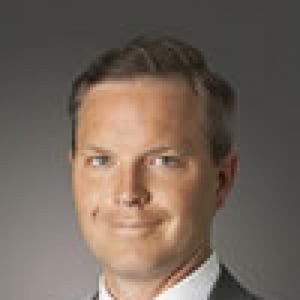
Partner, McGuireWoods
Mr. Hatch is a partner in the firm’s Government Investigations and White Collar Litigation group. Prior to joining McGuireWoods, Mr. Hatch spent nine years as a federal prosecutor with the United States Attorney’s Office, serving in the Alexandria, Richmond and Norfolk divisions of the Eastern District of Virginia. Most recently, Ben served as the Managing Assistant United States Attorney (AUSA) and Criminal Chief in the Norfolk Division.
During his time as an AUSA, Mr. Hatch successfully argued nine appeals in the U.S. Court of Appeals for the Fourth Circuit and conducted thirteen jury trials and two bench trials in the Norfolk, Alexandria and Richmond Divisions.
Mr. Hatch's work involved a diverse array of criminal cases, including prosecuting complex national security matters, white collar, public corruption and violent crime. Mr. Hatch received The John Marshall Award for Trial of Litigation, one of the highest awards given for trial practice by the Department of Justice, from then Attorney General Eric Holder for his role in a two month trial of several Somali pirates.
Mr. Hatch previously served as a law clerk to Justice Antonin Scalia of the Supreme Court of the United States and Judge J. Michael Luttig of the U.S. Court of Appeals for the Fourth Circuit. He graduated magna cum laude from the Harvard Law School. At Harvard, Mr. Hatch served as an editor of the Harvard Law Review. He was also part of a team that won Harvard Law School's Ames Moot Court Competition, and Ben received the George Leisure Award for being recognized as the best oralist.
For the last six years, Mr. Hatch has served as an Adjunct Professor teaching the Advanced Brief Writing class at the College of William and Mary Marshall-Wythe School of Law.
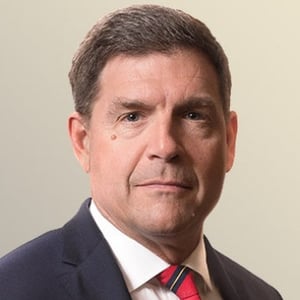
Partner, King & Spalding
John Richter is a trial and investigations partner in the Special Matters and Investigations Practice Group, and represents and defends companies, Boards of Directors, Board committees, and individuals facing a variety of white-collar criminal and regulatory enforcement matters, parallel civil litigation, and internal corporate investigations. John previously served as the Acting Assistant Attorney General in charge of the Criminal Division at the U.S. Department of Justice and as the U.S. Attorney for the Western District of Oklahoma, having been nominated by President George W. Bush and confirmed by unanimous consent of the U.S. Senate.
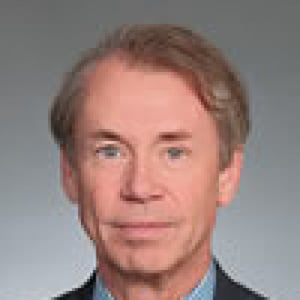
Partner, Goodwin Procter LLP
Joseph Savage, a partner in Goodwin's Securities Litigation & White Collar Defense Group, concentrates his practice on white collar criminal defense, governmental investigations work and complex civil litigation. His practice involves representing individuals and companies in a wide variety of fraud, false claims act, securities, health care, tax, public corruption, environmental and other investigations by federal, state and local law enforcement and government regulators, as well as representing companies and individuals in civil litigation, especially complex commercial disputes.
With more than 30 years’ experience, Mr. Savage is one of the most widely respected and accomplished trial lawyers in the nation. He is a Fellow of the American College of Trial Lawyers and is annually recognized by Chambers USA: America’s Leading Lawyers for Business and U.S. News-Best Lawyers, which named him Boston white collar “Lawyer of the Year” for 2017.
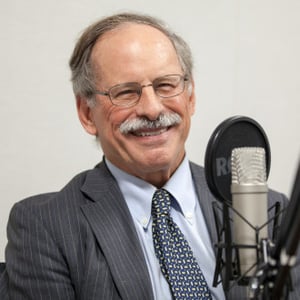
Freelance Journalist and Author
Stuart Taylor, Jr. is a Washington writer focusing on legal and policy issues and a National Journal contributing editor. He occasionally practices law.
Taylor has coauthored three books. All have been acclaimed by commentators across the ideological spectrum. In January 2017, KC Johnson and Taylor authored The Campus Rape Frenzy: The Attack on Due Process at America's Universities. In 2012, Richard Sander and Taylor authored Mismatch: How Affirmative Action Hurts Students It's Intended to Help, and Why Universities Won't Admit It. In 2007, Taylor and Johnson authored Until Proven Innocent: Political Correctness and the Shameful Injustices of the Duke Lacrosse Rape Fraud. Sander and Taylor have also filed amicus briefs in Supreme Court cases involving admissions preferences.
Since 1980, Taylor has done reporting and commentary about issues ranging from the biggest Supreme Court cases to race, voting rights, mindlessly excessive criminal penalties, guilt-presuming campus rape processes, journalistic bias, the death penalty, war powers, gerrymandering, guns, polarization, civil liberties, national security, torture, campaign finance, education, impeachment, and other issues. He has often been called one of the nation's best legal journalists and is known for challenging both liberal and conservative conventional wisdom.
Taylor was a reporter for The New York Times from 1980-1988, covering legal affairs and then the Supreme Court. He wrote commentaries and long features for The American Lawyer, Legal Times and their affiliates from 1989-1997, and for National Journal and Newsweek from 1998 through 2010. He has written (less often) on a freelance basis for numerous publications since 2010. He has written op-eds for The Washington Post, The New York Times, The Wall Street Journal, The Los Angeles Times, USA Today, and The New York Daily News and longer commentaries for RealClearPolitics, The Atlantic, The New Republic, the (late) Weekly Standard, National Review, Slate, The Daily Beast, Harper’s, Reader’s Digest, Time and other magazines. He has been interviewed on all major television and radio networks. He taught “Law and the News Media” at Stanford Law School in 2011 and 2012 and practices law on occasion.
Taylor graduated from Princeton University in 1970 with an A.B. in History. After working as a reporter for the Baltimore Evening Sun and Sun from 1971-1974, he moved to Harvard Law School, was a Harvard Law Review note editor, and graduated in 1977 at the top of his class, with high honors. He also won a Frederick Sheldon Traveling Fellowship and traveled around the world in 1977-1978 while studying freedom of the press in the United Kingdom and Kenya.
Taylor practiced law with Wilmer, Cutler & Pickering, in Washington, D.C., from 1977-1980 before returning to journalism in 1980 by joining the Washington Bureau of The New York Times.
Taylor's journalism honors include the 2009 Northern California Innocence Project Media Award for his work on the Duke lacrosse rape fraud; a 2002 National Headliner Award for best special magazine column on one subject; and a share of The American Lawyer’s National Magazine Award for a March 1990 special issue on the drug war. He was a National Magazine Award finalist in 1993 and 1997 and was nominated by The New York Times for a Pulitzer Prize in 1988.
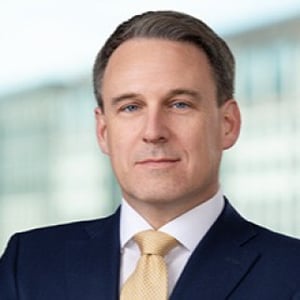
Chair, Global Antitrust Law Practice Group, Morrison Foerster
Alex Okuliar is Co-Chair of Morrison Foerster’s Global Antitrust Law Practice Group. He is the former Deputy Assistant Attorney General for Civil Antitrust Enforcement at the U.S. Department of Justice and a former advisor at the Federal Trade Commission.
Alex’s practice spans merger review, civil litigation, and criminal investigations. Over his twenty-five-year career, Alex has worked on nearly one thousand deals. He has deep experience guiding clients through the complex global merger clearance process and has litigated agency merger challenges through trial. He has also helped clients succeed in a wide range of federal and state cases, including class actions and private party disputes alleging price fixing, monopolization, group boycotts, market allocation, and tying. His understanding of the agency processes from the inside allows him to offer expert, timely, and practical advice to clients navigating merger and conduct investigations by the U.S. Department of Justice, the Federal Trade Commission, state Attorneys General, and foreign agencies. Alex’s work has been recognized by leading industry publications such as Chambers, The Legal 500 U.S., and Global Competition Review.
Outside of client work, Alex is a prolific thought leader and was recognized as a 2024 Top Author for Antitrust & Trade Regulation by JD Supra’s Readers’ Choice Awards. He currently serves as the co-chair of the ABA Antitrust Law Section’s Joint Conduct Committee and is the former chair of the Section’s Intellectual Property Committee and co-chair of the 2023 Antitrust Fall Forum on Artificial Intelligence. He is also a member of the Corporations, Securities & Antitrust Executive Committee of The Federalist Society for Law and Public Policy Studies.
Before law school, Alex co-founded and sold an online technology company. Alex received his B.S. in economics and B.A. with distinction in history from the Wharton School of the University of Pennsylvania and his J.D. from Vanderbilt University Law School.
Attorney, Arguedas, Cassman & Headley, LLP
Ms. Arguedas is recognized as one of the finest criminal defense lawyers in the United States. In her 20-plus years in private practice, she has represented high-profile clients in some of the most visible cases around the country, as well as many little-known clients on relatively routine matters that never make the nightly news.
Ms. Arguedas is equally adept at handling complex white-collar cases, sensational murders, and the full range of less serious criminal cases. She works closely with other ACH lawyers as well as a team of investigators, jury consultants and other top experts she has assembled over more than two decades.
Singled out for her thorough preparation, shrewd strategizing, and impressive courtroom skills, Cris has been named the lawyer other lawyers would hire if they got arrested (California Lawyer), one of the 10 best lawyers in the Bay Area (San Francisco Chronicle, Northern California Super Lawyers), one of the 50 most influential women lawyers in the United States (National Law Journal), one of the 100 top lawyers in California (San Francisco Daily Journal, The Recorder), and one of the five most promising women lawyers in the country (Time). She was named to “The International Who’s Who of Business Crime Lawyers 2010”, is a fellow of the American College of Trial Lawyers, and in 2010 was inducted into the Trial Lawyer Hall of Fame of the Litigation Section of the State Bar of California (an honor shared by only 20 other attorneys in the State).
Ms. Arguedas expertise also makes her a highly sought-after lecturer, teacher, and advisor to public officials in both major parties. She has served on advisory committees for the District Attorney of San Francisco and for the current and two past United States Attorneys for the Northern District of California. At the statewide level, she has been appointed to several commissions on judicial standards by the Chief Justice of the California Supreme Court. Cris has also headed U.S. Senator Barbara Boxer’s Federal Judicial Selection Committee, which recommends nominees for the federal judiciary and for the U.S. Attorney for the Northern District of California.
Assistant Attorney General for the Criminal Division, The United States Department of Justice
Leslie R. Caldwell was confirmed as the Assistant Attorney General for the Criminal Division on May 15, 2014.
As head of the Criminal Division, Ms. Caldwell oversees nearly 600 attorneys who prosecute federal criminal cases across the country, help develop criminal law and formulate criminal enforcement policy. She also works closely with the nation’s 93 United States Attorneys in the investigation and prosecution of criminal matters in their districts.
Ms. Caldwell has dedicated most of her professional career to handling federal criminal cases, both as a prosecutor and as defense counsel. From 2002 to 2004, Ms. Caldwell served as the director of the Justice Department’s Enron Task Force. When she worked at the U.S. Attorney’s Office for the Northern District of California from 1999 to 2002, she served as the Chief of the Criminal Division and the Chief of the Securities Fraud Section. During her eleven years in the U.S. Attorney’s Office for the Eastern District of New York from 1987 to 1998, her positions included Senior Trial Counsel for the Business & Securities Fraud Section and Chief of the Violent Criminal Enterprises Section. For her work on the Enron Task Force, Ms. Caldwell received the Attorney General’s Award for Exceptional Service. She is also the recipient of the Attorney General’s John Marshall Award for Trial of Litigation and the Attorney General’s Award for Fraud Prevention.
Prior to joining the Criminal Division, Ms. Caldwell was a partner at Morgan Lewis & Bockius LLP, a position she held since 2004. From 2004 to 2009, Ms. Caldwell was co-chair of the firm’s Corporate Investigations and White Collar Practice Group.
Ms. Caldwell received a B.A. in Economics from Pennsylvania State University and a J.D. from the George Washington University Law School.
Partner, McGuireWoods
Mr. Hatch is a partner in the firm’s Government Investigations and White Collar Litigation group. Prior to joining McGuireWoods, Mr. Hatch spent nine years as a federal prosecutor with the United States Attorney’s Office, serving in the Alexandria, Richmond and Norfolk divisions of the Eastern District of Virginia. Most recently, Ben served as the Managing Assistant United States Attorney (AUSA) and Criminal Chief in the Norfolk Division.
During his time as an AUSA, Mr. Hatch successfully argued nine appeals in the U.S. Court of Appeals for the Fourth Circuit and conducted thirteen jury trials and two bench trials in the Norfolk, Alexandria and Richmond Divisions.
Mr. Hatch's work involved a diverse array of criminal cases, including prosecuting complex national security matters, white collar, public corruption and violent crime. Mr. Hatch received The John Marshall Award for Trial of Litigation, one of the highest awards given for trial practice by the Department of Justice, from then Attorney General Eric Holder for his role in a two month trial of several Somali pirates.
Mr. Hatch previously served as a law clerk to Justice Antonin Scalia of the Supreme Court of the United States and Judge J. Michael Luttig of the U.S. Court of Appeals for the Fourth Circuit. He graduated magna cum laude from the Harvard Law School. At Harvard, Mr. Hatch served as an editor of the Harvard Law Review. He was also part of a team that won Harvard Law School's Ames Moot Court Competition, and Ben received the George Leisure Award for being recognized as the best oralist.
For the last six years, Mr. Hatch has served as an Adjunct Professor teaching the Advanced Brief Writing class at the College of William and Mary Marshall-Wythe School of Law.
Partner, King & Spalding
John Richter is a trial and investigations partner in the Special Matters and Investigations Practice Group, and represents and defends companies, Boards of Directors, Board committees, and individuals facing a variety of white-collar criminal and regulatory enforcement matters, parallel civil litigation, and internal corporate investigations. John previously served as the Acting Assistant Attorney General in charge of the Criminal Division at the U.S. Department of Justice and as the U.S. Attorney for the Western District of Oklahoma, having been nominated by President George W. Bush and confirmed by unanimous consent of the U.S. Senate.
Partner, Goodwin Procter LLP
Joseph Savage, a partner in Goodwin's Securities Litigation & White Collar Defense Group, concentrates his practice on white collar criminal defense, governmental investigations work and complex civil litigation. His practice involves representing individuals and companies in a wide variety of fraud, false claims act, securities, health care, tax, public corruption, environmental and other investigations by federal, state and local law enforcement and government regulators, as well as representing companies and individuals in civil litigation, especially complex commercial disputes.
With more than 30 years’ experience, Mr. Savage is one of the most widely respected and accomplished trial lawyers in the nation. He is a Fellow of the American College of Trial Lawyers and is annually recognized by Chambers USA: America’s Leading Lawyers for Business and U.S. News-Best Lawyers, which named him Boston white collar “Lawyer of the Year” for 2017.
Freelance Journalist and Author
Stuart Taylor, Jr. is a Washington writer focusing on legal and policy issues and a National Journal contributing editor. He occasionally practices law.
Taylor has coauthored three books. All have been acclaimed by commentators across the ideological spectrum. In January 2017, KC Johnson and Taylor authored The Campus Rape Frenzy: The Attack on Due Process at America's Universities. In 2012, Richard Sander and Taylor authored Mismatch: How Affirmative Action Hurts Students It's Intended to Help, and Why Universities Won't Admit It. In 2007, Taylor and Johnson authored Until Proven Innocent: Political Correctness and the Shameful Injustices of the Duke Lacrosse Rape Fraud. Sander and Taylor have also filed amicus briefs in Supreme Court cases involving admissions preferences.
Since 1980, Taylor has done reporting and commentary about issues ranging from the biggest Supreme Court cases to race, voting rights, mindlessly excessive criminal penalties, guilt-presuming campus rape processes, journalistic bias, the death penalty, war powers, gerrymandering, guns, polarization, civil liberties, national security, torture, campaign finance, education, impeachment, and other issues. He has often been called one of the nation's best legal journalists and is known for challenging both liberal and conservative conventional wisdom.
Taylor was a reporter for The New York Times from 1980-1988, covering legal affairs and then the Supreme Court. He wrote commentaries and long features for The American Lawyer, Legal Times and their affiliates from 1989-1997, and for National Journal and Newsweek from 1998 through 2010. He has written (less often) on a freelance basis for numerous publications since 2010. He has written op-eds for The Washington Post, The New York Times, The Wall Street Journal, The Los Angeles Times, USA Today, and The New York Daily News and longer commentaries for RealClearPolitics, The Atlantic, The New Republic, the (late) Weekly Standard, National Review, Slate, The Daily Beast, Harper’s, Reader’s Digest, Time and other magazines. He has been interviewed on all major television and radio networks. He taught “Law and the News Media” at Stanford Law School in 2011 and 2012 and practices law on occasion.
Taylor graduated from Princeton University in 1970 with an A.B. in History. After working as a reporter for the Baltimore Evening Sun and Sun from 1971-1974, he moved to Harvard Law School, was a Harvard Law Review note editor, and graduated in 1977 at the top of his class, with high honors. He also won a Frederick Sheldon Traveling Fellowship and traveled around the world in 1977-1978 while studying freedom of the press in the United Kingdom and Kenya.
Taylor practiced law with Wilmer, Cutler & Pickering, in Washington, D.C., from 1977-1980 before returning to journalism in 1980 by joining the Washington Bureau of The New York Times.
Taylor's journalism honors include the 2009 Northern California Innocence Project Media Award for his work on the Duke lacrosse rape fraud; a 2002 National Headliner Award for best special magazine column on one subject; and a share of The American Lawyer’s National Magazine Award for a March 1990 special issue on the drug war. He was a National Magazine Award finalist in 1993 and 1997 and was nominated by The New York Times for a Pulitzer Prize in 1988.
Attorney, Arguedas, Cassman & Headley, LLP
Ms. Arguedas is recognized as one of the finest criminal defense lawyers in the United States. In her 20-plus years in private practice, she has represented high-profile clients in some of the most visible cases around the country, as well as many little-known clients on relatively routine matters that never make the nightly news.
Ms. Arguedas is equally adept at handling complex white-collar cases, sensational murders, and the full range of less serious criminal cases. She works closely with other ACH lawyers as well as a team of investigators, jury consultants and other top experts she has assembled over more than two decades.
Singled out for her thorough preparation, shrewd strategizing, and impressive courtroom skills, Cris has been named the lawyer other lawyers would hire if they got arrested (California Lawyer), one of the 10 best lawyers in the Bay Area (San Francisco Chronicle, Northern California Super Lawyers), one of the 50 most influential women lawyers in the United States (National Law Journal), one of the 100 top lawyers in California (San Francisco Daily Journal, The Recorder), and one of the five most promising women lawyers in the country (Time). She was named to “The International Who’s Who of Business Crime Lawyers 2010”, is a fellow of the American College of Trial Lawyers, and in 2010 was inducted into the Trial Lawyer Hall of Fame of the Litigation Section of the State Bar of California (an honor shared by only 20 other attorneys in the State).
Ms. Arguedas expertise also makes her a highly sought-after lecturer, teacher, and advisor to public officials in both major parties. She has served on advisory committees for the District Attorney of San Francisco and for the current and two past United States Attorneys for the Northern District of California. At the statewide level, she has been appointed to several commissions on judicial standards by the Chief Justice of the California Supreme Court. Cris has also headed U.S. Senator Barbara Boxer’s Federal Judicial Selection Committee, which recommends nominees for the federal judiciary and for the U.S. Attorney for the Northern District of California.
Assistant Attorney General for the Criminal Division, The United States Department of Justice
Leslie R. Caldwell was confirmed as the Assistant Attorney General for the Criminal Division on May 15, 2014.
As head of the Criminal Division, Ms. Caldwell oversees nearly 600 attorneys who prosecute federal criminal cases across the country, help develop criminal law and formulate criminal enforcement policy. She also works closely with the nation’s 93 United States Attorneys in the investigation and prosecution of criminal matters in their districts.
Ms. Caldwell has dedicated most of her professional career to handling federal criminal cases, both as a prosecutor and as defense counsel. From 2002 to 2004, Ms. Caldwell served as the director of the Justice Department’s Enron Task Force. When she worked at the U.S. Attorney’s Office for the Northern District of California from 1999 to 2002, she served as the Chief of the Criminal Division and the Chief of the Securities Fraud Section. During her eleven years in the U.S. Attorney’s Office for the Eastern District of New York from 1987 to 1998, her positions included Senior Trial Counsel for the Business & Securities Fraud Section and Chief of the Violent Criminal Enterprises Section. For her work on the Enron Task Force, Ms. Caldwell received the Attorney General’s Award for Exceptional Service. She is also the recipient of the Attorney General’s John Marshall Award for Trial of Litigation and the Attorney General’s Award for Fraud Prevention.
Prior to joining the Criminal Division, Ms. Caldwell was a partner at Morgan Lewis & Bockius LLP, a position she held since 2004. From 2004 to 2009, Ms. Caldwell was co-chair of the firm’s Corporate Investigations and White Collar Practice Group.
Ms. Caldwell received a B.A. in Economics from Pennsylvania State University and a J.D. from the George Washington University Law School.
Partner, McGuireWoods
Mr. Hatch is a partner in the firm’s Government Investigations and White Collar Litigation group. Prior to joining McGuireWoods, Mr. Hatch spent nine years as a federal prosecutor with the United States Attorney’s Office, serving in the Alexandria, Richmond and Norfolk divisions of the Eastern District of Virginia. Most recently, Ben served as the Managing Assistant United States Attorney (AUSA) and Criminal Chief in the Norfolk Division.
During his time as an AUSA, Mr. Hatch successfully argued nine appeals in the U.S. Court of Appeals for the Fourth Circuit and conducted thirteen jury trials and two bench trials in the Norfolk, Alexandria and Richmond Divisions.
Mr. Hatch's work involved a diverse array of criminal cases, including prosecuting complex national security matters, white collar, public corruption and violent crime. Mr. Hatch received The John Marshall Award for Trial of Litigation, one of the highest awards given for trial practice by the Department of Justice, from then Attorney General Eric Holder for his role in a two month trial of several Somali pirates.
Mr. Hatch previously served as a law clerk to Justice Antonin Scalia of the Supreme Court of the United States and Judge J. Michael Luttig of the U.S. Court of Appeals for the Fourth Circuit. He graduated magna cum laude from the Harvard Law School. At Harvard, Mr. Hatch served as an editor of the Harvard Law Review. He was also part of a team that won Harvard Law School's Ames Moot Court Competition, and Ben received the George Leisure Award for being recognized as the best oralist.
For the last six years, Mr. Hatch has served as an Adjunct Professor teaching the Advanced Brief Writing class at the College of William and Mary Marshall-Wythe School of Law.
Partner, King & Spalding
John Richter is a trial and investigations partner in the Special Matters and Investigations Practice Group, and represents and defends companies, Boards of Directors, Board committees, and individuals facing a variety of white-collar criminal and regulatory enforcement matters, parallel civil litigation, and internal corporate investigations. John previously served as the Acting Assistant Attorney General in charge of the Criminal Division at the U.S. Department of Justice and as the U.S. Attorney for the Western District of Oklahoma, having been nominated by President George W. Bush and confirmed by unanimous consent of the U.S. Senate.
Partner, Goodwin Procter LLP
Joseph Savage, a partner in Goodwin's Securities Litigation & White Collar Defense Group, concentrates his practice on white collar criminal defense, governmental investigations work and complex civil litigation. His practice involves representing individuals and companies in a wide variety of fraud, false claims act, securities, health care, tax, public corruption, environmental and other investigations by federal, state and local law enforcement and government regulators, as well as representing companies and individuals in civil litigation, especially complex commercial disputes.
With more than 30 years’ experience, Mr. Savage is one of the most widely respected and accomplished trial lawyers in the nation. He is a Fellow of the American College of Trial Lawyers and is annually recognized by Chambers USA: America’s Leading Lawyers for Business and U.S. News-Best Lawyers, which named him Boston white collar “Lawyer of the Year” for 2017.
Freelance Journalist and Author
Stuart Taylor, Jr. is a Washington writer focusing on legal and policy issues and a National Journal contributing editor. He occasionally practices law.
Taylor has coauthored three books. All have been acclaimed by commentators across the ideological spectrum. In January 2017, KC Johnson and Taylor authored The Campus Rape Frenzy: The Attack on Due Process at America's Universities. In 2012, Richard Sander and Taylor authored Mismatch: How Affirmative Action Hurts Students It's Intended to Help, and Why Universities Won't Admit It. In 2007, Taylor and Johnson authored Until Proven Innocent: Political Correctness and the Shameful Injustices of the Duke Lacrosse Rape Fraud. Sander and Taylor have also filed amicus briefs in Supreme Court cases involving admissions preferences.
Since 1980, Taylor has done reporting and commentary about issues ranging from the biggest Supreme Court cases to race, voting rights, mindlessly excessive criminal penalties, guilt-presuming campus rape processes, journalistic bias, the death penalty, war powers, gerrymandering, guns, polarization, civil liberties, national security, torture, campaign finance, education, impeachment, and other issues. He has often been called one of the nation's best legal journalists and is known for challenging both liberal and conservative conventional wisdom.
Taylor was a reporter for The New York Times from 1980-1988, covering legal affairs and then the Supreme Court. He wrote commentaries and long features for The American Lawyer, Legal Times and their affiliates from 1989-1997, and for National Journal and Newsweek from 1998 through 2010. He has written (less often) on a freelance basis for numerous publications since 2010. He has written op-eds for The Washington Post, The New York Times, The Wall Street Journal, The Los Angeles Times, USA Today, and The New York Daily News and longer commentaries for RealClearPolitics, The Atlantic, The New Republic, the (late) Weekly Standard, National Review, Slate, The Daily Beast, Harper’s, Reader’s Digest, Time and other magazines. He has been interviewed on all major television and radio networks. He taught “Law and the News Media” at Stanford Law School in 2011 and 2012 and practices law on occasion.
Taylor graduated from Princeton University in 1970 with an A.B. in History. After working as a reporter for the Baltimore Evening Sun and Sun from 1971-1974, he moved to Harvard Law School, was a Harvard Law Review note editor, and graduated in 1977 at the top of his class, with high honors. He also won a Frederick Sheldon Traveling Fellowship and traveled around the world in 1977-1978 while studying freedom of the press in the United Kingdom and Kenya.
Taylor practiced law with Wilmer, Cutler & Pickering, in Washington, D.C., from 1977-1980 before returning to journalism in 1980 by joining the Washington Bureau of The New York Times.
Taylor's journalism honors include the 2009 Northern California Innocence Project Media Award for his work on the Duke lacrosse rape fraud; a 2002 National Headliner Award for best special magazine column on one subject; and a share of The American Lawyer’s National Magazine Award for a March 1990 special issue on the drug war. He was a National Magazine Award finalist in 1993 and 1997 and was nominated by The New York Times for a Pulitzer Prize in 1988.
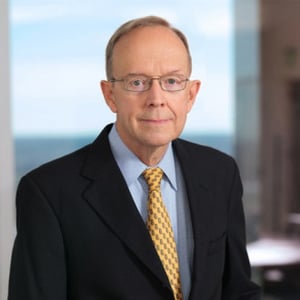
Former Deputy Attorney General for Virginia
Kennerly Davis has over forty years of experience in corporate management, public service, and the private practice of law. He has held senior executive positions in a Fortune 500 electric and gas company. He has served as Deputy Attorney General for the Commonwealth of Virginia, and as a legislative aide to a U.S. Senator and a U.S. Congressman. He practiced law for 25 years with Hunton Andrews Kurth LLP.
Davis is active in the Federalist Society as a member of the Regulatory Process Working Group of the Regulatory Transparency Project, and as a member of the Execuitve Committee of the Administrative Law and Regulation Practice Group. He is active in the national Alumni Free Speech Alliance, and involved in AFSA-chapter initiatives, including litigation, to publicize and correct the serious legal problems created by university Diversity, Equity, and Inclusion programs and the anonymous bias reporting systems used to enforce those DEI programs.
Davis writes and speaks on a wide variety of topics, including those related to the Founding of America, the natural rights foundation of our Republic, the constitutional rule of law, equal protection and free speech, DEI programs and bias reporting systems, capitalism, regulation and regulatory reform, and economic development. His articles have appeared in The Wall Street Journal, the Washington Examiner, the Richmond Times-Dispatch, The Federalist Society Review, the FedSoc Blog, Real Clear Energy, Townhall, the Daily Caller, reports of the Center for Strategic & International Studies, and other publications. He appears frequently on radio, podcasts, and television.
Davis graduated with honors from Cornell University with an A.B. degree in Government. He earned an M.A. degree from Pembroke College, Oxford, in Philosophy, Politics, and Economics. He was awarded a J.D. degree from Harvard Law School, and an M.B.A. degree from Virginia Commonwealth University.
Davis lives in Richmond, Virginia. He can be contacted by email: j.kendavis@verizon.net, and by phone: (804) 624-8525.
Partner, King & Spalding LLP
A partner in the FDA and Life Sciences practice at King & Spalding LLP, Marisa Maleck focuses on litigation, regulatory matters and public policy, with a focus on consumer products. As a former senior counsel at a bio-tech company and in private practice, Marisa has substantial experience with and is skilled in providing creative solutions in the face of uncertainty.
Marisa represents clients in a variety of matters with a focus on FDA-regulated products like food, beverages, pharmaceuticals, medical devices, wellness products, cosmetics, tobacco and cannabis. As a former senior counsel at an FDA-regulated biotech company and as a former partner in King & Spalding’s Litigation and Global Disputes practice group, she handled hundreds of suits in a multi-district litigation, multiple agency inquiries, an FTC lawsuit and 10+ state Attorney Generals actions. With a special focus on consumer fraud, social-media marketing and personal injury/wrongful death lawsuits, Marisa has successfully drafted and/or argued appellate briefs and critical motions in numerous cases—including class actions and complex litigation—before the U.S. Supreme Court, federal and state courts of appeals, and federal and state trial courts. She has also advocated tirelessly for her clients through engagement with agencies and policy-makers. She also advises her clients about legal risk (and how to avoid it) in investigations, enforcement actions, private litigation and private-equity investments.
Marisa also advocates for her clients’ interests in the court of public opinion. She is often solicited for her balanced legal analysis by members of the media. Marisa has appeared on (tv/radio) MSNBC, MSN, CNBC and NPR, and in (print) Newsweek, the National Law Journal, The Wall Street Journal, The Washington Post and Politico.
In addition, Marisa has an active pro-bono practice representing indigent defendants through federal appellate appointments as part of the Criminal Justice Act program and as a screener for the Mid-Atlantic Innocence Project.

Post-Election Update
Birmingham, AlabamaThe FCC: Death to the Set-Top Box! Long Live the Set-Top Box...or is it Apps?
Alexander P. Okuliar
Note from the Editor: This article discusses and critiques the FCC’s proposed set-top box rule....
The Limits of Federal Criminal Law
Cristina C. Arguedas, Leslie R. Caldwell, Benjamin L. Hatch, John C. Richter, Joseph F. Savage, Stuart S. Taylor
In the last year, the Department of Justice lost three major cases against Fed Ex,...
The Limits of Federal Criminal Law
Cristina C. Arguedas, Leslie R. Caldwell, Benjamin L. Hatch, John C. Richter, Joseph F. Savage, Stuart S. Taylor
In the last year, the Department of Justice lost three major cases against Fed Ex,...
The Limits of Federal Criminal Law
Criminal Law & Procedure Practice Group
Washington, DCCould a New Section 1983 Covering Federal Officials Curb Executive Branch Abuse of Constitutional Rights?
John Kennerly Davis
Note from the Editor: This article notes public distrust of the federal government in light...
The Limits of Federal Criminal Law--Livestream
In the last year, the Department of Justice lost three major cases against Fed Ex,...
Topics
SCOTUS Opinion: Federal Circuit reversed on smartphone infringement damages, insider trading conviction upheld, FCA seal violation does not mandate dismissal
Yesterday the Supreme Court issued three unamimous opinions: (1) Samsung Electronics v. Apple. By a vote...
The Misapplication of eBay v. MercExchange, LLC
Marisa Maleck
Note from the Editor: This article discusses the Supreme Court’s decision in eBay Inc. v....
The Trump administration and government contracting
A frequent complaint is that the Federal government pays more for similar products than do...