Partner, Holtzman Vogel Baran Torchinsky & Josefiak PLLC
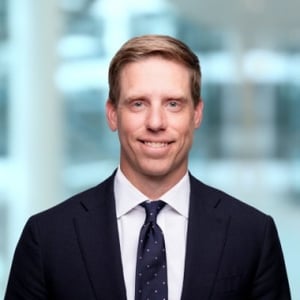
Jason Torchinsky is a partner at Holtzman Vogel Josefiak PLLC, specializing in campaign finance, election law, lobbying disclosure and issue advocacy groups. Politico recently named him one of the “50 Politicos to Watch,” and in 2007, Campaigns and Elections Magazine named him a “Rising Star of Politics.”
In addition to his practice counseling clients on compliance with campaign finance, ethics laws, lobbying disclosure and election laws, Mr. Torchinsky has served as lead counsel in a number of litigation matters. Representative matters in the redistricting area include Louisiana House of Representatives v. Holder (D.D.C.) (Section 5 pre-clearance action), City of Sandy Springs v. Holder (D.D.C.) (Section 5 bailout action), and Fletcher v. Lamone (D. Md.) (challenging Maryland’s Congressional Districting map). In the campaign finance context, he is currently representing clients in Alliance for America’s Future v. State (Nevada Supreme Court) and Van Hollen v. Federal Election Commission (D.D.C.) (Representing intervenor defendants). He has also represented Virginia candidates in recounts and voter registration challenges before various Virginia Circuit Courts.
Mr. Torchinsky frequently lectures on campaign finance redistricting and ethics related subjects and provides commentary to the media on election related matters.
Prior to joining the firm, Mr. Torchinsky was Counsel to the Assistant Attorney General for the Civil Rights Division at the United States Department of Justice. During the 2004 election cycle, he served as Deputy General Counsel to Bush-Cheney ’04 and Deputy General Counsel to the 2005 Presidential Inaugural Committee.
He holds a B.A. in Government and Public Policy from the College of William and Mary and a J.D. from the College of William and Mary School of Law. He is a member of the Virginia Bar, the District of Columbia Bar, the Republican National Lawyers Association and the Federalist Society.
Vice President, Edwin Meese III Institute for the Rule of Law, Advancing American Freedom
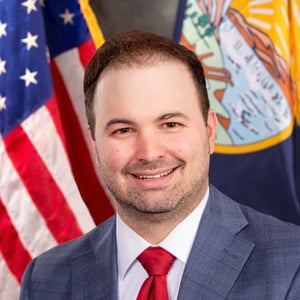
John G. Malcolm oversees Advancing American Freedom’s work to increase understanding of the Constitution and the rule of law as Vice President of the organization’s Edwin Meese III Institute for the Rule of Law. Malcolm brings to the challenge a wealth of legal expertise and experience in both the public and private sectors.
Prior to joining Advancing American Freedom in 2025, Malcolm was the Vice President of the Institute for Constitutional Government and the Director of the Meese Center for Legal and Judicial Studies at the Heritage Foundation. Prior to joining Heritage in 2012, Malcolm was general counsel at the U.S. Commission on International Religious Freedom, as well as a distinguished practitioner in residence at Pepperdine Law School. From 2004 to 2009, Malcolm was executive vice president and director of worldwide anti-piracy operations for the Motion Picture Association.
Malcolm served as a deputy assistant attorney general in the Department of Justice’s Criminal Division from 2001 to 2004, where he oversaw sections on computer crime and intellectual property, domestic security, child exploitation and obscenity, and special investigations. Immediately prior to that, he was a founding partner in the Atlanta law firm of Malcolm & Schroeder, LLP.
From 1990 to 1997, Malcolm was an assistant U.S. attorney in Atlanta, assigned to the fraud and public corruption section, and also an associate independent counsel, investigating fraud and abuse in the Department of Housing and Urban Development. He was honored with the Director’s Award for Superior Performance for his work in connection with the successful prosecution of Walter Leroy Moody Jr., who assassinated an 11th Circuit judge and the head of the Savannah chapter of the NAACP.
A graduate of Harvard Law School and Columbia College, Malcolm began his career as a law clerk to a federal district court judge and a federal appellate court judge, and as an associate at the Atlanta-based law firm of Sutherland, Asbill & Brennan (new Eversheds Sutherland).
Malcolm, who resides in Washington, D.C., serves on the Board of Trustees of the Washington National Opera and is a Senate-confirmed member of the Board of Directors of the Legal Services Corporation, the largest funder of civil legal aid in the United States.
Counsel to Commissioner Hester M. Peirce, U.S. Securities and Exchange Commission
Thaya Brook Knight was associate director of financial regulation studies at the Cato Institute. She is an attorney with extensive experience in securities regulation, small business capital access, and capital markets. Before joining Cato, she co-founded and served as general counsel of CrowdCheck, a company providing due diligence and disclosure services in the online investing market. Following the recent financial crisis, she served as investigative counsel for the congressional oversight panel charged with overseeing the expenditure of Troubled Asset Relief Program funds. She also spent several years with the Washington office of the law firm WilmerHale, where her practice focused on securities litigation, securities enforcement defense, and corporate investigations.
She holds a BA from Middlebury College and a JD from the University of Michigan Law School.
Founder and Principal, Johnson-IP Strategy & Consulting
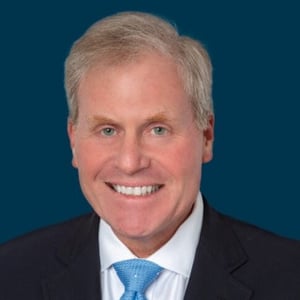
Philip S. Johnson is Founder and Principal of Johnson-IP Strategy & Consulting. He previously served as Senior Vice President - Law Department and Chief Intellectual Property Counsel of Johnson & Johnson, having joined the corporation in January 2000 after 27 years in private practice. In this position, he managed about 110 patent and trademark attorneys worldwide. Phil is Chair of the Board of Directors of the American Intellectual Property Law Education Foundation, Vice President and President Elect of the Intellectual Property Owners Association, and a member of the Board of the Intellectual Property Owners Association Education Foundation (Past President). He is also a member of the Steering Committee of the Coalition for 21st Century Patent Reform, of the Association of Corporate Patent Counsel (Past President) and of PhRMA’s IP Focus Group (Chair Emeritus). Previously, Phil served as President of INTERPAT.
Before joining Johnson & Johnson, Phil was a senior partner and co-chair of IP litigation at Woodcock Washburn in Philadelphia, where he specialized in intellectual property issues affecting major pharmaceutical, medical device and consumer product companies. Phil has served as trial counsel in over 100 patent cases, including over 50 resulting in reported decisions of the federal district courts and/or of the Federal Circuit Court of Appeals. Phil regularly testifies before both the House and Senate Judiciary Committees on the subject of patent law reform and, more recently, abusive patent litigation. Phil served as a member of Chief Judge Michel’s Advisory Council on Patent Reform, and was recognized in the Congressional Record as a member of the Minority Whip’s “Kitchen Cabinet” for the America Invents Act. Thereafter, Phil served as IPO’s representative on the ABA-AIPLA-IPO committee of six experts (“COSE”) formed at Director Kappos’ request to propose to the USPTO implementing regulations for the PGR-IPR post-grant proceedings created by the AIA.
Phil co-authored “Compensatory Damages Issues In Patent Infringement Cases, A Pocket Guide for Federal District Court Judges,” published by the Federal Judicial Center, and has served that Center as a faculty member on its IP-related judicial education programming. Phil was also featured in the Landslide Publication March/April 2013 issue. The New Jersey Intellectual Property Law Association awarded Phil with its 2013 Jefferson Medal, presented on June 7, 2013.
Phil received his Bachelor of Science degree, cum laude with distinction in biology from Bucknell University, and his J.D. degree from Harvard Law School, where his third year advisor was now-Supreme Court Justice Stephen Breyer.
Professor of Law, Antonin Scalia Law School, George Mason University
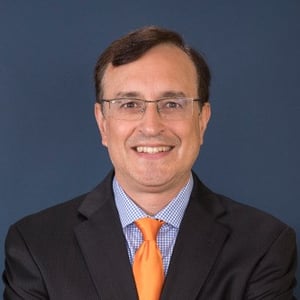
Adam Mossoff is Professor of Law at Antonin Scalia Law School, George Mason University. He has published extensively on why patents, copyrights, and other intellectual property rights have been—and should be—legally secured to innovators and creators as property rights. His scholarship has been relied on by the United States Supreme Court, by lower federal courts, and by U.S. federal agencies. He has been invited to testify numerous times before the U.S. Senate and the House of Representatives on intellectual property legislation. His writings on intellectual property policy have also appeared in the Wall Street Journal, New York Times, Forbes, Investors Business Daily, and in other media outlets. His journal articles can be downloaded here.
Professor Mossoff is a longstanding member of the Executive Committee of the Intellectual Property Practice Group of the Federalist Society, on which he served as Chairperson from 2016-2018, and he is Chair of the Intellectual Property Working Group of the Regulatory Transparency Project of the Federalist Society. He is a Senior Fellow and Chair of the Forum for Intellectual Property at the Hudson Institute, a Visiting Intellectual Property Fellow at the Heritage Foundation, and a member of the Board of Directors of the Center for Intellectual Property Understanding. He is a member of the Intellectual Property Rights Policy Committee of ANSI and he has served as Chair and Vice-Chair of the Intellectual Property Committee of the IEEE-USA, on which he remains a member in good standing.
Dana Rao is the Vice President of Intellectual Property and Litigation at Adobe Systems. He oversees all aspects of Adobe’s intellectual property and litigation matters, including procuring, licensing, and defending Adobe’s patents, trademarks, and copyrights, and managing all aspects of Adobe’s litigation practice.
Before Adobe, Dana was an Associate General Counsel of Patents at Microsoft Corporation, focusing on their Windows Phone and Xbox patent issues. Dana began his legal career at Fenwick & West, focusing on patent prosecution, licensing, and litigation. Dana received his undergraduate degree from Villanova University in Electrical Engineering, and received his law degree from The George Washington University School of Law, where he graduated Order of the Coif.
Partner, Fenwick & West LLP
Robert Sachs is President at Robert R. Sachs PC and concentrates his practice on strategic patent counseling and prosecution for software technologies. Bob has extensive experience in developing patent portfolios for companies of all sizes, from startups to multi-nationals.
He is the primary evaluator for standards essential patents on today's most important audio, video, and communications technologies, including 3GPP-LTE, IEEE 802.11, MPEG-4 AAC, DVB-MHP, OCAP, Digital Radio Mondiale, AMR-NB, AMR-WB, AMR-WB+, G.711, G.729, AGORA-C, and NFC-IP. He conducts and supervises patent evaluations in US, as well as Europe, Japan, China, South Korea, Mexico and Canada.
One of Bob’s areas of expertise is patentable subject matter: the question of what kinds of inventions are eligible for patent protection, and particularly whether software and life sciences related inventions are patentable. This issue has become the new battleground in the development of the patent law, with several important cases having been recently decided by the Supreme Court and the Court of Appeals for the Federal Circuit. While most authors and scholars take a results-oriented approach to this question, Bob instead starts with the first principles of creativity and innovation that drive humans to solve functional problems. From that understanding, software and life sciences inventions are squarely in the domain of what the patent law is designed to protect.
George R. Killam Jr. Chair of Criminal Law; Director, Center for Military Law & Policy, Texas Tech University School of Law
Geoffrey S. Corn is the George R. Killam Jr. Chair of Criminal Law and Director of the Center for Military Law and Policy.
Professor Corn comes to Texas Tech University School of Law from South Texas College of Law Houston where he was the Gary A. Kuiper Distinguished Professor of National Security.
Prior to joining the South Texas College of Law Houston faculty in 2005, Professor Corn served in the U.S. Army for 21 years as an officer, and a final year as a civilian legal advisor, retiring in the rank of Lieutenant Colonel. Professor Corn’s teaching and scholarship focuses on the law of armed conflict, national security law, criminal law and procedure, and prosecutorial ethics. He has appeared an expert witness at the Military Commission in Guantanamo, the International Criminal Tribunal for the Former Yugoslavia, and in federal court.
He is co-author of Criminal Law: Classroom to Courtroom (forthcoming), The Law of Armed Conflict: An Operational Perspective, The Laws of War and the War on Terror, National Security Law and the Constitution, National Security Law and Policy: a Student Treatise, The Law in War: A Concise Overview, and Principles of Counter-Terrorism Law.
His Army career included service as the Army’s senior law of war expert advisor, tactical intelligence officer in Panama; supervisory defense counsel for the Western United States; Chief of International Law for US Army Europe; Professor of International and National Security Law at the US Army Judge Advocate General’s School; and Chief Prosecutor for the 101st Airborne Division. He earned is B.A. from Hartwick College in Oneonta, NY, his J.D. with highest honors from George Washington University, his LLM as the distinguished graduate from the U.S. Army Judge Advocate General’s School. He is also a distinguished military graduate of U.S. Army Officer Candidate School, and a graduate of U.S. Army Command and General Staff Course.
Senior Fellow, National Security Institute, Antonin Scalia School of Law, George Mason University; Retired Professor, Distinguished Fellow and Co-Founder, Center for National Security Law, University of Virginia School of Law (1987-2020)
Robert F. Turner holds both professional and academic doctorates from the University of Virginia School of Law. He co-founded the Center for National Security Law with Professor John Norton Moore in April 1981 and served as its associate director for 39 years, except for two periods of government service in the 1980s and during 1994-95, when he occupied the Charles H. Stockton Chair of International Law at the U.S. Naval War College in Newport, Rhode Island. He retired from UVA in January 2020 and currently serves as a non-resident senior fellow at the GMU National Security Institute. He also served briefly in 2020 as President of the Crime Prevention Research Center—one of the most respected pro-Second Amendment groups in the country—while its founder, Dr. John Lott, was on leave of absence.
A former Army captain and veteran of two tours in Vietnam, Turner served as a research associate and public affairs fellow at Stanford's Hoover Institution on War, Revolution and Peace before spending five years in the mid-1970s as national security adviser to U.S. Senator Robert P. Griffin, a member of the Senate Foreign Relations Committee (where Turner anticipated by seven years the Supreme Court’s landmark INS v. Chadha decision, striking down legislative vetoes). He also served in the executive branch during the Reagan administration as a member of the Senior Executive Service, first in the Pentagon as special assistant to the undersecretary of defense for policy, then in the White House as counsel to the President's Intelligence Oversight Board, and at the State Department as principal deputy and then acting assistant secretary for legislative affairs. In 1986, he became the first president of the congressionally established United States Institute of Peace.
A former three-term chairman of the ABA Standing Committee on Law and National Security (and for many years editor of the ABA National Security Law Report), Turner also chaired the Executive-Congressional Relations Subcommittee of the ABA Section on International Law and Practice and chaired or co-chaired the National Security Law Subcommittee of the Federalist Society’s International and National Security Law Practice Group for several years.
Turner taught undergraduate courses at Virginia on international law, U.S. foreign policy, the Vietnam War and foreign policy and the law in what is now the Woodrow Wilson Department of Politics. In addition, he co-taught National Security Law and advanced national security law seminars on the Indochina War and on war and peace with Moore at the Law School.
The author or editor of 17 books and monographs (including co-editor of the Center's 1,600-page National Security Law & Policy casebook, National Security Law Documents, and Legal Issues in the Struggle Against Terror) and numerous articles in law reviews and other professional journals, Turner has also contributed articles to most of the major U.S. newspapers, including The New York Times and USA Today. In an op-ed published in The International Herald Tribune in September 1990, he and Moore were the first to call for a war-crimes trial for Iraqi dictator Saddam Hussein and for international controls over Iraq's weapons of mass destruction, and the following month he wrote the lead story in The Washington Post Sunday Outlook Section, “Killing Saddam: Would It Be a Crime?,” arguing that Hussein would be a lawful target during Operation Desert Storm. (His reasoning contributed to the modern legal justification for drone strikes targeting specific terrorist leaders.) Three years before the terrorist attacks of September 11, 2001, Turner published an op-ed in USA Today entitled: “In Self-defense, U.S. Has Right to Kill bin Laden.”
In July 2007, he co-authored an article in The Washington Post with former U.S. Marine Corps Commandant General P.X. Kelley, “War Crimes and the White House,” criticizing the use of unlawful “enhanced interrogation techniques” by the Central Intelligence Agency. On the 40th anniversary of the fall of Saigon he authored an article in The Wall Street Journal, “Saigon’s Fall Still Echoes Today,” noting that after the war ended, Hanoi admitted it had made a decision in 1959 to open the Ho Chi Minh Trail and start sending troops, weapons and supplies into South Vietnam to overthrow its government — just as the United States had charged. In 2010 Turner received the first “person of the year” award from SACEI, a major Vietnamese-American human rights organization.
A frequent lecturer and debater, Turner has spoken at more than 100 law schools around the nation and in other fora — taking on as many as four opponents at a time. His debate opponents have included former or future deans of Yale, Stanford, the University of Chicago and Berkeley law schools. Following a 1987 debate against Dean Harlan Cleveland (Rhodes Scholar, U.S. Ambassador to NATO, and Presidential Medal of Freedom recipient) in which Turner defended the legality of U.S. support for the Nicaraguan contras during the Reagan Administration, the host student debating societies awarded Turner the victory by an 85-to-15 percent margin.
Turner has also written and lectured widely on University of Virginia founder and America’s third president Thomas Jefferson. In 2000-2001 he chaired the Jefferson-Hemings Scholars Commission. In his 2012 book Master of the Mountain, Jefferson critic Henry Wiencek described Turner as “Jefferson’s chief scholarly defender."
A former distinguished lecturer at the U.S. Military Academy at West Point, Turner is a member of the Council on Foreign Relations, the Academy of Political Science, the Committee on the Present Danger, The Heterodox Academy, and other professional organizations. He maintained a 4.0 gpa as a graduate student at Stanford in History and Political Science and in the UVA Department of Government and Foreign Affairs and was the first person admitted directly to the UVA academic law doctorate (SJD) program without first being required to earn an LL.M. master’s degree. He was selected for inclusion in Who’s Who in American Law less than two years after graduating from law school and Who’s Who in the World before he reached the age of 40. Turner has testified before more than a dozen different congressional committees on issues of international or constitutional law and other topics.
Assistant Professor of Law, Stanford Law School
Gregory Ablavsky’s scholarship focuses on early American legal history, particularly on issues of sovereignty, territory, and property in the early American West. A lawyer and historian, his publications explore a range of topics including the history of the Indian Commerce Clause and the importance of Indian affairs in shaping the U.S. Constitution and the balance of power between states and the federal government. In 2015, the American Society of Legal History named him a Kathryn T. Preyer Scholar. He is currently writing a book based on his dissertation, “The Adjudicatory State: Sovereignty, Property, and the Law in the U.S. Territories, 1783-1803.”
Prior to joining the Stanford Law faculty in 2015, Professor Ablavsky was the Sharswood Fellow in Law and History at the University of Pennsylvania, where he taught courses on land use law and the legal history of empire and race. He clerked for Judge Anthony Scirica of the U.S. Court of Appeals for the Third Circuit. He was also a law clerk for the Native American Rights Fund in Washington, D.C.
Vice President, Global Policy, BSA | The Software Alliance
Aaron Cooper serves as Vice President, Global Policy with BSA | The Software Alliance. In this role, Cooper leads BSA’s global policy team and contributes to the advancement of BSA members’ policy priorities: data privacy and security, intellectual property, and trade. Cooper joined BSA in February 2016 as Vice President, Strategic Policy Initiatives.
Prior to joining BSA, Cooper served as the Chief Counsel for Intellectual Property and Antitrust Law for Chairman Patrick Leahy on the U.S. Senate Judiciary Committee. Most recently, Cooper was of counsel at Covington and Burling, where he provided strategic counseling and policy advice on a range of intellectual property, communications, and privacy issues. Cooper has also served as Legal Counsel to Senator Paul Sarbanes.
Cooper is a graduate of Princeton University and Vanderbilt Law School. He clerked for Judge Gerald Tjoflat on the U.S. Court of Appeals for the Eleventh Circuit.
Partner, Duane Morris LLP
Brian Pandya is Partner at Duane Morris LLP. A member of the firm’s Trial Practice Group, Brian represents technology, manufacturing, and healthcare companies in high-stakes litigation, arbitrations, investigations and appeals. He has served as lead trial counsel in a range of intellectual property, antitrust, complex commercial and white-collar matters. He also regularly counsels clients on cybersecurity and national security issues, particularly matters concerning emerging technologies and artificial intelligence.
Before joining Duane Morris, Brian served at the U.S. Department of Justice as Deputy Associate Attorney General from 2019-21, where he oversaw investigations and litigation undertaken by the Antitrust Division and Civil Division and served on several high-profile task forces and trial teams. Brian was also previously a litigation and IP partner at another prominent Washington, DC firm.
Brian clerked for Judge Leonard Davis on the United States District Court for the Eastern District of Texas. He is a two-time recipient of the Federal Circuit Bar Association’s Pro Bono Advocacy Award for work on behalf of military veterans and has served as volunteer federal public defender in the Eastern District of Virginia, among many other bar and community engagements.
Brian graduated cum laude from the University of Michigan Law School, where he was articles editor of the Michigan Telecommunications and Technology Law Review, and with honors and high distinction in mechanical engineering from Penn State University, where he received the Ralph Dorn Hetzel Memorial Award.
Partner, Shore Chan Depumpo LLP
Michael W. Shore practices in the areas of intellectual property commercialization, business litigation, and other select litigation matters. His intellectual property practice is multifaceted, aiding clients in commercializing their patent and copyright portfolios through strategic development, licensing and litigation. Mr. Shore currently represents clients ranging from Fortune 500 companies to individuals located in the United States, Japan, Great Britain, Luxembourg, Taiwan (ROC) and the People's Republic of China. Prior to forming Shore Chan DePumpo LLP, Mr. Shore headed the Intellectual Property Licensing and Litigation Practice Group as a partner at Akin Gump Strauss Hauer & Feld, LLP.
Judge, United States Court of Appeals, Ninth Circuit
Judge Carlos Bea serves as a judge on the United States Court of Appeals for the Ninth Circuit. He received his Bachelor's Degree from Stanford University in 1956 and his J.D. from Stanford Law School in 1958. Judge Bea was born in San Sebastian, Spain, and immigrated with his family to Cuba in 1939. In 1952, he represented Cuba on the Cuban National basketball team in the Helsinki Olympics. Judge Bea became a naturalized citizen of the United States in 1958. He engaged in private practice in San Francisco, principally in the area of civil trials (jury and non-jury), from 1959-75 at Dunne, Phelps & Mills and from 1975-90 at Carlos Bea, A Law Corporation. He taught courses in civil litigation advocacy at Hastings College of Law and Stanford Law School. From 1990 to 2003, Judge Bea served as a judge of the San Francisco Superior Court. He was nominated by President George W. Bush to the United States Court of Appeals for the Ninth Circuit and was confirmed in 2003.
Judge Bea and his wife Louise reside in San Francisco, where they raised their four sons, Sebastian, Alexander, Nicholas, and Dominic.
Chancellor's Professor of Law and Political Science, University of California, Irvine School of Law
Professor Richard L. Hasen is Chancellor’s Professor of Law and Political Science at the University of California, Irvine. Hasen is a nationally recognized expert in election law and campaign finance regulation, and is co-author of a leading casebook on election law.
From 2001-2010, he served (with Dan Lowenstein) as founding co-editor of the quarterly peer-reviewed publication, Election Law Journal. He is the author of over 100 articles on election law issues, published in numerous journals including the Harvard Law Review, Stanford Law Review and Supreme Court Review. He was elected to The American Law Institute in 2009 and served as an Adviser on ALI’s law reform project, Principles of Election Law: Resolution of Election Disputes.
Professor Hasen was named one of the 100 most influential lawyers in America by The National Law Journal in 2013, and one of the Top 100 Lawyers in California in 2005 and 2016 by the Los Angeles and San Francisco Daily Journal.
His op-eds and commentaries have appeared in many publications, including The New York Times, The Washington Post, Politico, and Slate. Hasen also writes the often-quoted Election Law Blog, which the ABA Journal named to its “Blawg 100 Hall of Fame” in 2015. His newest book, The Justice of Contradictions: Antonin Scalia and the Politics of Disruption, will be published in 2018 by Yale University Press.
Professor Hasen holds a B.A. degree (with highest honors) from UC Berkeley, and a J.D., M.A., and Ph.D. (Political Science) from UCLA. After law school, Hasen clerked for the Honorable David R. Thompson of the United States Court of Appeals for the Ninth Circuit, and then worked as a civil appellate lawyer at the Encino firm Horvitz and Levy.
From 1994-1997, Hasen taught at the Chicago-Kent College of Law and from 1998-2011 he taught at Loyola Law School, Los Angeles, where he was named the William H. Hannon Distinguished Professor of Law in 2005. He joined the UC Irvine School of Law faculty in July 2011, and is a faculty member of the UC Irvine Jack W. Peltason Center for the Study of Democracy.
Associate Attorney, Gibson, Dunn & Crutcher LLP
Joseph R. Rose is an associate in the San Francisco office of Gibson, Dunn & Crutcher. He practices in the firm’s Litigation Department, focusing on white collar defense, antitrust, and appellate litigation.
Representative matters include:
Mr. Rose also assists with internal investigations, and has achieved favorable resolution of government and regulatory inquiries on behalf of technology companies and financial institutions. Responsibilities include factual investigation, preparing for and conducting witness and employee interviews, managing document review and production, and drafting proffers and other reports to regulators.
Mr. Rose received his J.D. from the University of California, Berkeley School of Law in 2011, where he was Production Editor of the Berkeley Technology Law Journal, co-director of Berkeley Law’s McBaine Moot Court Competition, and a member of the Board of Advocates (moot court). Prior to law school, Mr. Rose worked as a Paralegal Specialist at the U.S. Department of Justice, Antitrust Division, assisting in grand jury investigations, civil merger reviews, and managing and presenting exhibits at trial. He earned his B.A. in Law, Letters and Society, with special honors, from the University of Chicago in 2005.
Chairman and Founder, Institute for Free Speech; Josiah H. Blackmore II/Shirley M. Nault Designated Professor of Law, Capital University Law School
Smith has authored over 40 articles on campaign finance reform, appearing in academic publications such as the Yale Law Journal and Georgetown Law Journal, and popular publications such as The Wall Street Journal, USA Today, and National Review. He has appeared on The O’Reilly Factor, Hardball with Chris Matthews, Bill Moyers Journal, the Lehrer News Hour, Fox News Special Report, ABC News, Washington Journal, and numerous other national and local television and radio programs.
As an FEC Commissioner, Smith won plaudits for his integrity and refusal to put partisan interests ahead of his duties, as well as his steadfast support for free speech. For his honesty and integrity, the Wall Street Journal dubbed him, “the only honorable man in this bordello.” Smith now serves as the Josiah H. Blackmore II/Shirley M. Nault Designated Professor of Law at Capital University Law School. He has won numerous awards for his scholarship and teaching, and is a past member of the Advisory Committee to the American Bar Association’s Standing Committee on Election Law. He currently serves on the Editorial Board of the Election Law Journal, and the Editorial Advisory Board of the Harvard Journal of Law and Public Policy. Smith also serves on the Board of Trustees of the Buckeye Institute for Public Policy Studies, is a senior fellow at the Goldwater Institute and is a member of the Board of Scholars of the Mackinac Center for Public Policy. Smith is a cum laude graduate of Harvard Law School and Kalamazoo College and holds an honorary doctorate from Augustana College.
League of Women Voters v. Commonwealth of Pennsylvania
Jason Torchinsky
In League of Women Voters v. Commonwealth of Pennsylvania, the Supreme Court of Pennsylvania determined that...
Topics
Docket Watch: League of Women Voters v. Commonwealth of Pennsylvania
In League of Women Voters v. Commonwealth of Pennsylvania, the Supreme Court of Pennsylvania determined...
Topics
Congress Should Write the Laws Before the Courts Do - United States v. Microsoft Corp.
In 2013, the United States issued a search warrant for emails in the possession of...
Should Congress Amend Section 101 of the Patent Act?
Intellectual Property Practice Group
TeleforumA Look at the Role of Congress in Korea, Vietnam, Afghanistan & ISIS
South Texas Student Chapter
Houston, TXTopics
DC Circuit Decision on CFPB Leadership
Today, the U.S. Court of Appeals for the District of Columbia, sitting en banc, issued...
New Frontiers for Tribal Immunity: Patents, Pharmaceuticals, and the PTAB
TeleforumThe Problem with the Proliferation of Collateral Consequences
John G. Malcolm
Note from the Editor: This article discusses collateral consequences of criminal convictions and argues that...
Donor privacy and Campaign-Related Speech
2018 Annual Western Chapters Conference
Simi Valley, CACyan, Inc. v. Beaver County Employees Retirement Fund - Post-Argument SCOTUScast
Thaya Brook Knight
On November 28, 2017, the Supreme Court heard argument in Cyan, Inc. v. Beaver County...