
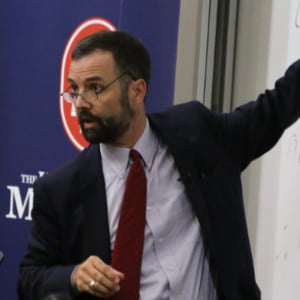
Professor of Law and Jamie L. Whitten Chair in Law and Government, University of Mississippi School of Law
Christopher Green (https://law.olemiss.edu/faculty-directory/christopher-green/) is Professor of Law and Jamie L. Whitten Chair in Law and Government at the University of Mississippi, where he has taught since 2006. He is a graduate of Princeton University and Yale Law School, and has a PhD in philosophy from the University of Notre Dame. He clerked for Judge Rhesa H. Barksdale on the Fifth Circuit and is the author of Equal Citizenship, Civil Rights, and the Constitution: The Original Sense of the Privileges or Immunities Clause (2015) and a large number of articles and essays on constitutional theory and the Fourteenth Amendment, including the two-part Original Sense of the (Equal) Protection Clause and Clarity and Reasonable Doubt in Early State-Constitutional Judicial Review. He is an affiliated scholar with the University of San Diego Center for the Study of Constitutional Originalism.
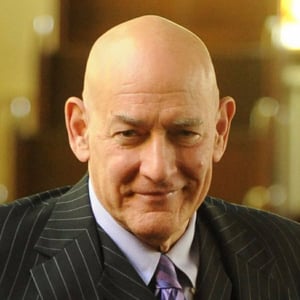
Raoul Berger Professor of Legal History at Northwestern University School of Law
Stephen Presser is a leading American legal historian and expert on shareholder liability for corporate debts. He is frequently an invited witness before committees of the U.S. Senate and House of Representatives on issues of constitutional law. He holds a joint appointment with the J. L. Kellogg Graduate School of Management and also teaches in Northwestern's history department.

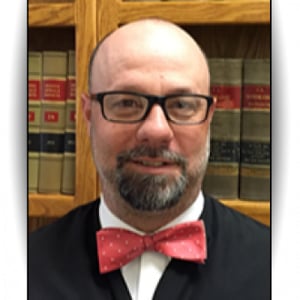
Director, Center for Judicial Engagement, Institute for Justice
Anthony Sanders is the Director of the Center for Judicial Engagement (CJE) at the Institute for Justice and a senior attorney. He joined IJ in 2010. As CJE’s director, he educates the public about the proper role of judges in enforcing constitutional limits on the size and scope of government. As a senior attorney he litigates cutting-edge constitutional cases protecting economic liberty, private property, freedom of speech and other individual liberties in both federal and state courts across the country.
One area of Anthony’s expertise is on using state constitutions to protect individual rights. He is the author of the book, published by University of Michigan Press, Baby Ninth Amendments: How Americans Embraced Unenumerated Rights and Why It Matters. He has also written several law review articles on state constitutional law, unenumerated rights, judicial review, economic liberty, property rights, international law, and other subjects. His work has appeared in publications such as the Iowa Law Review, Minnesota Law Review, American University Law Review, and Rutgers Law Review, and he has published opinion pieces in leading media outlets across the country. Further, he frequently speaks to various audiences on these matters and others, including judicial engagement, free speech, civil forfeiture, and the continuing importance of Magna Carta. Additionally, he hosts the weekly Short Circuit podcast, which often records live in front of law student audiences.
Anthony has litigated several cases in various state courts on state constitutional protections, as well as in federal courts on matters such as economic liberty, free speech, administrative law, and fines and fees abuse. Prior to joining IJ, Anthony served as a law clerk to Justice W. William Leaphart on the Montana Supreme Court. Anthony also worked for several years in private practice in Chicago where he was an active member of the Chicago Bar Association and chaired its Civil Rights Committee.
Anthony received his law degree cum laude from the University of Minnesota Law School in 2004, where he served as an articles submission editor for the Minnesota Law Review. He received his undergraduate degree from Hamline University in St. Paul, Minnesota, and his master’s degree from the University of Wisconsin-Madison. A dual U.S. and U.K. citizen, Anthony grew up on the islands of Vashon in Washington State, and Alderney in the British Channel Islands.
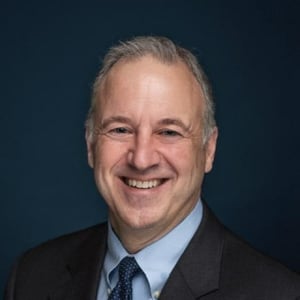
Senior Counsel, Litigation, Defense of Freedom Institute
Don Daugherty is Senior Counsel, Litigation, at the Defense of Freedom Institute for Policy Studies. He previously served as a Senior Counsel at the Institute for Free Speech and the Wisconsin Institute for Law & Liberty. Before that, he was a partner at three of Wisconsin’s largest firms, with nearly 30 years of trial and appellate litigation experience. He has been consistently recognized as among the “Best Lawyers in America,” as well as Wisconsin’s “Super Lawyers.” He received his B.A. from the University of Virginia and his J.D. from Northwestern University Law School. After law school, he served as a clerk to the Honorable Roger J. Miner of the United States Court of Appeals for the Second Circuit.
Don is on the Board of Advisors for the Milwaukee Lawyers’ Chapter of the Federalist Society, and on the Executive Committee of the Federalist Society’s Litigation Practice Group.

Professor Emerita of Law, George Mason University Antonin Scalia School of Law
Professor Emerita Joyce Lee Malcolm is an historian and constitutional scholar active in the area of constitutional history, focusing on the development of individual rights in Great Britain and America. She is the author of eight books, most recently The Tragedy of Benedict Arnold: An American Life, May 2018. Professor Malcolm has written many books and articles on gun control, the Second Amendment, and individual rights. Her work was cited several times in the recent U.S. Supreme Court opinion in District of Columbia v. Heller.
Professor Malcolm has previously taught at Princeton University, Bentley College, Boston University, Northeastern University and Cambridge University. She was also a Senior Advisor at the Massachusetts Institute of Technology Security Studies Program, a Visiting Scholar at Massachusetts Center for Renaissance Studies, and is a Bye Fellow at Robinson College, Cambridge University.
Her seventh book, Peter's War: A New England Slave Boy and the American Revolution, was published by Yale University Press in 2009. "Magna Carta in America: Entrenched," a chapter authored by Professor Malcolm, appears in Magna Carta: The Foundation of Freedom 1215-2015 (Nicholas Vincent, Third Millennium Publishing). Her essays have appeared in The Wall Street Journal, The Financial Times, USA Today, The Boston Globe and other newspapers.

State Court Docket Watch: Initiative Measure No. 65: Mayor Butler v. Watson
Christopher R. Green
Note from the Editor: The Federalist Society takes no positions on particular legal and public...
The 9th: A Forgotten Amendment
Northern Arizona Lawyers Chapter - Online Event
The 9th: A Forgotten Amendment
Northern Arizona Lawyers Chapter - Online Event
If the Framers Despaired, Should We?
Stephen B. Presser
A review of Fears of a Setting Sun: The Disillusionment of America’s Founders, by Dennis...
Topics
Wearing, Bearing, or Carrying Arms
In D.C. v. Heller (2008), the Supreme Court recognized an individual right under the...
Which Rights Are We Mediating?
Anthony Sanders
A review of How Rights Went Wrong: Why Our Obsession With Rights Is Tearing America...
Topics
Incorporation through the Privileges or Immunities Clause
Since the ratification of the Fourteenth Amendment in 1868, the Supreme Court has incrementally incorporated...
Last Hurrah for the Minimalist Court?
Donald A. Daugherty
A review of SCOTUS 2020: Major Decisions and Developments of the U.S. Supreme Court, edited...
McDonald v. City of Chicago, Illinois [SCOTUSbrief]
Joyce Lee Malcolm
When Chicago resident Otis McDonald attempted to purchase a handgun, he was turned down because...
Topics
How to Research the Constitutionality of Impeaching Former Presidents
Recently I’ve pivoted from 38 years of writing books and law review articles to spending...